Draft Annex 11 Section 14: Periodic Review—The Evolution from Compliance Theater to Living System Intelligence

The current state of periodic reviews in most pharmaceutical organizations is, to put it charitably, underwhelming. Annual checkbox exercises where teams dutifully document that “the system continues to operate as intended” while avoiding any meaningful analysis of actual system performance, emerging risks, or validation gaps. I’ve seen periodic reviews that consist of little more than confirming the system is still running and updating a few SOPs. This approach might have survived regulatory scrutiny in simpler times, but Section 14 of the draft Annex 11 obliterates this compliance theater and replaces it with rigorous, systematic, and genuinely valuable system intelligence.

The new requirements in the draft Annex 11 Section 14: Periodic Review don’t just raise the bar—they relocate it to a different universe entirely. Where the 2011 version suggested that systems “should be periodically evaluated,” the draft mandates comprehensive, structured, and consequential reviews that must demonstrate continued fitness for purpose and validated state. Organizations that have treated periodic reviews as administrative burdens are about to discover they’re actually the foundation of sustainable digital compliance.

The Philosophical Revolution: From Static Assessment to Dynamic Intelligence

The fundamental transformation in Section 14 reflects a shift from viewing computerized systems as static assets that require occasional maintenance to understanding them as dynamic, evolving components of complex pharmaceutical operations that require continuous intelligence and adaptive management. This philosophical change acknowledges several uncomfortable realities that the industry has long ignored.

First, modern computerized systems never truly remain static. Cloud platforms undergo continuous updates. SaaS providers deploy new features regularly. Integration points evolve. User behaviors change. Regulatory requirements shift. Security threats emerge. Business processes adapt. The fiction that a system can be validated once and then monitored through cursory annual reviews has become untenable in environments where change is the only constant.

Second, the interconnected nature of modern pharmaceutical operations means that changes in one system ripple through entire operational ecosystems in ways that traditional periodic reviews rarely capture. A seemingly minor update to a laboratory information management system might affect data flows to quality management systems, which in turn impact batch release processes, which ultimately influence regulatory reporting. Section 14 acknowledges this complexity by requiring assessment of combined effects across multiple systems and changes.

Third, the rise of data integrity as a central regulatory concern means that periodic reviews must evolve beyond functional assessment to include sophisticated analysis of data handling, protection, and preservation throughout increasingly complex digital environments. This requires capabilities that most current periodic review processes simply don’t possess.

Section 14.1 establishes the foundational requirement that “computerised systems should be subject to periodic review to verify that they remain fit for intended use and in a validated state.” This language moves beyond the permissive “should be evaluated” of the current regulation to establish periodic review as a mandatory demonstration of continued compliance rather than optional best practice.

The requirement that reviews verify systems remain “fit for intended use” introduces a performance-based standard that goes beyond technical functionality to encompass business effectiveness, regulatory adequacy, and operational sustainability. Systems might continue to function technically while becoming inadequate for their intended purposes due to changing regulatory requirements, evolving business processes, or emerging security threats.

Similarly, the requirement to verify systems remain “in a validated state” acknowledges that validation is not a permanent condition but a dynamic state that can be compromised by changes, incidents, or evolving understanding of system risks and requirements. This creates an ongoing burden of proof that validation status is actively maintained rather than passively assumed.

The Twelve Pillars of Comprehensive System Intelligence

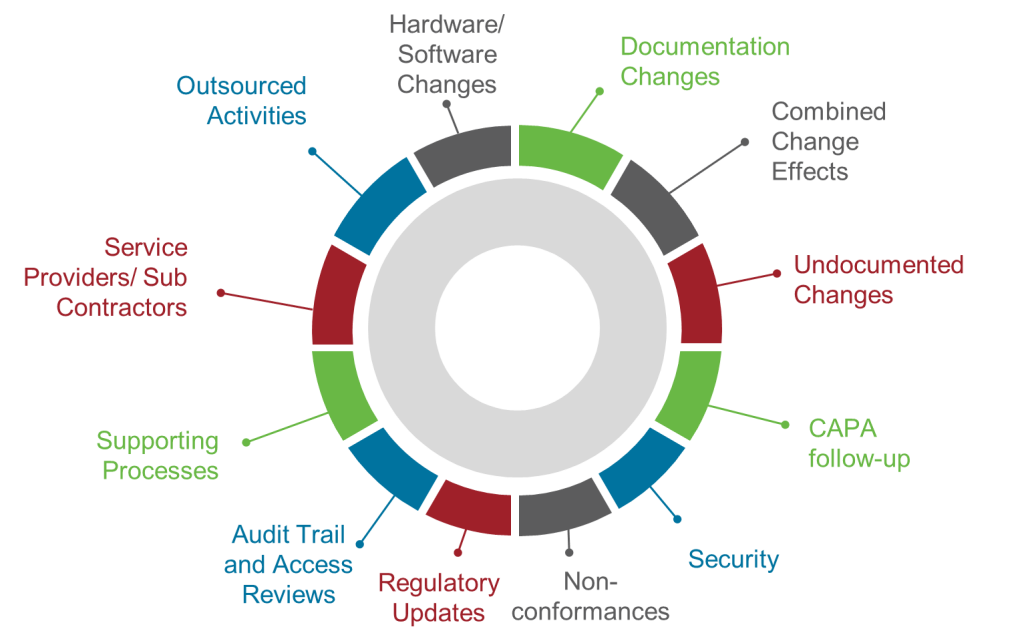
Section 14.2 represents perhaps the most significant transformation in the entire draft regulation by establishing twelve specific areas that must be addressed in every periodic review. This prescriptive approach eliminates the ambiguity that has allowed organizations to conduct superficial reviews while claiming regulatory compliance.

The requirement to assess “changes to hardware and software since the last review” acknowledges that modern systems undergo continuous modification through patches, updates, configuration changes, and infrastructure modifications. Organizations must maintain comprehensive change logs and assess the cumulative impact of all modifications on system validation status, not just changes that trigger formal change control processes.

“Changes to documentation since the last review” recognizes that documentation drift—where procedures, specifications, and validation documents become disconnected from actual system operation—represents a significant compliance risk. Reviews must identify and remediate documentation gaps that could compromise operational consistency or regulatory defensibility.

The requirement to evaluate “combined effect of multiple changes” addresses one of the most significant blind spots in traditional change management approaches. Individual changes might be assessed and approved through formal change control processes, but their collective impact on system performance, validation status, and operational risk often goes unanalyzed. Section 14 requires systematic assessment of how multiple changes interact and whether their combined effect necessitates revalidation activities.

“Undocumented or not properly controlled changes” targets one of the most persistent compliance failures in pharmaceutical operations. Despite robust change control procedures, systems inevitably undergo modifications that bypass formal processes. These might include emergency fixes, vendor-initiated updates, configuration drift, or unauthorized user modifications. Periodic reviews must actively hunt for these changes and assess their impact on validation status.

The focus on “follow-up on CAPAs” integrates corrective and preventive actions into systematic review processes, ensuring that identified issues receive appropriate attention and that corrective measures prove effective over time. This creates accountability for CAPA effectiveness that extends beyond initial implementation to long-term performance.

Requirements to assess “security incidents and other incidents” acknowledge that system security and reliability directly impact validation status and regulatory compliance. Organizations must evaluate whether incidents indicate systematic vulnerabilities that require design changes, process improvements, or enhanced controls.

“Non-conformities” assessment requires systematic analysis of deviations, exceptions, and other performance failures to identify patterns that might indicate underlying system inadequacies or operational deficiencies requiring corrective action.

The mandate to review “applicable regulatory updates” ensures that systems remain compliant with evolving regulatory requirements rather than becoming progressively non-compliant as guidance documents are revised, new regulations are promulgated, or inspection practices evolve.

“Audit trail reviews and access reviews” elevates these critical data integrity activities from routine operational tasks to strategic compliance assessments that must be evaluated for effectiveness, completeness, and adequacy as part of systematic periodic review.

Requirements for “supporting processes” assessment acknowledge that computerized systems operate within broader procedural and organizational contexts that directly impact their effectiveness and compliance. Changes to training programs, quality systems, or operational procedures might affect system validation status even when the systems themselves remain unchanged.

The focus on “service providers and subcontractors” reflects the reality that modern pharmaceutical operations depend heavily on external providers whose performance directly impacts system compliance and effectiveness. As I discussed in my analysis of supplier management requirements, organizations cannot outsource accountability for system compliance even when they outsource system operation.

Finally, the requirement to assess “outsourced activities” ensures that organizations maintain oversight of all system-related functions regardless of where they are performed or by whom, acknowledging that regulatory accountability cannot be transferred to external providers.

Review AreaPrimary ObjectiveKey Focus Areas
Hardware/Software ChangesTrack and assess all system modificationsChange logs, patch management, infrastructure updates, version control
Documentation ChangesEnsure documentation accuracy and currencyDocument version control, procedure updates, specification accuracy, training materials
Combined Change EffectsEvaluate cumulative change impactCumulative change impact, system interactions, validation status implications
Undocumented ChangesIdentify and control unmanaged changesChange detection, impact assessment, process gap identification, control improvements
CAPA Follow-upVerify corrective action effectivenessCAPA effectiveness, root cause resolution, preventive measure adequacy, trend analysis
Security & Other IncidentsAssess security and reliability statusIncident response effectiveness, vulnerability assessment, security posture, system reliability
Non-conformitiesAnalyze performance and compliance patternsDeviation trends, process capability, system adequacy, performance patterns
Regulatory UpdatesMaintain regulatory compliance currencyRegulatory landscape monitoring, compliance gap analysis, implementation planning
Audit Trail & Access ReviewsEvaluate data integrity control effectivenessData integrity controls, access management effectiveness, monitoring adequacy
Supporting ProcessesReview supporting organizational processesProcess effectiveness, training adequacy, procedural compliance, organizational capability
Service Providers/SubcontractorsMonitor third-party provider performanceVendor management, performance monitoring, contract compliance, relationship oversight
Outsourced ActivitiesMaintain oversight of external activitiesOutsourcing oversight, accountability maintenance, performance evaluation, risk management

Risk-Based Frequency: Intelligence-Driven Scheduling

Section 14.3 establishes a risk-based approach to periodic review frequency that moves beyond arbitrary annual schedules to systematic assessment of when reviews are needed based on “the system’s potential impact on product quality, patient safety and data integrity.” This approach aligns with broader pharmaceutical industry trends toward risk-based regulatory strategies while acknowledging that different systems require different levels of ongoing attention.

The risk-based approach requires organizations to develop sophisticated risk assessment capabilities that can evaluate system criticality across multiple dimensions simultaneously. A laboratory information management system might have high impact on product quality and data integrity but lower direct impact on patient safety, suggesting different review priorities and frequencies compared to a clinical trial management system or manufacturing execution system.

Organizations must document their risk-based frequency decisions and be prepared to defend them during regulatory inspections. This creates pressure for systematic, scientifically defensible risk assessment methodologies rather than intuitive or political decision-making about resource allocation.

The risk-based approach also requires dynamic adjustment as system characteristics, operational contexts, or regulatory environments change. A system that initially warranted annual reviews might require more frequent attention if it experiences reliability problems, undergoes significant changes, or becomes subject to enhanced regulatory scrutiny.

Risk-Based Periodic Review Matrix

High Criticality Systems

High ComplexityMedium ComplexityLow Complexity
FREQUENCY: Quarterly
DEPTH: Comprehensive (all 12 pillars)
RESOURCES: Dedicated cross-functional team
EXAMPLES: Manufacturing Execution Systems, Clinical Trial Management Systems, Integrated Quality Management Platforms
FOCUS: Full analytical assessment, trend analysis, predictive modeling
FREQUENCY: Semi-annually
DEPTH: Standard+ (emphasis on critical pillars)
RESOURCES: Cross-functional team
EXAMPLES: LIMS, Batch Management Systems, Electronic Document Management
FOCUS: Critical pathway analysis, performance trending, compliance verification
FREQUENCY: Semi-annually
DEPTH: Focused+ (critical areas with simplified analysis)
RESOURCES: Quality lead + SME support
EXAMPLES: Critical Parameter Monitoring, Sterility Testing Systems, Release Testing Platforms
FOCUS: Performance validation, data integrity verification, regulatory compliance

Medium Criticality Systems

High ComplexityMedium ComplexityLow Complexity
FREQUENCY: Semi-annually
DEPTH: Standard (structured assessment)
RESOURCES: Cross-functional team
EXAMPLES: Enterprise Resource Planning, Advanced Analytics Platforms, Multi-system Integrations
FOCUS: System integration assessment, change impact analysis, performance optimization
FREQUENCY: Annually
DEPTH: Standard (balanced assessment)
RESOURCES: Small team
EXAMPLES: Training Management Systems, Calibration Management, Standard Laboratory Instruments
FOCUS: Operational effectiveness, compliance maintenance, trend monitoring
FREQUENCY: Annually
DEPTH: Focused (key areas only)
RESOURCES: Individual reviewer + occasional SME
EXAMPLES: Simple Data Loggers, Basic Trending Tools, Standard Office Applications
FOCUS: Basic functionality verification, minimal compliance checking

High Criticality Systems

High ComplexityMedium ComplexityLow Complexity
FREQUENCY: Annually
DEPTH: Focused (complexity-driven assessment)
RESOURCES: Technical specialist + reviewer
EXAMPLES: IT Infrastructure Platforms, Communication Systems, Complex Non-GMP Analytics
FOCUS: Technical performance, security assessment, maintenance verification
FREQUENCY: Bi-annually
DEPTH: Streamlined (essential checks only)
RESOURCES: Individual reviewer
EXAMPLES: Facility Management Systems, Basic Inventory Tracking, Simple Reporting Tools
FOCUS: Basic operational verification, security updates, essential maintenance
FREQUENCY: Bi-annually or trigger-based
DEPTH: Minimal (checklist approach)
RESOURCES: Individual reviewer
EXAMPLES: Simple Environmental Monitors, Basic Utilities, Non-critical Support Tools
FOCUS: Essential functionality, basic security, minimal documentation review

Documentation and Analysis: From Checklists to Intelligence Reports

Section 14.4 transforms documentation requirements from simple record-keeping to sophisticated analytical reporting that must “document the review, analyze the findings and identify consequences, and be implemented to prevent any reoccurrence.” This language establishes periodic reviews as analytical exercises that generate actionable intelligence rather than administrative exercises that produce compliance artifacts.

The requirement to “analyze the findings” means that reviews must move beyond simple observation to systematic evaluation of what findings mean for system performance, validation status, and operational risk. This analysis must be documented in ways that demonstrate analytical rigor and support decision-making about system improvements, validation activities, or operational changes.

“Identify consequences” requires forward-looking assessment of how identified issues might affect future system performance, compliance status, or operational effectiveness. This prospective analysis helps organizations prioritize corrective actions and allocate resources effectively while demonstrating proactive risk management.

The mandate to implement measures “to prevent any reoccurrence” establishes accountability for corrective action effectiveness that extends beyond traditional CAPA processes to encompass systematic prevention of issue recurrence through design changes, process improvements, or enhanced controls.

These documentation requirements create significant implications for periodic review team composition, analytical capabilities, and reporting systems. Organizations need teams with sufficient technical and regulatory expertise to conduct meaningful analysis and systems capable of supporting sophisticated analytical reporting.

Integration with Quality Management Systems: The Nervous System Approach

Perhaps the most transformative aspect of Section 14 is its integration with broader quality management system activities. Rather than treating periodic reviews as isolated compliance exercises, the new requirements position them as central intelligence-gathering activities that inform broader organizational decision-making about system management, validation strategies, and operational improvements.

This integration means that periodic review findings must flow systematically into change control processes, CAPA systems, validation planning, supplier management activities, and regulatory reporting. Organizations can no longer conduct periodic reviews in isolation from other quality management activities—they must demonstrate that review findings drive appropriate organizational responses across all relevant functional areas.

The integration also means that periodic review schedules must align with other quality management activities including management reviews, internal audits, supplier assessments, and regulatory inspections. Organizations need coordinated calendars that ensure periodic review findings are available to inform these other activities while avoiding duplicative or conflicting assessment activities.

Technology Requirements: Beyond Spreadsheets and SharePoint

The analytical and documentation requirements of Section 14 push most current periodic review approaches beyond their technological limits. Organizations relying on spreadsheets, email coordination, and SharePoint collaboration will find these tools inadequate for systematic multi-system analysis, trend identification, and integrated reporting required by the new regulation.

Effective implementation requires investment in systems capable of aggregating data from multiple sources, supporting collaborative analysis, maintaining traceability throughout review processes, and generating reports suitable for regulatory presentation. These might include dedicated GRC (Governance, Risk, and Compliance) platforms, advanced quality management systems, or integrated validation lifecycle management tools.

The technology requirements extend to underlying system monitoring and data collection capabilities. Organizations need systems that can automatically collect performance data, track changes, monitor security events, and maintain audit trails suitable for periodic review analysis. Manual data collection approaches become impractical when reviews must assess twelve specific areas across multiple systems on risk-based schedules.

Resource and Competency Implications: Building Analytical Capabilities

Section 14’s requirements create significant implications for organizational capabilities and resource allocation. Traditional periodic review approaches that rely on part-time involvement from operational personnel become inadequate for systematic multi-system analysis requiring technical, regulatory, and analytical expertise.

Organizations need dedicated periodic review capabilities that might include full-time coordinators, subject matter expert networks, analytical tool specialists, and management reporting coordinators. These teams need training in analytical methodologies, regulatory requirements, technical system assessment, and organizational change management.

The competency requirements extend beyond technical skills to include systems thinking capabilities that can assess interactions between systems, processes, and organizational functions. Team members need understanding of how changes in one area might affect other areas and how to design analytical approaches that capture these complex relationships.

Comparison with Current Practices: The Gap Analysis

The transformation from current periodic review practices to Section 14 requirements represents one of the largest compliance gaps in the entire draft Annex 11. Most organizations conduct periodic reviews that bear little resemblance to the comprehensive analytical exercises envisioned by the new regulation.

Current practices typically focus on confirming that systems continue to operate and that documentation remains current. Section 14 requires systematic analysis of system performance, validation status, risk evolution, and operational effectiveness across twelve specific areas with documented analytical findings and corrective action implementation.

Current practices often treat periodic reviews as isolated compliance exercises with minimal integration into broader quality management activities. Section 14 requires tight integration with change management, CAPA processes, supplier management, and regulatory reporting.

Current practices frequently rely on annual schedules regardless of system characteristics or operational context. Section 14 requires risk-based frequency determination with documented justification and dynamic adjustment based on changing circumstances.

Current practices typically produce simple summary reports with minimal analytical content. Section 14 requires sophisticated analytical reporting that identifies trends, assesses consequences, and drives organizational decision-making.

GAMP 5 Alignment and Evolution

GAMP 5’s approach to periodic review provides a foundation for implementing Section 14 requirements but requires significant enhancement to meet the new regulatory standards. GAMP 5 recommends periodic review as best practice for maintaining validation throughout system lifecycles and provides guidance on risk-based approaches to frequency determination and scope definition.

However, GAMP 5’s recommendations lack the prescriptive detail and mandatory requirements of Section 14. While GAMP 5 suggests comprehensive system review including technical, procedural, and performance aspects, it doesn’t mandate the twelve specific areas required by Section 14. GAMP 5 recommends formal documentation and analytical reporting but doesn’t establish the specific analytical and consequence identification requirements of the new regulation.

The GAMP 5 emphasis on integration with overall quality management systems aligns well with Section 14 requirements, but organizations implementing GAMP 5 guidance will need to enhance their approaches to meet the more stringent requirements of the draft regulation.

Organizations that have successfully implemented GAMP 5 periodic review recommendations will have significant advantages in transitioning to Section 14 compliance, but they should not assume their current approaches are adequate without careful gap analysis and enhancement planning.

Implementation Strategy: From Current State to Section 14 Compliance

Organizations planning Section 14 implementation must begin with comprehensive assessment of current periodic review practices against the new requirements. This gap analysis should address all twelve mandatory review areas, analytical capabilities, documentation standards, integration requirements, and resource needs.

The implementation strategy should prioritize development of analytical capabilities and supporting technology infrastructure. Organizations need systems capable of collecting, analyzing, and reporting the complex multi-system data required for Section 14 compliance. This typically requires investment in new technology platforms and development of new analytical competencies.

Change management becomes critical for successful implementation because Section 14 requirements represent fundamental changes in how organizations approach system oversight. Stakeholders accustomed to routine annual reviews must be prepared for analytical exercises that might identify significant system issues requiring substantial corrective actions.

Training and competency development programs must address the enhanced analytical and technical requirements of Section 14 while ensuring that review teams understand their integration responsibilities within broader quality management systems.

Organizations should plan phased implementation approaches that begin with pilot programs on selected systems before expanding to full organizational implementation. This allows refinement of procedures, technology, and competencies before deploying across entire system portfolios.

The Final Review Requirement: Planning for System Retirement

Section 14.5 introduces a completely new concept: “A final review should be performed when a computerised system is taken out of use.” This requirement acknowledges that system retirement represents a critical compliance activity that requires systematic assessment and documentation.

The final review requirement addresses several compliance risks that traditional system retirement approaches often ignore. Organizations must ensure that all data preservation requirements are met, that dependent systems continue to operate appropriately, that security risks are properly addressed, and that regulatory reporting obligations are fulfilled.

Final reviews must assess the impact of system retirement on overall operational capabilities and validation status of remaining systems. This requires understanding of system interdependencies that many organizations lack and systematic assessment of how retirement might affect continuing operations.

The final review requirement also creates documentation obligations that extend system compliance responsibilities through the retirement process. Organizations must maintain evidence that system retirement was properly planned, executed, and documented according to regulatory requirements.

Regulatory Implications and Inspection Readiness

Section 14 requirements fundamentally change regulatory inspection dynamics by establishing periodic reviews as primary evidence of continued system compliance and organizational commitment to maintaining validation throughout system lifecycles. Inspectors will expect to see comprehensive analytical reports with documented findings, systematic corrective actions, and clear integration with broader quality management activities.

The twelve mandatory review areas provide inspectors with specific criteria for evaluating periodic review adequacy. Organizations that cannot demonstrate systematic assessment of all required areas will face immediate compliance challenges regardless of overall system performance.

The analytical and documentation requirements create expectations for sophisticated compliance artifacts that demonstrate organizational competency in system oversight and continuous improvement. Superficial reviews with minimal analytical content will be viewed as inadequate regardless of compliance with technical system requirements.

The integration requirements mean that inspectors will evaluate periodic reviews within the context of broader quality management system effectiveness. Disconnected or isolated periodic reviews will be viewed as evidence of inadequate quality system integration and organizational commitment to continuous improvement.

Strategic Implications: Periodic Review as Competitive Advantage

Organizations that successfully implement Section 14 requirements will gain significant competitive advantages through enhanced system intelligence, proactive risk management, and superior operational effectiveness. Comprehensive periodic reviews provide organizational insights that enable better system selection, more effective resource allocation, and proactive identification of improvement opportunities.

The analytical capabilities required for Section 14 compliance support broader organizational decision-making about technology investments, process improvements, and operational strategies. Organizations that develop these capabilities for periodic review purposes can leverage them for strategic planning, performance management, and continuous improvement initiatives.

The integration requirements create opportunities for enhanced organizational learning and knowledge management. Systematic analysis of system performance, validation status, and operational effectiveness generates insights that can improve future system selection, implementation, and management decisions.

Organizations that excel at Section 14 implementation will build reputations for regulatory sophistication and operational excellence that provide advantages in regulatory relationships, business partnerships, and talent acquisition.

The Future of Pharmaceutical System Intelligence

Section 14 represents the evolution of pharmaceutical compliance toward sophisticated organizational intelligence systems that provide real-time insight into system performance, validation status, and operational effectiveness. This evolution acknowledges that modern pharmaceutical operations require continuous monitoring and adaptive management rather than periodic assessment and reactive correction.

The transformation from compliance theater to genuine system intelligence creates opportunities for pharmaceutical organizations to leverage their compliance investments for strategic advantage while ensuring robust regulatory compliance. Organizations that embrace this transformation will build sustainable competitive advantages through superior system management and operational effectiveness.

However, the transformation also creates significant implementation challenges that will test organizational commitment to compliance excellence. Organizations that attempt to meet Section 14 requirements through incremental enhancement of current practices will likely fail to achieve adequate compliance or realize strategic benefits.

Success requires fundamental reimagining of periodic review as organizational intelligence activity that provides strategic value while ensuring regulatory compliance. This requires investment in technology, competencies, and processes that extend well beyond traditional compliance requirements but provide returns through enhanced operational effectiveness and strategic insight.

Summary Comparison: The New Landscape of Periodic Review

AspectDraft Annex 11 Section 14 (2025)Current Annex 11 (2011)GAMP 5 Recommendations
Regulatory MandateMandatory periodic reviews to verify system remains “fit for intended use” and “in validated state”Systems “should be periodically evaluated” – less prescriptive mandateStrongly recommended as best practice for maintaining validation throughout lifecycle
Scope of Review12 specific areas mandated including changes, supporting processes, regulatory updates, security incidentsGeneral areas listed: functionality, deviation records, incidents, problems, upgrade history, performance, reliability, securityComprehensive system review including technical, procedural, and performance aspects
Risk-Based ApproachFrequency based on risk assessment of system impact on product quality, patient safety, data integrityRisk-based approach implied but not explicitly requiredCore principle – review depth and frequency based on system criticality and risk
Documentation RequirementsReviews must be documented, findings analyzed, consequences identified, prevention measures implementedImplicit documentation requirement but not explicitly detailedFormal documentation recommended with structured reporting
Integration with Quality SystemIntegrated with audits, inspections, CAPA, incident management, security assessmentsLimited integration requirements specifiedIntegrated with overall quality management system and change control
Follow-up ActionsFindings must be analyzed to identify consequences and prevent recurrenceNo specific follow-up action requirementsAction plans for identified issues with tracking to closure
Final System ReviewFinal review mandated when system taken out of useNo final review requirement specifiedRetirement planning and data preservation activities

The transformation represented by Section 14 marks the end of periodic review as administrative burden and its emergence as strategic organizational capability. Organizations that recognize and embrace this transformation will build sustainable competitive advantages while ensuring robust regulatory compliance. Those that resist will find themselves increasingly disadvantaged in regulatory relationships and operational effectiveness as the pharmaceutical industry evolves toward more sophisticated digital compliance approaches.

Annex 11 Section 14 Integration: Computerized System Intelligence as the Foundation of CPV Excellence

The sophisticated framework for Continuous Process Verification (CPV) methodology and tool selection outlined in this post intersects directly with the revolutionary requirements of Draft Annex 11 Section 14 on periodic review. While CPV focuses on maintaining process validation through statistical monitoring and adaptive control, Section 14 ensures that the computerized systems underlying CPV programs remain in validated states and continue to generate trustworthy data throughout their operational lifecycles.

This intersection represents a critical compliance nexus where process validation meets system validation, creating dependencies that pharmaceutical organizations must understand and manage systematically. The failure to maintain computerized systems in validated states directly undermines CPV program integrity, while inadequate CPV data collection and analysis capabilities compromise the analytical rigor that Section 14 demands.

The Interdependence of System Validation and Process Validation

Modern CPV programs depend entirely on computerized systems for data collection, statistical analysis, trend detection, and regulatory reporting. Manufacturing Execution Systems (MES) capture Critical Process Parameters (CPPs) in real-time. Laboratory Information Management Systems (LIMS) manage Critical Quality Attribute (CQA) testing data. Statistical process control platforms perform the normality testing, capability analysis, and control chart generation that drive CPV decision-making. Enterprise quality management systems integrate CPV findings with broader quality management activities including CAPA, change control, and regulatory reporting.

Section 14’s requirement that computerized systems remain “fit for intended use and in a validated state” directly impacts CPV program effectiveness and regulatory defensibility. A manufacturing execution system that undergoes undocumented configuration changes might continue to collect process data while compromising data integrity in ways that invalidate statistical analysis. A LIMS system with inadequate change control might introduce calculation errors that render capability analyses meaningless. Statistical software with unvalidated updates might generate control charts based on flawed algorithms.

The twelve pillars of Section 14 periodic review map directly onto CPV program dependencies. Hardware and software changes affect data collection accuracy and statistical calculation reliability. Documentation changes impact procedural consistency and analytical methodology validity. Combined effects of multiple changes create cumulative risks to data integrity that traditional CPV monitoring might not detect. Undocumented changes represent blind spots where system degradation occurs without CPV program awareness.

Risk-Based Integration: Aligning System Criticality with Process Impact

The risk-based approach fundamental to both CPV methodology and Section 14 periodic review creates opportunities for integrated assessment that optimizes resource allocation while ensuring comprehensive coverage. Systems supporting high-impact CPV parameters require more frequent and rigorous periodic review than those managing low-risk process monitoring.

Consider an example of a high-capability parameter with data clustered near LOQ requiring threshold-based alerts rather than traditional control charts. The computerized systems supporting this simplified monitoring approach—perhaps basic trending software with binary alarm capabilities—represent lower validation risk than sophisticated statistical process control platforms. Section 14’s risk-based frequency determination should reflect this reduced complexity, potentially extending review cycles while maintaining adequate oversight.

Conversely, systems supporting critical CPV parameters with complex statistical requirements—such as multivariate analysis platforms monitoring bioprocess parameters—warrant intensive periodic review given their direct impact on patient safety and product quality. These systems require comprehensive assessment of all twelve pillars with particular attention to change management, analytical method validation, and performance monitoring.

The integration extends to tool selection methodologies outlined in the CPV framework. Just as process parameters require different statistical tools based on data characteristics and risk profiles, the computerized systems supporting these tools require different validation and periodic review approaches. A system supporting simple attribute-based monitoring requires different periodic review depth than one performing sophisticated multivariate statistical analysis.

Data Integrity Convergence: CPV Analytics and System Audit Trails

Section 14’s emphasis on audit trail reviews and access reviews creates direct synergies with CPV data integrity requirements. The sophisticated statistical analyses required for effective CPV—including normality testing, capability analysis, and trend detection—depend on complete, accurate, and unaltered data throughout collection, storage, and analysis processes.

The framework’s discussion of decoupling analytical variability from process signals requires systems capable of maintaining separate data streams with independent validation and audit trail management. Section 14’s requirement to assess audit trail review effectiveness directly supports this CPV capability by ensuring that system-generated data remains traceable and trustworthy throughout complex analytical workflows.

Consider the example where threshold-based alerts replaced control charts for parameters near LOQ. This transition requires system modifications to implement binary logic, configure alert thresholds, and generate appropriate notifications. Section 14’s focus on combined effects of multiple changes ensures that such CPV-driven system modifications receive appropriate validation attention while the audit trail requirements ensure that the transition maintains data integrity throughout implementation.

The integration becomes particularly important for organizations implementing AI-enhanced CPV tools or advanced analytics platforms. These systems require sophisticated audit trail capabilities to maintain transparency in algorithmic decision-making while Section 14’s periodic review requirements ensure that AI model updates, training data changes, and algorithmic modifications receive appropriate validation oversight.

Living Risk Assessments: Dynamic Integration of System and Process Intelligence

The framework’s emphasis on living risk assessments that integrate ongoing data with periodic review cycles aligns perfectly with Section 14’s lifecycle approach to system validation. CPV programs generate continuous intelligence about process performance, parameter behavior, and statistical tool effectiveness that directly informs system validation decisions.

Process capability changes detected through CPV monitoring might indicate system performance degradation requiring investigation through Section 14 periodic review. Statistical tool effectiveness assessments conducted as part of CPV methodology might reveal system limitations requiring configuration changes or software updates. Risk profile evolution identified through living risk assessments might necessitate changes to Section 14 periodic review frequency or scope.

This dynamic integration creates feedback loops where CPV findings drive system validation decisions while system validation ensures CPV data integrity. Organizations must establish governance structures that facilitate information flow between CPV teams and system validation functions while maintaining appropriate independence in decision-making processes.

Implementation Framework: Integrating Section 14 with CPV Excellence

Organizations implementing both sophisticated CPV programs and Section 14 compliance should develop integrated governance frameworks that leverage synergies while avoiding duplication or conflicts. This requires coordinated planning that aligns system validation cycles with process validation activities while ensuring both programs receive adequate resources and management attention.

The implementation should begin with comprehensive mapping of system dependencies across CPV programs, identifying which computerized systems support which CPV parameters and analytical methods. This mapping drives risk-based prioritization of Section 14 periodic review activities while ensuring that high-impact CPV systems receive appropriate validation attention.

System validation planning should incorporate CPV methodology requirements including statistical software validation, data integrity controls, and analytical method computerization. CPV tool selection decisions should consider system validation implications including ongoing maintenance requirements, change control complexity, and periodic review resource needs.

Training programs should address the intersection of system validation and process validation requirements, ensuring that personnel understand both CPV statistical methodologies and computerized system compliance obligations. Cross-functional teams should include both process validation experts and system validation specialists to ensure decisions consider both perspectives.

Strategic Advantage Through Integration

Organizations that successfully integrate Section 14 system intelligence with CPV process intelligence will gain significant competitive advantages through enhanced decision-making capabilities, reduced compliance costs, and superior operational effectiveness. The combination creates comprehensive understanding of both process and system performance that enables proactive identification of risks and opportunities.

Integrated programs reduce resource requirements through coordinated planning and shared analytical capabilities while improving decision quality through comprehensive risk assessment and performance monitoring. Organizations can leverage system validation investments to enhance CPV capabilities while using CPV insights to optimize system validation resource allocation.

The integration also creates opportunities for enhanced regulatory relationships through demonstration of sophisticated compliance capabilities and proactive risk management. Regulatory agencies increasingly expect pharmaceutical organizations to leverage digital technologies for enhanced quality management, and the integration of Section 14 with CPV methodology demonstrates commitment to digital excellence and continuous improvement.

This integration represents the future of pharmaceutical quality management where system validation and process validation converge to create comprehensive intelligence systems that ensure product quality, patient safety, and regulatory compliance through sophisticated, risk-based, and continuously adaptive approaches. Organizations that master this integration will define industry best practices while building sustainable competitive advantages through operational excellence and regulatory sophistication.

Section 4 of Draft Annex 11: Quality Risk Management—The Scientific Foundation That Transforms Validation

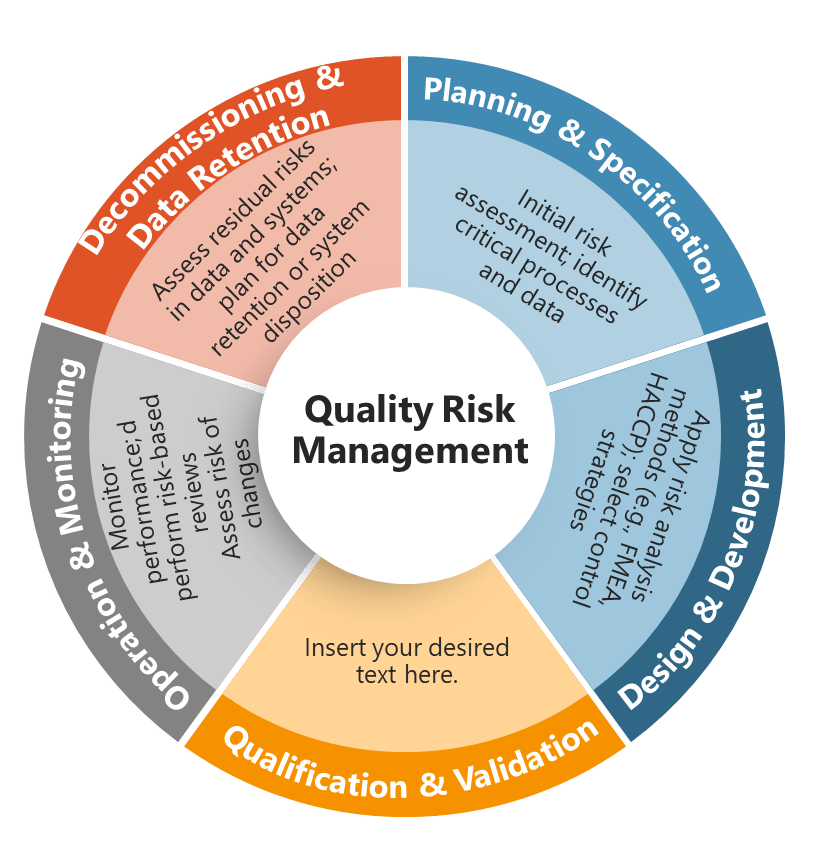
If there is one section that serves as the philosophical and operational backbone for everything else in the new regulation, it’s Section 4: Risk Management. This section embodies current regulatory thinking on how risk management, in light of the recent ICH Q9 (R1) is the scientific methodology that transforms how we think about, design, validate, and operate s in GMP environments.

Section 4 represents the regulatory codification of what quality professionals have long advocated: that every decision about computerized systems, from initial selection through operational oversight to eventual decommissioning, must be grounded in rigorous, documented, and scientifically defensible risk assessment. But more than that, it establishes quality risk management as the living nervous system of digital compliance, continuously sensing, evaluating, and responding to threats and opportunities throughout the system lifecycle.

For organizations that have treated risk management as a checkbox exercise or a justification for doing less validation, Section 4 delivers a harsh wake-up call. The new requirements don’t just elevate risk management to regulatory mandate—they transform it into the primary lens through which all computerized system activities must be viewed, planned, executed, and continuously improved.

The Philosophical Revolution: From Optional Framework to Mandatory Foundation

The transformation between the current Annex 11’s brief mention of risk management and Section 4’s comprehensive requirements represents more than regulatory updating—it reflects a fundamental shift in how regulators view the relationship between risk assessment and system control. Where the 2011 version offered generic guidance about applying risk management “throughout the lifecycle,” Section 4 establishes specific, measurable, and auditable requirements that make risk management the definitive basis for all computerized system decisions.

Section 4.1 opens with an unambiguous statement that positions quality risk management as the foundation of system lifecycle management: “Quality Risk Management (QRM) should be applied throughout the lifecycle of a computerised system considering any possible impact on product quality, patient safety or data integrity.” This language moves beyond the permissive “should consider” of the old regulation to establish QRM as the mandatory framework through which all system activities must be filtered.

The explicit connection to ICH Q9(R1) in Section 4.2 represents a crucial evolution. By requiring that “risks associated with the use of computerised systems in GMP activities should be identified and analysed according to an established procedure” and specifically referencing “examples of risk management methods and tools can be found in ICH Q9 (R1),” the regulation transforms ICH Q9 from guidance into regulatory requirement. Organizations can no longer treat ICH Q9 principles as aspirational best practices—they become the enforceable standard for pharmaceutical risk management.

This integration creates powerful synergies between pharmaceutical quality system requirements and computerized system validation. Risk assessments conducted under Section 4 must align with broader ICH Q9 principles while addressing the specific challenges of digital systems, cloud services, and automated processes. The result is a comprehensive risk management framework that bridges traditional pharmaceutical operations with modern digital infrastructure.

The requirement in Section 4.3 that “validation strategy and effort should be determined based on the intended use of the system and potential risks to product quality, patient safety and data integrity” establishes risk assessment as the definitive driver of validation scope and approach. This eliminates the historical practice of using standardized validation templates regardless of system characteristics or applying uniform validation approaches across diverse system types.

Under Section 4, every validation decision—from the depth of testing required to the frequency of periodic reviews—must be traceable to specific risk assessments that consider the unique characteristics of each system and its role in GMP operations. This approach rewards organizations that invest in comprehensive risk assessment while penalizing those that rely on generic, one-size-fits-all validation approaches.

Risk-Based System Design: Architecture Driven by Assessment

Perhaps the most transformative aspect of Section 4 is found in Section 4.4, which requires that “risks associated with the use of computerised systems in GMP activities should be mitigated and brought down to an acceptable level, if possible, by modifying processes or system design.” This requirement positions risk assessment as a primary driver of system architecture rather than simply a validation planning tool.

The language “modifying processes or system design” establishes a hierarchy of risk control that prioritizes prevention over detection. Rather than accepting inherent system risks and compensating through enhanced testing or operational controls, Section 4 requires organizations to redesign systems and processes to eliminate or minimize risks at their source. This approach aligns with fundamental safety engineering principles while ensuring that risk mitigation is built into system architecture rather than layered on top.

The requirement that “the outcome of the risk management process should result in the choice of an appropriate computerised system architecture and functionality” makes risk assessment the primary criterion for system selection and configuration. Organizations can no longer choose systems based purely on cost, vendor relationships, or technical preferences—they must demonstrate that system architecture aligns with risk assessment outcomes and provides appropriate risk mitigation capabilities.

This approach particularly impacts cloud system implementations, SaaS platform selections, and integrated system architectures where risk assessment must consider not only individual system capabilities but also the risk implications of system interactions, data flows, and shared infrastructure. Organizations must demonstrate that their chosen architecture provides adequate risk control across the entire integrated environment.

The emphasis on system design modification as the preferred risk mitigation approach will drive significant changes in vendor selection criteria and system specification processes. Vendors that can demonstrate built-in risk controls and flexible architecture will gain competitive advantages over those that rely on customers to implement risk mitigation through operational procedures or additional validation activities.

Data Integrity Risk Assessment: Scientific Rigor Applied to Information Management

Section 4.5 introduces one of the most sophisticated requirements in the entire draft regulation: “Quality risk management principles should be used to assess the criticality of data to product quality, patient safety and data integrity, the vulnerability of data to deliberate or indeliberate alteration, deletion or loss, and the likelihood of detection of such actions.”

This requirement transforms data integrity from a compliance concept into a systematic risk management discipline. Organizations must assess not only what data is critical but also how vulnerable that data is to compromise and how likely they are to detect integrity failures. This three-dimensional risk assessment approach—criticality, vulnerability, and detectability—provides a scientific framework for prioritizing data protection efforts and designing appropriate controls.

The distinction between “deliberate or indeliberate” data compromise acknowledges that modern data integrity threats encompass both malicious attacks and innocent errors. Risk assessments must consider both categories and design controls that address the full spectrum of potential data integrity failures. This approach requires organizations to move beyond traditional access control and audit trail requirements to consider the full range of technical, procedural, and human factors that could compromise data integrity.

The requirement to assess “likelihood of detection” introduces a crucial element often missing from traditional data integrity approaches. Organizations must evaluate not only how to prevent data integrity failures but also how quickly and reliably they can detect failures that occur despite preventive controls. This assessment drives requirements for monitoring systems, audit trail analysis capabilities, and incident detection procedures that can identify data integrity compromises before they impact product quality or patient safety.

This risk-based approach to data integrity creates direct connections between Section 4 and other draft Annex 11 requirements, particularly Section 10 (Handling of Data), Section 11 (Identity and Access Management), and Section 12 (Audit Trails). Risk assessments conducted under Section 4 drive the specific requirements for data input verification, access controls, and audit trail monitoring implemented through other sections.

Lifecycle Risk Management: Dynamic Assessment in Digital Environments

The lifecycle approach required by Section 4 acknowledges that computerized systems exist in dynamic environments where risks evolve continuously due to technology changes, process modifications, security threats, and operational experience. Unlike traditional validation approaches that treat risk assessment as a one-time activity during system implementation, Section 4 requires ongoing risk evaluation and response throughout the system lifecycle.

This dynamic approach particularly impacts cloud-based systems and SaaS platforms where underlying infrastructure, security controls, and functional capabilities change regularly without direct customer involvement. Organizations must establish procedures for evaluating the risk implications of vendor-initiated changes and updating their risk assessments and control strategies accordingly.

The lifecycle risk management approach also requires integration with change control processes, periodic review activities, and incident management procedures. Every significant system change must trigger risk reassessment to ensure that new risks are identified and appropriate controls are implemented. This creates a feedback loop where operational experience informs risk assessment updates, which in turn drive control system improvements and validation strategy modifications.

Organizations implementing Section 4 requirements must develop capabilities for continuous risk monitoring that can detect emerging threats, changing system characteristics, and evolving operational patterns that might impact risk assessments. This requires investment in risk management tools, monitoring systems, and analytical capabilities that extend beyond traditional validation and quality assurance functions.

Integration with Modern Risk Management Methodologies

The explicit reference to ICH Q9(R1) in Section 4.2 creates direct alignment between computerized system risk management and the broader pharmaceutical quality risk management framework. This integration ensures that computerized system risk assessments contribute to overall product and process risk understanding while benefiting from the sophisticated risk management methodologies developed for pharmaceutical operations.

ICH Q9(R1)’s emphasis on managing and minimizing subjectivity in risk assessment becomes particularly important for computerized system applications where technical complexity can obscure risk evaluation. Organizations must implement risk assessment procedures that rely on objective data, established methodologies, and cross-functional expertise rather than individual opinions or vendor assertions.

The ICH Q9(R1) toolkit—including Failure Mode and Effects Analysis (FMEA), Hazard Analysis and Critical Control Points (HACCP), and Fault Tree Analysis (FTA)—provides proven methodologies for systematic risk identification and assessment that can be applied to computerized system environments. Section 4’s reference to these tools establishes them as acceptable approaches for meeting regulatory requirements while providing flexibility for organizations to choose methodologies appropriate to their specific circumstances.

The integration with ICH Q9(R1) also emphasizes the importance of risk communication throughout the organization and with external stakeholders including suppliers, regulators, and business partners. Risk assessment results must be communicated effectively to drive appropriate decision-making at all organizational levels and ensure that risk mitigation strategies are understood and implemented consistently.

Operational Implementation: Transforming Risk Assessment from Theory to Practice

Implementing Section 4 requirements effectively requires organizations to develop sophisticated risk management capabilities that extend far beyond traditional validation and quality assurance functions. The requirement for “established procedures” means that risk assessment cannot be ad hoc or inconsistent—organizations must develop repeatable, documented methodologies that produce reliable and auditable results.

The procedures must address risk identification methods that can systematically evaluate the full range of potential threats to computerized systems including technical failures, security breaches, data integrity compromises, supplier issues, and operational errors. Risk identification must consider both current system states and future scenarios including planned changes, emerging threats, and evolving operational requirements.

Risk analysis procedures must provide quantitative or semi-quantitative methods for evaluating risk likelihood and impact across the three critical dimensions specified in Section 4.1: product quality, patient safety, and data integrity. This analysis must consider the interconnected nature of modern computerized systems where risks in one system or component can cascade through integrated environments to impact multiple processes and outcomes.

Risk evaluation procedures must establish criteria for determining acceptable risk levels and identifying risks that require mitigation. These criteria must align with organizational risk tolerance, regulatory expectations, and business objectives while providing clear guidance for risk-based decision making throughout the system lifecycle.

Risk mitigation procedures must prioritize design and process modifications over operational controls while ensuring that all risk mitigation strategies are evaluated for effectiveness and maintained throughout the system lifecycle. Organizations must develop capabilities for implementing system architecture changes, process redesign, and operational control enhancements based on risk assessment outcomes.

Technology and Tool Requirements for Effective Risk Management

Section 4’s emphasis on systematic, documented, and traceable risk management creates significant requirements for technology tools and platforms that can support sophisticated risk assessment and management processes. Organizations must invest in risk management systems that can capture, analyze, and track risks throughout complex system lifecycles while maintaining traceability to validation activities, change control processes, and operational decisions.

Risk assessment tools must support the multi-dimensional analysis required by Section 4, including product quality impacts, patient safety implications, and data integrity vulnerabilities. These tools must accommodate the dynamic nature of computerized system environments where risks evolve continuously due to technology changes, process modifications, and operational experience.

Integration with existing quality management systems, validation platforms, and operational monitoring tools becomes essential for maintaining consistency between risk assessments and other quality activities. Organizations must ensure that risk assessment results drive validation planning, change control decisions, and operational monitoring strategies while receiving feedback from these activities to update and improve risk assessments.

Documentation and traceability requirements create needs for sophisticated document management and workflow systems that can maintain relationships between risk assessments, system specifications, validation protocols, and operational procedures. Organizations must demonstrate clear traceability from risk identification through mitigation implementation and effectiveness verification.

Regulatory Expectations and Inspection Implications

Section 4’s comprehensive risk management requirements fundamentally change regulatory inspection dynamics by establishing risk assessment as the foundation for evaluating all computerized system compliance activities. Inspectors will expect to see documented, systematic, and scientifically defensible risk assessments that drive all system-related decisions from initial selection through ongoing operation.

The integration with ICH Q9(R1) provides inspectors with established criteria for evaluating risk management effectiveness including assessment methodology adequacy, stakeholder involvement appropriateness, and decision-making transparency. Organizations must demonstrate that their risk management processes meet ICH Q9(R1) standards while addressing the specific challenges of computerized system environments.

Risk-based validation approaches will receive increased scrutiny as inspectors evaluate whether validation scope and depth align appropriately with documented risk assessments. Organizations that cannot demonstrate clear traceability between risk assessments and validation activities will face significant compliance challenges regardless of validation execution quality.

The emphasis on system design and process modification as preferred risk mitigation strategies means that inspectors will evaluate whether organizations have adequately considered architectural and procedural alternatives to operational controls. Simply implementing extensive operational procedures to manage inherent system risks may no longer be considered adequate risk mitigation.

Ongoing risk management throughout the system lifecycle will become a key inspection focus as regulators evaluate whether organizations maintain current risk assessments and adjust control strategies based on operational experience, technology changes, and emerging threats. Static risk assessments that remain unchanged throughout system operation will be viewed as inadequate regardless of initial quality.

Strategic Implications for Pharmaceutical Operations

Section 4’s requirements represent a strategic inflection point for pharmaceutical organizations as they transition from compliance-driven computerized system approaches to risk-based digital strategies. Organizations that excel at implementing Section 4 requirements will gain competitive advantages through more effective system selection, optimized validation strategies, and superior operational risk management.

The emphasis on risk-driven system architecture creates opportunities for organizations to differentiate themselves through superior system design and integration strategies. Organizations that can demonstrate sophisticated risk assessment capabilities and implement appropriate system architectures will achieve better operational outcomes while reducing compliance costs and regulatory risks.

Risk-based validation approaches enabled by Section 4 provide opportunities for more efficient resource allocation and faster system implementation timelines. Organizations that invest in comprehensive risk assessment capabilities can focus validation efforts on areas of highest risk while reducing unnecessary validation activities for lower-risk system components and functions.

The integration with ICH Q9(R1) creates opportunities for pharmaceutical organizations to leverage their existing quality risk management capabilities for computerized system applications while enhancing overall organizational risk management maturity. Organizations can achieve synergies between product quality risk management and system risk management that improve both operational effectiveness and regulatory compliance.

Future Evolution and Continuous Improvement

Section 4’s lifecycle approach to risk management positions organizations for continuous improvement in risk assessment and mitigation capabilities as they gain operational experience and encounter new challenges. The requirement for ongoing risk evaluation creates feedback loops that enable organizations to refine their risk management approaches based on real-world performance and emerging best practices.

The dynamic nature of computerized system environments means that risk management capabilities must evolve continuously to address new technologies, changing threats, and evolving operational requirements. Organizations that establish robust risk management foundations under Section 4 will be better positioned to adapt to future regulatory changes and technology developments.

The integration with broader pharmaceutical quality systems creates opportunities for organizations to develop comprehensive risk management capabilities that span traditional manufacturing operations and modern digital infrastructure. This integration enables more sophisticated risk assessment and mitigation strategies that consider the full range of factors affecting product quality, patient safety, and data integrity.

Organizations that embrace Section 4’s requirements as strategic capabilities rather than compliance obligations will build sustainable competitive advantages through superior risk management that enables more effective system selection, optimized operational strategies, and enhanced regulatory relationships.

The Foundation for Digital Transformation

Section 4 ultimately serves as the scientific foundation for pharmaceutical digital transformation by providing the risk management framework necessary to evaluate, implement, and operate sophisticated computerized systems with appropriate confidence and control. The requirement for systematic, documented, and traceable risk assessment provides the methodology necessary to navigate the complex risk landscapes of modern pharmaceutical operations.

The emphasis on risk-driven system design creates the foundation for implementing advanced technologies including artificial intelligence, machine learning, and automated process control with appropriate risk understanding and mitigation. Organizations that master Section 4’s requirements will be positioned to leverage these technologies effectively while maintaining regulatory compliance and operational control.

The lifecycle approach to risk management provides the framework necessary to manage the continuous evolution of computerized systems in dynamic business and regulatory environments. Organizations that implement Section 4 requirements effectively will build the capabilities necessary to adapt continuously to changing circumstances while maintaining consistent risk management standards.

Section 4 represents more than regulatory compliance—it establishes the scientific methodology that enables pharmaceutical organizations to harness the full potential of digital technologies while maintaining the rigorous risk management standards essential for protecting product quality, patient safety, and data integrity. Organizations that embrace this transformation will lead the industry’s evolution toward more sophisticated, efficient, and effective pharmaceutical operations.

Requirement AreaDraft Annex 11 Section 4 (2025)Current Annex 11 (2011)ICH Q9(R1) 2023Implementation Impact
Lifecycle ApplicationQRM applied throughout entire lifecycle considering product quality, patient safety, data integrityRisk management throughout lifecycle considering patient safety, data integrity, product qualityQuality risk management throughout product lifecycleRequires continuous risk assessment processes rather than one-time validation activities
Risk Assessment FocusRisks identified and analyzed per established procedure with ICH Q9(R1) methodsRisk assessment should consider patient safety, data integrity, product qualitySystematic risk identification, analysis, and evaluationMandates systematic procedures using proven methodologies rather than ad hoc approaches
Validation StrategyValidation strategy and effort determined based on intended use and potential risksValidation extent based on justified and documented risk assessmentRisk-based approach to validation and control strategiesLinks validation scope directly to risk assessment outcomes, potentially reducing or increasing validation burden
Risk MitigationRisks mitigated to acceptable level through process/system design modificationsRisk mitigation not explicitly detailedRisk control through reduction and acceptance strategiesPrioritizes system design changes over operational controls, potentially requiring architecture modifications
Data Integrity RiskQRM principles assess data criticality, vulnerability, detection likelihoodData integrity risk mentioned but not detailedData integrity risks as part of overall quality risk assessmentRequires sophisticated three-dimensional risk assessment for all data management activities
Documentation RequirementsDocumented risk assessments required for all computerized systemsRisk assessment should be justified and documentedDocumented, transparent, and reproducible risk management processesElevates documentation standards and requires traceability throughout system lifecycle
Integration with QRMFully integrated with ICH Q9(R1) quality risk management principlesGeneral risk management principlesCore principle of pharmaceutical quality systemCreates mandatory alignment between system and product risk management activities
Ongoing Risk ReviewRisk review required for changes and incidents throughout lifecycleRisk review not explicitly requiredRegular risk review based on new knowledge and experienceEstablishes continuous risk monitoring as operational requirement rather than periodic activity

The Evolution of ALCOA: From Inspector’s Tool to Global Standard e

In the annals of pharmaceutical regulation, few acronyms have generated as much discussion, confusion, and controversy as ALCOA. What began as a simple mnemonic device for FDA inspectors in the 1990s has evolved into a complex framework that has sparked heated debates across regulatory agencies, industry associations, and boardrooms worldwide. The story of ALCOA’s evolution from a five-letter inspector’s tool to the comprehensive ALCOA++ framework represents one of the most significant regulatory harmonization challenges of the modern pharmaceutical era.

With the publication of Draft EU GMP Chapter 4 in 2025, this three-decade saga of definitional disputes, regulatory inconsistencies, and industry resistance finally reaches its definitive conclusion. For the first time in regulatory history, a major jurisdiction has provided comprehensive, legally binding definitions for all ten ALCOA++ principles, effectively ending years of interpretive debates and establishing the global gold standard for pharmaceutical data integrity.

The Genesis: Stan Woollen’s Simple Solution

The ALCOA story begins in the early 1990s with Stan W. Woollen, an FDA inspector working in the Office of Enforcement. Faced with the challenge of training fellow GLP inspectors on data quality assessment, Woollen needed a memorable framework that could be easily applied during inspections. Drawing inspiration from the ubiquitous aluminum foil manufacturer, he created the ALCOA acronym: Attributable, Legible, Contemporaneous, Original, and Accurate.

“The ALCOA acronym was first coined by me while serving in FDA’s Office of Enforcement back in the early 1990’s,” Woollen later wrote in a 2010 retrospective. “Exactly when I first used the acronym I don’t recall, but it was a simple tool to help inspectors evaluate data quality”.

Woollen’s original intent was modest—create a practical checklist for GLP inspections. He explicitly noted that “the individual elements of ALCOA were already present in existing Good Manufacturing Practice (GMP) and GLP regulations. What he did was organize them into an easily memorized acronym”. This simple organizational tool would eventually become the foundation for a global regulatory framework.

The First Expansion: EMA’s ALCOA+ Revolution

The pharmaceutical landscape of 2010 bore little resemblance to Woollen’s 1990s GLP world. Electronic systems had proliferated, global supply chains had emerged, and data integrity violations were making headlines. Recognizing that the original five ALCOA principles, while foundational, were insufficient for modern pharmaceutical operations, the European Medicines Agency took a bold step.

In their 2010 “Reflection paper on expectations for electronic source data and data transcribed to electronic data collection tools in clinical trials,” the EMA introduced four additional principles: Complete, Consistent, Enduring, and Available—creating ALCOA+. This expansion represented the first major regulatory enhancement to Woollen’s original framework and immediately sparked industry controversy.

The Industry Backlash

The pharmaceutical industry’s response to ALCOA+ was swift and largely negative. Trade associations argued that the original five principles were sufficient and that additional requirements represented regulatory overreach. “The industry argued that the original 5 were sufficient; regulators needed modern additions,” as contemporary accounts noted.

The resistance wasn’t merely philosophical—it was economic. Each new principle required system validations, process redesigns, and staff retraining. For companies operating legacy paper-based systems, the “Enduring” and “Available” requirements posed particular challenges, often necessitating expensive digitization projects.

The Fragmentation: Regulatory Babel

What followed ALCOA+’s introduction was a period of regulatory fragmentation that would plague the industry for over a decade. Different agencies adopted different interpretations, creating a compliance nightmare for multinational pharmaceutical companies.

FDA’s Conservative Approach

The FDA, despite being the birthplace of ALCOA, initially resisted the European additions. Their 2016 “Data Integrity and Compliance with CGMP Guidance for Industry” focused primarily on the original five ALCOA principles, with only implicit references to the additional requirements8. This created a transatlantic divide where companies faced different standards depending on their regulatory jurisdiction.

MHRA’s Independent Path

The UK’s MHRA further complicated matters by developing their own interpretations in their 2018 “GxP Data Integrity Guidance.” While generally supportive of ALCOA+, the MHRA included unique provisions such as their emphasis on “permanent and understandable” under “legible,” creating yet another variant.

WHO’s Evolving Position

The World Health Organization initially provided excellent guidance in their 2016 document, which included comprehensive ALCOA explanations in Appendix 1. However, their 2021 revision removed much of this detail.

PIC/S Harmonization Attempt

The Pharmaceutical Inspection Co-operation Scheme (PIC/S) attempted to bridge these differences with their 2021 “Guidance on Data Integrity,” which formally adopted ALCOA+ principles. However, even this harmonization effort failed to resolve fundamental definitional inconsistencies between agencies.

The Traceability Controversy: ALCOA++ Emerges

Just as the industry began adapting to ALCOA+, European regulators introduced another disruption. The EMA’s 2023 “Guideline on computerised systems and electronic data in clinical trials” added a tenth principle: Traceability, creating ALCOA++.

The Redundancy Debate

The addition of Traceability sparked the most intense regulatory debate in ALCOA’s history. Industry experts argued that traceability was already implicit in the original ALCOA principles. As R.D. McDowall noted in Spectroscopy Online, “Many would argue that the criterion ‘traceable’ is implicit in ALCOA and ALCOA+. However, the implication of the term is the problem; it is always better in data regulatory guidance to be explicit”.

The debate wasn’t merely academic. Companies that had invested millions in ALCOA+ compliance now faced another round of system upgrades and validations. The terminology confusion was equally problematic—some agencies used ALCOA++, others preferred ALCOA+ with implied traceability, and still others created their own variants like ALCOACCEA.

Industry Frustration

By 2023, industry frustration had reached a breaking point. Pharmaceutical executives complained about “multiple naming conventions (ALCOA+, ALCOA++, ALCOACCEA) created market confusion”. Quality professionals struggled to determine which version applied to their operations, leading to over-engineering in some cases and compliance gaps in others.

The regulatory inconsistencies created particular challenges for multinational companies. A facility manufacturing for both US and European markets might need to maintain different data integrity standards for the same product, depending on the intended market—an operationally complex and expensive proposition.

The Global Harmonization Failure

Despite multiple attempts at harmonization through ICH, PIC/S, and bilateral agreements, the regulatory community failed to establish a unified ALCOA standard. Each agency maintained sovereign authority over their interpretations, leading to:

Definitional Inconsistencies: The same ALCOA principle had different definitions across agencies. “Attributable” might emphasize individual identification in one jurisdiction while focusing on system traceability in another.

Technology-Specific Variations: Some agencies provided technology-neutral guidance while others specified different requirements for paper versus electronic systems.

Enforcement Variations: Inspection findings varied significantly between agencies, with some inspectors focusing on traditional ALCOA elements while others emphasized ALCOA+ additions.

Economic Inefficiencies: Companies faced redundant validation efforts, multiple audit preparations, and inconsistent training requirements across their global operations.

Draft EU Chapter 4: The Definitive Resolution

Against this backdrop of regulatory fragmentation and industry frustration, the European Commission’s Draft EU GMP Chapter 4 represents a watershed moment in pharmaceutical regulation. For the first time in ALCOA’s three-decade history, a major regulatory jurisdiction has provided comprehensive, legally binding definitions for all ten ALCOA++ principles.

Comprehensive Definitions

The draft chapter doesn’t merely list the ALCOA++ principles—it provides detailed, unambiguous definitions for each. The “Attributable” definition spans multiple sentences, covering not just identity but also timing, change control, and system attribution. The “Legible” definition explicitly addresses dynamic data and search capabilities, resolving years of debate about electronic system requirements.

Technology Integration

Unlike previous guidance documents that treated paper and electronic systems separately, Chapter 4 provides unified definitions that apply regardless of technology. The “Original” definition explicitly addresses both static (paper) and dynamic (electronic) data, stating that “Information that is originally captured in a dynamic state should remain available in that state”.

Risk-Based Framework

The draft integrates ALCOA++ principles into a broader risk-based data governance framework, addressing long-standing industry concerns about proportional implementation. The risk-based approach considers both data criticality and data risk, allowing companies to tailor their ALCOA++ implementations accordingly.

Hybrid System Recognition

Acknowledging the reality of modern pharmaceutical operations, the draft provides specific guidance for hybrid systems that combine paper and electronic elements—a practical consideration absent from earlier ALCOA guidance.

The End of Regulatory Babel

Draft Chapter 4’s comprehensive approach should effectively ends the definitional debates that have plagued ALCOA implementation for over a decade. By providing detailed, legally binding definitions, the EU has created the global gold standard that other agencies will likely adopt or reference.

Global Influence

The EU’s pharmaceutical market represents approximately 20% of global pharmaceutical sales, making compliance with EU standards essential for most major manufacturers. When EU GMP requirements are updated, they typically influence global practices due to the market’s size and regulatory sophistication.

Regulatory Convergence

Early indications suggest other agencies are already referencing the EU’s ALCOA++ definitions in their guidance development. The comprehensive nature of Chapter 4’s definitions makes them attractive references for agencies seeking to update their own data integrity requirements.

Industry Relief

For pharmaceutical companies, Chapter 4 represents regulatory clarity after years of uncertainty. Companies can now design global data integrity programs based on the EU’s comprehensive definitions, confident that they meet or exceed requirements in other jurisdictions.

Lessons from the ALCOA Evolution

The three-decade evolution of ALCOA offers several important lessons for pharmaceutical regulation:

  • Organic Growth vs. Planned Development: ALCOA’s organic evolution from inspector tool to global standard demonstrates how regulatory frameworks can outgrow their original intent. The lack of coordinated development led to inconsistencies that persisted for years.
  • Industry-Regulatory Dialogue Importance: The most successful ALCOA developments occurred when regulators engaged extensively with industry. The EU’s consultation process for Chapter 4, while not without controversy, produced a more practical and comprehensive framework than previous unilateral developments.
  • Technology Evolution Impact: Each ALCOA expansion reflected technological changes in pharmaceutical manufacturing. The original principles addressed paper-based GLP labs, ALCOA+ addressed electronic clinical systems, and ALCOA++ addresses modern integrated manufacturing environments.
  • Global Harmonization Challenges: Despite good intentions, regulatory harmonization proved extremely difficult to achieve through international cooperation. The EU’s unilateral approach may prove more successful in creating de facto global standards.

The Future of Data Integrity

With Draft Chapter 4’s comprehensive ALCOA++ framework, the regulatory community has finally established a mature, detailed standard for pharmaceutical data integrity. The decades of debate, expansion, and controversy have culminated in a framework that addresses the full spectrum of modern pharmaceutical operations.

Implementation Timeline

The EU’s implementation timeline provides the industry with adequate preparation time while establishing clear deadlines for compliance. Companies have approximately 18-24 months to align their systems with the new requirements, allowing for systematic implementation without rushed remediation efforts.

Global Adoption

Early indications suggest rapid global adoption of the EU’s ALCOA++ definitions. Regulatory agencies worldwide are likely to reference or adopt these definitions in their own guidance updates, finally achieving the harmonization that eluded the international community for decades.

Technology Integration

The framework’s technology-neutral approach while addressing specific technology requirements positions it well for future technological developments. Whether dealing with artificial intelligence, blockchain, or yet-to-be-developed technologies, the comprehensive definitions provide a stable foundation for ongoing innovation.

Conclusion: From Chaos to Clarity

The evolution of ALCOA from Stan Woollen’s simple inspector tool to the comprehensive ALCOA++ framework represents one of the most significant regulatory development sagas in pharmaceutical history. Three decades of expansion, controversy, and fragmentation have finally culminated in the European Union’s definitive resolution through Draft Chapter 4.

For an industry that has struggled with regulatory inconsistencies, definitional debates, and implementation uncertainties, Chapter 4 represents more than just updated guidance—it represents regulatory maturity. The comprehensive definitions, risk-based approach, and technology integration provide the clarity that has been absent from data integrity requirements for over a decade.

The pharmaceutical industry can now move forward with confidence, implementing data integrity programs based on clear, comprehensive, and legally binding definitions. The era of ALCOA debates is over; the era of ALCOA++ implementation has begun.

As we look back on this regulatory journey, Stan Woollen’s simple aluminum foil-inspired acronym has evolved into something he likely never envisioned—a comprehensive framework for ensuring data integrity across the global pharmaceutical industry. The transformation from inspector’s tool to global standard demonstrates how regulatory innovation, while often messy and contentious, ultimately serves the critical goal of ensuring pharmaceutical product quality and patient safety.

The Draft EU Chapter 4 doesn’t just end the ALCOA debates—it establishes the foundation for the next generation of pharmaceutical data integrity requirements. For an industry built on evidence and data, having clear, comprehensive standards for data integrity represents a fundamental advancement in regulatory science and pharmaceutical quality assurance.

References

Evolution of GMP Documentation: Analyzing the Transformative Changes in Draft EU Chapter 4

The draft revision of EU GMP Chapter 4 on Documentation represents more than just an update—it signals a paradigm shift toward digitalization, enhanced data integrity, and risk-based quality management in pharmaceutical manufacturing.

The Digital Transformation Imperative

The draft Chapter 4 emerges from a recognition that pharmaceutical manufacturing has fundamentally changed since 2011. The rise of Industry 4.0, artificial intelligence in manufacturing decisions, and the critical importance of data integrity following numerous regulatory actions have necessitated a complete reconceptualization of documentation requirements.

The new framework introduces comprehensive data governance systems, risk-based approaches throughout the documentation lifecycle, and explicit requirements for hybrid systems that combine paper and electronic elements. These changes reflect lessons learned from data integrity violations that have cost the industry billions in remediation and lost revenue.

Detailed Document Type Analysis

Master Documents: Foundation of Quality Systems

Document TypeCurrent Chapter 4 (2011) RequirementsDraft Chapter 4 (2025) RequirementsFDA 21 CFR 211ICH Q7WHO GMPISO 13485
Site Master FileA document describing the GMP related activities of the manufacturerRefer to EU GMP Guidelines, Volume 4 ‘Explanatory Notes on the preparation of a Site Master File’No specific equivalent, but facility information requirements under §211.176Section 2.5 – Documentation system should include site master file equivalent informationSection 4.1 – Site master file requirements similar to EU GMPQuality manual requirements under Section 4.2.2
Validation Master PlanNot specifiedA document describing the key elements of the site qualification and validation programProcess validation requirements under §211.100 and §211.110Section 12 – Validation requirements for critical operationsSection 4.2 – Validation and qualification programsValidation planning under Section 7.5.6 and design validation

The introduction of the Validation Master Plan as a mandatory master document represents the most significant addition to this category. This change acknowledges the critical role of systematic validation in modern pharmaceutical manufacturing and aligns EU GMP with global best practices seen in FDA and ICH frameworks.

The Site Master File requirement, while maintained, now references more detailed guidance, suggesting increased regulatory scrutiny of facility information and manufacturing capabilities.

Instructions: The Operational Backbone

Document TypeCurrent Chapter 4 (2011) RequirementsDraft Chapter 4 (2025) RequirementsFDA 21 CFR 211ICH Q7WHO GMPISO 13485
SpecificationsDescribe in detail the requirements with which the products or materials used or obtained during manufacture have to conform. They serve as a basis for quality evaluationRefer to glossary for definitionComponent specifications §211.84, drug product specifications §211.160Section 7.3 – Specifications for starting materials, intermediates, and APIsSection 4.12 – Specifications for starting materials and finished productsRequirements specifications under Section 7.2.1
Manufacturing Formulae, Processing, Packaging and Testing InstructionsProvide detail all the starting materials, equipment and computerised systems (if any) to be used and specify all processing, packaging, sampling and testing instructionsProvide complete detail on all the starting materials, equipment, and computerised systems (if any) to be used and specify all processing, packaging, sampling, and testing instructions to ensure batch to batch consistencyMaster production and control records §211.186, production record requirements §211.188Section 6.4 – Master production instructions and batch production recordsSection 4.13 – Manufacturing formulae and processing instructionsProduction and service provision instructions Section 7.5.1
Procedures (SOPs)Give directions for performing certain operationsOtherwise known as Standard Operating Procedures, documented set of instructions for performing and recording operationsWritten procedures required throughout Part 211 for various operationsSection 6.1 – Written procedures for all critical operationsSection 4.14 – Standard operating procedures for all operationsDocumented procedures throughout the standard, Section 4.2.1
Technical/Quality AgreementsAre agreed between contract givers and acceptors for outsourced activitiesWritten proof of agreement between contract givers and acceptors for outsourced activitiesContract manufacturing requirements implied, vendor qualificationSection 16 – Contract manufacturers agreements and responsibilitiesSection 7 – Contract manufacture and analysis agreementsOutsourcing agreements under Section 7.4 – Purchasing

The enhancement of Manufacturing Instructions to explicitly require “batch to batch consistency” represents a crucial evolution. This change reflects increased regulatory focus on manufacturing reproducibility and aligns with FDA’s process validation lifecycle approach and ICH Q7’s emphasis on consistent API production.

Procedures (SOPs) now explicitly encompass both “performing and recording operations,” emphasizing the dual nature of documentation as both instruction and evidence creation1. This mirrors FDA 21 CFR 211’s comprehensive procedural requirements and ISO 13485’s systematic approach to documented procedures910.

The transformation of Technical Agreements into Technical/Quality Agreements with emphasis on “written proof” reflects lessons learned from outsourcing challenges and regulatory enforcement actions. This change aligns with ICH Q7’s detailed contract manufacturer requirements and strengthens oversight of critical outsourced activities.

Records and Reports: Evidence of Compliance

Document TypeCurrent Chapter 4 (2011) RequirementsDraft Chapter 4 (2025) RequirementsFDA 21 CFR 211ICH Q7WHO GMPISO 13485
RecordsProvide evidence of various actions taken to demonstrate compliance with instructions, e.g. activities, events, investigations, and in the case of manufactured batches a history of each batch of productProvide evidence of various actions taken to demonstrate compliance with instructions, e.g. activities, events, investigations, and in the case of manufactured batches a history of each batch of product, including its distribution. Records include the raw data which is used to generate other recordsComprehensive record requirements throughout Part 211, §211.180 general requirementsSection 6.5 – Batch production records and Section 6.6 – Laboratory control recordsSection 4.16 – Records requirements for all GMP activitiesQuality records requirements under Section 4.2.4
Certificate of AnalysisProvide a summary of testing results on samples of products or materials together with the evaluation for compliance to a stated specificationProvide a summary of testing results on samples of products or materials together with the evaluation for compliance to a stated specificationLaboratory records and test results §211.194, certificate requirementsSection 11.15 – Certificate of analysis for APIsSection 6.8 – Certificates of analysis requirementsTest records and certificates under Section 7.5.3
ReportsDocument the conduct of particular exercises, projects or investigations, together with results, conclusions and recommendationsDocument the conduct of exercises, studies, assessments, projects or investigations, together with results, conclusions and recommendationsInvestigation reports §211.192, validation reportsSection 15 – Complaints and recalls, investigation reportsSection 4.17 – Reports for deviations, investigations, and studiesManagement review reports Section 5.6, validation reports

The expansion of Records to explicitly include “raw data” and “distribution information” represents perhaps the most impactful change for day-to-day operations. This enhancement directly addresses data integrity concerns highlighted by regulatory inspections and enforcement actions globally. The definition now states that “Records include the raw data which is used to generate other records,” establishing clear expectations for data traceability that align with FDA’s data integrity guidance and ICH Q7’s comprehensive record requirements.

Reports now encompass “exercises, studies, assessments, projects or investigations,” broadening the scope beyond the current “particular exercises, projects or investigations”. This expansion aligns with modern pharmaceutical operations that increasingly rely on various analytical studies and assessments for decision-making, matching ISO 13485’s comprehensive reporting requirements.

Revolutionary Framework Elements

Data Governance Revolution

The draft introduces an entirely new paradigm through its Data Governance Systems (Sections 4.10-4.18). This framework establishes:

  • Complete lifecycle management from data creation through retirement
  • Risk-based approaches considering data criticality and data risk
  • Service provider oversight with periodic review requirements
  • Ownership accountability throughout the data lifecycle

This comprehensive approach exceeds traditional GMP requirements and positions EU regulations at the forefront of data integrity management, surpassing even FDA’s current frameworks in systematic approach.

ALCOA++ Formalization

The draft formalizes ALCOA++ principles (Attributable, Legible, Contemporaneous, Original, Accurate, Complete, Consistent, Enduring, Available, Traceable) with detailed definitions for each attribute. This represents a major comprehensive regulatory codification of these principles, providing unprecedented clarity for industry implementation.

ALCOA++ Principles: Comprehensive Data Integrity Framework

The Draft EU GMP Chapter 4 (2025) formalizes the ALCOA++ principles as the foundation for data integrity in pharmaceutical manufacturing. This represents the first comprehensive regulatory codification of these expanded data integrity principles, building upon the traditional ALCOA framework with five additional critical elements.

Complete ALCOA++ Requirements Table

PrincipleCore RequirementPaper ImplementationElectronic Implementation
A – AttributableIdentify who performed the task and whenSignatures, dates, initialsUser authentication, e-signatures
L – LegibleInformation must be readable and unambiguousClear writing, permanent inkProper formats, search functionality
C – ContemporaneousRecord actions as they happen in real-timeImmediate recordingSystem timestamps, workflow controls
O – OriginalPreserve first capture of informationOriginal documents retainedDatabase integrity, backups
A – AccurateEnsure truthful representation of factsTraining, calibrated equipmentSystem validation, automated checks
+ CompleteInclude all critical information and metadataComplete data, no missing pagesMetadata capture, completeness checks
+ ConsistentStandardize data creation and processingStandard formats, consistent unitsData standards, validation rules
+ EnduringMaintain records throughout retention periodArchival materials, proper storageDatabase integrity, migration plans
+ AvailableEnsure accessibility for authorized personnelOrganized filing, access controlsRole-based access, query capabilities
+ TraceableEnable tracing of data history and changesSequential numbering, change logsAudit trails, version control

Hybrid Systems Management

Recognizing the reality of modern pharmaceutical operations, the draft dedicates sections 4.82-4.85 to hybrid systems that combine paper and electronic elements. This practical approach acknowledges that many manufacturers operate in mixed environments and provides specific requirements for managing these complex systems.

A New Era of Pharmaceutical Documentation

The draft EU GMP Chapter 4 represents the most significant evolution in pharmaceutical documentation requirements in over a decade. By introducing comprehensive data governance frameworks, formalizing data integrity principles, and acknowledging the reality of digital transformation, these changes position European regulations as global leaders in modern pharmaceutical quality management.

For industry professionals, these changes offer both challenges and opportunities. Organizations that proactively embrace these new paradigms will not only achieve regulatory compliance but will also realize operational benefits through improved data quality, enhanced decision-making capabilities, and reduced compliance costs.

The evolution from simple documentation requirements to comprehensive data governance systems reflects the maturation of the pharmaceutical industry and its embrace of digital technologies. As we move toward implementation, the industry’s response to these changes will shape the future of pharmaceutical manufacturing for decades to come.

The message is clear: the future of pharmaceutical documentation is digital, risk-based, and comprehensive. Organizations that recognize this shift and act accordingly will thrive in the new regulatory environment, while those that cling to outdated approaches risk being left behind in an increasingly sophisticated and demanding regulatory landscape.

Draft Annex 11 Section 6: System Requirements—When Regulatory Guidance Becomes Validation Foundation

The pharmaceutical industry has operated for over a decade under the comfortable assumption that GAMP 5’s risk-based guidance for system requirements represented industry best practice—helpful, comprehensive, but ultimately voluntary. Section 6 of the draft Annex 11 moves many things from recommended to mandated. What GAMP 5 suggested as scalable guidance, Annex 11 codifies as enforceable regulation. For computer system validation professionals, this isn’t just an update—it’s a fundamental shift from “how we should do it” to “how we must do it.”

This transformation carries profound implications that extend far beyond documentation requirements. Section 6 represents the regulatory codification of modern system engineering practices, forcing organizations to abandon the shortcuts, compromises, and “good enough” approaches that have persisted despite GAMP 5’s guidance. More significantly, it establishes system requirements as the immutable foundation of validation rather than merely an input to the process.

For CSV experts who have spent years evangelizing GAMP 5 principles within organizations that treated requirements as optional documentation, Section 6 provides regulatory teeth that will finally compel comprehensive implementation. However, it also raises the stakes dramatically—what was once best practice guidance subject to interpretation becomes regulatory obligation subject to inspection.

The Mandatory Transformation: From Guidance to Regulation

6.1: GMP Functionality—The End of Requirements Optionality

The opening requirement of Section 6 eliminates any ambiguity about system requirements documentation: “A regulated user should establish and approve a set of system requirements (e.g. a User Requirements Specification, URS), which accurately describe the functionality the regulated user has automated and is relying on when performing GMP activities.”

This language transforms what GAMP 5 positioned as risk-based guidance into regulatory mandate. The phrase “should establish and approve” in regulatory context carries the force of must—there is no longer discretion about whether to document system requirements. Every computerized system touching GMP activities requires formal requirements documentation, regardless of system complexity, development approach, or organizational preference.

The scope is deliberately comprehensive, explicitly covering “whether a system is developed in-house, is a commercial off-the-shelf product, or is provided as-a-service” and “independently on whether it is developed following a linear or iterative software development process.” This eliminates common industry escapes: cloud services can’t claim exemption because they’re external; agile development can’t avoid documentation because it’s iterative; COTS systems can’t rely solely on vendor documentation because they’re pre-built.

The requirement for accuracy in describing “functionality the regulated user has automated and is relying on” establishes a direct link between system capabilities and GMP dependencies. Organizations must explicitly identify and document what GMP activities depend on system functionality, creating traceability between business processes and technical capabilities that many current validation approaches lack.

Major Strike Against the Concept of “Indirect”

The new draft Annex 11 explicitly broadens the scope of requirements for user requirements specifications (URS) and validation to cover all computerized systems with GMP relevance—not just those with direct product or decision-making impact, but also indirect GMP systems. This means systems that play a supporting or enabling role in GMP activities (such as underlying IT infrastructure, databases, cloud services, SaaS platforms, integrated interfaces, and any outsourced or vendor-managed digital environments) are fully in scope.

Section 6 of the draft states that user requirements must “accurately describe the functionality the regulated user has automated and is relying on when performing GMP activities,” with no exemption or narrower definition for indirect systems. It emphasizes that this principle applies “regardless of whether a system is developed in-house, is a commercial off-the-shelf product, or is provided as-a-service, and independently of whether it is developed following a linear or iterative software development process.” The regulated user is responsible for approving, controlling, and maintaining these requirements over the system’s lifecycle—even if the system is managed by a third party or only indirectly involved in GMP data or decision workflows.

Importantly, the language and supporting commentaries make it clear that traceability of user requirements throughout the lifecycle is mandatory for all systems with GMP impact—direct or indirect. There is no explicit exemption in the draft for indirect GMP systems. Regulatory and industry analyses confirm that the burden of documented, risk-assessed, and lifecycle-maintained user requirements sits equally with indirect systems as with direct ones, as long as they play a role in assuring product quality, patient safety, or data integrity.

In practice, this means organizations must extend their URS, specification, and validation controls to any computerized system that through integration, support, or data processing could influence GMP compliance. The regulated company remains responsible for oversight, traceability, and quality management of those systems, whether or not they are operated by a vendor or IT provider. This is a significant expansion from previous regulatory expectations and must be factored into computerized system inventories, risk assessments, and validation strategies going forward.

9 Pillars of a User Requirements

PillarDescriptionPractical Examples
OperationalRequirements describing how users will operate the system for GMP tasks.Workflow steps, user roles, batch record creation.
FunctionalFeatures and functions the system must perform to support GMP processes.Electronic signatures, calculation logic, alarm triggers.
Data IntegrityControls to ensure data is complete, consistent, correct, and secure.Audit trails, ALCOA+ requirements, data record locking.
TechnicalTechnical characteristics or constraints of the system.Platform compatibility, failover/recovery, scalability.
InterfaceHow the system interacts with other systems, hardware, or users.Equipment integration, API requirements, data lakes
PerformanceSpeed, capacity, or throughput relevant to GMP operations.Batch processing times, max concurrent users, volume limits.
AvailabilitySystem uptime, backup, and disaster recovery necessary for GMP.99.9% uptime, scheduled downtime windows, backup frequency.
SecurityHow access is controlled and how data is protected against threats.Password policy, MFA, role-based access, encryption.
RegulatoryExplicit requirements imposed by GMP regulations and standards.Part 11/Annex 11 compliance, data retention, auditability.

6.2: Extent and Detail—Risk-Based Rigor, Not Risk-Based Avoidance

Section 6.2 appears to maintain GAMP 5’s risk-based philosophy by requiring that “extent and detail of defined requirements should be commensurate with the risk, complexity and novelty of a system.” However, the subsequent specifications reveal a much more prescriptive approach than traditional risk-based frameworks.

The requirement that descriptions be “sufficient to support subsequent risk analysis, specification, design, purchase, configuration, qualification and validation” establishes requirements documentation as the foundation for the entire system lifecycle. This moves beyond GAMP 5’s emphasis on requirements as input to validation toward positioning requirements as the definitive specification against which all downstream activities are measured.

The explicit enumeration of requirement types—”operational, functional, data integrity, technical, interface, performance, availability, security, and regulatory requirements”—represents a significant departure from GAMP 5’s more flexible categorization. Where GAMP 5 allows organizations to define requirement categories based on system characteristics and business needs, Annex 11 mandates coverage of nine specific areas regardless of system type or risk level.

This prescriptive approach reflects regulatory recognition that organizations have historically used “risk-based” as justification for inadequate requirements documentation. By specifying minimum coverage areas, Section 6 establishes a floor below which requirements documentation cannot fall, regardless of risk assessment outcomes.

The inclusion of “process maps and data flow diagrams” as recommended content acknowledges the reality that modern pharmaceutical operations involve complex, interconnected systems where understanding data flows and process dependencies is essential for effective validation. This requirement will force organizations to develop system-level understanding rather than treating validation as isolated technical testing.

6.3: Ownership—User Accountability in the Cloud Era

Perhaps the most significant departure from traditional industry practice, Section 6.3 addresses the growing trend toward cloud services and vendor-supplied systems by establishing unambiguous user accountability for requirements documentation. The requirement that “the regulated user should take ownership of the document covering the implemented version of the system and formally approve and control it” eliminates common practices where organizations rely entirely on vendor-provided documentation.

This requirement acknowledges that vendor-supplied requirements specifications rarely align perfectly with specific organizational needs, GMP processes, or regulatory expectations. While vendors may provide generic requirements documentation suitable for broad market applications, pharmaceutical organizations must customize, supplement, and formally adopt these requirements to reflect their specific implementation and GMP dependencies.

The language “carefully review and approve the document and consider whether the system fulfils GMP requirements and company processes as is, or whether it should be configured or customised” requires active evaluation rather than passive acceptance. Organizations cannot simply accept vendor documentation as sufficient—they must demonstrate that they have evaluated system capabilities against their specific GMP needs and either confirmed alignment or documented necessary modifications.

This ownership requirement will prove challenging for organizations using large cloud platforms or SaaS solutions where vendors resist customization of standard documentation. However, the regulatory expectation is clear: pharmaceutical companies cannot outsource responsibility for demonstrating that system capabilities meet their specific GMP requirements.

A horizontal or looping chain that visually demonstrates the lifecycle of system requirements from initial definition to sustained validation:

User Requirements → Design Specifications → Configuration/Customization Records → Qualification/Validation Test Cases → Traceability Matrix → Ongoing Updates

6.4: Update—Living Documentation, Not Static Archives

Section 6.4 addresses one of the most persistent failures in current validation practice: requirements documentation that becomes obsolete immediately after initial validation. The requirement that “requirements should be updated and maintained throughout the lifecycle of a system” and that “updated requirements should form the very basis for qualification and validation” establishes requirements as living documentation rather than historical artifacts.

This approach reflects the reality that modern computerized systems undergo continuous change through software updates, configuration modifications, hardware refreshes, and process improvements. Traditional validation approaches that treat requirements as fixed specifications become increasingly disconnected from operational reality as systems evolve.

The phrase “form the very basis for qualification and validation” positions requirements documentation as the definitive specification against which system performance is measured throughout the lifecycle. This means that any system change must be evaluated against current requirements, and any requirements change must trigger appropriate validation activities.

This requirement will force organizations to establish requirements management processes that rival those used in traditional software development organizations. Requirements changes must be controlled, evaluated for impact, and reflected in validation documentation—capabilities that many pharmaceutical organizations currently lack.

6.5: Traceability—Engineering Discipline for Validation

The traceability requirement in Section 6.5 codifies what GAMP 5 has long recommended: “Documented traceability between individual requirements, underlaying design specifications and corresponding qualification and validation test cases should be established and maintained.” However, the regulatory context transforms this from validation best practice to compliance obligation.

The emphasis on “effective tools to capture and hold requirements and facilitate the traceability” acknowledges that manual traceability management becomes impractical for complex systems with hundreds or thousands of requirements. This requirement will drive adoption of requirements management tools and validation platforms that can maintain automated traceability throughout the system lifecycle.

Traceability serves multiple purposes in the validation context: ensuring comprehensive test coverage, supporting impact assessment for changes, and providing evidence of validation completeness. Section 6 positions traceability as fundamental validation infrastructure rather than optional documentation enhancement.

For organizations accustomed to simplified validation approaches where test cases are developed independently of detailed requirements, this traceability requirement represents a significant process change requiring tool investment and training.

6.6: Configuration—Separating Standard from Custom

The final subsection addresses configuration management by requiring clear documentation of “what functionality, if any, is modified or added by configuration of a system.” This requirement recognizes that most modern pharmaceutical systems involve significant configuration rather than custom development, and that configuration decisions have direct impact on validation scope and approaches.

The distinction between standard system functionality and configured functionality is crucial for validation planning. Standard functionality may be covered by vendor testing and certification, while configured functionality requires user validation. Section 6 requires this distinction to be explicit and documented.

The requirement for “controlled configuration specification” separate from requirements documentation reflects recognition that configuration details require different management approaches than functional requirements. Configuration specifications must reflect the actual system implementation rather than desired capabilities.

Comparison with GAMP 5: Evolution Becomes Revolution

Philosophical Alignment with Practical Divergence

Section 6 maintains GAMP 5’s fundamental philosophy—risk-based validation supported by comprehensive requirements documentation—while dramatically changing implementation expectations. Both frameworks emphasize user ownership of requirements, lifecycle management, and traceability as essential validation elements. However, the regulatory context of Annex 11 transforms voluntary guidance into enforceable obligation.

GAMP 5’s flexibility in requirements categorization and documentation approaches reflects its role as guidance suitable for diverse organizational contexts and system types. Section 6’s prescriptive approach reflects regulatory recognition that flexibility has often been interpreted as optionality, leading to inadequate requirements documentation that fails to support effective validation.

The risk-based approach remains central to both frameworks, but Section 6 establishes minimum standards that apply regardless of risk assessment outcomes. While GAMP 5 might suggest that low-risk systems require minimal requirements documentation, Section 6 mandates coverage of nine requirement areas for all GMP systems.

Documentation Structure and Content

GAMP 5’s traditional document hierarchy—URS, Functional Specification, Design Specification—becomes more fluid under Section 6, which focuses on ensuring comprehensive coverage rather than prescribing specific document structures. This reflects recognition that modern development approaches, including agile and DevOps practices, may not align with traditional waterfall documentation models.

However, Section 6’s explicit enumeration of requirement types provides more prescriptive guidance than GAMP 5’s flexible approach. Where GAMP 5 might allow organizations to define requirement categories based on system characteristics, Section 6 mandates coverage of operational, functional, data integrity, technical, interface, performance, availability, security, and regulatory requirements.

The emphasis on process maps, data flow diagrams, and use cases reflects modern system complexity where understanding interactions and dependencies is essential for effective validation. GAMP 5 recommends these approaches for complex systems; Section 6 suggests their use “where relevant” for all systems.

Vendor and Service Provider Management

Both frameworks emphasize user responsibility for requirements even when vendors provide initial documentation. However, Section 6 uses stronger language about user ownership and control, reflecting increased regulatory concern about organizations that delegate requirements definition to vendors without adequate oversight.

GAMP 5’s guidance on supplier assessment and leveraging vendor documentation remains relevant under Section 6, but the regulatory requirement for user ownership and approval creates higher barriers for simply accepting vendor-provided documentation as sufficient.

Implementation Challenges for CSV Professionals

Organizational Capability Development

Most pharmaceutical organizations will require significant capability development to meet Section 6 requirements effectively. Traditional validation teams focused on testing and documentation must develop requirements engineering capabilities comparable to those found in software development organizations.

This transformation requires investment in requirements management tools, training for validation professionals, and establishment of requirements governance processes. Organizations must develop capabilities for requirements elicitation, analysis, specification, validation, and change management throughout the system lifecycle.

The traceability requirement particularly challenges organizations accustomed to informal relationships between requirements and test cases. Automated traceability management requires tool investments and process changes that many validation teams are unprepared to implement.

Integration with Existing Validation Approaches

Section 6 requirements must be integrated with existing validation methodologies and documentation structures. Organizations following traditional IQ/OQ/PQ approaches must ensure that requirements documentation supports and guides qualification activities rather than existing as parallel documentation.

The requirement for requirements to “form the very basis for qualification and validation” means that test cases must be explicitly derived from and traceable to documented requirements. This may require significant changes to existing qualification protocols and test scripts.

Organizations using risk-based validation approaches aligned with GAMP 5 guidance will find philosophical alignment with Section 6 but must adapt to more prescriptive requirements for documentation content and structure.

Technology and Tool Requirements

Effective implementation of Section 6 requirements typically requires requirements management tools capable of supporting specification, traceability, change control, and lifecycle management. Many pharmaceutical validation teams currently lack access to such tools or experience in their use.

Tool selection must consider integration with existing validation platforms, support for regulated environments, and capabilities for automated traceability maintenance. Organizations may need to invest in new validation platforms or significantly upgrade existing capabilities.

The emphasis on maintaining requirements throughout the system lifecycle requires tools that support ongoing requirements management rather than just initial documentation. This may conflict with validation approaches that treat requirements as static inputs to qualification activities.

Strategic Implications for the Industry

Convergence of Software Engineering and Pharmaceutical Validation

Section 6 represents convergence between pharmaceutical validation practices and mainstream software engineering approaches. Requirements engineering, long established in software development, becomes mandatory for pharmaceutical computerized systems regardless of development approach or vendor involvement.

This convergence benefits the industry by leveraging proven practices from software engineering while maintaining the rigor and documentation requirements essential for regulated environments. However, it requires pharmaceutical organizations to develop capabilities traditionally associated with software development rather than manufacturing and quality assurance.

The result should be more robust validation practices better aligned with modern system development approaches and capable of supporting the complex, interconnected systems that characterize contemporary pharmaceutical operations.

Vendor Relationship Evolution

Section 6 requirements will reshape relationships between pharmaceutical companies and system vendors. The requirement for user ownership of requirements documentation means that vendors must support more sophisticated requirements management processes rather than simply providing generic specifications.

Vendors that can demonstrate alignment with Section 6 requirements through comprehensive documentation, traceability tools, and support for user customization will gain competitive advantages. Those that resist pharmaceutical-specific requirements management approaches may find their market opportunities limited.

The emphasis on configuration management will drive vendors to provide clearer distinctions between standard functionality and customer-specific configurations, supporting more effective validation planning and execution.

The Regulatory Codification of Modern Validation

Section 6 of the draft Annex 11 represents the regulatory codification of modern computerized system validation practices. What GAMP 5 recommended through guidance, Annex 11 mandates through regulation. What was optional becomes obligatory; what was flexible becomes prescriptive; what was best practice becomes compliance requirement.

For CSV professionals, Section 6 provides regulatory support for comprehensive validation approaches while raising the stakes for inadequate implementation. Organizations that have struggled to implement effective requirements management now face regulatory obligation rather than just professional guidance.

The transformation from guidance to regulation eliminates organizational discretion about requirements documentation quality and comprehensiveness. While risk-based approaches remain valid for scaling validation effort, minimum standards now apply regardless of risk assessment outcomes.

Success under Section 6 requires pharmaceutical organizations to embrace software engineering practices for requirements management while maintaining the documentation rigor and process control essential for regulated environments. This convergence benefits the industry by improving validation effectiveness while ensuring compliance with evolving regulatory expectations.

The industry faces a choice: proactively develop capabilities to meet Section 6 requirements or reactively respond to inspection findings and enforcement actions. For organizations serious about digital transformation and validation excellence, Section 6 provides a roadmap for regulatory-compliant modernization of validation practices.

Requirement AreaDraft Annex 11 Section 6GAMP 5 RequirementsKey Implementation Considerations
System Requirements DocumentationMandatory – Must establish and approve system requirements (URS)Recommended – URS should be developed based on system category and complexityOrganizations must document requirements for ALL GMP systems, regardless of size or complexity
Risk-Based ApproachExtent and detail must be commensurate with risk, complexity, and noveltyRisk-based approach fundamental – validation effort scaled to riskRisk assessment determines documentation detail but cannot eliminate requirement categories
Functional RequirementsMust include 9 specific requirement types: operational, functional, data integrity, technical, interface, performance, availability, security, regulatoryFunctional requirements should be SMART (Specific, Measurable, Achievable, Realistic, Testable)All 9 areas must be addressed; risk determines depth, not coverage
Traceability RequirementsDocumented traceability between requirements, design specs, and test cases requiredTraceability matrix recommended – requirements linked through design to testingRequires investment in traceability tools and processes for complex systems
Requirement OwnershipRegulated user must take ownership even if vendor provides initial requirementsUser ownership emphasized, even for purchased systemsCannot simply accept vendor documentation; must customize and formally approve
Lifecycle ManagementRequirements must be updated and maintained throughout system lifecycleRequirements managed through change control throughout lifecycleRequires ongoing requirements management process, not just initial documentation
Configuration ManagementConfiguration options must be described in requirements; chosen configuration documented in controlled specConfiguration specifications separate from URSMust clearly distinguish between standard functionality and configured features
Vendor-Supplied RequirementsVendor requirements must be reviewed, approved, and owned by regulated userSupplier assessment required – leverage supplier documentation where appropriateHigher burden on users to customize vendor documentation for specific GMP needs
Validation BasisUpdated requirements must form basis for system qualification and validationRequirements drive validation strategy and testing scopeRequirements become definitive specification against which system performance is measured