Nothing new here really, as the FDA has just finalized recommendations that companies make adequate preparations to operations in advance of when a recall may be needed (e.g., prepare and execute a recall communications plan). In addition to these preparations, the FDA recommends that companies consider preparing, maintaining, and documenting written procedures (in paper or electronic format) for initiating a recall and performing actions related to initiating a recall. Moreover, the document addresses how companies should develop a recall strategy and train personnel on executing a recall, as well as how companies should use adequate product coding.
The US FDA recently changed the Investigations Operations Manual to allow Investigators direct access to a company’s databases during a BIMO inspection (See Section 5.10.2.1)
As the conduct of clinical and non-clinical trials increasingly moves toward 100% electronic data capture, to include electronic case report forms, medical records, patient-reported outcomes, informed consent systems and other electronic study records, it has become necessary for bioresearch monitoring investigators to have access to these electronic systems and databases in order to successfully perform inspections. Overseeing the firm’s personnel while they access their system is not always practical in BIMO inspections, as this can result in the firm having to dedicate an individual to this task.
Obviously, if you haven’t, you should be updating your GCP Inspections SOP, especially since they have a few interesting requirements, such as “While you may complete a form needed by the firm in order to obtain read-only access, such as an account request form, you will not sign such form as per section 5.1.2.3. You may acknowledge via email that you have completed any required training necessary for access.”
I think for many in the GCP world this change is sort of a sleeper change. We have been used to giving access to EMA inspectors for years, who often know more about your TMF than you do by the time they walk in the door.
The real interesting thing is how this spells a shift in attitude at the agency that has been a long-time coming. And how it fits into recent trends in the increase in remote inspections.
Remote inspections are here to stay. Set aside the FDA’s current view that a remote event is not an inspection. And one of the big things that stand out about remote inspections is they do not work well to find data integrity issues, as we’ve seen from the decrease in observations that is not proportionate to the overall size of inspections. I think what we are seeing here is a recognition of that, and the first shift in mindset at the agency.
I’d expect to see the FDA change their approach on the GMP side as they continue to absorb the lessons learned from remote inspections. It is a trend that I would be paying attention to as you continue your digital journey. It is always important to think “how will an inspector view this data”. Usually, we think in terms of printouts. You should also be thinking about read-only access in the near future.
Paul Gustafson, chair of the Pharmaceutical Inspection Co-operation Scheme (PIC/S) and a senior corporate regulatory compliance and enforcement advisor with Health Canada, stated that the plan was to issue the widely anticipated Annex 1 in mid-year 2022. He repeatedly said July to September so that is interesting news and start getting your contamination control strategies going. There will be a one-year period before in force, with 2 years on some of the lyophilizer requirements.
For those keeping track, it retains the provision calling for testing filters used in the sterilization process, pre-use, post-sterilization integrity testing (PUPSIT). The PUPSIT provision “has driven a substantial amount of discussion and has resulted in a number of papers being drafted,” said Gustafson. This was a very gracious understatement, and I have to admit I really admired his Canadian humor.
FDA continues to evaluate COVID inspection measures
Alonza Cruse, Director of the Office of Pharmaceutical Quality Operations at FDA/ORA did a thorough job going through the COVID measures of Remote Regulatory Assessments and Remote Interactive Evaluations and discussed how the agency was in the process of learning how best to do things going forward.
He also clearly state how they were continuing to get back to normal inspections and discussed new personnel in foreign offices, such as India.
Highlights from Panels
One of my favorite panels was Jo Ann Jacobs and Kara Vogt speaking on “Building Resiliency into Single-Use-Technology Systems” They laid out some good work they are doing as part of a startup to design good functional equivalency and supplier management, obviously learning from PPAP and similar measures. Quite well done. While it leans heavily into my own practice around functional equivalency it was good to see such a rock-solid implementation, and I felt like I learned a few good ideas.
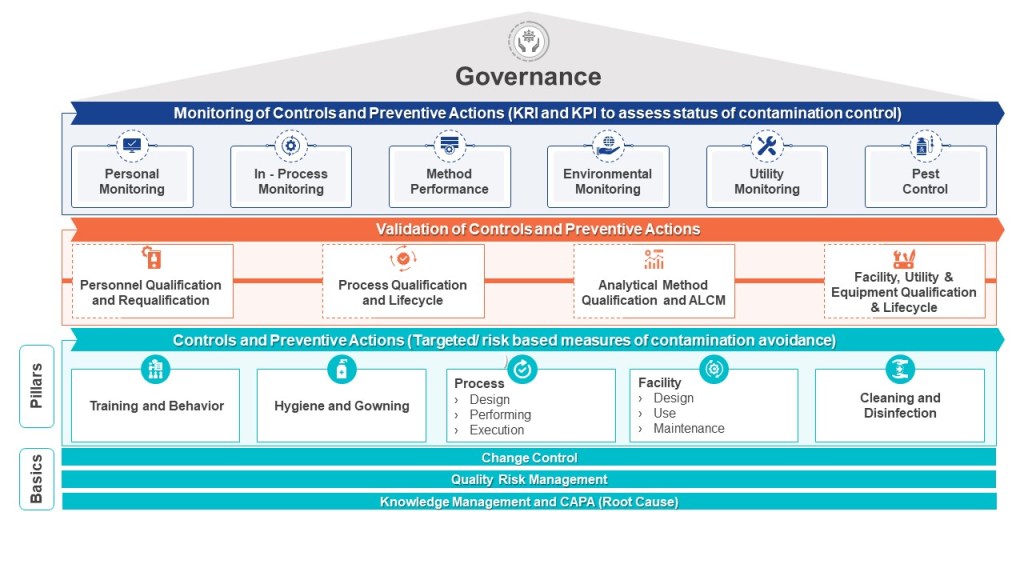
I spoke on Contamination Control, Risk Management and the Quality Management System, having a blast doing so. I was followed by Christa Myers who spoke on “Contamination Control Strategy: From Annex 1 Draft Requirements to Implementation in Practice.” We made a good duo and between the two I hope participants got a real solid idea on how to do this contamination control strategy effectively.
The National Academies of Science, Engineering and Medicine (NASEM) has published a report on resiliency in the medical supply chain that calls for the US Food and Drug Administration (FDA) to publicly disclose the location of all manufacturing facilities that supply ingredients and parts for pharmaceuticals and medical devices approved in the US.
The report recommends FDA publicly disclose information on drug sourcing, manufacturing quality and volume, and capacity for medical products approved for sale in the US.
“The manufacturer for a pharmaceutical drug should be required to publicly disclose the manufacturing location, in particular the FDA Establishment Identifier (FEI), the city, and the country for the finished dosage form (FDF), active pharmaceutical ingredient (API, major excipients, and major packaging and delivery devices for all pharmaceutical drugs sold in the United States,” said a report summary.
The same recommendation also applies to devices; device manufacturers should publicly disclose the manufacturing location in the FEI, the city, and the country involved in the device’s manufacturing and final assembly.
The report also recommends FDA make its risk-based site selection model scores publicly available. Wow, not only would that be good for consumers, I’d love to know where my sites fall in on that scoring.
Hurry up and put this recommendation in place!
Transparency is a good thing and it is shown to increase consumer safety. It is a problem that even a fairly knowledgeable industry professional like myself cannot figure out where generics are manufactured without making a few phone calls and shaking down my friend network. And even then, I’m never positive that I understand where my family’s medicine is coming from and the status of the sites involved in manufacturing and distributing the product.
There has been a lot of press lately for the Abbott Nutrition recall of infant formula. Fundamentally this is a colossal failure of our regulatory program, another failure in a long string of failures, and confirmation that the time is now for radical changes in the agency.
The optimist in me hopes that this calamity will drive needed change, as has been the unfortunate history of regulatory change in this country. I’m just not sure I hold enough confidence in Congress to get the job done.

 Investigations of a Dog