Scale of Remediation Under a Consent Decree

The recent Sanofi Warning Letter certainly gets me thinking about the work of a consent decree and the scale and ‘stickiness‘ within an organization.

Scale of Remediation

In the Sanofi-Genzyme consent decree there were these concentric circles of required activities. At the center was the plant the issue was discovered, the Allston Landing Facility, which had the full brunt of remediation.

The next level out were the plants in Framingham and Northborough. They had remediation actions to be done, including reduced third party oversight for critical activities for a more limited time. The consent decree was on a much reduced scale at these sites.

The next level out was the former Genzyme sites beyond the Massachusetts core. They did alignment to the new standards created as part of the consent decree. Finally the rest of Sanofi, after Sanofi bought Genzyme, pretty much ignored it.

This balkanization meant that the culture across the organization never really changed. The cultural resistance of the site/silos fostered a culture of “us vs. them” mentality within the organization. Without a unified organizational culture, it is much harder to implement and maintain changes across the entire company.

The Slippery Slope: How Quality Improvements Can Erode Over Time

The erosion of quality culture at Sanofi demonstrated by this new Warning Letter isn’t unique to this case. Even when quality improvement initiatives are launched with great enthusiasm and initial success it is not uncommon for these hard-won gains to gradually erode over time, leaving organizations back where they started or even worse off. This phenomenon of “quality backsliding” can be frustrating and costly.

Why Quality Improvements Fade

There are several reasons why quality improvements may deteriorate over time:

Leadership Changes: When key champions of quality initiatives leave or change roles, their successors may not prioritize maintaining those improvements. New leaders often want to make their own mark, potentially abandoning or de-emphasizing existing quality programs.

Budget Cuts: In times of financial pressure, quality improvement efforts are often seen as “nice to have” rather than essential. Resources dedicated to sustaining improvements may be reallocated, leading to a gradual decline in performance.

Complacency: Initial success can breed complacency. Once targets are met, there may be less motivation to continue pushing for further improvements or even maintaining current standards.

Loss of Focus: As new priorities emerge, attention and resources can shift away from quality initiatives. Without ongoing commitment, processes can slowly revert to old, less effective ways of working.

Lack of Standardization: If improvements aren’t fully standardized and integrated into daily operations, they remain dependent on individual efforts rather than becoming part of the organizational culture.

Sanofi Warning Letter

I think we will be evaluating the Sanofi Warning Letter of January 15th, 2025 for a while. Received at the Framingham manufacturing site, this Warning Letter will fuel case studies about the pendulum of compliance and how it can swing perhaps a bit too erratically.

This site is the sister site to the former Genzyme site (last time I checked owned by Resilience and mothballed) in Allston, MA.

The Genzyme consent decree was a significant regulatory action taken by the U.S. Food and Drug Administration (FDA) in response to ongoing manufacturing quality issues at Genzyme’s Allston Landing facility in Massachusetts. Here’s a chronological overview of the key events:

In October 2008, an FDA inspection of the Allston plant led to the issuance of an FDA Form 483, highlighting various deficiencies. In February 2009, the FDA issued a Warning Letter to Genzyme, detailing issues with microbiological contamination control procedures and bioburden monitoring. Then in June 2009, Genzyme detected a virus in one of its bioreactors, leading to a six-week production interruption and subsequent drug shortages. A follow-up FDA inspection in November 2009 revealed ongoing significant problems, resulting in a 49-item Form 483.

On May 24, 2010, Genzyme signed a consent decree with the FDA. The consent decree required Genzyme to adhere to a strict timetable to bring the Allston plant into compliance with FDA regulations.

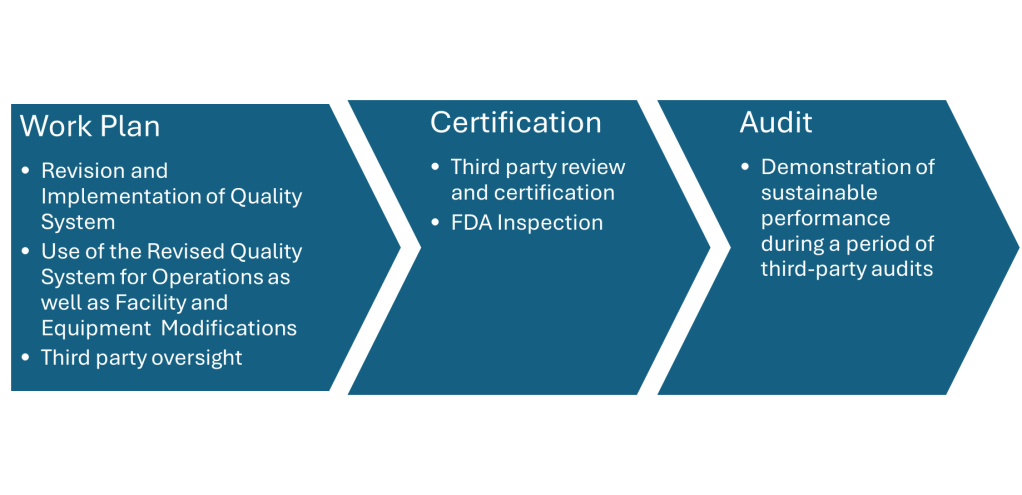
The next few years a comprehensive remediation plan was implemented with ongoing oversight from a third-party consultant. The company then went through a certification process, FDA inspection, and surveillance by a third party for another five years before being able to request an end to the consent decree.

I believe when Sanofi sold the Allston site to Resilience (Sanofi bought Genzyme in 2011), the consent decree had pretty much finished that surveillance period, but I can find no evidence of the company petitioning the court to lift the consent decree. So I have no idea what that means.

The Framingham sites (which this Warning Letter is addressed to) here under the consent decree but to a lesser amount of oversight. So to see this new Warning Letter, for the new construction done in the mid 2010s is pretty sad for me.

There’s a lot to unpack here that is relevant to SUS biologics manufacturing facilities, but that will be a future post. I need to go get a drink.

2024 FDA 483 Data

The FDA has published the 2024 Inspectional Observation Data Sets. I don’t think there are any surprise that on what the inspection observations data for fiscal year 2024 shows and what key GMP inspection themes emerge for drug manufacturers:

Quality Systems and Documentation

Inadequate Procedures and Documentation

  • Failure to establish or follow written procedures for various operations, including quality control, production, and process controls.
  • Lack of complete documentation for investigations, batch records, and laboratory testing.

Quality Control Unit Deficiencies

  • Inadequate responsibilities and authority of the quality control unit.
  • Failure to approve or reject components, products, procedures, or specifications.

Manufacturing and Process Controls

Equipment and Facility Issues

  • Inadequate design, maintenance, or cleaning of manufacturing equipment.
  • Deficiencies in facility maintenance, sanitation, and environmental controls.

Process Validation and Control

  • Lack of adequate process validation, especially for sterile drug products.
  • Insufficient control procedures to monitor and validate manufacturing processes.

Laboratory Controls

Inadequate Laboratory Practices

  • Failure to establish scientifically sound laboratory controls.
  • Deficiencies in test methods validation and stability testing programs.

Component Testing

  • Inadequate testing of drug components and reliance on supplier certificates without proper verification.

Sterile Drug Manufacturing

Aseptic Processing Deficiencies

  • Inadequate procedures and validation for sterile drug products.
  • Deficiencies in environmental monitoring and control systems for aseptic processing areas.

Training and Personnel

Inadequate Employee Training

  • Insufficient training of employees in GMP and specific job function.

Complaint Handling and Product Quality Reviews

Deficient Complaint Procedures

  • Inadequate procedures for handling product complaints.

Annual Product Quality Review

  • Failure to conduct adequate annual product quality reviews.

Equipment Related

Out of the 365 observations that mention equipment, 277 are from just 5 regulations. Let’s take a deeper look.

Reference Number Short Description Long Description Frequency
21 CFR 211.63 Equipment Design, Size and Location Equipment used in the manufacture, processing, packing or holding of drug products is not [of appropriate design] [of adequate size] [suitably located] to facilitate operations for its [intended use] [cleaning and maintenance]. Specifically, *** 85
21 CFR 211.67(a) Cleaning / Sanitizing / Maintenance Equipment and utensils are not [cleaned] [maintained] [sanitized] at appropriate intervals to prevent [malfunctions] [contamination] that would alter the safety, identity, strength, quality or purity of the drug product. Specifically, *** 76
21 CFR 211.67(b) Written procedures not established/followed Written procedures are not [established] [followed] for the cleaning and maintenance of equipment, including utensils, used in the manufacture, processing, packing or holding of a drug product. Specifically, *** 60
21 CFR 211.68(a) Calibration/Inspection/Checking not done Routine [calibration] [inspection] [checking] of [automatic] [mechanical] [electronic] equipment is not performed according to a written program designed to assure proper performance. Specifically, *** 30

Improper design and qualification, improper cleaning, improper calibration and inspections. Yes these take work, but these are all areas that effort can improve.

Limiting and Delaying Inspections – Brands International as Example

I think many of us have been discussing the blatant obstruction demonstrated in the December 2024 Warning Letter to Brands International Corporation, a drug manufacturer located in Ontario, Canada, citing it for limiting and delaying FDA’s inspection. Which it is important to remember congress has said is a big no-no.

I just want to stress that the Quality Manager there had a really bad day, week, month, year.

Good writeup of what to do around building your procedure for interviewing of employees during an inspection over at FDA Law blog.

FDA Continues the Discussion on AI/ML

Many of our organizations are somewhere in the journey of using AI/ML some where in the drug product lifecycle, so it is no surprise that the FDA is continuing the dialogue with the recently published draft of “Considerations for the Use of Artificial Intelligence to Support Regulatory Decision-Making for Drug and Biological Products.”

This draft guidance lays out a solid approach by using a risk-based credibility assessment framework to establish and evaluate the credibility of AI models. This involves:

  • Determining if the model is adequate for the intended use
  • Defining the question of interest the AI model will address
  • Defining the context of use for the AI model
  • Assessing the AI model risk based on model influence and decision consequence
  • Developing a plan to establish model credibility commensurate with the risk
  • Executing the plan and documenting results

I think may of us are in the midst of figuring out how to provide sufficient transparency around AI model development, evaluation, and outputs to support regulatory decision-making and what will be found to be acceptable. This sort of guidance is a good way for the agency to further that discussion and I definitely plan on commenting on this one.

Photo by HARUN BENLu0130 on Pexels.com