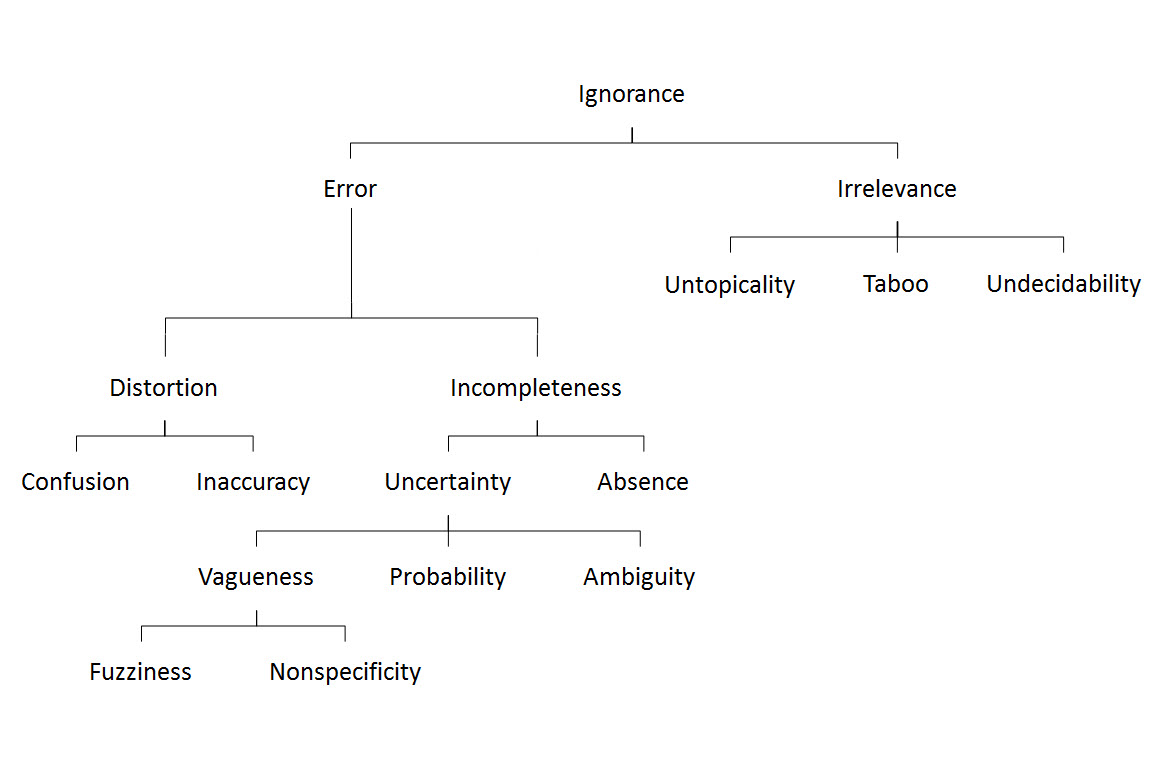
There are a lot of ways to discuss uncertainty, and narrow down on vaguess and unspecificity, following Smithson’s model of Ignorance.
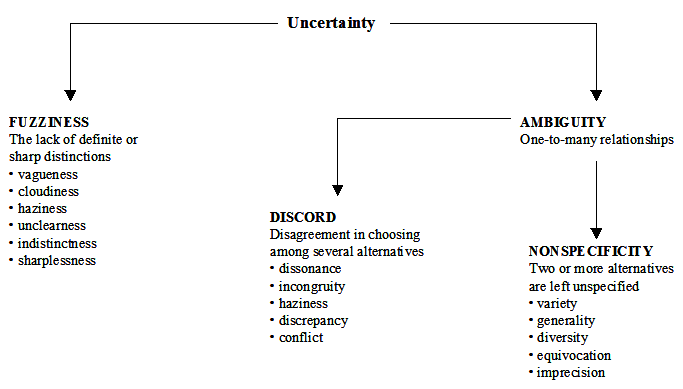
An alternative way to look at uncertainty is offered by Klir, which adds discord to the mix.
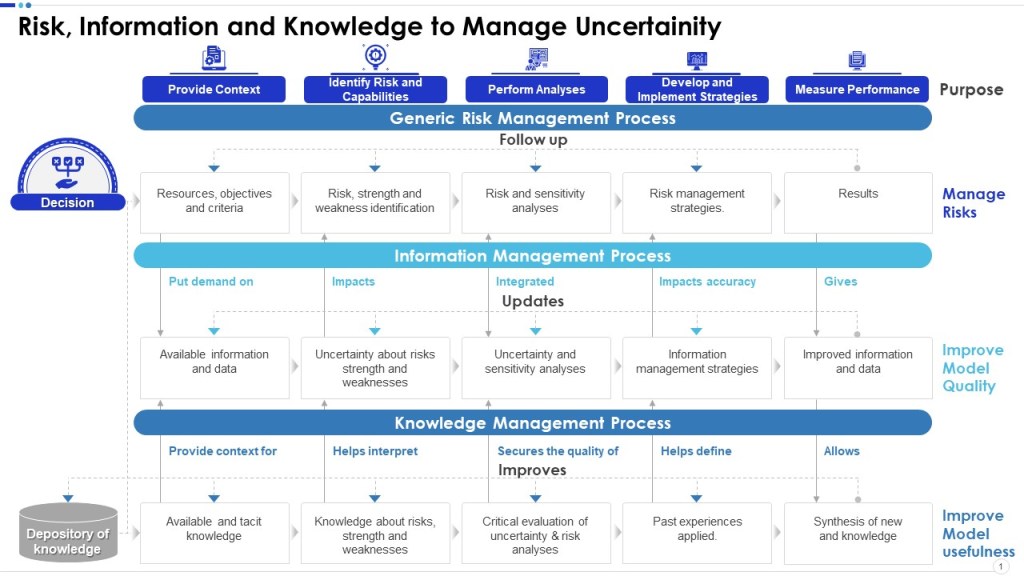
Work-As-Prescribed can be a real avenue for all three of these uncertainties. But by using risk management to examine the possibilities of these uncertainties we can truly interrogate. This is one of the things we mean by risk management and knowledge management being bound at the hip as enablers.
To do this we need to make sure that:
- There is the management of information quality. Management of information quality is crucial in risk management because uncertainty is prevalent. Uncertainty, as a state for which we lack information, means that uncertainty analysis should play an integral part in risk management to ensure that the uncertainty in the risk management process is kept at a feasible level.
- There is explicit management of either existing knowledge that can be applied to improve the quality of the analyses or to improve the knowledge acquired in the process that can be used in the follow-up process. Knowledge management is pivotal to ensuring an effective risk management process by providing context and learning possibilities. In essence, risk management is not just about managing risks – the entire context surrounding the risks must be understood and managed effectively.
 Investigations of a Dog