
In the world of creative problem-solving and idea generation, the Lotus Blossom technique stands out as a powerful and structured approach to brainstorming. Developed by Yasuo Matsumura, a Japanese management consultant, this method combines the free-flowing nature of traditional brainstorming with a systematic framework that encourages deeper exploration of ideas.
How It Works
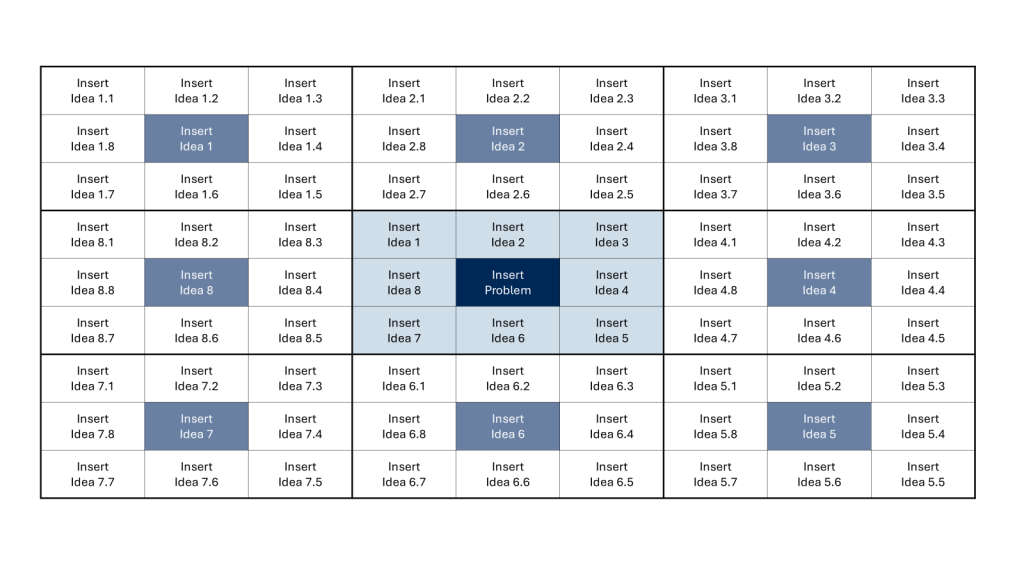
The Lotus Blossom technique uses a visual diagram resembling a lotus flower, hence its name. Here’s a step-by-step breakdown of the process:
- Start with a central idea or problem in the middle of a 3×3 grid.
- Surround the central concept with eight related ideas or themes.
- Take each of these eight ideas and make them the center of their own 3×3 grids.
- Generate eight new ideas for each of these secondary grids.
- Repeat the process until you have a fully bloomed “lotus” of ideas.
By the end of this process, you’ll have generated up to 64 ideas stemming from your original concept.
Benefits of the Lotus Blossom Technique
Structured Creativity: Unlike traditional brainstorming, which can sometimes feel chaotic, the Lotus Blossom method provides a clear structure for idea generation.
Depth and Breadth: This technique encourages both broad thinking and deep exploration of specific themes.
Visual Organization: The diagram format helps visualize connections between ideas and keeps the brainstorming process organized.
Flexibility: It can be used individually or in small groups, making it versatile for various settings.
Tips for Success
To make the most of the Lotus Blossom technique, consider these tips:
- Embrace All Ideas: Don’t self-censor. Even seemingly unrelated or far-fetched ideas can spark innovation.
- Time Management: Set time limits for each phase to maintain momentum and prevent overthinking.
- Iterate and Refine: After completing the diagram, review and refine your ideas. Look for patterns or combinations that might lead to breakthrough solutions.
 Investigations of a Dog