
Descriptive versus Prescriptive Regulatory Guidance and Quality

There are two different ways that language is discussed and taught: descriptive grammar vs. prescriptive grammar. 

Prescriptive grammar describes when people focus on talking about how a language should or ought to be used. Prescriptive grammar tells you how you should speak, and what type of language to avoid. This is commonly found in English classes where the aim is to teach people how to use language in a very particular (typically described as ‘proper’ or ‘correct’) way.

Descriptive grammaron the other hand, focuses on describing the language as it is used, not saying how it should be used. For example, think about a prescriptive rule like Don’t split infinitives. A descriptive grammarian would see a sentence like “To boldly go where no man has gone before” and would try to describe how the mental grammar can cause that ordering of words, rather than saying that the surface form is faulty due to prescriptive rules (which would require the sentence “To go boldly where no man has gone before”). Linguistics takes this approach to language.

We have a similar thing in pharmaceutical regulations, often seen by how the FDA looks at certain issues and how the EMA and PIC/S looks at them.

For example, the FDA is proceeding with draft guidance on setting up inspection testing programs for detecting visible particles in injectable drugs is meant to address this issue from a good manufacturing practices (GMP) standpoint. This is mostly a descriptive approach, as it sets a lot of desirable outcomes but you few strong requirements for how to get there.

The EMA has a draft Annex 1 which lays out a pretty strong set of requirements for exactly how to perform contamination control, telling you exactly what to have and what it should look like.

The difference can be pretty evident when you hear the different regulators discuss their approaches. I’ve certainly heard more than one present or former FDA regulator say that adopting Annex 1 isn’t necessary because the GMPs already have the requirements built in.

You see a similar approach when it comes to QPs or the GCPs.

The prescriptive versus descriptive difference even comes up during inspections. Most people will talk about how the FDA focuses on artifacts and the EMA goes deep on the process.

A similar divide can happen in your quality system where you see different approaches (often a hodge-podge) between controlling the bad and promoting the good.

Being a pragmatist I often see benefits in both approaches (the same way I find value navigating between FDA and EMA approaches). The key thing is being deliberate about it.
Environmental Impact for Risk Assessments

Contamination occurs in two ways:

  • Environmental contamination results from the ingress of contaminants from the surrounding production areas or even from outside environments
  • Cross-contamination is defined as contamination of a starting material, intermediate product or finished product with another starting material or product during production.

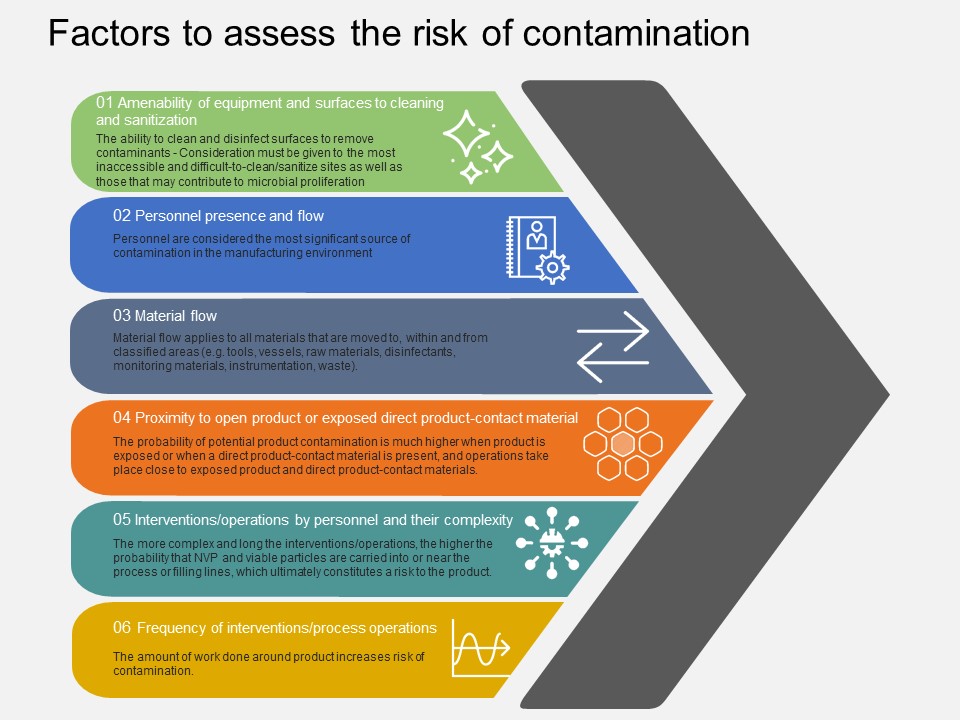
Whether performing risk assessments or impact assessments there are six factors to consider in order to determine environmental impact and to inform contamination control.

  1. Amenability of equipment and surfaces to cleaning and sanitization
  2. Personnel presence and flow
  3. Material flow
  4. Proximity to open product or exposed direct product-contact material
  5. Interventions/operations by personnel and their complexity
  6. Frequency of interventions/process operations.

Increasing Transparency in Drug/Medical Device Manufacturers

The National Academies of Science, Engineering and Medicine (NASEM) has published a report on resiliency in the medical supply chain that calls for the US Food and Drug Administration (FDA) to publicly disclose the location of all manufacturing facilities that supply ingredients and parts for pharmaceuticals and medical devices approved in the US.

The report recommends FDA publicly disclose information on drug sourcing, manufacturing quality and volume, and capacity for medical products approved for sale in the US.
 
“The manufacturer for a pharmaceutical drug should be required to publicly disclose the manufacturing location, in particular the FDA Establishment Identifier (FEI), the city, and the country for the finished dosage form (FDF), active pharmaceutical ingredient (API, major excipients, and major packaging and delivery devices for all pharmaceutical drugs sold in the United States,” said a report summary.
 
The same recommendation also applies to devices; device manufacturers should publicly disclose the manufacturing location in the FEI, the city, and the country involved in the device’s manufacturing and final assembly.
 
The report also recommends FDA make its risk-based site selection model scores publicly available. Wow, not only would that be good for consumers, I’d love to know where my sites fall in on that scoring.

Hurry up and put this recommendation in place!

Transparency is a good thing and it is shown to increase consumer safety. It is a problem that even a fairly knowledgeable industry professional like myself cannot figure out where generics are manufactured without making a few phone calls and shaking down my friend network. And even then, I’m never positive that I understand where my family’s medicine is coming from and the status of the sites involved in manufacturing and distributing the product.

Risk Assessment for Environmental Monitoring

Maybe you’ve been there too, you need to take a risk-based approach to determine environmental monitoring, so you go to a HAACP or FMEA and realize those tools just do not work to provide information to determine how to distribute monitoring to best verify that processes are operating under control.

What you want to do is build a heat map showing the relative probability of contamination in a defined area or room| covering six areas:

  1. Amenability of equipment and surfaces to cleaning and sanitization
  2. Personnel presence and flow
  3. Material flow
  4. Proximity to open product or exposed direct product-contact material
  5. Interventions/operations by personnel and their complexity
  6. Frequency of interventions/process operations.

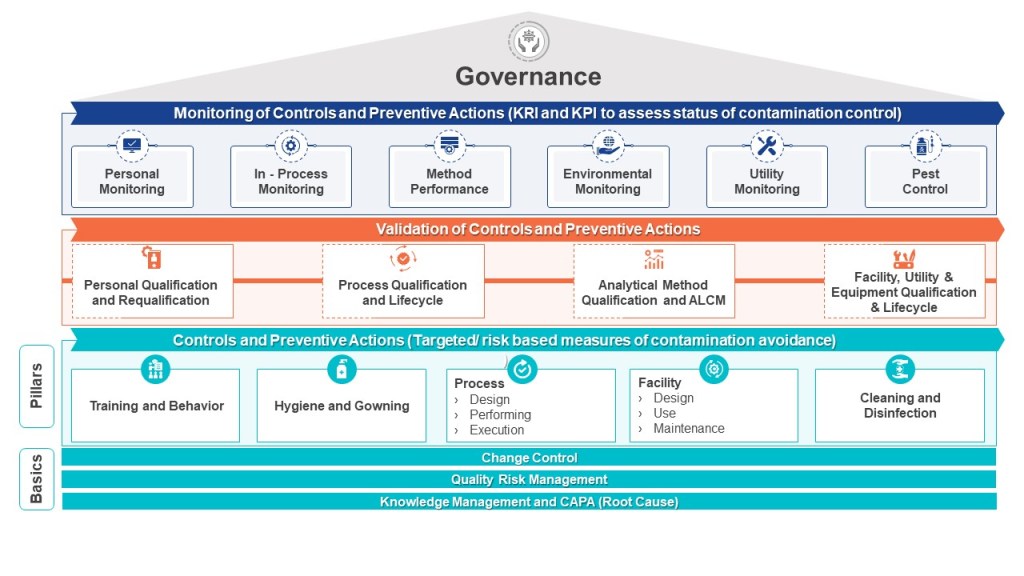
This approach builds off of the design activities and is part of a set of living risk assessments that inform the environmental monitoring part of your contamination control strategy.

Hope to see you in Bethesda to discuss more!

Sackler family sweetens deal to $6billion

I will not be happy with this story until every member of the Sackler family who was involved in the decision-making at Perdue is in jail and the family has lost every dollar they made. But I am heartened to see the failure of their failed bankruptcy ploy leading to the addition of another 1.5 billion in settlement.

Sackler family members to contribute up to $6 billion in latest agreement to resolve opioid claims

For the regulatory state to function there needs to be teeth, and quite frankly we do not see the teeth nearly enough.