Hierarchical Task Analysis

Hierarchical Task Analysis (HTA) is a structured method for understanding and analyzing users’ tasks and goals within a system, product, or service. A technique of task decomposition, it visibly breaks down complex tasks into smaller, more manageable parts.

Key Concepts

  1. Goal-Oriented: HTA starts with identifying the main goal or objective of the task. This goal is then broken down into sub-goals and further into smaller tasks, creating a hierarchical structure resembling a tree.
  2. Hierarchical Structure: The analysis is organized hierarchically, with each level representing a task broken down into more detailed steps. The top level contains the main goal, and subsequent levels contain sub-tasks necessary to achieve that goal.
  3. Iterative Process: HTA is often an iterative process involving multiple rounds of refinement to ensure that all tasks and sub-tasks are accurately captured and organized.

Steps to Conduct HTA

  1. Preparation and Research: Gather information about the system, including user needs, tasks, pain points, and other relevant data. This step involves understanding the target audience and observing how the task or system is used in real-world scenarios.
  2. Define the Use Case: Identify the scope of the analysis and the specific use case to be mapped. This includes understanding what needs to be mapped, why it is being mapped, and which user segment will engage with the experience.
  3. Construct the Initial Flow Chart: Create an initial draft of the flow chart that includes all the steps needed to complete the task. Highlight interactions between different parts of the system.
  4. Develop the Diagram: Break the main task into smaller chunks and organize them into a task sequence. Each chunk should have a unique identifier for easy reference.
  5. Review the Diagram: Validate the diagram’s accuracy and completeness through walkthroughs with stakeholders and users. Gather feedback to refine the analysis.
  6. Report Findings and Recommendations: Identify opportunities for improvement and make recommendations based on the analysis. This step involves further user research and ideation, culminating in a report to share with team members and stakeholders.

Applications of HTA

  • UX Design: HTA helps UX designers understand user interactions and identify pain points, leading to improved user experiences.
  • Human Factors Engineering: Originally used to evaluate and improve human performance, HTA is effective in designing systems that align with human capabilities and limitations.
  • Training and Onboarding: HTA can create training materials and onboarding processes by breaking down complex tasks into manageable steps.
  • Process Improvement: By analyzing and visualizing tasks, HTA helps identify inefficiencies and areas for improvement in existing systems.

Benefits of HTA

  • Comprehensive Understanding: A detailed view of all steps involved in completing a task.
  • Identifies Opportunities for Improvement: Helps pinpoint critical steps, redundant tasks, and user struggles.
  • Facilitates Communication: Offers a clear and structured way to share findings with stakeholders.
  • Supports Complex Task Analysis: Handles detailed and complex tasks effectively, making it suitable for various applications.

Limitations of HTA

  • Not Suitable for All Tasks: HTA is less effective for tasks that are open, volatile, uncertain, complex, and ambiguous (e.g., emergency response, strategic planning).
  • Requires Iterative Refinement: The process can be time-consuming and may require multiple iterations to achieve accuracy.

Hierarchical Task Analysis for Computer System Validation (CSV)

As an example, we will create an HTA for a Computer System Validation (CSV) process through release. Not meant to be exhaustive but meant to illustrate the point.

1. Planning and Preparation

1.1 Develop a Validation Plan

  • Create a comprehensive validation plan outlining objectives, scope, and responsibilities.
  • Include timelines, resource allocation, and project management strategies.

1.2 Conduct Risk Assessment

  • Perform a risk assessment to identify potential risks and their impact on validation.
  • Document mitigation strategies for identified risks.

1.3 Define User Requirements

  • Gather and document User Requirements Specifications (URS).
  • Ensure that the URS aligns with regulatory requirements and business needs.

2. System Design and Configuration

2.1 Develop System Configuration Specifications (SCS)

  • Document the hardware and software configuration needed to support the system.
  • Ensure that the configuration meets the defined URS.

2.2 Installation Qualification (IQ)

  • Verify that the system is installed correctly according to the SCS.
  • Document the installation process and obtain objective evidence.

3. Testing and Verification

3.1 Operational Qualification (OQ)

  • Test the system to ensure it operates according to the URS.
  • Document test results and obtain objective evidence of system performance.

3.2 Performance Qualification (PQ)

  • Conduct performance tests to verify that the system performs consistently under real-world conditions (includes disaster recovery)
  • Document test results and obtain objective evidence.

4. User Readiness

4.1 Write Procedure

  • Create process and procedure to execute within the system
  • Create Training

4.2 Perform User Acceptance Testing

  • Confirmation business process meets requirements
  • Document test results and iteratively improve on process and training

5. Documentation and Reporting

5.1 Create Traceability Matrix

  • Develop a traceability matrix linking requirements to test case.
  • Ensure all requirements have been tested and verified.

5.2 Validation Summary Report

  • Compile a validation summary report detailing the validation process, test results, and any deviations.
  • Obtain approval from stakeholders.

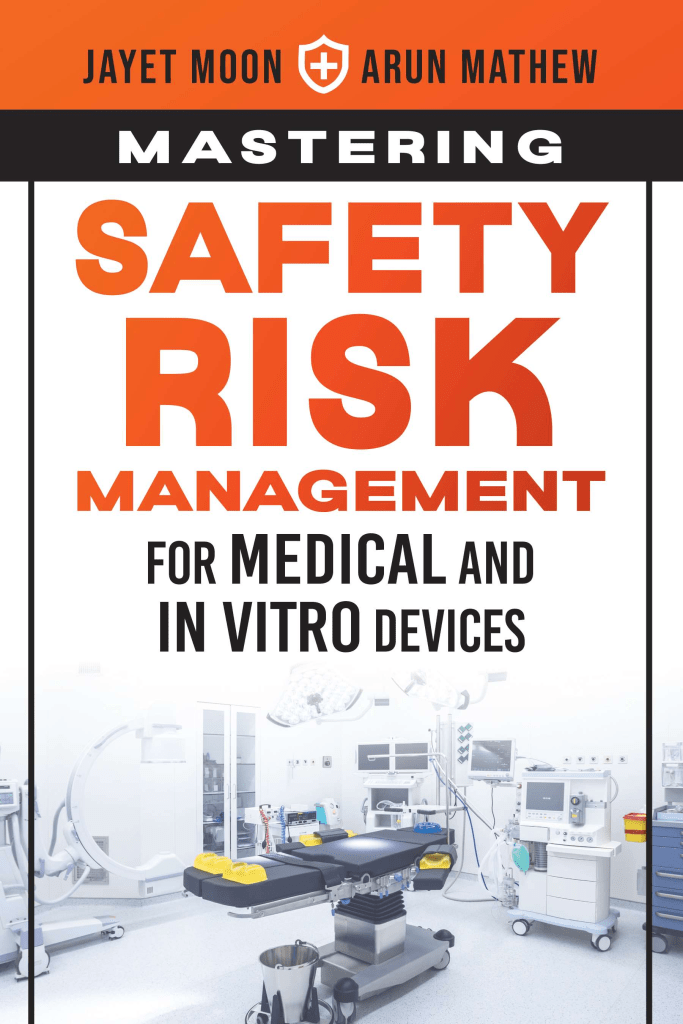
Quality Book Shelf: Mastering Safety Risk Management for Medical and In Vitro Devices

Disclaimer: I have had the privilege of being a former colleague of Jayet’s, and hold him in immense regard.

Mastering Safety Risk Management for Medical and In Vitro Devices by Jayet Moon and Arun Mathew is a comprehensive guide that addresses the critical aspects of risk management in medical and in vitro devices. This book is an essential resource for professionals involved in medical device design, production, and post-market phases, providing a structured approach to ensure product safety and regulatory compliance.

Starting with a solid overview of risk management principles that apply not only to medical devices under ISO13485 but will also teach pharmaceutical folks following ICH Q9 white a bit, this book delivers a heavy dose of knowledge and the benefit of wisdom in applying it.

The book then goes deep into the design assurance process, which is crucial for identifying, understanding, analyzing, and mitigating risks associated with healthcare product design. This foundational approach ensures that practitioners can perform a favorable benefit-risk assessment, which is vital for the safety and efficacy of medical devices.

Strengths

  • Regulatory Compliance: The authors provide detailed guidance on conforming to major international standards such as ISO 13485:2016, ISO 14971:2019, the European Union Medical Device Regulation (MDR), In Vitro Diagnostic Regulation (IVDR), and the US FDA regulations, including the new FDA Quality Management System Regulation (QMSR).
  • Risk Management Tools: The book offers a variety of tools and methodologies for effective risk management. These include risk analysis techniques, risk evaluation methods, and risk control measures, which are explained clearly and practically.
  • Lifecycle Approach: One of the standout features of this book is its lifecycle approach to risk management. It emphasizes that risk management does not end with product design but continues through production and into the post-market phase, ensuring ongoing safety and performance.

The authors, Jayet Moon and Arun Mathew, bring their extensive experience in the field to bear, providing real-world examples and case studies that illustrate the application of risk management principles in various scenarios. This practical approach helps readers to understand how to implement the theoretical concepts discussed in the book. This book is essential for anyone working in medical devices and a good read for other quality life sciences professionals as there is much to draw on here.

Stop it with the 4.0 stuff

Industry 4.0, Quality 4.0, Validaiton 4.0. It is all absurd, so cut it out. Old man rant out.

Seriously though, let’s have a chat about this and why it is a bad practice.

When we put a number after something, we denote a version number. Version numbers have meaning, and individuals react to them in a certain way.

Understanding Version Numbers

A version number is a unique identifier assigned to specific releases of software, hardware, firmware, or drivers. It helps developers and users track changes, improvements, and updates in the product over time. Version numbers are crucial for maintaining software, ensuring compatibility, and managing updates effectively.

Structure of Version Numbers

Version numbers typically follow a structured format, often in the form of major.minor.patch or major.minor.patch.build. Each segment of the version number conveys specific information about the changes made in that release.

Major Version

  • Indicates: Significant changes or overhauls.
  • Example: Going from version 1.0.0 to 2.0.0 might indicate a complete redesign or the addition of major new features.
  • Impact: These changes might not be backward compatible with previous versions.

Minor Version

  • Indicates: Addition of new features or significant improvements that are backward compatible.
  • Example: Updating from version 2.1.0 to 2.2.0 could mean new functionalities were added without altering existing ones.
  • Impact: Users can expect enhancements without losing compatibility with previous minor versions.

Patch Version

  • Indicates: Bug fixes and minor improvements.
  • Example: Moving from version 2.2.1 to 2.2.2 might mean minor bugs were fixed.
  • Impact: These updates are usually safe and recommended as they resolve issues without changing functionality.

Build Number

  • Indicates: Specific builds or iterations, often used internally.
  • Example: Version 2.2.2.45 could indicate the 45th build of this particular version.
  • Impact: Helps in identifying specific builds, useful for debugging and internal tracking.

Semantic Versioning

One of the most widely adopted systems for versioning is Semantic Versioning (SemVer). It uses a three-part version number: major.minor.patch. This system provides a clear and standardized way to communicate the nature of changes in each release.

  • Major: Incompatible API changes.
  • Minor: Backward-compatible functionality added.
  • Patch: Backward-compatible bug fixes.

Importance of Version Numbers

  1. Tracking Changes: Helps developers and users keep track of what changes have been made and when.
  2. Compatibility: Ensures that users know whether new versions will work with their current setup.
  3. Support and Maintenance: Facilitates efficient troubleshooting and support by identifying the exact version in use.
  4. Update Management: Allows users to determine if they need to update their software to the latest version.

Why I Dislike Quality 4.0, Validation 4.0, and the Like

It is meant to denote a major version, but it’s not, for a lot of reasons:

  1. These concepts are more growth of design boxes than major changes. To use version control lingo, there is a lot of backward compatibility.
  2. They are not definitive. There are absolutes and best practices and onward progression.
  3. Each company tends to be in different places in different ways, and there are many maturity scales, not just one.

Maturity models are a better option. Each of these buckets has multiple scales, each of which needs to be evaluated and improved.

This is why I like cGMP

The “c” in cGMP stands for “current,” which signifies that the Good Manufacturing Practices (GMP) being referred to are up-to-date with the latest standards and technologies. This differentiation emphasizes that companies must use the most recent and advanced technologies and systems to comply with the regulations set forth by the FDA. The term cGMP ensures that manufacturing practices are not only good but also current, reflecting ongoing improvements and updates in the industry.

Shipping Container Validation

Follow a systematic process to validate a shipping container by involving the traditional three main stages: Design Qualification (DQ), Operational Qualification (OQ), and Performance Qualification (PQ).

Design Qualification (DQ)

The DQ stage involves establishing that the shipping container design meets the user requirements and regulatory standards. Key steps include:

  1. Define user requirement specifications (URS) for the container, including temperature range, duration of transport, and product-specific needs.
  2. Review the container design specifications provided by the manufacturer.
  3. Assess the container’s compatibility with the pharmaceutical product and its storage requirements.
  4. Evaluate the container’s compliance with relevant regulatory guidelines and standards.

Operational Qualification (OQ)

OQ involves testing the container under controlled conditions to ensure it operates as intended. This stage includes:

  1. Conducting empty container tests to verify basic functionality.
  2. Testing temperature control systems and monitoring devices.
  3. Evaluating the container’s ability to maintain required conditions under various environmental scenarios.
  4. Assessing the ease of use and any potential operational issues.

Performance Qualification (PQ)

PQ is the most critical stage, involving real-world testing to ensure the container performs as required under actual shipping conditions. Steps include:

  1. Develop a detailed PQ protocol that outlines test conditions, acceptance criteria, and data collection methods.
  2. Conduct shipping trials using actual or simulated product loads.
  3. Test the container under worst-case scenarios, including extreme temperature conditions and extended shipping durations.
  4. Monitor and record temperature data throughout the shipping process.
  5. Assess the impact of various handling conditions (e.g., vibration, shock) on container performance.
  6. Evaluate the container’s performance across different shipping lanes and modes of transport.

Additional Considerations

  • Associated Materials and Equipment: Ensure all associated materials (e.g., coolants, packaging materials) and monitoring equipment are also qualified.
  • Re-qualification: For reusable containers, establish a process for periodic re-qualification to ensure ongoing performance.
  • Documentation: Maintain comprehensive documentation of all qualification stages, including test results, data analysis, and conclusions.
  • Risk Assessment: Conduct a risk assessment to identify potential failure modes and mitigation strategies.

Best Practices

  1. Use a risk-based approach to determine the extent of testing required for each container type and shipping scenario.
  2. Consider seasonal variations in ambient temperature profiles when designing qualification studies.
  3. Utilize pre-qualified containers from reputable suppliers when possible to streamline the validation process.
  4. Implement a robust change control process to manage any container or shipping process modifications post-validation.
  5. Regularly review and update validation documentation to reflect any changes in regulatory requirements or shipping conditions.

Following this comprehensive approach, you can ensure that your shipping containers are properly validated for pharmaceutical transport, maintaining product quality and integrity throughout the supply chain. Validation is an ongoing process, and containers should be periodically reassessed to ensure continued compliance and performance.

What do I need a Toxicologist for in the GMPs

Working on a job description for a toxicologist. Here’s what I have so far: what am I missing on the GMP side (not the GCP, GVP, or GLP sides).

A toxicologist plays several important roles in GMP activities, including in cleaning validation and extractable/leachable (E&L) studies for pharmaceutical manufacturing:

For cleaning validation:

  1. Establishing safety thresholds: Toxicologists help determine the Permitted Daily Exposure (PDE) or Acceptable Daily Exposure (ADE) limits for residual substances. These limits are crucial for setting acceptance criteria in cleaning validation.
  2. Risk assessment: They evaluate the potential health risks associated with residual substances that may remain after cleaning processes.
  3. Determining safety factors: Toxicologists apply appropriate safety factors when calculating acceptable residue limits, considering factors like route of administration and patient population.
  4. Reviewing toxicological data: They analyze available toxicity data on active ingredients, excipients, and cleaning agents to inform safety assessments.

For extractable and leachable studies:

  1. Toxicological evaluation: Toxicologists assess the potential health impacts of identified extractables and leachables from packaging materials or manufacturing equipment.
  2. Setting thresholds: They help establish Safety Concern Thresholds (SCT) and Analytical Evaluation Thresholds (AET) for E&L studies.
  3. Risk characterization: Toxicologists evaluate the toxicological significance of detected leachables in relation to patient exposure.
  4. Providing expertise on regulatory guidelines: They ensure studies comply with regulatory expectations regarding toxicological risk assessment.
  5. Interpreting study results: Toxicologists help interpret the significance of E&L findings in the context of patient safety.

Toxicologists provide critical expertise in assessing the potential health impacts of trace contaminants or leached substances. They also ensure that cleaning processes and packaging materials do not introduce unacceptable risks to patient safety. Their input is essential for developing scientifically sound and regulatorily compliant approaches to these critical pharmaceutical quality and safety aspects.