Understanding the Differences Between Group, Family, and Bracket Approaches in CQV Activities

Strategic approaches like grouping, family classification, and bracketing are invaluable tools in the validation professional’s toolkit. While these terms are sometimes used interchangeably, they represent distinct strategies with specific applications and regulatory considerations.

Grouping, Family and Bracket

Equipment Grouping – The Broader Approach

Equipment grouping (sometimes called matrixing) represents a broad risk-based approach where multiple equipment items are considered equivalent for validation purposes. This strategy allows companies to optimize validation efforts by categorizing equipment based on design, functionality, and risk profiles. The key principle behind grouping is that equipment with similar characteristics can be validated using a common approach, reducing redundancy in testing and documentation.

Example – Manufacturing

Equipment grouping might apply to multiple buffer preparation tanks that share fundamental design characteristics but differ in volume or specific features. For example, a facility might have six 500L buffer preparation tanks from the same manufacturer, used for various buffer preparations throughout the purification process. These tanks might have identical mixing technologies, materials of construction, and cleaning processes.

Under a grouping approach, the manufacturer could develop one validation plan covering all six tanks. This plan would outline the overall validation strategy, including the rationale for grouping, the specific tests to be performed, and how results will be evaluated across the group. The plan might specify that while all tanks will undergo full Installation Qualification (IQ) to verify proper installation and utility connections, certain Operational Qualification (OQ) and Performance Qualification (PQ) tests can be consolidated.

The mixing efficiency test might be performed on only two tanks (e.g., the first and last installed), with results extrapolated to the entire group. However, critical parameters like temperature control accuracy would still be tested individually for each tank. The grouping approach would also allow for the application of the same cleaning validation protocol across all tanks, with appropriate justification. This might involve developing a worst-case scenario for cleaning validation based on the most challenging buffer compositions and applying the results across all tanks in the group.

Examples – QC

In the QC laboratory setting, equipment grouping might involve multiple identical analytical instruments such as HPLCs used for release testing. For instance, five HPLC systems of the same model, configured with identical detectors and software versions, might be grouped for qualification purposes.

The QC group could justify standardized qualification protocols across all five systems. This would involve developing a comprehensive protocol that covers all aspects of HPLC qualification but allows for efficient execution across the group. For example, software validation might be performed once and applied to all systems, given that they use identical software versions and configurations.

Consolidated performance testing could be implemented where appropriate. This might involve running system suitability tests on a representative sample of HPLCs rather than exhaustively on each system. However, critical performance parameters like detector linearity would still be verified individually for each HPLC to ensure consistency across the group.

Uniform maintenance and calibration schedules could be established for the entire group, simplifying ongoing management and reducing the risk of overlooking maintenance tasks for individual units. This approach ensures consistent performance across all grouped HPLCs while optimizing resource utilization.

Equipment grouping provides broad flexibility but requires careful consideration of which validation elements truly can be shared versus those that must remain equipment-specific. The key to successful grouping lies in thorough risk assessment and scientific justification for any shared validation elements.

Family Approach: Categorizing Based on Common Characteristics

The family approach represents a more structured categorization methodology where equipment is grouped based on specific common characteristics including identical risk classification, common intended purpose, and shared design and manufacturing processes. Family grouping typically applies to equipment from the same manufacturer with minor permissible variations. This approach recognizes that while equipment within a family may not be identical, their core functionalities and critical quality attributes are sufficiently similar to justify a common validation approach with specific considerations for individual variations.

Example – Manufacturing

A family approach might apply to chromatography skids designed for different purification steps but sharing the same basic architecture. For example, three chromatography systems from the same manufacturer might have different column sizes and flow rates but identical control systems, valve technologies, and sensor types.

Under a family approach, base qualification protocols would be identical for all three systems. This core protocol would cover common elements such as control system functionality, alarm systems, and basic operational parameters. Each system would undergo full IQ verification to ensure proper installation, utility connections, and compliance with design specifications. This individual IQ is crucial as it accounts for the specific installation environment and configuration of each unit.

OQ testing would focus on the specific operating parameters for each unit while leveraging a common testing framework. All systems might undergo the same sequence of tests (e.g., flow rate accuracy, pressure control, UV detection linearity), but the acceptance criteria and specific test conditions would be tailored to each system’s operational range. This approach ensures that while the overall qualification strategy is consistent, each system is verified to perform within its specific design parameters.

Shared control system validation could be leveraged across the family. Given that all three systems use identical control software and hardware, a single comprehensive software validation could be performed and applied to all units. This might include validation of user access controls, data integrity features, and critical control algorithms. However, system-specific configuration settings would still need to be verified individually.

Example – QC

In QC testing, a family approach could apply to dissolution testers that serve the same fundamental purpose but have different configurations. For instance, four dissolution testers might have the same underlying technology and control systems but different numbers of vessels or sampling configurations.

The qualification strategy could include common template protocols with configuration-specific appendices. This approach allows for a standardized core qualification process while accommodating the unique features of each unit. The core protocol might cover elements common to all units, such as temperature control accuracy, stirring speed precision, and basic software functionality.

Full mechanical verification would be performed for each unit to account for the specific configuration of vessels and sampling systems. This ensures that despite being part of the same family, each unit’s unique physical setup is thoroughly qualified.

A shared software validation approach could be implemented, focusing on the common control software used across all units. This might involve validating core software functions, data processing algorithms, and report generation features. However, configuration-specific software settings and any unique features would require individual verification.

Configuration-specific performance testing would be conducted to address the unique aspects of each unit. For example, a dissolution tester with automated sampling would undergo additional qualification of its sampling system, while units with different numbers of vessels might require specific testing to ensure uniform performance across all vessels.

The family approach provides a middle ground, recognizing fundamental similarities while still acknowledging equipment-specific variations that must be qualified independently. This strategy is particularly useful in biologics manufacturing and QC, where equipment often shares core technologies but may have variations to accommodate different product types or analytical methods.

Bracketing Approach: Strategic Testing Reduction

Bracketing represents the most targeted approach, involving the selective testing of representative examples from a group of identical equipment to reduce the overall validation burden. This approach requires rigorous scientific justification and risk assessment to demonstrate that the selected “brackets” truly represent the performance of all units. Bracketing is based on the principle that if the extreme cases (brackets) meet acceptance criteria, units falling within these extremes can be assumed to comply as well.

Example – Manufacturing

Bracketing might apply to multiple identical bioreactors. For example, a facility might have six 2000L single-use bioreactors of identical design, from the same manufacturing lot, installed in similar environments, and operated by the same control system.

Under a bracketing approach, all bioreactors would undergo basic installation verification to ensure proper setup and connection to utilities. This step is crucial to confirm that each unit is correctly installed and ready for operation, regardless of its inclusion in comprehensive testing.

Only two bioreactors (typically the minimum and maximum in the installation sequence) might undergo comprehensive OQ testing. This could include detailed evaluation of temperature control systems, agitation performance, gas flow accuracy, and pH/DO sensor functionality. The justification for this approach would be based on the identical design and manufacturing of the units, with the assumption that any variation due to manufacturing or installation would be most likely to manifest in the first or last installed unit.

Temperature mapping might be performed on only two units with justification that these represent “worst-case” positions. For instance, the units closest to and farthest from the HVAC outlets might be selected for comprehensive temperature mapping studies. These studies would involve placing multiple temperature probes throughout the bioreactor vessel and running temperature cycles to verify uniform temperature distribution and control.

Process performance qualification might be performed on a subset of reactors. This could involve running actual production processes (or close simulations) on perhaps three of the six reactors – for example, the first installed, the middle unit, and the last installed. These runs would evaluate critical process parameters and quality attributes to demonstrate consistent performance across the bracketed group.

Example – QC

Bracketing might apply to a set of identical incubators used for microbial testing. For example, eight identical incubators might be installed in the same laboratory environment.

The bracketing strategy could include full IQ documentation for all units to ensure proper installation and basic functionality. This step verifies that each incubator is correctly set up, connected to appropriate utilities, and passes basic operational checks.

Comprehensive temperature mapping would be performed for only the first and last installed units. This intensive study would involve placing calibrated temperature probes throughout the incubator chamber and running various temperature cycles to verify uniform heat distribution and precise temperature control. The selection of the first and last units is based on the assumption that any variations due to manufacturing or installation would be most likely to appear in these extreme cases.

Challenge testing on a subset representing different locations in the laboratory might be conducted. This could involve selecting incubators from different areas of the lab (e.g., near windows, doors, or HVAC vents) for more rigorous performance testing. These tests might include recovery time studies after door openings, evaluation of temperature stability under various load conditions, and assessment of humidity control (if applicable).

Ongoing monitoring that continuously verifies the validity of the bracketing approach would be implemented. This might involve rotating additional performance tests among all units over time or implementing a program of periodic reassessment to confirm that the bracketed approach remains valid. For instance, annual temperature distribution studies might be rotated among all incubators, with any significant deviations triggering a reevaluation of the bracketing strategy.

Key Differences and Selection Criteria

The primary differences between these approaches can be summarized in several key areas:

Scope and Application

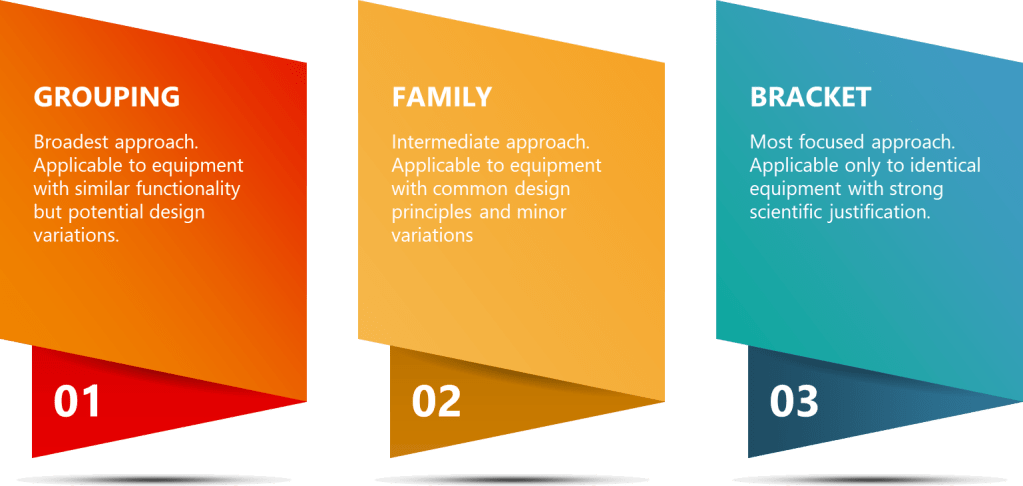
Grouping is the broadest approach, applicable to equipment with similar functionality but potential design variations. This strategy is most useful when dealing with a wide range of equipment that serves similar purposes but may have different manufacturers or specific features. For example, in a large biologics facility, grouping might be applied to various types of pumps used throughout the manufacturing process. While these pumps may have different flow rates or pressure capabilities, they could be grouped based on their common function of fluid transfer and similar cleaning requirements.

The Family approach is an intermediate strategy, applicable to equipment with common design principles and minor variations. This is particularly useful for equipment from the same manufacturer or product line, where core technologies are shared but specific configurations may differ. In a QC laboratory, a family approach might be applied to a range of spectrophotometers from the same manufacturer. These instruments might share the same fundamental optical design and software platform but differ in features like sample capacity or specific wavelength ranges.

Bracketing is the most focused approach, applicable only to identical equipment with strong scientific justification. This strategy is best suited for situations where multiple units of the exact same equipment model are installed under similar conditions. For example, in a fill-finish operation, bracketing might be applied to a set of identical lyophilizers installed in the same clean room environment.

Testing Requirements

In a Grouping approach, each piece typically requires individual testing, but with standardized protocols. This means that while the overall validation strategy is consistent across the group, specific tests are still performed on each unit to account for potential variations. For instance, in a group of buffer preparation tanks, each tank would undergo individual testing for critical parameters like temperature control and mixing efficiency, but using a standardized testing protocol developed for the entire group.

The Family approach involves core testing that is standardized, with variations to address equipment-specific features. This allows for a more efficient validation process where common elements are tested uniformly across the family, while specific features of each unit are addressed separately. In the case of a family of chromatography systems, core functions like pump operation and detector performance might be tested using identical protocols, while specific column compatibility or specialized detection modes would be validated individually for units that possess these features.

Bracketing involves selective testing of representative units with extrapolation to the remaining units. This approach significantly reduces the overall testing burden but requires robust justification. For example, in a set of identical bioreactors, comprehensive performance testing might be conducted on only the first and last installed units, with results extrapolated to the units in between. However, this approach necessitates ongoing monitoring to ensure the continued validity of the extrapolation.

Documentation Needs

Grouping requires individual documentation with cross-referencing to shared elements. Each piece of equipment within the group would have its own validation report, but these reports would reference a common validation master plan and shared testing protocols. This approach ensures that while each unit is individually accounted for, the efficiency gains of the grouping strategy are reflected in the documentation.

The Family approach typically involves standardized core documentation with equipment-specific supplements. This might manifest as a master validation report for the entire family, with appendices or addenda addressing the specific features or configurations of individual units. This structure allows for efficient document management while still providing a complete record for each piece of equipment.

Bracketing necessitates a comprehensive justification document plus detailed documentation for tested units. This approach requires the most rigorous upfront documentation to justify the bracketing strategy, including risk assessments and scientific rationale. The validation reports for the tested “bracket” units would be extremely detailed, as they serve as the basis for qualifying the entire set of equipment.

Risk Assessment

In a Grouping approach, the risk assessment is focused on demonstrating equivalence for specific validation purposes. This involves a detailed analysis of how variations within the group might impact critical quality attributes or process parameters. The risk assessment must justify why certain tests can be standardized across the group and identify any equipment-specific risks that need individual attention.

For the Family approach, risk assessment is centered on evaluating permissible variations within the family. This involves a thorough analysis of how differences in specific features or configurations might impact equipment performance or product quality. The risk assessment must clearly delineate which aspects of validation can be shared across the family and which require individual consideration.

Bracketing requires the most rigorous risk assessment to justify the extrapolation of results from tested units to non-tested units. This involves a comprehensive evaluation of potential sources of variation between units, including manufacturing tolerances, installation conditions, and operational factors. The risk assessment must provide a strong scientific basis

Criteria Group Approach Family Approach Bracket Approach
Scope and Application Broadest approach. Applicable to equipment with similar functionality but potential design variations. Intermediate approach. Applicable to equipment with common design principles and minor variations. Most focused approach. Applicable only to identical equipment with strong scientific justification.
Equipment Similarity Similar functionality, potentially different manufacturers or features. Same manufacturer or product line, core technologies shared, specific configurations may differ. Identical equipment models installed under similar conditions.
Testing Requirements Each piece requires individual testing, but with standardized protocols. Core testing is standardized, with variations to address equipment-specific features. Selective testing of representative units with extrapolation to the remaining units.
Documentation Needs Individual documentation with cross-referencing to shared elements. Standardized core documentation with equipment-specific supplements. Comprehensive justification document plus detailed documentation for tested units.
Risk Assessment Focus Demonstrating equivalence for specific validation purposes. Evaluating permissible variations within the family. Most rigorous assessment to justify extrapolation of results.
Flexibility High flexibility to accommodate various equipment types. Moderate flexibility within a defined family of equipment. Low flexibility, requires high degree of equipment similarity.
Resource Efficiency Moderate efficiency gains through standardized protocols. High efficiency for core validation elements, with specific testing as needed. Highest potential for efficiency, but requires strong justification.
Regulatory Considerations Generally accepted with proper justification. Well-established approach, often preferred for equipment from same manufacturer. Requires most robust scientific rationale and ongoing verification.
Ideal Use Case Large facilities with diverse equipment serving similar functions. Product lines with common core technology but varying features. Multiple identical units in same facility or laboratory.

The Effective Date of Documents

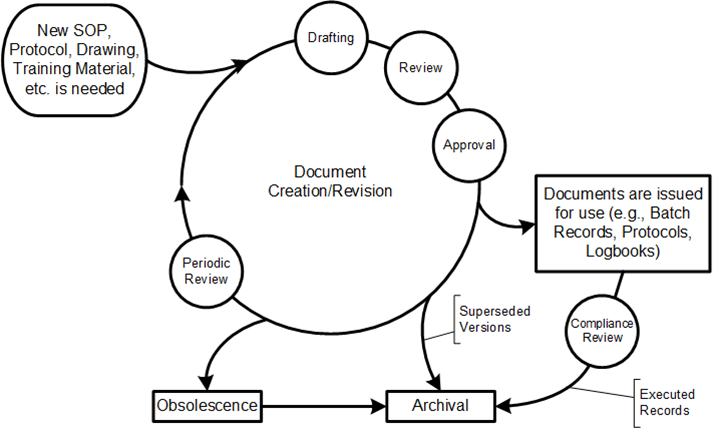
Document change control has a core set of requirements for managing critical information throughout its lifecycle. These requirements encompass:

  1. Approval of documents based on fit-for-purpose and fit-for-use before issuance
  2. Review and document updates as needed (including reapprovals)
  3. Managing changes and revision status
  4. Ensuring availability of current versions
  5. Maintaining document legibility and identification
  6. Controlling distribution of external documents

This lifecycle usually has three critical dates associated with approval:

  • Approval Date: When designated authorities have reviewed and approved the document
  • Issuance Date: When the document is released into the document management system
  • Effective Date: When the document officially takes effect and must be followed

These dates are dependent on the type of document and can change as a result of workflow decisions.

Type of DocumentApproval DateIssuance dateEffective Date
Functional Date Approved by final approver (sequential or parallel)Date Training Made AvailableEnd of Training Period
RecordDate Approved by final approver (sequential or parallel)Usually automated to be same as Date ApprovedUsually same as Date Approved
ReportDate Approved by final approver (sequential or parallel)Usually automated to be same as Date ApprovedUsually same as Date Approved

At the heart of the difference between these three days is the question of implementation and the Effective Date. At its core, the effective date is the date on which the requirements, instructions, or obligations in a document become binding for all affected parties. In the context of GxP document management, this represents the moment when:

  • Previous versions of the document are officially superseded
  • All operations must follow the new procedures outlined in the document
  • Training on the new procedures must be completed
  • Compliance audits will use the new document as their reference standard

Why Training Periods Matter in GxP Environments

One of the most frequently overlooked aspects of document management is the implementation period between document approval and its effective date. This period serves a critical purpose: ensuring that all affected personnel understand the document’s content and can execute its requirements correctly before it becomes binding.

In order to implement a new process change in a compliant manner, people must be trained in the new procedure before the document becomes effective. This fundamental principle ensures that by the time a new process goes “live,” everyone is prepared to perform the revised activity correctly and training records have been completed. Without this preparation period, organizations risk introducing non-compliance at the very moment they attempt to improve quality.

The implementation period bridges the gap between formal approval and practical application, addressing the human element of quality systems that automated solutions alone cannot solve.

Selecting Appropriate Implementation Periods

When configuring document change control systems, organizations must establish clear guidelines for determining implementation periods. The most effective approach is to build this determination into the change control workflow itself.

Several factors should influence the selection of implementation periods:

  • Urgency: In cases of immediate risk to patient safety or product quality, implementation periods may be compressed while still ensuring adequate training.
  • Risk Assessment: Higher-risk changes typically require more extensive training and therefore longer implementation periods.
  • Operational Impact: Changes affecting critical operations may need carefully staged implementation.
  • Training Complexity: Documents requiring hands-on training necessitate longer periods than read-only procedures.
  • Resource Availability: Consider the availability of trainers and affected personnel

Determining Appropriate Training Periods

The time required for training should be determined during the impact assessment phase of the change approval process. This assessment should consider:

  1. The number of people requiring training
  2. The complexity of the procedural changes
  3. The type of training required (read-only versus observed assessment)
  4. Operational constraints (shift patterns, production schedules)

Many organizations standardize on a default period (typically two weeks), but the most effective approach tailors the implementation period to each document’s specific requirements. For critical processes with many stakeholders, longer periods may be necessary, while simple updates affecting few staff might require only minimal time.

Consider this scenario: Your facility operates two shifts with 70 people during the day and 30 at night. An updated SOP requires all operators to complete not just read-only training but also a one-hour classroom assessment. If manufacturing schedules permit only 10 operators per shift to attend training, you would need a minimum of 7 days before the document becomes effective. Without this calculated implementation period, every operator would instantly become non-compliant when the new procedure takes effect.

Early Use of Documents

The distinction between a procedure’s approval date and its effective date serves a critical purpose. This gap allows for proper training and implementation before the procedure becomes binding. However, there are specific circumstances when personnel might appropriately use a procedure they’ve been trained on before its official effective date.

1. Urgent Safety or Quality Concerns

When there is an immediate risk to patient safety or product quality, the time between approval and effectiveness may be compressed. For these cases there should be a mechanism to move up the effective date.

In such cases, the organization should prioritize training and implementation while still maintaining proper documentation of the accelerated timeline.

2. During Implementation Period for Training Purposes

The implementation period itself is designed to allow for training and controlled introduction of the new procedure. During this time, a limited number of trained personnel may need to use the new procedure to:

  • Train others on the new requirements
  • Test the procedure in a controlled environment
  • Prepare systems and equipment for the full implementation

These are all tasks that should be captured in the change control.

3. For Qualification and Validation Activities

During qualification protocol execution, procedures that have been approved but are not yet effective may be used under controlled conditions to validate systems, equipment, or processes. These activities typically occur before full implementation and are carefully documented to demonstrate compliance. Again these are captured in the change control and appropriate validation plan.

In some regulatory contexts, such as IRB approvals in clinical research, there are provisions for “approval with conditions” where certain activities may proceed before all requirements are finalized2. While not directly analogous to procedure implementation, this demonstrates regulatory recognition of staged implementation approaches.

Required Controls When Using Pre-Effective Procedures

If an organization determines it necessary to use an approved but not yet effective procedure, the following controls should be in place:

  1. Documented Risk Assessment: A risk assessment should be conducted and documented to justify the early use of the procedure, especially considering potential impacts on product quality, data integrity, or patient safety.
  2. Authorization: Special authorization from management and quality assurance should be obtained and documented.
  3. Verification of Training: Evidence must be available confirming that the individuals using the procedure have been properly trained and assessed on the new requirements.

What About Parallel Compliance with Current Effective Procedures?

In all cases, the currently effective procedure must still be followed until the new procedure’s effective date. However there are changes, usually as a result of process improvement, usually in knowledge work processes where it is possible to use parts of the new procedure. For example, the new version of the deviation procedure adds additional requirements for assessing the deviation, or a new risk management tool is rolled out. In these cases you can meet the new compliance path without violating the current compliance path. The organization should demonstrate how both compliance paths are being maintained.

In cases where the new compliance path does not contain the old, but instead offers a new pathway, it is critical to maintain one way of work-as-prescribed and the effective date is a solid line.

Organizations should remember that the implementation period exists to ensure a smooth, compliant transition between procedures. Any exception to this standard approach should be carefully considered, well-justified, and thoroughly documented to maintain GxP compliance and minimize regulatory risk.

Beyond Documents: Embracing Data-Centric Thinking

We live in a fascinating inflection point in quality management, caught between traditional document-centric approaches and the emerging imperative for data-centricity needed to fully realize the potential of digital transformation. For several decades, we’ve been in a process that continues to accelerate through a technology transition that will deliver dramatic improvements in operations and quality. This transformation is driven by three interconnected trends: Pharma 4.0, the Rise of AI, and the shift from Documents to Data.

The History and Evolution of Documents in Quality Management

The history of document management can be traced back to the introduction of the file cabinet in the late 1800s, providing a structured way to organize paper records. Quality management systems have even deeper roots, extending back to medieval Europe when craftsman guilds developed strict guidelines for product inspection. These early approaches established the document as the fundamental unit of quality management—a paradigm that persisted through industrialization and into the modern era.

The document landscape took a dramatic turn in the 1980s with the increasing availability of computer technology. The development of servers allowed organizations to store documents electronically in centralized mainframes, marking the beginning of electronic document management systems (eDMS). Meanwhile, scanners enabled conversion of paper documents to digital format, and the rise of personal computers gave businesses the ability to create and store documents directly in digital form.

In traditional quality systems, documents serve as the backbone of quality operations and fall into three primary categories: functional documents (providing instructions), records (providing evidence), and reports (providing specific information). This document trinity has established our fundamental conception of what a quality system is and how it operates—a conception deeply influenced by the physical limitations of paper.

Photo by Andrea Piacquadio on Pexels.com

Breaking the Paper Paradigm: Limitations of Document-Centric Thinking

The Paper-on-Glass Dilemma

The maturation path for quality systems typically progresses mainly from paper execution to paper-on-glass to end-to-end integration and execution. However, most life sciences organizations remain stuck in the paper-on-glass phase of their digital evolution. They still rely on the paper-on-glass data capture method, where digital records are generated that closely resemble the structure and layout of a paper-based workflow. In general, the wider industry is still reluctant to transition away from paper-like records out of process familiarity and uncertainty of regulatory scrutiny.

Paper-on-glass systems present several specific limitations that hamper digital transformation:

  1. Constrained design flexibility: Data capture is limited by the digital record’s design, which often mimics previous paper formats rather than leveraging digital capabilities. A pharmaceutical batch record system that meticulously replicates its paper predecessor inherently limits the system’s ability to analyze data across batches or integrate with other quality processes.
  2. Manual data extraction requirements: When data is trapped in digital documents structured like paper forms, it remains difficult to extract. This means data from paper-on-glass records typically requires manual intervention, substantially reducing data utilization effectiveness.
  3. Elevated error rates: Many paper-on-glass implementations lack sufficient logic and controls to prevent avoidable data capture errors that would be eliminated in truly digital systems. Without data validation rules built into the capture process, quality systems continue to allow errors that must be caught through manual review.
  4. Unnecessary artifacts: These approaches generate records with inflated sizes and unnecessary elements, such as cover pages that serve no functional purpose in a digital environment but persist because they were needed in paper systems.
  5. Cumbersome validation: Content must be fully controlled and managed manually, with none of the advantages gained from data-centric validation approaches.

Broader Digital Transformation Struggles

Pharmaceutical and medical device companies must navigate complex regulatory requirements while implementing new digital systems, leading to stalling initiatives. Regulatory agencies have historically relied on document-based submissions and evidence, reinforcing document-centric mindsets even as technology evolves.

Beyond Paper-on-Glass: What Comes Next?

What comes after paper-on-glass? The natural evolution leads to end-to-end integration and execution systems that transcend document limitations and focus on data as the primary asset. This evolution isn’t merely about eliminating paper—it’s about reconceptualizing how we think about the information that drives quality management.

In fully integrated execution systems, functional documents and records become unified. Instead of having separate systems for managing SOPs and for capturing execution data, these systems bring process definitions and execution together. This approach drives up reliability and drives out error, but requires fundamentally different thinking about how we structure information.

A prime example of moving beyond paper-on-glass can be seen in advanced Manufacturing Execution Systems (MES) for pharmaceutical production. Rather than simply digitizing batch records, modern MES platforms incorporate AI, IIoT, and Pharma 4.0 principles to provide the right data, at the right time, to the right team. These systems deliver meaningful and actionable information, moving from merely connecting devices to optimizing manufacturing and quality processes.

AI-Powered Documentation: Breaking Through with Intelligent Systems

A dramatic example of breaking free from document constraints comes from Novo Nordisk’s use of AI to draft clinical study reports. The company has taken a leap forward in pharmaceutical documentation, putting AI to work where human writers once toiled for weeks. The Danish pharmaceutical company is using Claude, an AI model by Anthropic, to draft clinical study reports—documents that can stretch hundreds of pages.

This represents a fundamental shift in how we think about documents. Rather than having humans arrange data into documents manually, we can now use AI to generate high-quality documents directly from structured data sources. The document becomes an output—a view of the underlying data—rather than the primary artifact of the quality system.

Data Requirements: The Foundation of Modern Quality Systems in Life Sciences

Shifting from document-centric to data-centric thinking requires understanding that documents are merely vessels for data—and it’s the data that delivers value. When we focus on data requirements instead of document types, we unlock new possibilities for quality management in regulated environments.

At its core, any quality process is a way to realize a set of requirements. These requirements come from external sources (regulations, standards) and internal needs (efficiency, business objectives). Meeting these requirements involves integrating people, procedures, principles, and technology. By focusing on the underlying data requirements rather than the documents that traditionally housed them, life sciences organizations can create more flexible, responsive quality systems.

ICH Q9(R1) emphasizes that knowledge is fundamental to effective risk management, stating that “QRM is part of building knowledge and understanding risk scenarios, so that appropriate risk control can be decided upon for use during the commercial manufacturing phase.” We need to recognize the inverse relationship between knowledge and uncertainty in risk assessment. As ICH Q9(R1) notes, uncertainty may be reduced “via effective knowledge management, which enables accumulated and new information (both internal and external) to be used to support risk-based decisions throughout the product lifecycle.”

This approach helps us ensure that our tools take into account that our processes are living and breathing, our tools should take that into account. This is all about moving to a process repository and away from a document mindset.

Documents as Data Views: Transforming Quality System Architecture

When we shift our paradigm to view documents as outputs of data rather than primary artifacts, we fundamentally transform how quality systems operate. This perspective enables a more dynamic, interconnected approach to quality management that transcends the limitations of traditional document-centric systems.

Breaking the Document-Data Paradigm

Traditionally, life sciences organizations have thought of documents as containers that hold data. This subtle but profound perspective has shaped how we design quality systems, leading to siloed applications and fragmented information. When we invert this relationship—seeing data as the foundation and documents as configurable views of that data—we unlock powerful capabilities that better serve the needs of modern life sciences organizations.

The Benefits of Data-First, Document-Second Architecture

When documents become outputs—dynamic views of underlying data—rather than the primary focus of quality systems, several transformative benefits emerge.

First, data becomes reusable across multiple contexts. The same underlying data can generate different documents for different audiences or purposes without duplication or inconsistency. For example, clinical trial data might generate regulatory submission documents, internal analysis reports, and patient communications—all from a single source of truth.

Second, changes to data automatically propagate to all relevant documents. In a document-first system, updating information requires manually changing each affected document, creating opportunities for errors and inconsistencies. In a data-first system, updating the central data repository automatically refreshes all document views, ensuring consistency across the quality ecosystem.

Third, this approach enables more sophisticated analytics and insights. When data exists independently of documents, it can be more easily aggregated, analyzed, and visualized across processes.

In this architecture, quality management systems must be designed with robust data models at their core, with document generation capabilities built on top. This might include:

  1. A unified data layer that captures all quality-related information
  2. Flexible document templates that can be populated with data from this layer
  3. Dynamic relationships between data entities that reflect real-world connections between quality processes
  4. Powerful query capabilities that enable users to create custom views of data based on specific needs

The resulting system treats documents as what they truly are: snapshots of data formatted for human consumption at specific moments in time, rather than the authoritative system of record.

Electronic Quality Management Systems (eQMS): Beyond Paper-on-Glass

Electronic Quality Management Systems have been adopted widely across life sciences, but many implementations fail to realize their full potential due to document-centric thinking. When implementing an eQMS, organizations often attempt to replicate their existing document-based processes in digital form rather than reconceptualizing their approach around data.

Current Limitations of eQMS Implementations

Document-centric eQMS systems treat functional documents as discrete objects, much as they were conceived decades ago. They still think it terms of SOPs being discrete documents. They structure workflows, such as non-conformances, CAPAs, change controls, and design controls, with artificial gaps between these interconnected processes. When a manufacturing non-conformance impacts a design control, which then requires a change control, the connections between these events often remain manual and error-prone.

This approach leads to compartmentalized technology solutions. Organizations believe they can solve quality challenges through single applications: an eQMS will solve problems in quality events, a LIMS for the lab, an MES for manufacturing. These isolated systems may digitize documents but fail to integrate the underlying data.

Data-Centric eQMS Approaches

We are in the process of reimagining eQMS as data platforms rather than document repositories. A data-centric eQMS connects quality events, training records, change controls, and other quality processes through a unified data model. This approach enables more effective risk management, root cause analysis, and continuous improvement.

For instance, when a deviation is recorded in a data-centric system, it automatically connects to relevant product specifications, equipment records, training data, and previous similar events. This comprehensive view enables more effective investigation and corrective action than reviewing isolated documents.

Looking ahead, AI-powered eQMS solutions will increasingly incorporate predictive analytics to identify potential quality issues before they occur. By analyzing patterns in historical quality data, these systems can alert quality teams to emerging risks and recommend preventive actions.

Manufacturing Execution Systems (MES): Breaking Down Production Data Silos

Manufacturing Execution Systems face similar challenges in breaking away from document-centric paradigms. Common MES implementation challenges highlight the limitations of traditional approaches and the potential benefits of data-centric thinking.

MES in the Pharmaceutical Industry

Manufacturing Execution Systems (MES) aggregate a number of the technologies deployed at the MOM level. MES as a technology has been successfully deployed within the pharmaceutical industry and the technology associated with MES has matured positively and is fast becoming a recognized best practice across all life science regulated industries. This is borne out by the fact that green-field manufacturing sites are starting with an MES in place—paperless manufacturing from day one.

The amount of IT applied to an MES project is dependent on business needs. At a minimum, an MES should strive to replace paper batch records with an Electronic Batch Record (EBR). Other functionality that can be applied includes automated material weighing and dispensing, and integration to ERP systems; therefore, helping the optimization of inventory levels and production planning.

Beyond Paper-on-Glass in Manufacturing

In pharmaceutical manufacturing, paper batch records have traditionally documented each step of the production process. Early electronic batch record systems simply digitized these paper forms, creating “paper-on-glass” implementations that failed to leverage the full potential of digital technology.

Advanced Manufacturing Execution Systems are moving beyond this limitation by focusing on data rather than documents. Rather than digitizing batch records, these systems capture manufacturing data directly, using sensors, automated equipment, and operator inputs. This approach enables real-time monitoring, statistical process control, and predictive quality management.

An example of a modern MES solution fully compliant with Pharma 4.0 principles is the Tempo platform developed by Apprentice. It is a complete manufacturing system designed for life sciences companies that leverages cloud technology to provide real-time visibility and control over production processes. The platform combines MES, EBR, LES (Laboratory Execution System), and AR (Augmented Reality) capabilities to create a comprehensive solution that supports complex manufacturing workflows.

Electronic Validation Management Systems (eVMS): Transforming Validation Practices

Validation represents a critical intersection of quality management and compliance in life sciences. The transition from document-centric to data-centric approaches is particularly challenging—and potentially rewarding—in this domain.

Current Validation Challenges

Traditional validation approaches face several limitations that highlight the problems with document-centric thinking:

  1. Integration Issues: Many Digital Validation Tools (DVTs) remain isolated from Enterprise Document Management Systems (eDMS). The eDMS system is typically the first step where vendor engineering data is imported into a client system. However, this data is rarely validated once—typically departments repeat this validation step multiple times, creating unnecessary duplication.
  2. Validation for AI Systems: Traditional validation approaches are inadequate for AI-enabled systems. Traditional validation processes are geared towards demonstrating that products and processes will always achieve expected results. However, in the digital “intellectual” eQMS world, organizations will, at some point, experience the unexpected.
  3. Continuous Compliance: A significant challenge is remaining in compliance continuously during any digital eQMS-initiated change because digital systems can update frequently and quickly. This rapid pace of change conflicts with traditional validation approaches that assume relative stability in systems once validated.

Data-Centric Validation Solutions

Modern electronic Validation Management Systems (eVMS) solutions exemplify the shift toward data-centric validation management. These platforms introduce AI capabilities that provide intelligent insights across validation activities to unlock unprecedented operational efficiency. Their risk-based approach promotes critical thinking, automates assurance activities, and fosters deeper regulatory alignment.

We need to strive to leverage the digitization and automation of pharmaceutical manufacturing to link real-time data with both the quality risk management system and control strategies. This connection enables continuous visibility into whether processes are in a state of control.

The 11 Axes of Quality 4.0

LNS Research has identified 11 key components or “axes” of the Quality 4.0 framework that organizations must understand to successfully implement modern quality management:

  1. Data: In the quality sphere, data has always been vital for improvement. However, most organizations still face lags in data collection, analysis, and decision-making processes. Quality 4.0 focuses on rapid, structured collection of data from various sources to enable informed and agile decision-making.
  2. Analytics: Traditional quality metrics are primarily descriptive. Quality 4.0 enhances these with predictive and prescriptive analytics that can anticipate quality issues before they occur and recommend optimal actions.
  3. Connectivity: Quality 4.0 emphasizes the connection between operating technology (OT) used in manufacturing environments and information technology (IT) systems including ERP, eQMS, and PLM. This connectivity enables real-time feedback loops that enhance quality processes.
  4. Collaboration: Breaking down silos between departments is essential for Quality 4.0. This requires not just technological integration but cultural changes that foster teamwork and shared quality ownership.
  5. App Development: Quality 4.0 leverages modern application development approaches, including cloud platforms, microservices, and low/no-code solutions to rapidly deploy and update quality applications.
  6. Scalability: Modern quality systems must scale efficiently across global operations while maintaining consistency and compliance.
  7. Management Systems: Quality 4.0 integrates with broader management systems to ensure quality is embedded throughout the organization.
  8. Compliance: While traditional quality focused on meeting minimum requirements, Quality 4.0 takes a risk-based approach to compliance that is more proactive and efficient.
  9. Culture: Quality 4.0 requires a cultural shift that embraces digital transformation, continuous improvement, and data-driven decision-making.
  10. Leadership: Executive support and vision are critical for successful Quality 4.0 implementation.
  11. Competency: New skills and capabilities are needed for Quality 4.0, requiring significant investment in training and workforce development.

The Future of Quality Management in Life Sciences

The evolution from document-centric to data-centric quality management represents a fundamental shift in how life sciences organizations approach quality. While documents will continue to play a role, their purpose and primacy are changing in an increasingly data-driven world.

By focusing on data requirements rather than document types, organizations can build more flexible, responsive, and effective quality systems that truly deliver on the promise of digital transformation. This approach enables life sciences companies to maintain compliance while improving efficiency, enhancing product quality, and ultimately delivering better outcomes for patients.

The journey from documents to data is not merely a technical transition but a strategic evolution that will define quality management for decades to come. As AI, machine learning, and process automation converge with quality management, the organizations that successfully embrace data-centricity will gain significant competitive advantages through improved agility, deeper insights, and more effective compliance in an increasingly complex regulatory landscape.

The paper may go, but the document—reimagined as structured data that enables insight and action—will continue to serve as the foundation of effective quality management. The key is recognizing that documents are vessels for data, and it’s the data that drives value in the organization.

European Country Differences

As an American Pharmaceutical Quality professional who has worked in and with European colleagues for decades, I am used to hearing, “But the requirements in country X are different,” to which my response is always, “Prove it.”

EudraLex represents the cornerstone of Good Manufacturing Practice (GMP) regulations within the European Union, providing a comprehensive framework that ensures medicinal products meet stringent quality, safety, and efficacy standards. You will understand the fundamentals if you know and understand Eudralex volume 4. However, despite this unified approach, a few specific national differences exist in how a select few of these regulations are interpreted and implemented – mostly around Qualified Persons, GMP certifications, registrations and inspection types.

EudraLex: The European Union Pharmaceutical Regulatory Framework

EudraLex serves as the cornerstone of pharmaceutical regulation in the European Union, providing a structured approach to ensuring medicinal product quality, safety, and efficacy. The framework is divided into several volumes, with Volume 4 specifically addressing Good Manufacturing Practice (GMP) for both human and veterinary medicinal products. The legal foundation for these guidelines stems from Directive 2001/83/EC, which establishes the Community code for medicinal products for human use, and Directive 2001/82/EC for veterinary medicinal products.

Within this framework, manufacturing authorization is mandatory for all pharmaceutical manufacturers in the EU, whether their products are sold within or outside the Union. Two key directives establish the principles and guidelines for GMP: Directive 2003/94/EC for human medicinal products and Directive 91/412/EEC for veterinary products. These directives are interpreted and implemented through the detailed guidelines in the Guide to Good Manufacturing Practice.

Structure and Implementation of EU Pharmaceutical Regulation

The EU pharmaceutical regulatory framework operates on multiple levels. At the highest level, EU institutions establish the legal framework through regulations and directives. EU Law includes both Regulations, which have binding legal force in every Member State, and Directives, which lay down outcomes that must be achieved while allowing each Member State some flexibility in transposing them into national laws.

The European Medicines Agency (EMA) coordinates and harmonizes at the EU level, while national regulatory authorities inspect, license, and enforce compliance locally. This multilayered approach ensures consistent quality standards while accommodating certain national considerations.

For marketing authorization, medicinal products may follow several pathways:

Authorizing bodyProcedureScientific AssessmentTerritorial scope
European CommissionCentralizedEuropean Medicines Agency (EMA)EU
National authoritiesMutual Recognition, Decentralized, NationalNational competent authorities (with possible additional assessment by EMA in case of disagreement)EU countries concerned

This structure reflects the balance between EU-wide harmonization and national regulatory oversight in pharmaceutical manufacturing and authorization.

National Variations in Pharmaceutical Manufacturing Requirements

Austria

Austria maintains one of the more stringent interpretations of EU directives regarding Qualified Person requirements. While the EU directive 2001/83/EC establishes general qualifications for QPs, individual member states have some flexibility in implementing these requirements, and Austria has taken a particularly literal approach.

Austria also maintains a national “QP” or “eligible QP” registry, which is not a universal practice across all EU member states. This registry provides an additional layer of regulatory oversight and transparency regarding individuals qualified to certify pharmaceutical batches for release.

Denmark

Denmark has really flexible GMP certification recognition, but beyond that no real differences from Eudralex volume 4.

France

The Exploitant Status

The most distinctive feature of the French pharmaceutical regulatory framework is the “Exploitant” status, which has no equivalent in EU regulations. This status represents a significant departure from the standard European model and creates additional requirements for companies wishing to market medicinal products in France.

Under the French Public Health Code, the Exploitant is defined as “the company or organization providing the exploitation of medicinal products”. Exploitation encompasses a broad range of activities including “wholesaling or free distribution, advertising, information, pharmacovigilance, batch tracking and, where necessary, batch recall as well as any corresponding storage operations”. This status is uniquely French, as the European legal framework only recognizes three distinct positions: the Marketing Authorization Holder (MAH), the manufacturer, and the distributor.

The Exploitant status is mandatory for all companies that intend to market medicinal products in France. This requirement applies regardless of whether the product has received a standard marketing authorization or an early access authorization (previously known as Temporary Use Authorization or ATU).

To obtain and maintain Exploitant status, a company must fulfill several requirements that go beyond standard EU regulations:

  1. The company must obtain a pharmaceutical establishment license authorized by the French National Agency for the Safety of Medicines and Health Products (ANSM).
  2. It must employ a qualified person called a Chief Pharmaceutical Officer (Pharmacien Responsable).
  3. It must designate a local qualified person for Pharmacovigilance.

The Pharmacien Responsable: A Unique French Pharmaceutical Role

Another distinctive feature of the French health code is the requirement for a Pharmacien Responsable (Chief Pharmaceutical Officer or CPO), a role with broader responsibilities than the “Qualified Person” defined at the European level.

According to Article L.5124-2 of the French Public Health Code, “any company operating a pharmaceutical establishment engaged in activities such as purchasing, manufacturing, marketing, importing or exporting, and wholesale distribution of pharmaceutical products must be owned by a pharmacist or managed by a company which management or general direction includes a Pharmacien Responsable”. This appointment is mandatory and serves as a prerequisite for any administrative authorization request to operate a pharmaceutical establishment in France.

The Pharmacien Responsable holds significant responsibilities and personal liability, serving as “a guarantor of the quality of the medication and the safety of the patients”. The role is deeply rooted in French pharmaceutical tradition, deriving “directly from the pharmaceutical monopoly” and applying to all pharmaceutical companies in France regardless of their activities.

The Pharmacien Responsable “primarily organizes and oversees all pharmaceutical operations (manufacturing, advertising, information dissemination, batch monitoring and recalls) and ensures that transportation conditions guarantee the proper preservation, integrity, and safety of products”. They have authority over delegated pharmacists, approve their appointments, and must be consulted regarding their departure.

The corporate mandate of the Pharmacien Responsable varies depending on the legal structure of the company, but their placement within the organizational hierarchy must clearly demonstrate their authority and responsibility. This requirement for clear placement in the company’s organization chart, with explicit mention of hierarchical links and delegations, has no direct equivalent in standard EU pharmaceutical regulations.

Germany

While Germany has many distinctive elements—including the PZN identification system, the securPharm verification approach, specialized distribution regulations, and nuanced clinical trial oversight—the GMPs from Eudralex Volume 4 are the same.

Italy

Italy has implemented a highly structured inspection system with clearly defined categories that create a distinctive national approach to GMP oversight. 

  • National Preventive Inspections
    • Activating new manufacturing plants for active substances
    • Activating new manufacturing departments or lines
    • Reactivating departments that have been suspended
    • Authorizing manufacturing or import of new active substances (particularly sterile or biological products)
  • National Follow-up Inspections to verify the GMP compliance of the corrective actions declared as implemented by the manufacturing plant in the follow-up phase of a previous inspection. This structured approach to verification creates a continuous improvement cycle within the Italian regulatory system.
  • Extraordinary or Control Inspections: These are conducted outside normal inspection programs when necessary for public health protection.

Spain

The differences in Spain are mostly on the way an organization is registered and has no impacts on GMP operations.

Regulatory Recognition and Mutual Agreements

EU member states have received specific recognition for their GMP inspection capabilities from international partners individually.

Mechanistic Modeling in Model-Informed Drug Development: Regulatory Compliance Under ICH M15

We are at a fascinating and pivotal moment in standardizing Model-Informed Drug Development (MIDD) across the pharmaceutical industry. The recently released draft ICH M15 guideline, alongside the European Medicines Agency’s evolving framework for mechanistic models and the FDA’s draft guidance on artificial intelligence applications, establishes comprehensive expectations for implementing, evaluating, and documenting computational approaches in drug development. As these regulatory frameworks mature, understanding the nuanced requirements for mechanistic modeling becomes essential for successful drug development and regulatory acceptance.

The Spectrum of Mechanistic Models in Pharmaceutical Development

Mechanistic models represent a distinct category within the broader landscape of Model-Informed Drug Development, distinguished by their incorporation of underlying physiological, biological, or physical principles. Unlike purely empirical approaches that describe relationships within observed data without explaining causality, mechanistic models attempt to represent the actual processes driving those observations. These models facilitate extrapolation beyond observed data points and enable prediction across diverse scenarios that may not be directly observable in clinical studies.

Physiologically-Based Pharmacokinetic Models

Physiologically-based pharmacokinetic (PBPK) models incorporate anatomical, physiological, and biochemical information to simulate drug absorption, distribution, metabolism, and excretion processes. These models typically represent the body as a series of interconnected compartments corresponding to specific organs or tissues, with parameters reflecting physiological properties such as blood flow, tissue volumes, and enzyme expression levels. For example, a PBPK model might be used to predict the impact of hepatic impairment on drug clearance by adjusting liver blood flow and metabolic enzyme expression parameters to reflect pathophysiological changes. Such models are particularly valuable for predicting drug exposures in special populations (pediatric, geriatric, or disease states) where conducting extensive clinical trials might be challenging or ethically problematic.

Quantitative Systems Pharmacology Models

Quantitative systems pharmacology (QSP) models integrate pharmacokinetics with pharmacodynamic mechanisms at the systems level, incorporating feedback mechanisms and homeostatic controls. These models typically include detailed representations of biological pathways and drug-target interactions. For instance, a QSP model for an immunomodulatory agent might capture the complex interplay between different immune cell populations, cytokine signaling networks, and drug-target binding dynamics. This approach enables prediction of emergent properties that might not be apparent from simpler models, such as delayed treatment effects or rebound phenomena following drug discontinuation. The ICH M15 guideline specifically acknowledges the value of QSP models for integrating knowledge across different biological scales and predicting outcomes in scenarios where data are limited.

Agent-Based Models

Agent-based models simulate the actions and interactions of autonomous entities (agents) to assess their effects on the system as a whole. In pharmaceutical applications, these models are particularly useful for infectious disease modeling or immune system dynamics. For example, an agent-based model might represent individual immune cells and pathogens as distinct agents, each following programmed rules of behavior, to simulate the immune response to a vaccine. The emergent patterns from these individual interactions can provide insights into population-level responses that would be difficult to capture with more traditional modeling approaches5.

Disease Progression Models

Disease progression models mathematically represent the natural history of a disease and how interventions might modify its course. These models incorporate time-dependent changes in biomarkers or clinical endpoints related to the underlying pathophysiology. For instance, a disease progression model for Alzheimer’s disease might include parameters representing the accumulation of amyloid plaques, neurodegeneration rates, and cognitive decline, allowing simulation of how disease-modifying therapies might alter the trajectory of cognitive function over time. The ICH M15 guideline recognizes the value of these models for characterizing long-term treatment effects that may not be directly observable within the timeframe of clinical trials.

Applying the MIDD Evidence Assessment Framework to Mechanistic Models

The ICH M15 guideline introduces a structured framework for assessment of MIDD evidence, which applies across modeling methodologies but requires specific considerations for mechanistic models. This framework centers around several key elements that must be clearly defined and assessed to establish the credibility of model-based evidence.

Defining Questions of Interest and Context of Use

For mechanistic models, precisely defining the Question of Interest is particularly important due to their complexity and the numerous assumptions embedded within their structure. According to the ICH M15 guideline, the Question of Interest should “describe the specific objective of the MIDD evidence” in a concise manner. For example, a Question of Interest for a PBPK model might be: “What is the appropriate dose adjustment for patients with severe renal impairment?” or “What is the expected magnitude of a drug-drug interaction when Drug A is co-administered with Drug B?”

The Context of Use must provide a clear description of the model’s scope, the data used in its development, and how the model outcomes will contribute to answering the Question of Interest. For mechanistic models, this typically includes explicit statements about the physiological processes represented, assumptions regarding system behavior, and the intended extrapolation domain. For instance, the Context of Use for a QSP model might specify: “The model will be used to predict the time course of viral load reduction following administration of a novel antiviral therapy at doses ranging from 10 to 100 mg in treatment-naïve adult patients with hepatitis C genotype 1.”

Conducting Model Risk and Impact Assessment

Model Risk assessment combines the Model Influence (the weight of model outcomes in decision-making) with the Consequence of Wrong Decision (potential impact on patient safety or efficacy). For mechanistic models, the Model Influence is often high due to their ability to simulate conditions that cannot be directly observed in clinical trials. For example, if a PBPK model is being used as the primary evidence to support a dosing recommendation in a specific patient population without confirmatory clinical data, its influence would be rated as “high.”

The Consequence of Wrong Decision should be assessed based on potential impacts on patient safety and efficacy. For instance, if a mechanistic model is being used to predict drug exposures in pediatric patients for a drug with a narrow therapeutic index, the consequence of an incorrect prediction could be significant adverse events or treatment failure, warranting a “high” rating.

Model Impact reflects the contribution of model outcomes relative to current regulatory expectations or standards. For novel mechanistic modeling approaches, the Model Impact may be high if they are being used to replace traditionally required clinical studies or inform critical labeling decisions. The assessment table provided in Appendix 1 of the ICH M15 guideline serves as a practical tool for structuring this evaluation and facilitating communication with regulatory authorities.

Comprehensive Approach to Uncertainty Quantification in Mechanistic Models

Uncertainty quantification (UQ) is the science of quantitative characterization and estimation of uncertainties in both computational and real-world applications. It aims to determine how likely certain outcomes are when aspects of the system are not precisely known. For mechanistic models, this process is particularly crucial due to their complexity and the numerous assumptions embedded within their structure. A comprehensive uncertainty quantification approach is essential for establishing model credibility and supporting regulatory decision-making.

Types of Uncertainty in Mechanistic Models

Understanding the different sources of uncertainty is the first step toward effectively quantifying and communicating the limitations of model predictions. In mechanistic modeling, uncertainty typically stems from three primary sources:

Parameter Uncertainty

Parameter uncertainty emerges from imprecise knowledge of model parameters that serve as inputs to the mathematical model. These parameters may be unknown, variable, or cannot be precisely inferred from available data. In physiologically-based pharmacokinetic (PBPK) models, parameter uncertainty might include tissue partition coefficients, enzyme expression levels, or membrane permeability values. For example, the liver-to-plasma partition coefficient for a lipophilic drug might be estimated from in vitro measurements but carry considerable uncertainty due to experimental variability or limitations in the in vitro system’s representation of in vivo conditions.

Parametric Uncertainty

Parametric uncertainty derives from the variability of input variables across the target population. In the context of drug development, this might include demographic factors (age, weight, ethnicity), genetic polymorphisms affecting drug metabolism, or disease states that influence drug disposition or response. For instance, the activity of CYP3A4, a major drug-metabolizing enzyme, can vary up to 20-fold among individuals due to genetic, environmental, and physiological factors. This variability introduces uncertainty when predicting drug clearance in a diverse patient population.

Structural Uncertainty

Structural uncertainty, also known as model inadequacy or model discrepancy, results from incomplete knowledge of the underlying biology or physics. It reflects the gap between the mathematical representation and the true biological system. For example, a PBPK model might assume first-order kinetics for a metabolic pathway that actually exhibits more complex behavior at higher drug concentrations, or a QSP model might omit certain feedback mechanisms that become relevant under specific conditions. Structural uncertainty is often the most challenging type to quantify because it represents “unknown unknowns” in our understanding of the system.

Profile Likelihood Analysis for Parameter Identifiability and Uncertainty

Profile likelihood analysis has emerged as an efficient tool for practical identifiability analysis of mechanistic models, providing a systematic approach to exploring parameter uncertainty and identifiability issues. This approach involves fixing one parameter at various values across a range of interest while optimizing all other parameters to obtain the best possible fit to the data. The resulting profile of likelihood (or objective function) values reveals how well the parameter is constrained by the available data.

According to recent methodological developments, profile likelihood analysis provides equivalent verdicts concerning identifiability orders of magnitude faster than other approaches, such as Markov chain Monte Carlo (MCMC). The methodology involves the following steps:

  1. Selecting a parameter of interest (θi) and a range of values to explore
  2. For each value of θi, optimizing all other parameters to minimize the objective function
  3. Recording the optimized objective function value to construct the profile
  4. Repeating for all parameters of interest

The resulting profiles enable several key analyses:

  • Construction of confidence intervals representing overall uncertainties
  • Identification of non-identifiable parameters (flat profiles)
  • Attribution of the influence of specific parameters on predictions
  • Exploration of correlations between parameters (linked identifiability)

For example, when applying profile likelihood analysis to a mechanistic model of drug absorption with parameters for dissolution rate, permeability, and gut transit time, the analysis might reveal that while dissolution rate and permeability are individually non-identifiable (their individual values cannot be uniquely determined), their product is well-defined. This insight helps modelers understand which parameter combinations are constrained by the data and where additional experiments might be needed to reduce uncertainty.

Monte Carlo Simulation for Uncertainty Propagation

Monte Carlo simulation provides a powerful approach for propagating uncertainty from model inputs to outputs. This technique involves randomly sampling from probability distributions representing parameter uncertainty, running the model with each sampled parameter set, and analyzing the resulting distribution of outputs. The process comprises several key steps:

  1. Defining probability distributions for uncertain parameters based on available data or expert knowledge
  2. Generating random samples from these distributions, accounting for correlations between parameters
  3. Running the model for each sampled parameter set
  4. Analyzing the resulting output distributions to characterize prediction uncertainty

For example, in a PBPK model of a drug primarily eliminated by CYP3A4, the enzyme abundance might be represented by a log-normal distribution with parameters derived from population data. Monte Carlo sampling from this and other relevant distributions (e.g., organ blood flows, tissue volumes) would generate thousands of virtual individuals, each with a physiologically plausible parameter set. The model would then be simulated for each virtual individual to produce a distribution of predicted drug exposures, capturing the expected population variability and parameter uncertainty.

To ensure robust uncertainty quantification, the number of Monte Carlo samples must be sufficient to achieve stable estimates of output statistics. The Monte Carlo Error (MCE), defined as the standard deviation of the Monte Carlo estimator, provides a measure of the simulation precision and can be estimated using bootstrap resampling. For critical regulatory applications, it is important to demonstrate that the MCE is small relative to the overall output uncertainty, confirming that simulation imprecision is not significantly influencing the conclusions.

Sensitivity Analysis Techniques

Sensitivity analysis quantifies how changes in model inputs influence the outputs, helping to identify the parameters that contribute most significantly to prediction uncertainty. Several approaches to sensitivity analysis are particularly valuable for mechanistic models:

Local Sensitivity Analysis

Local sensitivity analysis examines how small perturbations in input parameters affect model outputs, typically by calculating partial derivatives at a specific point in parameter space. For mechanistic models described by ordinary differential equations (ODEs), sensitivity equations can be derived directly from the model equations and solved alongside the original system. Local sensitivities provide valuable insights into model behavior around a specific parameter set but may not fully characterize the effects of larger parameter variations or interactions between parameters.

Global Sensitivity Analysis

Global sensitivity analysis explores the full parameter space, accounting for non-linearities and interactions that local methods might miss. Variance-based methods, such as Sobol indices, decompose the output variance into contributions from individual parameters and their interactions. These methods require extensive sampling of the parameter space but provide comprehensive insights into parameter importance across the entire range of uncertainty.

Tornado Diagrams for Visualizing Parameter Influence

Tornado diagrams offer a straightforward visualization of parameter sensitivity, showing how varying each parameter within its uncertainty range affects a specific model output. These diagrams rank parameters by their influence, with the most impactful parameters at the top, creating the characteristic “tornado” shape. For example, a tornado diagram for a PBPK model might reveal that predicted maximum plasma concentration is most sensitive to absorption rate constant, followed by clearance and volume of distribution, while other parameters have minimal impact. This visualization helps modelers and reviewers quickly identify the critical parameters driving prediction uncertainty.

Step-by-Step Uncertainty Quantification Process

Implementing comprehensive uncertainty quantification for mechanistic models requires a structured approach. The following steps provide a detailed guide to the process:

  1. Parameter Uncertainty Characterization:
    • Compile available data on parameter values and variability
    • Estimate probability distributions for each parameter
    • Account for correlations between parameters
    • Document data sources and distribution selection rationale
  2. Model Structural Analysis:
    • Identify key assumptions and simplifications in the model structure
    • Assess potential alternative model structures
    • Consider multiple model structures if structural uncertainty is significant
  3. Identifiability Analysis:
    • Perform profile likelihood analysis for key parameters
    • Identify practical and structural non-identifiabilities
    • Develop strategies to address non-identifiable parameters (e.g., fixing to literature values, reparameterization)
  4. Global Uncertainty Propagation:
    • Define sampling strategy for Monte Carlo simulation
    • Generate parameter sets accounting for correlations
    • Execute model simulations for all parameter sets
    • Calculate summary statistics and confidence intervals for model outputs
  5. Sensitivity Analysis:
    • Conduct global sensitivity analysis to identify key uncertainty drivers
    • Create tornado diagrams for critical model outputs
    • Explore parameter interactions through advanced sensitivity methods
  6. Documentation and Communication:
    • Clearly document all uncertainty quantification methods
    • Present results using appropriate visualizations
    • Discuss implications for decision-making
    • Acknowledge limitations in the uncertainty quantification approach

For regulatory submissions, this process should be documented in the Model Analysis Plan (MAP) and Model Analysis Report (MAR), with particular attention to the methods used to characterize parameter uncertainty, the approach to sensitivity analysis, and the interpretation of uncertainty in model predictions.

Case Example: Uncertainty Quantification for a PBPK Model

To illustrate the practical application of uncertainty quantification, consider a PBPK model developed to predict drug exposures in patients with hepatic impairment. The model includes parameters representing physiological changes in liver disease (reduced hepatic blood flow, decreased enzyme expression, altered plasma protein binding) and drug-specific parameters (intrinsic clearance, tissue partition coefficients).

Parameter uncertainty is characterized based on literature data, with hepatic blood flow in cirrhotic patients represented by a log-normal distribution (mean 0.75 L/min, coefficient of variation 30%) and enzyme expression by a similar distribution (mean 60% of normal, coefficient of variation 40%). Drug-specific parameters are derived from in vitro experiments, with intrinsic clearance following a normal distribution centered on the mean experimental value with standard deviation reflecting experimental variability.

Profile likelihood analysis reveals that while total hepatic clearance is well-identified from available pharmacokinetic data, separating the contributions of blood flow and intrinsic clearance is challenging. This insight suggests that predictions of clearance changes in hepatic impairment might be robust despite uncertainty in the underlying mechanisms.

Monte Carlo simulation with 10,000 parameter sets generates a distribution of predicted concentration-time profiles. The results indicate that in severe hepatic impairment, drug exposure (AUC) is expected to increase 3.2-fold (90% confidence interval: 2.1 to 4.8-fold) compared to healthy subjects. Sensitivity analysis identifies hepatic blood flow as the primary contributor to prediction uncertainty, followed by intrinsic clearance and plasma protein binding.

This comprehensive uncertainty quantification supports a dosing recommendation to reduce the dose by 67% in severe hepatic impairment, with the understanding that therapeutic drug monitoring might be advisable given the wide confidence interval in the predicted exposure increase.

Model Structure and Identifiability in Mechanistic Modeling

The selection of model structure represents a critical decision in mechanistic modeling that directly impacts the model’s predictive capabilities and limitations. For regulatory acceptance, both the conceptual and mathematical structure must be justified based on current scientific understanding of the underlying biological processes.

Determining Appropriate Model Structure

Model structure should be consistent with available knowledge on drug characteristics, pharmacology, physiology, and disease pathophysiology. The level of complexity should align with the Question of Interest – incorporating sufficient detail to capture relevant phenomena while avoiding unnecessary complexity that could introduce additional uncertainty.

Key structural aspects to consider include:

  • Compartmentalization (e.g., lumped vs. physiologically-based compartments)
  • Rate processes (e.g., first-order vs. saturable kinetics)
  • System boundaries (what processes are included vs. excluded)
  • Time scales (what temporal dynamics are captured)

For example, when modeling the pharmacokinetics of a highly lipophilic drug with slow tissue distribution, a model structure with separate compartments for poorly and well-perfused tissues would be appropriate to capture the delayed equilibration with adipose tissue. In contrast, for a hydrophilic drug with rapid distribution, a simpler structure with fewer compartments might be sufficient. The selection should be justified based on the drug’s physicochemical properties and observed pharmacokinetic behavior.

Comprehensive Identifiability Analysis

Identifiability refers to the ability to uniquely determine the values of model parameters from available data. This concept is particularly important for mechanistic models, which often contain numerous parameters that may not all be directly observable.

Two forms of non-identifiability can occur:

  • Structural non-identifiability: When the model structure inherently prevents unique parameter determination, regardless of data quality
  • Practical non-identifiability: When limitations in the available data (quantity, quality, or information content) prevent precise parameter estimation

Profile likelihood analysis provides a reliable and efficient approach for identifiability assessment of mechanistic models. This methodology involves systematically varying individual parameters while re-optimizing all others, generating profiles that visualize parameter identifiability and uncertainty.

For example, in a physiologically-based pharmacokinetic model, structural non-identifiability might arise if the model includes separate parameters for the fraction absorbed and bioavailability, but only plasma concentration data is available. Since these parameters appear as a product in the equations governing plasma concentrations, they cannot be uniquely identified without additional data (e.g., portal vein sampling or intravenous administration for comparison).

Practical non-identifiability might occur if a parameter’s influence on model outputs is small relative to measurement noise, or if sampling times are not optimally designed to inform specific parameters. For instance, if blood sampling times are concentrated in the distribution phase, parameters governing terminal elimination might not be practically identifiable despite being structurally identifiable.

For regulatory submissions, identifiability analysis should be documented, with particular attention to parameters critical for the model’s intended purpose. Non-identifiable parameters should be acknowledged, and their potential impact on predictions should be assessed through sensitivity analyses.

Regulatory Requirements for Data Quality and Relevance

Regulatory authorities place significant emphasis on the quality and relevance of data used in mechanistic modeling. The ICH M15 guideline provides specific recommendations regarding data considerations for model development and evaluation.

Data Quality Standards and Documentation

Data used for model development and validation should adhere to appropriate quality standards, with consideration of the data’s intended use within the modeling context. For data derived from clinical studies, Good Clinical Practice (GCP) standards typically apply, while non-clinical data should comply with Good Laboratory Practice (GLP) when appropriate.

The FDA guidance on AI in drug development emphasizes that data should be “fit for use,” meaning it should be both relevant (including key data elements and sufficient representation) and reliable (accurate, complete, and traceable). This concept applies equally to mechanistic models, particularly those incorporating AI components for parameter estimation or data integration.

Documentation of data provenance, collection methods, and any processing or transformation steps is essential. For literature-derived data, the selection criteria, extraction methods, and assessment of quality should be transparently reported. For example, when using published clinical trial data to develop a population pharmacokinetic model, modelers should document:

  • Search strategy and inclusion/exclusion criteria for study selection
  • Extraction methods for relevant data points
  • Assessment of study quality and potential biases
  • Methods for handling missing data or reconciling inconsistencies across studies

This comprehensive documentation enables reviewers to assess whether the data foundation of the model is appropriate for its intended regulatory use.

Data Relevance Assessment for Target Populations

The relevance and appropriateness of data to answer the Question of Interest must be justified. This includes consideration of:

  • Population characteristics relative to the target population
  • Study design features (dosing regimens, sampling schedules, etc.)
  • Bioanalytical methods and their sensitivity/specificity
  • Environmental or contextual factors that might influence results

For example, when developing a mechanistic model to predict drug exposures in pediatric patients, data relevance considerations might include:

  • Age distribution of existing pediatric data compared to the target age range
  • Developmental factors affecting drug disposition (e.g., ontogeny of metabolic enzymes)
  • Body weight and other anthropometric measures relevant to scaling
  • Disease characteristics if the target population has a specific condition

The rationale for any data exclusion should be provided, and the potential for selection bias should be assessed. Data transformations and imputations should be specified, justified, and documented in the Model Analysis Plan (MAP) and Model Analysis Report (MAR).

Data Management Systems for Regulatory Compliance

Effective data management is increasingly important for regulatory compliance in model-informed approaches. Financial institutions have been required to overhaul their risk management processes with greater reliance on data, providing detailed reports to regulators on the risks they face and their impact on their capital and liquidity positions. Similar expectations are emerging in pharmaceutical development.

A robust data management system should be implemented that enables traceability from raw data to model inputs, with appropriate version control and audit trails. This system should include:

  • Data collection and curation protocols
  • Quality control procedures
  • Documentation of data transformations and aggregations
  • Tracking of data version used for specific model iterations
  • Access controls to ensure data integrity

This comprehensive data management approach ensures that mechanistic models are built on a solid foundation of high-quality, relevant data that can withstand regulatory scrutiny.

Model Development and Evaluation: A Comprehensive Approach

The ICH M15 guideline outlines a comprehensive approach to model evaluation through three key elements: verification, validation, and applicability assessment. These elements collectively determine the acceptability of the model for answering the Question of Interest and form the basis of MIDD evidence assessment.

Verification Procedures for Mechanistic Models

Verification activities aim to ensure that user-generated codes for processing data and conducting analyses are error-free, equations reflecting model assumptions are correctly implemented, and calculations are accurate. For mechanistic models, verification typically involves:

  1. Code verification: Ensuring computational implementation correctly represents the mathematical model through:
    • Code review by qualified personnel
    • Unit testing of individual model components
    • Comparison with analytical solutions for simplified cases
    • Benchmarking against established implementations when available
  2. Solution verification: Confirming numerical solutions are sufficiently accurate by:
    • Assessing sensitivity to solver settings (e.g., time step size, tolerance)
    • Demonstrating solution convergence with refined numerical parameters
    • Implementing mass balance checks for conservation laws
    • Verifying steady-state solutions where applicable
  3. Calculation verification: Checking that derived quantities are correctly calculated through:
    • Independent recalculation of key metrics
    • Verification of dimensional consistency
    • Cross-checking outputs against simplified calculations

For example, verification of a physiologically-based pharmacokinetic model implemented in a custom software platform might include comparing numerical solutions against analytical solutions for simple cases (e.g., one-compartment models), demonstrating mass conservation across compartments, and verifying that area under the curve (AUC) calculations match direct numerical integration of concentration-time profiles.

Validation Strategies for Mechanistic Models

Validation activities assess the adequacy of model robustness and performance. For mechanistic models, validation should address:

  1. Conceptual validation: Ensuring the model structure aligns with current scientific understanding by:
    • Reviewing the biological basis for model equations
    • Assessing mechanistic plausibility of parameter values
    • Confirming alignment with established scientific literature
  2. Mathematical validation: Confirming the equations appropriately represent the conceptual model through:
    • Dimensional analysis to ensure physical consistency
    • Bounds checking to verify physiological plausibility
    • Stability analysis to identify potential numerical issues
  3. Predictive validation: Evaluating the model’s ability to predict observed outcomes by:
    • Comparing predictions to independent data not used in model development
    • Assessing prediction accuracy across diverse scenarios
    • Quantifying prediction uncertainty and comparing to observed variability

Model performance should be assessed using both graphical and numerical metrics, with emphasis on those most relevant to the Question of Interest. For example, validation of a QSP model for predicting treatment response might include visual predictive checks comparing simulated and observed biomarker trajectories, calculation of prediction errors for key endpoints, and assessment of the model’s ability to reproduce known drug-drug interactions or special population effects.

External Validation: The Gold Standard

External validation with independent data is particularly valuable for mechanistic models and can substantially increase confidence in their applicability. This involves testing the model against data that was not used in model development or parameter estimation. The strength of external validation depends on the similarity between the validation dataset and the intended application domain.

For example, a metabolic drug-drug interaction model developed using data from healthy volunteers might be externally validated using:

  • Data from a separate clinical study with different dosing regimens
  • Observations from patient populations not included in model development
  • Real-world evidence collected in post-marketing settings

The results of external validation should be documented with the same rigor as the primary model development, including clear specification of validation criteria and quantitative assessment of prediction performance.

Applicability Assessment for Regulatory Decision-Making

Applicability characterizes the relevance and adequacy of the model’s contribution to answering a specific Question of Interest. This assessment should consider:

  1. The alignment between model scope and the Question of Interest:
    • Does the model include all relevant processes?
    • Are the included mechanisms sufficient to address the question?
    • Are simplifying assumptions appropriate for the intended use?
  2. The appropriateness of model assumptions for the intended application:
    • Are physiological parameter values representative of the target population?
    • Do the mechanistic assumptions hold under the conditions being simulated?
    • Has the model been tested under conditions similar to the intended application?
  3. The validity of extrapolations beyond the model’s development dataset:
    • Is extrapolation based on established scientific principles?
    • Have similar extrapolations been previously validated?
    • Is the degree of extrapolation reasonable given model uncertainty?

For example, applicability assessment for a PBPK model being used to predict drug exposures in pediatric patients might evaluate whether:

  • The model includes age-dependent changes in physiological parameters
  • Enzyme ontogeny profiles are supported by current scientific understanding
  • The extrapolation from adult to pediatric populations relies on well-established scaling principles
  • The degree of extrapolation is reasonable given available pediatric pharmacokinetic data for similar compounds

Detailed Plan for Meeting Regulatory Requirements

A comprehensive plan for ensuring regulatory compliance should include detailed steps for model development, evaluation, and documentation. The following expanded approach provides a structured pathway to meet regulatory expectations:

  1. Development of a comprehensive Model Analysis Plan (MAP):
    • Clear articulation of the Question of Interest and Context of Use
    • Detailed description of data sources, including quality assessments
    • Comprehensive inclusion/exclusion criteria for literature-derived data
    • Justification of model structure with reference to biological mechanisms
    • Detailed parameter estimation strategy, including handling of non-identifiability
    • Comprehensive verification, validation, and applicability assessment approaches
    • Specific technical criteria for model evaluation, with acceptance thresholds
    • Detailed simulation methodologies, including virtual population generation
    • Uncertainty quantification approach, including sensitivity analysis methods
  2. Implementation of rigorous verification activities:
    • Systematic code review by qualified personnel not involved in code development
    • Unit testing of all computational components with documented test cases
    • Integration testing of the complete modeling workflow
    • Verification of numerical accuracy through comparison with analytical solutions
    • Mass balance checking for conservation laws
    • Comprehensive documentation of all verification procedures and results
  3. Execution of multi-faceted validation activities:
    • Systematic evaluation of data relevance and quality for model development
    • Comprehensive assessment of parameter identifiability using profile likelihood
    • Detailed sensitivity analyses to determine parameter influence on key outputs
    • Comparison of model predictions against development data with statistical assessment
    • External validation against independent datasets
    • Evaluation of predictive performance across diverse scenarios
    • Assessment of model robustness to parameter uncertainty
  4. Comprehensive documentation in a Model Analysis Report (MAR):
    • Executive summary highlighting key findings and conclusions
    • Detailed introduction establishing scientific and regulatory context
    • Clear statement of objectives aligned with Questions of Interest
    • Comprehensive description of data sources and quality assessment
    • Detailed explanation of model structure with scientific justification
    • Complete documentation of parameter estimation and uncertainty quantification
    • Comprehensive results of model development and evaluation
    • Thorough discussion of limitations and their implications
    • Clear conclusions regarding model applicability for the intended purpose
    • Complete references and supporting materials
  5. Preparation of targeted regulatory submission materials:
    • Completion of the assessment table from ICH M15 Appendix 1 with detailed justifications
    • Development of concise summaries for inclusion in regulatory documents
    • Preparation of responses to anticipated regulatory questions
    • Organization of supporting materials (MAPs, MARs, code, data) for submission
    • Development of visual aids to communicate model structure and results effectively

This detailed approach ensures alignment with regulatory expectations while producing robust, scientifically sound mechanistic models suitable for drug development decision-making.

Virtual Population Generation and Simulation Scenarios

The development of virtual populations and the design of simulation scenarios represent critical aspects of mechanistic modeling that directly impact the relevance and reliability of model predictions. Proper design and implementation of these elements are essential for regulatory acceptance of model-based evidence.

Developing Representative Virtual Populations

Virtual population models serve as digital representations of human anatomical and physiological variability. The Virtual Population (ViP) models represent one prominent example, consisting of detailed high-resolution anatomical models created from magnetic resonance image data of volunteers.

For mechanistic modeling in drug development, virtual populations should capture relevant demographic, physiological, and genetic characteristics of the target patient population. Key considerations include:

  1. Population parameters and their distributions: Demographic variables (age, weight, height) and physiological parameters (organ volumes, blood flows, enzyme expression levels) should be represented by appropriate statistical distributions derived from population data. For example, liver volume might follow a log-normal distribution with parameters estimated from anatomical studies, while CYP enzyme expression might follow similar distributions with parameters derived from liver bank data.
  2. Correlations between parameters: Physiological parameters are often correlated (e.g., body weight correlates with organ volumes and cardiac output), and these correlations must be preserved to ensure physiological plausibility. Correlation structures can be implemented using techniques such as copulas or multivariate normal distributions with specified correlation matrices.
  3. Special populations: When modeling special populations (pediatric, geriatric, renal/hepatic impairment), the virtual population should reflect the specific physiological changes associated with these conditions. For pediatric populations, this includes age-dependent changes in body composition, organ maturation, and enzyme ontogeny. For disease states, the relevant pathophysiological changes should be incorporated, such as reduced glomerular filtration rate in renal impairment or altered hepatic blood flow in cirrhosis.
  4. Genetic polymorphisms: For drugs metabolized by enzymes with known polymorphisms (e.g., CYP2D6, CYP2C19), the virtual population should include the relevant frequency distributions of these genetic variants. This enables prediction of exposure variability and identification of potential high-risk subpopulations.

For example, a virtual population for evaluating a drug primarily metabolized by CYP2D6 might include subjects across the spectrum of metabolizer phenotypes: poor metabolizers (5-10% of Caucasians), intermediate metabolizers (10-15%), extensive metabolizers (65-80%), and ultrarapid metabolizers (5-10%). The physiological parameters for each group would be adjusted to reflect the corresponding enzyme activity levels, allowing prediction of drug exposure across phenotypes and evaluation of potential dose adjustment requirements.

Designing Informative Simulation Scenarios

Simulation scenarios should be designed to address specific questions while accounting for parameter and assumption uncertainties. Effective simulation design requires careful consideration of several factors:

  1. Clear definition of simulation objectives aligned with the Question of Interest: Simulation objectives should directly support the regulatory question being addressed. For example, if the Question of Interest relates to dose selection for a specific patient population, simulation objectives might include characterizing exposure distributions across doses, identifying factors influencing exposure variability, and determining the proportion of patients achieving target exposure levels.
  2. Comprehensive specification of treatment regimens: Simulation scenarios should include all relevant aspects of the treatment protocol, such as dose levels, dosing frequency, administration route, and duration. For complex regimens (loading doses, titration, maintenance), the complete dosing algorithm should be specified. For example, a simulation evaluating a titration regimen might include scenarios with different starting doses, titration criteria, and dose adjustment magnitudes.
  3. Strategic sampling designs: Sampling strategies should be specified to match the clinical setting being simulated. This includes sampling times, measured analytes (parent drug, metabolites), and sampling compartments (plasma, urine, tissue). For exposure-response analyses, the sampling design should capture the relationship between pharmacokinetics and pharmacodynamic effects.
  4. Incorporation of relevant covariates and their influence: Simulation scenarios should explore the impact of covariates known or suspected to influence drug behavior. This includes demographic factors (age, weight, sex), physiological variables (renal/hepatic function), concomitant medications, and food effects. For example, a comprehensive simulation plan might include scenarios for different age groups, renal function categories, and with/without interacting medications.

For regulatory submissions, simulation methods and scenarios should be described in sufficient detail to enable evaluation of their plausibility and relevance. This includes justification of the simulation approach, description of virtual subject generation, and explanation of analytical methods applied to simulation results.

Fractional Factorial Designs for Efficient Simulation

When the simulation is intended to represent a complex trial with multiple factors, “fractional” or “response surface” designs are often appropriate, as they provide an efficient way to examine relationships between multiple factors and outcomes. These designs enable maximum reliability from the resources devoted to the project and allow examination of individual and joint impacts of numerous factors.

For example, a simulation exploring the impact of renal impairment, age, and body weight on drug exposure might employ a fractional factorial design rather than simulating all possible combinations. This approach strategically samples the multidimensional parameter space to provide comprehensive insights with fewer simulation runs.

The design and analysis of such simulation studies should follow established principles of experiment design, including:

  • Proper randomization to avoid systematic biases
  • Balanced allocation across factor levels when appropriate
  • Statistical power calculations to determine required simulation sample sizes
  • Appropriate statistical methods for analyzing multifactorial results

These approaches maximize the information obtained from simulation studies while maintaining computational efficiency, providing robust evidence for regulatory decision-making.

Best Practices for Reporting Results of Mechanistic Modeling and Simulation

Effective communication of mechanistic modeling results is essential for regulatory acceptance and scientific credibility. The ICH M15 guideline and related regulatory frameworks provide specific recommendations for documentation and reporting that apply directly to mechanistic models.

Structured Documentation Through Model Analysis Plans and Reports

Predefined Model Analysis Plans (MAPs) should document the planned analyses, including objectives, data sources, modeling methods, and evaluation criteria. For mechanistic models, MAPs should additionally specify:

  1. The biological basis for the model structure, with reference to current scientific understanding and literature support
  2. Detailed description of model equations and their mechanistic interpretation
  3. Sources and justification for physiological parameters, including population distributions
  4. Comprehensive approach for addressing parameter uncertainty
  5. Specific methods for evaluating predictive performance, including acceptance criteria

Results should be documented in Model Analysis Reports (MARs) following the structure outlined in Appendix 2 of the ICH M15 guideline. A comprehensive MAR for a mechanistic model should include:

  1. Executive Summary: Concise overview of the modeling approach, key findings, and conclusions relevant to the regulatory question
  2. Introduction: Detailed background on the drug, mechanism of action, and scientific context for the modeling approach
  3. Objectives: Clear statement of modeling goals aligned with specific Questions of Interest
  4. Data and Methods: Comprehensive description of:
    • Data sources, quality assessment, and relevance evaluation
    • Detailed model structure with mechanistic justification
    • Parameter estimation approach and results
    • Uncertainty quantification methodology
    • Verification and validation procedures
  5. Results: Detailed presentation of:
    • Model development process and parameter estimates
    • Uncertainty analysis results, including parameter confidence intervals
    • Sensitivity analysis identifying key drivers of model behavior
    • Validation results with statistical assessment of predictive performance
    • Simulation outcomes addressing the specific regulatory questions
  6. Discussion: Thoughtful interpretation of results, including:
    • Mechanistic insights gained from the modeling
    • Comparison with previous knowledge and expectations
    • Limitations of the model and their implications
    • Uncertainty in predictions and its regulatory impact
  7. Conclusions: Assessment of model adequacy for the intended purpose and specific recommendations for regulatory decision-making
  8. References and Appendices: Supporting information, including detailed results, code documentation, and supplementary analyses

Assessment Tables for Regulatory Communication

The assessment table from ICH M15 Appendix 1 provides a structured format for communicating key aspects of the modeling approach. For mechanistic models, this table should clearly specify:

  1. Question of Interest: Precise statement of the regulatory question being addressed
  2. Context of Use: Detailed description of the model scope and intended application
  3. Model Influence: Assessment of how heavily the model evidence weighs in the overall decision-making
  4. Consequence of Wrong Decision: Evaluation of potential impacts on patient safety and efficacy
  5. Model Risk: Combined assessment of influence and consequences, with justification
  6. Model Impact: Evaluation of the model’s contribution relative to regulatory expectations
  7. Technical Criteria: Specific metrics and thresholds for evaluating model adequacy
  8. Model Evaluation: Summary of verification, validation, and applicability assessment results
  9. Outcome Assessment: Overall conclusion regarding the model’s fitness for purpose

This structured communication facilitates regulatory review by clearly linking the modeling approach to the specific regulatory question and providing a transparent assessment of the model’s strengths and limitations.

Transparency, Completeness, and Parsimony in Reporting

Reporting of mechanistic modeling should follow principles of transparency, completeness, and parsimony. As stated in guidance for simulation in drug development:

  • CLARITY: The report should be understandable in terms of scope and conclusions by intended users
  • COMPLETENESS: Assumptions, methods, and critical results should be described in sufficient detail to be reproduced by an independent team
  • PARSIMONY: The complexity of models and simulation procedures should be no more than necessary to meet the objectives

For simulation studies specifically, reporting should address all elements of the ADEMP framework (Aims, Data-generating mechanisms, Estimands, Methods, and Performance measures).

The ADEMP Framework for Simulation Studies

The ADEMP framework represents a structured approach for planning, conducting, and reporting simulation studies in a comprehensive and transparent manner. Introduced by Morris, White, and Crowther in their seminal 2019 paper published in Statistics in Medicine, this framework has rapidly gained traction across multiple disciplines including biostatistics. ADEMP provides a systematic methodology that enhances the credibility and reproducibility of simulation studies while facilitating clearer communication of complex results.

Components of the ADEMP Framework

Aims

The Aims component explicitly defines the purpose and objectives of the simulation study. This critical first step establishes what questions the simulation intends to answer and provides context for all subsequent decisions. For example, a clear aim might be “to evaluate the hypothesis testing and estimation characteristics of different methods for analyzing pre-post measurements”. Well-articulated aims guide the entire simulation process and help readers understand the context and relevance of the results.

Data-generating Mechanism

The Data-generating mechanism describes precisely how datasets are created for the simulation. This includes specifying the underlying probability distributions, sample sizes, correlation structures, and any other parameters needed to generate synthetic data. For instance, pre-post measurements might be “simulated from a bivariate normal distribution for two groups, with varying treatment effects and pre-post correlations”. This component ensures that readers understand the conditions under which methods are being evaluated and can assess whether these conditions reflect scenarios relevant to their research questions.

Estimands and Other Targets

Estimands refer to the specific parameters or quantities of interest that the simulation aims to estimate or test. This component defines what “truth” is known in the simulation and what aspects of this truth the methods should recover or address. For example, “the null hypothesis of no effect between groups is the primary target, the treatment effect is the secondary estimand of interest”. Clear definition of estimands allows for precise evaluation of method performance relative to known truth values.

Methods

The Methods component details which statistical techniques or approaches will be evaluated in the simulation. This should include sufficient technical detail about implementation to ensure reproducibility. In a simulation comparing approaches to pre-post measurement analysis, methods might include ANCOVA, change-score analysis, and post-score analysis. The methods section should also specify software, packages, and key parameter settings used for implementation.

Performance Measures

Performance measures define the metrics used to evaluate and compare the methods being assessed. These metrics should align with the stated aims and estimands of the study. Common performance measures include Type I error rate, power, and bias among others. This component is crucial as it determines how results will be interpreted and what conclusions can be drawn about method performance.

Importance of the ADEMP Framework

The ADEMP framework addresses several common shortcomings observed in simulation studies by providing a structured approach, ADEMP helps researchers:

  • Plan simulation studies more rigorously before execution
  • Document design decisions in a systematic manner
  • Report results comprehensively and transparently
  • Enable better assessment of the validity and generalizability of findings
  • Facilitate reproduction and verification by other researchers

Implementation

When reporting simulation results using the ADEMP framework, researchers should:

  • Present results clearly answering the main research questions
  • Acknowledge uncertainty in estimated performance (e.g., through Monte Carlo standard errors)
  • Balance between streamlined reporting and comprehensive detail
  • Use effective visual presentations combined with quantitative summaries
  • Avoid selectively reporting only favorable conditions

Visual Communication of Uncertainty

Effective communication of uncertainty is essential for proper interpretation of mechanistic model results. While tempting to present only point estimates, comprehensive reporting should include visual representations of uncertainty:

  1. Confidence/prediction intervals on key plots, such as concentration-time profiles or exposure-response relationships
  2. Forest plots showing parameter sensitivity and its impact on key outcomes
  3. Tornado diagrams highlighting the relative contribution of different uncertainty sources
  4. Boxplots or violin plots illustrating the distribution of simulated outcomes across virtual subjects

These visualizations help reviewers and decision-makers understand the robustness of conclusions and identify areas where additional data might be valuable.

Conclusion

The evolving regulatory landscape for Model-Informed Drug Development, as exemplified by the ICH M15 draft guideline, the EMA’s mechanistic model guidance initiative, and the FDA’s framework for AI applications, provides both structure and opportunity for the application of mechanistic models in pharmaceutical development. By adhering to the comprehensive frameworks for model evaluation, uncertainty quantification, and documentation outlined in these guidelines, modelers can enhance the credibility and impact of their work.

Mechanistic models offer unique advantages in their ability to integrate biological knowledge with clinical and non-clinical data, enabling predictions across populations, doses, and scenarios that may not be directly observable in clinical studies. However, these benefits come with responsibilities for rigorous model development, thorough uncertainty quantification, and transparent reporting.

The systematic approach described in this article—from clear articulation of modeling objectives through comprehensive validation to structured documentation—provides a roadmap for ensuring mechanistic models meet regulatory expectations while maximizing their value in drug development decision-making. As regulatory science continues to evolve, the principles outlined in ICH M15 and related guidance establish a foundation for consistent assessment and application of mechanistic models that will ultimately contribute to more efficient development of safe and effective medicines.