
The draft EU Annex 11 Section 11 “Identity and Access Management” reads like a complete demolition of every lazy access-control practice organizations might have been coasting on for years. Gone are the vague handwaves about “appropriate controls.” The new IAM requirements are explicitly designed to eliminate the shared-account shortcuts and password recycling schemes that have made pharma IT security a running joke among auditors.
The regulatory bar for access management has been raised so high that most existing computerized systems will need major overhauls to comply. Organizations that think a username-password combo and quarterly access reviews will satisfy the new requirements are about to learn some expensive lessons about modern data integrity enforcement.
What Makes This Different from Every Other Access Control Update
The draft Annex 11’s Identity and Access Management section is a complete philosophical shift from “trust but verify” to “prove everything, always.” Where the 2011 version offered generic statements about restricting access to “authorised persons,” the 2025 draft delivers 11 detailed subsections that read like a cybersecurity playbook written by paranoid auditors who’ve spent too much time investigating data integrity failures.
This isn’t incremental improvement. Section 11 transforms IAM from a compliance checkbox into a fundamental pillar of data integrity that touches every aspect of how users interact with GMP systems. The draft makes it explicitly clear that poor access controls are considered violations of data integrity—not just security oversights.
European regulators have decided that the EU needs robust—and arguably more prescriptive—guidance for managing user access in an era where cloud services, remote work, and cyber threats have fundamentally changed the risk landscape. The result is regulatory text that assumes bad actors, compromised credentials, and insider threats as baseline conditions rather than edge cases.
The Eleven Subsections That Will Break Your Current Processes
11.1: Unique Accounts – The Death of Shared Logins
The draft opens with a declaration that will send shivers through organizations still using shared service accounts: “All users should have unique and personal accounts. The use of shared accounts except for those limited to read-only access (no data or settings can be changed), constitute a violation of data integrity”.
This isn’t a suggestion—it’s a flat prohibition with explicit regulatory consequences. Every shared “QC_User” account, every “Production_Shift” login, every “Maintenance_Team” credential becomes a data integrity violation the moment this guidance takes effect. The only exception is read-only accounts that cannot modify data or settings, which means most shared accounts used for batch record reviews, approval workflows, and system maintenance will need complete redesign.
The impact extends beyond just creating more user accounts. This sets out the need to address all the legacy systems that have coasted along for years. There are a lot of filter integrity testers, pH meters and balances, among other systems, that will require some deep views.
11.2: Continuous Management – Beyond Set-and-Forget
Where the 2011 Annex 11 simply required that access changes “should be recorded,” the draft demands “continuous management” with timely granting, modification, and revocation as users “join, change, and end their involvement in GMP activities”. The word “timely” appears to be doing significant regulatory work here—expect inspectors to scrutinize how quickly access is updated when employees change roles or leave the organization.
This requirement acknowledges the reality that modern pharmaceutical operations involve constant personnel changes, contractor rotations, and cross-functional project teams. Static annual access reviews become insufficient when users need different permissions for different projects, temporary elevated access for system maintenance, and immediate revocation when employment status changes. The continuous management standard implies real-time or near-real-time access administration that most organizations currently lack.
The operational implications are clear. It is no longer optional not to integrate HR systems with IT provisioning tools and tie it into your GxP systems. Contractor management processes will require pre-defined access templates and automatic expiration dates. Organizations that treat access management as a periodic administrative task rather than a dynamic business process will find themselves fundamentally out of compliance.
11.3: Certain Identification – The End of Token-Only Authentication
Perhaps the most technically disruptive requirement, Section 11.3 mandates authentication methods that “identify users with a high degree of certainty” while explicitly prohibiting “authentication only by means of a token or a smart card…if this could be used by another user”. This effectively eliminates proximity cards, USB tokens, and other “something you have” authentication methods as standalone solutions.
The regulation acknowledges biometric authentication as acceptable but requires username and password as the baseline, with other methods providing “at least the same level of security”. For organizations that have invested heavily in smart card infrastructure or hardware tokens, this represents a significant technology shift toward multi-factor authentication combining knowledge and possession factors.
The “high degree of certainty” language introduces a subjective standard that will likely be interpreted differently across regulatory jurisdictions. Organizations should expect inspectors to challenge any authentication method that could reasonably be shared, borrowed, or transferred between users. This standard effectively rules out any authentication approach that doesn’t require active user participation—no more swiping someone else’s badge to help them log in during busy periods.
Biometric systems become attractive under this standard, but the draft doesn’t provide guidance on acceptable biometric modalities, error rates, or privacy considerations. Organizations implementing fingerprint, facial recognition, or voice authentication systems will need to document the security characteristics that meet the “high degree of certainty” requirement while navigating European privacy regulations that may restrict biometric data collection.
11.4: Confidential Passwords – Personal Responsibility Meets System Enforcement
The draft’s password confidentiality requirements combine personal responsibility with system enforcement in ways that current pharmaceutical IT environments rarely support. Section 11.4 requires passwords to be “kept confidential and protected from all other users, both at system and at a personal level” while mandating that “passwords received from e.g. a manager, or a system administrator should be changed at the first login, preferably required by the system”1.
This requirement targets the common practice of IT administrators assigning temporary passwords that users may or may not change, creating audit trail ambiguity about who actually performed specific actions. The “preferably required by the system” language suggests that technical controls should enforce password changes rather than relying on user compliance with written procedures.
The personal responsibility aspect extends beyond individual users to organizational accountability. Companies must demonstrate that their password policies, training programs, and technical controls work together to prevent password sharing, writing passwords down, or other practices that compromise authentication integrity. This creates a documentation burden for organizations to prove that their password management practices support data integrity objectives.
11.5: Secure Passwords – Risk-Based Complexity That Actually Works
Rather than mandating specific password requirements, Section 11.5 takes a risk-based approach that requires password rules to be “commensurate with risks and consequences of unauthorised changes in systems and data”. For critical systems, the draft specifies passwords should be “of sufficient length to effectively prevent unauthorised access and contain a combination of uppercase, lowercase, numbers and symbols”.
The regulation prohibits common password anti-patterns: “A password should not contain e.g. words that can be found in a dictionary, the name of a person, a user id, product or organisation, and should be significantly different from a previous password”. This requirement goes beyond basic complexity rules to address predictable password patterns that reduce security effectiveness.
The risk-based approach means organizations must document their password requirements based on system criticality assessments. Manufacturing control systems, quality management databases, and regulatory submission platforms may require different password standards than training systems or general productivity applications. This creates a classification burden where organizations must justify their password requirements through formal risk assessments.
“Sufficient length” and “significantly different” introduce subjective standards that organizations must define and defend. Expect regulatory discussions about whether 8-character passwords meet the “sufficient length” requirement for critical systems, and whether changing a single character constitutes “significantly different” from previous passwords.
11.6: Strong Authentication – MFA for Remote Access
Section 11.6 represents the draft’s most explicit cybersecurity requirement: “Remote authentication on critical systems from outside controlled perimeters, should include multifactor authentication (MFA)”. This requirement acknowledges the reality of remote work, cloud services, and mobile access to pharmaceutical systems while establishing clear security expectations.
The “controlled perimeters” language requires organizations to define their network security boundaries and distinguish between internal and external access. Users connecting from corporate offices, manufacturing facilities, and other company-controlled locations may use different authentication methods than those connecting from home, hotels, or public networks.
“Critical systems” must be defined through risk assessment processes, creating another classification requirement. Organizations must identify which systems require MFA for remote access and document the criteria used for this determination. Laboratory instruments, manufacturing equipment, and quality management systems will likely qualify as critical, but organizations must make these determinations explicitly.
The MFA requirement doesn’t specify acceptable second factors, leaving organizations to choose between SMS codes, authenticator applications, hardware tokens, biometric verification, or other technologies. However, the emphasis on security effectiveness suggests that easily compromised methods like SMS may not satisfy regulatory expectations for critical system access.
11.7: Auto Locking – Administrative Controls for Security Failures
Account lockout requirements in Section 11.7 combine automated security controls with administrative oversight in ways that current pharmaceutical systems rarely implement effectively. The draft requires accounts to be “automatically locked after a pre-defined number of successive failed authentication attempts” with “accounts should only be unlocked by the system administrator after it has been confirmed that this was not part of an unauthorised login attempt or after the risk for such attempt has been removed”.
This requirement transforms routine password lockouts from simple user inconvenience into formal security incident investigations. System administrators cannot simply unlock accounts upon user request—they must investigate the failed login attempts and document their findings before restoring access. For organizations with hundreds or thousands of users, this represents a significant administrative burden that requires defined procedures and potentially additional staffing.
The “pre-defined number” must be established through risk assessment and documented in system configuration. Three failed attempts may be appropriate for highly sensitive systems, while five or more attempts might be acceptable for lower-risk applications. Organizations must justify their lockout thresholds based on balancing security protection with operational efficiency.
“Unauthorised login attempt” investigations require forensic capabilities that many pharmaceutical IT organizations currently lack. System administrators must be able to analyze login patterns, identify potential attack signatures, and distinguish between user errors and malicious activity. This capability implies enhanced logging, monitoring tools, and security expertise that extends beyond traditional IT support functions.
11.8: Inactivity Logout – Session Management That Users Cannot Override
Session management requirements in Section 11.8 establish mandatory timeout controls that users cannot circumvent: “Systems should include an automatic inactivity logout, which logs out a user after a defined period of inactivity. The user should not be able to change the inactivity logout time (outside defined and acceptable limits) or deactivate the functionality”.
The requirement for re-authentication after inactivity logout means users cannot simply resume their sessions—they must provide credentials again, creating multiple authentication points throughout extended work sessions. This approach prevents unauthorized access to unattended workstations while ensuring that long-running analytical procedures or batch processing operations don’t compromise security.
“Defined and acceptable limits” requires organizations to establish timeout parameters based on risk assessment while potentially allowing users some flexibility within security boundaries. A five-minute timeout might be appropriate for systems that directly impact product quality, while 30-minute timeouts could be acceptable for documentation or training applications.
The prohibition on user modification of timeout settings eliminates common workarounds where users extend session timeouts to avoid frequent re-authentication. System configurations must enforce these settings at a level that prevents user modification, requiring administrative control over session management parameters.
11.9: Access Log – Comprehensive Authentication Auditing
Section 11.9 establishes detailed logging requirements that extend far beyond basic audit trail functionality: “Systems should include an access log (separate, or as part of the audit trail) which, for each login, automatically logs the username, user role (if possible, to choose between several roles), the date and time for login, the date and time for logout (incl. inactivity logout)”.
The “separate, or as part of the audit trail” language recognizes that authentication events may need distinct handling from data modification events. Organizations must decide whether to integrate access logs with existing audit trail systems or maintain separate authentication logging capabilities. This decision affects log analysis, retention policies, and regulatory presentation during inspections.
Role logging requirements are particularly significant for organizations using role-based access control systems. Users who can assume different roles during a session (QC analyst, batch reviewer, system administrator) must have their role selections logged with each login event. This requirement supports accountability by ensuring auditors can determine which permissions were active during specific time periods.
The requirement for logs to be “sortable and searchable, or alternatively…exported to a tool which provides this functionality” establishes performance standards for authentication logging systems. Organizations cannot simply capture access events—they must provide analytical capabilities that support investigation, trend analysis, and regulatory review.
11.10: Guiding Principles – Segregation of Duties and Least Privilege
Section 11.10 codifies two fundamental security principles that transform access management from user convenience to risk mitigation: “Segregation of duties, i.e. that users who are involved in GMP activities do not have administrative privileges” and “Least privilege principle, i.e. that users do not have higher access privileges than what is necessary for their job function”.
Segregation of duties eliminates the common practice of granting administrative rights to power users, subject matter experts, or senior personnel who also perform GMP activities. Quality managers cannot also serve as system administrators. Production supervisors cannot have database administrative privileges. Laboratory directors cannot configure their own LIMS access permissions. This separation requires organizations to maintain distinct IT support functions independent from GMP operations.
The least privilege principle requires ongoing access optimization rather than one-time role assignments. Users should receive minimum necessary permissions for their specific job functions, with temporary elevation only when required for specific tasks. This approach conflicts with traditional pharmaceutical access management where users often accumulate permissions over time or receive broad access to minimize support requests.
Implementation of these principles requires formal role definition, access classification, and privilege escalation procedures. Organizations must document job functions, identify minimum necessary permissions, and establish processes for temporary access elevation when users need additional capabilities for specific projects or maintenance activities.
11.11: Recurrent Reviews – Documented Access Verification
The final requirement establishes ongoing access governance through “recurrent reviews where managers confirm the continued access of their employees in order to detect accesses which should have been changed or revoked during daily operation, but were accidentally forgotten”. This requirement goes beyond periodic access reviews to establish manager accountability for their team’s system permissions.
Manager confirmation creates personal responsibility for access accuracy rather than delegating reviews to IT or security teams. Functional managers must understand what systems their employees access, why those permissions are necessary, and whether access levels remain appropriate for current job responsibilities. This approach requires manager training on system capabilities and access implications.
Role-based access reviews extend the requirement to organizational roles rather than just individual users: “If user accounts are managed by means of roles, these should be subject to the same kind of reviews, where the accesses of roles are confirmed”. Organizations using role-based access control must review role definitions, permission assignments, and user-to-role mappings with the same rigor applied to individual account reviews.
Documentation and action requirements ensure that reviews produce evidence and corrections: “The reviews should be documented, and appropriate action taken”. Organizations cannot simply perform reviews—they must record findings, document decisions, and implement access modifications identified during the review process.
Risk-based frequency allows organizations to adjust review cycles based on system criticality: “The frequency of these reviews should be commensurate with the risks and consequences of changes in systems and data made by unauthorised individuals”. Critical manufacturing systems may require monthly reviews, while training systems might be reviewed annually.
How This Compares to 21 CFR Part 11 and Current Best Practices
The draft Annex 11’s Identity and Access Management requirements represent a significant advancement over 21 CFR Part 11, which addressed access control through basic authority checks and user authentication rather than comprehensive identity management. Part 11’s requirement for “at least two distinct identification components” becomes the foundation for much more sophisticated authentication and access control frameworks.
Multi-factor authentication requirements in the draft Annex 11 exceed Part 11 expectations by mandating MFA for remote access to critical systems, while Part 11 remains silent on multi-factor approaches. This difference reflects 25 years of cybersecurity evolution and acknowledges that username-password combinations provide insufficient protection for modern threat environments.
Current data integrity best practices have evolved toward comprehensive access management, risk-based authentication, and continuous monitoring—approaches that the draft Annex 11 now mandates rather than recommends. Organizations following ALCOA+ principles and implementing robust access controls will find the new requirements align with existing practices, while those relying on minimal compliance approaches will face significant gaps.
The Operational Reality of Implementation
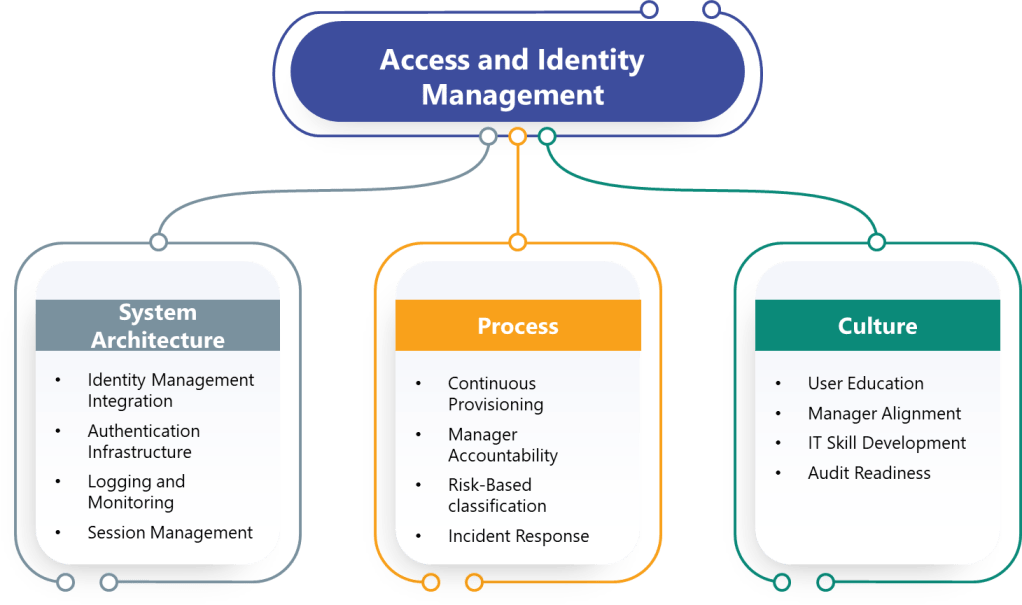
System Architecture Changes
Most pharmaceutical computerized systems were designed assuming manual access management and periodic reviews would satisfy regulatory requirements. The draft Annex 11 requirements will force fundamental architecture changes including:
Identity Management Integration: Manufacturing execution systems, laboratory information management systems, and quality management platforms must integrate with centralized identity management systems to support continuous access management and role-based controls.
Authentication Infrastructure: Organizations must deploy multi-factor authentication systems capable of supporting diverse user populations, remote access scenarios, and integration with existing applications.
Logging and Monitoring: Enhanced access logging requirements demand centralized log management, analytical capabilities, and integration between authentication systems and audit trail infrastructure.
Session Management: Applications must implement configurable session timeout controls, prevent user modification of security settings, and support re-authentication without disrupting long-running processes.
Process Reengineering Requirements
The regulatory requirements will force organizations to redesign fundamental access management processes:
Continuous Provisioning: HR onboarding, role changes, and termination processes must trigger immediate access modifications rather than waiting for periodic reviews.
Manager Accountability: Access review processes must shift from IT-driven activities to manager-driven confirmations with documented decision-making and corrective actions.
Risk-Based Classification: Organizations must classify systems based on criticality, define access requirements accordingly, and maintain documentation supporting these determinations.
Incident Response: Account lockout events must trigger formal security investigations rather than simple password resets, requiring enhanced forensic capabilities and documented procedures.
Training and Cultural Changes
Implementation success requires significant organizational change management:
Manager Training: Functional managers must understand system capabilities, access implications, and review responsibilities rather than delegating access decisions to IT teams.
User Education: Password security, MFA usage, and session management practices require user training programs that emphasize data integrity implications rather than just security compliance.
IT Skill Development: System administrators must develop security investigation capabilities, risk assessment skills, and regulatory compliance expertise beyond traditional technical support functions.
Audit Readiness: Organizations must prepare to demonstrate access control effectiveness through documentation, metrics, and investigative capabilities during regulatory inspections.
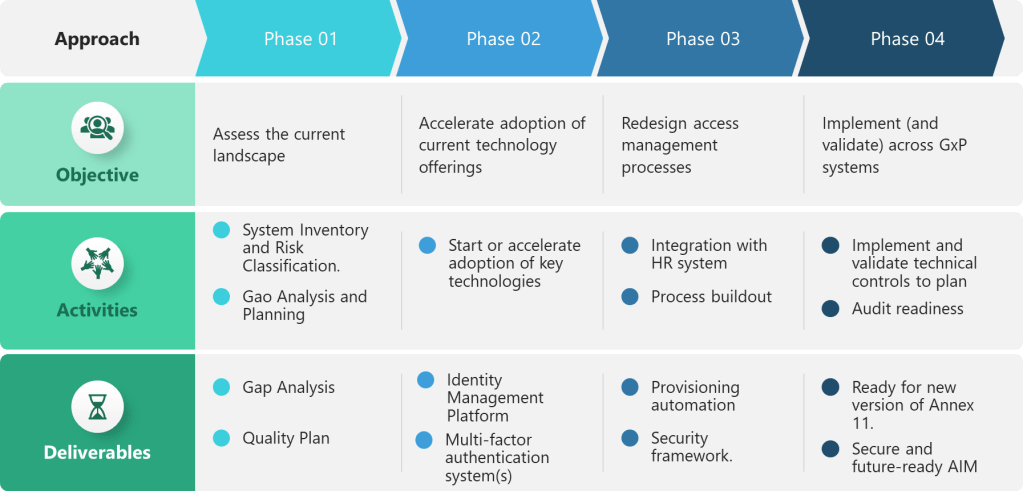
Strategic Implementation Approach
The Annex 11 Draft is just taking good cybersecurity and enshrining it more firmly in the GMPs. Organizations should not wait for the effective version to implement. Get that budget prioritized and start now.
Phase 1: Assessment and Classification
Organizations should begin with comprehensive assessment of current access control practices against the new requirements:
- System Inventory: Catalog all computerized systems used in GMP activities, identifying shared accounts, authentication methods, and access control capabilities.
- Risk Classification: Determine which systems qualify as “critical” requiring enhanced authentication and access controls.
- Gap Analysis: Compare current practices against each subsection requirement, identifying technical, procedural, and training gaps.
- Compliance Timeline: Develop implementation roadmap aligned with expected regulatory effective dates and system upgrade cycles.
Phase 2: Infrastructure Development
Focus on foundational technology changes required to support the new requirements:
- Identity Management Platform: Deploy or enhance centralized identity management systems capable of supporting continuous provisioning and role-based access control.
- Multi-Factor Authentication: Implement MFA systems supporting diverse authentication methods and integration with existing applications.
- Enhanced Logging: Deploy log management platforms capable of aggregating, analyzing, and presenting access events from distributed systems.
- Session Management: Upgrade applications to support configurable timeout controls and prevent user modification of security settings.
Phase 3: Process Implementation
Redesign access management processes to support continuous management and enhanced accountability:
- Provisioning Automation: Integrate HR systems with IT provisioning tools to support automatic access changes based on employment events.
- Manager Accountability: Train functional managers on access review responsibilities and implement documented review processes.
- Security Incident Response: Develop procedures for investigating account lockouts and documenting security findings.
- Audit Trail Integration: Ensure access events are properly integrated with existing audit trail review and batch release processes.
Phase 4: Validation and Documentation
When the Draft becomes effective you’ll be ready to complete validation activities demonstrating compliance with the new requirements:
- Access Control Testing: Validate that technical controls prevent unauthorized access, enforce authentication requirements, and log security events appropriately.
- Process Verification: Demonstrate that access management processes support continuous management, manager accountability, and risk-based reviews.
- Training Verification: Document that personnel understand their responsibilities for password security, session management, and access control compliance.
- Audit Readiness: Prepare documentation, metrics, and investigative capabilities required to demonstrate compliance during regulatory inspections.
The Competitive Advantage of Early Implementation
Organizations that proactively implement the draft Annex 11 IAM requirements will gain significant advantages beyond regulatory compliance:
- Enhanced Security Posture: The access control improvements provide protection against cyber threats, insider risks, and accidental data compromise that extend beyond GMP applications to general IT security.
- Operational Efficiency: Automated provisioning, role-based access, and centralized identity management reduce administrative overhead while improving access accuracy.
- Audit Confidence: Comprehensive access logging, manager accountability, and continuous management provide evidence of control effectiveness that regulators and auditors will recognize.
- Digital Transformation Enablement: Modern identity and access management infrastructure supports cloud adoption, mobile access, and advanced analytics initiatives that drive business value.
- Risk Mitigation: Enhanced access controls reduce the likelihood of data integrity violations, security incidents, and regulatory findings that can disrupt operations and damage reputation.
Looking Forward: The End of Security Theater
The draft Annex 11’s Identity and Access Management requirements represent the end of security theater in pharmaceutical access control. Organizations can no longer satisfy regulatory expectations through generic policies and a reliance on periodic reviews to provide the appearance of control without actual security effectiveness.
The new requirements assume that user access is a continuous risk requiring active management, real-time monitoring, and ongoing verification. This approach aligns with modern cybersecurity practices while establishing regulatory expectations that reflect the actual threat environment facing pharmaceutical operations.
Implementation success will require significant investment in technology infrastructure, process reengineering, and organizational change management. However, organizations that embrace these requirements as opportunities for security improvement rather than compliance burdens will build competitive advantages that extend far beyond regulatory satisfaction.
The transition period between now and the expected 2026 effective date provides a ideal window for organizations to assess their current practices, develop implementation strategies, and begin the technical and procedural changes required for compliance. Organizations that delay implementation risk finding themselves scrambling to achieve compliance while their competitors demonstrate regulatory leadership through proactive adoption.
For pharmaceutical organizations serious about data integrity, operational security, and regulatory compliance, the draft Annex 11 IAM requirements aren’t obstacles to overcome—they’re the roadmap to building access control practices worthy of the products and patients we serve. The only question is whether your organization will lead this transformation or follow in the wake of those who do.
| Requirement | Current Annex 11 (2011) | Draft Annex 11 Section 11 (2025) | 21 CFR Part 11 |
|---|---|---|---|
| User Account Management | Basic – creation, change, cancellation should be recorded | Continuous management – grant, modify, revoke as users join/change/leave | Basic user management, creation/change/cancellation recorded |
| Authentication Methods | Physical/logical controls, pass cards, personal codes with passwords, biometrics | Username + password or equivalent (biometrics); tokens/smart cards alone insufficient | At least two distinct identification components (ID code + password) |
| Password Requirements | Not specified in detail | Secure passwords enforced by systems, length/complexity based on risk, dictionary words prohibited | Unique ID/password combinations, periodic checking/revision required |
| Multi-factor Authentication | Not mentioned | Required for remote access to critical systems from outside controlled perimeters | Not explicitly required |
| Access Control Principles | Restrict access to authorized persons | Segregation of duties + least privilege principle explicitly mandated | Authority checks to ensure only authorized individuals access system |
| Account Lockout | Not specified | Auto-lock after failed attempts, admin unlock only after investigation | Not specified |
| Session Management | Not specified | Auto inactivity logout with re-authentication required | Not specified |
| Access Logging | Record identity of operators with date/time | Access log with username, role, login/logout times, searchable/exportable | Audit trails record operator entries and actions |
| Role-based Access | Not explicitly mentioned | Role-based access controls explicitly required | Authority checks for different functions |
| Access Reviews | Not specified | Recurrent reviews of user accounts and roles, documented with action taken | Periodic checking of ID codes and passwords |
| Segregation of Duties | Not mentioned | Users cannot have administrative privileges for GMP activities | Not explicitly stated |
| Unique User Accounts | Not explicitly required | All users must have unique personal accounts, shared accounts violate data integrity | Each electronic signature unique to one individual |
| Remote Access Control | Not specified | MFA required for remote access to critical systems | Additional controls for open systems |
| Password Confidentiality | Not specified | Passwords confidential at system and personal level, change at first login | Password security and integrity controls required |
| Account Administration | Not detailed | System administrators control unlock, access privilege assignment | Administrative controls over password issuance |

 Investigations of a Dog
5 thoughts on “Draft Annex 11’s Identity & Access Management Changes: Why Your Current SOPs Won’t Cut It”