In the last 6 years, Pfizer’s Hospira plant in Kansas has received eight FDA Form 483 citations, as well as other observations for regulatory bodies, such as this summer’s from the MHRA.
The future is now. Industry 4.0 probably means you have algorithms in your process. For example, if you aren’t using algorithims to analyze deviations, you probably soon will.
And with those algorithms come a whole host of questions on how to validate and how to ensure they work properly over time. The FDA has indicated that ““we want to get an understanding of your general idea for model maintenance.” FDA also wants to know the “trigger” for updating the model, the criteria for recalibration, and the level of validation of the model.”
Kate Crawford at Microsoft speaks about “data fundamentalism” – the notion that massive datasets are repositories that yield reliable and objective truths, if only we can extract them using machine learning tools. It shouldn’t take much to realize the reasons why this trap can produce some very bad decision making. Our algorithm’s have biases, just as human beings have biases. They are dependent on the data models used to build and refine them.
Based on reported FDA thinking, and given where European regulators are in other areas, it is very clear we need to be able to explain and justify our algorithmic decisions. Machine learning in here now and will only grow more important.
Basic model of data science
Ask an Interesting Question
The first step is to be very clear on why there is a need for this system and what problem it is trying to solve. Having alignment across all the stakeholders is key to guarantee that the entire team is here with the same purpose. Here we start building a framework
Get the Data
The solution will only be as good as what it learns from. Following the common saying “garbage in, garbage out”, the problem is not with the machine learning tool itself, it lies with how it’s been trained and what data it is learning from.
Explore the Data
Look at the raw data. Look at data summary. Visualize the data. Do it all again a different way. Notice things. Do it again. Probably get more data. Design experiments with the data.
Model the Data
The only true way to validate a model is to observe, iterate and audit. If we take a traditional csv model to machine learning, we are in for a lot of hurt. We need to take the framework we built and validate to it. Ensure there are emchanisms to observe to this framework and audit to performance over time.
On 30-Nov-2018 PIC/S published the third draft of guidance PI 041-1 “Good Practices for Data Management and Data Integrity in regulated GMP/GDP Environments“. The first draft was published back in 2016, and the third draft is subject to a focused stakeholder consultation seeking substantive comments from trade and professional associations on specific questions relating to the proportionality, clarity and implementation of the guidance requirements. In parallel to this stakeholder consultation, the new draft is applied by PIC/S Participating Authorities on a trial basis for a new implementation trial period (3 months).
In short, you can expect inspectors to have reviewed and be reviewing against this. Do your gap analysis now and have plans in place to address the gaps. Yes, there will be a little while before this is finally published, but at this point this guidance neatly triangulates with other guidances on data integrity and we can expect most of this to be in the final version.
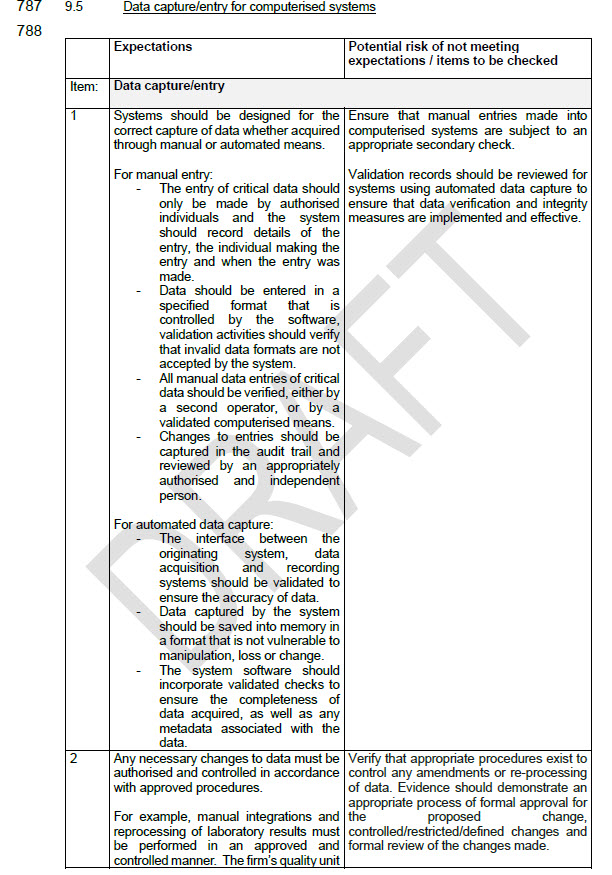
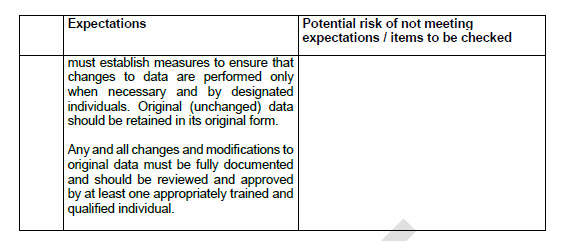
This document is a great place to start and can be used to develop whole sections of the quality management system. I find it very actionable. For example this table from 9.5 “Data capture/entry for computerised systems”:
If we want to address the complex problem situations that the world is facing, being a smart systems thinker and innovator is not enough. We need to engage in new ways of collaborating that promote continuous, productive and collective learning and innovation. These collaborations require us to learn social skills, build social structures, and adopt attitudes of openness to learning, trust and responsibility, however hard it is to let go of the behaviours and structures that hold us back.
Good article on problem-solving and complexity that is very sympathetic with Donella Meadows Leverage Points. This article and my recent post on creativity are both coming from similar points by stressing many of the same solutions to solving problems.
I liked the discussion on creating the right organization structures to allow problem-solving to happen. As someone who is very worried that can contribute to laying the bricks in Kafka’s castle and the bars in Weber’s Iron Cage, I am always striving to push for better ways of working, of creating structures that both amplify freedom and responsibility, that drive for innovation. Applying basic principles is pretty important to ensure we build for now and the future.


 Investigations of a Dog