Selecting the Right Consultant for Facility Evaluation

When considering the engagement of an external consultant for your facility, the decision should not be taken lightly. Consultants can provide invaluable insights when addressing compliance gaps, resolving environmental control issues, or conducting design reviews. However, the real value lies in their ability to bring expertise and actionable solutions tailored to your specific needs. To ensure this, assessing their relevant expertise and experience is paramount.

The first step in evaluating a consultant’s expertise is to scrutinize their professional background and track record. This involves examining their history of projects within your industry and determining whether they have successfully addressed challenges similar to yours. For instance, if you are dealing with deviations in environmental monitoring trends, you should confirm that the consultant has prior experience diagnosing and resolving such issues in facilities governed by comparable regulatory frameworks. Look for evidence of their familiarity with regulations and standards such as FDA 21 CFR Part 211 or ISO 14644 for cleanroom environments. Additionally, assess whether they have worked with facilities of a similar scale and complexity to yours—what works for a small-scale operation may not translate effectively to a larger, more intricate system.

To gain deeper insights into their qualifications, ask targeted questions during the evaluation process. For example:

  • “Can you describe a recent project where you addressed similar challenges? What were the outcomes?”
  • “How do you approach identifying root causes in complex systems?”
  • “What methodologies or tools do you use to ensure compliance with regulatory standards?”
    These questions not only help verify their technical knowledge but also reveal their problem-solving approach and adaptability.

Another critical aspect of assessing expertise is understanding their familiarity with current regulations and industry trends. A consultant who actively engages with updated guidelines from regulatory bodies like the FDA or EMA demonstrates a commitment to staying relevant. You might ask: “How do you stay informed about changes in regulations or advancements in technology that could impact our operations?” Their response can indicate whether they are proactive in maintaining their expertise or rely on outdated practices.

Experience is equally important in assessing whether a consultant can deliver practical, actionable recommendations. Review case studies or examples of past work that demonstrate measurable results—such as improved compliance rates, reduced deviations, or enhanced operational efficiency. Requesting references from previous clients is another effective way to validate their claims. When speaking with references, inquire about the consultant’s ability to communicate effectively, collaborate with internal teams, and deliver results within agreed timelines.

Ultimately, assessing expertise and experience requires a thorough evaluation of both technical qualifications and practical application. By asking detailed questions and reviewing tangible evidence of success, you can ensure that the consultant you hire has the skills and knowledge necessary to address your facility’s unique challenges effectively.

Companies that have participated in GMP remediation in response to warning letters or consent decrees offer a unique perspective on the intricacies of the facility. This experience allows them to:

  1. Identify systemic issues more effectively: Remediation veterans are better equipped to recognize underlying problems that may not be immediately apparent, having seen how seemingly minor issues can cascade into major compliance failures.
  2. Understand regulatory expectations: Direct experience with regulatory agencies during remediation provides insight into their thought processes, priorities, and interpretation of GMP requirements.
  3. Implement sustainable solutions: Those who have been through remediation understand the importance of addressing root causes rather than applying superficial fixes, ensuring long-term compliance.
  4. Prioritize effectively: Experience helps in distinguishing between critical issues that require immediate attention and those that can be addressed over time, allowing for more efficient resource allocation

Questions to Ask During Evaluation

To identify the best fit for your needs, ask potential consultants these critical questions:

  1. Can you provide examples of similar projects you’ve completed?
    • This helps verify their experience with challenges of GMP facilities.
    • Look for previous remediation experience
  2. What methodologies do you use?
    • Ensure their approach aligns with your facility’s operational style and regulatory requirements.
  3. How do you ensure actionable recommendations?
    • Look for consultants who provide clear implementation plans rather than vague advice.
  4. How do you handle confidentiality?
    • Confirm safeguards are in place to protect sensitive information.
  5. Can you share references from past clients?
    • Contact references to assess reliability, responsiveness, and outcomes achieved.
  6. What is your communication style?
    • Evaluate their ability to provide timely updates and collaborate effectively with your team.

Ensuring Actionable Outcomes

The ultimate goal of hiring a consultant is actionable improvements that enhance compliance, efficiency, or performance. To achieve this:

  1. Define Clear Objectives
    • Before engaging a consultant, outline your project scope, goals, budget, and desired outcomes. This clarity helps both parties align expectations.
  2. Insist on Detailed Proposals
    • Request proposals that include timelines, deliverables, methodologies, and pricing structures. This ensures transparency and sets benchmarks for success.
  3. Collaborate Throughout the Process
    • Involve your team in discussions with the consultant to ensure alignment on priorities and feasibility of recommendations.
  4. Monitor Implementation
    • Establish metrics to track progress against the consultant’s recommendations (e.g., compliance rates, operational efficiency improvements).
U.S. Pharmacopeia’s draft chapter〈1110〉Microbial Contamination Control Strategy Considerations

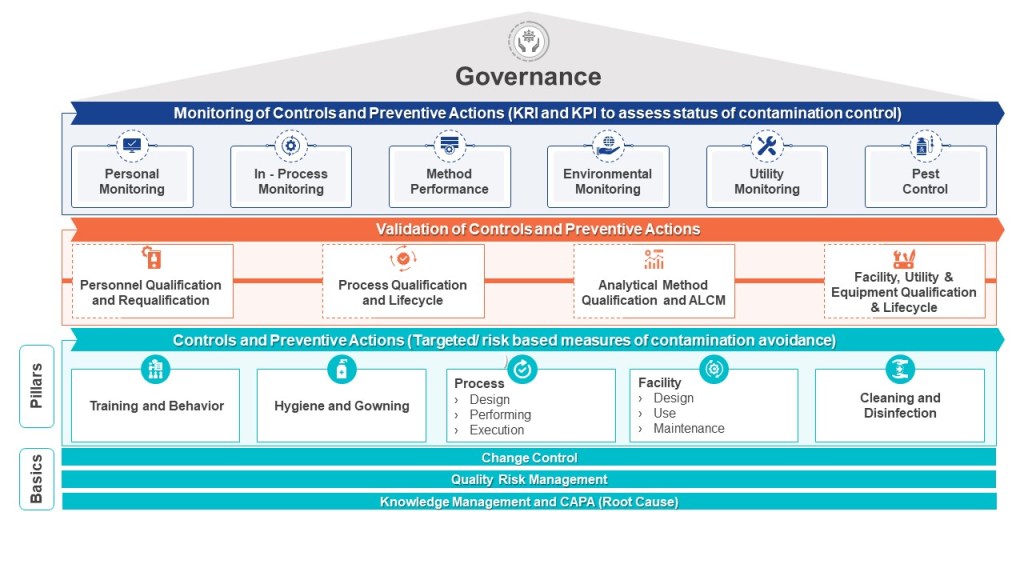
The pharmaceutical industry is navigating a transformative period in contamination control, driven by the convergence of updated international standards. The U.S. Pharmacopeia’s draft chapter〈1110〉 Microbial Contamination Control Strategy Considerations (March 2025) joins EU GMP Annex 1 (2022) in emphasizing risk-based strategies but differ in technical requirements and classification systems.

USP〈1110〉: A Lifecycle-Oriented Microbial Control Framework

The draft USP chapter introduces a comprehensive contamination control strategy (CCS) that spans the entire product lifecycle, from facility design to post-market surveillance. It emphasizes microbial, endotoxin, and pyrogen risks, requiring manufacturers to integrate quality risk management (QRM) into every operational phase. Facilities must adopt ISO 14644-1 cleanroom classifications, with ISO Class 5 (≤3,520 particles ≥0.5 µm/m³) mandated for aseptic processing areas. Environmental monitoring programs must include both viable (microbial) and nonviable particles, with data trends analyzed quarterly to refine alert/action levels. Unlike Annex 1, USP allows flexibility in risk assessment methodologies but mandates documented justifications for control measures, such as the use of closed systems or isolators to minimize human intervention.

EU GMP Annex 1: Granular Cleanroom and Sterilization Requirements

Annex 1 builds on ISO 14644-1 cleanroom standards but introduces pharmaceutical-specific adaptations through its Grade A–D system. Grade A zones (critical processing areas) require ISO Class 5 conditions during both “at-rest” and “in-operation” states, with continuous particle monitoring and microbial limits of <1 CFU/m³. Annex 1 also mandates smoke studies to validate unidirectional airflow patterns in Grade A areas, a requirement absent in ISO 14644-1. Sterilization processes, such as autoclaving and vaporized hydrogen peroxide (VHP) treatments, require pre- and post-use integrity testing, aligning with its focus on sterility assurance.

Reconciling Annex 1 and ISO 14644-1 Cleanroom Classifications

While both frameworks reference ISO 14644-1, Annex 1 overlays additional pharmaceutical requirements:

AspectEU GMP Annex 1ISO 14644-1
Classification SystemGrades A–D mapped to ISO classesISO Class 1–9 based on particle counts
Particle Size≥0.5 µm and ≥5.0 µm monitoring for Grades A–B≥0.1 µm to ≥5.0 µm, depending on class
Microbial LimitsExplicit CFU/m³ limits for each gradeNo microbial criteria; focuses on particles
Operational StatesQualification required for “at-rest” and “in-operation” statesSingle-state classification permitted
Airflow ValidationSmoke studies mandatory for Grade AAirflow pattern testing optional

For example, a Grade B cleanroom (ISO Class 7 at rest) must maintain ISO Class 7 particle counts during production but adheres to stricter microbial limits (≤10 CFU/m³) than ISO 14644-1 alone. Manufacturers must design monitoring programs that satisfy both standards, such as deploying continuous particle counters for Annex 1 compliance while maintaining ISO certification reports.

ClassificationDescription
Grade ACritical area for high-risk and aseptic operations that corresponds to ISO 5 at rest/static and ISO 4.8 (in-operation/dynamic). Grade A areas apply to aseptic operations where the sterile product, product primary packaging components and product-contact surfaces are exposed to the environment. Normally Grade A conditions are provided by localized air flow protection, such as unidirectional airflow workstations within a Restricted Access Barrier System (RABS) or isolator. Direct intervention (e.g., without the protection of barrier and glove port protection) into the Grade A area by operators must be minimized by premises, equipment, process, or procedural design.
Grade BFor aseptic preparation and filling, this is the background area for Grade A (where it is not an isolator) and corresponds to ISO 5 at rest/static and ISO 7 in-operation/dynamic. Air pressure differences must be continuously monitored. Classified spaces of lower grade can be considered with the appropriate risk assessment and technical justification.
Grade CUsed for carrying out less critical steps in the manufacture of aseptically filled sterile products or as a background for isolators. They can also be used for the preparation/filling of terminally sterilized products. Grade C correspond to ISO 7 at rest/static and ISO 8 in-operation/dynamic.
Grade DUsed to carry out non-sterile operations and corresponds to ISO 8 at rest/static and in-operation/dynamic.

Risk Management: Divergent Philosophies, Shared Objectives

Both frameworks require Quality Risk Management. USP〈1110〉advocates for a flexible, science-driven approach, allowing tools like HACCP (Hazard Analysis Critical Control Points) or FMEA (Failure Modes Effects Analysis) to identify critical control points. For instance, a biologics manufacturer might use HACCP to prioritize endotoxin controls during cell culture harvesting. USP also emphasizes lifecycle risk reviews, requiring CCS updates after facility modifications or adverse trend detections.

Annex 1 mandates formal QRM processes with documented risk assessments for all sterilization and aseptic processes. Its Annex 1.25 clause requires FMEA for media fill simulations, ensuring worst-case scenarios (e.g., maximum personnel presence) are tested. Risk assessments must also justify cleanroom recovery times after interventions, linking airflow validation data to contamination probability.

A harmonized approach involves:

  1. Baseline Risk Identification: Use HACCP to map contamination risks across product stages, aligning with USP’s lifecycle focus.
  2. Control Measure Integration: Apply Annex 1’s sterilization and airflow requirements to critical risks identified in USP’s CCS.
  3. Continuous Monitoring: Combine USP’s trend analysis with continuous monitoring for real-time risk mitigation.

Strategic Implementation Considerations

Reconciling these standards requires a multi-layered strategy. Facilities must first achieve ISO 14644-1 certification for particle counts, then overlay Annex 1’s microbial and operational requirements. For example, an ISO Class 7 cleanroom used for vial filling would need Grade B microbial monitoring (≤10 CFU/m³) and quarterly smoke studies to validate airflow. Risk management documentation should cross-reference USP’s CCS objectives with Annex 1’s sterilization validations, creating a unified audit trail. Training programs must blend USP’s aseptic technique modules with Annex 1’s cleanroom behavior protocols, ensuring personnel understand both particle control and microbial hygiene.

Toward Global Harmonization

The draft USP〈1110〉and Annex 1 represent complementary pillars of modern contamination control. By anchoring cleanroom designs to ISO 14644-1 and layering region-specific requirements, manufacturers can streamline compliance across jurisdictions. Proactive risk management—combining USP’s flexibility with Annex 1’s rigor—will be pivotal in navigating this evolving landscape. As regulatory expectations converge, firms that invest in integrated CCS platforms will gain agility in an increasingly complex global market.

The FDA and HHS Layoffs: A Catastrophic Blow to Public Health, Science, and Transparency

The recent mass layoffs at the Food and Drug Administration (FDA) and other agencies under the Department of Health and Human Services (HHS) represent a seismic shift in the U.S. public health landscape. These actions, spearheaded by HHS Secretary Robert F. Kennedy Jr., are not just a bureaucratic reshuffle—they are a direct assault on public health, the pharmaceutical and medical device industries, and the very principles of scientific inquiry and transparency.

Impact on Public Health

The decision to lay off 10,000 employees across HHS, including 3,500 at the FDA, is a reckless gamble with public health. These cuts come at a time when the nation faces complex challenges such as emerging infectious diseases, the regulation of cutting-edge medical technologies, and the ongoing need for robust food safety measures. The FDA’s ability to approve new drugs, monitor post-market safety, and evaluate medical devices has been severely compromised. Entire teams responsible for drug approvals and post-market surveillance have been gutted, leaving critical regulatory gaps that could jeopardize patient safety.

The layoffs have also disproportionately affected specialized areas like artificial intelligence (AI) in medical devices—a field that requires high levels of expertise due to its complexity. With half of the AI-focused staff at the FDA’s Center for Devices and Radiological Health (CDRH) terminated, delays in approving life-saving innovations are inevitable. Medical device companies are already reporting disruptions in their interactions with the FDA, with meetings canceled due to the absence of key reviewers.

The Fallout for Industry

Pharmaceutical and medical device manufacturers are facing an unprecedented regulatory bottleneck. The layoffs have introduced significant delays in product approvals, with some industry insiders estimating that timelines could stretch by months or even years. This is not just an inconvenience for companies; it directly impacts patients waiting for new treatments and technologies. The uncertainty is compounded by the elimination of entire communications teams at the FDA, leaving stakeholders without clear channels to navigate this chaotic environment.

Undermining Science

Science thrives on stability and expertise—both of which have been decimated by these layoffs. The FDA and NIH have long been global leaders in biomedical research and innovation. By removing experienced scientists, regulators, and administrators en masse, these agencies are being hollowed out at their core. This is not just a loss for the U.S.; it weakens global public health efforts that rely on American leadership in research and regulation.

Transparency Under Siege

Perhaps most egregious is how these changes undermine transparency—a principle Secretary Kennedy himself pledged to uphold through “radical transparency.” Instead, we see a systematic erosion of public accountability:

  • FOIA Offices Gutted: The FDA’s Freedom of Information Act (FOIA) office has been severely impacted, with many officers laid off or reassigned. At other agencies like the CDC, FOIA offices have reportedly been shuttered entirely. This makes it nearly impossible for journalists, researchers, and citizens to access critical information about government operations.
  • Public Meetings Canceled: Advisory committee meetings that traditionally allow public input on vaccine recommendations and other health policies have been postponed or canceled without explanation.
  • Opaque Decision-Making: HHS has increasingly relied on administrative maneuvers to bypass public comment periods required under federal law. This creates a “fait accompli” system where stakeholders only learn about policy changes after they are implemented.

These actions betray not only Kennedy’s promises but also the foundational principles of democratic governance. FOIA exists to ensure an informed citizenry capable of holding its government accountable—a safeguard now dangerously weakened.

A Call to Action

The layoffs at HHS and FDA are more than just a bureaucratic reshuffling—they are an existential threat to public health infrastructure, scientific progress, and governmental transparency. These cuts may save $1.8 billion annually—a mere 0.1% of HHS’s budget—but they come at an incalculable cost to human lives and societal trust. The pharmaceutical industry cannot function effectively without a competent regulatory partner; public health cannot flourish without transparent governance; science cannot advance without institutional support.

This is not reform—it is sabotage disguised as efficiency. It is time for Congress, industry leaders, public health advocates, and every concerned citizen to demand accountability before this crisis deepens further.

Citations

FDA’s Warning Letter to Advanced Pharmaceutical Technology: Insights on Process Validation

The recent FDA warning letter issued to Advanced Pharmaceutical Technology highlights critical deficiencies in process validation and compliance with Current Good Manufacturing Practices (CGMP).

What the Warning Letter Reveals About Process Validation

The FDA’s inspection identified several violations that directly pertain to inadequate process validation. Process validation is essential for ensuring that drug manufacturing processes consistently produce products meeting their intended specifications. Here are the notable findings:

Failure to Validate Sterilization Processes:

    • The firm did not establish adequate controls to prevent microbiological contamination in drug products purporting to be sterile. Specifically, it relied on sterilization processes without monitoring pre-sterilization bioburden or maintaining appropriate environmental conditions.
    • The FDA emphasized that sterility testing alone is insufficient to assure product safety. It must be part of a broader validation strategy that includes pre-sterilization controls and environmental monitoring.

    Inadequate Validation of Controlled-Release Dosage Forms:

      • The company failed to demonstrate that its controlled-release products conformed to specifications for active ingredient release rates. This lack of validation raises concerns about therapeutic efficacy and patient safety.
      • The response provided by the firm was deemed inadequate as it lacked retrospective assessments of marketed products and a detailed plan for corrective actions.

      Insufficient Procedures for Production and Process Control:

        • The firm increased batch sizes without validating the impact on product quality and failed to include critical process parameters in batch records.
        • The FDA highlighted the importance of process qualification studies, which evaluate intra-batch variations and establish a state of control before commercial distribution.

        Key Learnings for Pharmaceutical Manufacturers

        The violations outlined in this warning letter provide valuable lessons for manufacturers aiming to maintain CGMP compliance:

        Comprehensive Process Validation is Non-Negotiable

        Process validation must encompass all stages of manufacturing, from raw materials to finished products. Manufacturers should:

        • Conduct rigorous qualification studies before scaling up production.
        • Validate sterilization processes, including pre-sterilization bioburden testing, environmental controls, and monitoring systems.

        Sterility Testing Alone is Insufficient

        Sterility testing should complement other preventive measures rather than serve as the sole assurance mechanism. Manufacturers must implement controls throughout the production lifecycle to minimize contamination risks.

        Quality Control Units Must Exercise Oversight

        The role of quality control units (QU) is pivotal in ensuring compliance across all operations, including oversight of contract testing laboratories and contract manufacturing organizations (CMOs). Failure to enforce proper testing protocols can lead to regulatory action.

        Repeat Violations Signal Systemic Failures

        The letter noted repeated violations from prior inspections in 2019 and 2021, indicating insufficient executive management oversight.

        Leveraging Learning Logs to Foster a Learning Culture for CQV Maturity

        Achieving maturity in commissioning, qualification, and validation (CQV) processes is vital for ensuring regulatory compliance, operational excellence, and product quality. However, advancing maturity requires more than adherence to protocols; it demands a learning culture that encourages reflection, adaptation, and innovation. Learning logs—structured tools for capturing experiences and insights—can play a transformative role in this journey. By introducing learning logs into CQV workflows, organizations can bridge the gap between compliance-driven processes and continuous improvement.


        What Are Learning Logs?

        A learning log is a reflective tool used to document key events, challenges, insights, and lessons learned during a specific activity or process. Unlike traditional record-keeping methods that focus on compliance or task completion, learning logs emphasize understanding and growth. They allow individuals or teams to capture their experiences in real time and revisit them later to extract deeper meaning. For example, a learning log might include the date of an event, the situation encountered, results achieved, insights gained, and next steps. Over time, these entries provide a rich repository of knowledge that can be leveraged for better decision-making.

        The structure of a learning log can vary depending on the needs of the team or organization. Some may prefer simple spreadsheets to track entries by project or event type, while others might use visual tools like Miro boards for creative pattern recognition. Regardless of format, the key is to keep logs practical and focused on capturing meaningful “aha” moments rather than exhaustive details. Pairing learning logs with periodic team discussions—known as learning conversations—can amplify their impact by encouraging reflection and collaboration.

        Learning logs are particularly effective because they combine assessment with reflection. They help individuals articulate what they’ve learned, identify areas for improvement, and plan future actions. This process fosters critical thinking and embeds continuous learning into daily workflows. In essence, learning logs are not just tools for documentation; they are catalysts for organizational growth.


        Applying Learning Logs to CQV

        In pharmaceutical CQV processes—where precision and compliance are paramount—learning logs can serve as powerful instruments for driving maturity. These processes often involve complex activities such as equipment commissioning, qualification (OQ), and product/process validation. Introducing learning logs into CQV workflows enables teams to capture insights that go beyond standard deviation reporting or audit trails.

        During commissioning, for instance, engineers can use learning logs to document unexpected equipment behavior and the steps taken to resolve issues. These entries create a knowledge base that can inform future commissioning projects and reduce repeat errors. Similarly, in qualification phases, teams can reflect on deviations from expected outcomes and adjustments made to protocols. Validation activities benefit from logs that highlight inefficiencies or opportunities for optimization, ensuring long-term consistency in manufacturing processes.

        By systematically capturing these reflections in learning logs, organizations can accelerate knowledge transfer across teams. Logs become living repositories of troubleshooting methods, risk scenarios, and process improvements that reduce redundancy in future projects. For example, if a team encounters calibration drift during equipment qualification and resolves it by updating SOPs, documenting this insight ensures that future teams can anticipate similar challenges.


        Driving CQV Maturity Through Reflection

        Learning logs also help close the loop between compliance-driven processes and innovation by emphasizing critical analysis. Reflective questions such as “What worked? What failed? What could we do differently?” uncover root causes of deviations that might otherwise remain unaddressed in traditional reporting systems. Logs can highlight overly complex steps in protocols or inefficiencies in workflows, enabling teams to streamline operations.

        Moreover, integrating learning logs into change control processes ensures that past insights inform future decisions. When modifying validated systems or introducing new equipment, reviewing previous log entries helps predict risks and avoid repeating mistakes. This proactive approach aligns with the principles of continuous improvement embedded in GMP practices.


        Cultivating a Learning Culture

        To fully realize the benefits of learning logs in CQV workflows, organizations must foster a culture of reflection and collaboration. Leaders play a crucial role by modeling the use of learning logs during team meetings or retrospectives. Encouraging open discussions about log entries creates psychological safety where employees feel comfortable sharing challenges and ideas for improvement.

        Gamification can further enhance engagement with learning logs by rewarding teams for actionable insights that optimize CQV timelines or reduce deviations. Linking log-derived improvements to KPIs—such as reductions in repeat deviations or faster protocol execution—demonstrates their tangible value to the organization.


        The Future of CQV: Learning-Driven Excellence

        As pharmaceutical manufacturing evolves with technologies like AI and digital twins, learning logs will become even more dynamic tools for driving CQV maturity. Machine learning algorithms could analyze log data to predict validation risks or identify recurring challenges across global sites. Real-time dashboards may visualize patterns from log entries to inform decision-making at scale.

        By embedding learning logs into CQV workflows alongside compliance protocols, organizations can transform reactive processes into proactive systems of excellence. Teams don’t just meet regulatory requirements—they anticipate challenges, adapt seamlessly, and innovate continuously.

        Next Step: Start small by introducing learning logs into one CQV process this month—perhaps equipment commissioning—and measure how insights shift team problem-solving approaches over time. Share your findings across departments to scale what works and build momentum toward maturity.