ASQ 2022 WCQI Day 3 (second half)

Making a Quality Leader: From Theory to Practice

Always a pleasure to hear from the Human Development and Leadership (HDL) technical community. Their competency framework is a great tool that can help many a quality leader as they struggle to build the leadership competencies necessary to strive towards excellence.
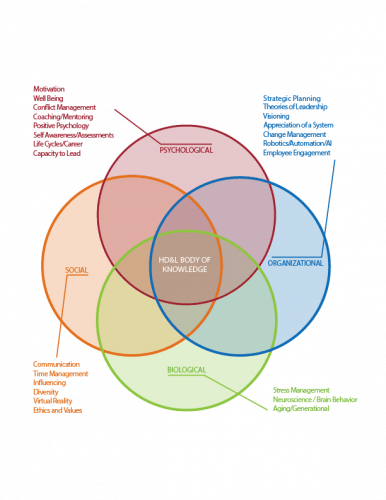
Human Development & Leadership Body of Knowledge Model

Having done a lot of comptency frameworks I think the HDL has done a good job building theirs out as a progressive framework. I think a challenge is how do we make it easy to scale up to this more detailed HD&LBok from the QBok, and occasionally the same concept can be discussed a few different ways across different technical community boks and this lack of consistency is a detriment.

Stressing practice as the core part of a competency framework. A good conversation at my table was how often these competencies move back a little as we change roles and organizations.

No competency framework is valuable without a good development plan and the workshop did a great job at introducing how to use one.

Honor Deming’s 14 Points Through Modular Kaizen by Grace Duffy

Grace has always been a mentor who always brings thought provoking topics to the society.
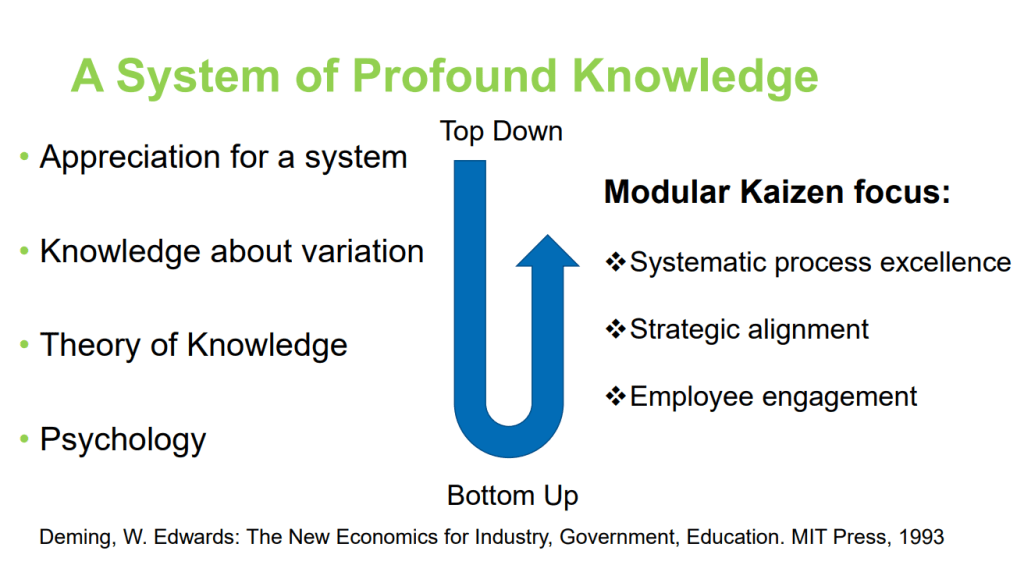
Goes without saying that I’m a fan of the 14 points and the System of Profound Knowledge. I’ve written a lot about Driving out Fear. It ties in a lot of my thoughts about how much of what is happening now in organizational excellence is the evolution from these 14 points.

Looking to the past is an important part of building the future. I think Grace did a great job of respecting the past to drive innovation and new ideas within the quality practice. I loved the care for our past, and the urge to challenge the future in the audience. She really avoided the tendency in some quality circles to obsess about the past (Toyota nuts I am thinking of you) and thus trap the present and stifle the future.

Grace does an amazing job being a pillar of the quality community while still being an iconcolast. When you see her name on the conference session list I always recommend taking the time to attend.

Quality Past & Present

I found most of the videos to be a little personality driven instead of insightful pieces of history. I would hope this session would draw from our history in exciting ways, that was not realized. However the ending charge to create solutions instead of just solving problems is a pivotal one.

2022 Business Meeting

This business meeting drives home the struggle the ASQ has on figuring out what comes next.

As an organization we do not understand what a digital organization looks like. Only 2000 users of the app in the US is embarrassing. Teens can create apps with 100 times more users.

It is nice to admit that actively listening to the members is crucial. I look forward to that consistently happening. We don’t always do a good job of using the tools at the heart of the QBok.

Finances are still rocky, though the Federal Stimulus has left the ASQ in an okay place.

I was actually shocked to hear the chair of the ASQ say it is hard to have metrics for meeting strategic goals. We have entire methodologies dedicated to that.

There are a lot of challenges ahead of us.
Is There Equity in Out of Office?

I think many of us are considering what work looks like, grappling with a return to offices, hybrid situations, and being fully remote. I think the media focuses rather extensively on companies like Apple, where a good chunk of the workforce seems to be up-in-arms about a mandatory return to the office.

In the pharma world, things are a little more complicated, especially as it applies to the quality profession.

At the heart sits the question, what sort of labs and manufacturing facilities do you have on site? This physical presence requires that certain employees be on-site. Which in most pharmas makes a bundle of those who must be on-site, and those who do not need to be on-site.

I understand the desire for those who can work remotely to want to work remotely. There are a lot of good reasons for working remotely, and I personally chose a company that was purely remote for a chunk of those.

But, and this is a big but, what does equity look like?

Take for example an average quality department. It is broken down into those who support labs, manufacturing, clinical trials and post-marketing surveillance (for simplicity). You thus have in the same department individuals who must be always on-site; who need to show up a few days a week; and those who can do their job perfectly well remotely. To complicate matters you might even have a big chunk of your partners (all those clinical trial, medical affairs, pharmacovigilance folks) that have no attention of coming back to the office.

So, what does equity look like? How do you treat these three camps? How to you compensate those who come into the office, that have commutes on top of their days that co-workers do not? How do you ensure everyone has equal opportunity to be seen, heard and participate? What does this organization look like?

I thnk this is one of the major challenges for quality organizations moving forward. I do not think there is one size fits all, and there is no easy answer.

Adapting and Experimenting – the Role of a New Quality Leader

I think a common challenge is how do we as a new quality professional joining an organization replicate the same success we have had in past roles

Quality requires a support structure, and I think it is easy to underestimate the impact of the absence, or the lack of, that structure. Just parachuting quality professionals into different organizations where they are left without the scaffolding they’ve implicitly grown to expect and depend on can lead to underperformance. Some adapt, of course, but others flounder, especially when hired with daunting short-term expectations, which can often be the case in organizations looking to remediate gaps in a fast way. I think this is only exacerbated as a result of the pandemic.

Culture can have a steep learning curve and being able to execute requires being very well-versed in the culture of an organization. You have to know how your organization works in order to get it to work diligently like a well-oiled machine to execute the higher-level quality vision.

Learning the culture doesn’t mean simply parroting the oft-repeated mantras received during orientation, but truly internalizing it to an extent where it informs every small decision and discussion. At the best of times, that’s difficult and takes time, particularly as there isn’t usually a single monolithic culture to learn, but myriad microcultures in various different parts of the organization. Doesn’t matter the size, this is a challenge.

In the worst case, where an organization has a culture diametrically opposite to that of the previous workplace, “learning the culture” also requires un-learning almost everything that led people to get to their current level in the first place. The humility to strive to turn themselves into the leader the organization truly needs, rather than the leader they’ve grown to be over the past years, is a hard one for many of us. Especially since we are usually brought on board to build and remediate and address deficiencies.

To be a successful agent of change one has to adapt to the current culture, try experiments to accelerate change, and do all the other aspects of our job.

This is hard stuff, and a part of the job I don’t think gets discussed enough.

Impact of Virtual Communication on Creativity

A very interesting study in Nature this week on “Virtual communication curbs creative idea generation.” And while I don’t think the results will surprise many, I do think we are not close to settling the question. This is a fairly good-sized study, with a good methodology, but I think more research is needed in the area. I’m thinking we will see a few more studies around the topic.

The results suggest that there is a unique cognitive advantage to in-person collaboration, but the authors do acknowledge there are a whole lot of other factors in play.

This is the big question for many. How do we get the benefits of in-person while maintaining the flexibility and benefits folks are used to. I think, for those work environments where virtual work is possible, the answer is going to be to structure times to maximize the tangible benefits of office-based work, including:

  • Serendipitous collaboration,” a term coined by Dana Sitar in Inc. to describe informal interactions that result in innovative ideas, problem-solving, and new approaches. For me this includes plopping in a coworker’s office for a quick problem-solving session (maybe with a little healthy venting on the side). Speedy, efficient interactions that simply don’t happen in a remote environment — and that build a sense of camaraderie and teamwork.
  • More productive meetings. Even though we’re becoming more skillful at remote meetings, there are just certain meetings that benefit from in-person..
  • Connection and loyalty are difficult to promote in employees working remotely. The sense of team is not the same when team members see each other online as opposed to seeing them and speaking with them multiple times a day.
  • High-functioning teams have outstanding communication and shared experiences — both of which are difficult to manufacture long distance. Creating a relaxed, and informal environment, diffusing tension, and engaging in an extensive discussion where every team member is heard are all much easier to do in person than virtually.

Businesses operate thanks to human ideas and energy. People are the power behind every business; successful businesses find that fulfilled, happy employees drive fresh ideas, work harder to accomplish goals, and remain loyal to their employers.

The human element (and the need for and value of human connection) can’t be overstated as an ingredient for success and growth. I think we’re entering a new phase, and there are a lot of questions to be answered. What I hope is that bad decisions won’t become enshrined because of cost-cutting or just organization laziness. That approach already gave us horrible open offices.

Defining Values, with Speaking Out as an example

Which espoused values and desired behaviors will best enable an organization to live its quality purpose? There’s been a lot of writing and thought on this, and for this post, I am going to start with ISO 10018-2020 “Quality management — Guidance for people engagement” and develop an example of a value to build in your organization.

ISO 10018-2020 gives 6 areas:

  • Context of the organization and quality culture
  • Leadership
  • Planning and Strategy
  • Knowledge and Awareness
  • Competence
  • Improvement

This list is pretty well aligned to other models, including the Malcolm Baldrige Excellence Framework (NIST), EFQM Excellence Model, SIQ Model for Performance Excellence, and such tools as the PDA Culture of Quality Assessment.

A concept that we find in ISO 10018-2020 (and everywhere else) is the handling of errors, mistakes, everyday problems and ‘niggles’, near misses, critical incidents, and failures; to ensure they are reported and recorded honestly and transparently. That the time is taken for these to be discussed openly and candidly, viewed as opportunities for learning how to prevent their recurrence by improving systems but also as potentially protective of potentially larger and more consequential failures or errors. The team takes the time and effort to engage in ‘second orderproblem-solving. ‘First order’ problem solving is the quick fixing of issues as they appear so as to stop them disrupting normal workflow. ‘Second order’ problem solving involves identifying the root causes of problems and taking action to address these rather than their signs and symptoms. The team takes ownership of mistakes instead of blaming, accusing, or scapegoating individual team members. The team proactively seeks to identify errors and problems it may have missed in its processes or outputs by seeking feedback and asking for help from external stakeholders, e.g. colleagues in other teams, and customers, and also by engaging in frequent experimentation and testing.

We can tackle this in two ways. The first is to define all the points above as a value. The second would be to look at themes for this and the other aspects of robust quality culture and come up with a set of standard values, for example:

  • Accountable
  • Ownership
  • Action Orientated
  • Speak up

Don’t be afraid to take a couple of approaches to get values that really sing in your organization.

Values can be easily written in the following format:

  1. Value: A one or two-word title for each value
  2. Definition: A two or three sentence description that clearly states what this value means in your organization
  3. Desired Behaviors: “I statement” behaviors that simply state activities. The behaviors we choose reinforce the values’ definitions by describing exactly how you want members of the organization to interact.
    • Is this observable behavior? Can we assess someone’s demonstration of this behavior by watching and/or listening to their interactions? By seeing results?
    • Is this behavior measurable? Can we reliably “score” this behavior? Can we rank how individual models or demonstrates this behavior?

For the rest of this post, I am going to focus on how you would write a value statement for Speak Up.

First, ask two questions:

  • Specific to your organization’s work environment, how would you define “Speak Up.”
  • What phrase or sentences describe what you mean by “Speak Up.”

Then broaden by considering how fellow leaders and team members would act to demonstrate “Speak Up”, as you defined it.

  • How would leaders and team members act so that, when you observe them, you would see a demonstration of Speaking Up? Note three or four behaviors that would clearly demonstrate your definition.

Next, answer these questions exclusively from your team member’s perspective:

  • How would employees define Speaking Out?
  • How would their definition differ from yours? Why?
  • What behaviors would employees feel they must model to demonstrate Speaking Out properly?
  • How would their modeled behaviors differ from yours? Why?

This process allows us to create common alignment based on a shared purpose.

By going through this process we may end up with a Value that looks like this:

  1. Value: Speaking Out
  2. Definition: Problems are reported and recorded honestly and transparently. Employees are not afraid to speak up, identify quality issues, or challenge the status quo for improved quality; they believe management will act on their suggestions. 
  3. Desired Behaviors:
    • I hold myself accountable for raising problems and issues to my team promptly.
    • I attack process and problems, not people.
    • I work to anticipate and fend off the possibility of failures occurring.
    • I approach admissions of errors and lack of knowledge/skill with support.