In my recent exploration of the Jobs-to-Be-Done (JTBD) tool for process improvement, I examined how this customer-centric approach could revolutionize our understanding of deviation management. I want to extend that analysis to another fundamental challenge in pharmaceutical quality: risk management.
As we grapple with increasing regulatory complexity, accelerating technological change, and the persistent threat of risk blindness, most organizations remain trapped in what I call “compliance theater”—performing risk management activities that satisfy auditors but fail to build genuine organizational resilience. JTBD is a useful tool as we move beyond this theater toward risk management that actually creates value.
The Risk Management Jobs Users Actually Hire
When quality professionals, executives, and regulatory teams engage with risk management processes, what job are they really trying to accomplish? The answer reveals a profound disconnect between organizational intent and actual capability.
The Core Functional Job
“When facing uncertainty that could impact product quality, patient safety, or business continuity, I want to systematically understand and address potential threats, so I can make confident decisions and prevent surprise failures.”
This job statement immediately exposes the inadequacy of most risk management systems. They focus on documentation rather than understanding, assessment rather than decision enablement, and compliance rather than prevention.
The Consumption Jobs: The Hidden Workload
Risk management involves numerous consumption jobs that organizations often ignore:
Evaluation and Selection: “I need to choose risk assessment methodologies that match our operational complexity and regulatory environment.”
Implementation and Training: “I need to build organizational risk capability without creating bureaucratic overhead.”
Maintenance and Evolution: “I need to keep our risk approach current as our business and threat landscape evolves.”
Integration and Communication: “I need to ensure risk insights actually influence business decisions rather than gathering dust in risk registers.”
These consumption jobs represent the difference between risk management systems that organizations grudgingly tolerate and those they genuinely want to “hire.”
The Eight-Step Risk Management Job Map
Applying JTBD’s universal job map to risk management reveals where current approaches systematically fail:
1. Define: Establishing Risk Context
What users need: Clear understanding of what they’re assessing, why it matters, and what decisions the risk analysis will inform.
Current reality: Risk assessments often begin with template completion rather than context establishment, leading to generic analyses that don’t support actual decision-making.
2. Locate: Gathering Risk Intelligence
What users need: Access to historical data, subject matter expertise, external intelligence, and tacit knowledge about how things actually work.
Current reality: Risk teams typically work from documentation rather than engaging with operational reality, missing the pattern recognition and apprenticeship dividend that experienced practitioners possess.
3. Prepare: Creating Assessment Conditions
What users need: Diverse teams, psychological safety for honest risk discussions, and structured approaches that challenge rather than confirm existing assumptions.
Current reality: Risk assessments often involve homogeneous teams working through predetermined templates, perpetuating the GI Joe fallacy—believing that knowledge of risk frameworks prevents risky thinking.
4. Confirm: Validating Assessment Readiness
What users need: Confidence that they have sufficient information, appropriate expertise, and clear success criteria before proceeding.
Current reality: Risk assessments proceed regardless of information quality or team readiness, driven by schedule rather than preparation.
5. Execute: Conducting Risk Analysis
What users need: Systematic identification of risks, analysis of interconnections, scenario testing, and development of robust mitigation strategies.
Current reality: Risk analysis often becomes risk scoring—reducing complex phenomena to numerical ratings that provide false precision rather than genuine insight.
6. Monitor: Tracking Risk Reality
What users need: Early warning systems that detect emerging risks and validate the effectiveness of mitigation strategies.
Current reality: Risk monitoring typically involves periodic register updates rather than active intelligence gathering, missing the dynamic nature of risk evolution.
7. Modify: Adapting to New Information
What users need: Responsive adjustment of risk strategies based on monitoring feedback and changing conditions.
Current reality: Risk assessments often become static documents, updated only during scheduled reviews rather than when new information emerges.
8. Conclude: Capturing Risk Learning
What users need: Systematic capture of risk insights, pattern recognition, and knowledge transfer that builds organizational risk intelligence.
Current reality: Risk analysis conclusions focus on compliance closure rather than learning capture, missing opportunities to build the organizational memory that prevents risk blindness.
The Emotional and Social Dimensions
Risk management involves profound emotional and social jobs that traditional approaches ignore:
Confidence: Risk practitioners want to feel genuinely confident that significant threats have been identified and addressed, not just that procedures have been followed.
Intellectual Satisfaction: Quality professionals are attracted to rigorous analysis and robust reasoning—risk management should engage their analytical capabilities, not reduce them to form completion.
Professional Credibility: Risk managers want to be perceived as strategic enablers rather than bureaucratic obstacles—as trusted advisors who help organizations navigate uncertainty rather than create administrative burden.
Organizational Trust: Executive teams want assurance that their risk management capabilities are genuinely protective, not merely compliant.
What’s Underserved: The Innovation Opportunities
JTBD analysis reveals four critical areas where current risk management approaches systematically underserve user needs:
Risk Intelligence
Current systems document known risks but fail to develop early warning capabilities, pattern recognition across multiple contexts, or predictive insights about emerging threats. Organizations need risk management that builds institutional awareness, not just institutional documentation.
Decision Enablement
Risk assessments should create confidence for strategic decisions, enable rapid assessment of time-sensitive opportunities, and provide scenario planning that prepares organizations for multiple futures. Instead, most risk management creates decision paralysis through endless analysis.
Organizational Capability
Effective risk management should build risk literacy across all levels, create cultural resilience that enables honest risk conversations, and develop adaptive capacity to respond when risks materialize. Current approaches often centralize risk thinking rather than distributing risk capability.
Stakeholder Trust
Risk management should enable transparent communication about threats and mitigation strategies, demonstrate competence in risk anticipation, and provide regulatory confidence in organizational capabilities. Too often, risk management creates opacity rather than transparency.
Moving Beyond Compliance Theater
The JTBD framework helps us address a key challenge in risk management: many organizations place excessive emphasis on “table stakes” such as regulatory compliance and documentation requirements, while neglecting vital aspects like intelligence, enablement, capability, and trust that contribute to genuine resilience.
This represents a classic case of process myopia—becoming so focused on risk management activities that we lose sight of the fundamental job those activities should accomplish. Organizations perfect their risk registers while remaining vulnerable to surprise failures, not because they lack risk management processes, but because those processes fail to serve the jobs users actually need accomplished.
Design Principles for User-Centered Risk Management
Context Over Templates: Begin risk analysis with clear understanding of decisions to be informed rather than forms to be completed.
Intelligence Over Documentation: Prioritize systems that build organizational awareness and pattern recognition rather than risk libraries.
Engagement Over Compliance: Create risk processes that attract rather than burden users, recognizing that effective risk management requires active intellectual participation.
Learning Over Closure: Structure risk activities to build institutional memory and capability rather than simply completing assessment cycles.
Integration Over Isolation: Ensure risk insights flow naturally into operational decisions rather than remaining in separate risk management systems.
Hiring Risk Management for Real Jobs
The most dangerous risk facing pharmaceutical organizations may be risk management systems that create false confidence while building no real capability. JTBD analysis reveals why: these systems optimize for regulatory approval rather than user needs, creating elaborate processes that nobody genuinely wants to “hire.”
True risk management begins with understanding what jobs users actually need accomplished: building confidence for difficult decisions, developing organizational intelligence about threats, creating resilience against surprise failures, and enabling rather than impeding business progress. Organizations that design risk management around these jobs will develop competitive advantages in an increasingly uncertain world.
The choice is clear: continue performing compliance theater, or build risk management systems that organizations genuinely want to hire. In a world where zemblanity—the tendency to encounter negative, foreseeable outcomes—threatens every quality system, only the latter approach offers genuine protection.
Risk management should not be something organizations endure. It should be something they actively seek because it makes them demonstrably better at navigating uncertainty and protecting what matters most.
In the relentless march of quality and operational improvement, frameworks, methodologies and tools abound but true breakthrough is rare. There is a persistent challenge: organizations often become locked into their own best practices, relying on habitual process reforms that seldom address the deeper why of operational behavior. This “process myopia”—where the visible sequence of tasks occludes the real purpose—runs in parallel to risk blindness, leaving many organizations vulnerable to the slow creep of inefficiency, bias, and ultimately, quality failures.
The Jobs-to-Be-Done (JTBD) tool offers an effective method for reorientation. Rather than focusing on processes or systems as static routines, JTBD asks a deceptively simple question: What job are people actually hiring this process or tool to do? In deviation management, audit response, even risk assessment itself, the answer to this question is the gravitational center on which effective redesign can be based.
What Does It Mean to Hire a Process?
To “hire” a process—even when it is a regulatory obligation—means viewing the process not merely as a compliance requirement, but as a tool or mechanism that stakeholders use to achieve specific, desirable outcomes beyond simple adherence. In Jobs-to-Be-Done (JTBD), the idea of “hiring” a process reframes organizational behavior: stakeholders (such as quality professionals, operators, managers, or auditors) are seen as engaging with the process to get particular jobs done—such as ensuring product safety, demonstrating control to regulators, reducing future risk, or creating operational transparency.
When a process is regulatory-mandated—such as deviation management, change control, or batch release—the “hiring” metaphor recognizes two coexisting realities:
Dual Functions: Compliance and Value Creation
Compliance Function: The organization must follow the process to satisfy legal, regulatory, or contractual obligations. Not following is not an option; it’s legally or organizationally enforced.
Functional “Hiring”: Even for required processes, users “hire” the process to accomplish additional jobs—like protecting patients, facilitating learning from mistakes, or building organizational credibility. A well-designed process serves both external (regulatory) and internal (value-creating) goals.
Stakeholders still have choices in how they interact with the process—they can engage deeply (to learn and improve) or superficially (for box-checking), depending on how well the process helps them do their “real” job.
If a process is viewed only as a regulatory tax, users will find ways to shortcut, minimally comply, or bypass the spirit of the requirement, undermining learning and risk mitigation.
Effective design ensures the process delivers genuine value, making “compliance” a natural by-product of a process stakeholders genuinely want to “hire”—because it helps them achieve something meaningful and important.
Practical Example: Deviation Management
Regulatory “Must”: Deviations must be documented and investigated under GMP.
Users “Hire” the Process to: Identify real risks early, protect quality, learn from mistakes, and demonstrate control in audits.
If the process enables those jobs well, it will be embraced and used effectively. If not, it becomes paperwork compliance—and loses its potential as a learning or risk-reduction tool.
To “hire” a process under regulatory obligation is to approach its use intentionally, ensuring it not only satisfies external requirements but also delivers real value for those required to use it. The ultimate goal is to design a process that people would choose to “hire” even if it were not mandatory—because it supports their intrinsic goals, such as maintaining quality, learning, and risk control.
Unpacking Jobs-to-Be-Done: The Roots of Customer-Centricity
Historical Genesis: From Marketing Myopia to Outcome-Driven Innovation
The JTBD’s intellectual lineage traces back to Theodore Levitt’s famous adage: “People don’t want to buy a quarter-inch drill. They want a quarter-inch hole.” This insight, presented in his seminal 1960 Harvard Business Review article “Marketing Myopia,” underscores the fatal flaw of most process redesigns: overinvestment in features, tools, and procedures, while neglecting the underlying human need or outcome.
This thinking resonates strongly with Peter Drucker’s core dictum that “the purpose of a business is to create and keep a customer”—and that marketing and innovation, not internal optimization, are the only valid means to this end. Both Drucker and Levitt’s insights form the philosophical substrate for JTBD, framing the product, system, or process not as an end in itself, but as a means to enable desired change in someone’s “real world”.
Modern JTBD: Ulwick, Christensen, and Theory Development
Tony Ulwick, after experiencing firsthand the failure of IBM’s PCjr product, launched a search to discover how organizations could systematically identify the outcomes customers (or process users) use to judge new offerings. Ulwick formalized jobs-as-process thinking, and by marrying Six Sigma concepts with innovation research, developed the “Outcome-Driven Innovation” (ODI) method, later shared with Clayton Christensen at Harvard.
Clayton Christensen, in his disruption theory research, sharpened the framing: customers don’t simply buy products—they “hire” them to get a job done, to make progress in their lives or work. He and Bob Moesta extended this to include the emotional and social dimensions of these jobs, and added nuance on how jobs can signal category-breaking opportunities for disruptive innovation. In essence, JTBD isn’t just about features; it’s about the outcome and the experience of progress.
The JTBD tool is now well-established in business, product development, health care, and increasingly, internal process improvement.
What Is a “Job” and How Does JTBD Actually Work?
Core Premise: The “Job” as the Real Center of Process Design
A “Job” in JTBD is not a task or activity—it is the progress someone seeks in a specific context. In regulated quality systems, this reframing prompts a pivotal question: For every step in the process, what is the user actually trying to achieve?
JTBD Statement Structure:
When [situation], I want to [job], so I can [desired outcome].
“When a process deviation occurs, I want to quickly and accurately assess impact, so I can protect product quality without delaying production.”
“When reviewing supplier audit responses, I want to identify meaningful risk signals, so I can challenge assumptions before they become failures.”
The Mechanics: Job Maps, Outcome Statements, and Dimensional Analysis
Job Map:
JTBD practitioners break the “job” down into a series of steps—the job map—outlining the user’s journey to achieve the desired progress. Ulwick’s “Universal Job Map” includes steps like: Define and plan, Locate inputs, Prepare, Confirm and validate, Execute, Monitor, Modify, and Conclude.
Dimension Analysis: A full JTBD approach considers not only the functional needs (what must be accomplished), but also emotional (how users want to feel), social (how users want to appear), and cost (what users have to give up).
Outcome Statements: JTBD expresses desired process outcomes in solution-agnostic language: To [achieve a specific goal], [user] must [perform action] to [produce a result].
The Relationship Between Job Maps and Process Maps
Job maps and process maps represent fundamentally different approaches to understanding and documenting work, despite both being visual tools that break down activities into sequential steps. Understanding their relationship reveals why each serves distinct purposes in organizational improvement efforts.
Core Distinction: Purpose vs. Execution
Job Maps focus on what customers or users are trying to accomplish—their desired outcomes and progress independent of any specific solution or current method. A job map asks: “What is the person fundamentally trying to achieve at each step?”
Process Maps focus on how work currently gets done—the specific activities, decisions, handoffs, and systems involved in executing a workflow. A process map asks: “What are the actual steps, roles, and systems involved in completing this work?”
Job Map Structure
Job maps follow a universal eight-step method regardless of industry or solution:
Define – Determine goals and plan resources
Locate – Gather required inputs and information
Prepare – Set up the environment for execution
Confirm – Verify readiness to proceed
Execute – Carry out the core activity
Monitor – Assess progress and performance
Modify – Make adjustments as needed
Conclude – Finish or prepare for repetition
Process Map Structure
Process maps vary significantly based on the specific workflow being documented and typically include:
Tasks and activities performed by different roles
Decision points where choices affect the flow
Handoffs between departments or systems
Inputs and outputs at each step
Time and resource requirements
Exception handling and alternate paths
Perspective and Scope
Job Maps maintain a solution-agnostic perspective. We can actually get pretty close to universal industry job maps, because whatever approach an individual organization takes, the job map remains the same because it captures the underlying functional need, not the method of fulfillment. A job map starts an improvement effort, helping us understand what needs to exist.
Process Maps are solution-specific. They document exactly how a particular organization, system, or workflow operates, including specific tools, roles, and procedures currently in use. The process map defines what is, and is an outcome of process improvement.
JTBD vs. Design Thinking, and Other Process Redesign Models
Most process improvement methodologies—including classic “design thinking”—center around incremental improvement, risk minimization, and stakeholder consensus. As previously critiqued , design thinking’s participatory workshops and empathy prototypes can often reinforce conservative bias, indirectly perpetuating the status quo. The tendency to interview, ideate, and choose the “least disruptive” option can perpetuate “GI Joe Fallacy”: knowing is not enough; action emerges only through challenged structures and direct engagement.
JTBD’s strength?
It demands that organizations reframe the purpose and metrics of every step and tool: not “How do we optimize this investigation template?”; but rather, “Does this investigation process help users make actual progress towards safer, more effective risk detection?” JTBD uncovers latent needs, both explicit and tacit, that design thinking’s post-it note workshops often fail to surface.
Why JTBD Is Invaluable for Process Design in Quality Systems
JTBD Enables Auditable Process Redesign
In pharmaceutical manufacturing, deviation management is a linchpin process—defining how organizations identify, document, investigate, and respond to events that depart from expected norms. Classic improvement initiatives target cycle time, documentation accuracy, or audit readiness. But JTBD pushes deeper.
Example JTBD Analysis for Deviations:
Trigger: A deviation is detected.
Job: “I want to report and contextualize the event accurately, so I can ensure an effective response without causing unnecessary disruption.”
By mapping out the jobs of different deviation process stakeholders—production staff, investigation leaders, quality approvers, regulatory auditors—organizations can surface unmet needs: e.g., “Accelerating cross-functional root cause analysis while maintaining unbiased investigation integrity”; “Helping frontline operators feel empowered rather than blamed for honest reporting”; “Ensuring remediation is prioritized and tracked.”
Revealing Hidden Friction and Underserved Needs
JTBD methodology surfaces both overt and tacit pain points, often ignored in traditional process audits:
Operators “hire” process workarounds when formal documentation is slow or punitive.
Investigators seek intuitive data access, not just fields for “root cause.”
Approvers want clarity, not bureaucracy.
Regulatory reviewers “hire” the deviation process to provide organizational intelligence—not just box-checking.
A JTBD-based diagnostic invariably shows where job performance is low, but process compliance is high—a warning sign of process myopia and risk blindness.
Practical JTBD for Deviation Management: Step-by-Step Example
Job Statement and Context Definition
Define user archetypes:
Frontline Production Staff: “When a deviation occurs, I want a frictionless way to report it, so I can get support and feedback without being blamed.”
Quality Investigator: “When reviewing deviations, I want accessible, chronological data so I can detect patterns and act swiftly before escalation.”
Quality Leader: “When analyzing deviation trends, I want systemic insights that allow for proactive action—not just retrospection.”
Job Mapping: Stages of Deviation Lifecycle
Trigger/Detection: Event recognition (pattern recognition)—often leveraging both explicit SOPs and staff tacit knowledge.
Reporting: Document the event in a way that preserves context and allows for nuanced understanding.
Assessment:Rapid triage—“Is this risk emergent or routine? Is there unseen connection to a larger trend?” “Does this impact the product?”
Investigation: “Does the process allow multidisciplinary problem-solving, or does it force siloed closure? Are patterns shared across functions?”
Remediation: Job statement: “I want assurance that action will prevent recurrence and create meaningful learning.”
Closure and Learning Loop: “Does the process enable reflective practice and cognitive diversity—can feedback loops improve risk literacy?”
JTBD mapping reveals specific breakpoints: documentation systems that prioritize completeness over interpretability, investigation timelines that erode engagement, premature closure.
Number of deviations generating actionable cross-functional insights.
Staff perception of process fairness and learning.
Time to credible remediation vs. time to closure.
Audit reviewer alignment with risk signals detected pre-close, not only post-mortem.
JTBD and the Apprenticeship Dividend: Pattern Recognition and Tacit Knowledge
JTBD, when deployed authentically, actively supports the development of deeper pattern recognition and tacit knowledge—qualities essential for risk resilience.
Structured exposure programs ensure users “hire” the process to learn common and uncommon risks.
Cognitive diversity teams ensures the job of “challenging assumptions” is not just theoretical.
True process improvement emerges when the system supports practice, reflection, and mentoring—outcomes unmeasurable by conventional improvement metrics.
JTBD Limitations: Caveats and Critical Perspective
No methodology is infallible. JTBD is only as powerful as the organization’s willingness to confront uncomfortable truths and challenge compliance-driven inertia:
Rigorous but Demanding: JTBD synthesis is non-“snackable” and lacks the pop-management immediacy of other tools.
Action Over Awareness: Knowing the job to be done is not sufficient; structures must enable action.
Regulatory Realities: Quality processes must satisfy regulatory standards, which are not always aligned with lived user experience. JTBD should inform, not override, compliance strategies.
Skill and Culture: Successful use demands qualitative interviewing skill, genuine cross-functional buy-in, and a culture of psychological safety—conditions not easily created.
Despite these challenges, JTBD remains unmatched for surfacing hidden process failures, uncovering underserved needs, and catalyzing redesign where it matters most.
Breaking Through the Status Quo
Many organizations pride themselves on their calibration routines, investigation checklists, and digital documentation platforms. But the reality is that these systems are often “hired” not to create learning—but to check boxes, push responsibility, and sustain the illusion of control. This leads to risk blindess and organizations systematically make themselves vulnerable when process myopia replaces real learning – zemblanity.
JTBD’s foundational question—“What job are we hiring this process to do?”—is more than a strategic exercise. It is a countermeasure against stagnation and blindness. It insists on radical honesty, relentless engagement, and humility before the complexity of operational reality. For deviation management, JTBD is a tool not just for compliance, but for organizational resilience and quality excellence.
Quality leaders should invest in JTBD not as a “one more tool,” but as a philosophical commitment: a way to continually link theory to action, root cause to remediation, and process improvement to real progress. Only then will organizations break free of procedural conservatism, cure risk blindness, and build systems worthy of trust and regulatory confidence.
Risk blindness is an insidious loss of organizational perception—the gradual erosion of a company’s ability to recognize, interpret, and respond to threats that undermine product safety, regulatory compliance, and ultimately, patient trust. It is not merely ignorance or oversight; rather, risk blindness manifests as the cumulative inability to see threats, often resulting from process shortcuts, technology overreliance, and the undervaluing of hands-on learning.
Unlike risk aversion or neglect, which involves conscious choices, risk blindness is an unconscious deficiency. It often stems from structural changes like the automation of foundational jobs, fragmented risk ownership, unchallenged assumptions, and excessive faith in documentation or AI-generated reports. At its core, risk blindness breeds a false sense of security and efficiency while creating unseen vulnerabilities.
Pattern Recognition and Risk Blindness: The Cognitive Foundation of Quality Excellence
The Neural Architecture of Risk Detection
Pattern recognition lies at the heart of effective risk management in quality systems. It represents the sophisticated cognitive process by which experienced professionals unconsciously scan operational environments, data trends, and behavioral cues to detect emerging threats before they manifest as full-scale quality events. This capability distinguishes expert practitioners from novices and forms the foundation of what we might call “risk literacy” within quality organizations.
The development of pattern recognition in pharmaceutical quality follows predictable stages. At the most basic level (Level 1 Situational Awareness), professionals learn to perceive individual elements—deviation rates, environmental monitoring trends, supplier performance metrics. However, true expertise emerges at Level 2 (Comprehension), where practitioners begin to understand the relationships between these elements, and Level 3 (Projection), where they can anticipate future system states based on current patterns.
Research in clinical environments demonstrates that expert pattern recognition relies on matching current situational elements with previously stored patterns and knowledge, creating rapid, often unconscious assessments of risk significance. In pharmaceutical quality, this translates to the seasoned professional who notices that “something feels off” about a batch record, even when all individual data points appear within specification, or the environmental monitoring specialist who recognizes subtle trends that precede contamination events.
The Apprenticeship Dividend: Building Pattern Recognition Through Experience
The development of sophisticated pattern recognition capabilities requires what we’ve previously termed the “apprenticeship dividend”—the cumulative learning that occurs through repeated exposure to routine operations, deviations, and corrective actions. This learning cannot be accelerated through technology or condensed into senior-level training programs; it must be built through sustained practice and mentored reflection.
The Stages of Pattern Recognition Development:
Foundation Stage (Years 1-2): New professionals learn to identify individual risk elements—understanding what constitutes a deviation, recognizing out-of-specification results, and following investigation procedures. Their pattern recognition is limited to explicit, documented criteria.
Integration Stage (Years 3-5): Practitioners begin to see relationships between different quality elements. They notice when environmental monitoring trends correlate with equipment issues, or when supplier performance changes precede raw material problems. This represents the emergence of tacit knowledge—insights that are difficult to articulate but guide decision-making.
Mastery Stage (Years 5+): Expert practitioners develop what researchers call “intuitive expertise”—the ability to rapidly assess complex situations and identify subtle risk patterns that others miss. They can sense when a investigation is heading in the wrong direction, recognize when supplier responses are evasive, or detect process drift before it appears in formal metrics.
Tacit Knowledge: The Uncodifiable Foundation of Risk Assessment
Perhaps the most critical aspect of pattern recognition in pharmaceutical quality is the role of tacit knowledge—the experiential wisdom that cannot be fully documented or transmitted through formal training systems. Tacit knowledge encompasses the subtle cues, contextual understanding, and intuitive insights that experienced professionals develop through years of hands-on practice.
In pharmaceutical quality systems, tacit knowledge manifests in numerous ways:
Knowing which equipment is likely to fail after cleaning cycles, based on subtle operational cues rather than formal maintenance schedules
Recognizing when supplier audit responses are technically correct but practically inadequate
Sensing when investigation teams are reaching premature closure without adequate root cause analysis
Detecting process drift through operator reports and informal observations before it appears in formal monitoring data
This tacit knowledge cannot be captured in standard operating procedures or electronic systems. It exists in the experienced professional’s ability to read “between the lines” of formal data, to notice what’s missing from reports, and to sense when organizational pressures are affecting the quality of risk assessments.
The GI Joe Fallacy: The Dangers of “Knowing is Half the Battle”
A persistent—and dangerous—belief in quality organizations is the idea that simply knowing about risks, standards, or biases will prevent us from falling prey to them. This is known as the GI Joe fallacy—the misguided notion that awareness is sufficient to overcome cognitive biases or drive behavioral change.
What is the GI Joe Fallacy?
Inspired by the classic 1980s G.I. Joe cartoons, which ended each episode with “Now you know. And knowing is half the battle,” the GI Joe fallacy describes the disconnect between knowledge and action. Cognitive science consistently shows that knowing about biases or desired actions does not ensure that individuals or organizations will behave accordingly.
Even the founder of bias research, Daniel Kahneman, has noted that reading about biases doesn’t fundamentally change our tendency to commit them. Organizations often believe that training, SOPs, or system prompts are enough to inoculate staff against error. In reality, knowledge is only a small part of the battle; much larger are the forces of habit, culture, distraction, and deeply rooted heuristics.
GI Joe Fallacy in Quality Risk Management
In pharmaceutical quality risk management, the GI Joe fallacy can have severe consequences. Teams may know the details of risk matrices, deviation procedures, and regulatory requirements, yet repeatedly fail to act with vigilance or critical scrutiny in real situations. Loss aversion, confirmation bias, and overconfidence persist even for those trained in their dangers.
For example, base rate neglect—a bias where salient event data distracts from underlying probabilities—can influence decisions even when staff know better intellectually. This manifests in investigators overreacting to recent dramatic events while ignoring stable process indicators. Knowing about risk frameworks isn’t enough; structures and culture must be designed specifically to challenge these biases in practice, not simply in theory.
Structural Roots of Risk Blindness
The False Economy of Automation and Overconfidence
Risk blindness often arises from a perceived efficiency gained through process automation or the curtailment of on-the-ground learning. When organizations substitute active engagement for passive oversight, staff lose critical exposure to routine deviations and process variables.
Senior staff who only approve system-generated risk assessments lack daily operational familiarity, making them susceptible to unseen vulnerabilities. Real risk assessment requires repeated, active interaction with process data—not just a review of output.
Fragmented Ownership and Deficient Learning Culture
Risk ownership must be robust and proximal. When roles are fragmented—where the “system” manages risk and people become mere approvers—vital warnings can be overlooked. A compliance-oriented learning culture that believes training or SOPs are enough to guard against operational threats falls deeper into the GI Joe fallacy: knowledge is mistaken for vigilance.
Instead, organizations need feedback loops, reflection, and opportunities to surface doubts and uncertainties. Training must be practical and interactive, not limited to information transfer.
Zemblanity: The Shadow of Risk Blindness
Zemblanity is the antithesis of serendipity in the context of pharmaceutical quality—it describes the persistent tendency for organizations to encounter negative, foreseeable outcomes when risk signals are repeatedly ignored, misunderstood, or left unacted upon.
When examining risk blindness, zemblanity stands as the practical outcome: a quality system that, rather than stumbling upon unexpected improvements or positive turns, instead seems trapped in cycles of self-created adversity. Unlike random bad luck, zemblanity results from avoidable and often visible warning signs—deviations that are rationalized, oversight meetings that miss the point, and cognitive biases like the GI Joe fallacy that lull teams into a false sense of mastery
Real-World Manifestations
Case: The Disappearing Deviation
Digital batch records reduced documentation errors and deviation reports, creating an illusion of process control. But when technology transfer led to out-of-spec events, the lack of manually trained eyes meant no one was poised to detect subtle process anomalies. Staff “knew” the process in theory—yet risk blindness set in because the signals were no longer being actively, expertly interpreted. Knowledge alone was not enough.
Case: Supplier Audit Blindness
Virtual audits relying solely on documentation missed chronic training issues that onsite teams would likely have noticed. The belief that checklist knowledge and documentation sufficed prevented the team from recognizing deeper underlying risks. Here, the GI Joe fallacy made the team believe their expertise was shield enough, when in reality, behavioral engagement and observation were necessary.
Counteracting Risk Blindness: Beyond Knowing to Acting
Effective pharmaceutical quality systems must intentionally cultivate and maintain pattern recognition capabilities across their workforce. This requires structured approaches that go beyond traditional training and incorporate the principles of expertise development:
Structured Exposure Programs: New professionals need systematic exposure to diverse risk scenarios—not just successful cases, but also investigations that went wrong, supplier audits that missed problems, and process changes that had unexpected consequences. This exposure must be guided by experienced mentors who can help identify and interpret relevant patterns.
Cross-Functional Pattern Sharing: Different functional areas—manufacturing, quality control, regulatory affairs, supplier management—develop specialized pattern recognition capabilities. Organizations need systematic mechanisms for sharing these patterns across functions, ensuring that insights from one area can inform risk assessment in others.
Cognitive Diversity in Assessment Teams: Research demonstrates that diverse teams are better at pattern recognition than homogeneous groups, as different perspectives help identify patterns that might be missed by individuals with similar backgrounds and experience. Quality organizations should intentionally structure assessment teams to maximize cognitive diversity.
Systematic Challenge Processes: Pattern recognition can become biased or incomplete over time. Organizations need systematic processes for challenging established patterns—regular “red team” exercises, external perspectives, and structured devil’s advocate processes that test whether recognized patterns remain valid.
Reflective Practice Integration: Pattern recognition improves through reflection on both successes and failures. Organizations should create systematic opportunities for professionals to analyze their pattern recognition decisions, understand when their assessments were accurate or inaccurate, and refine their capabilities accordingly.
Using AI as a Learning Accelerator
AI and automation should support, not replace, human risk assessment. Tools can help new professionals identify patterns in data, but must be employed as aids to learning—not as substitutes for judgment or action.
Diagnosing and Treating Risk Blindness
Assess organizational risk literacy not by the presence of knowledge, but by the frequency of active, critical engagement with real risks. Use self-assessment questions such as:
Do deviation investigations include frontline voices, not just system reviewers?
Are new staff exposed to real processes and deviations, not just theoretical scenarios?
Are risk reviews structured to challenge assumptions, not merely confirm them?
Is there evidence that knowledge is regularly translated into action?
Why Preventing Risk Blindness Matters
Regulators evaluate quality maturity not simply by compliance, but by demonstrable capability to anticipate and mitigate risks. AI and digital transformation are intensifying the risk of the GI Joe fallacy by tempting organizations to substitute data and technology for judgment and action.
As experienced professionals retire, the gap between knowing and doing risks widening. Only organizations invested in hands-on learning, mentorship, and behavioral feedback will sustain true resilience.
Choosing Sight
Risk blindness is perpetuated by the dangerous notion that knowing is enough. The GI Joe fallacy teaches that organizational memory, vigilance, and capability require much more than knowledge—they demand deliberate structures, engaged cultures, and repeated practice that link theory to action.
Quality leaders must invest in real development, relentless engagement, and humility about the limits of their own knowledge. Only then will risk blindness be cured, and resilience secured.
Dr. Valerie Mulholland’s recent exploration of the GI Joe Bias strikes gets to the heart of a fundamental challenge in pharmaceutical quality management: the persistent belief that awareness of cognitive biases is sufficient to overcome them. I find Valerie’s analysis particularly compelling because it connects directly to the practical realities we face when implementing ICH Q9(R1)’s mandate to actively manage subjectivity in risk assessment.
Valerie’s observation that “awareness of a bias does little to prevent it from influencing our decisions” shows us that the GI Joe Bias underlays a critical gap between intellectual understanding and practical application—a gap that pharmaceutical organizations must bridge if they hope to achieve the risk-based decision-making excellence that ICH Q9(R1) demands.
The Expertise Paradox: Why Quality Professionals Are Particularly Vulnerable
Valerie correctly identifies that quality risk management facilitators are often better at spotting biases in others than in themselves. This observation connects to a deeper challenge I’ve previously explored: the fallacy of expert immunity. Our expertise in pharmaceutical quality systems creates cognitive patterns that simultaneously enable rapid, accurate technical judgments while increasing our vulnerability to specific biases.
The very mechanisms that make us effective quality professionals—pattern recognition, schema-based processing, heuristic shortcuts derived from base rate experiences—are the same cognitive tools that generate bias. When I conduct investigations or facilitate risk assessments, my extensive experience with similar events creates expectations and assumptions that can blind me to novel failure modes or unexpected causal relationships. This isn’t a character flaw; it’s an inherent part of how expertise develops and operates.
Valerie’s emphasis on the need for trained facilitators in high-formality QRM activities reflects this reality. External facilitation isn’t just about process management—it’s about introducing cognitive diversity and bias detection capabilities that internal teams, no matter how experienced, cannot provide for themselves. The facilitator serves as a structured intervention against the GI Joe fallacy, embodying the systematic approaches that awareness alone cannot deliver.
From Awareness to Architecture: Building Bias-Resistant Quality Systems
The critical insight from both Valerie’s work and my writing about structured hypothesis formation is that effective bias management requires architectural solutions, not individual willpower. ICH Q9(R1)’s introduction of the “Managing and Minimizing Subjectivity” section represents recognition that regulatory compliance requires systematic approaches to cognitive bias management.
Leveraging Knowledge Management: Rather than relying on individual awareness, effective bias management requires systematic capture and application of objective information. When risk assessors can access structured historical data, supplier performance metrics, and process capability studies, they’re less dependent on potentially biased recollections or impressions.
Good Risk Questions: The formulation of risk questions represents a critical intervention point. Well-crafted questions can anchor assessments in specific, measurable terms rather than vague generalizations that invite subjective interpretation. Instead of asking “What are the risks to product quality?”, effective risk questions might ask “What are the potential causes of out-of-specification dissolution results for Product X in the next 6 months based on the last three years of data?”
Cross-Functional Teams: Valerie’s observation that we’re better at spotting biases in others translates directly into team composition strategies. Diverse, cross-functional teams naturally create the external perspective that individual bias recognition cannot provide. The manufacturing engineer, quality analyst, and regulatory specialist bring different cognitive frameworks that can identify blind spots in each other’s reasoning.
Structured Decision-Making Processes: The tools Valerie mentions—PHA, FMEA, Ishikawa, bow-tie analysis—serve as external cognitive scaffolding that guides thinking through systematic pathways rather than relying on intuitive shortcuts that may be biased.
The Formality Framework: When and How to Escalate Bias Management
One of the most valuable aspects of ICH Q9(R1) is its introduction of the formality concept—the idea that different situations require different levels of systematic intervention. Valerie’s article implicitly addresses this by noting that “high formality QRM activities” require trained facilitators. This suggests a graduated approach to bias management that scales intervention intensity with decision importance.
This formality framework needs to include bias management that organizations can use to determine when and how intensively to apply bias mitigation strategies:
Low Formality Situations: Routine decisions with well-understood parameters, limited stakeholders, and reversible outcomes. Basic bias awareness training and standardized checklists may be sufficient.
Medium Formality Situations: Decisions involving moderate complexity, uncertainty, or impact. These require cross-functional input, structured decision tools, and documentation of rationales.
High Formality Situations: Complex, high-stakes decisions with significant uncertainty, multiple conflicting objectives, or diverse stakeholders. These demand external facilitation, systematic bias checks, and formal documentation of how potential biases were addressed.
This framework acknowledges that the GI Joe fallacy is most dangerous in high-formality situations where the stakes are highest and the cognitive demands greatest. It’s precisely in these contexts that our confidence in our ability to overcome bias through awareness becomes most problematic.
The Cultural Dimension: Creating Environments That Support Bias Recognition
Valerie’s emphasis on fostering humility, encouraging teams to acknowledge that “no one is immune to bias, even the most experienced professionals” connects to my observations about building expertise in quality organizations. Creating cultures that can effectively manage subjectivity requires more than tools and processes; it requires psychological safety that allows bias recognition without professional threat.
I’ve noted in past posts that organizations advancing beyond basic awareness levels demonstrate “systematic recognition of cognitive bias risks” with growing understanding that “human judgment limitations can affect risk assessment quality.” However, the transition from awareness to systematic application requires cultural changes that make bias discussion routine rather than threatening.
This cultural dimension becomes particularly important when we consider the ironic processing effects that Valerie references. When organizations create environments where acknowledging bias is seen as admitting incompetence, they inadvertently increase bias through suppression attempts. Teams that must appear confident and decisive may unconsciously avoid bias recognition because it threatens their professional identity.
The solution is creating cultures that frame bias recognition as professional competence rather than limitation. Just as we expect quality professionals to understand statistical process control or regulatory requirements, we should expect them to understand and systematically address their cognitive limitations.
Practical Implementation: Moving Beyond the GI Joe Fallacy
Building on Valerie’s recommendations for structured tools and systematic approaches, here are some specific implementation strategies that organizations can adopt to move beyond bias awareness toward bias management:
Bias Pre-mortems: Before conducting risk assessments, teams explicitly discuss what biases might affect their analysis and establish specific countermeasures. This makes bias consideration routine rather than reactive.
Devil’s Advocate Protocols: Systematic assignment of team members to challenge prevailing assumptions and identify information that contradicts emerging conclusions.
Perspective-Taking Requirements: Formal requirements to consider how different stakeholders (patients, regulators, operators) might view risks differently from the assessment team.
Bias Audit Trails: Documentation requirements that capture not just what decisions were made, but how potential biases were recognized and addressed during the decision-making process.
External Review Requirements: For high-formality decisions, mandatory review by individuals who weren’t involved in the initial assessment and can provide fresh perspectives.
These interventions acknowledge that bias management is not about eliminating human judgment—it’s about scaffolding human judgment with systematic processes that compensate for known cognitive limitations.
The Broader Implications: Subjectivity as Systemic Challenge
Valerie’s analysis of the GI Joe Bias connects to broader themes in my work about the effectiveness paradox and the challenges of building rigorous quality systems in an age of pop psychology. The pharmaceutical industry’s tendency to adopt appealing frameworks without rigorous evaluation extends to bias management strategies. Organizations may implement “bias training” or “awareness programs” that create the illusion of progress while failing to address the systematic changes needed for genuine improvement.
The GI Joe Bias serves as a perfect example of this challenge. It’s tempting to believe that naming the bias—recognizing that awareness isn’t enough—somehow protects us from falling into the awareness trap. But the bias is self-referential: knowing about the GI Joe Bias doesn’t automatically prevent us from succumbing to it when implementing bias management strategies.
This is why Valerie’s emphasis on systematic interventions rather than individual awareness is so crucial. Effective bias management requires changing the decision-making environment, not just the decision-makers’ knowledge. It requires building systems, not slogans.
A Call for Systematic Excellence in Bias Management
Valerie’s exploration of the GI Joe Bias provides a crucial call for advancing pharmaceutical quality management beyond the illusion that awareness equals capability. Her work, combined with ICH Q9(R1)’s explicit recognition of subjectivity challenges, creates an opportunity for the industry to develop more sophisticated approaches to cognitive bias management.
The path forward requires acknowledging that bias management is a core competency for quality professionals, equivalent to understanding analytical method validation or process characterization. It requires systematic approaches that scaffold human judgment rather than attempting to eliminate it. Most importantly, it requires cultures that view bias recognition as professional strength rather than weakness.
As I continue to build frameworks for reducing subjectivity in quality risk management and developing structured approaches to decision-making, Valerie’s insights about the limitations of awareness provide essential grounding. The GI Joe Bias reminds us that knowing is not half the battle—it’s barely the beginning.
The real battle lies in creating pharmaceutical quality systems that systematically compensate for human cognitive limitations while leveraging human expertise and judgment. That battle is won not through individual awareness or good intentions, but through systematic excellence in bias management architecture.
What structured approaches has your organization implemented to move beyond bias awareness toward systematic bias management? Share your experiences and challenges as we work together to advance the maturity of risk management practices in our industry.
Meet Valerie Mulholland
Dr. Valerie Mulholland is transforming how our industry thinks about quality risk management. As CEO and Principal Consultant at GMP Services in Ireland, Valerie brings over 25 years of hands-on experience auditing and consulting across biopharmaceutical, pharmaceutical, medical device, and blood transfusion industries throughout the EU, US, and Mexico.
But what truly sets Valerie apart is her unique combination of practical expertise and cutting-edge research. She recently earned her PhD from TU Dublin’s Pharmaceutical Regulatory Science Team, focusing on “Effective Risk-Based Decision Making in Quality Risk Management”. Her groundbreaking research has produced 13 academic papers, with four publications specifically developed to support ICH’s work—research that’s now incorporated into the official ICH Q9(R1) training materials. This isn’t theoretical work gathering dust on academic shelves; it’s research that’s actively shaping global regulatory guidance.
Why Risk Revolution Deserves Your Attention
The Risk Revolution podcast, co-hosted by Valerie alongside Nuala Calnan (25-year pharmaceutical veteran and Arnold F. Graves Scholar) and Dr. Lori Richter (Director of Risk Management at Ultragenyx with 21+ years industry experience), represents something unique in pharmaceutical podcasting. This isn’t your typical regulatory update show—it’s a monthly masterclass in advancing risk management maturity.
In an industry where staying current isn’t optional—it’s essential for patient safety—Risk Revolution offers the kind of continuing education that actually advances your professional capabilities. These aren’t recycled conference presentations; they’re conversations with the people shaping our industry’s future.
The ECA recently wrote about a recurring theme across 2025 FDA warning letters that puts the spotlight on the troubling reality that inadequate training remains a primary driver of compliance failures across pharmaceutical manufacturing. Recent enforcement actions against companies like Rite-Kem Incorporated, Yangzhou Sion Commodity, and Staska Pharmaceuticals consistently cite violations of 21 CFR 211.25, specifically failures to ensure personnel receive adequate education, training, and experience for their assigned functions. These patterns, which are supported by deep dives into compliance data, indicate that traditional training approaches—focused on knowledge transfer rather than behavior change—are fundamentally insufficient for building robust quality systems. The solution requires a shift toward falsifiable quality systems where training programs become testable hypotheses about organizational performance, integrated with risk management principles that anticipate and prevent failures, and designed to drive quality maturity through measurable learning outcomes.
The Systemic Failure of Traditional Training Approaches
These regulatory actions reflect deeper systemic issues than mere documentation failures. They reveal organizations operating with unfalsifiable assumptions about training effectiveness—assumptions that cannot be tested, challenged, or proven wrong. Traditional training programs operate on the premise that information transfer equals competence development, yet regulatory observations consistently show this assumption fails under scrutiny. When the FDA investigates training effectiveness, they discover organizations that cannot demonstrate actual behavioral change, knowledge retention, or performance improvement following training interventions.
The Hidden Costs of Quality System Theater
As discussed before, many pharmaceutical organizations engage in what can be characterized as theater. In this case the elaborate systems of documentation, attendance tracking, and assessment create the appearance of comprehensive training while failing to drive actual performance improvements. This phenomenon manifests in several ways: annual training requirements that focus on seat time rather than competence development, generic training modules disconnected from specific job functions, and assessment methods that test recall rather than application. These approaches persist because they are unfalsifiable—they cannot be proven ineffective through normal business operations.
The evidence suggests that training theater is pervasive across the industry. Organizations invest significant resources in learning management systems, course development, and administrative overhead while failing to achieve the fundamental objective: ensuring personnel can perform their assigned functions competently and consistently. As architects of quality systems we need to increasingly scrutinizing the outcomes of training programs rather than their inputs, demanding evidence that training actually enables personnel to perform their functions effectively.
Falsifiable Quality Systems: A New Paradigm for Training Excellence
Falsifiable quality systems represent a departure from traditional compliance-focused approaches to pharmaceutical quality management. Falsifiable systems generate testable predictions about organizational behavior that can be proven wrong through empirical observation. In the context of training, this means developing programs that make specific, measurable predictions about learning outcomes, behavioral changes, and performance improvements—predictions that can be rigorously tested and potentially falsified.
Traditional training programs operate as closed systems that confirm their own effectiveness through measures like attendance rates, completion percentages, and satisfaction scores. Falsifiable training systems, by contrast, generate external predictions about performance that can be independently verified. For example, rather than measuring training satisfaction, a falsifiable system might predict specific reductions in deviation rates, improvements in audit performance, or increases in proactive risk identification following training interventions.
The philosophical shift from unfalsifiable to falsifiable training systems addresses a fundamental problem in pharmaceutical quality management: the tendency to confuse activity with achievement. Traditional training systems measure inputs—hours of training delivered, number of personnel trained, compliance with training schedules—rather than outputs—behavioral changes, performance improvements, and quality outcomes. This input focus creates systems that can appear successful while failing to achieve their fundamental objectives.
Predictive Training Models
Falsifiable training systems begin with the development of predictive models that specify expected relationships between training interventions and organizational outcomes. These models must be specific enough to generate testable hypotheses while remaining practical for implementation in pharmaceutical manufacturing environments. For example, a predictive model for CAPA training might specify that personnel completing an enhanced root cause analysis curriculum will demonstrate a 25% improvement in investigation depth scores and a 40% reduction in recurring issues within six months of training completion.
The development of predictive training models requires deep understanding of the causal mechanisms linking training inputs to quality outcomes. This understanding goes beyond surface-level correlations to identify the specific knowledge, skills, and behaviors that drive superior performance. For root cause analysis training, the predictive model might specify that improved performance results from enhanced pattern recognition abilities, increased analytical rigor in evidence evaluation, and greater persistence in pursuing underlying causes rather than superficial explanations.
Predictive models must also incorporate temporal dynamics, recognizing that different aspects of training effectiveness manifest over different time horizons. Initial learning might be measurable through knowledge assessments administered immediately following training. Behavioral change might become apparent within 30-60 days as personnel apply new techniques in their daily work. Organizational outcomes like deviation reduction or audit performance improvement might require 3-6 months to become statistically significant. These temporal considerations are essential for designing evaluation systems that can accurately assess training effectiveness across multiple dimensions.
Measurement Systems for Learning Verification
Falsifiable training systems require sophisticated measurement approaches that can detect both positive outcomes and training failures. Traditional training evaluation often relies on Kirkpatrick’s four-level model—reaction, learning, behavior, and results—but applies it in ways that confirm rather than challenge training effectiveness. Falsifiable systems use the Kirkpatrick framework as a starting point but enhance it with rigorous hypothesis testing approaches that can identify training failures as clearly as training successes.
Level 1 (Reaction) measurements in falsifiable systems focus on engagement indicators that predict subsequent learning rather than generic satisfaction scores. These might include the quality of questions asked during training sessions, the depth of participation in case study discussions, or the specificity of action plans developed by participants. Rather than measuring whether participants “liked” the training, falsifiable systems measure whether participants demonstrated the type of engagement that research shows correlates with subsequent performance improvement.
Level 2 (Learning) measurements employ pre- and post-training assessments designed to detect specific knowledge and skill development rather than general awareness. These assessments use scenario-based questions that require application of training content to realistic work situations, ensuring that learning measurement reflects practical competence rather than theoretical knowledge. Critically, falsifiable systems include “distractor” assessments that test knowledge not covered in training, helping to distinguish genuine learning from test-taking artifacts or regression to the mean effects.
Level 3 (Behavior) measurements represent the most challenging aspect of falsifiable training evaluation, requiring observation and documentation of actual workplace behavior change. Effective approaches include structured observation protocols, 360-degree feedback systems focused on specific behaviors taught in training, and analysis of work products for evidence of skill application. For example, CAPA training effectiveness might be measured by evaluating investigation reports before and after training using standardized rubrics that assess analytical depth, evidence quality, and causal reasoning.
Level 4 (Results) measurements in falsifiable systems focus on leading indicators that can provide early evidence of training impact rather than waiting for lagging indicators like deviation rates or audit performance. These might include measures of proactive risk identification, voluntary improvement suggestions, or peer-to-peer knowledge transfer. The key is selecting results measures that are closely linked to the specific behaviors and competencies developed through training while being sensitive enough to detect changes within reasonable time frames.
Risk-Based Training Design and Implementation
The integration of Quality Risk Management (QRM) principles with training design represents a fundamental advancement in pharmaceutical education methodology. Rather than developing generic training programs based on regulatory requirements or industry best practices, risk-based training design begins with systematic analysis of the specific risks posed by knowledge and skill gaps within the organization. This approach aligns training investments with actual quality and compliance risks while ensuring that educational resources address the most critical performance needs.
Risk-based training design employs the ICH Q9(R1) framework to systematically identify, assess, and mitigate training-related risks throughout the pharmaceutical quality system. Risk identification focuses on understanding how knowledge and skill deficiencies could impact product quality, patient safety, or regulatory compliance. For example, inadequate understanding of aseptic technique among sterile manufacturing personnel represents a high-impact risk with direct patient safety implications, while superficial knowledge of change control procedures might create lower-magnitude but higher-frequency compliance risks.
The risk assessment phase quantifies both the probability and impact of training-related failures while considering existing controls and mitigation measures. This analysis helps prioritize training investments and design appropriate learning interventions. High-risk knowledge gaps require intensive, hands-on training with multiple assessment checkpoints and ongoing competency verification. Lower-risk areas might be addressed through self-paced learning modules or periodic refresher training. The risk assessment also identifies scenarios where training alone is insufficient, requiring procedural changes, system enhancements, or additional controls to adequately manage identified risks.
Proactive Risk Detection Through Learning Analytics
Advanced risk-based training systems employ learning analytics to identify emerging competency risks before they manifest as quality failures or compliance violations. These systems continuously monitor training effectiveness indicators, looking for patterns that suggest degrading competence or emerging knowledge gaps. For example, declining assessment scores across multiple personnel might indicate inadequate training design, while individual performance variations could suggest the need for personalized learning interventions.
Learning analytics in pharmaceutical training systems must be designed to respect privacy while providing actionable insights for quality management. Effective approaches include aggregate trend analysis that identifies systemic issues without exposing individual performance, predictive modeling that forecasts training needs based on operational changes, and comparative analysis that benchmarks training effectiveness across different sites or product lines. These analytics support proactive quality management by enabling early intervention before competency gaps impact operations.
The integration of learning analytics with quality management systems creates powerful opportunities for continuous improvement in both training effectiveness and operational performance. By correlating training metrics with quality outcomes, organizations can identify which aspects of their training programs drive the greatest performance improvements and allocate resources accordingly. This data-driven approach transforms training from a compliance activity into a strategic quality management tool that actively contributes to organizational excellence.
Risk Communication and Training Transfer
Risk-based training design recognizes that effective learning transfer requires personnel to understand not only what to do but why it matters from a risk management perspective. Training programs that explicitly connect learning objectives to quality risks and patient safety outcomes demonstrate significantly higher retention and application rates than programs focused solely on procedural compliance. This approach leverages the psychological principle of meaningful learning, where understanding the purpose and consequences of actions enhances both motivation and performance.
Effective risk communication in training contexts requires careful balance between creating appropriate concern about potential consequences while maintaining confidence and motivation. Training programs should help personnel understand how their individual actions contribute to broader quality objectives and patient safety outcomes without creating paralyzing anxiety about potential failures. This balance is achieved through specific, actionable guidance that empowers personnel to make appropriate decisions while understanding the risk implications of their choices.
The development of risk communication competencies represents a critical training need across pharmaceutical organizations. Personnel at all levels must be able to identify, assess, and communicate about quality risks in ways that enable appropriate decision-making and continuous improvement. This includes technical skills like hazard identification and risk assessment as well as communication skills that enable effective knowledge transfer, problem escalation, and collaborative problem-solving. Training programs that develop these meta-competencies create multiplicative effects that enhance overall organizational capability beyond the specific technical content being taught.
Building Quality Maturity Through Structured Learning
The FDA’s Quality Management Maturity (QMM) program provides a framework for understanding how training contributes to overall organizational excellence in pharmaceutical manufacturing. QMM assessment examines five key areas—management commitment to quality, business continuity, advanced pharmaceutical quality system, technical excellence, and employee engagement and empowerment—with training playing critical roles in each area. Mature organizations demonstrate systematic approaches to developing and maintaining competencies that support these quality management dimensions.
Quality maturity in training systems manifests through several observable characteristics: systematic competency modeling that defines required knowledge, skills, and behaviors for each role; evidence-based training design that uses adult learning principles and performance improvement methodologies; comprehensive measurement systems that track training effectiveness across multiple dimensions; and continuous improvement processes that refine training based on performance outcomes and organizational feedback. These characteristics distinguish mature training systems from compliance-focused programs that meet regulatory requirements without driving performance improvement.
The development of quality maturity requires organizations to move beyond reactive training approaches that respond to identified deficiencies toward proactive systems that anticipate future competency needs and prepare personnel for evolving responsibilities. This transition involves sophisticated workforce planning, competency forecasting, and strategic learning design that aligns with broader organizational objectives. Mature organizations treat training as a strategic capability that enables business success rather than a cost center that consumes resources for compliance purposes.
Competency-Based Learning Architecture
Competency-based training design represents a fundamental departure from traditional knowledge-transfer approaches, focusing instead on the specific behaviors and performance outcomes that drive quality excellence. This approach begins with detailed job analysis and competency modeling that identifies the critical success factors for each role within the pharmaceutical quality system. For example, a competency model for quality assurance personnel might specify technical competencies like analytical problem-solving and regulatory knowledge alongside behavioral competencies like attention to detail and collaborative communication.
The architecture of competency-based learning systems includes several interconnected components: competency frameworks that define performance standards for each role; assessment strategies that measure actual competence rather than theoretical knowledge; learning pathways that develop competencies through progressive skill building; and performance support systems that reinforce learning in the workplace. These components work together to create comprehensive learning ecosystems that support both initial competency development and ongoing performance improvement.
Competency-based systems also incorporate adaptive learning technologies that personalize training based on individual performance and learning needs. Advanced systems use diagnostic assessments to identify specific competency gaps and recommend targeted learning interventions. This personalization increases training efficiency while ensuring that all personnel achieve required competency levels regardless of their starting point or learning preferences. The result is more effective training that requires less time and resources while achieving superior performance outcomes.
Progressive Skill Development Models
Quality maturity requires training systems that support continuous competency development throughout personnel careers rather than one-time certification approaches. Progressive skill development models provide structured pathways for advancing from basic competence to expert performance, incorporating both formal training and experiential learning opportunities. These models recognize that expertise development is a long-term process requiring sustained practice, feedback, and reflection rather than short-term information transfer.
Effective progressive development models incorporate several design principles: clear competency progression pathways that define advancement criteria; diverse learning modalities that accommodate different learning preferences and situations; mentorship and coaching components that provide personalized guidance; and authentic assessment approaches that evaluate real-world performance rather than abstract knowledge. For example, a progression pathway for CAPA investigators might begin with fundamental training in problem-solving methodologies, advance through guided practice on actual investigations, and culminate in independent handling of complex quality issues with peer review and feedback.
The implementation of progressive skill development requires sophisticated tracking systems that monitor individual competency development over time and identify opportunities for advancement or intervention. These systems must balance standardization—ensuring consistent competency development across the organization—with flexibility that accommodates individual differences in learning pace and career objectives. Successful systems also incorporate recognition and reward mechanisms that motivate continued competency development and reinforce the organization’s commitment to learning excellence.
Practical Implementation Framework
Systematic Training Needs Analysis
The foundation of effective training in pharmaceutical quality systems requires systematic needs analysis that moves beyond compliance-driven course catalogs to identify actual performance gaps and learning opportunities. This analysis employs multiple data sources—including deviation analyses, audit findings, near-miss reports, and performance metrics—to understand where training can most effectively contribute to quality improvement. Rather than assuming that all personnel need the same training, systematic needs analysis identifies specific competency requirements for different roles, experience levels, and operational contexts.
Effective needs analysis in pharmaceutical environments must account for the complex interdependencies within quality systems, recognizing that individual performance occurs within organizational systems that can either support or undermine training effectiveness. This systems perspective examines how organizational factors like procedures, technology, supervision, and incentives influence training transfer and identifies barriers that must be addressed for training to achieve its intended outcomes. For example, excellent CAPA training may fail to improve investigation quality if organizational systems continue to prioritize speed over thoroughness or if personnel lack access to necessary analytical tools.
The integration of predictive analytics into training needs analysis enables organizations to anticipate future competency requirements based on operational changes, regulatory developments, or quality system evolution. This forward-looking approach prevents competency gaps from developing rather than reacting to them after they impact performance. Predictive needs analysis might identify emerging training requirements related to new manufacturing technologies, evolving regulatory expectations, or changing product portfolios, enabling proactive competency development that maintains quality system effectiveness during periods of change.
Development of Falsifiable Learning Objectives
Traditional training programs often employ learning objectives that are inherently unfalsifiable—statements like “participants will understand good documentation practices” or “attendees will appreciate the importance of quality” that cannot be tested or proven wrong. Falsifiable learning objectives, by contrast, specify precise, observable, and measurable outcomes that can be independently verified. For example, a falsifiable objective might state: “Following training, participants will identify 90% of documentation deficiencies in standardized case studies and propose appropriate corrective actions that address root causes rather than symptoms.”
The development of falsifiable learning objectives requires careful consideration of the relationship between training content and desired performance outcomes. Objectives must be specific enough to enable rigorous testing while remaining meaningful for actual job performance. This balance requires deep understanding of both the learning content and the performance context, ensuring that training objectives align with real-world quality requirements. Effective falsifiable objectives specify not only what participants will know but how they will apply that knowledge in specific situations with measurable outcomes.
Falsifiable learning objectives also incorporate temporal specificity, defining when and under what conditions the specified outcomes should be observable. This temporal dimension enables systematic follow-up assessment that can verify whether training has achieved its intended effects. For example, an objective might specify that participants will demonstrate improved investigation techniques within 30 days of training completion, as measured by structured evaluation of actual investigation reports using standardized assessment criteria. This specificity enables organizations to identify training successes and failures with precision, supporting continuous improvement in educational effectiveness.
Assessment Design for Performance Verification
The assessment of training effectiveness in falsifiable quality systems requires sophisticated evaluation methods that can distinguish between superficial compliance and genuine competency development. Traditional assessment approaches—multiple-choice tests, attendance tracking, and satisfaction surveys—provide limited insight into actual performance capability and cannot support rigorous testing of training hypotheses. Falsifiable assessment systems employ authentic evaluation methods that measure performance in realistic contexts using criteria that reflect actual job requirements.
Scenario-based assessment represents one of the most effective approaches for evaluating competency in pharmaceutical quality contexts. These assessments present participants with realistic quality challenges that require application of training content to novel situations, providing insight into both knowledge retention and problem-solving capability. For example, CAPA training assessment might involve analyzing actual case studies of quality failures, requiring participants to identify root causes, develop corrective actions, and design preventive measures that address underlying system weaknesses. The quality of these responses can be evaluated using structured rubrics that provide objective measures of competency development.
Performance-based assessment extends evaluation beyond individual knowledge to examine actual workplace behavior and outcomes. This approach requires collaboration between training and operational personnel to design assessment methods that capture authentic job performance while providing actionable feedback for improvement. Performance-based assessment might include structured observation of personnel during routine activities, evaluation of work products using quality criteria, or analysis of performance metrics before and after training interventions. The key is ensuring that assessment methods provide valid measures of the competencies that training is intended to develop.
Continuous Improvement and Adaptation
Falsifiable training systems require robust mechanisms for continuous improvement based on empirical evidence of training effectiveness. This improvement process goes beyond traditional course evaluations to examine actual training outcomes against predicted results, identifying specific aspects of training design that contribute to success or failure. Continuous improvement in falsifiable systems is driven by data rather than opinion, using systematic analysis of training metrics to refine educational approaches and enhance performance outcomes.
The continuous improvement process must examine training effectiveness at multiple levels—individual learning, operational performance, and organizational outcomes—to identify optimization opportunities across the entire training system. Individual-level analysis might reveal specific content areas where learners consistently struggle, suggesting the need for enhanced instructional design or additional practice opportunities. Operational-level analysis might identify differences in training effectiveness across different sites or departments, indicating the need for contextual adaptation or implementation support. Organizational-level analysis might reveal broader patterns in training impact that suggest strategic changes in approach or resource allocation.
Continuous improvement also requires systematic experimentation with new training approaches, using controlled trials and pilot programs to test innovations before full implementation. This experimental approach enables organizations to stay current with advances in adult learning while maintaining evidence-based decision making about educational investments. For example, an organization might pilot virtual reality training for aseptic technique while continuing traditional approaches, comparing outcomes to determine which method produces superior performance improvement. This experimental mindset transforms training from a static compliance function into a dynamic capability that continuously evolves to meet organizational needs.
An Example
Competency
Assessment Type
Falsifiable Hypothesis
Assessment Method
Success Criteria
Failure Criteria (Falsification)
Gowning Procedures
Level 1: Reaction
Trainees will rate gowning training as ≥4.0/5.0 for relevance and engagement
Post-training survey with Likert scale ratings
Mean score ≥4.0 with <10% of responses below 3.0
Mean score <4.0 OR >10% responses below 3.0
Gowning Procedures
Level 2: Learning
Trainees will demonstrate 100% correct gowning sequence in post-training assessment
Written exam + hands-on gowning demonstration with checklist
100% pass rate on practical demonstration within 2 attempts
<100% pass rate after 2 attempts OR critical safety errors observed
Gowning Procedures
Level 3: Behavior
Operators will maintain <2% gowning deviations during observed cleanroom entries over 30 days
Direct observation with standardized checklist over multiple shifts
Statistical significance (p<0.05) in deviation reduction vs. baseline
No statistically significant improvement OR increase in deviations
Gowning Procedures
Level 4: Results
Gowning-related contamination events will decrease by ≥50% within 90 days post-training
Trend analysis of contamination event data with statistical significance testing
50% reduction confirmed by chi-square analysis (p<0.05)
<50% reduction OR no statistical significance (p≥0.05)
Aseptic Technique
Level 1: Reaction
Trainees will rate aseptic technique training as ≥4.2/5.0 for practical applicability
Post-training survey focusing on perceived job relevance and confidence
Mean score ≥4.2 with confidence interval ≥3.8-4.6
Mean score <4.2 OR confidence interval below 3.8
Aseptic Technique
Level 2: Learning
Trainees will achieve ≥90% on aseptic technique knowledge assessment and skills demonstration
Combination written test and practical skills assessment with video review
90% first-attempt pass rate with skills assessment score ≥85%
<90% pass rate OR skills assessment score <85%
Aseptic Technique
Level 3: Behavior
Operators will demonstrate proper first air protection in ≥95% of observed aseptic manipulations
Real-time observation using behavioral checklist during routine operations
Statistically significant improvement in compliance rate vs. pre-training
No statistically significant behavioral change OR compliance decrease
Aseptic Technique
Level 4: Results
Aseptic process simulation failure rates will decrease by ≥40% within 6 months
APS failure rate analysis with control group comparison and statistical testing
40% reduction in APS failures with 95% confidence interval
<40% APS failure reduction OR confidence interval includes zero
Environmental Monitoring
Level 1: Reaction
Trainees will rate EM training as ≥4.0/5.0 for understanding monitoring rationale
Survey measuring comprehension and perceived value of monitoring program
Mean score ≥4.0 with standard deviation <0.8
Mean score <4.0 OR standard deviation >0.8 indicating inconsistent understanding
Environmental Monitoring
Level 2: Learning
Trainees will correctly identify ≥90% of sampling locations and techniques in practical exam
Practical examination requiring identification and demonstration of techniques
90% pass rate on location identification and 95% on technique demonstration
<90% location accuracy OR <95% technique demonstration success
Environmental Monitoring
Level 3: Behavior
Personnel will perform EM sampling with <5% procedural deviations during routine operations
Audit-style observation with deviation tracking and root cause analysis
Significant reduction in deviation rate compared to historical baseline
No significant reduction in deviations OR increase above baseline
Environmental Monitoring
Level 4: Results
Lab Error EM results will decrease by ≥30% within 120 days of training completion
Statistical analysis of EM excursion trends with pre/post training comparison
30% reduction in lab error rate with statistical significance and sustained trend
<30% lab error reduction OR lack of statistical significance
Material Transfer
Level 1: Reaction
Trainees will rate material transfer training as ≥3.8/5.0 for workflow integration understanding
Survey assessing understanding of contamination pathways and prevention
Mean score ≥3.8 with >70% rating training as “highly applicable”
Mean score <3.8 OR <70% rating as applicable
Material Transfer
Level 2: Learning
Trainees will demonstrate 100% correct transfer procedures in simulated scenarios
Simulation-based assessment with pass/fail criteria and video documentation
100% demonstration success with zero critical procedural errors
<100% demonstration success OR any critical procedural errors
Material Transfer
Level 3: Behavior
Material transfer protocol violations will be <3% during observed operations over 60 days
Structured observation protocol with immediate feedback and correction
Violation rate <3% sustained over 60-day observation period
Violation rate ≥3% OR inability to sustain improvement
Material Transfer
Level 4: Results
Cross-contamination incidents related to material transfer will decrease by ≥60% within 6 months
Incident trend analysis with correlation to training completion dates
60% incident reduction with 6-month sustained improvement confirmed
<60% incident reduction OR failure to sustain improvement
Cleaning & Disinfection
Level 1: Reaction
Trainees will rate cleaning training as ≥4.1/5.0 for understanding contamination risks
Survey measuring risk awareness and procedure confidence levels
Mean score ≥4.1 with >80% reporting increased contamination risk awareness
Mean score <4.1 OR <80% reporting increased risk awareness
Cleaning & Disinfection
Level 2: Learning
Trainees will achieve ≥95% accuracy in cleaning agent selection and application method tests
Knowledge test combined with practical application assessment
95% accuracy rate with no critical knowledge gaps identified
<95% accuracy OR identification of critical knowledge gaps
Cleaning & Disinfection
Level 3: Behavior
Cleaning procedure compliance will be ≥98% during direct observation over 45 days
Compliance monitoring with photo/video documentation of techniques
98% compliance rate maintained across multiple observation cycles
<98% compliance OR declining performance over observation period
Cleaning & Disinfection
Level 4: Results
Cleaning-related contamination findings will decrease by ≥45% within 90 days post-training
Contamination event investigation with training correlation analysis
45% reduction in findings with sustained improvement over 90 days
<45% reduction in findings OR inability to sustain improvement
Technology Integration and Digital Learning Ecosystems
Learning Management Systems for Quality Applications
The days where the Learning Management Systems (LMS) is just there to track read-and-understands, on-the-job trainings and a few other things should be in the past. Unfortunately few technology providers have risen to the need and struggle to provide true competency tracking aligned with regulatory expectations, and integration with quality management systems. Pharmaceutical-capable LMS solutions must provide comprehensive documentation of training activities while supporting advanced learning analytics that can demonstrate training effectiveness.
We cry out for robust LMS platforms that incorporate sophisticated competency management features that align with quality system requirements while supporting personalized learning experiences. We need systems can track individual competency development over time, identify training needs based on role changes or performance gaps, and automatically schedule required training based on regulatory timelines or organizational policies. Few organizations have the advanced platforms that also support adaptive learning pathways that adjust content and pacing based on individual performance, ensuring that all personnel achieve required competency levels while optimizing training efficiency.
It is critical to have integration of LMS platforms with broader quality management systems to enable the powerful analytics that can correlate training metrics with operational performance indicators. This integration supports data-driven decision making about training investments while providing evidence of training effectiveness for regulatory inspections. For example, integrated systems might demonstrate correlations between enhanced CAPA training and reduced deviation recurrence rates, providing objective evidence that training investments are contributing to quality improvement. This analytical capability transforms training from a cost center into a measurable contributor to organizational performance.
Give me a call LMS/eQMS providers. I’ll gladly provide some consulting hours to make this actually happen.
Virtual and Augmented Reality Applications
We are just starting to realize the opportunities that virtual and augmented reality technologies offer for immersive training experiences that can simulate high-risk scenarios without compromising product quality or safety. These technologies are poised to be particularly valuable for pharmaceutical quality training because they enable realistic practice with complex procedures, equipment, or emergency situations that would be difficult or impossible to replicate in traditional training environments. For example, virtual reality can provide realistic simulation of cleanroom operations, allowing personnel to practice aseptic technique and emergency procedures without risk of contamination or product loss.
The effectiveness of virtual reality training in pharmaceutical applications depends on careful design that maintains scientific accuracy while providing engaging learning experiences. Training simulations must incorporate authentic equipment interfaces, realistic process parameters, and accurate consequences for procedural deviations to ensure that virtual experiences translate to improved real-world performance. Advanced VR training systems also incorporate intelligent tutoring features that provide personalized feedback and guidance based on individual performance, enhancing learning efficiency while maintaining training consistency across organizations.
Augmented reality applications provide complementary capabilities for performance support and just-in-time training delivery. AR systems can overlay digital information onto real-world environments, providing contextual guidance during actual work activities or offering detailed procedural information without requiring personnel to consult separate documentation. For quality applications, AR might provide real-time guidance during equipment qualification procedures, overlay quality specifications during inspection activities, or offer troubleshooting assistance during non-routine situations. These applications bridge the gap between formal training and workplace performance, supporting continuous learning throughout daily operations.
Data Analytics for Learning Optimization
The application of advanced analytics to pharmaceutical training data enables unprecedented insights into learning effectiveness while supporting evidence-based optimization of educational programs. Modern analytics platforms can examine training data across multiple dimensions—individual performance patterns, content effectiveness, temporal dynamics, and correlation with operational outcomes—to identify specific factors that contribute to training success or failure. This analytical capability transforms training from an intuitive art into a data-driven science that can be systematically optimized for maximum performance impact.
Predictive analytics applications can forecast training needs based on operational changes, identify personnel at risk of competency degradation, and recommend personalized learning interventions before performance issues develop. These systems analyze patterns in historical training and performance data to identify early warning indicators of competency gaps, enabling proactive intervention that prevents quality problems rather than reacting to them. For example, predictive models might identify personnel whose performance patterns suggest the need for refresher training before deviation rates increase or audit findings develop.
Learning analytics also enable sophisticated A/B testing of training approaches, allowing organizations to systematically compare different educational methods and identify optimal approaches for specific content areas or learner populations. This experimental capability supports continuous improvement in training design while providing objective evidence of educational effectiveness. For instance, organizations might compare scenario-based learning versus traditional lecture approaches for CAPA training, using performance metrics to determine which method produces superior outcomes for different learner groups. This evidence-based approach ensures that training investments produce maximum returns in terms of quality performance improvement.
Organizational Culture and Change Management
Leadership Development for Quality Excellence
The development of quality leadership capabilities represents a critical component of training systems that aim to build robust quality cultures throughout pharmaceutical organizations. Quality leadership extends beyond technical competence to encompass the skills, behaviors, and mindset necessary to drive continuous improvement, foster learning environments, and maintain unwavering commitment to patient safety and product quality. Training programs for quality leaders must address both the technical aspects of quality management and the human dimensions of leading change, building trust, and creating organizational conditions that support excellent performance.
Effective quality leadership training incorporates principles from both quality science and organizational psychology, helping leaders understand how to create systems that enable excellent performance rather than simply demanding compliance. This approach recognizes that sustainable quality improvement requires changes in organizational culture, systems, and processes rather than exhortations to “do better” or increased oversight. Quality leaders must understand how to design work systems that make good performance easier and poor performance more difficult, while creating cultures that encourage learning from failures and continuous improvement.
The assessment of leadership development effectiveness requires sophisticated measurement approaches that examine both individual competency development and organizational outcomes. Traditional leadership training evaluation often focuses on participant reactions or knowledge acquisition rather than behavioral change and organizational impact. Quality leadership assessment must examine actual leadership behaviors in workplace contexts, measure changes in organizational climate and culture indicators, and correlate leadership development with quality performance improvements. This comprehensive assessment approach ensures that leadership training investments produce tangible improvements in organizational quality capability.
Creating Learning Organizations
The transformation of pharmaceutical organizations into learning organizations requires systematic changes in culture, processes, and systems that go beyond individual training programs to address how knowledge is created, shared, and applied throughout the organization. Learning organizations are characterized by their ability to continuously improve performance through systematic learning from both successes and failures, adapting to changing conditions while maintaining core quality commitments. This transformation requires coordinated changes in organizational design, management practices, and individual capabilities that support collective learning and continuous improvement.
The development of learning organization capabilities requires specific attention to psychological safety, knowledge management systems, and improvement processes that enable organizational learning. Psychological safety—the belief that one can speak up, ask questions, or admit mistakes without fear of negative consequences—represents a fundamental prerequisite for organizational learning in regulated industries where errors can have serious consequences. Training programs must address both the technical aspects of creating psychological safety and the practical skills necessary for effective knowledge sharing, constructive challenge, and collaborative problem-solving.
Knowledge management systems in learning organizations must support both explicit knowledge transfer—through documentation, training programs, and formal communication systems—and tacit knowledge sharing through mentoring, communities of practice, and collaborative work arrangements. These systems must also incorporate mechanisms for capturing and sharing lessons learned from quality events, process improvements, and regulatory interactions to ensure that organizational learning extends beyond individual experiences. Effective knowledge management requires both technological platforms and social processes that encourage knowledge sharing and application.
Sustaining Behavioral Change
The sustainability of behavioral change following training interventions represents one of the most significant challenges in pharmaceutical quality education. Research consistently demonstrates that without systematic reinforcement and support systems, training-induced behavior changes typically decay within weeks or months of training completion. Sustainable behavior change requires comprehensive support systems that reinforce new behaviors, provide ongoing skill development opportunities, and maintain motivation for continued improvement beyond the initial training period.
Effective behavior change sustainability requires systematic attention to both individual and organizational factors that influence performance maintenance. Individual factors include skill consolidation through practice and feedback, motivation maintenance through goal setting and recognition, and habit formation through consistent application of new behaviors. Organizational factors include system changes that make new behaviors easier to perform, management support that reinforces desired behaviors, and measurement systems that track and reward behavior change outcomes.
The design of sustainable training systems must incorporate multiple reinforcement mechanisms that operate across different time horizons to maintain behavior change momentum. Immediate reinforcement might include feedback systems that provide real-time performance information. Short-term reinforcement might involve peer recognition programs or supervisor coaching sessions. Long-term reinforcement might include career development opportunities that reward sustained performance improvement or organizational recognition programs that celebrate quality excellence achievements. This multi-layered approach ensures that new behaviors become integrated into routine performance patterns rather than remaining temporary modifications that decay over time.
Regulatory Alignment and Global Harmonization
FDA Quality Management Maturity Integration
The FDA’s Quality Management Maturity program provides a strategic framework for aligning training investments with regulatory expectations while driving organizational excellence beyond basic compliance requirements. The QMM program emphasizes five key areas where training plays critical roles: management commitment to quality, business continuity, advanced pharmaceutical quality systems, technical excellence, and employee engagement and empowerment. Training programs aligned with QMM principles demonstrate systematic approaches to competency development that support mature quality management practices rather than reactive compliance activities.
Integration with FDA QMM requirements necessitates training systems that can demonstrate measurable contributions to quality management maturity across multiple organizational dimensions. This demonstration requires sophisticated metrics that show how training investments translate into improved quality outcomes, enhanced organizational capabilities, and greater resilience in the face of operational challenges. Training programs must be able to document their contributions to predictive quality management, proactive risk identification, and continuous improvement processes that characterize mature pharmaceutical quality systems.
The alignment of training programs with QMM principles also requires ongoing adaptation as the program evolves and regulatory expectations mature. Organizations must maintain awareness of emerging FDA guidance, industry best practices, and international harmonization efforts that influence quality management expectations. This adaptability requires training systems with sufficient flexibility to incorporate new requirements while maintaining focus on fundamental quality competencies that remain constant across regulatory changes. The result is training programs that support both current compliance and future regulatory evolution.
International Harmonization Considerations
The global nature of pharmaceutical manufacturing requires training systems that can support consistent quality standards across different regulatory jurisdictions while accommodating regional variations in regulatory expectations and cultural contexts. International harmonization efforts, particularly through ICH guidelines like Q9(R1), Q10, and Q12, provide frameworks for developing training programs that meet global regulatory expectations while supporting business efficiency through standardized approaches.
Harmonized training approaches must balance standardization—ensuring consistent quality competencies across global operations—with localization that addresses specific regulatory requirements, cultural factors, and operational contexts in different regions. This balance requires sophisticated training design that identifies core competencies that remain constant across jurisdictions while providing flexible modules that address regional variations. For example, core quality management competencies might be standardized globally while specific regulatory reporting requirements are tailored to regional needs.
The implementation of harmonized training systems requires careful attention to cultural differences in learning preferences, communication styles, and organizational structures that can influence training effectiveness across different regions. Effective global training programs incorporate cultural intelligence into their design, using locally appropriate learning methodologies while maintaining consistent learning outcomes. This cultural adaptation ensures that training effectiveness is maintained across diverse global operations while supporting the development of shared quality culture that transcends regional boundaries.
Emerging Regulatory Trends
The pharmaceutical regulatory landscape continues to evolve toward greater emphasis on quality system effectiveness rather than procedural compliance, requiring training programs that can adapt to emerging regulatory expectations while maintaining focus on fundamental quality principles. Recent regulatory developments, including the draft revision of EU GMP Chapter 1 and evolving FDA enforcement priorities, emphasize knowledge management, risk-based decision making, and continuous improvement as core quality system capabilities that must be supported through comprehensive training programs.
Emerging regulatory trends also emphasize the importance of data integrity, cybersecurity, and supply chain resilience as critical quality competencies that require specialized training development. These evolving requirements necessitate training systems that can rapidly incorporate new content areas while maintaining the depth and rigor necessary for effective competency development. Organizations must develop training capabilities that can anticipate regulatory evolution rather than merely reacting to new requirements after they are published.
The integration of advanced technologies—including artificial intelligence, machine learning, and advanced analytics—into pharmaceutical manufacturing creates new training requirements for personnel who must understand both the capabilities and limitations of these technologies. Training programs must prepare personnel to work effectively with intelligent systems while maintaining the critical thinking and decision-making capabilities necessary for quality oversight. This technology integration represents both an opportunity for enhanced training effectiveness and a requirement for new competency development that supports technological advancement while preserving quality excellence.
Measuring Return on Investment and Business Value
Financial Metrics for Training Effectiveness
The demonstration of training program value in pharmaceutical organizations requires sophisticated financial analysis that can quantify both direct cost savings and indirect value creation resulting from improved competency. Traditional training ROI calculations often focus on obvious metrics like reduced deviation rates or decreased audit findings while missing broader value creation through improved productivity, enhanced innovation capability, and increased organizational resilience. Comprehensive financial analysis must capture the full spectrum of training benefits while accounting for the long-term nature of competency development and performance improvement.
Direct financial benefits of effective training include quantifiable improvements in quality metrics that translate to cost savings: reduced product losses due to quality failures, decreased regulatory remediation costs, improved first-time approval rates for new products, and reduced costs associated with investigations and corrective actions. These benefits can be measured using standard financial analysis methods, comparing operational costs before and after training interventions while controlling for other variables that might influence performance. For example, enhanced CAPA training might be evaluated based on reductions in recurring deviations, decreased investigation cycle times, and improved effectiveness of corrective actions.
Indirect financial benefits require more sophisticated analysis but often represent the largest component of training value creation. These benefits include improved employee engagement and retention, enhanced organizational reputation and regulatory standing, increased capability for innovation and continuous improvement, and greater operational flexibility and resilience. The quantification of these benefits requires advanced analytical methods that can isolate training contributions from other organizational influences while providing credible estimates of economic value. This analysis must also consider the temporal dynamics of training benefits, which often increase over time as competencies mature and organizational capabilities develop.
The development of quality performance indicators that can demonstrate training effectiveness requires careful selection of metrics that reflect both training outcomes and broader organizational performance. These indicators must be sensitive enough to detect training impacts while being specific enough to attribute improvements to educational interventions rather than other organizational changes. Effective quality performance indicators span multiple time horizons and organizational levels, providing comprehensive insight into how training contributes to quality excellence across different dimensions and timeframes.
Leading quality performance indicators focus on early evidence of training impact that can be detected before changes appear in traditional quality metrics. These might include improvements in risk identification rates, increases in voluntary improvement suggestions, enhanced quality of investigation reports, or better performance during training assessments and competency evaluations. Leading indicators enable early detection of training effectiveness while providing opportunities for course correction if training programs are not producing expected outcomes.
Lagging quality performance indicators examine longer-term training impacts on organizational quality outcomes. These indicators include traditional metrics like deviation rates, audit performance, regulatory inspection outcomes, and customer satisfaction measures, but analyzed in ways that can isolate training contributions. Sophisticated analysis techniques, including statistical control methods and comparative analysis across similar facilities or time periods, help distinguish training effects from other influences on quality performance. The integration of leading and lagging indicators provides comprehensive evidence of training value while supporting continuous improvement in educational effectiveness.
Long-term Organizational Benefits
The assessment of long-term organizational benefits from training investments requires longitudinal analysis that can track training impacts over extended periods while accounting for the cumulative effects of sustained competency development. Long-term benefits often represent the most significant value creation from training programs but are also the most difficult to measure and attribute due to the complex interactions between training, organizational development, and environmental changes that occur over extended timeframes.
Organizational capability development represents one of the most important long-term benefits of effective training programs. This development manifests as increased organizational learning capacity, enhanced ability to adapt to regulatory or market changes, improved innovation and problem-solving capabilities, and greater resilience in the face of operational challenges. The measurement of capability development requires assessment methods that examine organizational responses to challenges over time, comparing performance patterns before and after training interventions while considering external factors that might influence organizational capability.
Cultural transformation represents another critical long-term benefit that emerges from sustained training investments in quality excellence. This transformation manifests as increased employee engagement with quality objectives, greater willingness to identify and address quality concerns, enhanced collaboration across organizational boundaries, and stronger commitment to continuous improvement. Cultural assessment requires sophisticated measurement approaches that can detect changes in attitudes, behaviors, and organizational climate over extended periods while distinguishing training influences from other cultural change initiatives.
Transforming Quality Through Educational Excellence
The transformation of pharmaceutical training from compliance-focused information transfer to falsifiable quality system development represents both an urgent necessity and an unprecedented opportunity. The recurring patterns in 2025 FDA warning letters demonstrate that traditional training approaches are fundamentally inadequate for building robust quality systems capable of preventing the failures that continue to plague the pharmaceutical industry. Organizations that continue to rely on training theater—elaborate documentation systems that create the appearance of comprehensive education while failing to drive actual performance improvement—will find themselves increasingly vulnerable to regulatory enforcement and quality failures that compromise patient safety and business sustainability.
The falsifiable quality systems approach offers a scientifically rigorous alternative that transforms training from an unverifiable compliance activity into a testable hypothesis about organizational performance. By developing training programs that generate specific, measurable predictions about learning outcomes and performance improvements, organizations can create educational systems that drive continuous improvement while providing objective evidence of effectiveness. This approach aligns training investments with actual quality outcomes while supporting the development of quality management maturity that meets evolving regulatory expectations and business requirements.
The integration of risk management principles into training design ensures that educational investments address the most critical competency gaps while supporting proactive quality management approaches. Rather than generic training programs based on regulatory checklists, risk-based training design identifies specific knowledge and skill deficiencies that could impact product quality or patient safety, enabling targeted interventions that provide maximum return on educational investment. This risk-based approach transforms training from a reactive compliance function into a proactive quality management tool that prevents problems rather than responding to them after they occur.
The development of quality management maturity through structured learning requires sophisticated competency development systems that support continuous improvement in individual capability and organizational performance. Progressive skill development models provide pathways for advancing from basic compliance to expert performance while incorporating both formal training and experiential learning opportunities. These systems recognize that quality excellence is achieved through sustained competency development rather than one-time certification, requiring comprehensive support systems that maintain performance improvement over extended periods.
The practical implementation of these advanced training approaches requires systematic change management that addresses organizational culture, leadership development, and support systems necessary for educational transformation. Organizations must move beyond viewing training as a cost center that consumes resources for compliance purposes toward recognizing training as a strategic capability that enables business success and quality excellence. This transformation requires leadership commitment, resource allocation, and cultural changes that support continuous learning and improvement throughout the organization.
The measurement of training effectiveness in falsifiable quality systems demands sophisticated assessment approaches that can demonstrate both individual competency development and organizational performance improvement. Traditional training evaluation methods—attendance tracking, completion rates, and satisfaction surveys—provide insufficient insight into actual training impact and cannot support evidence-based improvement in educational effectiveness. Advanced assessment systems must examine training outcomes across multiple dimensions and time horizons while providing actionable feedback for continuous improvement.
The technological enablers available for pharmaceutical training continue to evolve rapidly, offering unprecedented opportunities for immersive learning experiences, personalized education delivery, and sophisticated performance analytics. Organizations that effectively integrate these technologies with sound educational principles can achieve training effectiveness and efficiency improvements that were impossible with traditional approaches. However, technology integration must be guided by learning science and quality management principles rather than technological novelty, ensuring that innovations actually improve educational outcomes rather than merely modernizing ineffective approaches.
The global nature of pharmaceutical manufacturing requires training approaches that can support consistent quality standards across diverse regulatory, cultural, and operational contexts while leveraging local expertise and knowledge. International harmonization efforts provide frameworks for developing training programs that meet global regulatory expectations while supporting business efficiency through standardized approaches. However, harmonization must balance standardization with localization to ensure training effectiveness across different cultural and operational contexts.
The financial justification for advanced training approaches requires comprehensive analysis that captures both direct cost savings and indirect value creation resulting from improved competency. Organizations must develop sophisticated measurement systems that can quantify the full spectrum of training benefits while accounting for the long-term nature of competency development and performance improvement. This financial analysis must consider the cumulative effects of sustained training investments while providing evidence of value creation that supports continued investment in educational excellence.
The future of pharmaceutical quality training lies in the development of learning organizations that can continuously adapt to evolving regulatory requirements, technological advances, and business challenges while maintaining unwavering commitment to patient safety and product quality. These organizations will be characterized by their ability to learn from both successes and failures, share knowledge effectively across organizational boundaries, and maintain cultures that support continuous improvement and innovation. The transformation to learning organization status requires sustained commitment to educational excellence that goes beyond compliance to embrace training as a fundamental capability for organizational success.
The opportunity before pharmaceutical organizations is clear: transform training from a compliance burden into a competitive advantage that drives quality excellence, regulatory success, and business performance. Organizations that embrace falsifiable quality systems, risk-based training design, and quality maturity development will establish sustainable competitive advantages while contributing to the broader pharmaceutical industry’s evolution toward scientific excellence and patient focus. The choice is not whether to improve training effectiveness—the regulatory environment and business pressures make this improvement inevitable—but whether to lead this transformation or be compelled to follow by regulatory enforcement and competitive disadvantage.
The path forward requires courage to abandon comfortable but ineffective traditional approaches in favor of evidence-based training systems that can be rigorously tested and continuously improved. It requires investment in sophisticated measurement systems, advanced technologies, and comprehensive change management that supports organizational transformation. Most importantly, it requires recognition that training excellence is not a destination but a continuous journey toward quality management maturity that serves the fundamental purpose of pharmaceutical manufacturing: delivering safe, effective medicines to patients who depend on our commitment to excellence.
The transformation begins with a single step: the commitment to make training effectiveness falsifiable, measurable, and continuously improvable. Organizations that take this step will discover that excellent training is not an expense to be minimized but an investment that generates compounding returns in quality performance, regulatory success, and organizational capability. The question is not whether this transformation will occur—the regulatory and competitive pressures make it inevitable—but which organizations will lead this change and which will be forced to follow. The choice, and the opportunity, is ours.


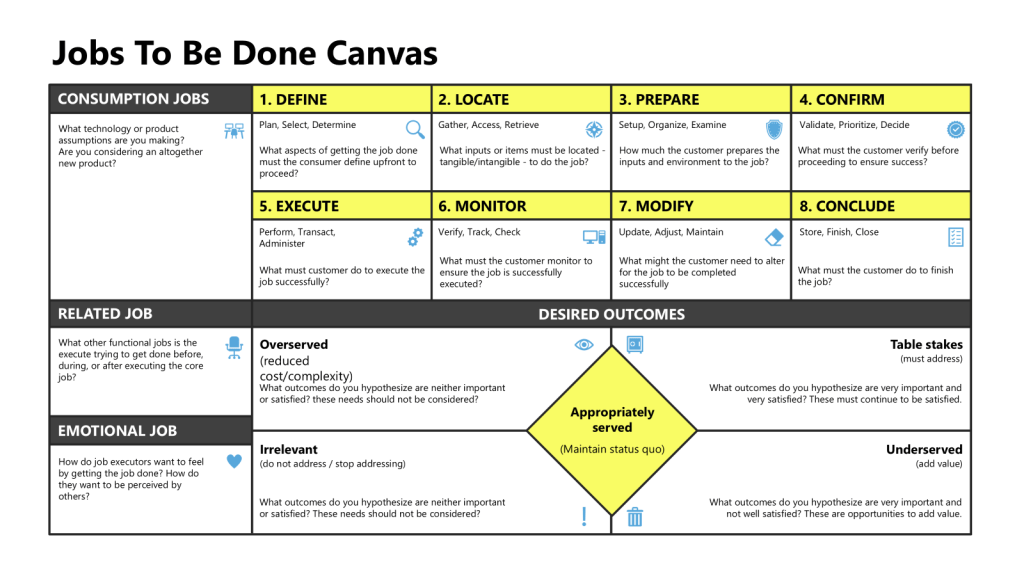
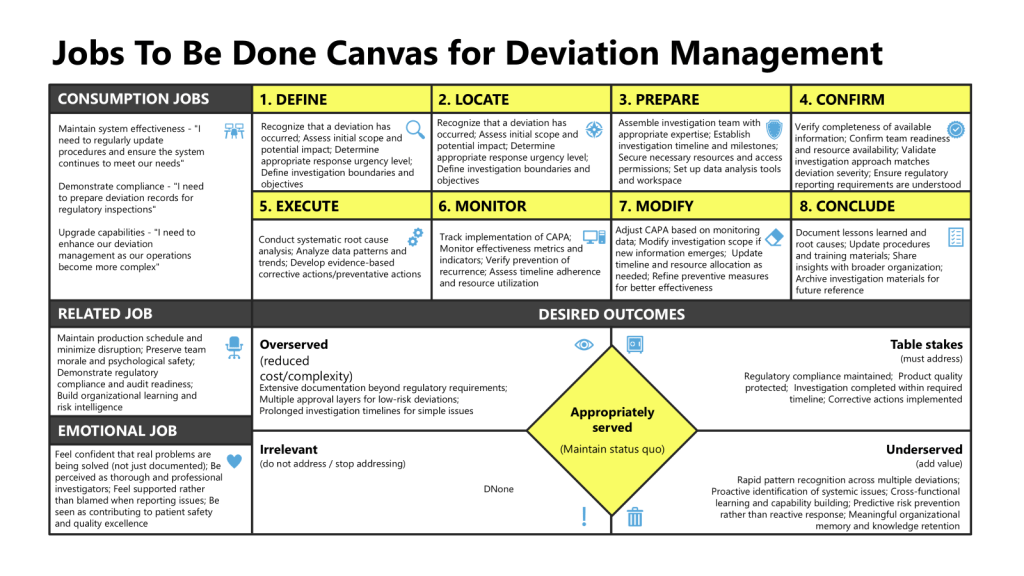

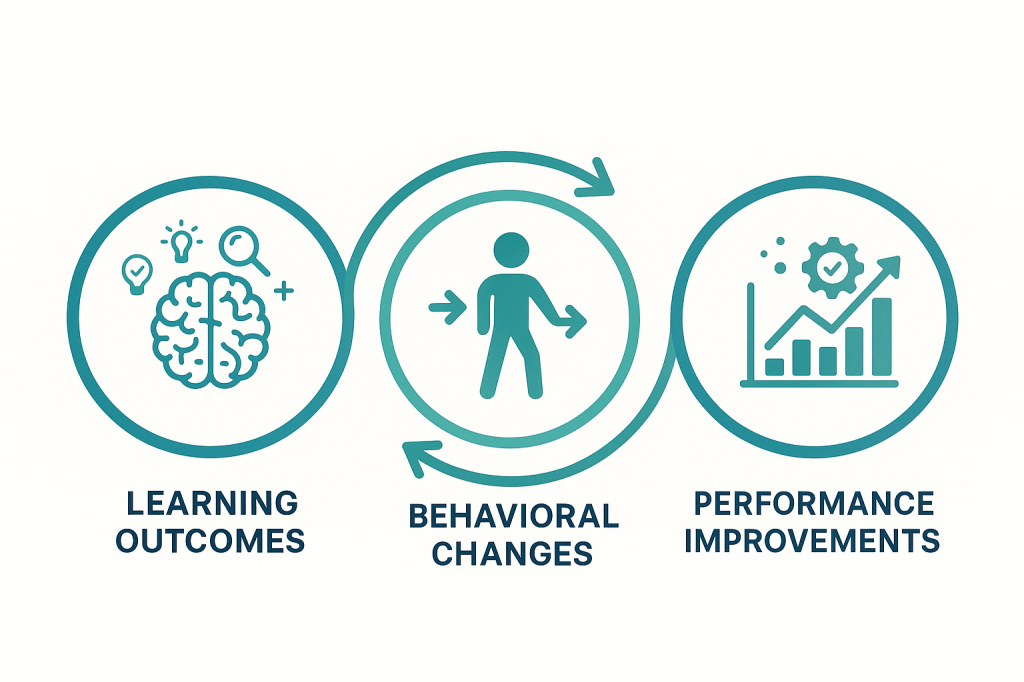
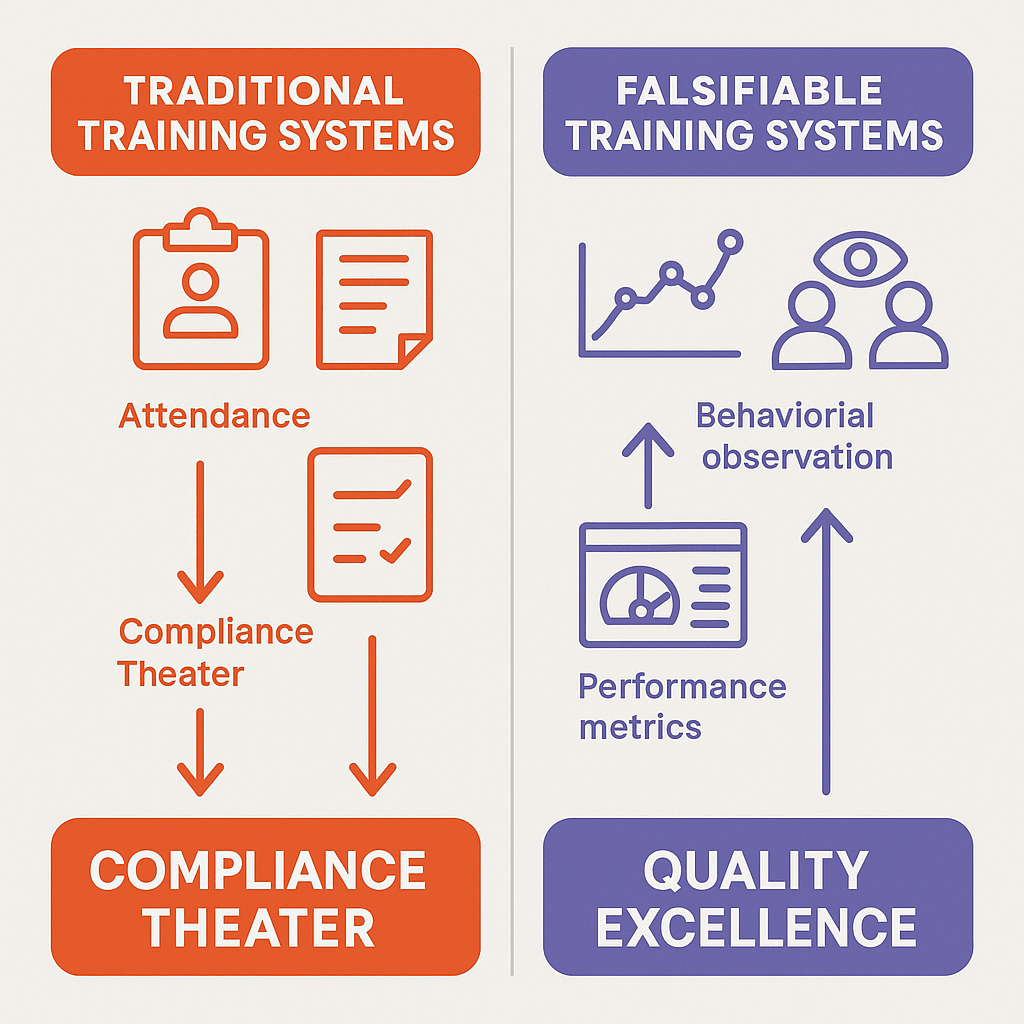
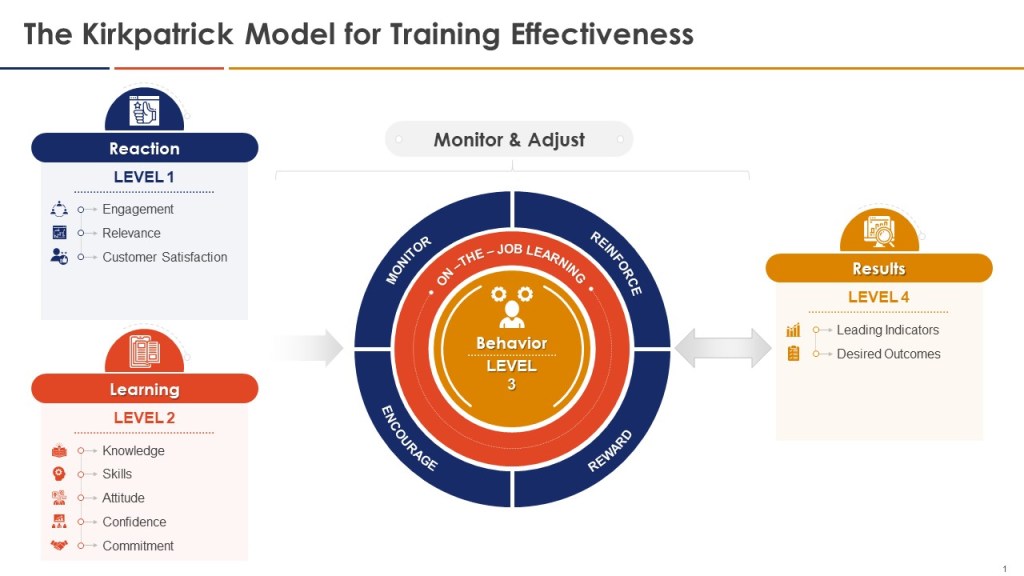
 Investigations of a Dog