Draft Annex 11, Section 13: What the Proposed Electronic Signature Rules Mean

Ready or not, the EU’s draft revision of Annex 11 is moving toward finalization, and its brand-new Section 13 on electronic signatures is a wake-up call for anyone still treating digital authentication as just Part 11 with an accent. In this post I will take a deep dive into what’s changing, why it matters, and how to keep your quality system out of the regulatory splash zone.

Section 13 turns electronic signatures from a check-the-box formality into a risk-based, security-anchored discipline. Think multi-factor authentication, time-zone stamps, hybrid wet-ink safeguards, and explicit “non-repudiation” language—all enforced at the same rigor as system login. If your current SOPs still assume username + password = done, it’s time to start planning some improvements.

Why the Rewrite?

  1. Tech has moved on: Biometric ID, cloud PaaS, and federated identity management were sci-fi when the 2011 Annex 11 dropped.
  2. Threat landscape: Ransomware and credential stuffing didn’t exist at today’s scale. Regulators finally noticed.
  3. Global convergence: The FDA’s Computer Software Assurance (CSA) draft and PIC/S data-integrity guides pushed the EU to level up.

For the bigger regulatory context, see my post on EMA GMP Plans for Regulation Updates.

What’s Actually New in Section 13?

Topic2011 Annex 11Draft Annex 11 (2025)21 CFR Part 11Why You Should Care
Authentication at SignatureSilentMust equal or exceed login strength; first sign = full re-auth, subsequent signs = pwd/biometric; smart-card-only = bannedTwo identification componentsForces MFA or biometrics; goodbye “remember me” shortcuts
Time & Time-ZoneDate + time (manual OK)Auto-captured and time-zone loggedDate + time (no TZ)Multisite ops finally get defensible chronology
Signature Meaning PromptNot requiredSystem must ask user for purpose (approve, review…)Required but less prescriptiveEliminates “mystery clicks” that auditors love to exploit
Manifestation ElementsMinimalFull name, username, role, meaning, date/time/TZName, date, meaningCloses attribution gaps; boosts ALCOA+ “Legible”
Indisputability Clause“Same impact”Explicit non-repudiation mandateEquivalent legal weightSets the stage for eIDAS/federated ID harmonization
Record Linking After ChangePermanent linkIf record altered post-sign, signature becomes void/flaggedLink cannot be excisedEnds stealth edits after approval
Hybrid Wet-Ink ControlSilentHash code or similar to break link if record changesSilentLets you keep occasional paper without tanking data integrity
Open Systems / Trusted ServicesSilentMust comply with “national/international trusted services” (read: eIDAS)Extra controls, but legacy wordingValidates cloud signing platforms out of the box

The Implications

Multi-Factor Authentication (MFA) Is Now Table Stakes

Because the draft explicitly bars any authentication method that relies solely on a smart card or a static PIN, every electronic signature now has to be confirmed with an additional, independent factor—such as a password, biometric scan, or time-limited one-time code—so that the credential used to apply the signature is demonstrably different from the one that granted the user access to the system in the first place.

Time-Zone Logging Kills Spreadsheet Workarounds

One of the more subtle but critical updates in Draft Annex 11’s Section 13.4 is the explicit requirement for automatic logging of the time zone when electronic signatures are applied. Unlike previous guidance—whether under the 2011 Annex 11 or 21 CFR Part 11—that only mandated the capture of date and time (often allowing manual entry or local system time), the draft stipulates that systems must automatically capture the precise time and associated time zone for each signature event. This seemingly small detail has monumental implications for data integrity, traceability, and regulatory compliance. Why does this matter? For global pharmaceutical operations spanning multiple time zones, manual or local-only timestamps often create ambiguous or conflicting audit trails, leading to discrepancies in event sequencing. Companies relying on spreadsheets or legacy systems that do not incorporate time zone information effectively invite errors where a signature in one location appears to precede an earlier event simply due to zone differences. This ambiguity can undermine the “Contemporaneous” and “Enduring” principles of ALCOA+, principles the draft Annex 11 explicitly reinforces throughout electronic signature requirements. By mandating automated, time zone-aware timestamping, Draft Annex 11 Section 13.4 ensures that electronic signature records maintain a defensible and standardized chronology across geographies, eliminating the need for cumbersome manual reconciliation or retrospective spreadsheet corrections. This move not only tightens compliance but also supports modern, centralized data review and analytics where uniform timestamping is essential. If your current systems or SOPs rely on manual date/time entry or overlook time zone logging, prepare for significant system and procedural updates to meet this enhanced expectation once the draft Annex 11 is finalized. .

Hybrid Records Are Finally Codified

If you still print a batch record for wet-ink QA approval, Section 13.9 lets you keep the ritual—but only if a cryptographic hash or similar breaks when someone tweaks the underlying PDF. Expect a flurry of DocuSign-scanner-hash utilities.

Open-System Signatures Shift Liability

Draft Annex 11’s Section 13.2 represents perhaps the most strategically significant change in electronic signature liability allocation since 21 CFR Part 11 was published in 1997. The provision states that “Where the system owner does not have full control of system accesses (open systems), or where required by other legislation, electronic signatures should, in addition, meet applicable national and international requirements, such as trusted services”. This seemingly simple sentence fundamentally reshapes liability relationships in modern pharmaceutical IT architectures.

Defining the Open System Boundary

The draft Annex 11 adopts the 21 CFR Part 11 definition of open systems—environments where system owners lack complete control over access and extends it into contemporary cloud, SaaS, and federated identity scenarios. Unlike the original Part 11 approach, which merely required “additional measures such as document encryption and use of appropriate digital signature standards”, Section 13.2 creates a positive compliance obligation by mandating adherence to “trusted services” frameworks.

This distinction is critical: while Part 11 treats open systems as inherently risky environments requiring additional controls, draft Annex 11 legitimizes open systems provided they integrate with qualified trust service providers. Organizations no longer need to avoid cloud-based signature services; instead, they must ensure those services meet eIDAS-qualified standards or equivalent national frameworks.

The Trusted Services Liability Transfer

Section 13.2’s reference to “trusted services” directly incorporates European eIDAS Regulation 910/2014 into pharmaceutical GMP compliance, creating what amounts to a liability transfer mechanism. Under eIDAS, Qualified Trust Service Providers (QTSPs) undergo rigorous third-party audits, maintain certified infrastructure, and provide legal guarantees about signature validity and non-repudiation. When pharmaceutical companies use eIDAS-qualified signature services, they effectively transfer signature validity liability from their internal systems to certified external providers.

This represents a fundamental shift from the 21 CFR Part 11 closed-system preference, where organizations maintained complete control over signature infrastructure but also bore complete liability for signature failures. Draft Annex 11 acknowledges that modern pharmaceutical operations often depend on cloud service providers, federated authentication systems, and external trust services—and provides a regulatory pathway to leverage these technologies while managing liability exposure.

Practical Implications for SaaS Platforms

The most immediate impact affects organizations using Software-as-a-Service platforms for clinical data management, quality management, or document management. Under current Annex 11 and Part 11, these systems often require complex validation exercises to demonstrate signature integrity, with pharmaceutical companies bearing full responsibility for signature validity even when using external platforms.

Section 13.2 changes this dynamic by validating reliance on qualified trust services. Organizations using platforms like DocuSign, Adobe Sign, or specialized pharmaceutical SaaS providers can now satisfy Annex 11 requirements by ensuring their chosen platforms integrate with eIDAS-qualified signature services. The pharmaceutical company’s validation responsibility shifts from proving signature technology integrity to verifying trust service provider qualifications and proper integration.

Integration with Identity and Access Management

Draft Annex 11’s Section 11 (Identity and Access Management) works in conjunction with Section 13.2 to support federated identity scenarios common in modern pharmaceutical operations. Organizations can now implement single sign-on (SSO) systems with external identity providers, provided the signature components integrate with trusted services. This enables scenarios where employees authenticate through corporate Active Directory systems but execute legally binding signatures through eIDAS-qualified providers.

The liability implications are significant: authentication failures become the responsibility of the identity provider (within contractual limits), while signature validity becomes the responsibility of the qualified trust service provider. The pharmaceutical company retains responsibility for proper system integration and user access controls, but shares technical implementation liability with certified external providers.

Cloud Service Provider Risk Allocation

For organizations using cloud-based LIMS, MES, or quality management systems, Section 13.2 provides regulatory authorization to implement signature services hosted entirely by external providers. Cloud service providers offering eIDAS-compliant signature services can contractually accept liability for signature technical implementation, cryptographic integrity, and legal validity—provided they maintain proper trust service qualifications.

This risk allocation addresses a long-standing concern in pharmaceutical cloud adoption: the challenge of validating signature infrastructure owned and operated by external parties. Under Section 13.2, organizations can rely on qualified trust service provider certifications rather than conducting detailed technical validation of cloud provider signature implementations.

Harmonization with Global Standards

Section 13.2’s “national and international requirements” language extends beyond eIDAS to encompass other qualified electronic signature frameworks. This includes Swiss ZertES standards and Canadian digital signature regulations,. Organizations operating globally can implement unified signature platforms that satisfy multiple regulatory requirements through single trusted service provider integrations.

The practical effect is regulatory arbitrage: organizations can choose signature service providers based on the most favorable combination of technical capabilities, cost, and regulatory coverage, rather than being constrained by local regulatory limitations.

Supplier Assessment Transformation

Draft Annex 11’s Section 7 (Supplier and Service Management) requires comprehensive supplier assessment for computerized systems. However, Section 13.2 creates a qualified exception for eIDAS-certified trust service providers: organizations can rely on third-party certification rather than conducting independent technical assessments of signature infrastructure.

This significantly reduces supplier assessment burden for signature services. Instead of auditing cryptographic implementations, hardware security modules, and signature validation algorithms, organizations can verify trust service provider certifications and assess integration quality. The result: faster implementation cycles and reduced validation costs for signature-enabled systems.

Audit Trail Integration Considerations

The liability shift enabled by Section 13.2 affects audit trail management requirements detailed in draft Annex 11’s expanded Section 12 (Audit Trails). When signature events are managed by external trust service providers, organizations must ensure signature-related audit events are properly integrated with internal audit trail systems while maintaining clear accountability boundaries.

Qualified trust service providers typically provide comprehensive signature audit logs, but organizations remain responsible for correlation with business process audit trails. This creates shared audit trail management where signature technical events are managed externally but business context remains internal responsibility.

Competitive Advantages of Early Adoption

Organizations that proactively implement Section 13.2 requirements gain several strategic advantages:

  • Reduced Infrastructure Costs: Elimination of internal signature infrastructure maintenance and validation overhead
  • Enhanced Security: Leverage specialized trust service provider security expertise and certified infrastructure
  • Global Scalability: Unified signature platforms supporting multiple regulatory jurisdictions through single provider relationships
  • Accelerated Digital Transformation: Faster deployment of signature-enabled processes through validated external services
  • Risk Transfer: Contractual liability allocation with qualified external providers rather than complete internal risk retention

Section 13.2 transforms open system electronic signatures from compliance challenges into strategic enablers of digital pharmaceutical operations. By legitimizing reliance on qualified trust services, the draft Annex 11 enables organizations to leverage best-in-class signature technologies while managing regulatory compliance and liability exposure through proven external partnerships. The result: more secure, cost-effective, and globally scalable electronic signature implementations that support advanced digital quality management systems.

How to Get Ahead (Instead of Playing Cleanup)

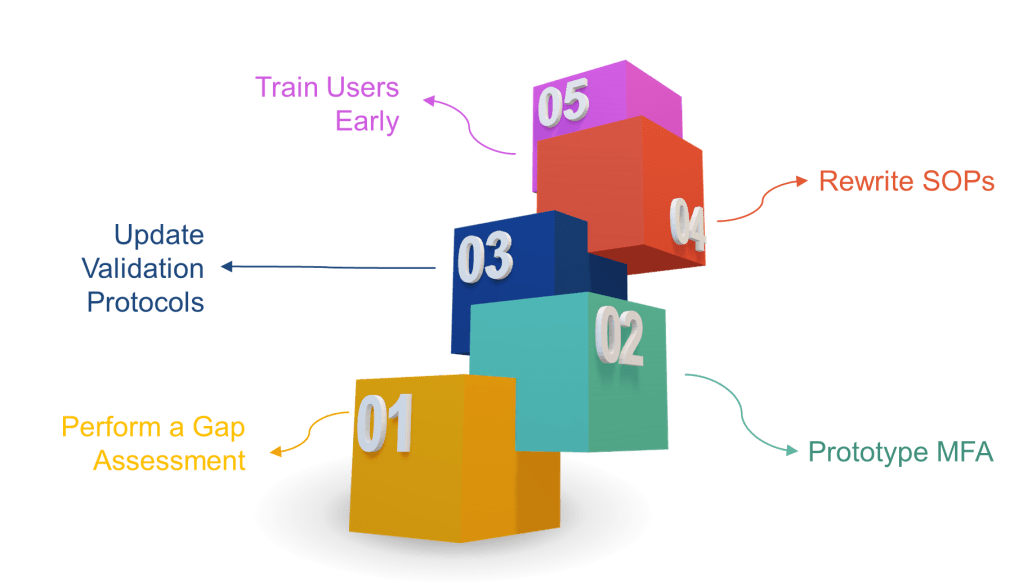
  1. Perform a gap assessment now—map every signature point to the new rules.
  2. Prototype MFA in your eDMS or MES. If users scream about friction, remind them that ransomware is worse.
  3. Update validation protocols to include time-zone, hybrid record, and non-repudiation tests.
  4. Rewrite SOPs to include signature-meaning prompts and periodic access-right recertification.
  5. Train users early. A 30-second “why you must re-authenticate” explainer video beats 300 deviations later.
Final Thoughts

The draft Annex 11 doesn’t just tweak wording—it yanks electronic signatures into the 2020s. Treat Section 13 as both a compliance obligation and an opportunity to slash latent data-integrity risk. Those who adapt now will cruise through 2026/2027 inspections while the laggards scramble for remediation budgets.
Navigating the Evolving Landscape of Validation in 2025: Trends, Challenges, and Strategic Imperatives

Hopefully, you’ve been following my journey through the ever-changing world of validation. In that case, you’ll recognize that our field is undergoing transformation under the dual drivers of digital transformation and shifting regulatory expectations. Halfway through 2025, we have another annual report from Kneat, and it is clear that while some of those core challenges remain, companies are reporting that new priorities are emerging—driven by the rapid pace of digital adoption and evolving compliance landscapes.

The 2025 validation landscape reveals a striking reversal: audit readiness has dethroned compliance burden as the industry’s primary concern , marking a fundamental shift in how organizations prioritize regulatory preparedness. While compliance burden dominated in 2024—a reflection of teams grappling with evolving standards during active projects—this year’s data signals a maturation of validation programs. As organizations transition from project execution to operational stewardship, the scramble to pass audits has given way to the imperative to sustain readiness.

Why the Shift Matters

The surge in audit readiness aligns with broader quality challenges outlined in The Challenges Ahead for Quality (2023) , where data integrity and operational resilience emerged as systemic priorities.

Table: Top Validation Challenges (2022–2025)

Rank2022202320242025
1Human resourcesHuman resourcesCompliance burdenAudit readiness
2EfficiencyEfficiencyAudit readinessCompliance burden
3Technological gapsTechnological gapsData integrityData integrity

This reversal mirrors a lifecycle progression. During active validation projects, teams focus on navigating procedural requirements (compliance burden). Once operational, the emphasis shifts to sustaining inspection-ready systems—a transition fraught with gaps in metadata governance and decentralized workflows. As noted in Health of the Validation Program, organizations often discover latent weaknesses in change control or data traceability only during audits, underscoring the need for proactive systems.

Next year it could flop back, to be honest these are just two sides of the same coin.

Operational Realities Driving the Change

The 2025 report highlights two critical pain points:

  1. Documentation traceability : 69% of teams using digital validation tools cite automated audit trails as their top benefit, yet only 13% integrate these systems with project management platform . This siloing creates last-minute scrambles to reconcile disparate records.
  2. Experience gaps : With 42% of professionals having 6–15 years of experience, mid-career teams lack the institutional knowledge to prevent audit pitfalls—a vulnerability exacerbated by retiring senior experts .

Organizations that treated compliance as a checkbox exercise now face operational reckoning, as fragmented systems struggle to meet the FDA’s expectations for real-time data access and holistic process understanding.

Similarly, teams that relied on 1 or 2 full-time employees, and leveraged contractors, also struggle with building and retaining expertise.

Strategic Implications

To bridge this gap, forward-thinking teams continue to adopt risk-adaptive validation models that align with ICH Q10’s lifecycle approach. By embedding audit readiness into daily work organizations can transform validation from a cost center to a strategic asset. As argued in Principles-Based Compliance, this shift requires rethinking quality culture: audit preparedness is not a periodic sprint but a byproduct of robust, self-correcting systems.

In essence, audit readiness reflects validation’s evolution from a tactical compliance activity to a cornerstone of enterprise quality—a theme that will continue to dominate the profession’s agenda and reflects the need to drive for maturity.

Digital Validation Adoption Reaches Tipping Point

Digital validation systems have seen a 28% adoption increase since 2024, with 58% of organizations now using these tools . By 2025, 93% of firms either use or plan to adopt digital validation, signaling and sector-wide transformation. Early adopters report significant returns: 63% meet or exceed ROI expectations, achieving 50% faster cycle times and reduced deviations. However, integration gaps persist, as only 13% connect digital validation with project management tools, highlighting siloed workflows.

None of this should be a surprise, especially since Kneat, a provider of an electronic validation management system, sponsored the report.

Table 2: Digital Validation Adoption Metrics (2025)

MetricValue
Organizations using digital systems58%
ROI expectations met/exceeded63%
Integration with project tools13%

For me, the real challenge here, as I explored in my post “Beyond Documents: Embracing Data-Centric Thinking“, is not just settling for paper-on-glass but to start thinking of your validation data as a larger lifecycle.

Leveraging Data-Centric Thinking for Digital Validation Transformation

The shift from document-centric to data-centric validation represents a paradigm shift in how regulated industries approach compliance, as outlined in Beyond Documents: Embracing Data-Centric Thinking. This transition aligns with the 2025 State of Validation Report’s findings on digital adoption trends and addresses persistent challenges like audit readiness and workforce pressures.

The Paper-on-Glass Trap in Validation

Many organizations remain stuck in “paper-on-glass” validation models, where digital systems replicate paper-based workflows without leveraging data’s full potential. This approach perpetuates inefficiencies such as:

  • Manual data extraction requiring hours to reconcile disparate records
  • Inflated validation cycles due to rigid document structures that limit adaptive testing
  • Increased error rates from static protocols that cannot dynamically respond to process deviations

Principles of Data-Centric Validation

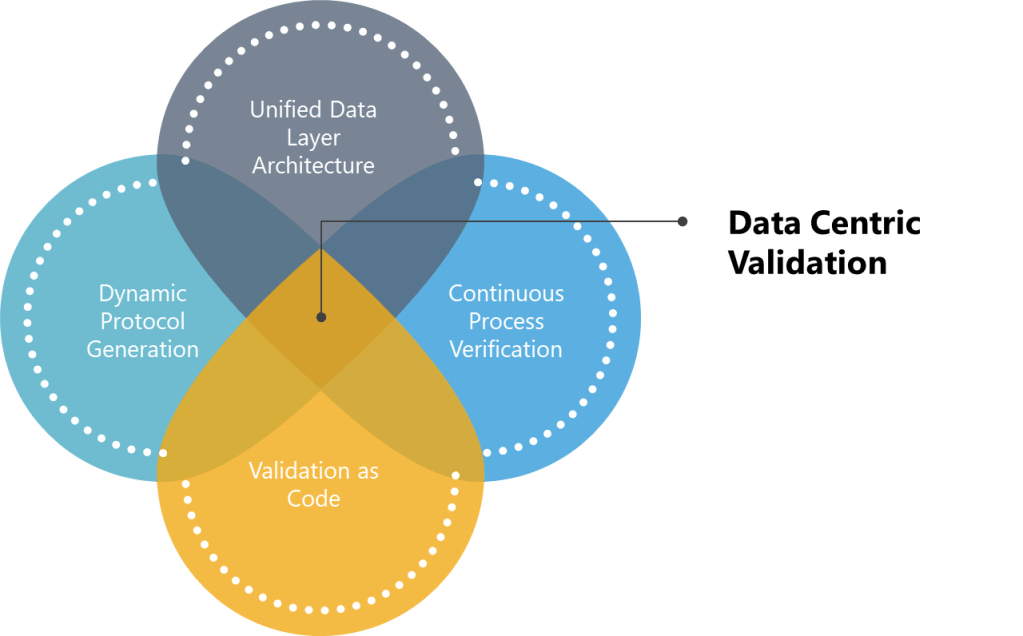
True digital transformation requires reimagining validation through four core data-centric principles:

  • Unified Data Layer Architecture: The adoption of unified data layer architectures marks a paradigm shift in validation practices, as highlighted in the 2025 State of Validation Report. By replacing fragmented document-centric models with centralized repositories, organizations can achieve real-time traceability and automated compliance with ALCOA++ principles. The transition to structured data objects over static PDFs directly addresses the audit readiness challenges discussed above, ensuring metadata remains enduring and available across decentralized teams.
  • Dynamic Protocol Generation: AI-driven dynamic protocol generation may reshape validation efficiency. By leveraging natural language processing and machine learning, the hope is to have systems analyze historical protocols and regulatory guidelines to auto-generate context-aware test scripts. However, regulatory acceptance remains a barrier—only 10% of firms integrate validation systems with AI analytics, highlighting the need for controlled pilots in low-risk scenarios before broader deployment.
  • Continuous Process Verification: Continuous Process Verification (CPV) has emerged as a cornerstone of the industry as IoT sensors and real-time analytics enabling proactive quality management. Unlike traditional batch-focused validation, CPV systems feed live data from manufacturing equipment into validation platforms, triggering automated discrepancy investigations when parameters exceed thresholds. By aligning with ICH Q10’s lifecycle approach, CPV transforms validation from a compliance exercise into a strategic asset.
  • Validation as Code: The validation-as-code movement, pioneered in semiconductor and nuclear industries, represents the next frontier in agile compliance. By representing validation requirements as machine-executable code, teams automate regression testing during system updates and enable Git-like version control for protocols. The model’s inherent auditability—with every test result linked to specific code commits—directly addresses the data integrity priorities ranked by 63% of digital validation adopters.

Table 1: Document-Centric vs. Data-Centric Validation Models

AspectDocument-CentricData-Centric
Primary ArtifactPDF/Word DocumentsStructured Data Objects
Change ManagementManual Version ControlGit-like Branching/Merging
Audit ReadinessWeeks of PreparationReal-Time Dashboard Access
AI CompatibilityLimited (OCR-Dependent)Native Integration (eg, LLM Fine-Tuning)
Cross-System TraceabilityManual Matrix MaintenanceAutomated API-Driven Links

Implementation Roadmap

Organizations progressing towards maturity should:

  1. Conduct Data Maturity Assessments
  2. Adopt Modular Validation Platforms
    • Implement cloud-native solutions
  3. Reskill Teams for Data Fluency
  4. Establish Data Governance Frameworks

AI in Validation: Early Adoption, Strategic Potential

Artificial intelligence (AI) adoption and validation are still in the early stages, though the outlook is promising. Currently, much of the conversation around AI is driven by hype, and while there are encouraging developments, significant questions remain about the fundamental soundness and reliability of AI technologies.

In my view, AI is something to consider for the future rather than immediate implementation, as we still need to fully understand how it functions. There are substantial concerns regarding the validation of AI systems that the industry must address, especially as we approach more advanced stages of integration. Nevertheless, AI holds considerable potential, and leading-edge companies are already exploring a variety of approaches to harness its capabilities.

Table 3: AI Adoption in Validation (2025)

AI ApplicationAdoption RateImpact
Protocol generation12%40% faster drafting
Risk assessment automation9%30% reduction in deviations
Predictive analytics5%25% improvement in audit readiness

Workforce Pressures Intensify Amid Resource Constraints

Workloads increased for 66% of teams in 2025, yet 39% operate with 1–3 members, exacerbating talent gaps . Mid-career professionals (42% with 6–15 years of experience) dominate the workforce, signaling a looming “experience gap” as senior experts retire. This echoes 2023 quality challenges, where turnover risks and knowledge silos threaten operational resilience. Outsourcing has become a critical strategy, with 70% of firms relying on external partners for at least 10% of validation work.

Smart organizations have talent and competency building strategies.

Emerging Challenges and Strategic Responses

From Compliance to Continuous Readiness

Organizations are shifting from reactive compliance to building “always-ready” systems.

From Firefighting to Future-Proofing: The Strategic Shift to “Always-Ready” Quality Systems

The industry’s transition from reactive compliance to “always-ready” systems represents a fundamental reimagining of quality management. This shift aligns with the Excellence Triad framework—efficiency, effectiveness, and elegance—introduced in my 2025 post on elegant quality systems, where elegance is defined as the seamless integration of intuitive design, sustainability, and user-centric workflows. Rather than treating compliance as a series of checkboxes to address during audits, organizations must now prioritize systems that inherently maintain readiness through proactive risk mitigation , real-time data integrity , and self-correcting workflows .

Elegance as the Catalyst for Readiness

The concept of “always-ready” systems draws heavily from the elegance principle, which emphasizes reducing friction while maintaining sophistication. .

Principles-Based Compliance and Quality

The move towards always-ready systems also reflects lessons from principles-based compliance , which prioritizes regulatory intent over prescriptive rules.

Cultural and Structural Enablers

Building always-ready systems demands more than technology—it requires a cultural shift. The 2021 post on quality culture emphasized aligning leadership behavior with quality values, a theme reinforced by the 2025 VUCA/BANI framework , which advocates for “open-book metrics” and cross-functional transparency to prevent brittleness in chaotic environments. F

Outcomes Over Obligation

Ultimately, always-ready systems transform compliance from a cost center into a strategic asset. As noted in the 2025 elegance post , organizations using risk-adaptive documentation practices and API-driven integrations report 35% fewer audit findings, proving that elegance and readiness are mutually reinforcing. This mirrors the semiconductor industry’s success with validation-as-code, where machine-readable protocols enable automated regression testing and real-time traceability.

By marrying elegance with enterprise-wide integration, organizations are not just surviving audits—they’re redefining excellence as a state of perpetual readiness, where quality is woven into the fabric of daily operations rather than bolted on during inspections.

Workforce Resilience in Lean Teams

The imperative for cross-training in digital tools and validation methodologies stems from the interconnected nature of modern quality systems, where validation professionals must act as “system gardeners” nurturing adaptive, resilient processes. This competency framework aligns with the principles outlined in Building a Competency Framework for Quality Professionals as System Gardeners, emphasizing the integration of technical proficiency, regulatory fluency, and collaborative problem-solving.

Competency: Digital Validation Cross-Training

Definition : The ability to fluidly navigate and integrate digital validation tools with traditional methodologies while maintaining compliance and fostering system-wide resilience.

Dimensions and Elements

1. Adaptive Technical Mastery

Elements :

  • Tool Agnosticism : Proficiency across validation platforms and core systems (eQMS, etc) with ability to map workflows between systems.
  • System Literacy : Competence in configuring integrations between validation tools and electronic systems, such as an MES.
  • CSA Implementation : Practical application of Computer Software Assurance principles and GAMP 5.

2. Regulatory-DNA Integration

Elements :

  • ALCOA++ Fluency : Ability to implement data integrity controls that satisfy FDA 21 CFR Part 11 and EU Annex 11.
  • Inspection Readiness : Implementation of inspection readiness principles
  • Risk-Based AI Validation : Skills to validate machine learning models per FDA 2024 AI/ML Validation Draft Guidance.

3. Cross-Functional Cultivation

Elements :

  • Change Control Hybridization : Ability to harmonize agile sprint workflows with ASTM E2500 and GAMP 5 change control requirements.
  • Knowledge Pollination : Regular rotation through manufacturing/QC roles to contextualize validation decisions.

Validation’s Role in Broader Quality Ecosystems

Data Integrity as a Strategic Asset

The axiom “we are only as good as our data” encapsulates the existential reality of regulated industries, where decisions about product safety, regulatory compliance, and process reliability hinge on the trustworthiness of information. The ALCOA++ framework— Attributable, Legible, Contemporary, Original, Accurate, Complete, Consistent, Enduring, and Available —provides the architectural blueprint for embedding data integrity into every layer of validation and quality systems. As highlighted in the 2025 State of Validation Report , organizations that treat ALCOA++ as a compliance checklist rather than a cultural imperative risk systemic vulnerabilities, while those embracing it as a strategic foundation unlock resilience and innovation.

Cultural Foundations: ALCOA++ as a Mindset, Not a Mandate

The 2025 validation landscape reveals a stark divide: organizations treating ALCOA++ as a technical requirement struggle with recurring findings, while those embedding it into their quality culture thrive. Key cultural drivers include:

  • Leadership Accountability : Executives who tie KPIs to data integrity metrics (eg, % of unattributed deviations) signal its strategic priority, aligning with Principles-Based Compliance.
  • Cross-Functional Fluency : Training validation teams in ALCOA++-aligned tools bridges the 2025 report’s noted “experience gap” among mid-career professionals .
  • Psychological Safety : Encouraging staff to report near-misses without fear—a theme in Health of the Validation Program —prevents data manipulation and fosters trust.

The Cost of Compromise: When Data Integrity Falters

The 2025 report underscores that 25% of organizations spend >10% of project budgets on validation—a figure that balloons when data integrity failures trigger rework. Recent FDA warning letters cite ALCOA++ breaches as root causes for:

  • Batch rejections due to unverified temperature logs (lack of original records).
  • Clinical holds from incomplete adverse event reporting (failure of Complete ).
  • Import bans stemming from inconsistent stability data across sites (breach of Consistent ).

Conclusion: ALCOA++ as the Linchpin of Trust

In an era where AI-driven validation and hybrid inspections redefine compliance, ALCOA++ principles remain the non-negotiable foundation. Organizations must evolve beyond treating these principles as static rules, instead embedding them into the DNA of their quality systems—as emphasized in Pillars of Good Data. When data integrity drives every decision, validation transforms from a cost center into a catalyst for innovation, ensuring that “being as good as our data” means being unquestionably reliable.

Future-Proofing Validation in 2025

The 2025 validation landscape demands a dual focus: accelerating digital/AI adoption while fortifying human expertise . Key recommendations include:

  1. Prioritize Integration : Break down silos by connecting validation tools to data sources and analytics platforms.
  2. Adopt Risk-Based AI : Start with low-risk AI pilots to build regulatory confidence.
  3. Invest in Talent Pipelines : Address mid-career gaps via academic partnerships and reskilling programs.

As the industry navigates these challenges, validation will increasingly serve as a catalyst for quality innovation—transforming from a cost center to a strategic asset.

Quality Unit Oversight Failures: A Critical Analysis of Recent FDA Warning Letters

The continued trend in FDA warning letters citing Quality Unit (QU) deficiencies highlights a concerning reality across pharmaceutical manufacturing operations worldwide. Three warning letters recently issued to pharmaceutical companies in China, India, and Malaysia reveal fundamental weaknesses in Quality Unit oversight that extend beyond isolated procedural failures to indicate systemic quality management deficiencies. These regulatory actions demonstrate the FDA’s continued emphasis on the Quality Unit as the cornerstone of pharmaceutical quality systems, with expectations that these units function as independent guardians of product quality with sufficient authority, resources, and expertise. This analysis examines the specific deficiencies identified across recent warning letters, identifies patterns of Quality Unit organizational failures, explores regulatory expectations, and provides strategic guidance for building robust quality oversight capabilities that meet evolving compliance standards.

Recent FDA Warning Letters Highlighting Critical Quality Unit Deficiencies

Multiple Geographic Regions Under Scrutiny

The FDA has continues to provide an intense focus on Quality Unit oversight through a series of warning letters targeting pharmaceutical operations across Asia. As highlighted in a May 19, 2025 GMP Compliance article, three notable warning letters targeted specific Quality Unit failures across multiple regions. The Chinese manufacturer failed to establish an adequate Quality Unit with proper authority to oversee manufacturing operations, particularly in implementing change control procedures and conducting required periodic product reviews. Similarly, the Indian manufacturer’s Quality Unit failed to implement controls ensuring data integrity, resulting in unacceptable documentation practices including torn batch records, damaged testing chromatograms, and improperly completed forms. The Malaysian facility, producing OTC products, showed failures in establishing adequate training programs and performing appropriate product reviews, further demonstrating systemic quality oversight weaknesses. These geographically diverse cases indicate that Quality Unit deficiencies represent a global challenge rather than isolated regional issues.

Historical Context of Regulatory Concerns

FDA’s focus on Quality Unit responsibilities isn’t new. A warning letter to a Thai pharmaceutical company earlier in 2024 cited Quality Unit deficiencies including lack of control over manufacturing operations, inadequate documentation of laboratory preparation, and insufficient review of raw analytical data. These issues allowed concerning practices such as production staff altering master batch records and using erasable markers on laminated sheets for production records. Another notable case involved Henan Kangdi Medical Devices, where in January 2020 the FDA stated explicitly that “significant findings in this letter indicate that your quality unit is not fully exercising its authority and/or responsibilities”. The consistent regulatory focus across multiple years suggests pharmaceutical manufacturers continue to struggle with properly empowering and positioning Quality Units within their organizational structures.

Geographic Analysis of Quality Unit Failures: Emerging vs. Mature Regulatory Markets

These FDA warning letters highlighting Quality Unit (QU) deficiencies reveal significant disparities between pharmaceutical manufacturing practices in emerging markets (e.g., China, India, Malaysia, Thailand) and mature regulatory jurisdictions (e.g., the U.S., EU, Japan). These geographic differences reflect systemic challenges tied to regulatory infrastructure, economic priorities, and technological adoption.

In emerging markets, structural weaknesses in regulatory oversight and quality culture dominate QU failures. For example, Chinese manufacturers like Linghai ZhanWang Biotechnology (2025) and Henan Kangdi (2019) faced FDA action because their Quality Units lacked the authority to enforce CGMP standards, with production teams frequently overriding quality decisions. Similarly, Indian facilities cited in 2025 warnings struggled with basic data integrity controls, including torn paper records and unreviewed raw data—issues exacerbated by domestic regulatory bodies like India’s CDSCO, which inspects fewer than 2% of facilities annually. These regions often prioritize production quotas over compliance, leading to under-resourced Quality Units and inadequate training programs, as seen in a 2025 warning letter to a Malaysian OTC manufacturer whose QU staff lacked GMP training. Supply chain fragmentation further complicates oversight, particularly in contract manufacturing hubs like Thailand, where a 2024 warning letter noted no QU review of outsourced laboratory testing.

By contrast, mature markets face more nuanced QU challenges tied to technological complexity and evolving regulatory expectations. In the U.S. and EU, recent warnings highlight gaps in Quality Units’ understanding of advanced manufacturing technologies, such as continuous manufacturing processes or AI-driven analytics. A 2024 EU warning letter to a German API manufacturer, for instance, cited cybersecurity vulnerabilities in electronic batch records—a stark contrast to emerging markets’ struggles with paper-based systems. While data integrity remains a global concern, mature markets grapple with sophisticated gaps like inadequate audit trails in cloud-based laboratory systems, whereas emerging economies face foundational issues like erased entries or unreviewed chromatograms. Regulatory scrutiny also differs: FDA inspection data from 2023 shows QU-related citations in just 6.2% of U.S. facilities versus 23.1% in Asian operations, reflecting stronger baseline compliance in mature jurisdictions.

Case comparisons illustrate these divergences. At an Indian facility warned in 2025, production staff routinely overruled QU decisions to meet output targets, while a 2024 U.S. warning letter described a Quality Unit delaying batch releases due to inadequate validation of a new AI-powered inventory system. Training gaps also differ qualitatively: emerging-market QUs often lack basic GMP knowledge, whereas mature-market teams may struggle with advanced tools like machine learning algorithms.

These geographic trends have strategic implications. Emerging markets require foundational investments in QU independence, such as direct reporting lines to executive leadership, and adoption of centralized digital systems to mitigate paper-record risks. Partnerships with mature-market firms could accelerate quality culture development. Meanwhile, mature jurisdictions must modernize QU training programs to address rapidly changing technologies and strengthen oversight of decentralized production models.

Data Integrity as a Critical Quality Unit Responsibility

Data integrity issues feature prominently in recent enforcement actions, reflecting the Quality Unit’s crucial role as guardian of trustworthy information. The FDA frequently requires manufacturers with data integrity deficiencies to engage third-party consultants to conduct comprehensive investigations into record inaccuracies across all laboratories, manufacturing operations, and relevant systems. These remediation efforts must identify numerous potential issues including omissions, alterations, deletions, record destruction, non-contemporaneous record completion, and other deficiencies that undermine data reliability. Thorough risk assessments must evaluate potential impacts on product quality, with companies required to implement both interim protective measures and comprehensive long-term corrective actions. These requirements underscore the fundamental importance of the Quality Unit in ensuring that product decisions are based on accurate, complete, and trustworthy data.

Patterns of Quality Unit Organizational Failures

Insufficient Authority and Resources

A recurring theme across warning letters is Quality Units lacking adequate authority or resources to fulfill their responsibilities effectively. The FDA’s warning letter to Linghai ZhanWang Biotechnology Co. in February 2025 cited violations that demonstrated the company’s Quality Unit couldn’t effectively ensure compliance with CGMP regulations. Similarly, Lex Inc. faced regulatory action when its “quality system was inadequate” because the Quality Unit “did not provide adequate oversight for the manufacture of over-the-counter (OTC) drug products”.

These cases reflect a fundamental organizational failure to empower Quality Units with sufficient authority and resources to perform their essential functions. Without proper positioning within the organizational hierarchy, Quality Units cannot effectively challenge manufacturing decisions that might compromise product quality or regulatory compliance, creating systemic vulnerabilities.

Documentation and Data Management Deficiencies

Quality Units frequently demonstrate inadequate oversight of documentation and data management processes, allowing significant compliance risks to emerge. According to FDA warning letters, these issues include torn batch records, incompletely documented laboratory preparation, inadequate retention of weight printouts, and insufficient review of raw analytical data. One particularly concerning practice involved “production records on laminated sheets using erasable markers that could be easily altered or lost,” representing a fundamental breakdown of documentation control. These examples demonstrate how Quality Unit failures in documentation oversight directly enable data integrity issues that can undermine the reliability of manufacturing records, ultimately calling product quality into question. Effective Quality Units must establish robust systems for ensuring complete, accurate, and contemporaneous documentation throughout the manufacturing process.

Inadequate Change Control and Risk Assessment

Change control deficiencies represent another significant pattern in Quality Unit failures. Warning letters frequently cite the Quality Unit’s failure to ensure appropriate change control procedures, highlighting inadequate risk assessments as a particular area of concern. FDA inspectors have found that inadequate change control practices present significant compliance risks, with change control appearing among the top ten FDA 483 violations. These deficiencies often involve failure to evaluate the potential impact of changes on product quality, incomplete documentation of changes, and improper execution of change implementation. Effective Quality Units must establish robust change control processes that include thorough risk assessments, appropriate approvals, and verification that changes have not adversely affected product quality.

Insufficient Batch Release and Production Record Review

Quality Units regularly fail to conduct adequate reviews of production records and properly execute batch release procedures. A frequent citation in warning letters involves the Quality Unit’s failure to “review production records to assure that no errors have occurred or, if errors have occurred, that they have been fully investigated”. In several cases, the Quality Unit reviewed only analytical results entered into enterprise systems without examining the underlying raw analytical data, creating significant blind spots in quality oversight. This pattern demonstrates a superficial approach to batch review and release decisions that fails to fulfill the Quality Unit’s fundamental responsibility to ensure each batch meets all established specifications before distribution. Comprehensive batch record review is essential for detecting anomalies that might indicate quality or compliance issues requiring investigation.

Regulatory Expectations for Effective Quality Units

Core Quality Unit Responsibilities

The FDA has clearly defined the essential responsibilities of the Quality Unit through regulations, guidance documents, and enforcement actions. According to 21 CFR 211.22, the Quality Unit must “have the responsibility and authority to approve or reject all components, drug product containers, closures, in-process materials, packaging material, labeling, and drug products”. Additionally, the unit must “review production records to assure that no errors have occurred or, if errors have occurred, that they have been fully investigated”. FDA guidance elaborates that the Quality Unit’s duties include “ensuring that controls are implemented and completed satisfactorily during manufacturing operations” and “ensuring that developed procedures and specifications are appropriate and followed”. These expectations establish the Quality Unit as both guardian and arbiter of quality throughout the manufacturing process, with authority to make critical decisions regarding product acceptability.

Independence and Organizational Structure

Regulatory authorities expect Quality Units to maintain appropriate independence from production units to prevent conflicts of interest. FDA guidance specifically states that “under a quality system, it is normally expected that the product and process development units, the manufacturing units, and the QU will remain independent”. This separation ensures that quality decisions remain objective and focused on product quality rather than production metrics or efficiency considerations. While the FDA acknowledges that “in very limited circumstances, a single individual can perform both production and quality functions,” such arrangements require additional safeguards including “another qualified individual, not involved in the production operation, conduct[ing] an additional, periodic review of QU activities”. This guidance underscores the critical importance of maintaining appropriate separation between quality and production responsibilities.

Quality System Integration

Regulatory authorities increasingly view the Quality Unit as the central coordinator of a comprehensive quality system. The FDA’s guidance document “Quality Systems Approach to Pharmaceutical CGMP Regulations” positions the Quality Unit as responsible for creating, monitoring, and implementing the entire quality system. This expanded view recognizes that while the Quality Unit doesn’t assume responsibilities belonging to other organizational units, it plays a crucial role in ensuring that all departments understand and fulfill their quality-related responsibilities. The Quality Unit must therefore establish appropriate communication channels and collaborative mechanisms with other functional areas while maintaining the independence necessary to make objective quality decisions. This integrated approach recognizes that quality management extends beyond a single department to encompass all activities affecting product quality.

Strategic Approaches to Strengthening Quality Unit Effectiveness

Comprehensive Quality System Assessment

Organizations facing Quality Unit deficiencies should begin remediation with a thorough assessment of their entire pharmaceutical quality system. Warning letters frequently require companies to conduct “a comprehensive assessment and remediation plan to ensure your QU is given the authority and resources to effectively function”. This assessment should examine whether procedures are “robust and appropriate,” how the Quality Unit provides oversight “throughout operations to evaluate adherence to appropriate practices,” the effectiveness of batch review processes, and the Quality Unit’s investigational capabilities. A thorough gap analysis should compare current practices against regulatory requirements and industry best practices to identify specific areas requiring improvement. This comprehensive assessment provides the foundation for developing targeted remediation strategies that address the root causes of Quality Unit deficiencies.

Establishing Clear Roles and Adequate Resources

Effective remediation requires clearly defining Quality Unit roles and ensuring adequate resources to fulfill regulatory responsibilities. FDA warning letters frequently cite the absence of “written procedures for QU roles and responsibilities” as a significant deficiency. Organizations must develop detailed written procedures that clearly articulate the Quality Unit’s authority and responsibilities, including approval or rejection authority for components and drug products, review of production records, and oversight of quality-impacting procedures and specifications. Additionally, companies must assess whether Quality Units have sufficient staffing with appropriate qualifications and training to effectively execute these responsibilities. This assessment should consider both the number of personnel and their technical capabilities relative to the complexity of manufacturing operations and product portfolio.

Implementing Robust Data Integrity Controls

Data integrity represents a critical area requiring focused attention from Quality Units. Companies must implement comprehensive data governance systems that ensure records are attributable, legible, contemporaneous, original, and accurate (ALCOA principles). Quality Units should establish oversight mechanisms for all quality-critical data, including laboratory results, manufacturing records, and investigation documentation. These systems must include appropriate controls for paper records and electronic data, with verification processes to ensure consistency between different data sources. Quality Units should also implement risk-based audit programs that regularly evaluate data integrity practices across all manufacturing and laboratory operations. These controls provide the foundation for trustworthy data that supports sound quality decisions and regulatory compliance.

Developing Management Support and Quality Culture

Sustainable improvements in Quality Unit effectiveness require strong management support and a positive quality culture throughout the organization. FDA warning letters specifically call for “demonstration of top management support for quality assurance and reliable operations, including timely provision of resources to address emerging manufacturing and quality issues”. Executive leadership must visibly champion quality as an organizational priority and empower the Quality Unit with appropriate authority to fulfill its responsibilities effectively. Organizations should implement programs that promote quality awareness at all levels, with particular emphasis on the shared responsibility for quality across all departments. Performance metrics and incentive structures should align with quality objectives to reinforce desired behaviors and decision-making patterns. This culture change requires consistent messaging, appropriate resource allocation, and leadership accountability for quality outcomes.

Conclusion

FDA warning letters reveal persistent Quality Unit deficiencies across global pharmaceutical operations, with significant implications for product quality and regulatory compliance. The patterns identified—including insufficient authority and resources, documentation and data management weaknesses, inadequate change control, and ineffective batch review processes—highlight the need for fundamental improvements in how Quality Units are structured, resourced, and empowered within pharmaceutical organizations. Regulatory expectations clearly position the Quality Unit as the cornerstone of effective pharmaceutical quality systems, with responsibility for ensuring that all operations meet established quality standards through appropriate oversight, review, and decision-making processes.

Addressing these challenges requires a strategic approach that begins with comprehensive assessment of current practices, establishment of clear roles and responsibilities, implementation of robust data governance systems, and development of a supportive quality culture. Organizations that successfully strengthen their Quality Units can not only avoid regulatory action but also realize significant operational benefits through more consistent product quality, reduced manufacturing deviations, and more efficient operations. As regulatory scrutiny of Quality Unit effectiveness continues to intensify, pharmaceutical manufacturers must prioritize these improvements to ensure sustainable compliance and protect patient safety in an increasingly complex manufacturing environment.

Key Warning Letters Discussed

  • Linghai ZhanWang Biotechnology Co., Ltd. (China) — February 25, 2025
    • (For the original FDA letter, search the FDA Warning Letters database for “Linghai ZhanWang Biotechnology Co” and the date “02/25/2025”)
  • Henan Kangdi Medical Devices Co. Ltd. (China) — December 3, 2019
    • (For the original FDA letter, search the FDA Warning Letters database for “Henan Kangdi Medical Devices” and the date “12/03/2019”)
  • Drug Manufacturing Facility in Thailand — February 27, 2024
    • (For the original FDA letter, search the FDA Warning Letters database for “Thailand” and the date “02/27/2024”)
  • BioAsia Worldwide (Malaysia) — February 2025
    • (For the original FDA letter, search the FDA Warning Letters database for “BioAsia Worldwide” and the date “02/2025”)

For the most authoritative and up-to-date versions, always use the FDA Warning Letters database and search by company name and date.

From PAI to Warning Letter – Lessons from Sanofi

Through the skilled work of a very helpful FOIA officer at the FDA I have been reviewing the 2020 483 and EIR for the pre-approval inspection at the Sanofi Framingham, MA site that recently received a Warning Letter:

The 2020 pre-approval inspection (PAI) of Sanofi’s facility in Framingham, MA, uncovered critical deviations that exposed systemic weaknesses in contamination controls, equipment maintenance, and quality oversight. These deficiencies, documented in FDA Form 483 (FEI 1220423), violated 21 CFR 211 regulations and FDA Compliance Program 7346.832 requirements for PAIs. The facility’s failure to address these issues and to make systeatic changes over time (and perhaps backslide, but that is conjecture) contributed to subsequent regulatory actions, including a 2022 Form 483 and the 2024 FDA warning letter citing persistent CGMP violations. This analysis traces the 2020 findings to their regulatory origins, examines their operational consequences, and identifies lessons for PAI preparedness in high-risk API manufacturing.

Regulatory Foundations of Pre-Approval Inspections

The FDA’s PAI program operates under Compliance Program 7346.832, which mandates rigorous evaluation of facilities named in NDAs, ANDAs, or BLAs. Three pillars govern these inspections:

  1. Commercial Manufacturing Readiness: PAIs assess whether facilities can reliably execute commercial-scale processes while maintaining CGMP compliance. This includes verification of validated equipment cleaning procedures, environmental monitoring systems, and preventive maintenance programs. The FDA prioritizes sites handling novel APIs, narrow therapeutic index drugs, or first-time applications—criteria met by Sanofi’s production of drug substances.
  2. Application Conformance: Inspectors cross-validate submission data against actual operations, focusing on batch records, process parameters, and analytical methods. Discrepancies between filed documentation and observed practices constitute major compliance risks, particularly for facilities like Sanofi that utilize complex biologics manufacturing processes.
  3. Data Integrity Assurance
    Per 21 CFR 211.194, PAIs include forensic reviews of raw data, equipment logs, and stability studies. The 2020 inspection identified multiple QC laboratory lapses at Sanofi that undermined data reliability—a red flag under FDA’s heightened focus on data governance in PAIs.

Facility Maintenance Deficiencies

Sterilization Equipment Contamination
On September 2, 2020, FDA investigators documented (b)(4) residue on FB-2880-001 sterilization equipment and its transport cart—critical infrastructure for bioreactor probe sterilization. The absence of cleaning procedures or routine inspections violated 21 CFR 211.67(a), which mandates written equipment maintenance protocols. This lapse created cross-contamination risks for (b)(4) drug substances, directly contradicting the application’s sterility claims.

The unvalidated cleaning process for those chambers further breached 21 CFR 211.63, requiring equipment design that prevents adulteration. Historical data from 2008–2009 FDA inspections revealed similar sterilization issues at Allston facility, suggesting systemic quality control failures which suggests that these issues never were really dealt with systematically across all sites under the consent decree.

Environmental Control Breakdowns
The August 26, 2020 finding of unsecured pre-filters in Downflow Booth —a critical area for raw material weighing—exposed multiple CGMP violations:

  • 21 CFR 211.46(b): Failure to maintain HEPA filter integrity in controlled environments
  • FDA Aseptic Processing Guidance: Loose filters compromise ISO 5 unidirectional airflow
  • 21 CFR 211.42(c): Inadequate facility design for preventing material contamination

Ceiling diffuser screens in Suite CNC space with unsecured fasteners exacerbated particulate contamination risks. The cumulative effect violated PAI Objective 1 by demonstrating poor facility control—a key factor in the 2024 warning letter’s citation of “unsuitable equipment for microbiologically controlled environments”.

Quality Control Laboratory Failures

Analytical Balance Non-Compliance
The QC microbiology laboratory’s use of an unqualified balance breached multiple standards:

  • 21 CFR 211.68(a): Lack of calibration for automated equipment
  • USP <41> Guidelines: Failure to establish minimum weigh limits
  • FDA Data Integrity Guidance (2018): Unguaranteed accuracy of microbiological test results

This deficiency directly impacted the reliability of bioburden testing data submitted in the application, contravening PAI Objective 3’s data authenticity requirements.

Delayed Logbook Reviews
Three QC logbooks exceeded the review window specified in the site’s procedure:

  1. Temperature logs for water baths
  2. Dry state storage checklists

The delays violated 21 CFR 211.188(b)(11), which requires contemporaneous review of batch records. More critically, they reflected inadequate quality unit oversight—a recurring theme in Sanofi’s 2024 warning letter citing “lackluster quality control”.

And if they found 3 logbooks, chances are there were many more in an equal state.

Leak Investigations – A Leading Indicator

there are two pages in the EIR around leak deviation investigations, including the infamous bags, and in hindsight, I think this is an incredibly important inflection point from improvement that was missed.

The inspector took the time to evaluate quite a few deviations and overall control strategy for leaks and gave Sanofi a clean-bill of health. So we have to wonder if there was not enough problems to go deep enough to see a trend or if a sense of complacency allowed Sanofi to lower their guard around this critical aspect of single use, functionally closed systems.

2022 Follow-Up Inspection: Escalating Compliance Failures

The FDA’s July 2022 reinspection of Sanofi’s Framingham facility revealed persistent deficiencies despite corrective actions taken after the 2020 PAI. The inspection, conducted under Compliance Program 7356.002M, identified critical gaps in data governance and facility maintenance, resulting in a 2-item Form FDA 483 and an Official Action Indicated (OAI) classification – a significant escalation from the 2020 Voluntary Action Indicated (VAI) status.

Computerized System Control Failures

The FDA identified systemic weaknesses in data integrity controls for testers used to validate filter integrity during drug substance manufacturing. These testers generated electronic logs documenting failed and canceled tests that were never reviewed or documented in manufacturing records. For example:

  • On June 9, 2022, a filter underwent three consecutive tests for clarification operations: two failures and one cancellation due to operator error (audible “hissing” during testing). Only the final passing result was recorded in logbooks.
  • Between 2020–2022, operators canceled 14% of tests across testers without documented justification, violating 21 CFR 211.68(b) requirements for automated equipment review.

The firm had improperly classified these testers as “legacy electronic equipment,” bypassing mandatory audit trail reviews under their site procedure. I am not even sure what legacy electronic equipment means, but this failure contravened FDA’s Data Integrity Guidance (2018), which requires full traceability of GxP decisions.

Facility Degradation Risks

Multiple infrastructure deficiencies demonstrated declining maintenance standards:

Grade-A Area Compromises

  • Biological Safety Cabinet: Rust particles and brown residue contaminated interior surfaces used for drug substance handling in April 20223. The material was later identified as iron oxide from deteriorating cabinet components.
  • HVAC System Leaks: A pH probe in the water system leaked into grade-D areas, with standing water observed near active bioreactors3.

Structural Integrity Issues

  • Chipped epoxy floors in grade-C rooms created particulate generation risks during cell culture operations.
  • Improperly sloped flooring allowed pooling of rinse water adjacent to purification equipment.

These conditions violated 21 CFR 211.42(c), requiring facilities to prevent contamination through proper design, and demonstrated backsliding from 2020 corrective actions targeting environmental controls.

Regulatory Reckoning

These cultural failures crystallized in FDA’s 2024 citation of “systemic indifference to quality stewardship”. While some technological upgrades provided tactical fixes, the delayed recognition of cultural rot as root cause transformed manageable equipment issues into existential compliance threats—a cautionary tale for pharmaceutical manufacturers navigating dual challenges of technological modernization and workforce transition.

Conclusion: A Compliance Crisis Decade

The Sanofi case (2020–2024) exemplifies the consequences of treating PAIs as checklist exercises rather than opportunities for quality system maturation. The facility’s progression from 483 observations to OAI status and finally warning letter underscores three critical lessons:

  1. Proactive Data Governance: Holitisic data overnance and data integrity, including audit trail reviews that encompass all GxP systems – legacy or modern.
  2. Infrastructure Investment: Episodic maintenance cannot replace lifecycle-based asset management programs.
  3. Cultural Transformation: Quality metrics must drive executive incentives to prevent recurrent failures.

Manufacturers must adopt holistic systems integrating advanced analytics, robust knowledge management, and cultural accountability to avoid a costly regulatory debacle.

PAI Readiness Best Practices

Pre-Inspection Preparation

  1. Gap Analysis Against CPGM 7346.832
    Facilities should conduct mock inspections evaluating:
    • Conformance between batch records and application data
    • Completeness of method validation protocols
    • Environmental monitoring trend reports
  2. Data Integrity Audits
    Forensic reviews of electronic records (e.g., HPLC chromatograms, equipment logs) using FDA’s “ALCOA+” criteria—ensuring data is Attributable, Legible, Contemporaneous, Original, and Accurate.
  3. Facility Hardening
    Preventive maintenance programs for critical utilities:
    • Steam-in-place systems
    • HVAC airflow balances
    • Water for injection loops

Post-Approval Vigilance

The Sanofi case underscores the need for ongoing compliance monitoring post-PAI:

  • Quality Metrics Tracking: FDA-required metrics like lot rejection rates and CAPA effectiveness
  • Regulatory Intelligence: Monitoring emerging focus areas through FDA warning letters and guidance updates
  • Process Robustness Studies: Continued process verification per 21 CFR 211.110(a)

GMP Critical System

Defining a GMP critical system is an essential aspect of Good Manufacturing Practices (GMP) in the pharmaceutical and medical device industries. A critical system is one that has a direct impact on product quality, safety, and efficacy.

Key Characteristics of GMP Critical Systems

  1. Direct Impact on Product Quality: A critical system is one that can directly affect the quality, safety, or efficacy of the final product.
  2. Influence on Patient Safety: Systems that have a direct or indirect influence on patient safety are considered critical. This is where CPPs come in
  3. Data Integrity: Systems that generate, store, or process data used to determine product SISPQ (e.g. batch quality or are included in batch processing records, stability, data used in a regulatory filing) are critical.
  4. Decision-Making Role: Systems used in the decision process for product release or a regulatory filing are considered critical.
  5. Contact with Products: Equipment or devices that may come into contact with products are often classified as critical.

Continuous Evaluation

It’s important to note that the criticality of systems should be periodically evaluated to ensure they remain in a valid state and compliant with GMP requirements. This includes reviewing the current range of functionality, deviation records, incidents, problems, upgrade history, performance, reliability, security, and validation status reports.