Draft revision of Eudralex Volume 4 Chapter 1

The draft revision of Eudralex Volume 4 Chapter 1 marks a substantial evolution from the current version, reflecting regulatory alignment with ICH Q9(R1), enhanced risk-based approaches, and a new emphasis on knowledge management, proactive risk detection, and supply chain resilience.

Core Differences at a Glance

  • The draft update integrates advances in global quality science—especially from ICH Q9(R1)—anchoring the Pharmaceutical Quality System (PQS) more firmly in knowledge management and risk management practice.
  • Proactive risk identification and mitigation are highlighted, reflecting the need to anticipate supply disruptions and quality failures, beyond routine compliance.
  • The requirements for Product Quality Review (PQR) are clarified, notably in how to handle grouped products and limited-batch scenarios, enhancing operational clarity for diverse manufacturing models.

Philosophical Shift: From Compliance to Dynamic Risk Management

Where the current Chapter 1 (in force since 2013) framed the PQS largely as a static structure of roles, documentation, and reviews, the draft version pivots toward a learning organization approach: knowledge acquisition, use, and feedback become core system elements.

Emphasis is now placed on systematic knowledge management as both a regulatory and operational priority. This serves as an overt marker of quality system maturity, intended to reduce “invisible failures” and foster analytical vigilance—aligning closely with falsifiable quality frameworks.

Risk-Based Decision-Making: Explicit and Actionable

The revision operationalizes risk-based thinking by mandating scientific rationale for risk decisions and clarifying expectations for proportionality in risk assessment. The regulator’s intent is clear: risk management can no longer be a box-checking exercise, but must be demonstrably linked to daily site operations and lifecycle decisions.

This brings the PQS into closer alignment with both the adaptive toolbox and the take-the-best heuristics: decisive focus on the most causally relevant risk vectors rather than exhaustive factor listing, echoing playbooks for effective investigation and CAPA prioritization.

Product Quality Review (PQR) and Batch Grouping

Clarification is provided in the revised text on how to perform quality reviews for products manufactured in small numbers or as grouped products, a challenge long met with uncertainty. The draft provides operational guidance, aiming to resolve ambiguities around the statistical and process review requirements for product families and low-volume production.

Supply Chain Resilience, Shortage Prevention, and Knowledge Networks

The draft gives unprecedented attention to shortage prevention and supply chain risk. Manufacturers will be expected to anticipate, document, and mitigate vulnerabilities not only in routine operations but also in emergency or shortage-prone contexts. This aligns the PQS with broader public health objectives, situating quality management as a bulwark against systemic healthcare risk.

International Harmonization and the ICH Q9(R1) Impact

Most significantly, the update explicitly references alignment with ICH Q9(R1) on Quality Risk Management, making harmonization with international best practice an explicit goal. This pushes organizations toward the global baseline for science- and risk-driven GMP.

The effect will be increased regulatory predictability for multinational manufacturers and heightened expectations for knowledge-handling and continuous improvement.

Summary Table: Draft vs. Current Chapter 1

FeatureCurrent Chapter 1 (2013)Draft Chapter 1 (2025)
PQS PhilosophyCompliance/document controlKnowledge management & risk management
Risk ManagementImplied, periodicEmbedded, real-time, evidence-based
ICH Q9 AlignmentPartialExplicit, full alignment to Q9(R1)
Product Quality Review (PQR)General guidanceDetailed, incl. grouped/low-batch
Supply Chain & ShortagesMinimal focusProactive risk, shortage prevention
Corrective/Preventive Action (CAPA)System-orientedRooted in risk, causal prioritization
Lifecycle IntegrationWeakStrong, with embedded feedback

Operational Implications for Quality Leaders

The new Chapter 1 will demand a more dynamic, evidence-driven PQS, with robust mechanisms for knowledge transfer, risk-based priority setting, and system learning cycles. Technical writing, investigation reports, and CAPA logic will need to reference causal mechanisms and risk rationale explicitly—a marked shift from checklists to analytical narratives, aligning with the take-the-best causal reasoning discussed in your recent writings.

To prepare, organizations should:

  • Review and strengthen knowledge management assets
  • Embed risk assessment into the daily decision matrix—not just annual reviews
  • Foster investigative cultures that value causal specificity over exhaustive documentation
  • Reframe supply chain oversight as a continuous risk monitoring exercise

This systemic move, when enacted, will shift GMP thinking from historical compliance to forward-looking, adaptive quality management—an ambitious but necessary corrective for the challenges facing pharmaceutical manufacturing in 2025 and beyond.

The Evolution of ALCOA: From Inspector’s Tool to Global Standard e

In the annals of pharmaceutical regulation, few acronyms have generated as much discussion, confusion, and controversy as ALCOA. What began as a simple mnemonic device for FDA inspectors in the 1990s has evolved into a complex framework that has sparked heated debates across regulatory agencies, industry associations, and boardrooms worldwide. The story of ALCOA’s evolution from a five-letter inspector’s tool to the comprehensive ALCOA++ framework represents one of the most significant regulatory harmonization challenges of the modern pharmaceutical era.

With the publication of Draft EU GMP Chapter 4 in 2025, this three-decade saga of definitional disputes, regulatory inconsistencies, and industry resistance finally reaches its definitive conclusion. For the first time in regulatory history, a major jurisdiction has provided comprehensive, legally binding definitions for all ten ALCOA++ principles, effectively ending years of interpretive debates and establishing the global gold standard for pharmaceutical data integrity.

The Genesis: Stan Woollen’s Simple Solution

The ALCOA story begins in the early 1990s with Stan W. Woollen, an FDA inspector working in the Office of Enforcement. Faced with the challenge of training fellow GLP inspectors on data quality assessment, Woollen needed a memorable framework that could be easily applied during inspections. Drawing inspiration from the ubiquitous aluminum foil manufacturer, he created the ALCOA acronym: Attributable, Legible, Contemporaneous, Original, and Accurate.

“The ALCOA acronym was first coined by me while serving in FDA’s Office of Enforcement back in the early 1990’s,” Woollen later wrote in a 2010 retrospective. “Exactly when I first used the acronym I don’t recall, but it was a simple tool to help inspectors evaluate data quality”.

Woollen’s original intent was modest—create a practical checklist for GLP inspections. He explicitly noted that “the individual elements of ALCOA were already present in existing Good Manufacturing Practice (GMP) and GLP regulations. What he did was organize them into an easily memorized acronym”. This simple organizational tool would eventually become the foundation for a global regulatory framework.

The First Expansion: EMA’s ALCOA+ Revolution

The pharmaceutical landscape of 2010 bore little resemblance to Woollen’s 1990s GLP world. Electronic systems had proliferated, global supply chains had emerged, and data integrity violations were making headlines. Recognizing that the original five ALCOA principles, while foundational, were insufficient for modern pharmaceutical operations, the European Medicines Agency took a bold step.

In their 2010 “Reflection paper on expectations for electronic source data and data transcribed to electronic data collection tools in clinical trials,” the EMA introduced four additional principles: Complete, Consistent, Enduring, and Available—creating ALCOA+. This expansion represented the first major regulatory enhancement to Woollen’s original framework and immediately sparked industry controversy.

The Industry Backlash

The pharmaceutical industry’s response to ALCOA+ was swift and largely negative. Trade associations argued that the original five principles were sufficient and that additional requirements represented regulatory overreach. “The industry argued that the original 5 were sufficient; regulators needed modern additions,” as contemporary accounts noted.

The resistance wasn’t merely philosophical—it was economic. Each new principle required system validations, process redesigns, and staff retraining. For companies operating legacy paper-based systems, the “Enduring” and “Available” requirements posed particular challenges, often necessitating expensive digitization projects.

The Fragmentation: Regulatory Babel

What followed ALCOA+’s introduction was a period of regulatory fragmentation that would plague the industry for over a decade. Different agencies adopted different interpretations, creating a compliance nightmare for multinational pharmaceutical companies.

FDA’s Conservative Approach

The FDA, despite being the birthplace of ALCOA, initially resisted the European additions. Their 2016 “Data Integrity and Compliance with CGMP Guidance for Industry” focused primarily on the original five ALCOA principles, with only implicit references to the additional requirements8. This created a transatlantic divide where companies faced different standards depending on their regulatory jurisdiction.

MHRA’s Independent Path

The UK’s MHRA further complicated matters by developing their own interpretations in their 2018 “GxP Data Integrity Guidance.” While generally supportive of ALCOA+, the MHRA included unique provisions such as their emphasis on “permanent and understandable” under “legible,” creating yet another variant.

WHO’s Evolving Position

The World Health Organization initially provided excellent guidance in their 2016 document, which included comprehensive ALCOA explanations in Appendix 1. However, their 2021 revision removed much of this detail.

PIC/S Harmonization Attempt

The Pharmaceutical Inspection Co-operation Scheme (PIC/S) attempted to bridge these differences with their 2021 “Guidance on Data Integrity,” which formally adopted ALCOA+ principles. However, even this harmonization effort failed to resolve fundamental definitional inconsistencies between agencies.

The Traceability Controversy: ALCOA++ Emerges

Just as the industry began adapting to ALCOA+, European regulators introduced another disruption. The EMA’s 2023 “Guideline on computerised systems and electronic data in clinical trials” added a tenth principle: Traceability, creating ALCOA++.

The Redundancy Debate

The addition of Traceability sparked the most intense regulatory debate in ALCOA’s history. Industry experts argued that traceability was already implicit in the original ALCOA principles. As R.D. McDowall noted in Spectroscopy Online, “Many would argue that the criterion ‘traceable’ is implicit in ALCOA and ALCOA+. However, the implication of the term is the problem; it is always better in data regulatory guidance to be explicit”.

The debate wasn’t merely academic. Companies that had invested millions in ALCOA+ compliance now faced another round of system upgrades and validations. The terminology confusion was equally problematic—some agencies used ALCOA++, others preferred ALCOA+ with implied traceability, and still others created their own variants like ALCOACCEA.

Industry Frustration

By 2023, industry frustration had reached a breaking point. Pharmaceutical executives complained about “multiple naming conventions (ALCOA+, ALCOA++, ALCOACCEA) created market confusion”. Quality professionals struggled to determine which version applied to their operations, leading to over-engineering in some cases and compliance gaps in others.

The regulatory inconsistencies created particular challenges for multinational companies. A facility manufacturing for both US and European markets might need to maintain different data integrity standards for the same product, depending on the intended market—an operationally complex and expensive proposition.

The Global Harmonization Failure

Despite multiple attempts at harmonization through ICH, PIC/S, and bilateral agreements, the regulatory community failed to establish a unified ALCOA standard. Each agency maintained sovereign authority over their interpretations, leading to:

Definitional Inconsistencies: The same ALCOA principle had different definitions across agencies. “Attributable” might emphasize individual identification in one jurisdiction while focusing on system traceability in another.

Technology-Specific Variations: Some agencies provided technology-neutral guidance while others specified different requirements for paper versus electronic systems.

Enforcement Variations: Inspection findings varied significantly between agencies, with some inspectors focusing on traditional ALCOA elements while others emphasized ALCOA+ additions.

Economic Inefficiencies: Companies faced redundant validation efforts, multiple audit preparations, and inconsistent training requirements across their global operations.

Draft EU Chapter 4: The Definitive Resolution

Against this backdrop of regulatory fragmentation and industry frustration, the European Commission’s Draft EU GMP Chapter 4 represents a watershed moment in pharmaceutical regulation. For the first time in ALCOA’s three-decade history, a major regulatory jurisdiction has provided comprehensive, legally binding definitions for all ten ALCOA++ principles.

Comprehensive Definitions

The draft chapter doesn’t merely list the ALCOA++ principles—it provides detailed, unambiguous definitions for each. The “Attributable” definition spans multiple sentences, covering not just identity but also timing, change control, and system attribution. The “Legible” definition explicitly addresses dynamic data and search capabilities, resolving years of debate about electronic system requirements.

Technology Integration

Unlike previous guidance documents that treated paper and electronic systems separately, Chapter 4 provides unified definitions that apply regardless of technology. The “Original” definition explicitly addresses both static (paper) and dynamic (electronic) data, stating that “Information that is originally captured in a dynamic state should remain available in that state”.

Risk-Based Framework

The draft integrates ALCOA++ principles into a broader risk-based data governance framework, addressing long-standing industry concerns about proportional implementation. The risk-based approach considers both data criticality and data risk, allowing companies to tailor their ALCOA++ implementations accordingly.

Hybrid System Recognition

Acknowledging the reality of modern pharmaceutical operations, the draft provides specific guidance for hybrid systems that combine paper and electronic elements—a practical consideration absent from earlier ALCOA guidance.

The End of Regulatory Babel

Draft Chapter 4’s comprehensive approach should effectively ends the definitional debates that have plagued ALCOA implementation for over a decade. By providing detailed, legally binding definitions, the EU has created the global gold standard that other agencies will likely adopt or reference.

Global Influence

The EU’s pharmaceutical market represents approximately 20% of global pharmaceutical sales, making compliance with EU standards essential for most major manufacturers. When EU GMP requirements are updated, they typically influence global practices due to the market’s size and regulatory sophistication.

Regulatory Convergence

Early indications suggest other agencies are already referencing the EU’s ALCOA++ definitions in their guidance development. The comprehensive nature of Chapter 4’s definitions makes them attractive references for agencies seeking to update their own data integrity requirements.

Industry Relief

For pharmaceutical companies, Chapter 4 represents regulatory clarity after years of uncertainty. Companies can now design global data integrity programs based on the EU’s comprehensive definitions, confident that they meet or exceed requirements in other jurisdictions.

Lessons from the ALCOA Evolution

The three-decade evolution of ALCOA offers several important lessons for pharmaceutical regulation:

  • Organic Growth vs. Planned Development: ALCOA’s organic evolution from inspector tool to global standard demonstrates how regulatory frameworks can outgrow their original intent. The lack of coordinated development led to inconsistencies that persisted for years.
  • Industry-Regulatory Dialogue Importance: The most successful ALCOA developments occurred when regulators engaged extensively with industry. The EU’s consultation process for Chapter 4, while not without controversy, produced a more practical and comprehensive framework than previous unilateral developments.
  • Technology Evolution Impact: Each ALCOA expansion reflected technological changes in pharmaceutical manufacturing. The original principles addressed paper-based GLP labs, ALCOA+ addressed electronic clinical systems, and ALCOA++ addresses modern integrated manufacturing environments.
  • Global Harmonization Challenges: Despite good intentions, regulatory harmonization proved extremely difficult to achieve through international cooperation. The EU’s unilateral approach may prove more successful in creating de facto global standards.

The Future of Data Integrity

With Draft Chapter 4’s comprehensive ALCOA++ framework, the regulatory community has finally established a mature, detailed standard for pharmaceutical data integrity. The decades of debate, expansion, and controversy have culminated in a framework that addresses the full spectrum of modern pharmaceutical operations.

Implementation Timeline

The EU’s implementation timeline provides the industry with adequate preparation time while establishing clear deadlines for compliance. Companies have approximately 18-24 months to align their systems with the new requirements, allowing for systematic implementation without rushed remediation efforts.

Global Adoption

Early indications suggest rapid global adoption of the EU’s ALCOA++ definitions. Regulatory agencies worldwide are likely to reference or adopt these definitions in their own guidance updates, finally achieving the harmonization that eluded the international community for decades.

Technology Integration

The framework’s technology-neutral approach while addressing specific technology requirements positions it well for future technological developments. Whether dealing with artificial intelligence, blockchain, or yet-to-be-developed technologies, the comprehensive definitions provide a stable foundation for ongoing innovation.

Conclusion: From Chaos to Clarity

The evolution of ALCOA from Stan Woollen’s simple inspector tool to the comprehensive ALCOA++ framework represents one of the most significant regulatory development sagas in pharmaceutical history. Three decades of expansion, controversy, and fragmentation have finally culminated in the European Union’s definitive resolution through Draft Chapter 4.

For an industry that has struggled with regulatory inconsistencies, definitional debates, and implementation uncertainties, Chapter 4 represents more than just updated guidance—it represents regulatory maturity. The comprehensive definitions, risk-based approach, and technology integration provide the clarity that has been absent from data integrity requirements for over a decade.

The pharmaceutical industry can now move forward with confidence, implementing data integrity programs based on clear, comprehensive, and legally binding definitions. The era of ALCOA debates is over; the era of ALCOA++ implementation has begun.

As we look back on this regulatory journey, Stan Woollen’s simple aluminum foil-inspired acronym has evolved into something he likely never envisioned—a comprehensive framework for ensuring data integrity across the global pharmaceutical industry. The transformation from inspector’s tool to global standard demonstrates how regulatory innovation, while often messy and contentious, ultimately serves the critical goal of ensuring pharmaceutical product quality and patient safety.

The Draft EU Chapter 4 doesn’t just end the ALCOA debates—it establishes the foundation for the next generation of pharmaceutical data integrity requirements. For an industry built on evidence and data, having clear, comprehensive standards for data integrity represents a fundamental advancement in regulatory science and pharmaceutical quality assurance.

References

Regulatory Changes I am Watching – July 2025

The environment for commissioning, qualification, and validation (CQV) professionals remains defined by persistent challenges. Rapid technological advancements—most notably in artificial intelligence, machine learning, and automation—are constantly reshaping the expectations for validation. Compliance requirements are in frequent flux as agencies modernize guidance, while the complexity of novel biologics and therapies demands ever-higher standards of sterility, traceability, and process control. The shift towards digital systems has introduced significant hurdles in data management and integration, often stretching already limited resources. At the same time, organizations are expected to fully embrace risk-based, science-first approaches, which require new methodologies and skills. Finally, true validation now hinges on effective collaboration and knowledge-sharing among increasingly cross-functional and global teams.

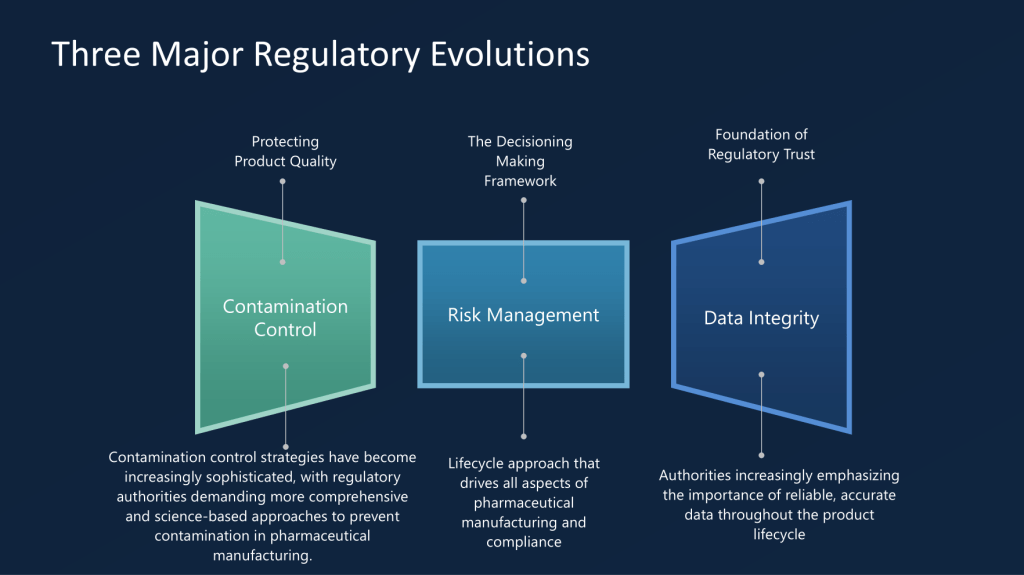
Overlaying these challenges, three major regulatory paradigm shifts are transforming the expectations around risk management, contamination control, and data integrity. Data integrity in particular has become an international touchpoint. Since the landmark PIC/S guidance in 2021 and matching World Health Organization updates, agencies have made it clear that trustworthy, accurate, and defendable data—whether paper-based or digital—are the foundation of regulatory confidence. Comprehensive data governance, end-to-end traceability, and robust documentation are now all non-negotiable.

Contamination control is experiencing its own revolution. The August 2023 overhaul of EU GMP Annex 1 set a new benchmark for sterile manufacturing. The core concept, the Contamination Control Strategy (CCS), formalizes expectations: every manufacturer must systematically identify, map, and control contamination risks across the entire product lifecycle. From supply chain vigilance to environmental monitoring, regulators are pushing for a proactive, science-driven, and holistic approach, far beyond previous practices that too often relied on reactive measures. We this reflected in recent USP drafts as well.

Quality risk management (QRM) also has a new regulatory backbone. The ICH Q9(R1) revision, finalized in 2023, addresses long-standing shortcomings—particularly subjectivity and lack of consistency—in how risks are identified and managed. The European Medicines Agency’s ongoing revision of EudraLex Chapter 1, now aiming for finalization in 2026, will further require organizations to embed preventative, science-based risk management within globalized and complex supply chain operations. Modern products and supply webs simply cannot be managed with last-generation compliance thinking.

The EU Digital Modernization: Chapter 4, Annex 11, and Annex 22

With the rapid digitalization of pharma, the European Union has embarked on an ambitious modernization of its GMP framework. At the heart of these changes are the upcoming revisions to Chapter 4 (Documentation), Annex 11 (Computerised Systems), and the anticipated implementation of Annex 22 (Artificial Intelligence).

Chapter 4—Documentation is being thoroughly updated in parallel with Annex 11. The current chapter, which governs all aspects of documentation in GMP environments, was last revised in 2011. Its modernization is a direct response to the prevalence of digital tools—electronic records, digital signatures, and interconnected documentation systems. The revised Chapter 4 is expected to provide much clearer requirements for the management, review, retention, and security of both paper and electronic records, ensuring that information flows align seamlessly with the increasingly digital processes described in Annex 11. Together, these updates will enable companies to phase out paper where possible, provided electronic systems are validated, auditable, and secure.

Annex 11—Computerised Systems will see its most significant overhaul since the dawn of digital pharma. The new guidance, scheduled for publication and adoption in 2026, directly addresses areas that the previous version left insufficiently covered. The scope now embraces the tectonic shift toward AI, machine learning, cloud-based services, agile project management, and advanced digital workflows. For instance, close attention is being paid to the robustness of electronic signatures, demanding multi-factor authentication, time-zoned audit trails, and explicit provisions for non-repudiation. Hybrid (wet-ink/digital) records will only be acceptable if they can demonstrate tamper-evidence via hashes or equivalent mechanisms. Especially significant is the regulation of “open systems” such as SaaS and cloud platforms. Here, organizations can no longer rely on traditional username/password models; instead, compliance with standards like eIDAS for trusted digital providers is expected, with more of the technical compliance burden shifting onto certified digital partners.

The new Annex 11 also calls for enhanced technical controls throughout computerized systems, proportional risk management protocols for new technologies, and a far greater emphasis on continuous supplier oversight and lifecycle validation. Integration with the revised Chapter 4 ensures that documentation requirements and data management are harmonized across the digital value chain.

Posts on the Draft Annex 11:

Annex 22—a forthcoming addition—artificial intelligence

The introduction of Annex 22 represents a pivotal moment in the regulatory landscape for pharmaceutical manufacturing in Europe. This annex is the EU’s first dedicated framework addressing the use of Artificial Intelligence (AI) and machine learning in the production of active substances and medicinal products, responding to the rapid digital transformation now reshaping the industry.

Annex 22 sets out explicit requirements to ensure that any AI-based systems integrated into GMP-regulated environments are rigorously controlled and demonstrably trustworthy. It starts by mandating that manufacturers clearly define the intended use of any AI model deployed, ensuring its purpose is scientifically justified and risk-appropriate.

Quality risk management forms the backbone of Annex 22. Manufacturers must establish performance metrics tailored to the specific application and product risk profile of AI, and they are required to demonstrate the suitability and adequacy of all data used for model training, validation, and testing. Strong data governance principles apply: manufacturers need robust controls over data quality, traceability, and security throughout the AI system’s lifecycle.

The annex foresees a continuous oversight regime. This includes change control processes for AI models, ongoing monitoring of performance to detect drift or failures, and formally documented procedures for human intervention where necessary. The emphasis is on ensuring that, even as AI augments or automates manufacturing processes, human review and responsibility remain central for all quality- and safety-critical steps.

By introducing these requirements, Annex 22 aims to provide sufficient flexibility to enable innovation, while anchoring AI applications within a robust regulatory framework that safeguards product quality and patient safety at every stage. Together with the updates to Chapter 4 and Annex 11, Annex 22 gives companies clear, actionable expectations for responsibly harnessing digital innovation in the manufacturing environment.

Posts on Annex 22

Life Cycle Integration, Analytical Validation, and AI/ML Guidance

Across global regulators, a clear consensus has taken shape: validation must be seen as a continuous lifecycle process, not as a “check-the-box” activity. The latest WHO technical reports, the USP’s evolving chapters (notably <1058> and <1220>), and the harmonized ICH Q14 all signal a new age of ongoing qualification, continuous assurance, change management, and systematic performance verification. The scope of validation stretches from the design qualification stage through annual review and revalidation after every significant change.

A parallel wave of guidance for AI and machine learning is cresting. The EMA, FDA, MHRA, and WHO are now releasing coordinated documents addressing everything from transparent model architecture and dataset controls to rigorous “human-in-the-loop” safeguards for critical manufacturing decisions, including the new draft Annex 22. Data governance—traceability, security, and data quality—has never been under more scrutiny.

Regulatory BodyDocument TitlePublication DateStatusKey Focus Areas
EMAReflection Paper on the Use of Artificial Intelligence in the Medicinal Product LifecycleOct-24FinalRisk-based approach for AI/ML development, deployment, and performance monitoring across product lifecycle including manufacturing
EMA/HMAMulti-annual AI Workplan 2023-2028Dec-23FinalStrategic framework for European medicines regulatory network to utilize AI while managing risks
EMAAnnex 22 Artificial IntelligenceJul-25DraftEstablishes requirements for the use of AI and machine learning in the manufacturing of active substances and medicinal products.
FDAConsiderations for the Use of AI to Support Regulatory Decision Making for Drug and Biological ProductsFeb-25DraftGuidelines for using AI to generate information for regulatory submissions
FDADiscussion Paper on AI in the Manufacture of MedicinesMay-23PublishedConsiderations for cloud applications, IoT data management, regulatory oversight of AI in manufacturing
FDA/Health Canada/MHRAGood Machine Learning Practice for Medical Device Development Guiding PrinciplesMar-25Final10 principles to inform development of Good Machine Learning Practice
WHOGuidelines for AI Regulation in Health CareOct-23FinalSix regulatory areas including transparency, risk management, data quality
MHRAAI Regulatory StrategyApr-24FinalStrategic approach based on safety, transparency, fairness, accountability, and contestability principles
EFPIAPosition Paper on Application of AI in a GMP Manufacturing EnvironmentSep-24PublishedIndustry position on using existing GMP framework to embrace AI/ML solutions

The Time is Now

The world of validation is no longer controlled by periodic updates or leisurely transitions. Change is the new baseline. Regulatory authorities have codified the digital, risk-based, and globally harmonized future—are your systems, people, and partners ready?

Transparency in GMP Pharmaceutical Oversight

I think it is unfortunate that two of the world’s most influential regulatory agencies, the U.S. Food and Drug Administration (FDA) and the European Medicines Agency (EMA), have taken markedly different approaches to transparency in sharing Good Manufacturing Practice (GMP) observations and non-compliance information with the public.

The Foundation of Regulatory Transparency

FDA’s Transparency Initiative

The FDA’s commitment to transparency traces back to the Freedom of Information Act (FOIA) of 1966, which required federal agencies to provide information to the public upon request. However, the agency’s proactive transparency efforts gained significant momentum under President Obama’s Open Government Initiative. In June 2009, FDA Commissioner Dr. Margaret Hamburg launched the FDA’s Transparency Initiative, creating new webpages, establishing FDA-TRACK performance monitoring system, and proposing steps to provide greater public understanding of FDA decision-making.

EMA’s Evolution Toward Transparency

The EMA’s journey toward transparency has been more gradual and complex For many years, EU inspectorates did not publish results of their inspections, unlike the FDA’s long-standing practice of making Form 483s and Warning Letters publicly accessible. This changed significantly in 2014 when the EMA launched a new version of the EudraGMDP database that included, for the first time, the publication of statements of non-compliance with Good Manufacturing Practice.

The EMA’s approach to transparency reflects its commitment to transparency, efficiency, and public health protection through structured partnerships with agencies worldwide 1. However, the agency’s transparency policy has faced criticism for being “marred by too many failings,” particularly regarding pharmaceutical companies’ ability to redact clinical study reports.

FDA’s Comprehensive Data Infrastructure

The FDA operates several interconnected systems for sharing inspection and compliance information:

Form 483 Database and Public Access
The FDA maintains extensive databases for Form 483 inspectional observations, which are publicly accessible through multiple channels. The agency’s Office of Inspections and Investigations provides spreadsheets summarizing inspection observations by fiscal year, broken down by product areas including biologics, drugs, devices, and other categories.

FDA Data Dashboard
Launched as part of the agency’s transparency initiative, the FDA Data Dashboard presents compliance, inspection, and recall data in an easy-to-read graphical format. The dashboard provides data from FY 2009 onward and allows access to information on inspections, warning letters, seizures, injunctions, and recall statistics. The system is updated semi-annually and allows users to download information, manipulate data views, and export charts for analysis.

Warning Letters and Public Documentation
All FDA-issued Warning Letters are posted on FDA.gov in redacted form to permit public access without requiring formal FOIA requests. This practice has been in place for many years, with warning letters being publicly accessible under the Freedom of Information Act.

EMA’s EudraGMDP Database

The EMA’s primary transparency tool is the EudraGMDP database, which serves as the Community database on manufacturing, import, and wholesale-distribution authorizations, along with GMP and GDP certificates. A public version of the database has been available since 2011, providing access to information that is not commercially or personally confidential.

The EudraGMDP database contains several modules including Manufacturing Import Authorisation (MIA), GMP certificates, Wholesale Distribution Authorisation (WDA), and Active Product Ingredient Registration (API REG). The database is publicly accessible without login requirements and is maintained by the EMA with data populated by EEA national competent authorities.

Non-Compliance Reporting and Publication

A significant milestone in EMA transparency occurred in 2014 when the agency began publishing statements of non-compliance with GMP . These documents contain information about the nature of non-compliance and actions taken by issuing authorities to protect public health, aiming to establish coordinated responses by EU medicines regulators.

A major difference here is that the EMA removes non-compliance statements from EudraGMDP following successful compliance restoration. The EMA’s procedures explicitly provide for post-publication modifications of non-compliance information. Following publication, the lead inspectorate authority may modify non-compliance information entered in EudraGMDP, for example, following receipt of new information, with modified statements distributed to the rapid alert distribution list.

This is unfortunate, as it requires going to a 3rd party service to find historical data on a site.

CategoryFDAEMA
Volume of Published InformationOver 25,000 Form 483s in databases83 non-compliance reports total (2007-2020)
Annual Inspection VolumeEvery 483 observation is trackable at a high levelLimited data available
Database Update FrequencyMonthly updates to inspection databasesUpdates as available from member states
Dashboard UpdatesSemi-annual updatesNot applicable
Historical Data AvailabilityForm 483s and warning letters accessible for decades under FOIANon-compliance information public since 2014
Information ScopeInspections, warning letters, seizures, injunctions, recalls, import alertsPrimarily GMP/GDP certificates and non-compliance statements
Geographic Distribution of Non-ComplianceGlobal coverage with detailed breakdownsIndia: 35 reports, China: 22 reports, US: 4 reports
Real-Time AccessYes – monthly database updatesLimited – dependent on member state reporting
Public AccessibilityMultiple channels: direct database access, FOIA requestsSingle portal: EudraGMDP database
Data Manipulation CapabilitiesUsers can download, manipulate data views, export chartsBasic search and view functionality
Login RequirementsNo login required for public databasesNo login required for EudraGMDP
Commercial ConfidentialityRedacted information Commercially confidential information not published
Non-Compliance Statement RemovalForm 483s remain public permanentlyStatements can be removed after successful remediation

While both the FDA and EMA have made significant strides in regulatory transparency, the FDA clearly shares more information about GMP observations and non-compliance issues. The FDA’s transparency advantage stems from its longer history of public disclosure under FOIA, more comprehensive database systems, higher volume of published enforcement actions, and more frequent updates to public information.

My next post will be on the recent changes at the FDA and what that means for ongoing transparency.

European Country Differences

As an American Pharmaceutical Quality professional who has worked in and with European colleagues for decades, I am used to hearing, “But the requirements in country X are different,” to which my response is always, “Prove it.”

EudraLex represents the cornerstone of Good Manufacturing Practice (GMP) regulations within the European Union, providing a comprehensive framework that ensures medicinal products meet stringent quality, safety, and efficacy standards. You will understand the fundamentals if you know and understand Eudralex volume 4. However, despite this unified approach, a few specific national differences exist in how a select few of these regulations are interpreted and implemented – mostly around Qualified Persons, GMP certifications, registrations and inspection types.

EudraLex: The European Union Pharmaceutical Regulatory Framework

EudraLex serves as the cornerstone of pharmaceutical regulation in the European Union, providing a structured approach to ensuring medicinal product quality, safety, and efficacy. The framework is divided into several volumes, with Volume 4 specifically addressing Good Manufacturing Practice (GMP) for both human and veterinary medicinal products. The legal foundation for these guidelines stems from Directive 2001/83/EC, which establishes the Community code for medicinal products for human use, and Directive 2001/82/EC for veterinary medicinal products.

Within this framework, manufacturing authorization is mandatory for all pharmaceutical manufacturers in the EU, whether their products are sold within or outside the Union. Two key directives establish the principles and guidelines for GMP: Directive 2003/94/EC for human medicinal products and Directive 91/412/EEC for veterinary products. These directives are interpreted and implemented through the detailed guidelines in the Guide to Good Manufacturing Practice.

Structure and Implementation of EU Pharmaceutical Regulation

The EU pharmaceutical regulatory framework operates on multiple levels. At the highest level, EU institutions establish the legal framework through regulations and directives. EU Law includes both Regulations, which have binding legal force in every Member State, and Directives, which lay down outcomes that must be achieved while allowing each Member State some flexibility in transposing them into national laws.

The European Medicines Agency (EMA) coordinates and harmonizes at the EU level, while national regulatory authorities inspect, license, and enforce compliance locally. This multilayered approach ensures consistent quality standards while accommodating certain national considerations.

For marketing authorization, medicinal products may follow several pathways:

Authorizing bodyProcedureScientific AssessmentTerritorial scope
European CommissionCentralizedEuropean Medicines Agency (EMA)EU
National authoritiesMutual Recognition, Decentralized, NationalNational competent authorities (with possible additional assessment by EMA in case of disagreement)EU countries concerned

This structure reflects the balance between EU-wide harmonization and national regulatory oversight in pharmaceutical manufacturing and authorization.

National Variations in Pharmaceutical Manufacturing Requirements

Austria

Austria maintains one of the more stringent interpretations of EU directives regarding Qualified Person requirements. While the EU directive 2001/83/EC establishes general qualifications for QPs, individual member states have some flexibility in implementing these requirements, and Austria has taken a particularly literal approach.

Austria also maintains a national “QP” or “eligible QP” registry, which is not a universal practice across all EU member states. This registry provides an additional layer of regulatory oversight and transparency regarding individuals qualified to certify pharmaceutical batches for release.

Denmark

Denmark has really flexible GMP certification recognition, but beyond that no real differences from Eudralex volume 4.

France

The Exploitant Status

The most distinctive feature of the French pharmaceutical regulatory framework is the “Exploitant” status, which has no equivalent in EU regulations. This status represents a significant departure from the standard European model and creates additional requirements for companies wishing to market medicinal products in France.

Under the French Public Health Code, the Exploitant is defined as “the company or organization providing the exploitation of medicinal products”. Exploitation encompasses a broad range of activities including “wholesaling or free distribution, advertising, information, pharmacovigilance, batch tracking and, where necessary, batch recall as well as any corresponding storage operations”. This status is uniquely French, as the European legal framework only recognizes three distinct positions: the Marketing Authorization Holder (MAH), the manufacturer, and the distributor.

The Exploitant status is mandatory for all companies that intend to market medicinal products in France. This requirement applies regardless of whether the product has received a standard marketing authorization or an early access authorization (previously known as Temporary Use Authorization or ATU).

To obtain and maintain Exploitant status, a company must fulfill several requirements that go beyond standard EU regulations:

  1. The company must obtain a pharmaceutical establishment license authorized by the French National Agency for the Safety of Medicines and Health Products (ANSM).
  2. It must employ a qualified person called a Chief Pharmaceutical Officer (Pharmacien Responsable).
  3. It must designate a local qualified person for Pharmacovigilance.

The Pharmacien Responsable: A Unique French Pharmaceutical Role

Another distinctive feature of the French health code is the requirement for a Pharmacien Responsable (Chief Pharmaceutical Officer or CPO), a role with broader responsibilities than the “Qualified Person” defined at the European level.

According to Article L.5124-2 of the French Public Health Code, “any company operating a pharmaceutical establishment engaged in activities such as purchasing, manufacturing, marketing, importing or exporting, and wholesale distribution of pharmaceutical products must be owned by a pharmacist or managed by a company which management or general direction includes a Pharmacien Responsable”. This appointment is mandatory and serves as a prerequisite for any administrative authorization request to operate a pharmaceutical establishment in France.

The Pharmacien Responsable holds significant responsibilities and personal liability, serving as “a guarantor of the quality of the medication and the safety of the patients”. The role is deeply rooted in French pharmaceutical tradition, deriving “directly from the pharmaceutical monopoly” and applying to all pharmaceutical companies in France regardless of their activities.

The Pharmacien Responsable “primarily organizes and oversees all pharmaceutical operations (manufacturing, advertising, information dissemination, batch monitoring and recalls) and ensures that transportation conditions guarantee the proper preservation, integrity, and safety of products”. They have authority over delegated pharmacists, approve their appointments, and must be consulted regarding their departure.

The corporate mandate of the Pharmacien Responsable varies depending on the legal structure of the company, but their placement within the organizational hierarchy must clearly demonstrate their authority and responsibility. This requirement for clear placement in the company’s organization chart, with explicit mention of hierarchical links and delegations, has no direct equivalent in standard EU pharmaceutical regulations.

Germany

While Germany has many distinctive elements—including the PZN identification system, the securPharm verification approach, specialized distribution regulations, and nuanced clinical trial oversight—the GMPs from Eudralex Volume 4 are the same.

Italy

Italy has implemented a highly structured inspection system with clearly defined categories that create a distinctive national approach to GMP oversight. 

  • National Preventive Inspections
    • Activating new manufacturing plants for active substances
    • Activating new manufacturing departments or lines
    • Reactivating departments that have been suspended
    • Authorizing manufacturing or import of new active substances (particularly sterile or biological products)
  • National Follow-up Inspections to verify the GMP compliance of the corrective actions declared as implemented by the manufacturing plant in the follow-up phase of a previous inspection. This structured approach to verification creates a continuous improvement cycle within the Italian regulatory system.
  • Extraordinary or Control Inspections: These are conducted outside normal inspection programs when necessary for public health protection.

Spain

The differences in Spain are mostly on the way an organization is registered and has no impacts on GMP operations.

Regulatory Recognition and Mutual Agreements

EU member states have received specific recognition for their GMP inspection capabilities from international partners individually.