
Being a Quality Leader

Domain Knowledge

Having recently said farewell to a leader in our quality organization, I have been reflecting on quality leaders and what makes one great. As I often do, I look to standards, in this case the American Society of Quality (ASQ).

The Certified Manager of Quality/Organizational Excellence (CMQ/OE)leads and champions process improvement initiatives—that can have regional or global focus—in various service and industrial settings. A CMQ/OE facilitates and leads team efforts to establish and monitor customer/supplier relations,supports strategic planning and deployment initiatives, and helps develop measurement systems to determine organizational improvement.

American Society of Quality

The ASQ’s Certified Manager of Quality/Operation Excellence (CMQ/OE) body of knowledge‘s first section is on leadership. 

To be honest, the current body of knowledge (bok) is a hodge-podge collection of stuff that is sort of related but often misses a real thematic underpinning. The bok (and the exam) could use a healthy dose of structure when laying out the principles of roles and responsibilities, change management, leadership techniques and empowerment.

There are fundamental skills to being a leader:

  • Shape a vision that is exciting and challenging for your team (or division/unit/organization).
  • Translate that vision into a clear strategy about what actions to take, and what not to do.
  • Recruit, develop, and reward a team of great people to carry out the strategy.
  • Focus on measurable results.
  • Foster innovation and learning to sustain your team (or organization) and grow new leaders.
  • Lead yourself — know yourself, improve yourself, and manage the appropriate balance in your own life.

In order to do these things a leader needs to demonstrate skills in communication, critical thinking, problem solving, and skills motivating and leading teams (and self).

The best leaders know a lot about the domain in which they are leading, and part of what makes them successful in a management role is technical competence. A Quality leader needs to know quality as a domain AND the domain of the industry they are within.
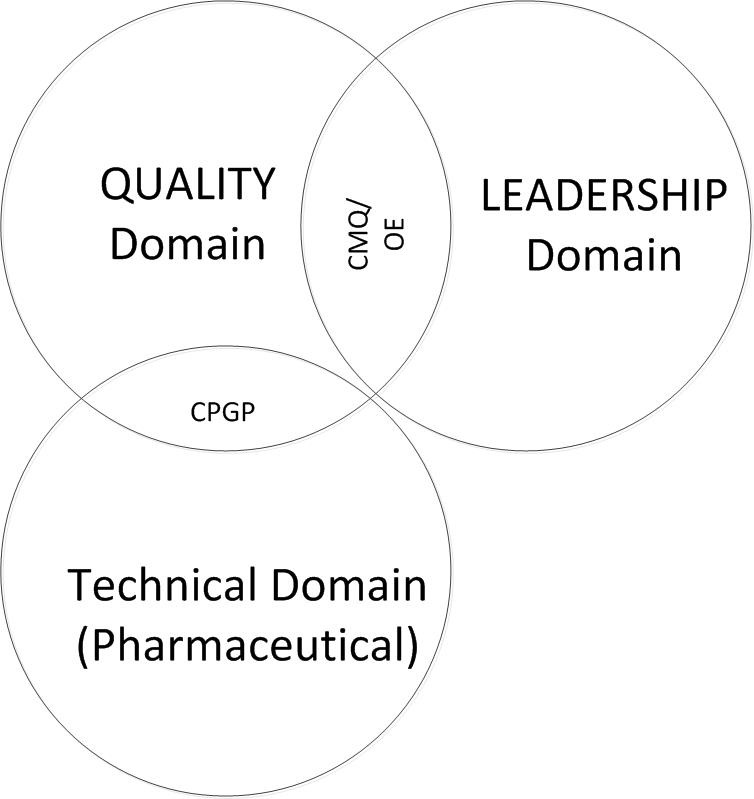
Three domains necessary for a quality leader

In my industry it is just not enough to know quality (for now we’ll define that as the ASQ BoK) nor is it enough to know pharmaceuticals (with regulatory being a subdomain). It is not enough just to have leadership skills. It is critical to be able to operate in all three areas. 

To excel as a leader in practice, you also need a lot of expertise in a particular domain. 

As an example, take the skill of thinking critically in order to find the essence of a situation. To do that well, you must have specific, technical expertise. The critical information an engineer needs to design a purification system is different from the knowledge used to understand drug safety, and both of those differ in important ways from what is needed to negotiate a good business deal.

When you begin to look at any of the core skills that leaders have, it quickly becomes clear that domain-specific expertise is bound up in all of them. And the domains of expertise required may also be fairly specific. Even business is not really a single domain. Leadership in pharmaceuticals, transportation, and internet (for example) all require a lot of specific knowledge.

Similarly, with only leadership and technical, you are going to fumble. Quality brings a set of practices necessary for success. A domain filled with analytical and decision making capabilities that cross-over with leadership (critical thinking and problem-solving) but are deepened with that perspective. 

There are also other smaller domains, or flavors of domains. If I was building this model out more seriously I would have an interesting cluster of Health and Safety with Quality (the wider bucket of compliance even). I’m simplifying for this post.
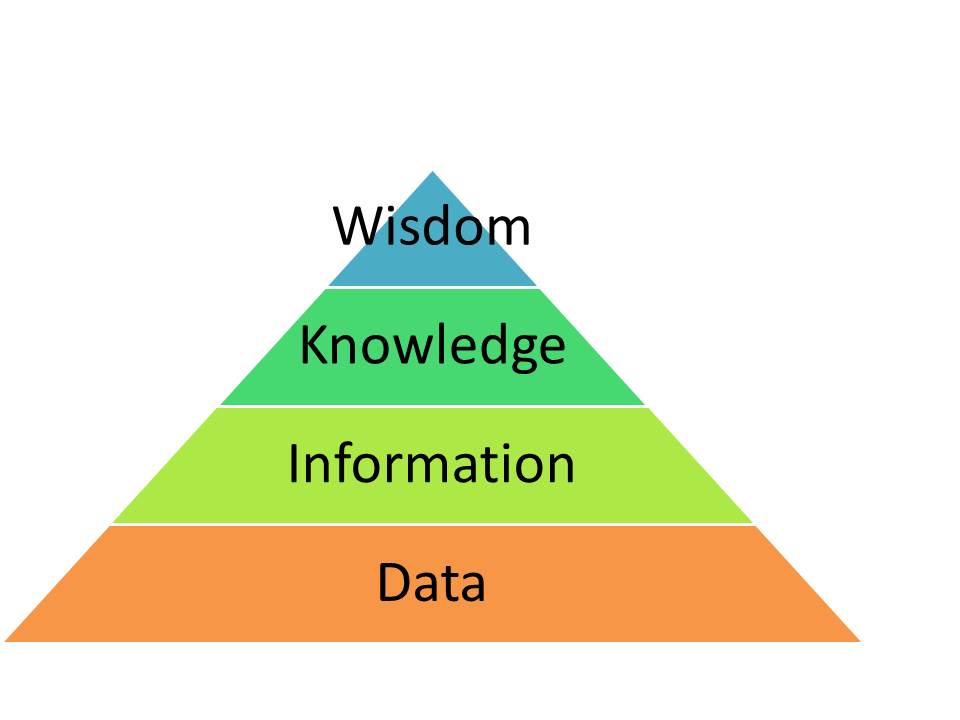
Development of knowledge

To go a step further. These three domains are critical for any quality professional. What changes is the development of wisdom and the widening of scope. This is why tenure is important. People need to be able to settle down and develop the skills they need to be successful in all three domains. 

Good quality leaders recognize all this and look to build their organizations to reflect the growth of technical, quality and leadership domain. 

Creative teams

The secret to unlocking creativity is not to look for more creative people, but to unlock more creativity from the people who already work for you. The same body of creativity research that finds no distinct “creative personality” is incredibly consistent about what leads to creative work, and they are all things you can implement within your team. Here’s what you need to do:

Greg Satell “Set the Conditions for Anyone on Your Team to Be Creative”  05Dec2018 Harvard Business Review

In this great article Greg Satell lays out what an organization that drives creativity looks like. Facilitating creativity is crucial for continuous improvement and thus a fundamental part of a culture of quality. So let’s break it down.

Cultivate Expertise

In order to build expertise our organizations need to be apply to provide deliberate practice: identify the components of a skill, offer coaching, and encourage employees to work on weak areas.

Bring knowledge management to bear to ensure the knowledge behind a skill has been appropriately captured and published. To do this you need to identify who the expert performers currently are.

It is crucial when thinking about deliberate practice to recognize that this is not shallow work, those tasks we can do in our sleep. Unlike chess or weight-lifting you really do not get anything from the 100th validation protocol or batch record reviewed. For work to be of value for deliberate practice it needs to stretch us, to go a little further than before, and give the opportunity for reflection.

Geoff Colvin in Talent is Overrated gave six traits for deliberate practice:

  • It’s designed to improve performance. “The essence of deliberate practice is continually stretching an individual just beyond his or her current abilities. That may sound obvious, but most of us don’t do it in the activities we think of as practice.”
  • It’s repeated a lot. “High repetition is the most important difference between deliberate practice of a task and performing the task for real, when it counts.”
  • Feedback on results is continuously available. “You may think that your rehearsal of a job interview was flawless, but your opinion isn’t what counts.”
  • It’s highly demanding mentally. “Deliberate practice is above all an effort of focus and concentration. That is what makes it ‘deliberate,’ as distinct from the mindless playing of scales or hitting of tennis balls that most people engage in.”
  • It’s hard. “Doing things we know how to do well is enjoyable, and that’s exactly the opposite of what deliberate practice demands.”
  • It requires (good) goals. “The best performers set goals that are not about the outcome but rather about the process of reaching the outcome.”

Encourage Exploration

The Innovators DNA by Dyer, Gregersen, and Christensen state that creativity is a function of five key behaviours

  • Associating: drawing connections between questions, problems, or ideas from unrelated fields
  • Questioning: posing queries that challenge common wisdom
  • Observing: scrutinizing the behavior of customers, suppliers, and competitors to identify new ways of doing things
  • Networking: meeting people with different ideas and perspectives
  • Experimenting: constructing interactive experiences and provoking unorthodox responses to see what insights emerge

Exploration can be seen as observing outside your sphere of knowledge, networking and experimenting.

Empower with Technology

Sure, I guess. Call me a luddite but I still think a big wall, lots of post-its, markers and some string work fine for me.

Reward Persistence

Remember this, we are always in this for the long haul. I think remembering the twelve levers can help give perspective.

Improving But Not Learning by Doing

Alex Tarbok on Marginal revolution wrote “Improving But Not Learning by Doing” looking at a paper “Causal understanding is not necessary for the improvement of culturally evolving technology” — which has interesting things to say to those interested in knowledge management. In short it demonstrates that the complex problems we have today need to be approached multi-dimension approach, in short system thinking is required to do true knowledge management.

Knowledge management Circular_Process_6_Stages (for expansion)

Throughout the six stages we need to be evaluating for complexities and interfaces. It is very easy to think in a silo and then create bigger problems done the line.

The DIKW pyramid is a great resource to keep in mind here.dikw pyramid

  • —Data comprises facts, observations, or perceptions
  • —Information is a subset of data, only including those data that possess context, relevance, and purpose
  • Knowledge is —Information with direction, i.e., leads to appropriate actions
  • Wisdom is the understanding of the why

I know that in many knowledge management models wisdom is often discounted, but that is to our detriment. Quality is often all about the why, whether a regulatory commitment, or a deep understanding of history, or as is relevant here , the relationship between parts of a complex system (or the interrelationship between systems).

Quality is about teaching

One of the core skills for a quality professional is teaching. We teach skills, ways of thinking, methodologies. “Great Employees Want to Learn. Great Managers Know How to Teach” by Daniel Dobrygowski nicely covers some key points that every quality professional should think through as we go through out day advocating for quality in our organizations.

Define goals and communicate them clearly

Part of this is an evangelical role. Quality needs to be able to explain the quality goals, whether of the organization of a specific system or process. People in your organization want to know why they are doing things. Spend some time having clear talking points, be ready to give your pitch. Speak proudly of your quality systems. And be ready to understand how other’s goals intersect with your own.

Identify and build skills

Understand the skills necessary for quality, develop a plan to assess and build them and then execute to it. Knowledge management is crucial here.

Create opportunities for growth

Quality raises the prospects of all. Quality professionals who realize that our core job is building skills and growing the people in our organization benefit from teaching will drive continuous improvement and make folks happier using our systems. Growth is a reward loop, and people feeling they are rewarded by your system will want to use it more.

In short take each and every opportunity to use your interactions as a way to grow skills and capabilities. Quality will only grow as a result.

Knowledge Work is the product

Johanna Rothman recently provided some insightful thoughts about Project Work vs Product Work. While focused on software, Johanna has some points that are valuable outside of software as she focuses on the importance of long-lived teams, applying a product work mindset to team functions.

The more we create long-lived teams who have already learned how to work together, the easier it is to work together. Even if that work is project-based work.

I think the critical thing for me is how much we have to view each team, each project as having as one of it’s key deliverables knowledge management.

However, we also need to recognize that in this day-and-age the modern corporation is  a transient collective. Companies do not do a great job of showing loyalty, there are a lot of options for the modern knowledge worker, and people regularly move on.

For me, this is why it is so important for not just projects, but day-to-day work to have as part of the inherent ways of working, processes to bring the tacit to explicit. The lessons-learned is a great place to start but we should be constantly be striving to identify “what have we learned”, “what do we need to make explicit” and “how do we make it explicit” as part of our work.

Knowledge management Circular_Process_6_Stages (for expansion)

Returning to the 6 stages of knowledge management:

    1. Have a way to capture what knowledge bits. For example, if you have a visual board, make sure this is explicitly part of the board. Make it part of your day-to-day.
    2. As a team assess the collected captured (and generated) knowledge and determine what is suitable for retaining.
    3. Share it – pass it up, pass it down. Make it available by tying it into your companies knowledge management system.
    4. Turn it into artifacts that are reusable. Pre-job briefings, procedures, work instructions, whatever is relevant.
    5. Live it. Confirm you are using it.
    6. Remember knowledge management artifacts are living. Things change and need to be updated. We can always refine. Continuous improvement is key.