It’s not. This guidance is just one big “calm down people” letter from the agency. They publish these sorts of guidance every now and then because we as an industry can sometimes learn the wrong lessons.
So read the guidance, but don’t panic. You are either following it already or you just need to spend some time getting better at risk assessments and creating some matrix approaches.
The risk question established the purpose and scope – the context of the risk assessment. This step is critical since it sets the risk assessment’s direction, tone, and expectations. From this risk question stems the risk team; the degree, extent, or rigor of the assessment; the risk assessment methodologies; the risk criteria; and levels of acceptable risk.
The risk problem needs to be clear, concise, and well understood by all stakeholders. Every successful risk assessment needs a tightly defined beginning and end, so the assessment team can set good boundaries for the assessment with internal (resources, knowledge, culture, values, etc) and external (technology, legal, regulatory, economy, perceptions of external stakeholders, etc) parameters in mind.
To ensure the risk team focuses on the correct elements, the risk question should clearly explain what is expected. For example:
For a risk assessment of potential emergencies/disasters, should the assessment be limited to emergencies/disasters at facility sites or include events off-site? Should it include natural, manmade, or technological emergencies/disasters, or all of them?
If the hazards associated with the job of repairing a porch as to be assessed, would it just cover the actual porch repair, or would it include hazards like setting up the space, bringing materials on site, and the hazards associated with use/not-use of the porch?
If the risk assessment covers getting a new family dog does it include just those associated with the dog, or does it include changes to the schedule or even next year’s vacation?
Setting the scope too narrow on the risk question might prevent a hazard and the resulting risk from being identified and assessed or making it too broad could prevent the risk assessment from getting to the real purpose.
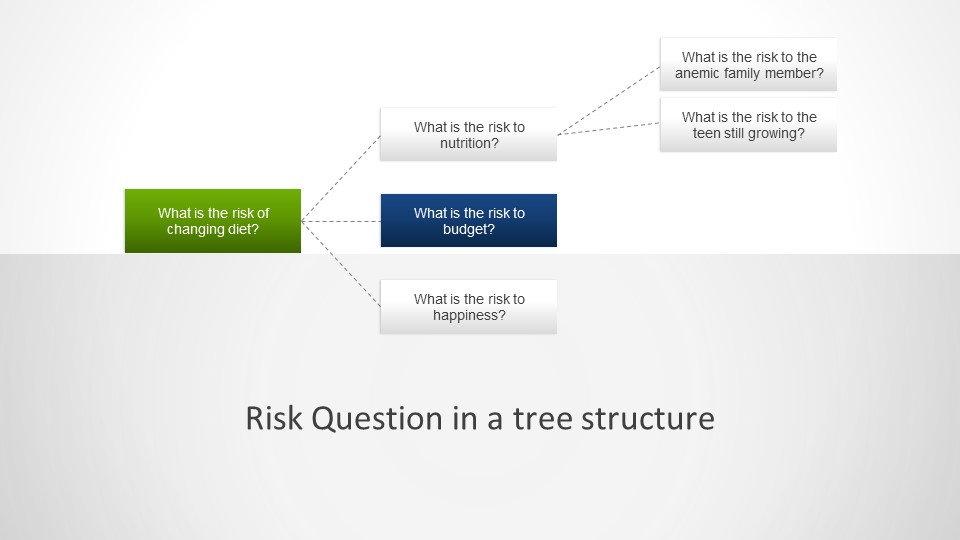
Risk questions can be broken down in a tree structure to more define scopes, which can help drive effective teams.
For example, if we are doing a risk assessment on changing the family’s diet, it might look like this:
The current draft of ICH Q9 places a lot of importance on the risk question, rightfully so. As a tool it helps focus and define the risk assessment, producing better results.
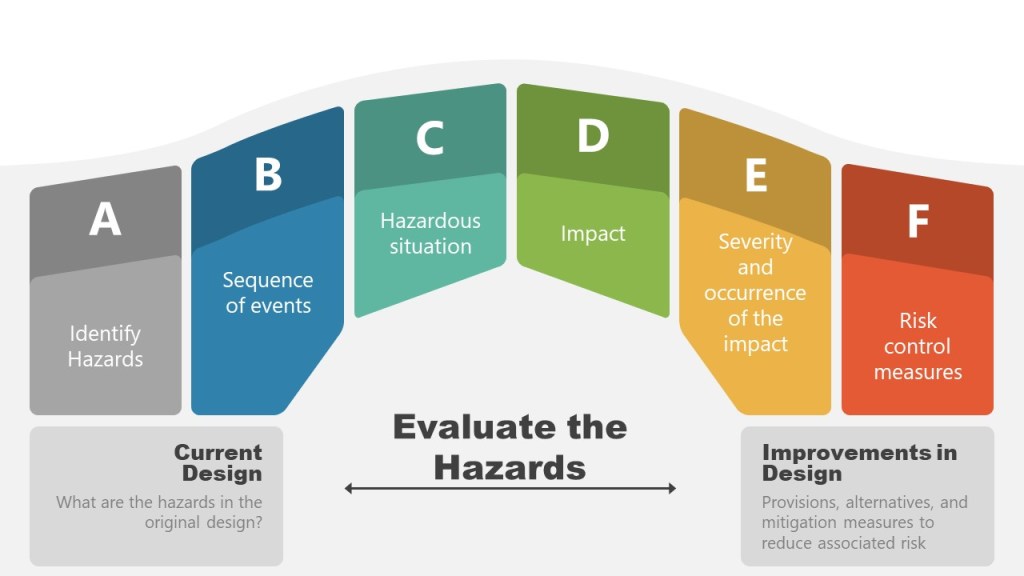
The Preliminary Hazard Analysis (PHA) is a risk tool that is used during initial design and development, thus the name “preliminary”, to identify systematic hazards that affect the intended function of the design to provide an opportunity to modify requirements that will help avoid issues in the design.
Like a fair amount of tools used in risk, the PHA was created by the US Army. ANSI/ASSP Z.590.3 “Prevention through Design, Guidelines for Addressing Occupational Hazards and Risks in Design and Redesign Processes” makes this one of the eight risk assessment tools everyone should know.
Taking the time to perform a PHA early on in the design will speed up the design process and avoid costly mistakes. Any identified hazards that cannot be avoided or eliminated are then controlled so that the risk is reduced to an acceptable level.
PHAs can also be used to examine existing systems, prioritize risk levels and select those systems requiring further study. The use of a single PHA may also be appropriate for simple, less compelx systems.
Like a Structured What-If, the Preliminary Hazard Analysis benefits from an established list of general categories:
by the source of risk: raw materials, environmental, equipment, usability and human factors, safety hazards, etc.
by consequence, aspects or dimensions of objectives or performance
Based on the established list, a preliminary hazard list is identified which lists the potential, significant hazards associated with a design. The purpose of the preliminary hazard list is to initially identify the most evident or worst-credible hazards that could occur in the system being designed. Such hazards may be inherent to the design or created by the interaction with other systems/environment/etc.
A team should be involved in collecting and reviewing.
B. Sequence of Events
Once the hazards are identified, the sequence of events that leads from each hazard to various hazardous situations is identified.
C. Hazardous Situation
For each sequence of events, we identify one or more hazardous situations.
D. Impact
For each hazardous situation, we identify one or more outcomes (or harms).
E. Severity and occurrence of the impact
Based on the identified outcomes/harms the severity is determined. An occurrence or probability is determined for each sequence of events that leads from the hazard to the hazardous situation to the outcome.
Based on severity and likelihood of occurrence a risk level is determined.
From hazard to a variety of harms
I tend to favor a 5×5 matrix for a PHA, though some use 3×3, and I’ve even seen 4×5.
Intended
outcomes
Likelihood of
Occurrence
Severity
Rating
Impact to failure
scale
1
Very unlikely
2
Likely
3
Possible
4
Likely
5
Very Likely
5
Complete
failure
5
10
15
20
25
4
Maximum tolerable
failure
4
8
12
16
20
3
Maximum
anticipated failure
3
6
9
12
15
2
Minimum
anticipated failure
2
4
6
8
10
1
Negligible
1
2
3
4
5
Very high risk: 15 or greater, High risk 9-14, Medium
risk 5-8, Low risk 1-4
F. Risk Control Measures
Based on the risk level risk controls and developed and applied. These risk controls will help the design team create new requirements that will drive the design.
On-going risks should be evaluated for the risk register.
Environmental contamination results from the ingress of contaminants from the surrounding production areas or even from outside environments
Cross-contamination is defined as contamination of a starting material, intermediate product or finished product with another starting material or product during production.
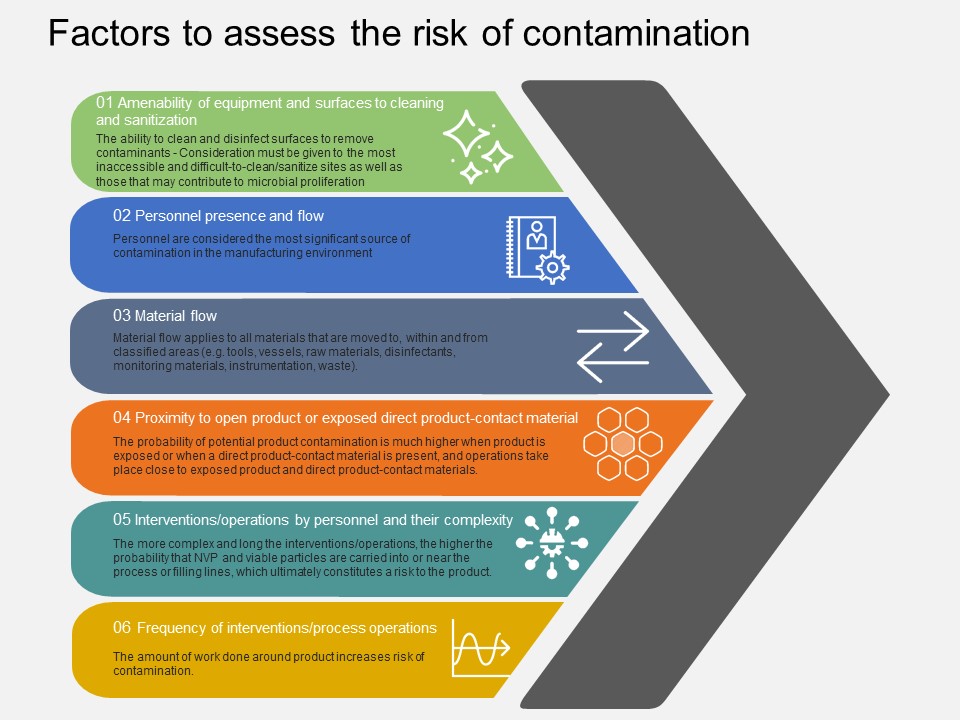
Whether performing risk assessments or impact assessments there are six factors to consider in order to determine environmental impact and to inform contamination control.
Amenability of equipment and surfaces to cleaning and sanitization
Personnel presence and flow
Material flow
Proximity to open product or exposed direct product-contact material
Interventions/operations by personnel and their complexity
Maybe you’ve been there too, you need to take a risk-based approach to determine environmental monitoring, so you go to a HAACP or FMEA and realize those tools just do not work to provide information to determine how to distribute monitoring to best verify that processes are operating under control.
What you want to do is build a heat map showing the relative probability of contamination in a defined area or room| covering six areas:
Amenability of equipment and surfaces to cleaning and sanitization
Personnel presence and flow
Material flow
Proximity to open product or exposed direct product-contact material
Interventions/operations by personnel and their complexity
Frequency of interventions/process operations.
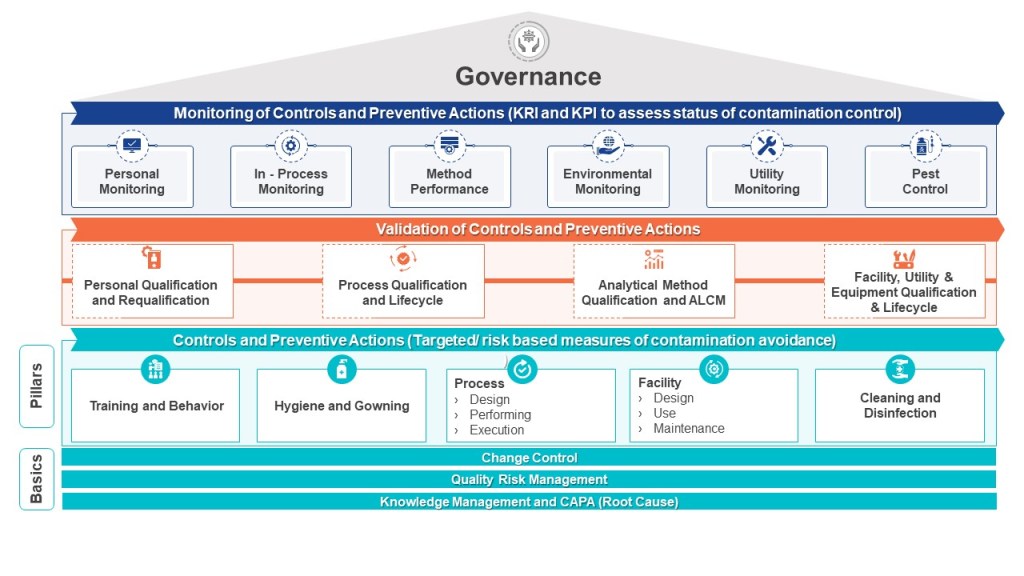
This approach builds off of the design activities and is part of a set of living risk assessments that inform the environmental monitoring part of your contamination control strategy.