Effective Organizations — Think Different

Effectiveness I recently had a bit of a wake-up call via Twitter. I asked the following question: “What’s the one thing /above all/ that makes for an effective organisation?” My thanks to all those who took the time to reply with their viewpoint. The wake-up call for me was the variety of these responses. All […]

via Effectiveness — Think Different

Great thought-piece over on “Think Different” on effectiveness, with a nice tie-in to Donnella Meadow’s “Twelve Leverage Points to Intervene in a System.”

In quality management systems, it is critical to look at effectiveness. If you do not measure, you do not know if the system is working the ways you expect and desire.

We often discuss lagging (output measurement) and leading (predictive) indicators, and this is a good way to start, but if we apply System Thinking and use Meadow’s twelve leverage points we can see that most metrics tend to be around 7-12, with the more effective levers being the least utilized.

I think there are a lot of value in finding metrics within these levers.

So for example, a few indicators on the effectiveness of lever 4 “The Power to Add, Change, Evolve, or Self-Organize System Structure”:

Lagging Leading
Effective CAPAs to the System Number of changes initiated by level of organization and scale of change
Deviation Reduction


Improving But Not Learning by Doing

Alex Tarbok on Marginal revolution wrote “Improving But Not Learning by Doing” looking at a paper “Causal understanding is not necessary for the improvement of culturally evolving technology” — which has interesting things to say to those interested in knowledge management. In short it demonstrates that the complex problems we have today need to be approached multi-dimension approach, in short system thinking is required to do true knowledge management.

Knowledge management Circular_Process_6_Stages (for expansion)

Throughout the six stages we need to be evaluating for complexities and interfaces. It is very easy to think in a silo and then create bigger problems done the line.

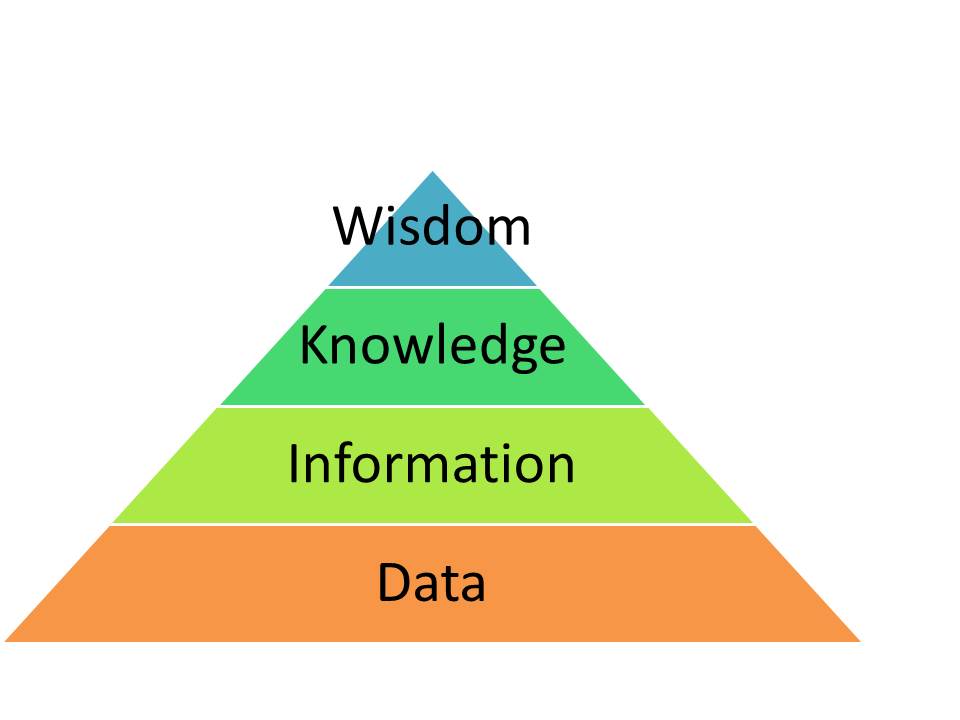
The DIKW pyramid is a great resource to keep in mind here.dikw pyramid

  • —Data comprises facts, observations, or perceptions
  • —Information is a subset of data, only including those data that possess context, relevance, and purpose
  • Knowledge is —Information with direction, i.e., leads to appropriate actions
  • Wisdom is the understanding of the why

I know that in many knowledge management models wisdom is often discounted, but that is to our detriment. Quality is often all about the why, whether a regulatory commitment, or a deep understanding of history, or as is relevant here , the relationship between parts of a complex system (or the interrelationship between systems).

Forget the technology, Quality 4.0 is all about thinking

Quality 4.0 is Industry 4.0 which is really just:

  • A ton of sensors (cheap, reliable sensors for everyone)
  • Data everywhere! (So much data. Honest data is good. Trust us.)
  • Collaboration (Because that never happened before technology)
  • Machine learning (this never ends well in the movies)

However, Quality 4.0 is really a lot more than the technology, it is all about using that technology to improve our quality management systems. So Quality 4.0 is really all about understanding that the world around us, and thus the organizations we work in, is full of complex and interconnected challenges and increasingly open systems of communication, and that we can no longer afford to address complex issues as we have in the past. The very simple idea behind Quality 4.0 is that current and future challenges requires thinking that is consistent with a living world of complexity and change.

As such there is nothing really new about Quality 4.0; it is just a consolidation of a lot of themes of change management, knowledge management and above all system thinking.

System Thinking requires quality professionals to develop the skills to operate in a paradigm where we see our people, organizations, processes and technology as part of the world, a set of dynamic entities that display continually emerging patterns arising from the interactions among many interdependent connecting components.

There are lots of tools and methodologies for managing systems. Frankly, a whole lot of them are the same that have been in use in quality for decades; others are new tools. The crucial thing to remember about Quality 4.0 is that it is an additive and transformative way to look at quality, and quite frankly one can go back and read Deming and see the majority of this there.

When I work on systems (which is according to my job description my core function), I keep some principles always in mind.

Principle Description
Balance The system creates value for the multiple stakeholders. While the ideal is to develop a design that maximizes the value for all the key stakeholders, the designer often has to compromise and balance the needs of the various stakeholders.
Congruence The degree to which the system components are aligned and consistent with each other and the other organizational systems, culture, plans, processes, information, resource decisions, and actions.
Convenience The system is designed to be as convenient as possible for the participants to implement (a.k.a. user friendly). System includes specific processes, procedures, and controls only when necessary.
Coordination System components are interconnected and harmonized with the other (internal and external) components, systems, plans, processes, information, and resource decisions toward common action or effort. This is beyond congruence and is achieved when the individual components of a system operate as a fully interconnected unit.
Elegance Complexity vs. benefit — the system includes only enough complexity as is necessary to meet the stakeholder’s needs. In other words, keep the design as simple as possible and no more while delivering the desired benefits. It often requires looking at the system in new ways.
Human Participants in the system are able to find joy, purpose and meaning in their work.
Learning Knowledge management, with opportunities for reflection and learning (learning loops), is designed into the system. Reflection and learning are built into the system at key points to encourage single- and double-loop learning from experience to improve future implementation and to systematically evaluate the design of the system itself.
Sustainability The system effectively meets the near- and long-term needs of the current stakeholders without compromising the ability of future generations of stakeholders to meet their own needs.

In order to be successful utilizing these principles when designing systems and processes we need to keep user at the forefront — striving to be sensitive to the user, to understand them, their situation and feelings: to be more empathetic.

components of empathy

We leverage both the affective component and the cognitive component of empathetic reasoning, in short we need to both share and understand.

We are in short asking 5 major questions:

  • What is the purpose of the system? What happens in the system?
  • What is the system? What’s inside? What’s outside? Set the boundaries, the internal elements and elements of the system’s environment.
  • What are the internal structure and dependencies?
  • How does the system behave? What are the system’s emergent behaviors and do we understand their causes and dynamics?
  • What is the context? Usually in the terms of bigger systems and interacting systems.

Think holistically, think empathetically with the user, and ask questions about system behavior. Everything else falls into place from there.

Thinking in Systems

Thinking in Systems by Donella Meadows is one of the books that has shaped my thinking as a quality professional, and I consider it one of the top 10 books for folks in the quality profession to read. If I ever try to lend you a copy, consider that a good thing.

The basic premise of system thinking is the notion that any force applied to the system has consequences. A well-designed system can absorb these forces and still maintain system functionality. A poorly designed system cannot absorb external forces, causing the system to collapse. A key take away of the book is that the systems we design do what they are designed to do, both positive and negative.

Ms. Meadows presents systems and models in ecosystem thinking in ways to avoid simplistic approaches and explains system oscillations and overshoots as examples of system instability. The book explains the attributes of systems:

  1.   Resilience – ability for a system to adjust. The opposite of resilience – fragility, causes the system to be unresponsive to change, and exposes the system to potential of collapse.
  2.   Self-Organization – ability of system to adjust to new demands and circumstances. Ability of the system to orient itself and build complex structures from simple building blocks is viewed as key characteristic.
  3. Hierarchy – describe how complex system can be broken into smaller, simpler organization that can function autonomously. The opposite of hierarchy is one complex organism that cannot be productive of parts of it is not performing at the level required for the smooth operation of the system.

The book has a ton of good approaches on how to solve system problems. The identification of a leverage point in the system describes how to affect system behavior in a most effective way.  The list of leverage point includes quantitative things such as numbers, creating of buffers in the system, as well as the introduction of new feedback loops and general system flexibility.

Read this book. Good quality culture understands the systems we build and how they impact the individuals who use them. The tools in this book serve as a good framework, and one I think you will come back to again and again.