There is a strong correlation between quality and ethics. Leadership’s demonstration of their philosophy and practice of ethical behavior impacts the whole organization in education, government or commercial enterprises
Quality is a management methodology, a set of ethics and a grab-bag of technical skills and tools (many of which are not unique to quality). Dennis Sergent does a good job riffing off of Deming’s Code of Professional Conduct, and in light of my recent post “Being a Quality Leader” I wanted to briefly talk about how leadership is perhaps the most effective lever in producing an ethical organization.
Cognitive moral development, meaning how sophisticated one’s thinking is about ethical issues
Ethics and Quality are hand-in-hand. You cannot create a quality product if you do not have an ethical framework. I often think this is a part of Deming’s message that has been lost.
Having recently said farewell to a leader in our quality organization, I have been reflecting on quality leaders and what makes one great. As I often do, I look to standards, in this case the American Society of Quality (ASQ).
The Certified Manager of Quality/Organizational Excellence (CMQ/OE)leads and champions process improvement initiatives—that can have regional or global focus—in various service and industrial settings. A CMQ/OE facilitates and leads team efforts to establish and monitor customer/supplier relations,supports strategic planning and deployment initiatives, and helps develop measurement systems to determine organizational improvement.
The ASQ’s Certified Manager of Quality/Operation Excellence (CMQ/OE) body of knowledge‘s first section is on leadership.
To be honest, the current body of knowledge (bok) is a hodge-podge collection of stuff that is sort of related but often misses a real thematic underpinning. The bok (and the exam) could use a healthy dose of structure when laying out the principles of roles and responsibilities, change management, leadership techniques and empowerment.
There are fundamental skills to being a leader:
Shape a vision that is exciting and challenging for your team (or division/unit/organization).
Translate that vision into a clear strategy about what actions to take, and what not to do.
Recruit, develop, and reward a team of great people to carry out the strategy.
Focus on measurable results.
Foster innovation and learning to sustain your team (or organization) and grow new leaders.
Lead yourself — know yourself, improve yourself, and manage the appropriate balance in your own life.
In order to do these things a leader needs to demonstrate skills in communication, critical thinking, problem solving, and skills motivating and leading teams (and self).
The best leaders know a lot about the domain in which they are leading, and part of what makes them successful in a management role is technical competence. A Quality leader needs to know quality as a domain AND the domain of the industry they are within.
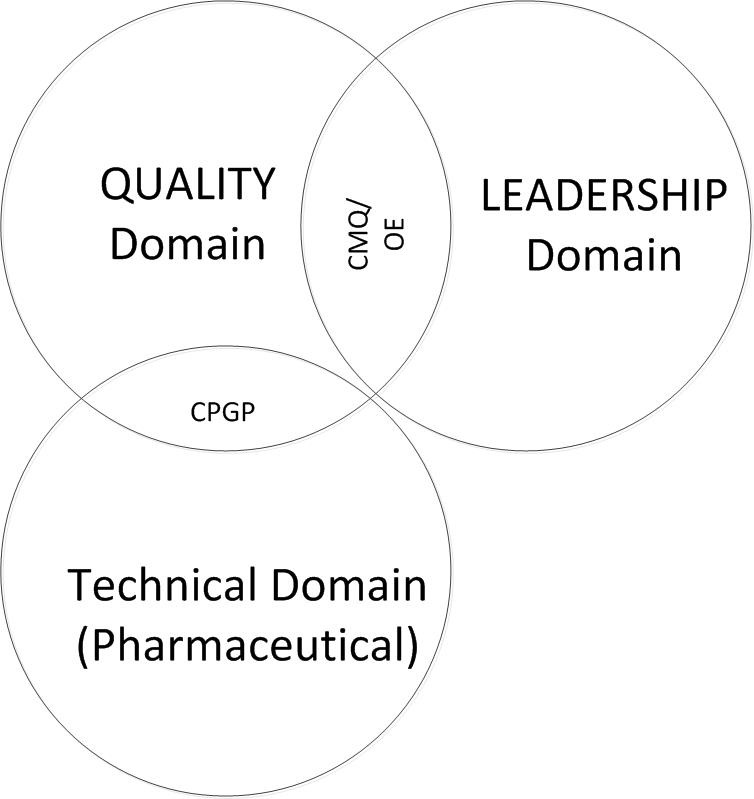
Three domains necessary for a quality leader
In my industry it is just not enough to know quality (for now we’ll define that as the ASQ BoK) nor is it enough to know pharmaceuticals (with regulatory being a subdomain). It is not enough just to have leadership skills. It is critical to be able to operate in all three areas.
To excel as a leader in practice, you also need a lot of expertise in a particular domain.
As an example, take the skill of thinking critically in order to find the essence of a situation. To do that well, you must have specific, technical expertise. The critical information an engineer needs to design a purification system is different from the knowledge used to understand drug safety, and both of those differ in important ways from what is needed to negotiate a good business deal.
When you begin to look at any of the core skills that leaders have, it quickly becomes clear that domain-specific expertise is bound up in all of them. And the domains of expertise required may also be fairly specific. Even business is not really a single domain. Leadership in pharmaceuticals, transportation, and internet (for example) all require a lot of specific knowledge.
Similarly, with only leadership and technical, you are going to fumble. Quality brings a set of practices necessary for success. A domain filled with analytical and decision making capabilities that cross-over with leadership (critical thinking and problem-solving) but are deepened with that perspective.
There are also other smaller domains, or flavors of domains. If I was building this model out more seriously I would have an interesting cluster of Health and Safety with Quality (the wider bucket of compliance even). I’m simplifying for this post.
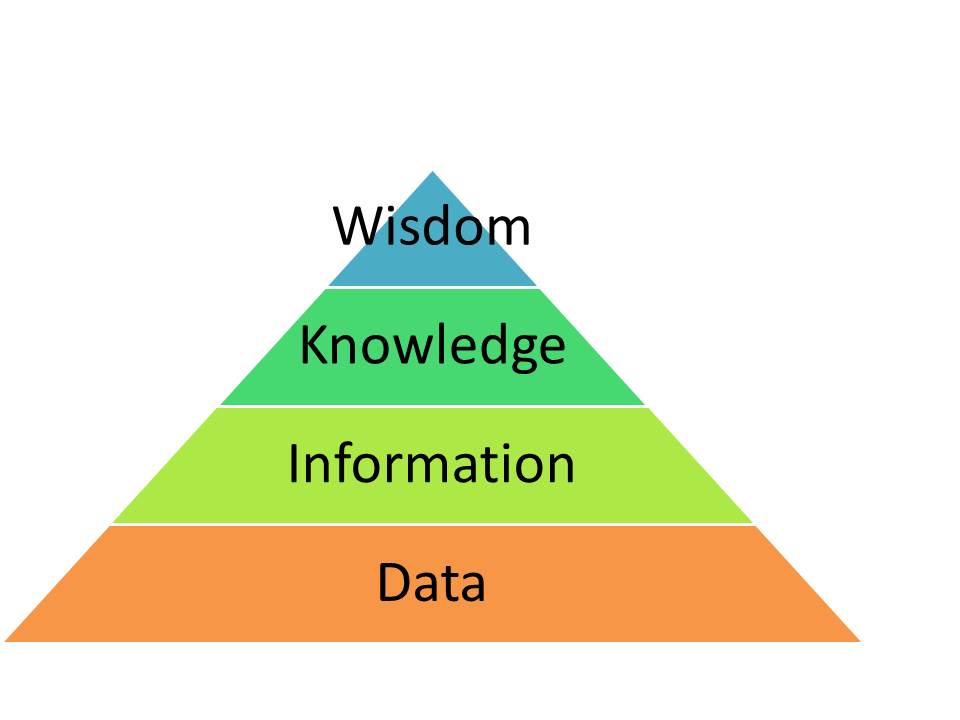
Development of knowledge
To go a step further. These three domains are critical for any quality professional. What changes is the development of wisdom and the widening of scope. This is why tenure is important. People need to be able to settle down and develop the skills they need to be successful in all three domains.
Good quality leaders recognize all this and look to build their organizations to reflect the growth of technical, quality and leadership domain.
I will be presenting at the ASQ Lean and Six Sigma Conference on March 5, 2019 on the topic “Training as Part of Lean Change Management.”
If you plan on being at the conference, let me know. I always enjoy sitting down with colleagues and chatting.
This topic unites three of my passions: change management, knowledge management and continuous improvements.
One of the key parts of any change stemming from a project is preparing people to actually do the work effectively. Every change needs to train and building valid and reliable training at the right level for the change is critical.
Training is valid when it is tied to the requirements of the job – the objectives; and when it includes evaluations that are linked to the skills and knowledge started in the objectives. Reliability means that the training clearly differentiates between those who can perform the task and those who cannot.
In this session we will take a risk based training approach to the best outcome for training. The following criteria will be examined and a tool provided for decision making:
Is a change in knowledge or skills needed to execute the changed process?
Is the process or change complex? Are there multiple changes?
Criticality of Process and risk of performance error? What is the difficulty in detecting errors?
What is the identified audience (e.g., location,size, department, single site vs. multiple sites)?
Is the goal to change workers conditioned behavior?
Armed with these criteria, participants will then be exposed to specific training tools to enable quick adoption of the training:reader-doer, pre-job briefings, and structured discussions. Advantages of each method, as well as common mistakes will be evaluated.
Knowledge management as a key enabler to lean improvements will be examined. Participants will gain an understanding of how to draw from their organizations formal and informal knowledge management systems, and gain an understanding a tool to ensure results of a lean project feedback into the knowledge management system.
Participants will leave this training with the ability to execute decision making around providing successful training for their lean projects and ensuring that this deepens their organization’s knowledge and the ability to apply that knowledge in the future.
There must be document controls in place to assure product quality (see §§ 211.100, 211.160(a),211.186, 212.20(d), and 212.60(g)). For example, bound paginated notebooks, stamped for official use by a document control group, provide good document control because they allow easy detection of unofficial notebooks as well as any gaps in notebook pages. If used, blank forms (e.g., electronic worksheets, laboratory notebooks, and MPCRs) should be controlled by the quality unit or by another document control method. As appropriate, numbered sets of blank forms may be issued and should be reconciled upon completion of all issued forms. Incomplete or erroneous forms should be kept as part of the permanent record along with written justification for their replacement (see, e.g., §§ 211.192, 211.194, 212.50(a), and 212.70(f)(1)(vi)). All data required to recreate a CGMP activity should be maintained as part of the complete record.
6. How should blank forms be controlled? on page 7 of 13
First sentence “There must be document controls in place to assure product quality” should be interpreted in a risk based approach. All forms should always be published from a controlled manner, ideally an electronic system that ensures the correct version is used and provides a time/date stamp of when the form is published. Some forms (based on risk) should be published in such a way that contemporaneity and originality are more easy to prove. In other words, bind them.
A good rule of thumb for binding a printed form (which is now going to become a record) is as follows:
Is it one large form with individual pages contributing to the whole record that could be easily lost, misplaced or even intentionally altered?
Is it a form that provides chronological order to the same or similar pieces of information such as a logbook?
Is time of entry important?
Will this form live with a piece of equipment, an instrument, a room for a period of time? Another way to phrase this, if the form is not a once and done that upon completion as a record moves along in a review flow.
If you answer yes to any of these, then the default should be to bind it and control it through a central publishing function, traditionally called document control.
Potential risk of not meeting expectations/items to be checked
Distribution and Control Item 2 page 17 of 52
Issue should be controlled by written procedures that include the following controls: – Details of who issued the copies and when they were issued. – using of a secure stamp, or paper colour code not available in the working areas or another appropriate system. – ensuring that only the current approved version is available for use. – allocating a unique identifier to each blank document issued and recording the issue of each document in a register. – Numbering every distributed copy (e.g.: copy 2 of 2) and sequential numbering of issued pages in bound books. Where the re-issue of additional copies of the blank template is necessary, a controlled process regarding re-issue should be followed. All distributed copies should be maintained and a justification and approval for the need of an extra copy should be recorded, e.g.: “the original template record was damaged”. – All issued records should be reconciled following use to ensure the accuracy and completeness of records.
Without the use of security measures, there is a risk that rewriting
or falsification of data may be made after photocopying or scanning the
template record (which gives the user another template copy to use). Obsolete
version can be used intentionally or by error. A filled record with an
anomalous data entry could be replaced by a new rewritten template.
All unused forms should be accounted for, and either defaced and
destroyed, or returned for secure filing.
Did someone declare December Data Integrity month when I wasn’t looking? Though recent FDA announcements really mean that every month is data integrity month.
In the spirit of giving the US published on 13Dec2017 “Data Integrity and Compliance with Drug CGMP: Questions and Answers.” This guidance updates a draft version released in 2016 and has been revised to include additional information on the agency’s current thinking on best practices and covers the design, operation and monitoring of systems and controls to maintain data integrity.



 Investigations of a Dog