
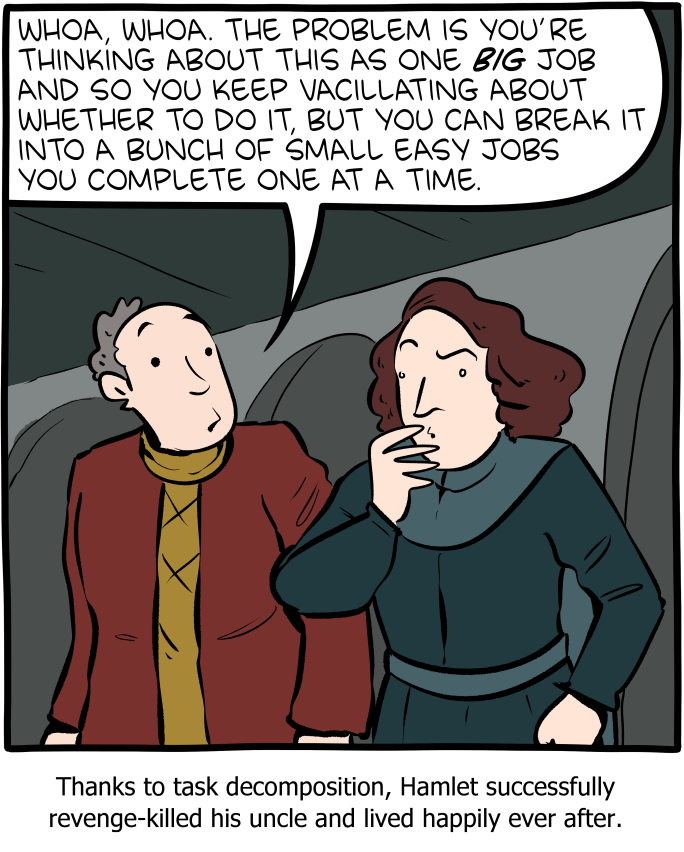
Task decomposition is a systematic approach to breaking down a complex task into smaller, more manageable components. A more detailed version of task analysis helps organize work, improve understanding, and facilitate effective execution.
Step 1: Understand the Task
The first step in task decomposition is to fully understand the task at hand. This involves defining the main objective, identifying the final deliverables, and recognizing all the requirements and constraints associated with the task.
Step 2: Break Down the Task
Once the task is clearly understood, the next step is to break it down into smaller, more manageable parts. This can be done by identifying the major components or phases of the task and then further dividing these into subtasks.
Techniques for Breaking Down Tasks:
- Hierarchical Task Analysis (HTA): This involves creating a hierarchy of tasks, starting with the main task at the top and breaking it down into subtasks and further into individual actions.
- Functional Decomposition: Focus on dividing the task based on different functions or processes involved.
- Object-Oriented Decomposition: Used primarily in software development, where tasks are divided based on the objects or data involved.
Step 3: Sequence the Tasks
Determine the logical order in which the subtasks should be completed. This involves identifying dependencies between tasks, where some tasks must precede others.
Step 4: Assign Resources and Estimate Time
Assign the appropriate resources to each subtask, including personnel, tools, and materials. Additionally, estimate the time required to complete each subtask. This helps in scheduling and resource allocation.
Step 5: Prioritize Tasks
Not all tasks are equally important. Prioritize tasks based on their impact on the overall project, their urgency, and their dependencies.
Step 6: Monitor and Adjust
Once the decomposition and planning are in place, the execution phase begins. It’s important to monitor the progress of tasks, check adherence to timelines, and make adjustments as necessary. This might involve re-prioritizing tasks or re-allocating resources to address any bottlenecks or delays.
Step 7: Documentation and Feedback
Document the entire process and gather feedback. This documentation will serve as a valuable reference for future projects, and feedback can help in refining the decomposition process.
Task decomposition is a dynamic process that may require iterative adjustments. Used well, it is a powerful tool in the quality toolbox.

 Investigations of a Dog
4 thoughts on “Task Decomposition”