
The Theory of Constraints: A Cornerstone for Advanced Quality Systems and Organizational Maturity

A familiar scene exists across every pharmaceutical manufacturing site I’ve ever seen, lot disposition cycle times are a struggle. While management instinctively pushes for “optimization everywhere,” the quality department remains overwhelmed and becomes the weakest link in an otherwise robust chain. This scenario illustrates perfectly why understanding and applying the Theory of Constraints (TOC) is essential for quality excellence in complex systems.

The Fundamentals of Theory of Constraints

The Theory of Constraints, developed by management guru Eliyahu M. Goldratt in his groundbreaking 1984 book The Goal, fundamentally changed how we view process improvement. Unlike approaches that attempt to optimize all parts of a system simultaneously, TOC recognizes a profound truth: in any system, there is always at least one constraint-a bottleneck-that limits overall performance. This constraint determines the maximum throughput of the entire system, regardless of how efficient other components might be.

TOC defines a constraint as “anything that prevents the system from achieving its goal,” which in business typically translates to generating profit but can also be viewed as getting product to the patient. By focusing improvement efforts specifically on these constraints rather than dispersing resources across the system, organizations can achieve more significant results with less effort. This laser-focused approach makes TOC not just another quality tool but a foundational framework that bridges system thinking with practical quality management.

The Power of the Weakest Link Paradigm

Systems thinking teaches us that organizations are networks of interdependent processes in which the performance of the whole exceeds the sum of its parts. TOC enhances this perspective by providing a clear mechanism for prioritization. As Goldratt famously observed, “a chain is only as strong as its weakest link.” This metaphor eloquently captures the essence of constraint management-no matter how much you strengthen other links, the chain’s overall strength remains limited by its weakest component.

This perspective fundamentally challenges the traditional approach of seeking balanced capacity across all processes.

The Five Focusing Steps: A Systematic Approach to Constraint Management

The heart of TOC’s practical application lies in the Five Focusing Steps-a powerful cyclic methodology that systematically addresses constraints:

  1. Identify the system’s constraint(s): Determine what limits the system’s performance.
  2. Decide how to exploit the constraint: Maximize the efficiency of the constraint without major investments.
  3. Subordinate everything else to the above decision: Align all other processes to support the constraint’s optimal performance.
  4. Elevate the system’s constraint: If necessary, make larger investments to increase the constraint’s capacity.
  5. Warning! If in the previous steps a constraint has been broken, go back to step 1, but don’t allow inertia to create a new constraint: Once a constraint is resolved, the improvement cycle begins again with the new limiting factor.

This approach aligns perfectly with the system thinking principles outlined in “Principles behind a good system,” which highlight balance, coordination, and sustainability as critical elements of well-designed systems. The systematic nature of TOC provides a clear roadmap for addressing complex system challenges without becoming overwhelmed by their complexity.

TOC, Lean, and Six Sigma: A Powerful Triad

While TOC focuses on constraints, Lean targets waste elimination, and Six Sigma concentrates on reducing variation. Rather than competing methodologies, these approaches complement each other in what some practitioners call “TLSS” (TOC, Lean, Six Sigma).

The synergy becomes evident when we consider their respective objectives:

MethodologyPrimary FocusKey MetricPhilosophy
TOCBottlenecksThroughput“Find the constraint. Fix it. Repeat.”
LeanWasteValue Flow“If it doesn’t add value, it’s waste.”
Six SigmaVariationQuality“Reduce variation to meet customer expectations.”

TOC says ‘What’s broken?’ Lean says ‘Here’s how to fix it right.'” This complementary relationship makes TOC particularly valuable as a prioritization mechanism for quality improvement initiatives-pointing precisely where Lean and Six Sigma tools should be applied for maximum impact.

Constraints, Waste, and Variation: An Interconnected Trilogy

Constraints in a system often become amplifiers of waste and variation. When a process operates at capacity, minor variations become magnified, and waste becomes more impactful. Consider a quality testing laboratory operating at its constraint-even small variations in testing time or minor errors requiring rework can cascade into significant delays, exacerbating waste throughout the system.

This interconnection helps explain why constraint management must be integrated with waste reduction and variation control. The goal is not just to fix immediate issues but to prevent recurrence and drive continuous improvement. TOC provides the critical prioritization framework to ensure these improvement efforts target the most impactful areas.

Throughput as a Quality Metric: Beyond Efficiency to Effectiveness

TOC introduces a clear set of metrics that differ from traditional accounting measures: throughput (the rate at which the system generates money through sales), inventory (all the money invested in things intended to be sold), and operating expense (all money spent turning inventory into throughput).

This focus on throughput as the primary metric represents a significant shift in quality thinking. Rather than optimizing local metrics or cost-cutting, TOC emphasizes increasing the flow of value through the system-aligning perfectly with the concept of operational stability as “the state where manufacturing and quality processes exhibit consistent, predictable performance over time with minimal unexpected variations”. This emphasis on flow over efficiency helps organizations maintain focus on outcomes rather than activities.

TOC in Quality Maturity: A Path to Excellence

From Constraint Neglect to Strategic Constraint Management

Quality maturity models provide a roadmap for organizational improvement, and TOC can be mapped to these models to illustrate progression in constraint management capability:

Level 1: Initial (Constraint Neglect)

At this level, constraints are neither identified nor managed systematically. The organization experiences frequent firefighting and may attempt to “optimize” all processes simultaneously, resulting in scattered efforts and minimal system improvement. Quality issues are addressed reactively, much like the early stages of validation programs described as “ad hoc and lacking standardization”.

Level 2: Managed (Constraint Awareness)

Organizations at this level recognize the existence of constraints but address them in silos. There’s increased awareness of bottlenecks, but responses remain tactical rather than strategic. This parallels the “Managed” validation maturity level where “basic processes are established but may not fully align with guidelines”. Constraints are managed as isolated problems rather than system limitations.

Level 3: Standardized (Constraint Management)

At this level, constraint identification and management become standardized across the organization. The Five Focusing Steps are consistently applied, and there’s alignment between constraint management and other quality initiatives. This mirrors the “Standardized” level in validation maturity where “processes are well-defined and consistently implemented”.

Level 4: Predictable (Quantitative Constraint Management)

Organizations at this level not only manage current constraints but predict future ones through data analysis. Constraint metrics are established and regularly monitored, similar to the “Predictable” validation maturity level where “KPIs for validation activities are established and regularly monitored”.

Level 5: Optimizing (Strategic Constraint Integration)

At the highest maturity level, constraint management becomes embedded in strategic planning. The organization continuously innovates its approach to constraints and may actively design systems to control where constraints appear. This aligns with the “Optimizing” validation maturity level characterized by “continuous improvement and innovation.”

This maturity progression illustrates how TOC implementation evolves from reactive problem-solving to strategic system design, paralleling broader quality maturity development.

Actionable Insights: Implementing TOC in Your Quality System

Step 1: Map Your Value Stream to Identify Potential Constraints

Process mapping is a fundamental first step in constraint identification. As noted in “Process Mapping as a Scaling Solution,” a process flow diagram is a visual representation of a process’s steps, showing the sequence of activities from start to finish. This visualization helps identify where materials, information, or approvals might be bottlenecked.

When mapping your value stream, pay particular attention to:

  • Where work accumulates or waits
  • Processes with high utilization rates
  • Steps requiring specialized resources or expertise
  • Points where batching occurs
  • Areas with high rework rates

Step 2: Analyze System Performance to Confirm the Constraint

Once potential constraints are identified, analyze performance data to confirm where the true system constraint lies. Remember, as TOC teaches, “organizations have very few true constraints.” Look for:

  • Processes that are consistently running at capacity.
  • Steps that dictate the pace of the entire system
  • Areas where expediting frequently occurs
  • Processes that, when improved, directly improve overall system performance

Step 3: Apply the Five Focusing Steps

With the constraint identified, systematically apply the Five Focusing Steps:

  • Identify: Document exactly what limits the constraint’s performance.
  • Exploit: Before investing in expansion, ensure the constraint operates at maximum efficiency. For example, in a quality testing lab constraint, this might mean eliminating administrative delays, optimizing scheduling, and ensuring the constraint never waits for inputs.
  • Subordinate: Adjust all other processes to support the constraint. This might include changing batch sizes, scheduling, or staffing patterns in non-constraint areas to ensure the constraint never starves or becomes blocked.
  • Elevate: Only after fully exploiting the constraint should you invest in expanding its capacity through additional resources, technology, or process redesign.
  • Repeat: Once the constraint is no longer limiting system performance, a new constraint will emerge. Return to step one to identify this new constraint.

Step 4: Integrate TOC with Your CAPA System

TOC provides an excellent framework for prioritizing corrective and preventive actions. As noted in discussions of CAPA systems, “one reason to invest in the CAPA program is that you will see fewer deviations over time as you fix issues.” By focusing CAPA efforts on constraints, you maximize the system-wide impact of improvements.

Consider this Constraint Prioritization Scorefor CAPA initiatives: Prioritization Score = Impact × (Ease + Risk Reduction)

This approach ensures your quality improvement efforts focus on areas that will most significantly improve overall system performance.

Conclusion: TOC as a Quality Mindset

The Theory of Constraints offers more than just a methodology for improvement-it represents a fundamental shift in how we think about system performance and quality management. By recognizing that systems are inherently limited by constraints and systematically addressing these limitations, organizations can achieve breakthrough improvements with focused effort.

As quality systems mature, the integration of TOC principles becomes increasingly important. From reactive problem-solving to proactive constraint management and ultimately to strategic constraint design, TOC provides a path to quality excellence that complements and enhances other methodologies.

The journey to quality maturity requires system thinking, disciplined focus, and continuous improvement-all principles embodied in the Theory of Constraints. By adopting TOC not just as a tool but as a mindset, quality professionals can navigate the complexity of modern systems with clarity and purpose, ensuring resources are directed where they will have the greatest impact.

I invite you to explore more about integrating TOC with quality systems in related posts on system thinking principles, operational stability, and maturity models. The constraint may be your system’s limitation-but identifying it is your greatest opportunity for breakthrough improvement.
Environmental Monitoring as a Falsifiable Story: Trending, Investigation, and the Illusion of Control

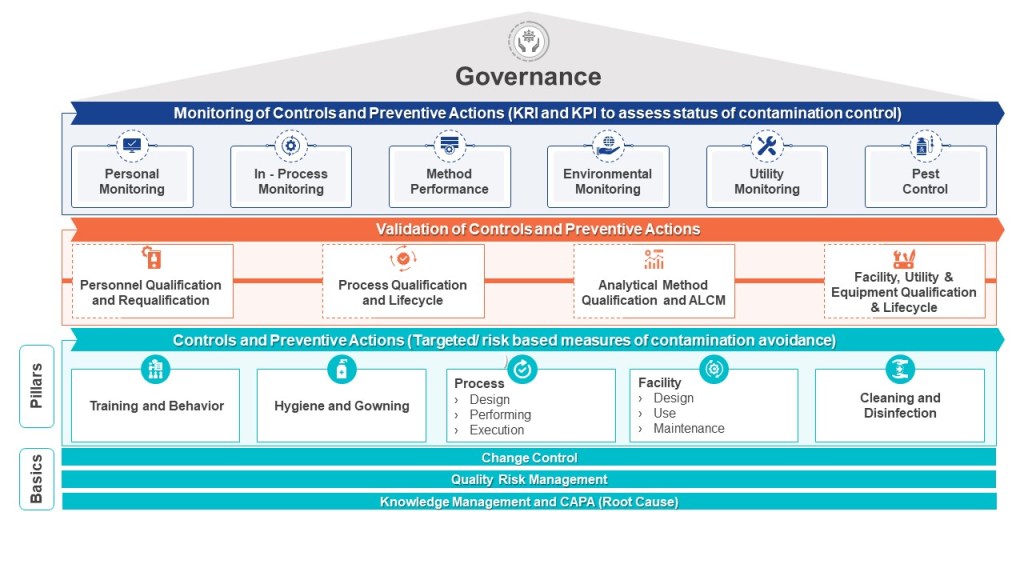
Environmental monitoring (EM) is not a hygiene check. It is a story we tell ourselves about whether our contamination control strategy actually works.

On paper, EM is straightforward: pick locations, define limits, collect samples, trend the data, investigate excursions. In practice, it sits at the messy intersection of microbiology, human behavior, facility design, and what I’ve elsewhere called unfalsifiable control strategies. When it works, EM quietly falsifies our fears by showing the facility behaving as predicted. When it fails, it often fails by never really testing the prediction in the first place.

This post is about that failure mode. More specifically, it is about two parts of the EM ecosystem that are chronically underpowered: trending and investigation. If you’ve read my earlier piece on Risk Assessment for Environmental Monitoring, think of this as the sequel where the risk model has to face its least forgiving critic: reality.

What Environmental Monitoring Is Really For

We often say EM is about verifying “state of control” in cleanrooms. It is a phrase that sounds reassuring and says almost nothing. State of control relative to what?

In Risk Assessment for Environmental Monitoring, I argued that an EM program should be anchored in a living risk assessment that behaves more like a heat map than a checklist. The assessment looks at:

  • Amenability of equipment and surfaces to cleaning and disinfection
  • Personnel presence and flow
  • Material flow and hand‑offs
  • Proximity to open product or direct-contact surfaces
  • Complexity and frequency of interventions

The result is not just a pretty risk matrix to staple behind Annex 1. It is a falsifiable prediction:

Given this process, this design, and these behaviors, contamination is most likely to appear here, here, and here.

Environmental monitoring is the ongoing experiment we run against that prediction. Every plate, every settle dish, every active air sample is data in a long-running test: does the world behave the way our contamination control strategy (CCS) says it should?

That framing matters. It changes the central trending question from “Are we under our alert and action limits?” to “Are the patterns we see consistent with the story our CCS tells?”

In Contamination Control, Risk Management and Change Control, I wrote that contamination control is a risk management problem that must be dynamically updated as we learn. EM is where that learning is supposed to happen. A CCS that cannot be contradicted by EM data is not a strategy; it is a belief system.

Aspirational Data vs Representative Data

Before we talk about trending, we have to talk about the data we are trending. Environmental monitoring quietly encourages a particular pathology: the production of aspirational data.

Aspirational data capture how we wish the facility behaved. Representative data capture how it actually behaves. The differences are subtle and often invisible in a quarterly slide deck.

Common ways organizations drift toward aspiration:

  • Pre-cleaned sampling. The team “freshens” the line before the EM tech arrives, creating a pristine snapshot of a room that never exists during peak operations.
  • Special sampling behavior. Operators slow their movements, avoid borderline practices, and “try harder” when plates are out. EM never sees the way work happens at 02:00 on day seven of a long campaign.
  • Convenience-based sites. Surfaces that are easy to access become the de facto sampling plan. Awkward, congested, or genuinely risky locations become afterthoughts.
  • Frozen plans. Once a sampling plan is approved, changing it is culturally hard. Risk shifts, processes evolve, but the plan clings to the path of least resistance.

The result is a dataset that looks pleasant in management reviews but has low epistemic value. It cannot falsify the CCS because it rarely goes near the conditions where the CCS is most likely to fail.

In Control Strategies, I described control strategies as knowledge systems that depend on feedback loops. EM is one of those loops. When EM is restricted to safe sampling, we quietly turn down the volume on our feedback. We get charts that signal control regardless of what is happening in the real system.

When an inspector asks, “How do you know this program is representative of normal operations?”, the reflex is to present design-intent documents: risk assessments, HVAC diagrams, EM SOPs. We rarely acknowledge the human side:

  • “We always clean right before EM.”
  • “Operators adjust their behavior during sampling.”

But these are exactly the kinds of issues that decide whether EM is a diagnostic or a performance. Representative programs will, at times, generate ugly data. That is what makes trending worth doing.

Trending as Hypothesis Testing, Not Chart Decoration

Trending has become a ritual. EM SOPs promise regular trend analysis. Quarterly reports bristle with plots and heat maps. Warning letter responses swear that “trends are monitored.”

Yet, in practice, most trending boils down to two actions:

  1. Plot excursion counts or percentages by area/quarter.
  2. Confirm that they are below predefined thresholds (excursion rate limits, contamination recovery rate limits, etc.).

This can catch gross failures. It does little for the subtler changes that matter most.

The Wrong Question: “Are We Under the Number?”

When trending is reduced to “staying under 1% excursions” or “within CRR limits,” we are asking the wrong question. Limits are not magic; they are guesses, often conservative and sometimes inherited, about what “normal” should look like.

If your excursion rate moves from 0.05% to 0.4% to 0.8% across four quarters and your only commentary is “still under 1%,” you are treating an arbitrary number as a metaphysical boundary. The system is speaking; you are ignoring it because the cell in the dashboard is still green.

The same goes for contamination recovery rates. USP <1116> introduced CRR specifically to get us away from binary hit/no‑hit thinking. But CRR can easily become just another “good/bad” threshold if we do not embed it in a broader hypothesis test.

The Right Question: “What Pattern Would Falsify Our Story?”

In my 2025 retrospective, I described investigations as opportunities to falsify the control strategy. Trending is the front end of that logic. Before you can falsify a story, you must decide what would count as falsification.

Most EM programs are full of unspoken hypotheses:

  • “If excursion rate ever exceeds X, we have a problem.”
  • “If mold appears in Grade C, the building envelope is compromised.”
  • “If we see TNTC in this room, an operator did something dramatically wrong.”

These thoughts exist as hallway comments and private thresholds in managers’ heads. They rarely make it into procedures.

A mature trending program would make them explicit. For example:

  • Predefined trend triggers:
    • Four consecutive quarters of increasing excursion rate, regardless of absolute level.
    • A statistically significant increase in CRR versus the prior two-year baseline.
    • Recurrence of the same organism species in the same location over multiple months.
    • Emergence of organisms outside the current disinfectant challenge panel.
  • Explicit CCS linkages:
    • “This pattern would contradict our assumption that weekly sporicide is sufficient in Buffer Prep.”
    • “This cluster would contradict our assumption that the gowning procedure is robust under peak traffic.”

In the Rechon warning letter post, I emphasized temporal correlation: contamination patterns aligned with specific campaigns, maintenance events, or staffing changes are not curiosities; they are tests of our explanatory model. Trend analysis that never confronts the CCS with these tests remains decorative.

Three Levels of Trend Analysis

Practically, it helps to distinguish three nested levels of trend analysis:

  1. Descriptive – What happened?
    • Excursion counts and percentages by room, grade, quarter.
    • CRR by parameter and area versus internal limits and historical baselines.
    • Organism distributions over time.
  2. Relational – What does it correlate with?
    • Overlay EM excursions with campaign schedules, change controls, shutdowns, HVAC events, and staffing patterns.
    • Ask, “When X happens, does Y tend to happen as well?”
  3. Explanatory – What does this say about our CCS?
    • Map observed trends back to specific CCS elements: cleaning regime, gowning, HVAC, material/personnel flow.
    • Ask, “If this pattern persists, which CCS or risk assessment statements would we need to rewrite?”

Most organizations live at level 1, dabble in level 2, and rarely touch level 3. But level 3 is where trending actually becomes hypothesis testing.

In The Quality Continuum in Pharmaceutical Manufacturing, I wrote about QC’s role in providing continuity across detection, response, and learning. EM trending is one of the places QC can either uphold that continuum or quietly break it by staying at the descriptive level.

Seasonal Molds and Convenient Amnesia

Seasonality is a good example of where EM trending and investigation often part ways with reality.

Many facilities can tell you, in a hand-wavy way, that “we always see more molds in the fall” or “pollen season is rough on our Grade D.” Fewer can show you a disciplined comparison of Q4 versus Q4 across multiple years, with room-by-room and species-level analysis.

The usual pattern looks like this:

  • A cluster of mold excursions appears in Q4.
  • Each individual event is investigated as a standalone deviation: root cause “seasonal loading,” “door left open,” “operator movement,” etc.
  • The quarterly report notes an “increase in mold recoveries consistent with seasonal variation.”
  • No one actually compares the magnitude and distribution of this Q4 spike to prior years in a way that could falsify the “just seasonal” story.

The phrase “consistent with” is doing a lot of work there. Consistent with does not mean explained by. It means “we can imagine a world where this pattern is seasonal.”

A more disciplined approach would:

  • Collect 3–5 years of Q4 data and compare mold counts and species distributions to other quarters.
  • Look at spatial patterns: are these molds appearing in the same areas repeatedly, or migrating?
  • Correlate with facility and CCS changes: new disinfectants, altered cleaning frequencies, HVAC modifications, construction, landscaping changes.

If the story is “seasonal loading,” that story should make predictions:

  • The spike should repeat with roughly similar magnitude and species profile year-on-year, absent major changes in controls.
  • Rooms with greater exchange with the external environment should be more affected than those with tight controls.

If those predictions do not hold, the hypothesis fails. Perhaps what we actually have is a cleaning regime that is adequate at baseline but fragile under seasonal stress; or a building envelope that slowly degraded; or a CCS that never truly considered spores as a separate risk dimension.

Trending without this kind of explicit, falsifiable seasonal analysis can lull us into a comforting narrative about inevitable variation, instead of pushing us to ask whether our controls are robust enough.

Investigation as the Continuation of Trending

If trending is hypothesis testing at the population level, investigation is the continuation of that testing at the event level.

In several posts, I have written about investigation craft:

  • Using cognitive interviewing instead of leading questions.
  • Avoiding the “Golden Day” fallacy, where we focus only on what was different on the day it went wrong and ignore the many days it went right.
  • Distinguishing between negative reasoning (“no evidence of”) and causal reasoning (“this factor contributed to…”).

EM gives us a special sort of investigation problem. We are often dealing with:

  • Low signal-to-noise ratio.
  • Long latency between event and detection.
  • Data that are inherently spatial and temporal (room, site, campaign, season).

When an EM excursion occurs, the temptation is to compress the narrative down to the single day, the single shift, the single operator. We write: “On this day, operator X failed to do Y, leading to Z.”

That can be true. It is rarely the whole truth.

The Golden Day vs the Typical Day

The Golden Day fallacy appears when we contrast the excursion day to an imaginary “typical day” and then attribute all differences to the excursion. The problem is that most of the time, we do not actually understand what a typical day looks like in any rigorous sense.

Trending should inform that understanding. For example:

  • If a room has a history of low-level hits clustered around certain interventions, then seeing a spike during such an intervention may be a case of the same mechanism operating more strongly, not a unique one-off.
  • If a species has appeared sporadically over months across different surfaces, the excursion might be the moment the underlying reservoir finally crossed a threshold, not the moment the contamination was created.

Good EM investigations make heavy use of trend data as context. They ask:

  • “What does the last year of data in this room look like?”
  • “Have we seen this organism before, and where?”
  • “Which parts of the CCS would predict that this should not happen here?”

The investigation then moves from “What happened on Tuesday?” to “What does Tuesday tell us about a pattern we may have been ignoring?”

Negative Evidence and Silent Failures

Another trap in EM investigations is the overuse of negative evidence:

  • “No HVAC deviations were noted.”
  • “Cleaning logs were complete.”
  • “No maintenance activities were recorded.”

Each of these is a statement about documentation, not reality. They are not useless—records matter—but they are not the same as positive evidence of proper behavior.

When we string together a series of “no deviations noted” statements and conclude that “no systemic issues were identified,” we have quietly moved from absence of evidence to evidence of absence.

Trend-informed EM investigations counter this by looking for silent failures:

  • If we see a slow increase in low-level counts in a room with “perfect” cleaning records, what does that say about the sensitivity of our cleaning oversight?
  • If we consistently recover organisms that our disinfectant efficacy studies never challenged, what does that say about our DE study design?

In other words, investigations should use EM data to question the sensitivity and specificity of our own controls, not just to confirm that paperwork exists.

A Composite Case: When EM Told Two Stories

Consider a composite, anonymized scenario that will feel familiar.

Over the course of a year, a facility sees:

  • A quarterly excursion rate that increases from 0.1% to 0.7%, always under the 1.0% internal limit.
  • Recurrent viable air excursions and occasional TNTC readings in two Grade C cell culture rooms during peak campaigns.
  • A cluster of mold recoveries in Q4 in both Grade C and D areas, including species not previously seen at the site.
  • A contamination recovery rate that remains within internal CRR limits for all grades.

The quarterly EM report dutifully notes:

  • “Excursion rate remains below 1%; EM program continues to demonstrate control.”
  • “Increased excursions seen in Grade C areas consistent with high activity.”
  • “Mold recoveries consistent with seasonal variation.”

Investigations for the individual deviations attribute causes to:

  • Operator aseptic technique.
  • Increased production activity.
  • Seasonal mold loading.

No trend deviation is opened. No update is made to the CCS.

From a strict, spec-driven point of view, this is plausible. From a hypothesis-testing point of view, it is deeply unsatisfying.

A more ambitious approach would treat the year’s data as a falsification challenge to the CCS:

  • The CCS claimed cleaning frequencies and disinfectant rotation were sufficient for Grade C under expected facility loading. Yet under peak load, the system appears fragile.
  • The CCS claimed gowning procedures and personnel flow were robust for cell culture operations. Recurrent TNTC and high viable air counts suggest a different story.
  • The CCS and DE study implicitly assumed the disinfectant panel and contact times were adequate against relevant molds. The appearance of new species and seasonal clustering should trigger a revisit of those assumptions.

In this view, the “trend deviation” is not an administrative nicety. It is the vehicle for making the CCS falsification explicit and forcing the organization to decide:

  • Do we update the control strategy and invest in new controls?
  • Or do we defend the current strategy with stronger evidence?

Either answer is more honest than quietly declaring everything “within limits.”

Making EM Falsifiable by Design

If EM is going to function as a falsifiable story rather than a compliance ritual, a few design principles help.

1. Design for Representation, Not Respectability

Sampling plans should start from the premise that data will sometimes be uncomfortable. That means:

  • Sampling when rooms are at their busiest, not when they are at their tidiest.
  • Including sites that are awkward, noisy, or politically sensitive because they are truly high risk.
  • Formalizing in procedures that pre‑cleaning specifically for EM is not permitted (and verifying this in practice).

If EM results never make anyone uncomfortable, they are probably not representative.

2. Treat Risk Assessments as Versioned Hypotheses

The EM risk assessment and CCS should be treated as versioned, hypothesis-bearing documents:

  • Each version should explicitly state key assumptions: e.g., “Weekly sporicide is sufficient for Grade C floors under expected traffic.”
  • Trend analysis should regularly review whether observed patterns still align with those assumptions.
  • When they do not, the CCS and risk assessment should be revised, not simply the justification text.

This links EM data to change control in a way that Contamination Control, Risk Management and Change Control sketched conceptually but rarely gets fully implemented.

3. Use Annual Organism Review as a Falsification Step

Annual organism reviews for disinfectant challenge panels are often treated as administrative ticks: yes, we still have a Gram-positive, a Gram-negative, a yeast, a mold, and maybe a facility isolate or two.

A more useful review would ask:

  • Which organisms actually dominated our EM recoveries this year?
  • Which organisms recurred in high-risk rooms?
  • Which organisms appeared for the first time, and where?
  • Which of these are covered by our current disinfectant efficacy panel, and which are not?

When there is a mismatch, that is a hypothesis failure: our DE panel is not representative of the real flora. The response might be to:

  • Add one or two high-frequency isolates to the next DE study.
  • Re‑evaluate contact times or concentrations.
  • Re-examine how disinfectant is applied in challenging locations.

This turns the organism review into an explicit test of how well our lab studies generalize to the field.

4. Integrate Trend Triggers into Investigation Governance

Trend triggers—like consecutive quarters of increase, or recurrent species in a location—should be codified and tied directly to deviation types. For example:

  • “Any four-quarter monotonic increase in excursion rate in a grade triggers a site-level EM trend deviation.”
  • “Any repeated recovery of the same mold in the same room over three months triggers a mold trend deviation.”

These trend deviations should then be treated with the same seriousness as a major one-off excursion, because they represent repeated falsification of a CCS assumption, not a single-point failure.

Culture: Pretty Charts vs Uncomfortable Truths

Behind all of this sits culture. Environmental monitoring lives in a tension between two expectations:

  • Regulators expect EM to be representative of normal operations.
  • Leadership often expects EM results to be respectable—low, stable, reassuring.

Those expectations are not always compatible.

A representative EM program will sometimes show uncomfortable patterns:

  • A room that is chronically fragile under certain campaigns.
  • A mold species that stubbornly reappears despite cleaning.
  • A slow drift upward in viable counts in a high-risk area.

If every excursion turns into a hunt for the “operator at fault,” people learn quickly that ignorance is safer than insight. Sampling windows get narrowed, “special cleaning” becomes routine, and the data gradually become aspirational.

Building a culture where EM can falsify our own stories requires a few commitments:

  • An excursion is the start of a learning conversation, not the end of a blame assignment.
  • Trend deviations are opportunities to reconsider strategies, not black marks.
  • Quality and operations jointly own the CCS and EM program; neither can use the other as a shield.

In Lessons from the Rechon Life Science Warning Letter, I argued that contamination events are often the visible tip of a long, shared history of decisions that made the system brittle. EM is one of the few tools that can reveal that history in real time—if we let it.

Questions to Ask of Your Own EM Program

If you want to stress-test your own EM trending and investigation system, a few questions can help. Treat this as a discussion tool, not a checklist.

About representation

  • When are most of your EM samples taken: during peak activity or during “quiet times”?
  • If you shadowed an EM tech for a week, what unwritten rules would you see about when and where they really sample?

About risk and CCS

  • Can you point to specific CCS statements that your EM data are actively testing?
  • When was the last time an EM trend led to a formal change to the CCS, rather than just a CAPA or training?

About trending

  • Do your trend reports do more than plot counts versus limits?
  • Have you defined patterns (e.g., consecutive increases, changing organism profiles) that automatically trigger deeper review?

About investigation

  • How often do EM investigations bring in trend data from previous months as part of the causal reasoning?
  • How often does the conclusion “no systemic issue identified” rest primarily on “no deviations found in records”?

About organisms and disinfectants

  • Does your current disinfectant efficacy panel match the organisms you actually recover?
  • Have you added or removed isolates based on organism review in the last three years?

If the honest answers make you uncomfortable, that is a good sign. It means there is room to turn EM from a hygiene ritual into a genuine falsification engine for your control strategy.

Environmental monitoring is, at its best, a continuous experiment we run on our own systems. Every sample is an invitation for the facility to contradict the story we tell about it. Trending and investigation are how we listen to those contradictions and decide whether to learn from them or explain them away.

We can continue to treat EM as a series of charts we wave at auditors. Or we can treat it as evidence in an ongoing argument between our control strategies and the stubbornness of reality.

The second option is harder. It is also the only one that moves us forward.

f

The Annex 15 Revision Is Coming: What It Means for Validation, Control Strategy, and Industry Maturity

On January 19, 2026, the EMA GMP/GDP Inspectors Working Group and PIC/S published a concept paper proposing a targeted revision of EU GMP Annex 15—Qualification and Validation. The public consultation opened on February 9 and runs through April 9, 2026. If you work in active substance manufacturing, or if your drug product quality depends on active substance quality—which is to say, if you work in this industry at all—this document deserves your attention.

The headline is straightforward: Annex 15 will become mandatory for active substance manufacturers. But what makes this revision significant isn’t just the shift from optional to mandatory. It’s what the shift reveals about where the regulatory landscape is heading, and how many of the themes I’ve been writing about on this blog—living risk management, control strategy as connective tissue, the validation lifecycle as a knowledge system—are now being codified into explicit regulatory expectations for a sector that has, frankly, lagged behind.

The Nitrosamine Wake-Up Call

The revision traces its origin directly to the N-nitrosamine crisis in sartan medicines. The EMA’s June 2020 lessons-learnt report was unsparing: one root cause of nitrosamine contamination was “the lack of sufficient process and product knowledge during the development stage and GMP deficiencies by active substance manufacturers, including inadequate investigation of quality issues and insufficient contamination control measures”. This wasn’t a novel finding at the time, but the sartans case gave regulators the political and scientific impetus to act.

Paragraph 4.2.2 of that lessons-learnt report specifically recommended making Annex 15 mandatory for active substance manufacturers to address the shortcomings identified during inspections. It took several years of deliberation—the GMP/GDP IWG formally agreed to proceed at its 115th meeting in September 2024—but the wheels are now turning.

The lesson here is one I’ve returned to repeatedly: knowledge gaps don’t stay dormant. They surface as deviations, contamination events, and regulatory actions. The sartans crisis was, at its core, a failure of process understanding and control strategy—areas where Annex 15 is now being strengthened precisely because too many active substance manufacturers treated validation as peripheral rather than foundational.

What the Concept Paper Actually Proposes

Let me walk through the key elements of the proposed revision, because the specifics matter more than the headline.

Scope Extension

The revised Annex 15 will apply to manufacturers of both chemical and biological active substances. EU and PIC/S inspectorates will enforce compliance during regulatory inspections. This is a paradigm shift for API manufacturers who have historically operated under Part II of the EU GMP Guide with Annex 15 as optional supplementary guidance. The concept paper is clear: “Although annex 15 is not currently mandatory for AS manufacturers, the applicability of its principles in this sector is generally recognised”. In other words, the expectation already existed—now it will have enforcement teeth.

Validation Master File, Policy, and Change Control

The concept paper proposes extending the Validation Master File, the Qualification and Validation Policy, and formal change control requirements to active substance manufacturers. These aren’t new concepts for drug product manufacturers, but their extension to AS manufacturers signals a regulatory expectation of structured, documented validation programs rather than ad hoc approaches.

Change control, in particular, is described as “an important part of knowledge management”. This language is deliberate and echoes what I’ve been writing about in the context of control strategies and the feedback-feedforward controls hub: change control isn’t bureaucratic overhead—it’s the mechanism through which accumulated process knowledge is preserved, evaluated, and applied.

Validation Discrepancies

The revision will extend the requirement to investigate results that fail to meet pre-defined acceptance criteria during validation activities. This extension, the concept paper notes, “will promote AS manufacturers to have a more in-depth knowledge of their processes.” This is one of the most quietly important provisions. In my experience, the gap between drug product and active substance manufacturers is often widest in investigation rigor. Robust investigation of validation failures isn’t just about compliance—it’s about generating the process knowledge that underpins meaningful control strategies.

Qualification Stages: URS, FAT/SAT, DQ/IQ/OQ/PQ

The concept paper extends the formal qualification lifecycle—User Requirements Specifications, Factory Acceptance Testing, Site Acceptance Testing, and the traditional DQ/IQ/OQ/PQ sequence—to active substance manufacturing. For those of us who have worked in the ASTM E2500 and ISPE commissioning and qualification frameworks, this is a natural evolution. As I discussed in my posts on CQV and engineering runs, these qualification stages aren’t separate activities—they form a continuum where each stage builds on the knowledge generated in the previous one. Extending this structured approach to API manufacturing strengthens the design-validation continuum that is essential for robust control strategies.

Process Validation: Development, Concurrent Validation, CPV, and Recovery

Several process validation enhancements are proposed:

  • Emphasis on robust process development: Clarifying that validation begins with development, not with the first PPQ batch.
  • Clarification of concurrent validation: Tightening expectations on when and how concurrent validation may be used.
  • Continuous process verification and hybrid approaches: Extending Stage 3/CPV thinking to active substance manufacturing.
  • Recovery of materials and solvents: Extending validation requirements to solvent and material recovery processes.
  • Supplier qualification: Emphasizing the role of supplier qualification in the validation ecosystem.
  • Periodic review: Reinforcing the expectation that validation is a lifecycle activity, not a one-time event.

This aligns directly with what I wrote about in Continuous Process Verification (CPV) Methodology and Tool Selection: CPV is “not an isolated activity but a continuation of the knowledge gained in earlier stages”. The lifecycle approach—Process Design (Stage 1), Process Qualification (Stage 2), Continued Process Verification (Stage 3)—is being explicitly extended to a sector that has too often treated validation as a discrete project rather than an ongoing program.

Transport Verification

The revision extends expectations for transport verification, linking GMP with Good Distribution Practices (GDP) for active substances. This addresses a gap that has been hiding in plain sight: product knowledge must include understanding of how transportation affects quality. For biologically-derived active substances in particular, this provision acknowledges that the supply chain is part of the process, not external to it.

ICH Q9 (R1) Integration

The concept paper mandates incorporation of ICH Q9 (R1) quality risk management principles throughout validation and qualification activities. Specifically:

  • QRM in the design and validation/qualification of monitoring systems
  • Risk review activities to support ongoing validation and qualification
  • Emphasis on QRM in the context of traditional processes

This integration is overdue. As I discussed in Living Risk in the Validation Lifecycle and Risk Management is a Living Process, effective risk management isn’t a one-time exercise performed during design—it’s a living system that evolves throughout the product lifecycle. ICH Q9 (R1) itself emphasizes that “the level of effort, formality and documentation of the quality risk management process should be commensurate with the level of risk.” It introduces the importance-complexity-uncertainty framework for calibrating risk assessment rigor. The Annex 15 revision will make these principles explicitly applicable to qualification and validation decisions in active substance manufacturing.

Why This Matters: The Industry-Wide Implications

Closing the Knowledge Gap

The fundamental driver of this revision is a knowledge deficit. The nitrosamine crisis exposed what many of us already suspected: a significant number of active substance manufacturers lacked the process understanding necessary to predict, prevent, and detect quality problems. Making Annex 15 mandatory doesn’t automatically create knowledge, but it creates the structural requirements—validation master plans, formal qualification stages, investigation requirements, CPV programs—that force organizations to build and maintain it.

As I explored in Control Strategies, control strategies represent “the central mechanism through which pharmaceutical companies ensure quality, manage risk, and leverage knowledge”. Without the foundational process knowledge that structured validation generates, control strategies are hollow documents. The Annex 15 revision, by mandating the validation activities that generate this knowledge for active substance manufacturers, strengthens the entire control strategy ecosystem from the ground up.

From Compliance Burden to Audit Readiness

In my analysis of the 2025 State of Validation data, I noted a striking reversal: audit readiness has overtaken compliance burden as the industry’s primary validation challenge. This shift reflects a maturation of validation programs—organizations are moving from the scramble to implement validation to the discipline of sustaining it. The Annex 15 revision will push active substance manufacturers through a similar maturation arc. The initial impact will feel like compliance burden. But the long-term trajectory, if organizations approach it with the right mindset, is toward sustained audit readiness grounded in genuine process knowledge.

Risk Management as the Connective Thread

The integration of ICH Q9 (R1) throughout the revised Annex 15 reinforces a theme I’ve been tracking across multiple regulatory developments: risk management is no longer a supporting tool—it’s the connective thread that runs through every quality decision. The parallel revision of EudraLex Chapter 1, the new Annex 11 requirements for computerized systems, and the forthcoming Annex 22 for artificial intelligence all place quality risk management at their center. The Annex 15 revision ensures that qualification and validation are no exception.

This convergence means that organizations need integrated risk management capabilities—not siloed risk assessments performed by different teams for different purposes, but a coherent QRM framework that connects design risk, process risk, facility risk, and supply chain risk into a unified picture. As I wrote in my piece on risk management and change management: “Risk management leads to change management. Change management contains risk management”. The revised Annex 15 makes this cycle explicit for active substance manufacturers.

The Control Strategy Connection

Perhaps the most significant implication is how this revision strengthens the link between validation and control strategy. In Control Strategies, I described how control strategies occupy “that critical program-level space between overarching quality policies and detailed operational procedures” and serve as “the blueprint for how quality will be achieved, maintained, and improved throughout a product’s lifecycle”.

The Annex 15 revision reinforces every dimension of this blueprint for active substance manufacturing:

  • Validation Master File → documents the overall validation approach and connects it to the control strategy
  • Formal qualification stages → ensure that facility and equipment design supports the intended control strategy
  • Process validation with CPV → generates the ongoing data that validates and refines the control strategy
  • Investigation of failures → feeds new knowledge back into the control strategy through the feedback loop
  • Change control as knowledge management → ensures that the control strategy evolves based on accumulated understanding
  • Transport verification → extends the control strategy to encompass the supply chain

This is the feedback-feedforward controls hub in action. Each element of the revised Annex 15 either generates knowledge that feeds into the control strategy or applies knowledge from the control strategy to operational decisions.

The PLCM Document and Established Conditions

Looking forward, this revision also has implications for how active substance manufacturers engage with ICH Q12 concepts. As I discussed in my recent post on the Product Lifecycle Management (PLCM) document, the distinction between comprehensive control strategy elements and Established Conditions is critical for enabling continuous improvement. Active substance manufacturers who build robust validation and knowledge management programs now—in response to the Annex 15 revision—will be better positioned to participate in lifecycle management frameworks that reward process understanding with regulatory flexibility.

The concept paper’s emphasis on “change control as an important part of knowledge management” directly supports this trajectory. Organizations that treat change control as a bureaucratic hurdle will miss the point. Those that treat it as a knowledge capture mechanism will find themselves building the foundation for more sophisticated lifecycle management.

The Timeline and What to Do Now

The proposed timetable is aggressive:

MilestoneDate
Concept paper public consultationFebruary – April 2026
Draft guideline consultationApril – June 2026
EMA GMP/GDP IWG endorsementJuly 2026
Publication by European CommissionDecember 2026
PIC/S adoptionDecember 2026

The concept paper includes four stakeholder questions that are worth engaging with seriously:

  1. What is the current level of use of Annex 15 principles in active substance manufacturing?
  2. What would be the impact of making Annex 15 mandatory?
  3. What is the current understanding and use of ICH Q9 (R1) in active substance manufacturing?
  4. What would be the impact of incorporating Q9 (R1)?

If you manufacture active substances—or if you’re a drug product manufacturer who depends on active substance suppliers—now is the time to:

  • Perform a gap assessment against the current Annex 15 requirements, assuming mandatory application
  • Evaluate your Validation Master Plan or equivalent program documentation for active substance operations
  • Review your qualification lifecycle to ensure URS, FAT/SAT, and formal qualification stages are documented and traceable
  • Assess your CPV program for active substance processes—does it exist? Is it generating actionable knowledge?
  • Examine your investigation process for validation failures against pre-defined acceptance criteria
  • Review your QRM integration into qualification and validation activities against ICH Q9 (R1) expectations
  • Engage with the public consultation by the April 9, 2026 deadline

The Bigger Picture

The concept paper notes that the GMP/GDP IWG also agreed that “a comprehensive review of Annex 15 should be initiated in the future, once the current targeted revision is finished”. This targeted revision is just the beginning. A full-scope revision will likely address the broader evolution of validation thinking—digital systems, advanced analytics, platform approaches—that I’ve been tracking in posts on the evolving validation landscape.

The world of validation is no longer controlled by periodic updates or leisurely transitions. Change is the new baseline. The Annex 15 revision is another data point in a pattern that includes the Annex 1 overhaul, the Annex 11 modernization, the introduction of Annex 22, the ICH Q9 (R1) revision, and the convergence of global regulators around lifecycle, risk-based, and knowledge-driven approaches to quality.

For active substance manufacturers, the message is clear: the era of treating validation as optional supplementary guidance is over. For the rest of us, the message is equally important: the quality of our medicines depends on the quality of knowledge throughout the supply chain, and regulators are now ensuring that the structural requirements to generate and maintain that knowledge extend to every link in the chain.

Dear Raz: Building Technical Depth from a Compliance Foundation — A Certification Roadmap for Pharma Professionals

A Reader Writes In

A long-time reader of this blog, Raz, recently left a comment that I think resonates with a lot of people in our industry:

“As a compliance lead with 10+ years of experience in pharma (API sites, greenfield) but lacking a technical background, what would you suggest to be the best courses / trainings for proper certificates?”

First, thank you for reading and for asking the question publicly. You’re not alone. This is one of the most common career inflection points in pharmaceutical quality and compliance — you’ve spent a decade building deep regulatory instincts, you understand what the rules require, and now you want to close the gap on the how and why behind the technical systems you oversee. That’s exactly the right impulse. Let’s talk about how to act on it.

Your Experience Is the Foundation, Not the Gap

Before diving into specific programs, a reframe is needed. Ten years navigating API manufacturing, greenfield startups, and automation compliance isn’t “lacking a technical background” — it is a technical background, just one built from the compliance and operational side rather than the engineering side. Greenfield experience in particular is rare and valuable; you’ve seen quality systems built from scratch rather than inherited. That perspective is something no certification can teach.

What certifications can do is give you a shared vocabulary with your engineering and validation counterparts, formalize knowledge you’ve likely already absorbed by osmosis, and — importantly — signal to future employers that you’ve made deliberate investments in your professional development. With that framing, here’s how to think about the landscape.

Tier 1: The Flagship Credentials

These are the certifications that carry the most weight on a resume and in hiring conversations across the pharmaceutical industry. They require significant preparation but deliver lasting career value.

ASQ Certified Pharmaceutical GMP Professional (CPGP)

This is the single most relevant certification for someone in Raz’s position. The CPGP is specifically designed for pharmaceutical professionals who work within GMP-regulated environments and covers the full lifecycle — from regulatory governance and quality systems to production operations, laboratory controls, and facility management. Unlike more general quality certifications, every question on the exam is rooted in pharmaceutical context.

The eligibility requirements are straightforward for someone with a decade of experience: five years of on-the-job experience in one or more areas of the CPGP Body of Knowledge, with at least three years in a decision-making position. No specific degree is required. The exam consists of 165 multiple-choice questions over roughly four hours and is open-book. Exam fees run approximately $450–$550 depending on ASQ membership status, and the certification is maintained with 30 continuing education units every three years.

For a compliance lead who wants to demonstrate comprehensive GMP knowledge — not just the regulatory text, but how it applies to actual manufacturing operations — this is the credential that most directly fills the gap.

ASQ Certified Quality Auditor (CQA)

The CQA is the gold standard for professionals whose work involves auditing, supplier qualification, and compliance assessment. If Raz’s role includes conducting or hosting audits (which most compliance leads at API sites do), the CQA formalizes and deepens that skill set. The exam covers auditing fundamentals, techniques, tools, and management of audit programs. It’s industry-agnostic, which is both a strength (portable across sectors) and a limitation (less pharma-specific than the CPGP).

Many professionals pursue the CPGP first for its pharmaceutical depth and then add the CQA to formalize their auditing capabilities. Together, they form a powerful combination for compliance leadership.

ASQ Certified Quality Engineer (CQE)

The CQE is the most broadly recognized ASQ certification and has been the flagship credential for quality professionals for decades. It covers statistical process control, design of experiments, quality management systems, reliability, and continuous improvement. For someone who self-identifies as lacking a technical background, this is the certification that most directly addresses that gap — it teaches the quantitative and analytical toolkit that underpins modern quality engineering.

The CQE body of knowledge directly correlates with statistical methods and tools used across pharmaceutical manufacturing. However, it’s a challenging exam. If statistics and data analysis feel like foreign territory, a preparation course (CQE Academy offers well-regarded ones) is a worthwhile investment before sitting for the exam.

Tier 2: Industry-Specific Technical Programs

These aren’t exam-based certifications in the traditional sense, but they’re recognized across the industry and deliver directly applicable technical knowledge.

ISPE Academy Certificate Programs

ISPE launched its Academy in 2025 with five certificate programs that are highly relevant to pharmaceutical compliance professionals:

ProgramFocus AreaBest For
GAMP® EssentialsComputerized system validation, data integrity, risk-based approachesAutomation compliance roles (directly relevant to Raz)
GMP RefresherCurrent GMP regulations, quality systems, QA vs. QC distinctionStaying current on evolving requirements
Biopharmaceutical EssentialsDrug substance manufacturing, facility design, aseptic processingBroadening beyond API into biologics
Good Engineering PracticesEngineering project management, compliance in project deliveryUnderstanding the engineering lifecycle
Pharmaceutical Water SystemsWater generation, storage, delivery, regulatory complianceUtility system knowledge

For someone in automation compliance at an API site, the GAMP® Essentials program should be the starting point — it covers risk-based validation, data integrity, and regulatory requirements aligned with the ISPE GAMP® 5 Guide (Second Edition). This is the technical language of computerized system validation, and mastering it transforms a compliance professional from someone who reviews validation documents into someone who can meaningfully challenge and improve them.

ISPE membership also provides access to Baseline Guides, technical articles, and local chapter events — resources that experienced practitioners consistently recommend as among the most valuable in the industry.

PDA Training and Research Institute

The Parenteral Drug Association’s Training and Research Institute (TRI) in Bethesda, Maryland is unique in the industry — it operates an independent manufacturing training facility with cleanrooms where professionals gain hands-on experience without patient or product risk. PDA trains over 1,000 professionals annually, including more than 300 health authority and regulator representatives.

PDA courses cover aseptic processing, process validation, environmental monitoring, quality risk management, and regulatory compliance. For building technical depth, the hands-on format is particularly valuable. Reading about aseptic technique in a guidance document is qualitatively different from gowning up and working in a simulated fill room. PDA is developing a formal TRI Certificate Program with verified digital badges, which will add credentialing to an already excellent training experience.

CfPIE Current Good Manufacturing Practices Certified Professional (GMPCP)

The Center for Professional Innovation and Education (CfPIE) holds an FDA contract to provide Quality System Regulation training to FDA professionals — which speaks to the program’s credibility. Their cGMP certification requires completion of four courses (three core, one elective) and a comprehensive examination. The curriculum covers the full spectrum of cGMP compliance from clinical development through post-approval manufacturing.

CfPIE courses tend to be taught by practitioners with deep industry experience, and they offer both on-site and public sessions. The certification is particularly well-suited for professionals who want structured, classroom-style learning delivered by people who’ve been on the manufacturing floor and in the inspection room.

ECA Academy GMP/GDP Certification Programme

For professionals with international scope or working at sites with European regulatory exposure, the ECA Academy’s certification program is the largest of its kind in Europe. It offers 15 modular certification tracks — including Certified Validation Manager, Certified Biotech Manager, and Certified Quality Assurance Manager — each requiring completion of three courses from a defined list. The modular structure allows professionals to select courses aligned with their specific responsibilities and interests.

Tier 3: Process Improvement and Methodology

Lean Six Sigma (Green Belt or Black Belt)

Lean Six Sigma is the process improvement methodology, and it’s increasingly expected for quality professionals targeting management and leadership roles. In pharmaceutical manufacturing, Green Belt projects commonly focus on cycle time reduction, deviation rate reduction, cleaning optimization, and yield improvement. More than half of Fortune 500 companies follow Lean Six Sigma frameworks, and certified professionals often see 20–25% salary increases at the Green Belt level.

That said, context matters. In GMP environments, the iterative experimentation that Lean Six Sigma encourages can run into regulatory friction — changes to validated processes require formal change control, and FDA doesn’t care about your DMAIC timeline. The real value of Six Sigma for a compliance professional isn’t the belt itself; it’s the statistical literacy and structured problem-solving mindset it develops. If your investigations and CAPAs already reflect that thinking, a certification formalizes what you’re doing. If they don’t, the training will genuinely change how you approach problems.

ASQ’s Green Belt certification is the most broadly recognized and credible option.

RAPS Regulatory Affairs Certification (RAC)

If Raz’s career trajectory points toward regulatory affairs rather than quality operations, the Regulatory Affairs Certification from RAPS is the leading credential in that space. The RAC-Drugs designation validates expertise across the regulatory lifecycle — from product development and registration to post-market compliance. The exam requires at least three years of regulatory experience (or equivalent) and covers U.S., EU, and global regulatory frameworks.

RAPS also offers certificate programs (distinct from the RAC credential) consisting of online course bundles in pharmaceutical or medical device regulatory affairs — nine courses for roughly $2,745–$3,490. These are educational certificates rather than professional credentials, but they provide structured learning paths for professionals building regulatory knowledge.

Building a Technical Vocabulary: Where to Start Without a Certification

Not everything needs a certificate attached to it. For a compliance lead wanting to build technical depth quickly, these resources deliver high impact at low cost:

  • ICH Q8–Q12 Guidelines: Reading and truly understanding these documents — pharmaceutical development (Q8), quality risk management (Q9), pharmaceutical quality system (Q10), development and manufacture of drug substances (Q11), and product lifecycle management (Q12) — provides the technical vocabulary of modern pharmaceutical quality. They’re free, they’re authoritative, and they’re the foundation everything else builds on.
  • FDA 483 Observation Database: Reviewing recent observations for your site type (API, biologics, sterile) is free continuing education in what goes wrong and why. Make it a weekly habit.
  • ISPE Baseline Guides: These are the technical reference documents that engineers and validation professionals use daily. Understanding them closes the gap between “what the regulation says” and “how we build it”.
  • GAMP® 5 Guide (Second Edition): For anyone in automation compliance, this is the foundational text. It covers risk-based validation of computerized systems and is the de facto standard for computer system validation in pharma. Understanding GAMP categories, the V-model, and risk-based testing strategies is essential.

A Recommended Path for Raz

Given 10+ years in pharma compliance at API sites with greenfield experience and a current role in automation compliance, a prioritized roadmap:

  1. Immediate (next 3–6 months): ISPE GAMP® Essentials certificate program — directly applicable to automation compliance work, builds the technical validation vocabulary, and connects with the ISPE professional community.
  2. Near-term (6–12 months): ASQ CPGP certification — the most relevant formal credential for pharmaceutical GMP professionals, formalizes a decade of accumulated knowledge, and signals comprehensive competence to employers.
  3. Medium-term (12–18 months): Lean Six Sigma Green Belt — adds the statistical and process improvement toolkit, strengthens investigation and CAPA capabilities, and is increasingly expected for management-track roles.
  4. Ongoing: ISPE or PDA membership for continuing education, access to technical resources, and professional networking. Consider PDA TRI hands-on courses for specific technical areas where deeper understanding is needed.
  5. If auditing becomes a larger part of the role: Add the ASQ CQA to formalize and credential auditing expertise.

The Real Advice

Certifications open doors, but they don’t replace the hard work of actually learning the material. The best compliance professionals — the ones who earn the respect of their engineering and manufacturing colleagues — are the ones who can have a conversation about why a cleanroom HVAC system is designed a certain way, not just whether the qualification documentation is complete. They can look at a deviation trend and see a process capability problem, not just a paperwork problem.

Ten years of experience at API sites and greenfield facilities has built a foundation that many credentialed professionals lack. The certifications above will give that experience structure, vocabulary, and formal recognition. Pick the ones that match where you want to go next, not just where you’ve been.

Thanks for reading, Raz. Keep asking the good questions.