I am, by temperament, an intellectual magpie. I pick up ideas, frameworks, and images from papers, talks, conference slides, and conversations, and then carry them around in my head until they re-emerge—sometimes polished, sometimes altered, and, in this case, without the clear lineage they deserve. That tendency serves me well as a writer and quality professional, but it also comes with a responsibility to keep better track of where things come from.
In my recent article on USP <1220> and the analytical lifecycle, I included a figure that closely reflected a slide originally developed by Christopher Burgess and later incorporated into the ECA Foundation’s “Guide for an Integrated Lifecycle Approach to Analytical Instrument Qualification and System Validation,” Version 1.0, November 2023, Figure 13. While my version was redrawn, the structure and conceptual flow were clearly derived from that original work, and I did not provide proper attribution when I first published the post. That was my mistake, and I regret it.
I want to state clearly that the ECA guidance document, and the work of Christopher Burgess and Bob McDowall in particular, is excellent and deserves to be read in its original form by anyone serious about analytical lifecycle thinking. The “Guide for an Integrated Lifecycle Approach to Analytical Instrument Qualification and System Validation” is a rich, thoughtful piece of work that offers far more depth than any single blog figure can convey. If my article or the adapted graphic spoke to you, you should absolutely go to the source and read the ECA paper itself.
I am grateful to Dr. Markus Funk and the ECA Analytical Quality Control Group for reaching out in a collegial and constructive way, rather than assuming bad intent. Their note made it clear that they did not object to the use of the underlying concept, only to the lack of proper attribution. That distinction matters, because it reinforces a core principle in our community: ideas can and should circulate, but credit should travel with them.
In response, I have updated the original post to include an explicit reference to the ECA document and to identify the figure as an adaptation of their work, using the wording they suggested. That is a necessary corrective step, but it is not enough on its own. I also want to be transparent with you, my readers, about how this happened and what I plan to do differently going forward.
The honest explanation is not malice, but intellectual untidiness. I often sketch and rework ideas first for internal presentations or personal notes, then later re-use those visuals in blog posts when they seem generally useful. Over time, the original provenance can blur in my mind: what started as “inspired by X” slowly feels like “my standard way of explaining this,” and unless I am vigilant, the attribution falls away. That is still my responsibility, and “I forgot where I saw it” is not an acceptable standard for publication.
Intellectual humility, for me, means acknowledging that most of what I write sits on foundations laid by others. It means admitting, publicly, when I have failed to make those foundations visible. It also means tightening my own practices: keeping clearer notes on the origin of figures and concepts, double-checking sources before I hit “publish,” and erring on the side of over-attribution rather than under-attribution.
So to the authors of the ECA guidance document, to Dr. Funk and the ECA Foundation, and to you as readers: I apologize. I used a graphic that was substantively derived from their work without clearly crediting it, and that fell short of the standards I believe in and advocate for. I am committed to doing better, and I appreciate the chance to correct the record rather than quietly moving on.
If there is a positive takeaway here, I hope it is this: even in a niche world like analytical quality and validation, we are part of a living conversation. Being an “intellectual magpie” can be a strength when it helps us cross-pollinate ideas—but only if we are careful to honor the people and organizations who first did the hard work of thinking them through.
There’s a tendency in our industry to talk about “small molecules versus biologics” as if we woke up one morning and the world had simply divided itself into two neat categories. But the truth is more interesting—and more instructive—than that. The dividing line was drawn by one molecule in particular: insulin. And the story of how insulin moved from animal extraction to recombinant manufacturing didn’t just change how we make one drug. It fundamentally rewired how we think about manufacturing, quality, and regulation across the entire pharmaceutical landscape.
From Pancreases to Plasmids
For the first six decades of its therapeutic life, insulin was an extractive product. Since the 1920s, producing insulin required enormous quantities of animal pancreases—primarily from cows and pigs—sourced from slaughterhouses. Eli Lilly began full-scale animal insulin production in 1923 using isoelectric precipitation to separate and purify the hormone, and that basic approach held for decades. Chromatographic advancements in the 1970s improved purity and reduced the immunogenic reactions that had long plagued patients, but the fundamental dependency on animal tissue remained.
This was, in manufacturing terms, essentially a small-molecule mindset applied to a protein. You sourced your raw material, you extracted, you purified, you tested the final product against a specification, and you released it. The process was relatively well-characterized and reproducible. Quality lived primarily in the finished product testing.
But this model was fragile. Market forces and growing global demand revealed the unsustainable nature of dependency on animal sources. The fear of supply shortages was real. And it was into this gap that recombinant DNA technology arrived.
1982: The Paradigm Breaks Open
In 1978, scientists at City of Hope and Genentech developed a method for producing biosynthetic human insulin (BHI) using recombinant DNA technology, synthesizing the insulin A and B chains separately in E. coli. On October 28, 1982, after only five months of review, the FDA approved Humulin—the first biosynthetic human insulin and the first approved medical product of any kind derived from recombinant DNA technology.
Think about what happened here. Overnight, insulin manufacturing went from:
Animal tissue extraction → Living cell factory production
Sourcing variability tied to agricultural supply chains → Engineered biological systems with defined genetic constructs
Purification of a natural mixture → Directed expression of a specific gene product
The production systems themselves tell the story. Recombinant human insulin is produced predominantly in E. coli (where insulin precursors form inclusion bodies requiring solubilization and refolding) or in Saccharomyces cerevisiae (where soluble precursors are secreted into culture supernatant). Each system brings its own manufacturing challenges—post-translational modification limitations in bacteria, glycosylation considerations in yeast—that simply did not exist in the old extraction paradigm.
This wasn’t just a change in sourcing. It was a change in manufacturing identity.
“The Process Is the Product”
And here is where the real conceptual earthquake happened. With small-molecule drugs, you can fully characterize the molecule. You know every atom, every bond. If two manufacturers produce the same compound by different routes, you can prove equivalence through analytical testing of the finished product. The process matters, but it isn’t definitional.
Biologics are different. As the NIH Regulatory Knowledge Guide puts it directly: “the process is the product”—any changes in the manufacturing process can result in a fundamental change to the biological molecule, impacting the product and its performance, safety, or efficacy. The manufacturing process for biologics—from cell bank to fermentation to purification to formulation—determines the quality of the product in ways that cannot be fully captured by end-product testing alone.
Insulin was the first product to force the industry to confront this reality at commercial scale. When Lilly and Genentech brought Humulin to market, they weren’t just scaling up a chemical reaction. They were scaling up a living system, with all the inherent variability that implies—batch-to-batch differences in cell growth, protein folding, post-translational modifications, and impurity profiles.
This single insight—that for biologics, process control is product control—cascaded through the entire regulatory and quality framework over the next four decades.
The Regulatory Framework Catches Up
Insulin’s journey also exposed a peculiar regulatory gap. Despite being a biologic by any scientific definition, insulin was regulated as a drug under Section 505 of the Federal Food, Drug, and Cosmetic Act (FFDCA), not as a biologic under the Public Health Service Act (PHSA). This was largely a historical accident: when recombinant insulin arrived in 1982, the distinctions between FFDCA and PHSA weren’t particularly consequential, and the relevant FDA expertise happened to reside in the drug review division.
But this classification mismatch had real consequences. Because insulin was regulated as a “drug,” there was no pathway for biosimilar insulins—even after the Hatch-Waxman Act of 1984 created abbreviated pathways for generic small-molecule drugs. The “generic” framework simply doesn’t work for complex biological molecules where “identical” is the wrong standard.
It took decades to resolve this. The Biologics Price Competition and Innovation Act (BPCIA), enacted in 2010 as part of the Affordable Care Act, created an abbreviated regulatory pathway for biosimilars and mandated that insulin—along with certain other protein products—would transition from drug status to biologic status. On March 23, 2020, all insulin products were formally “deemed to be” biologics, licensed under Section 351 of the PHSA.
This wasn’t a relabeling exercise. It opened insulin to the biosimilar pathway for the first time, culminating in the July 2021 approval of Semglee (insulin glargine-yfgn) as the first interchangeable biosimilar insulin product. That approval—allowing pharmacy-level substitution of a biologic—was a moment the industry had been building toward for decades.
ICH Q5 and the Quality Architecture for Biologics
The regulatory thinking that insulin forced into existence didn’t stay confined to insulin. It spawned an entire framework of ICH guidelines specifically addressing the quality of biotechnological products:
ICH Q5A – Viral safety evaluation of biotech products derived from cell lines
ICH Q5B – Analysis of the expression construct in cell lines
ICH Q5C – Stability testing of biotechnological/biological products
ICH Q5D – Derivation and characterization of cell substrates
ICH Q5E – Comparability of biotechnological/biological products subject to changes in their manufacturing process
ICH Q5E deserves particular attention because it codifies the “process is the product” principle into an operational framework. It states that changes to manufacturing processes are “normal and expected” but insists that manufacturers demonstrate comparability—proving that post-change product has “highly similar quality attributes” and that no adverse impact on safety or efficacy has occurred. The guideline explicitly acknowledges that even “minor” changes can have unpredictable impacts on quality, safety, and efficacy.
This is fundamentally different from the small-molecule world, where a process change can often be managed through updated specifications and finished-product testing. For biologics, comparability exercises can involve extensive analytical characterization, in-process testing, stability studies, and potentially nonclinical or clinical assessments.
How This Changed Industry Thinking
The ripple effects of insulin’s transition from extraction to biologics manufacturing reshaped the entire pharmaceutical industry in several concrete ways:
1. Process Development Became a Core Competency, Not a Support Function. When “the process is the product,” process development scientists aren’t just optimizing yield—they’re defining the drug. The extensive process characterization, design space definition, and control strategy work enshrined in ICH Q8 (Pharmaceutical Development) and ICH Q11 (Development and Manufacture of Drug Substances) grew directly from the recognition that biologics manufacturing demands a fundamentally deeper understanding of process-product relationships.
2. Cell Banks Became the Crown Jewels. The master cell bank concept—maintaining a characterized, qualified starting point for all future production—became the foundational control strategy for biologics. Every batch traces back to a defined, banked cell line. This was a completely new paradigm compared to sourcing animal pancreases from slaughterhouses.
3. Comparability Became a Lifecycle Discipline. In the small-molecule world, process changes are managed through supplements and updated batch records. In biologics, every significant process change triggers a comparability exercise that can take months and cost millions. This has made change control for biologics a far more rigorous discipline and has elevated the role of quality and regulatory functions in manufacturing decisions.
4. The Biosimilar Paradigm Created New Quality Standards. Unlike generics, biosimilars cannot be “identical” to the reference product. The FDA requires a demonstration that the biosimilar is “highly similar” with “no clinically meaningful differences” in safety, purity, and potency. This “totality of evidence” approach, developed for the BPCIA pathway, requires sophisticated analytical, functional, and clinical comparisons that go well beyond the bioequivalence studies used for generic drugs.
5. Manufacturing Cost and Complexity Became Strategic Variables. Biologics manufacturing requires living cell systems, specialized bioreactors, extensive purification trains (including viral clearance steps), and facility designs with stringent contamination controls. The average cost to develop an approved biologic is estimated at $2.6–2.8 billion, compared to significantly lower costs for small molecules. This manufacturing complexity has driven the growth of the CDMO industry and made facility design, tech transfer, and manufacturing strategy central to business planning.
The Broader Industry Shift
Insulin was the leading edge of a massive transformation. By 2023, the global pharmaceutical market was $1.34 trillion, with biologics representing 42% of sales (up from 31% in 2018) and growing three times faster than small molecules. Some analysts predict biologics will outstrip small molecule sales by 2027.
This growth has been enabled by the manufacturing and regulatory infrastructure that insulin’s transition helped build. The expression systems first commercialized for insulin—E. coli and yeast—remain workhorses, while mammalian cell lines (especially CHO cells) now dominate monoclonal antibody production. The quality frameworks (ICH Q5 series, Q6B specifications, Q8–Q11 development and manufacturing guidelines) provide the regulatory architecture that makes all of this possible.
Even the regulatory structure itself—the distinction between 21 CFR Parts 210/211 (drug CGMP) and 21 CFR Parts 600–680 (biologics)—reflects this historical evolution. Biologics manufacturers must often comply with both frameworks simultaneously, maintaining drug CGMP baselines while layering on biologics-specific controls for establishment licensing, lot release, and biological product deviation reporting.
Where We Are Now
Today, insulin sits at a fascinating intersection. It’s a relatively small, well-characterized protein—analytically simpler than a monoclonal antibody—but it carries the full regulatory weight of a biologic. The USP maintains five drug substance monographs and thirteen drug product monographs for insulin. Manufacturers must hold Biologics License Applications, comply with CGMP for both drugs and biologics, and submit to pre-approval inspections.
Meanwhile, the manufacturing technology continues to evolve. Animal-free recombinant insulin is now a critical component of cell culture media used in the production of other biologics, supporting CHO cell growth in monoclonal antibody manufacturing—a kind of recursive loop where the first recombinant biologic enables the manufacture of subsequent generations.
And the biosimilar pathway that insulin’s reclassification finally opened is beginning to deliver on its promise. Multiple biosimilar and interchangeable insulin products are now reaching patients at lower costs. The framework developed for insulin biosimilars is being applied across the biologics landscape—from adalimumab to trastuzumab to bevacizumab.
The Lesson for Quality Professionals
If there’s a single takeaway from insulin’s manufacturing evolution, it’s this: the way we make a drug is inseparable from what the drug is. This was always true for biologics, but it took insulin—the first recombinant product to reach commercial scale—to force the industry and regulators to internalize that principle.
Every comparability study you run, every cell bank qualification you perform, every process validation protocol you execute for a biologic product exists because of the conceptual framework that insulin’s journey established. The ICH Q5E comparability exercise, the Q5D cell substrate characterization, the Q5A viral safety evaluation—these aren’t bureaucratic requirements imposed from outside. They’re the rational response to a fundamental truth about biological manufacturing that insulin made impossible to ignore.
The molecule that changed everything didn’t just save millions of lives. It rewired how an entire industry thinks about the relationship between process and product. And in doing so, it set the stage for every biologic that followed.
Pharmaceutical regulatory frameworks have evolved substantially over the past two decades, moving from fixed-approval models—where products remained frozen in approved specifications after authorization—toward dynamic lifecycle management approaches that acknowledge manufacturing reality. Products don’t remain static across their commercial life. Manufacturing sites scale up. Suppliers introduce new materials. Analytical technologies improve. Equipment upgrades occur. Process understanding deepens through continued manufacturing experience. Managing these inevitable changes while maintaining product quality and regulatory compliance has historically required regulatory submission and approval for nearly every meaningful post-approval modification, regardless of risk magnitude or scientific foundation.
This traditional submission-for-approval model reflected regulatory frameworks designed when pharmaceutical manufacturing was less understood, analytical capabilities were more limited, and standardized post-approval change procedures were the best available mechanism for regulatory oversight. Organizations would develop products, conduct manufacturing validation, obtain market approval, then essentially operate within a frozen state of approval—any meaningful change required regulatory notification and frequently required prior approval before distribution of product made under the changed conditions.
The limitations of this approach became increasingly apparent over the 2000s. Regulatory approval cycles extended as the volume of submitted changes increased. Organizations deferred beneficial improvements to avoid submission burden. Supply chain disruptions couldn’t be addressed quickly because qualified alternative suppliers required prior approval supplements with multi-year review timelines. Manufacturing facilities accumulated technical debt—aging equipment, suboptimal processes, outdated analytical methods—because upgrading would trigger regulatory requirements disproportionate to the quality impact. Quality culture inadvertently incentivized resistance to change rather than continuous improvement.
Simultaneously, the pharmaceutical industry’s scientific understanding evolved. Quality by Design (QbD) principles, implemented through ICH Q8 guidance on pharmaceutical development, enabled organizations to develop products with comprehensive process understanding and characterized design spaces. ICH Q10 on pharmaceutical quality systems introduced systematic approaches to knowledge management and continual improvement. Risk management frameworks (ICH Q9) provided scientific methods to evaluate change impact with quantitative rigor. This growing scientific sophistication created opportunity for more nuanced, risk-informed post-approval change management than the binary approval/no approval model permitted.
ICH Q12 “Technical and Regulatory Considerations for Pharmaceutical Product Lifecycle Management” represents the evolution toward scientific, risk-based lifecycle management frameworks. Rather than treating all post-approval changes as equivalent regulatory events, Q12 provides a comprehensive toolbox: Established Conditions (designating which product elements warrant regulatory oversight if changed), Post-Approval Change Management Protocols (enabling prospective agreement on how anticipated changes will be implemented), categorized reporting approaches (aligning regulatory oversight intensity with quality risk), and the Product Lifecycle Management (PLCM) document as central repository for this lifecycle strategy.
The PLCM document itself represents this evolutionary mindset. Where traditional regulatory submissions distribute CMC information across dozens of sections following Common Technical Document structure, the PLCM document consolidates lifecycle management strategy into a central location accessible to regulatory assessors, inspectors, and internal quality teams. The document serves “as a central repository in the marketing authorization application for Established Conditions and reporting categories for making changes to Established Conditions”. It outlines “the specific plan for product lifecycle management that includes the Established Conditions, reporting categories for changes to Established Conditions, PACMPs (if used), and any post-approval CMC commitments”.
This approach doesn’t abandon regulatory oversight. Rather, it modernizes oversight mechanisms by aligning regulatory scrutiny with scientific understanding and risk assessment. High-risk changes warrant prior approval. Moderate-risk changes warrant notification to maintain regulators’ awareness. Low-risk changes can be managed through pharmaceutical quality systems without regulatory notification—though the robust quality system remains subject to regulatory inspection.
The shift from fixed-approval to lifecycle management represents maturation in how the pharmaceutical industry approaches quality. Instead of assuming that quality emerges from regulatory permission, the evolved approach recognizes that quality emerges from robust understanding, effective control systems, and systematic continuous improvement. Regulatory frameworks support this quality assurance by maintaining oversight appropriate to risk, enabling efficient improvement implementation, and incentivizing investment in product and process understanding that justifies flexibility.
For pharmaceutical organizations, this evolution creates both opportunity and complexity. The opportunity is substantial: post-approval flexibility enabling faster response to supply chain challenges, incentives for continuous improvement no longer penalized by submission burden, manufacturing innovation supported by risk-based change management rather than constrained by regulatory caution. The complexity emerges from requirements to build the organizational capability, scientific understanding, and quality system infrastructure supporting this more sophisticated approach.
The PLCM document is the central planning and communication tool, making this evolution operational. Understanding what PLCM documents are, how they’re constructed, and how they connect control strategy development to commercial lifecycle management is essential for organizations navigating this transition from fixed-approval models toward dynamic, evidence-based lifecycle management.
Established Conditions: The Foundation Underlying PLCM Documents
The PLCM document cannot be understood without first understanding Established Conditions—the regulatory construct that forms the foundation for modern lifecycle management approaches. Established Conditions (ECs) are elements in a marketing application considered necessary to assure product quality and therefore requiring regulatory submission if changed post-approval. This definition appears straightforward until you confront the judgment required to distinguish “necessary to assure product quality” from the extensive supporting information submitted in regulatory applications that doesn’t meet this threshold.
The pharmaceutical development process generates enormous volumes of data. Formulation screening studies. Process characterization experiments. Analytical method development. Stability studies. Scale-up campaigns. Manufacturing experience from clinical trial material production. Much of this information appears in regulatory submissions because it supports and justifies the proposed commercial manufacturing process and control strategy. But not all submitted information constitutes an Established Condition.
Consider a monoclonal antibody purification process submitted in a biologics license application. The application describes the chromatography sequence: Protein A capture, viral inactivation, anion exchange polish, cation exchange polish. For each step, the application provides:
Column resin identity and supplier
Column dimensions and bed height
Load volume and load density
Buffer compositions and pH
Flow rates
Gradient profiles
Pool collection criteria
Development studies showing how these parameters were selected
Process characterization data demonstrating parameter ranges that maintain product quality
Which elements are Established Conditions requiring regulatory submission if changed? Which are supportive information that can be managed through the Pharmaceutical Quality System without regulatory notification?
The traditional regulatory approach made everything potentially an EC through conservative interpretation—any element described in the application might require submission if changed. This created perverse incentives against thorough process description (more detail creates more constraints) and against continuous improvement (changes trigger submission burden regardless of quality impact). ICH Q12 explicitly addresses this problem by distinguishing ECs from supportive information and providing frameworks for identifying ECs based on product and process understanding, quality risk management, and control strategy design.
The guideline describes three approaches to identifying process parameters as ECs:
Minimal parameter-based approach: Critical process parameters (CPPs) and other parameters where impact on product quality cannot be reasonably excluded are identified as ECs. This represents the default position requiring limited process understanding—if you haven’t demonstrated that a parameter doesn’t impact quality, assume it’s critical and designate it an EC. For our chromatography example, this approach would designate most process parameters as ECs: resin type, column dimensions, load parameters, buffer compositions, flow rates, gradient profiles. Only clearly non-impactful variables (e.g., specific pump model, tubing lengths within reasonable ranges) would be excluded.
Enhanced parameter-based approach: Leveraging extensive process characterization and understanding of parameter impacts on Critical Quality Attributes (CQAs), the organization identifies which parameters are truly critical versus those demonstrated to have minimal quality impact across realistic operational ranges. Process characterization studies using Design of Experiments (DoE), prior knowledge from similar products, and mechanistic understanding support justifications that certain parameters, while described in the application for completeness, need not be ECs because quality impact has been demonstrated to be negligible. For our chromatography process, enhanced understanding might demonstrate that precise column dimensions matter less than maintaining appropriate bed height and superficial velocity within characterized ranges. Gradient slope variations within defined design space don’t impact product quality measurably. Flow rate variations of ±20% from nominal don’t affect separation performance meaningfully when other parameters compensate appropriately.
Performance-based approach: Rather than designating input parameters (process settings) as ECs, this approach designates output performance criteria—in-process or release specifications that assure quality regardless of how specific parameters vary. For chromatography, this might mean the EC is aggregate purity specification rather than specific column operating parameters. As long as the purification process delivers aggregates below specification limits, variation in how that outcome is achieved doesn’t require regulatory notification. This provides maximum flexibility but requires robust process understanding, appropriate performance specifications representing quality assurance, and effective pharmaceutical quality system controls.
The choice among these approaches depends on product and process understanding available at approval and organizational lifecycle management strategy. Products developed with minimal Quality by Design (QbD) application, limited process characterization, and traditional “recipe-based” approaches default toward minimal parameter-based EC identification—describing most elements as ECs because insufficient knowledge exists to justify alternatives. Products developed with extensive QbD, comprehensive process characterization, and demonstrated design spaces can justify enhanced or performance-based approaches that provide greater post-approval flexibility.
This creates strategic implications. Organizations implementing ICH Q12 for legacy products often confront applications describing processes in detail without the underlying characterization studies that would support enhanced EC approaches. The submitted information implies everything might be critical because nothing was systematically demonstrated non-critical. Retrofitting ICH Q12 concepts requires either accepting conservative EC designation (reducing post-approval flexibility) or conducting characterization studies to generate understanding supporting more nuanced EC identification. The latter option represents significant investment but potentially generates long-term value through reduced regulatory submission burden for routine lifecycle changes.
For new products, the strategic decision occurs during pharmaceutical development. QbD implementation, process characterization investment, and design space establishment aren’t simply about demonstrating understanding to reviewers—they create the foundation for efficient lifecycle management by enabling justified EC identification that balances quality assurance with operational flexibility.
The PLCM Document Structure: Central Repository for Lifecycle Strategy
The PLCM document consolidates this EC identification and associated lifecycle management planning into a central location within the regulatory application. ICH Q12 describes the PLCM document as serving “as a central repository in the marketing authorization application for ECs and reporting categories for making changes to ECs”. The document “outlines the specific plan for product lifecycle management that includes the ECs, reporting categories for changes to ECs, PACMPs (if used) and any post-approval CMC commitments”.
The functional purpose is transparency and predictability. Regulatory assessors reviewing a marketing application can locate the PLCM document and immediately understand:
Which elements the applicant considers Established Conditions (versus supportive information)
The reporting category the applicant believes appropriate if each EC changes (prior approval, notification, or managed solely in PQS)
Any Post-Approval Change Management Protocols (PACMPs) proposed for planned future changes
Specific post-approval CMC commitments made during regulatory negotiations
This consolidation addresses a persistent challenge in regulatory assessment and inspection. Traditional applications distribute CMC information across dozens of sections following Common Technical Document (CTD) structure. Critical process parameters appear in section 3.2.S.2.2 or 3.2.P.3.3. Specifications appear in 3.2.S.4.1 or 3.2.P.5.1. Analytical procedures scatter across multiple sections. Control strategy discussions appear in pharmaceutical development sections. Regulatory commitments might exist in scattered communications, meeting minutes, and approval letters accumulated over the years.
When post-approval changes arise, determining what requires submission involves archeology through historical submissions, approval letters, and regional regulatory guidance. Different regional regulatory authorities might interpret submission requirements differently. Change control groups debate whether manufacturing site changes to mixing speed from 150 RPM to 180 RPM triggers prior approval (if RPM was specified in the approved application) or represent routine optimization (if only “appropriate mixing” was specified).
The PLCM document centralizes this information and makes commitments explicit. When properly constructed and maintained, the PLCM becomes the primary reference for change management decisions and regulatory inspection discussions about lifecycle management approach.
Core Elements of the PLCM Document
ICH Q12 specifies that the PLCM document should contain several key elements:
Summary of product control strategy: A high-level summary clarifying and highlighting which control strategy elements should be considered ECs versus supportive information. This summary addresses the fundamental challenge that control strategies contain extensive elements—material controls, in-process testing, process parameter monitoring, release testing, environmental monitoring, equipment qualification requirements, cleaning validation—but not all control strategy elements necessarily rise to EC status requiring regulatory submission if changed. The control strategy summary in the PLCM document maps this landscape, distinguishing legally binding commitments from quality system controls.
Established Conditions listing: The proposed ECs for the product should be listed comprehensively with references to detailed information located elsewhere in the CTD/eCTD structure. A tabular format is recommended though not mandatory. The table typically includes columns for: CTD section reference, EC description, justification for EC designation, current approved state, and reporting category for changes.
Reporting category assignments: For each EC, the reporting category indicates whether changes require prior approval (major changes with high quality risk), notification to regulatory authority (moderate changes with manageable risk), or can be managed solely within the PQS without regulatory notification (minimal or no quality risk). These categorizations should align with regional regulatory frameworks (21 CFR 314.70 in the US, EU variation regulations, equivalent frameworks in other ICH regions) while potentially proposing justified deviations based on product-specific risk assessment.
Post-Approval Change Management Protocols: If the applicant has developed PACMPs for anticipated future changes, these should be referenced in the PLCM document with location of the detailed protocols elsewhere in the submission. PACMPs represent prospective agreements with regulatory authorities about how specific types of changes will be implemented, what studies will support implementation, and what reporting category will apply when acceptance criteria are met. The PLCM document provides the index to these protocols.
Post-approval CMC commitments: Any commitments made to regulatory authorities during assessment—additional validation studies, monitoring programs, method improvements, process optimization plans—should be documented in the PLCM with timelines and expected completion. This addresses the common problem of commitments made during approval negotiations becoming lost or forgotten without systematic tracking.
The document is submitted initially with the marketing authorization application or via supplement/variation for marketed products when defining ECs. Following approval, the PLCM document should be updated in post-approval submissions for CMC changes, capturing how ECs have evolved and whether commitments have been fulfilled.
Location and Format Within Regulatory Submissions
The PLCM document can be located in eCTD Module 1 (regional administrative information), Module 2 (summaries), or Module 3 (quality information) based on regional regulatory preferences. The flexibility in location reflects that the PLCM document functions somewhat differently than traditional CTD sections—it’s a cross-reference and planning document rather than detailed technical information.
Module 3 placement (likely section 3.2.P.2 or 3.2.S.2 as part of pharmaceutical development discussions) positions the PLCM document alongside control strategy descriptions and process development narratives. This co-location makes logical sense—the PLCM represents the regulatory management strategy for the control strategy and process described in those sections.
Module 2 placement (within quality overall summary sections) positions the PLCM as summary-level strategic document, which aligns with its function as a high-level map rather than detailed specification.
Module 1 placement reflects that the PLCM document contains primarily regulatory process information (reporting categories, commitments) rather than scientific/technical content.
In practice, consultation with regional regulatory authorities during development or pre-approval meetings can clarify preferred location. The critical requirement is consistency and findability—inspectors and assessors need to locate the PLCM document readily.
The tabular format recommended for key PLCM elements facilitates comprehension and maintenance. ICH Q12 Annex IF provides an illustrative example showing how ECs, reporting categories, justifications, PACMPs, and commitments might be organized in tabular structure. While this example shouldn’t be treated as prescriptive template, it demonstrates organizational principles: grouping by product attribute (drug substance vs. drug product), clustering related parameters, referencing detailed justifications in development sections rather than duplicating extensive text in the table.
Control Strategy: The Foundation From Which ECs Emerge
The PLCM document’s Established Conditions emerge from the control strategy developed during pharmaceutical development and refined through technology transfer and commercial manufacturing experience. Understanding how PLCM documents relate to control strategy requires understanding what control strategies are, how they evolve across the lifecycle, and which control strategy elements become ECs versus remaining internal quality system controls.
ICH Q10 defines control strategy as “a planned set of controls, derived from current product and process understanding, that assures process performance and product quality”. This deceptively simple definition encompasses extensive complexity. The “planned set of controls” includes multiple layers:
Controls on material attributes: Specifications and acceptance criteria for starting materials, excipients, drug substance, intermediates, and packaging components. These controls ensure incoming materials possess the attributes necessary for the manufacturing process to perform as designed and the final product to meet quality standards.
Controls on the manufacturing process: Process parameter ranges, operating conditions, sequence of operations, and in-process controls that govern how materials are transformed into drug product. These include both parameters that operators actively control (temperatures, pressures, mixing speeds, flow rates) and parameters that are monitored to verify process state (pH, conductivity, particle counts).
Controls on drug substance and drug product: Release specifications, stability monitoring programs, and testing strategies that verify the final product meets all quality requirements before distribution and maintains quality throughout its shelf life.
Controls implicit in process design: Elements like sequence of unit operations, order of addition, purification step selection that aren’t necessarily “controlled” in real-time but represent design decisions that assure quality. A viral inactivation step positioned after affinity chromatography but before polishing steps exemplifies implicit control—the sequence matters for process performance but isn’t a parameter operators adjust batch-to-batch.
Environmental and facility controls: Clean room classifications, environmental monitoring programs, utilities qualification, equipment maintenance, and calibration that create the context within which manufacturing occurs.
The control strategy is not a single document. It’s distributed across process descriptions, specifications, SOPs, batch records, validation protocols, equipment qualification protocols, environmental monitoring programs, stability protocols, and analytical methods. What makes these disparate elements a “strategy” is that they collectively and systematically address how Critical Quality Attributes are ensured within appropriate limits throughout manufacturing and shelf life.
Control Strategy Development During Pharmaceutical Development
Control strategies don’t emerge fully formed at the end of development. They evolve systematically as product and process understanding grows.
Early development focuses on identifying what quality attributes matter. The Quality Target Product Profile (QTPP) articulates intended product performance, dosage form, route of administration, strength, stability, and quality characteristics necessary for safety and efficacy. From QTPP, potential Critical Quality Attributes are identified—the physical, chemical, biological, or microbiological properties that should be controlled within appropriate limits to ensure product quality.
For a monoclonal antibody therapeutic, potential CQAs might include: protein concentration, high molecular weight species (aggregates), low molecular weight species (fragments), charge variants, glycosylation profile, host cell protein levels, host cell DNA levels, viral safety, endotoxin levels, sterility, particulates, container closure integrity. Not all initially identified quality attributes prove critical upon investigation, but systematic evaluation determines which attributes genuinely impact safety or efficacy versus which can vary without meaningful consequence.
Risk assessment identifies which formulation components and process steps might impact these CQAs. For attributes confirmed as critical, development studies characterize how material attributes and process parameters affect CQA levels. Design of Experiments (DoE), mechanistic models, scale-down models, and small-scale studies explore parameter space systematically.
This characterization reveals Critical Material Attributes (CMAs)—characteristics of input materials that impact CQAs when varied—and Critical Process Parameters (CPPs)—process variables that affect CQAs. For our monoclonal antibody, CMAs might include cell culture media glucose concentration (affects productivity and glycosylation), excipient sources (affect aggregation propensity), and buffer pH (affects stability). CPPs might include bioreactor temperature, pH control strategy, harvest timing, chromatography load density, viral inactivation pH and duration, ultrafiltration/diafiltration concentration factors.
The control strategy emerges from this understanding. CMAs become specifications on incoming materials. CPPs become controlled process parameters with defined operating ranges in batch records. CQAs become specifications with appropriate acceptance criteria. Process analytical technology (PAT) or in-process testing provides real-time verification that process state aligns with expectations. Design spaces, when established, define multidimensional regions where input variables and process parameters consistently deliver quality.
Control Strategy Evolution Through Technology Transfer and Commercial Manufacturing
The control strategy at approval represents best understanding achieved during development and clinical manufacturing. Technology transfer to commercial manufacturing sites tests whether that understanding transfers successfully—whether commercial-scale equipment, commercial facility environments, and commercial material sourcing produce equivalent product quality when operating within the established control strategy.
Technology transfer frequently reveals knowledge gaps. Small-scale bioreactors used for clinical supply might achieve adequate oxygen transfer through simple impeller agitation; commercial-scale 20,000L bioreactors require sparging strategy design considering bubble size, gas flow rates, and pressure control that weren’t critical at smaller scale. Heat transfer dynamics differ between 200L and 2000L vessels, affecting cooling/heating rates and potentially impacting CQAs sensitive to temperature excursions. Column packing procedures validated on 10cm diameter columns at development scale might not translate directly to 80cm diameter columns at commercial scale.
These discoveries during scale-up, process validation, and early commercial manufacturing build on development knowledge. Process characterization at commercial scale, continued process verification, and manufacturing experience over initial production batches refine understanding of which parameters truly drive quality versus which development-scale sensitivities don’t manifest at commercial scale.
The control strategy should evolve to reflect this learning. Parameters initially controlled tightly based on limited understanding might be relaxed when commercial experience demonstrates wider ranges maintain quality. Parameters not initially recognized as critical might be added when commercial-scale phenomena emerge. In-process testing strategies might shift from extensive sampling to targeted critical points when process capability is demonstrated.
ICH Q10 explicitly envisions this evolution, describing pharmaceutical quality system objectives that include “establishing and maintaining a state of control” and “facilitating continual improvement”. The state of control isn’t static—it’s dynamic equilibrium where process understanding, monitoring, and control mechanisms maintain product quality while enabling adaptation as knowledge grows.
Connecting Control Strategy to PLCM Document: Which Elements Become Established Conditions?
The control strategy contains far more elements than should be Established Conditions. This is where the conceptual distinction between control strategy (comprehensive quality assurance approach) and Established Conditions (regulatory commitments requiring submission if changed) becomes critical.
Not all controls necessary to assure quality need regulatory approval before changing. Organizations should continuously improve control strategies based on growing knowledge, without regulatory approval creating barriers to enhancement. The challenge is determining which controls are so fundamental to quality assurance that regulatory oversight of changes is appropriate versus which controls can be managed through pharmaceutical quality systems without regulatory involvement.
ICH Q12 guidance indicates that EC designation should consider:
Criticality to product quality: Controls directly governing CQAs or CPPs/CMAs with demonstrated impact on CQAs are candidates for EC status. Release specifications for CQAs clearly merit EC designation—changing acceptance criteria for aggregates in a protein therapeutic affects patient safety and product efficacy directly. Similarly, critical process parameters with demonstrated CQA impact warrant EC consideration.
Level of quality risk: High-risk controls where inappropriate change could compromise patient safety should be ECs with prior approval reporting category. Moderate-risk controls might be ECs with notification reporting category. Low-risk controls might not need EC designation.
Product and process understanding: Greater understanding enables more nuanced EC identification. When extensive characterization demonstrates certain parameters have minimal quality impact, justification exists for excluding them from ECs. Conversely, limited understanding argues for conservative EC designation until further characterization enables refinement.
Regulatory expectations and precedent: While ICH Q12 harmonizes approaches, regional regulatory expectations still influence EC identification strategy. Conservative regulators might expect more extensive EC designation; progressive regulators comfortable with risk-based approaches might accept narrower EC scope when justified.
Consider our monoclonal antibody purification process control strategy. The comprehensive control strategy includes:
Cleaning validation for equipment between campaigns
Batch record templates documenting execution
Investigation procedures when deviations occur
Which elements become ECs in the PLCM document?
Using enhanced parameter-based approach with substantial process understanding: Resin specifications for critical attributes (dynamic binding capacity range, leachables below limits) likely merit EC designation—changing resin characteristics affects purification performance and CQA delivery. Load density ranges and pool collection criteria based on specific quality specifications probably merit EC status given their direct connection to product purity and yield. Critical buffer component specifications affecting pH and conductivity (which impact protein behavior on resins) warrant EC consideration.
Buffer preparation SOPs, equipment qualification procedures, environmental monitoring program details, operator training qualification criteria, cleaning validation acceptance criteria, and batch record templates likely don’t require EC designation despite being essential control strategy elements. These controls matter for quality, but changes can be managed through pharmaceutical quality system change control with appropriate impact assessment, validation where needed, and implementation without regulatory notification.
The PLCM document makes these distinctions explicit. The control strategy summary section acknowledges that comprehensive controls exist beyond those designated ECs. The EC listing table specifies which elements are ECs, referencing detailed justifications in development sections. The reporting category column indicates whether EC changes require prior approval (drug substance concentration specification), notification (resin dynamic binding capacity specification range adjustment based on additional characterization), or PQS management only (parameters within approved design space).
How ICH Q12 Tools Integrate Into Overall Lifecycle Management
The PLCM document serves as integrating framework for ICH Q12’s lifecycle management tools: Established Conditions, Post-Approval Change Management Protocols, reporting category assignments, and pharmaceutical quality system enablement.
PACMPs address a fundamental lifecycle management challenge: regulatory authorities assess change appropriateness when changes are proposed, but this reactive assessment creates timeline uncertainty and resource inefficiency. Organizations proposing manufacturing site additions, analytical method improvements, or process optimizations submit change supplements, then wait months or years for assessment and approval while maintaining existing less-optimal approaches.
PACMPs flip this dynamic by obtaining prospective agreement on how anticipated changes will be implemented and assessed. The PACMP submitted in the original application or post-approval supplement describes:
The change intended for future implementation (e.g., manufacturing site addition, scale-up to larger bioreactors, analytical method improvement)
Rationale for the change (capacity expansion, technology improvement, continuous improvement)
Studies and validation work that will support change implementation
Acceptance criteria that will demonstrate the change maintains product quality
Proposed reporting category when acceptance criteria are met
If regulatory authorities approve the PACMP, the organization can implement the described change when studies meet acceptance criteria, reporting results per the agreed category rather than defaulting to conservative prior approval submission. This dramatically improves predictability—the organization knows in advance what studies will suffice and what reporting timeline applies.
For example, a PACMP might propose adding manufacturing capacity at a second site using identical equipment and procedures. The protocol specifies: three engineering runs demonstrating equipment performs comparably; analytical comparability studies showing product quality matches reference site; process performance qualification demonstrating commercial batches meet specifications; stability studies confirming comparable stability profiles. When these acceptance criteria are met, implementation proceeds via notification rather than prior approval supplement.
The PLCM document references approved PACMPs, providing the index to these prospectively planned changes. During regulatory inspections or when implementing changes, the PLCM document directs inspectors and internal change control teams to the relevant protocol describing the agreed implementation approach.
Reporting category assignment represents ICH Q12’s mechanism for aligning regulatory oversight intensity with quality risk. Not all changes merit identical regulatory scrutiny. Changes with high potential patient impact warrant prior approval before implementation. Changes with moderate impact might warrant notification so regulators are aware but don’t need to approve prospectively. Changes with minimal quality risk can be managed through pharmaceutical quality systems without regulatory notification (though inspection verification remains possible).
ICH Q12 encourages risk-based categorization aligned with regional regulatory frameworks while enabling flexibility when justified by product/process understanding and robust PQS. The PLCM document makes categorization explicit and provides justification.
Traditional US framework defines three reporting categories per 21 CFR 314.70:
Major changes (prior approval supplement): Changes requiring FDA approval before distribution of product made using the change. Examples include formulation changes affecting bioavailability, new manufacturing sites, significant manufacturing process changes, specification relaxations for CQAs. These changes present high quality risk; regulatory assessment verifies that proposed changes maintain safety and efficacy.
Moderate changes (Changes Being Effected or notification): Changes implemented after submission but before FDA approval (CBE-30: 30 days after submission) or notification to FDA without awaiting approval. Examples include analytical method changes, minor formulation adjustments, supplier changes for non-critical materials. Quality risk is manageable; notification ensures regulatory awareness while avoiding unnecessary delay.
Minor changes (annual report): Changes reported annually without prior notification. Examples include editorial corrections, equipment replacement with comparable equipment, supplier changes for non-critical non-functional components. Quality risk is minimal; annual aggregation reduces administrative burden while maintaining regulatory visibility.
European variation regulations provide comparable framework with Type IA (notification), Type IB (notification with delayed implementation), and Type II (approval required) variations.
ICH Q12 enables movement beyond default categorization through justified proposals based on product understanding, process characterization, and PQS effectiveness. A change that would traditionally require prior approval might justify notification category when:
Extensive process characterization demonstrates the change remains within validated design space
Comparability studies show equivalent product quality
Robust PQS ensures appropriate impact assessment and validation before implementation
PACMP established prospectively agreed acceptance criteria
The PLCM document documents these justified categorizations alongside conservative defaults, creating transparency about lifecycle management approach. When organizations propose that specific EC changes merit notification rather than prior approval based on process understanding, the PLCM provides the location for that proposal and cross-references to supporting justification in development sections.
Pharmaceutical Quality System: The Foundation Enabling Flexibility
None of the ICH Q12 tools—ECs, PACMPs, reporting categories, PLCM documents—function effectively without robust pharmaceutical quality system foundation. The PQS provides the infrastructure ensuring that changes not requiring regulatory notification are nevertheless managed with appropriate rigor.
ICH Q10 describes PQS as the comprehensive framework spanning the entire lifecycle from pharmaceutical development through product discontinuation, with objectives including achieving product realization, establishing and maintaining state of control, and facilitating continual improvement. The PQS elements—process performance monitoring, corrective and preventive action, change management, management review—provide systematic mechanisms for managing all changes (not just those notified to regulators).
When the PLCM document indicates that certain parameters can be adjusted within design space without regulatory notification, the PQS change management system ensures those adjustments undergo appropriate impact assessment, scientific justification, implementation with validation where needed, and effectiveness verification. When parameters are adjusted within specification ranges based on process optimization, CAPA systems ensure changes address identified opportunities while monitoring systems verify maintained quality.
Regulatory inspectors assessing ICH Q12 implementation evaluate PQS effectiveness as much as PLCM document content. An impressive PLCM document with sophisticated EC identification and justified reporting categories means little if the PQS change management system can’t demonstrate appropriate rigor for changes managed internally. Conversely, organizations with robust PQS can justify greater regulatory flexibility because inspectors have confidence that internal management substitutes effectively for regulatory oversight.
The Lifecycle Perspective: PLCM Documents as Living Infrastructure
The PLCM document concept fails if treated as static submission artifact—a form populated during regulatory preparation then filed away after approval. The document’s value emerges from functioning as living infrastructure maintained throughout commercial lifecycle.
Pharmaceutical Development Stage: Establishing Initial PLCM
During pharmaceutical development (ICH Q10’s first lifecycle stage), the focus is designing products and processes that consistently deliver intended performance. Development activities using QbD principles, risk management, and systematic characterization generate the product and process understanding that enables initial control strategy design and EC identification.
At this stage, the PLCM document represents the lifecycle management strategy proposed to regulatory authorities. Development teams compile:
Control strategy summary articulating how CQAs will be ensured through material controls, process controls, and testing strategy
Proposed EC listing based on available understanding and chosen approach (minimal, enhanced parameter-based, or performance-based)
Reporting category proposals justified by development studies and risk assessment
Any PACMPs for changes anticipated during commercialization (site additions, scale-up, method improvements)
Commitments for post-approval work (additional validation studies, monitoring programs, process characterization to be completed commercially)
The quality of this initial PLCM document depends heavily on development quality. Products developed with minimal process characterization and traditional empirical approaches produce conservative PLCM documents—extensive ECs, default prior approval reporting categories, limited justification for flexibility. Products developed with extensive QbD, comprehensive characterization, and demonstrated design spaces produce strategic PLCM documents—targeted ECs, risk-based reporting categories, justified flexibility.
This creates powerful incentive alignment. QbD investment during development isn’t merely about satisfying reviewers or demonstrating scientific sophistication—it’s infrastructure investment enabling lifecycle flexibility that delivers commercial value through reduced regulatory burden, faster implementation of improvements, and supply chain agility.
Technology Transfer Stage: Testing and Refining PLCM Strategy
Technology transfer represents critical validation of whether development understanding and proposed control strategy transfer successfully to commercial manufacturing. This stage tests the PLCM strategy implicitly—do the identified ECs actually ensure quality at commercial scale? Are proposed reporting categories appropriate for the change types that emerge during scale-up?
Technology transfer frequently reveals refinements needed. Parameters identified as critical at development scale might prove less sensitive commercially due to different equipment characteristics. Parameters not initially critical might require tighter control at larger scale due to heat/mass transfer limitations, longer processing times, or equipment-specific phenomena.
These discoveries should inform PLCM document updates submitted with first commercial manufacturing supplements or variations. The EC listing might be refined based on scale-up learning. Reporting category proposals might be adjusted when commercial-scale validation provides different risk perspectives. PACMPs initially proposed might require modification when commercial manufacturing reveals implementation challenges not apparent from development-scale thinking.
Organizations treating the PLCM as static approval-time artifact miss this refinement opportunity. The PLCM document approved initially reflected best understanding available during development. Commercial manufacturing generates new understanding that should enhance the PLCM, making it more accurate and strategic.
Commercial Manufacturing Stage: Maintaining PLCM as Living Document
Commercial manufacturing represents the longest lifecycle stage, potentially spanning decades. During this period, the PLCM document should evolve continuously as the product evolves.
Post-approval changes occur constantly in pharmaceutical manufacturing. Supplier discontinuations force raw material changes. Equipment obsolescence requires replacement. Analytical methods improve as technology advances. Process optimizations based on manufacturing experience enhance efficiency or robustness. Regulatory standard evolution necessitates updated validation approaches or expanded testing.
Each change potentially affects the PLCM document. If an EC changes, the PLCM document should be updated to reflect the new approved state. If a PACMP is executed and the change implemented, the PLCM should document completion and remove that protocol from active status while adding the implemented change to the EC listing if it becomes a new EC. If post-approval commitments are fulfilled, the PLCM should document completion.
The PLCM document becomes the central change management reference. When change controls propose manufacturing modifications, the first question is: “Does this affect an Established Condition in our PLCM document?” If yes, what’s the reporting category? Do we have an approved PACMP covering this change type? If we’re proposing this change doesn’t require regulatory notification despite affecting described elements, what’s our justification based on design space, process understanding, or risk assessment?
Annual Product Reviews, Management Reviews, and change management metrics should assess PLCM document currency. How many changes implemented last year affected ECs? What reporting categories were used? Were reporting category assignments appropriate retrospectively based on actual quality impact? Are there patterns suggesting EC designation should be refined—parameters initially identified as critical that commercial experience shows have minimal impact, or vice versa?
This dynamic maintenance transforms the PLCM document from regulatory artifact into operational tool for lifecycle management strategy. The document evolves from initial approval state toward increasingly sophisticated representation of how the organization manages quality through knowledge-based, risk-informed change management rather than rigid adherence to initial approval conditions.
Practical Implementation Challenges: PLCM-as-Done Versus PLCM-as-Imagined
The conceptual elegance of PLCM documents—central repository for lifecycle management strategy, transparent communication with regulators, strategic enabler for post-approval flexibility—confronts implementation reality in pharmaceutical organizations struggling with resource constraints, competing priorities, and cultural inertia favoring traditional approaches.
The Knowledge Gap: Insufficient Understanding to Support Enhanced EC Approaches
Many pharmaceutical organizations implementing ICH Q12 confront applications containing limited process characterization. Products approved years or decades ago described manufacturing processes in detail without the underlying DoE studies, mechanistic models, or design space characterization that would support enhanced EC identification.
The submitted information implies everything might be critical because systematic demonstrations of non-criticality don’t exist. Implementing PLCM documents for these legacy products forces uncomfortable choice: designate extensive ECs based on conservative interpretation (accepting reduced post-approval flexibility), or invest in retrospective characterization studies generating understanding needed to justify refined EC identification.
The latter option represents significant resource commitment. Process characterization at commercial scale requires manufacturing capacity allocation, analytical testing resources, statistical expertise for DoE design and interpretation, and time for study execution and assessment. For products with mature commercial manufacturing, this investment competes with new product development, existing product improvements, and operational firefighting.
Organizations often default to conservative EC designation for legacy products, accepting reduced ICH Q12 benefits rather than making characterization investment. This creates two-tier environment: new products developed with QbD approaches achieving ICH Q12 flexibility, while legacy products remain constrained by limited understanding despite being commercially mature.
The strategic question is whether retrospective characterization investment pays back through avoided regulatory submission costs, faster implementation of supply chain changes, and enhanced resilience during material shortages or supplier disruptions. For high-value products with long remaining commercial life, the investment frequently justifies itself. For products approaching patent expiration or with declining volumes, the business case weakens.
The Cultural Gap: Change Management as Compliance Versus Strategic Capability
Traditional pharmaceutical change management culture treats post-approval changes as compliance obligations requiring regulatory permission rather than strategic capabilities enabling continuous improvement. This mindset manifests in change control processes designed to document what changed and ensure regulatory notification rather than optimize change implementation efficiency.
ICH Q12 requires cultural shift from “prove we complied with regulatory notification requirements” toward “optimize lifecycle management strategy balancing quality assurance with operational agility”. This shift challenges embedded assumptions.
The assumption that “more regulatory oversight equals better quality” must confront evidence that excessive regulatory burden can harm quality by preventing necessary improvements, forcing workarounds when optimal changes can’t be implemented due to submission timelines, and creating perverse incentives against process optimization. Quality emerges from robust understanding, effective control, and systematic improvement—not from regulatory permission slips for every adjustment.
The assumption that “regulatory submission requirements are fixed by regulation” must acknowledge that ICH Q12 explicitly encourages justified proposals for risk-based reporting categories differing from traditional defaults. Organizations can propose that specific changes merit notification rather than prior approval based on process understanding, comparability demonstrations, and PQS rigor. But proposing non-default categorization requires confidence to articulate justification and defend during regulatory assessment—confidence many organizations lack.
Building this capability requires training quality professionals, regulatory affairs teams, and change control reviewers in ICH Q12 concepts and their application. It requires developing organizational competency in risk assessment connecting change types to quality impact with quantitative or semi-quantitative justification. It requires quality systems that can demonstrate to inspectors that internally managed changes undergo appropriate rigor even without regulatory oversight.
The Maintenance Gap: PLCM Documents as Static Approval Artifacts Versus Living Systems
Perhaps the largest implementation gap exists between PLCM documents as living lifecycle management infrastructure versus PLCM documents as one-time regulatory submission artifacts. Pharmaceutical organizations excel at generating documentation for regulatory submissions. We struggle with maintaining dynamic documents that evolve with the product.
The PLCM document submitted at approval captures understanding and strategy at that moment. Absent systematic maintenance processes, the document fossilizes. Post-approval changes occur but the PLCM document isn’t updated to reflect current EC state. PACMPs are executed but completion isn’t documented in updated PLCM versions. Commitments are fulfilled but the PLCM document continues listing them as pending.
Within several years, the PLCM document submitted at approval no longer accurately represents current product state or lifecycle management approach. When inspectors request the PLCM document, organizations scramble to reconstruct current state from change control records, approval letters, and variation submissions rather than maintaining the PLCM proactively.
This failure emerges from treating PLCM documents as regulatory submission deliverables (owned by regulatory affairs, prepared for submission, then archived) rather than operational quality system documents (owned by quality systems, maintained continuously, used routinely for change management decisions). The latter requires infrastructure:
Document management systems with version control and change history
Assignment of PLCM document maintenance responsibility to specific quality system roles
Integration of PLCM updates into change control workflows (every approved change affecting ECs triggers PLCM update)
Periodic PLCM review during annual product reviews or management reviews to verify currency
Training for quality professionals in using PLCM documents as operational references rather than dusty submission artifacts
Organizations implementing ICH Q12 successfully build these infrastructure elements deliberately. They recognize that PLCM document value requires maintenance investment comparable to batch record maintenance, specification maintenance, or validation protocol maintenance—not one-time preparation then neglect.
Strategic Implications: PLCM Documents as Quality System Maturity Indicators
The quality and maintenance of PLCM documents reveals pharmaceutical quality system maturity. Organizations with immature quality systems produce PLCM documents that check regulatory boxes—listing ECs comprehensively with conservative reporting categories, acknowledging required elements, fulfilling submission expectations. But these PLCM documents provide minimal strategic value because they reflect compliance obligation rather than lifecycle management strategy.
Organizations with mature quality systems produce PLCM documents demonstrating sophisticated lifecycle thinking: targeted EC identification justified by process understanding, risk-based reporting category proposals supported by characterization data and PQS capabilities, PACMPs anticipating future manufacturing evolution, and maintained currency through systematic update processes integrated into quality system operations.
This maturity manifests in tangible outcomes. Mature organizations implement post-approval improvements faster because PLCM planning anticipated change types and established appropriate reporting categories. They navigate supplier changes and material shortages more effectively because EC scope acknowledges design space flexibility rather than rigid specification adherence. They demonstrate regulatory inspection resilience because inspectors reviewing PLCM documents find coherent lifecycle strategy supported by robust PQS rather than afterthought compliance artifacts.
The PLCM document, implemented authentically, becomes what it was intended to be: central infrastructure connecting product understanding, control strategy design, risk management, quality systems, and regulatory strategy into integrated lifecycle management capability. Not another form to complete during regulatory preparation, but the strategic framework enabling pharmaceutical organizations to manage commercial manufacturing evolution over decades while assuring consistent product quality and maintaining regulatory compliance.
That’s what ICH Q12 envisions. That’s what the pharmaceutical industry needs. The gap between vision and reality—between PLCM-as-imagined and PLCM-as-done—determines whether these tools transform pharmaceutical lifecycle management or become another layer of regulatory theater generating compliance artifacts without operational value.
Closing that gap requires the same fundamental shift quality culture always requires: moving from procedure compliance and documentation theater toward genuine capability development grounded in understanding, measurement, and continuous improvement. PLCM documents that work emerge from organizations committed to product understanding, lifecycle strategy, and quality system maturity—not from organizations populating templates because ICH Q12 says we should have these documents.
Which type of organization are we building? The answer appears not in the eloquence of our PLCM document prose, but in whether our change control groups reference these documents routinely, whether our annual product reviews assess PLCM currency systematically, whether our quality professionals can articulate EC rationale confidently, and whether our post-approval changes implement predictably because lifecycle planning anticipated them rather than treating each change as crisis requiring regulatory archeology.
PLCM documents are falsifiable quality infrastructure. They make specific predictions: that identified ECs capture elements necessary for quality assurance, that reporting categories align with actual quality risk, that PACMPs enable anticipated changes efficiently, that PQS provides appropriate rigor for internally managed changes. These predictions can be tested through change implementation experience, regulatory inspection outcomes, supply chain resilience during disruptions, and cycle time metrics for post-approval changes.
Organizations serious about pharmaceutical lifecycle management should test these predictions systematically. If PLCM strategies prove ineffective—if supposedly non-critical parameters actually impact quality when changed, if reporting categories prove inappropriate, if PQS rigor proves insufficient for internally managed changes—that’s valuable information demanding revision. If PLCM strategies prove effective, that validates the lifecycle management approach and builds confidence for further refinement.
Most organizations won’t conduct this rigorous testing. PLCM documents will become another compliance artifact, accepted uncritically as required elements without empirical validation of effectiveness. This is exactly the kind of unfalsifiable quality system I’ve critiqued throughout this blog. Genuine commitment to lifecycle management requires honest measurement of whether ICH Q12 tools actually improve lifecycle management outcomes.
The pharmaceutical industry deserves better. Patients deserve better. We can build lifecycle management infrastructure that actually manages lifecycles—or we can generate impressive documents that impress nobody except those who’ve never tried using them for actual change management decisions.
The gap between quality-as-imagined and quality-as-done doesn’t emerge from inadequate procedures or insufficient training budgets. It emerges from a fundamental failure to transfer the reasoning, judgment, and adaptive capacity that expert quality professionals deploy every day but rarely articulate explicitly. This knowledge—how to navigate the tension between regulatory compliance and operational reality, how to distinguish signal from noise in deviation trends, how to conduct investigations that identify causal mechanisms rather than document procedural failures—doesn’t transmit effectively through classroom training or SOP review. It requires mentorship.
Yet pharmaceutical quality organizations treat mentorship as a peripheral benefit rather than critical infrastructure. When we discuss quality culture, we focus on leadership commitment, clear procedures, adequate resources, and accountability systems. These matter. But without deliberate mentorship structures that transfer tacit quality expertise from experienced professionals to developing ones, we’re building quality systems on the assumption that technical competence alone generates quality judgment. That assumption fails predictably and expensively.
A recent Harvard Business Review article on organizational mentorship culture provides a framework that translates powerfully to pharmaceutical quality contexts. The authors distinguish between running mentoring programs—tactical initiatives with clear participants and timelines—and fostering mentoring cultures where mentorship permeates the organization as an expected practice rather than a special benefit. That distinction matters enormously for quality functions.
Quality organizations running mentoring programs might pair high-potential analysts with senior managers for quarterly conversations about career development. Quality organizations with mentoring cultures embed expectation and practice of knowledge transfer into daily operations—senior investigators routinely involve junior colleagues in root cause analysis, experienced auditors deliberately explain their risk-based thinking during facility walkthroughs, quality managers create space for emerging leaders to struggle productively with complex regulatory interpretations before providing their own conclusions.
The difference isn’t semantic. It’s the difference between quality systems that can adapt and improve versus systems that stagnate despite impressive procedure libraries and training completion metrics.
The Organizational Blind Spot: High Performers Left to Navigate Development Alone
The HBR article describes a scenario that resonates uncomfortably with pharmaceutical quality career paths: Maria, a high-performing marketing professional, was overlooked for promotion because strong technical results didn’t automatically translate to readiness for increased responsibility. She assumed performance alone would drive progression. Her manager recognized a gap between Maria’s current behaviors and those required for senior roles but also recognized she wasn’t the right person to develop those capabilities—her focus was Maria’s technical performance, not her strategic development.
This pattern repeats constantly in pharmaceutical quality organizations. A QC analyst demonstrates excellent technical capability—meticulous documentation, strong analytical troubleshooting, consistent detection of out-of-specification results. Based on this performance, they’re promoted to Senior Analyst or given investigation leadership responsibilities. Suddenly they’re expected to demonstrate capabilities that excellent technical work neither requires nor develops: distinguishing between adequate and excellent investigation depth, navigating political complexity when investigations implicate manufacturing process decisions, mentoring junior analysts while managing their own workload.
Nobody mentions mentoring because everything seemed to be going well. The analyst was meeting expectations. Training records were current. Performance reviews were positive. But the knowledge required for the next level—how to think like a senior quality professional rather than execute like a proficient technician—was never deliberately transferred.
I’ve seen this failure mode throughout my career leading quality organizations. We promote based on technical excellence, then express frustration when newly promoted professionals struggle with judgment, strategic thinking, or leadership capabilities. We attribute these struggles to individual limitations rather than systematic organizational failure to develop those capabilities before they became job requirements.
The assumption underlying this failure is that professional development naturally emerges from experience plus training. Put capable people in challenging roles, provide required training, and development follows. This assumption ignores what research on expertise consistently demonstrates: expert performance emerges from deliberate practice with feedback, not accumulated experience. Without structured mentorship providing that feedback and guiding that deliberate practice, experience often just reinforces existing patterns rather than developing new capabilities.
Why Generic Mentorship Programs Fail in Quality Contexts
Pharmaceutical companies increasingly recognize mentorship value and implement formal mentoring programs. According to the HBR article, 98% of Fortune 500 companies offered visible mentoring programs in 2024. Yet uptake remains remarkably low—only 24% of employees use available programs. Employees cite time pressures, unclear expectations, limited training, and poor program visibility as barriers.
These barriers intensify in quality functions. Quality professionals already face impossible time allocation challenges—investigation backlogs, audit preparation, regulatory submission support, training delivery, change control review, deviation trending. Adding mentorship meetings to calendars already stretched beyond capacity feels like another corporate initiative disconnected from operational reality.
But the deeper problem with generic mentoring programs in quality contexts is misalignment between program structure and quality knowledge characteristics. Most corporate mentoring programs focus on career development, leadership skills, networking, and organizational navigation. These matter. But they don’t address the specific knowledge transfer challenges unique to pharmaceutical quality practice.
Quality expertise is deeply contextual and often tacit. An experienced investigator approaching a potential product contamination doesn’t follow a decision tree. They’re integrating environmental monitoring trends, recent facility modifications, similar historical events, understanding of manufacturing process vulnerabilities, assessment of analytical method limitations, and pattern recognition across hundreds of previous investigations. Much of this reasoning happens below conscious awareness—it’s System 1 thinking in Kahneman’s framework, rapid and automatic.
When mentoring focuses primarily on career development conversations, it misses the opportunity to make this tacit expertise explicit. The most valuable mentorship for a junior quality professional isn’t quarterly career planning discussions. It’s the experienced investigator talking through their reasoning during an active investigation: “I’m focusing on the environmental monitoring because the failure pattern suggests localized contamination rather than systemic breakdown, and these three recent EM excursions in the same suite caught my attention even though they were all within action levels…” That’s knowledge transfer that changes how the mentee will approach their next investigation.
Generic mentoring programs also struggle with the falsifiability challenge I’ve been exploring on this blog. When mentoring success metrics focus on program participation rates, satisfaction surveys, and retention statistics, they measure mentoring-as-imagined (career discussions happened, participants felt supported) rather than mentoring-as-done (quality judgment improved, investigation quality increased, regulatory inspection findings decreased). These programs can look successful while failing to transfer the quality expertise that actually matters for organizational performance.
Evidence for Mentorship Impact: Beyond Engagement to Quality Outcomes
Despite implementation challenges, research evidence for mentorship impact is substantial. The HBR article cites multiple studies demonstrating that mentees were promoted at more than twice the rate of non-participants, mentoring delivered ROI of 1000% or better, and 70% of HR leaders reported mentoring enhanced business performance. A 2021 meta-analysis in the Journal of Vocational Behavior found strong correlations between mentoring, job performance, and career satisfaction across industries.
These findings align with broader research on expertise development. Anders Ericsson’s work on deliberate practice demonstrates that expert performance requires not just experience but structured practice with immediate feedback from more expert practitioners. Mentorship provides exactly this structure—experienced quality professionals providing feedback that helps developing professionals identify gaps between their current performance and expert performance, then deliberately practicing specific capabilities to close those gaps.
In pharmaceutical quality contexts, mentorship impact manifests in several measurable dimensions that directly connect to organizational quality outcomes:
Investigation quality and cycle time—Organizations with strong mentorship cultures produce investigations that more reliably identify causal mechanisms rather than documenting procedural failures. Junior investigators mentored through multiple complex investigations develop pattern recognition and causal reasoning capabilities that would take years to develop through independent practice. This translates to shorter investigation cycles (less rework when initial investigation proves inadequate) and more effective CAPAs (addressing actual causes rather than superficial procedural gaps).
Regulatory inspection resilience—Quality professionals who’ve been mentored through inspection preparation and response demonstrate better real-time judgment during inspections. They’ve observed how experienced professionals navigate inspector questions, balance transparency with appropriate context, and distinguish between minor observations requiring acknowledgment versus potential citations requiring immediate escalation. This tacit knowledge doesn’t transfer through training on FDA inspection procedures—it requires observing and debriefing actual inspection experiences with expert mentors.
Adaptive capacity during operational challenges—Mentorship develops the capability to distinguish when procedures should be followed rigorously versus when procedures need adaptive interpretation based on specific circumstances. This is exactly the work-as-done versus work-as-imagined tension that Sidney Dekker emphasizes. Junior quality professionals without mentorship default to rigid procedural compliance (safest from personal accountability perspective) or make inappropriate exceptions (lacking judgment to distinguish justified from unjustified deviation). Experienced mentors help develop the judgment required to navigate this tension appropriately.
Knowledge retention during turnover—Perhaps most critically for pharmaceutical manufacturing, mentorship creates explicit transfer of institutional knowledge that otherwise walks out the door when experienced professionals leave. The experienced QA manager who remembers why specific change control categories exist, which regulatory commitments drove specific procedural requirements, and which historical issues inform current risk assessments—without deliberate mentorship, that knowledge disappears at retirement, leaving the organization vulnerable to repeating historical failures.
The ROI calculation for quality mentorship should account for these specific outcomes. What’s the cost of investigation rework cycles? What’s the cost of FDA Form 483 observations requiring CAPA responses? What’s the cost of lost production while investigating contamination events that experienced professionals would have prevented through better environmental monitoring interpretation? What’s the cost of losing manufacturing licenses because institutional knowledge critical for regulatory compliance wasn’t transferred before key personnel retired?
When framed against these costs, the investment in structured mentorship—time allocation for senior professionals to mentor, reduced direct productivity while developing professionals learn through observation and guided practice, programmatic infrastructure to match mentors with mentees—becomes obviously justified. The problem is that mentorship costs appear on operational budgets as reduced efficiency, while mentorship benefits appear as avoided costs that are invisible until failures occur.
From Mentoring Programs to Mentoring Culture: The Infrastructure Challenge
The HBR framework distinguishes programs from culture by emphasizing permeation and normalization. Mentoring programs are tactical—specific participants, clear timelines, defined objectives. Mentoring cultures embed mentorship expectations throughout the organization such that receiving and providing mentorship becomes normal professional practice rather than a special developmental opportunity.
This distinction maps directly onto quality culture challenges. Organizations with quality programs have quality departments, quality procedures, quality training, quality metrics. Organizations with quality cultures have quality thinking embedded throughout operational decision-making—manufacturing doesn’t view quality as external oversight but as integrated partnership, investigations focus on understanding what happened rather than documenting compliance, regulatory commitments inform operational planning rather than appearing as constraints after plans are established.
Building quality culture requires exactly the same permeation and normalization that building mentoring culture requires. And these aren’t separate challenges—they’re deeply interconnected. Quality culture emerges when quality judgment becomes distributed throughout the organization rather than concentrated in the quality function. That distribution requires knowledge transfer. Knowledge transfer of complex professional judgment requires mentorship.
The pathway from mentoring programs to mentoring culture in quality organizations involves several specific shifts:
From Opt-In to Default Expectation
The HBR article recommends shifting from opt-in to opt-out mentoring so support becomes a default rather than a benefit requiring active enrollment. In quality contexts, this means embedding mentorship into role expectations rather than treating it as additional responsibility.
When I’ve implemented this approach, it looks like clear articulation in job descriptions and performance objectives: “Senior Investigators are expected to mentor at least two developing investigators through complex investigations annually, with documented knowledge transfer and mentee capability development.” Not optional. Not extra credit. Core job responsibility with the same performance accountability as investigation completion and regulatory response.
Similarly for mentees: “QA Associates are expected to engage actively with assigned mentors, seeking guidance on complex quality decisions and debriefing experiences to accelerate capability development.” This frames mentorship as professional responsibility rather than optional benefit.
The challenge is time allocation. If mentorship is a core expectation, workload planning must account for it. A senior investigator expected to mentor two people through complex investigations cannot also carry the same investigation load as someone without mentorship responsibilities. Organizations that add mentorship expectations without adjusting other performance expectations are creating mentorship theater—the appearance of commitment without genuine resource allocation.
This requires honest confrontation with capacity constraints. If investigation workload already exceeds capacity, adding mentorship expectations just creates another failure mode where people are accountable for obligations they cannot possibly fulfill. The alternative is reducing other expectations to create genuine space for mentorship—which forces difficult prioritization conversations about whether knowledge transfer and capability development matter more than marginal investigation throughput increases.
Embedding Mentorship into Performance and Development Processes
The HBR framework emphasizes integrating mentorship into performance conversations rather than treating it as standalone initiative. Line managers should be trained to identify development needs served through mentoring and explore progress during check-ins and appraisals.
In quality organizations, this integration happens at multiple levels. Individual development plans should explicitly identify capabilities requiring mentorship rather than classroom training. Investigation management processes should include mentorship components—complex investigations assigned to mentor-mentee pairs rather than individual investigators, with explicit expectation that mentors will transfer reasoning processes not just task completion.
Quality system audits and management reviews should assess mentorship effectiveness as quality system element. Are investigations led by recently mentored professionals showing improved causal reasoning? Are newly promoted quality managers demonstrating judgment capabilities suggesting effective mentorship? Are critical knowledge areas identified for transfer before experienced professionals leave?
The falsifiable systems approach I’ve advocated demands testable predictions. A mentoring culture makes specific predictions about performance: professionals who receive structured mentorship in investigation techniques will produce higher quality investigations than those who develop through independent practice alone. This prediction can be tested—and potentially falsified—through comparison of investigation quality metrics between mentored and non-mentored populations.
Organizations serious about quality culture should conduct exactly this analysis. If mentorship isn’t producing measurable improvement in quality performance, either the mentorship approach needs revision or the assumption that mentorship improves quality performance is wrong. Most organizations avoid this test because they’re not confident in the answer—which suggests they’re engaged in mentorship theater rather than genuine capability development.
The HBR article emphasizes that senior leaders should mentor beyond their direct teams to ensure objectivity and transparency. Mentors outside the mentee’s reporting line can provide perspective and feedback that direct managers cannot.
This principle is especially powerful in quality contexts when applied cross-functionally. Quality professionals mentored exclusively within quality functions risk developing insular perspectives that reinforce quality-as-imagined disconnected from manufacturing-as-done. Manufacturing professionals mentored exclusively within manufacturing risk developing operational perspectives disconnected from regulatory requirements and patient safety considerations.
Cross-functional mentorship addresses these risks while building organizational capabilities that strengthen quality culture. Consider several specific applications:
Manufacturing leaders mentoring quality professionals—An experienced manufacturing director mentoring a QA manager helps the QA manager understand operational constraints, equipment limitations, and process variability from manufacturing perspective. This doesn’t compromise quality oversight—it makes oversight more effective by grounding regulatory interpretation in operational reality. The QA manager learns to distinguish between regulatory requirements demanding rigid compliance versus areas where risk-based interpretation aligned with manufacturing capabilities produces better patient outcomes than theoretical ideals disconnected from operational possibility.
Quality leaders mentoring manufacturing professionals—Conversely, an experienced quality director mentoring a manufacturing supervisor helps the supervisor understand how manufacturing decisions create quality implications and regulatory commitments. The supervisor learns to anticipate how process changes will trigger change control requirements, how equipment qualification status affects operational decisions, and how data integrity practices during routine manufacturing become critical evidence during investigations. This knowledge prevents problems rather than just catching them after occurrence.
Reverse mentoring on emerging technologies and approaches—The HBR framework mentions reverse and peer mentoring as equally important to traditional hierarchical mentoring. In quality contexts, reverse mentoring becomes especially valuable around emerging technologies, data analytics approaches, and new regulatory frameworks. A junior quality analyst with strong statistical and data visualization capabilities mentoring a senior quality director on advanced trending techniques creates mutual benefit—the director learns new analytical approaches while the analyst gains understanding of how to make analytical insights actionable in regulatory contexts.
Cross-site mentoring for platform knowledge transfer—For organizations with multiple manufacturing sites, cross-site mentoring creates powerful platform knowledge transfer mechanisms. An experienced quality manager from a mature site mentoring quality professionals at a newer site transfers not just procedural knowledge but judgment about what actually matters versus what looks impressive in procedures but doesn’t drive quality outcomes. This prevents newer sites from learning through expensive failures that mature sites have already experienced.
The organizational design challenge is creating infrastructure that enables and incentivizes cross-functional mentorship despite natural siloing tendencies. Mentorship expectations in performance objectives should explicitly include cross-functional components. Recognition programs should highlight cross-functional mentoring impact. Senior leadership communications should emphasize cross-functional mentoring as strategic capability development rather than distraction from functional responsibilities.
Measuring Mentorship: Individual Development and Organizational Capability
The HBR framework recommends measuring outcomes both individually and organizationally, encouraging mentors and mentees to set clear objectives while also connecting individual progress to organizational objectives. This dual measurement approach addresses the falsifiability challenge—ensuring mentorship programs can be tested against claims about impact rather than just demonstrated as existing.
Individual measurement focuses on capability development aligned with career progression and role requirements. For quality professionals, this might include:
Investigation capabilities—Mentees should demonstrate progressive improvement in investigation quality based on defined criteria: clarity of problem statements, thoroughness of data gathering, rigor of causal analysis, effectiveness of CAPA identification. Mentors and mentees should review investigation documentation together, comparing mentee reasoning processes to expert reasoning and identifying specific capability gaps requiring deliberate practice.
Regulatory interpretation judgment—Quality professionals must constantly interpret regulatory requirements in specific operational contexts. Mentorship should develop this judgment through guided practice—mentor and mentee reviewing the same regulatory scenario, mentee articulating their interpretation and rationale, mentor providing feedback on reasoning quality and identifying considerations the mentee missed. Over time, mentee interpretations should converge toward expert quality with less guidance required.
Risk assessment and prioritization—Developing quality professionals often struggle with risk-based thinking, defaulting to treating everything as equally critical. Mentorship should deliberately develop risk intuition through discussion of specific scenarios: “Here are five potential quality issues—how would you prioritize investigation resources?” Mentor feedback explains expert risk reasoning, helping mentee calibrate their own risk assessment against expert judgment.
Technical communication and influence—Quality professionals must communicate complex technical and regulatory concepts to diverse audiences—regulatory agencies, senior management, manufacturing personnel, external auditors. Mentorship develops this capability through observation (mentees attending regulatory meetings led by mentors), practice with feedback (mentees presenting draft communications for mentor review before external distribution), and guided reflection (debriefing presentations and identifying communication approaches that succeeded or failed).
These individual capabilities should be assessed through demonstrated performance, not self-report satisfaction surveys. The question isn’t whether mentees feel supported or believe they’re developing—it’s whether their actual performance demonstrates capability improvement measurable through work products and outcomes.
Organizational measurement focuses on whether mentorship programs translate to quality system performance improvements:
Investigation quality trending—Organizations should track investigation quality metrics across mentored versus non-mentored populations and over time for individuals receiving mentorship. Quality metrics might include: percentage of investigations identifying credible root causes versus concluding with “human error”, investigation cycle time, CAPA effectiveness (recurrence rates for similar events), regulatory inspection findings related to investigation quality. If mentorship improves investigation capability, these metrics should show measurable differences.
Regulatory inspection outcomes—Organizations with strong quality mentorship should demonstrate better regulatory inspection outcomes—fewer observations, faster response cycles, more credible CAPA plans. While multiple factors influence inspection outcomes, tracking inspection performance alongside mentorship program maturity provides indication of organizational impact. Particularly valuable is comparing inspection findings between facilities or functions with strong mentorship cultures versus those with weaker mentorship infrastructure within the same organization.
Knowledge retention and transfer—Organizations should measure whether critical quality knowledge transfers successfully during personnel transitions. When experienced quality professionals leave, do their successors demonstrate comparable judgment and capability, or do quality metrics deteriorate until new professionals develop through independent experience? Strong mentorship programs should show smoother transitions with maintained or improved performance rather than capability gaps requiring years to rebuild.
Succession pipeline health—Quality organizations need robust internal pipelines preparing professionals for increasing responsibility. Mentorship programs should demonstrate measurable pipeline development—percentage of senior quality roles filled through internal promotion, time required for promoted professionals to demonstrate full capability in new roles, retention of high-potential quality professionals. Organizations with weak mentorship typically show heavy external hiring for senior roles (internal candidates lack required capabilities), extended learning curves when internal promotions occur, and turnover of high-potential professionals who don’t see clear development pathways.
The measurement framework should be designed for falsifiability—creating testable predictions that could prove mentorship programs ineffective. If an organization invests significantly in quality mentorship programs but sees no measurable improvement in investigation quality, regulatory outcomes, knowledge retention, or succession pipeline health, that’s important information demanding program revision or recognition that mentorship isn’t generating claimed benefits.
Most organizations avoid this level of measurement rigor because they’re not confident in results. Mentorship programs become articles of faith—assumed to be beneficial without empirical testing. This is exactly the kind of unfalsifiable quality system I’ve critiqued throughout this blog. Genuine commitment to quality culture requires honest measurement of whether quality initiatives actually improve quality outcomes.
Work-As-Done in Mentorship: The Implementation Gap
Mentorship-as-imagined involves structured meetings where experienced mentors transfer knowledge to developing mentees through thoughtful discussions aligned with individual development plans. Mentors are skilled at articulating tacit knowledge, mentees are engaged and actively seeking growth, organizations provide adequate time and support, and measurable capability development results.
Mentorship-as-done often looks quite different. Mentors are senior professionals already overwhelmed with operational responsibilities, struggling to find time for scheduled mentorship meetings and unprepared to structure developmental conversations effectively when meetings do occur. They have deep expertise but limited conscious access to their own reasoning processes and even less experience articulating those processes pedagogically. Mentees are equally overwhelmed, viewing mentorship meetings as another calendar obligation rather than developmental opportunity, and uncertain what questions to ask or how to extract valuable knowledge from limited meeting time.
Organizations schedule mentorship programs, create matching processes, provide brief mentor training, then declare victory when participation metrics look acceptable—while actual knowledge transfer remains minimal and capability development indistinguishable from what would have occurred through independent experience.
I’ve observed this implementation gap repeatedly when introducing formal mentorship into quality organizations. The gap emerges from several systematic failures:
Insufficient time allocation—Organizations add mentorship expectations without reducing other responsibilities. A senior investigator told to mentor two junior colleagues while maintaining their previous investigation load simply cannot fulfill both expectations adequately. Mentorship becomes the discretionary activity sacrificed when workload pressures mount—which is always. Genuine mentorship requires genuine time allocation, meaning reduced expectations for other deliverables or additional staffing to maintain throughput.
Lack of mentor development—Being expert quality practitioners doesn’t automatically make professionals effective mentors. Mentoring requires different capabilities: articulating tacit reasoning processes, identifying mentee knowledge gaps, structuring developmental experiences, providing constructive feedback, maintaining mentoring relationships through operational pressures. Organizations assume these capabilities exist or develop naturally rather than deliberately developing them through mentor training and mentoring-the-mentors programs.
Mismatch between mentorship structure and knowledge characteristics—Many mentorship programs structure around scheduled meetings for career discussions. This works for developing professional skills like networking, organizational navigation, and career planning. It doesn’t work well for developing technical judgment that emerges in context. The most valuable mentorship for investigation capability doesn’t happen in scheduled meetings—it happens during actual investigations when mentor and mentee are jointly analyzing data, debating hypotheses, identifying evidence gaps, and reasoning about causation. Organizations need mentorship structures that embed mentoring into operational work rather than treating it as separate activity.
Inadequate mentor-mentee matching—Generic matching based on availability and organizational hierarchy often creates mismatched pairs where mentor expertise doesn’t align with mentee development needs or where interpersonal dynamics prevent effective knowledge transfer. The HBR article emphasizes that good mentors require objectivity and the ability to make mentees comfortable sharing transparently—qualities undermined when mentors are in direct reporting lines or have conflicts of interest. Quality organizations need thoughtful matching considering expertise alignment, developmental needs, interpersonal compatibility, and organizational positioning.
Absence of accountability and measurement—Without clear accountability for mentorship outcomes and measurement of mentorship effectiveness, programs devolve into activity theater. Mentors and mentees go through motions of scheduled meetings while actual capability development remains minimal. Organizations need specific, measurable expectations for both mentors and mentees, regular assessment of whether those expectations are being met, and consequences when they’re not—just as with any other critical organizational responsibility.
Addressing these implementation gaps requires moving beyond mentorship programs to genuine mentorship culture. Culture means expectations, norms, accountability, and resource allocation aligned with stated priorities. Organizations claiming quality mentorship is a priority while providing no time allocation, no mentor development, no measurement, and no accountability for outcomes aren’t building mentorship culture—they’re building mentorship theater.
Practical Implementation: Building Quality Mentorship Infrastructure
Building authentic quality mentorship culture requires deliberate infrastructure addressing the implementation gaps between mentorship-as-imagined and mentorship-as-done. Based on both the HBR framework and my experience implementing quality mentorship in pharmaceutical manufacturing, several practical elements prove critical:
1. Embed Mentorship in Onboarding and Role Transitions
New hire onboarding provides natural mentorship opportunity that most organizations underutilize. Instead of generic orientation training followed by independent learning, structured onboarding should pair new quality professionals with experienced mentors for their first 6-12 months. The mentor guides the new hire through their first investigations, change control reviews, audit preparations, and regulatory interactions—not just explaining procedures but articulating the reasoning and judgment underlying quality decisions.
This onboarding mentorship should include explicit knowledge transfer milestones: understanding of regulatory framework and organizational commitments, capability to conduct routine quality activities independently, judgment to identify when escalation or consultation is appropriate, integration into quality team and cross-functional relationships. Successful onboarding means the new hire has internalized not just what to do but why, developing foundation for continued capability growth rather than just procedural compliance.
Role transitions create similar mentorship opportunities. When quality professionals are promoted or move to new responsibilities, assigning experienced mentors in those roles accelerates capability development and reduces failure risk. A newly promoted QA manager benefits enormously from mentorship by an experienced QA director who can guide them through their first regulatory inspection, first serious investigation, first contentious cross-functional negotiation—helping them develop judgment through guided practice rather than expensive independent trial-and-error.
2. Create Operational Mentorship Structures
The most valuable quality mentorship happens during operational work rather than separate from it. Organizations should structure operational processes to enable embedded mentorship:
Investigation mentor-mentee pairing—Complex investigations should be staffed as mentor-mentee pairs rather than individual assignments. The mentee leads the investigation with mentor guidance, developing investigation capabilities through active practice with immediate expert feedback. This provides better developmental experience than either independent investigation (no expert feedback) or observation alone (no active practice).
Audit mentorship—Quality audits provide excellent mentorship opportunities. Experienced auditors should deliberately involve developing auditors in audit planning, conduct, and reporting—explaining risk-based audit strategy, demonstrating interview techniques, articulating how they distinguish significant findings from minor observations, and guiding report writing that balances accuracy with appropriate tone.
Regulatory submission mentorship—Regulatory submissions require judgment about what level of detail satisfies regulatory expectations, how to present data persuasively, and how to address potential deficiencies proactively. Experienced regulatory affairs professionals should mentor developing professionals through their first submissions, providing feedback on draft content and explaining reasoning behind revision recommendations.
Cross-functional meeting mentorship—Quality professionals must regularly engage with cross-functional partners in change control meetings, investigation reviews, management reviews, and strategic planning. Experienced quality leaders should bring developing professionals to these meetings as observers initially, then active participants with debriefing afterward. The debrief addresses what happened, why particular approaches succeeded or failed, what the mentee noticed or missed, and how expert quality professionals navigate cross-functional dynamics effectively.
These operational mentorship structures require deliberate process design. Investigation procedures should explicitly describe mentor-mentee investigation approaches. Audit planning should consider developmental opportunities alongside audit objectives. Meeting attendance should account for mentorship value even when the developing professional’s direct contribution is limited.
3. Develop Mentors Systematically
Effective mentoring requires capabilities beyond subject matter expertise. Organizations should develop mentors through structured programs addressing:
Articulating tacit knowledge—Expert quality professionals often operate on intuition developed through extensive experience—they “just know” when an investigation needs deeper analysis or a regulatory interpretation seems risky. Mentor development should help experts make this tacit knowledge explicit by practicing articulation of their reasoning processes, identifying the cues and patterns driving their intuitions, and developing vocabulary for concepts they previously couldn’t name.
Providing developmental feedback—Mentors need capability to provide feedback that improves mentee performance without being discouraging or creating defensiveness. This requires distinguishing between feedback on work products (investigation reports, audit findings, regulatory responses) and feedback on reasoning processes underlying those products. Product feedback alone doesn’t develop capability—mentees need to understand why their reasoning was inadequate and how expert reasoning differs.
Structuring developmental conversations—Effective mentorship conversations follow patterns: asking mentees to articulate their reasoning before providing expert perspective, identifying specific capability gaps rather than global assessments, creating action plans for deliberate practice addressing identified gaps, following up on previous developmental commitments. Mentor development should provide frameworks and practice for conducting these conversations effectively.
Managing mentorship relationships—Mentoring relationships have natural lifecycle challenges—establishing initial rapport, navigating difficult feedback conversations, maintaining connection through operational pressures, transitioning appropriately when mentees outgrow the relationship. Mentor development should address these relationship dynamics, providing guidance on building trust, managing conflict, maintaining boundaries, and recognizing when mentorship should evolve or conclude.
Organizations serious about quality mentorship should invest in systematic mentor development programs, potentially including formal mentor training, mentoring-the-mentors structures where experienced mentors guide newer mentors, and regular mentor communities of practice sharing effective approaches and addressing challenges.
4. Implement Robust Matching Processes
The quality of mentor-mentee matches substantially determines mentorship effectiveness. Poor matches—misaligned expertise, incompatible working styles, problematic organizational dynamics—generate minimal value while consuming significant time. Thoughtful matching requires considering multiple dimensions:
Expertise alignment—Mentee developmental needs should align with mentor expertise and experience. A quality professional needing to develop investigation capabilities benefits most from mentorship by an expert investigator, not a quality systems manager whose expertise centers on procedural compliance and audit management.
Organizational positioning—The HBR framework emphasizes that mentors should be outside mentees’ direct reporting lines to enable objectivity and transparency. In quality contexts, this means avoiding mentor-mentee relationships where the mentor evaluates the mentee’s performance or makes decisions affecting the mentee’s career progression. Cross-functional mentoring, cross-site mentoring, or mentoring across organizational levels (but not direct reporting relationships) provide better positioning.
Working style compatibility—Mentoring requires substantial interpersonal interaction. Mismatches in communication styles, work preferences, or interpersonal approaches create friction that undermines mentorship effectiveness. Matching processes should consider personality assessments, communication preferences, and past relationship patterns alongside technical expertise.
Developmental stage appropriateness—Mentee needs evolve as capability develops. Early-career quality professionals need mentors who excel at foundational skill development and can provide patient, detailed guidance. Mid-career professionals need mentors who can challenge their thinking and push them beyond comfortable patterns. Senior professionals approaching leadership transitions need mentors who can guide strategic thinking and organizational influence.
Mutual commitment—Effective mentoring requires genuine commitment from both mentor and mentee. Forced pairings where participants lack authentic investment generate minimal value. Matching processes should incorporate participant preferences and voluntary commitment alongside organizational needs.
Organizations can improve matching through structured processes: detailed profiles of mentor expertise and mentee developmental needs, algorithms or facilitated matching sessions pairing based on multiple criteria, trial periods allowing either party to request rematch if initial pairing proves ineffective, and regular check-ins assessing relationship health.
5. Create Accountability Through Measurement and Recognition
What gets measured and recognized signals organizational priorities. Quality mentorship cultures require measurement systems and recognition programs that make mentorship impact visible and valued:
Individual accountability—Mentors and mentees should have explicit mentorship expectations in performance objectives with assessment during performance reviews. For mentors: capability development demonstrated by mentees, quality of mentorship relationship, time invested in developmental activities. For mentees: active engagement in mentorship relationship, evidence of capability improvement, application of mentored knowledge in operational performance.
Organizational metrics—Quality leadership should track mentorship program health and impact: participation rates (while noting that universal participation is the goal, not special achievement), mentee capability development measured through work quality metrics, succession pipeline strength, knowledge retention during transitions, and ultimately quality system performance improvements associated with enhanced organizational capability.
Recognition programs—Organizations should visibly recognize effective mentoring through awards, leadership communications, and career progression. Mentoring excellence should be weighted comparably to technical excellence and operational performance in promotion decisions. When senior quality professionals are recognized primarily for investigation output or audit completion but not for developing the next generation of quality professionals, the implicit message is that knowledge transfer doesn’t matter despite explicit statements about mentorship importance.
Integration into quality metrics—Quality system performance metrics should include indicators of mentorship effectiveness: investigation quality trends for recently mentored professionals, successful internal promotions, retention of high-potential talent, knowledge transfer completeness during personnel transitions. These metrics should appear in quality management reviews alongside traditional quality metrics, demonstrating that organizational capability development is a quality system element comparable to deviation management or CAPA effectiveness.
This measurement and recognition infrastructure prevents mentorship from becoming another compliance checkbox—organizations can demonstrate through data whether mentorship programs generate genuine capability development and quality improvement or represent mentorship theater disconnected from outcomes.
The Strategic Argument: Mentorship as Quality Risk Mitigation
Quality leaders facing resource constraints and competing priorities require clear strategic rationale for investing in mentorship infrastructure. The argument shouldn’t rest on abstract benefits like “employee development” or “organizational culture”—though these matter. The compelling argument positions mentorship as critical quality risk mitigation addressing specific vulnerabilities in pharmaceutical quality systems.
Knowledge Retention Risk
Pharmaceutical quality organizations face acute knowledge retention risk as experienced professionals retire or leave. The quality director who remembers why specific procedural requirements exist, which regulatory commitments drive particular practices, and how historical failures inform current risk assessments—when that person leaves without deliberate knowledge transfer, the organization loses institutional memory critical for regulatory compliance and quality decision-making.
This knowledge loss creates specific, measurable risks: repeating historical failures because current professionals don’t understand why particular controls exist, inadvertently violating regulatory commitments because knowledge of those commitments wasn’t transferred, implementing changes that create quality issues experienced professionals would have anticipated. These aren’t hypothetical risks—I’ve investigated multiple serious quality events that occurred specifically because institutional knowledge wasn’t transferred during personnel transitions.
Mentorship directly mitigates this risk by creating systematic knowledge transfer mechanisms. When experienced professionals mentor their likely successors, critical knowledge transfers explicitly before transition rather than disappearing at departure. The cost of mentorship infrastructure should be evaluated against the cost of knowledge loss—investigation costs, regulatory response costs, potential product quality impact, and organizational capability degradation.
Investigation Capability Risk
Investigation quality directly impacts regulatory compliance, patient safety, and operational efficiency. Poor investigations fail to identify true root causes, leading to ineffective CAPAs and event recurrence. Poor investigations generate regulatory findings requiring expensive remediation. Poor investigations consume excessive time without generating valuable knowledge to prevent recurrence.
Organizations relying on independent experience to develop investigation capabilities accept years of suboptimal investigation quality while professionals learn through trial and error. During this learning period, investigations are more likely to miss critical causal factors, identify superficial rather than genuine root causes, and propose CAPAs addressing symptoms rather than causes.
Mentorship accelerates investigation capability development by providing expert feedback during active investigations rather than after completion. Instead of learning that an investigation was inadequate when it receives critical feedback during regulatory inspection or management review, mentored investigators receive that feedback during investigation conduct when it can improve the current investigation rather than just inform future attempts.
Regulatory Relationship Risk
Regulatory relationships—with FDA, EMA, and other authorities—represent critical organizational assets requiring years to build and moments to damage. These relationships depend partly on demonstrated technical competence but substantially on regulatory agencies’ confidence in organizational quality judgment and integrity.
Junior quality professionals without mentorship often struggle during regulatory interactions, providing responses that are technically accurate but strategically unwise, failing to understand inspector concerns underlying specific questions, or presenting information in ways that create rather than resolve regulatory concerns. These missteps damage regulatory relationships and can trigger expanded inspection scope or regulatory actions.
Mentorship develops regulatory interaction capabilities before professionals face high-stakes regulatory situations independently. Mentored professionals observe how experienced quality leaders navigate inspector questions, understand regulatory concerns, and present information persuasively. They receive feedback on draft regulatory responses before submission. They learn to distinguish situations requiring immediate escalation versus independent handling.
Organizations should evaluate mentorship investment against regulatory risk—potential costs of warning letters, consent decrees, import alerts, or manufacturing restrictions that can result from poor regulatory relationships exacerbated by inadequate quality professional development.
Succession Planning Risk
Quality organizations need robust internal succession pipelines to ensure continuity during planned and unplanned leadership transitions. External hiring for senior quality roles creates risks: extended learning curves while new leaders develop organizational and operational knowledge, potential cultural misalignment, and expensive recruiting and retention costs.
Yet many pharmaceutical quality organizations struggle to develop internal candidates ready for senior leadership roles. They promote based on technical excellence without developing strategic thinking, organizational influence, and leadership capabilities required for senior positions. The promoted professionals then struggle, creating performance gaps and succession planning failures.
Mentorship directly addresses succession pipeline risk by deliberately developing capabilities required for advancement before promotion rather than hoping they emerge after promotion. Quality professionals mentored in strategic thinking, cross-functional influence, and organizational leadership become viable internal succession candidates—reducing dependence on external hiring, accelerating leadership transition effectiveness, and retaining high-potential talent who see clear development pathways.
These strategic arguments position mentorship not as employee development benefit but as essential quality infrastructure comparable to laboratory equipment, quality systems software, or regulatory intelligence capabilities. Organizations invest in these capabilities because their absence creates unacceptable quality and business risk. Mentorship deserves comparable investment justification.
From Compliance Theater to Genuine Capability Development
Pharmaceutical quality culture doesn’t emerge from impressive procedure libraries, extensive training catalogs, or sophisticated quality metrics systems. These matter, but they’re insufficient. Quality culture emerges when quality judgment becomes distributed throughout the organization—when professionals at all levels understand not just what procedures require but why, not just how to detect quality failures but how to prevent them, not just how to document compliance but how to create genuine quality outcomes for patients.
That distributed judgment requires knowledge transfer that classroom training and procedure review cannot provide. It requires mentorship—deliberate, structured, measured transfer of expert quality reasoning from experienced professionals to developing ones.
Most pharmaceutical organizations claim mentorship commitment while providing no genuine infrastructure supporting effective mentorship. They announce mentoring programs without adjusting workload expectations to create time for mentoring. They match mentors and mentees based on availability rather than thoughtful consideration of expertise alignment and developmental needs. They measure participation and satisfaction rather than capability development and quality outcomes. They recognize technical achievement while ignoring knowledge transfer contribution to organizational capability.
This is mentorship theater—the appearance of commitment without genuine resource allocation or accountability. Like other forms of compliance theater that Sidney Dekker critiques, mentorship theater satisfies surface expectations while failing to deliver claimed benefits. Organizations can demonstrate mentoring program existence to leadership and regulators while actual knowledge transfer remains minimal and quality capability development indistinguishable from what would occur without any mentorship program.
Building genuine mentorship culture requires confronting this gap between mentorship-as-imagined and mentorship-as-done. It requires honest acknowledgment that effective mentorship demands time, capability, infrastructure, and accountability that most organizations haven’t provided. It requires shifting mentorship from peripheral benefit to core quality infrastructure with resource allocation and measurement commensurate to strategic importance.
The HBR framework provides actionable structure for this shift: broaden mentorship access from select high-potentials to organizational default, embed mentorship into performance management and operational processes rather than treating it as separate initiative, implement cross-functional mentorship breaking down organizational silos, measure mentorship outcomes both individually and organizationally with falsifiable metrics that could demonstrate program ineffectiveness.
For pharmaceutical quality organizations specifically, mentorship culture addresses critical vulnerabilities: knowledge retention during personnel transitions, investigation capability development affecting regulatory compliance and patient safety, regulatory relationship quality depending on quality professional judgment, and succession pipeline strength determining organizational resilience.
The organizations that build genuine mentorship cultures—with infrastructure, accountability, and measurement demonstrating authentic commitment—will develop quality capabilities that organizations relying on procedure compliance and classroom training cannot match. They’ll conduct better investigations, build stronger regulatory relationships, retain critical knowledge through transitions, and develop quality leaders internally rather than depending on expensive external hiring.
Most importantly, they’ll create quality systems characterized by genuine capability rather than compliance theater—systems that can honestly claim to protect patients because they’ve developed the distributed quality judgment required to identify and address quality risks before they become quality failures.
That’s the quality culture we need. Mentorship is how we build it.
The November 2025 FDA Warning Letter to Catalent Indiana, LLC reads like an autopsy report—a detailed dissection of how contamination hazards aren’t discovered but rather engineered into aseptic operations through a constellation of decisions that individually appear defensible yet collectively create what I’ve previously termed the “zemblanity field” in pharmaceutical quality. Section 2, addressing failures under 21 CFR 211.113(b), exposes contamination hazards that didn’t emerge from random misfortune but from deliberate choices about decontamination strategies, sampling methodologies, intervention protocols, and investigation rigor.
What makes this warning letter particularly instructive isn’t the presence of contamination events—every aseptic facility battles microbial ingress—but rather the systematic architectural failures that allowed contamination hazards to persist unrecognized, uninvestigated, and unmitigated despite multiple warning signals spanning more than 20 deviations and customer complaints. The FDA’s critique centers on three interconnected contamination hazard categories: VHP decontamination failures involving occluded surfaces, inadequate environmental monitoring methods that substituted convenience for detection capability, and intervention risk assessments that ignored documented contamination routes.
For those of us responsible for contamination control in aseptic manufacturing, this warning letter demands we ask uncomfortable questions: How many of our VHP cycles are validated against surfaces that remain functionally occluded? How often have we chosen contact plates over swabs because they’re faster, not because they’re more effective? When was the last time we terminated a media fill and treated it with the investigative rigor of a batch contamination event?
The Occluded Surface Problem: When Decontamination Becomes Theatre
The FDA’s identification of occluded surfaces as contamination sources during VHP decontamination represents a failure mode I’ve observed with troubling frequency across aseptic facilities. The fundamental physics are unambiguous: vaporized hydrogen peroxide achieves sporicidal efficacy through direct surface contact at validated concentration-time profiles. Any surface the vapor doesn’t contact—or contacts at insufficient concentration—remains a potential contamination reservoir regardless of cycle completion indicators showing “successful” decontamination.
The Catalent situation involved two distinct occluded surface scenarios, each revealing different architectural failures in contamination hazard assessment. First, equipment surfaces occluded during VHP decontamination that subsequently became contamination sources during atypical interventions involving equipment changes. The FDA noted that “the most probable root cause” of an environmental monitoring failure was equipment surfaces occluded during VHP decontamination, with contamination occurring during execution of an atypical intervention involving changes to components integral to stopper seating.
This finding exposes a conceptual error I frequently encounter: treating VHP decontamination as a universal solution that overcomes design deficiencies rather than as a validated process with specific performance boundaries. The Catalent facility’s own risk assessments advised against interventions that could disturb potentially occluded surfaces, yet these interventions continued—creating the precise contamination pathway their risk assessments identified as unacceptable.
The second occluded surface scenario involved wrapped components within the filling line where insufficient VHP exposure allowed potential contamination. The FDA cited “occluded surfaces on wrapped [components] within the [equipment] as the potential cause of contamination”. This represents a validation failure: if wrapping materials prevent adequate VHP penetration, either the wrapping must be eliminated, the decontamination method must change, or these surfaces must be treated through alternative validated processes.
The literature on VHP decontamination is explicit about occluded surface risks. As Sandle notes, surfaces must be “designed and installed so that operations, maintenance, and repairs can be performed outside the cleanroom” and where unavoidable, “all surfaces needing decontaminated” must be explicitly identified. The PIC/S guidance is similarly unambiguous: “Continuously occluded surfaces do not qualify for such trials as they cannot be exposed to the process and should have been eliminated”. Yet facilities continue to validate VHP cycles that demonstrate biological indicator kill on readily accessible flat coupons while ignoring the complex geometries, wrapped items, and recessed surfaces actually present in their filling environments.
What does a robust approach to occluded surface assessment look like? Based on the regulatory expectations and technical literature, facilities should:
Conduct comprehensive occluded surface mapping during design qualification. Every component introduced into VHP-decontaminated spaces must undergo geometric analysis to identify surfaces that may not receive adequate vapor exposure. This includes crevices, threaded connections, wrapped items, hollow spaces, and any surface shadowed by another object. The mapping should document not just that surfaces exist but their accessibility to vapor flow based on the specific VHP distribution characteristics of the equipment.
Validate VHP distribution using chemical and biological indicators placed on identified occluded surfaces. Flat coupon placement on readily accessible horizontal surfaces tells you nothing about vapor penetration into wrapped components or recessed geometries. Biological indicators should be positioned specifically where vapor exposure is questionable—inside wrapped items, within threaded connections, under equipment flanges, in dead-legs of transfer lines. If biological indicators in these locations don’t achieve the validated log reduction, the surfaces are occluded and require design modification or alternative decontamination methods.
Establish clear intervention protocols that distinguish between “sterile-to-sterile” and “potentially contaminated” surface contact. The Catalent finding reveals that atypical interventions involving equipment changes exposed the Grade A environment to surfaces not reliably exposed to VHP. Intervention risk assessments must explicitly categorize whether the intervention involves only VHP-validated surfaces or introduces components from potentially occluded areas. The latter category demands heightened controls: localized Grade A air protection, pre-intervention surface swabbing and disinfection, real-time environmental monitoring during the intervention, and post-intervention investigation if environmental monitoring shows any deviation.
Implement post-decontamination surface monitoring that targets historically occluded locations. If your facility has identified occluded surfaces that cannot be designed out, these become critical sampling locations for post-VHP environmental monitoring. Trending of these specific locations provides early detection of decontamination effectiveness degradation before contamination reaches product-contact surfaces.
The FDA’s remediation demand is appropriately comprehensive: “a review of VHP exposure to decontamination methods as well as permitted interventions, including a retrospective historical review of routine interventions and atypical interventions to determine their risks, a comprehensive identification of locations that are not reliably exposed to VHP decontamination (i.e., occluded surfaces), your plan to reduce occluded surfaces where feasible, review of currently permitted interventions and elimination of high-risk interventions entailing equipment manipulations during production campaigns that expose the ISO 5 environment to surfaces not exposed to a validated decontamination process, and redesign of any intervention that poses an unacceptable contamination risk”.
This remediation framework represents best practice for any aseptic facility using VHP decontamination. The occluded surface problem isn’t limited to Catalent—it’s an industry-wide vulnerability wherever VHP validation focuses on demonstrating sporicidal activity under ideal conditions rather than confirming adequate vapor contact across all surfaces within the validated space.
Contact Plates Versus Swabs: The Detection Capability Trade-Off
The FDA’s critique of Catalent’s environmental monitoring methodology exposes a decision I’ve challenged repeatedly throughout my career: the use of contact plates for sampling irregular, product-contact surfaces in Grade A environments. The technical limitations are well-established, yet contact plates persist because they’re faster and operationally simpler—prioritizing workflow convenience over contamination detection capability.
The specific Catalent deficiency involved sampling filling line components using “contact plate, sampling [surfaces] with one sweeping sampling motion.” The FDA identified two fundamental inadequacies: “With this method, you are unable to attribute contamination events to specific [locations]” and “your firm’s use of contact plates is not as effective as using swab methods”. These limitations aren’t novel discoveries—they’re inherent to contact plate methodology and have been documented in the microbiological literature for decades.
Contact plates—rigid agar surfaces pressed against the area to be sampled—were designed for flat, smooth surfaces where complete agar-to-surface contact can be achieved with uniform pressure. They perform adequately on stainless steel benchtops, isolator walls, and other horizontal surfaces. But filling line components—particularly those identified in the warning letter—present complex geometries: curved surfaces, corners, recesses, and irregular topographies where rigid agar cannot conform to achieve complete surface contact.
The microbial recovery implications are significant. When a contact plate fails to achieve complete surface contact, microorganisms in uncontacted areas remain unsampled. The result is a false-negative environmental monitoring reading that suggests contamination control while actual contamination persists undetected. Worse, the “sweeping sampling motion” described in the warning letter—moving a single contact plate across multiple locations—creates the additional problem the FDA identified: inability to attribute any recovered contamination to a specific surface. Was the contamination on the first component contacted? The third? Somewhere in between? This sampling approach provides data too imprecise for meaningful contamination source investigation.
The alternative—swab sampling—addresses both deficiencies. Swabs conform to irregular surfaces, accessing corners, recesses, and curved topographies that contact plates cannot reach. Swabs can be applied to specific, discrete locations, enabling precise attribution of any contamination recovered to a particular surface. The trade-off is operational: swab sampling requires more time, involves additional manipulative steps within Grade A environments, and demands different operator technique validation.
Yet the Catalent warning letter makes clear that this operational inconvenience doesn’t justify compromised detection capability for critical product-contact surfaces. The FDA’s expectation—acknowledged in Catalent’s response—is swab sampling “to replace use of contact plates to sample irregular surfaces”. This represents a fundamental shift from convenience-optimized to detection-optimized environmental monitoring.
What should a risk-based surface sampling strategy look like? The differentiation should be based on surface geometry and criticality:
Contact plates remain appropriate for flat, smooth, readily accessible surfaces where complete agar contact can be verified and where contamination risk is lower (Grade B floors, isolator walls, equipment external surfaces). The speed and simplicity advantages of contact plates justify their continued use in these applications.
Swab sampling should be mandatory for product-contact surfaces, irregular geometries, recessed areas, and any location where contact plate conformity is questionable. This includes filling needles, stopper bowls, vial transport mechanisms, crimping heads, and the specific equipment components cited in the Catalent letter. The additional time required for swab sampling is trivial compared to the contamination risk from inadequate monitoring.
Surface sampling protocols must specify the exact location sampled, not general equipment categories. Rather than “sample stopper bowl,” protocols should identify “internal rim of stopper bowl,” “external base of stopper bowl,” “stopper agitation mechanism interior surfaces.” This specificity enables contamination source attribution during investigations and ensures sampling actually reaches the highest-risk surfaces.
Swab technique must be validated to ensure consistent recovery from target surfaces. Simply switching from contact plates to swabs doesn’t guarantee improved detection unless swab technique—pressure applied, surface area contacted, swab saturation, transfer to growth media—is standardized and demonstrated to achieve adequate microbial recovery from the specific materials and geometries being sampled.
The EU GMP Annex 1 and FDA guidance documents emphasize detection capability over convenience in environmental monitoring. The expectation isn’t perfect contamination prevention—that’s impossible in aseptic processing—but rather monitoring systems sensitive enough to detect contamination events when they occur, enabling investigation and corrective action before product impact. Contact plates on irregular surfaces fail this standard by design, not because of operator error or inadequate validation but because the fundamental methodology cannot access the surfaces requiring monitoring.
The Intervention Paradox: When Risk Assessments Identify Hazards But Operations Ignore Them
Perhaps the most troubling element of the Catalent contamination hazards section isn’t the presence of occluded surfaces or inadequate sampling methods but rather the intervention management failure that reveals a disconnect between risk assessment and operational decision-making. Catalent’s risk assessments explicitly “advised against interventions that can disturb potentially occluded surfaces,” yet these high-risk interventions continued during production campaigns.
This represents what I’ve termed “investigation theatre” in previous posts—creating the superficial appearance of risk-based decision-making while actual operations proceed according to production convenience rather than contamination risk mitigation. The risk assessment identified the hazard. The environmental monitoring data confirmed the hazard when contamination occurred during the intervention. Yet the intervention continued as an accepted operational practice.
The specific intervention involved equipment changes to components “integral to stopper seating in the [filling line]”. These components operate at the critical interface between the sterile stopper and the vial—precisely the location where any contamination poses direct product impact risk. The intervention occurred during production campaigns rather than between campaigns when comprehensive decontamination and validation could occur. The intervention involved surfaces potentially occluded during VHP decontamination, meaning their microbiological state was unknown when introduced into the Grade A filling environment.
Every element of this scenario screams “unacceptable contamination risk,” yet it persisted as accepted practice until FDA inspection. How does this happen? Based on my experience across multiple aseptic facilities, the failure mode follows a predictable pattern:
Production scheduling drives intervention timing rather than contamination risk assessment. Stopping a campaign for equipment maintenance creates schedule disruption, yield loss, and capacity constraints. The pressure to maintain campaign continuity overwhelms contamination risk considerations that appear theoretical compared to the immediate, quantifiable production impact.
Risk assessments become compliance artifacts disconnected from operational decision-making. The quality unit conducts a risk assessment, documents that certain interventions pose unacceptable contamination risk, and files the assessment. But when production encounters the situation requiring that intervention, the actual decision-making process references production need, equipment availability, and batch schedules—not the risk assessment that identified the intervention as high-risk.
Interventions become “normalized deviance”—accepted operational practices despite documented risks. After performing a high-risk intervention successfully (meaning without detected contamination) multiple times, it transitions from “high-risk intervention requiring exceptional controls” to “routine intervention” in operational thinking. The fact that adequate controls prevented contamination detection gets inverted into evidence that the intervention isn’t actually high-risk.
Environmental monitoring provides false assurance when contamination goes undetected. If a high-risk intervention occurs and subsequent environmental monitoring shows no contamination, operations interprets this as validation that the intervention is acceptable. But as discussed in the contact plate section, inadequate sampling methodology may fail to detect contamination that actually occurred. The absence of detected contamination becomes “proof” that contamination didn’t occur, reinforcing the normalization of high-risk interventions.
The EU GMP Annex 1 requirements for intervention management represent regulatory recognition of these failure modes. Annex 1 Section 8.16 requires “the list of interventions evaluated via risk analysis” and Section 9.36 requires that aseptic process simulations include “interventions and associated risks”. The framework is explicit: identify interventions, assess their contamination risk, validate that operators can perform them aseptically through media fills, and eliminate interventions that cannot be performed without unacceptable contamination risk.
What does robust intervention risk management look like in practice?
Categorize interventions by contamination risk based on specific, documented criteria. The categorization should consider: surfaces contacted (sterile-to-sterile vs. potentially contaminated), duration of exposure, proximity to open product, operator actions required, first air protection feasibility, and frequency. This creates a risk hierarchy that enables differentiated control strategies rather than treating all interventions equivalently.
Establish clear decision authorities for different intervention risk levels. Routine interventions (low contamination risk, validated through media fills, performed regularly) can proceed under operator judgment following standard procedures. High-risk interventions (those involving occluded surfaces, extended exposure, or proximity to open product) should require quality unit pre-approval including documented risk assessment and enhanced controls specification. Interventions identified as posing unacceptable risk should be prohibited until equipment redesign or process modification eliminates the contamination hazard.
Validate intervention execution through media fills that specifically simulate the intervention’s contamination challenges. Generic media fills demonstrating overall aseptic processing capability don’t validate specific high-risk interventions. If your risk assessment identifies a particular intervention as posing contamination risk, your media fill program must include that intervention, performed by the operators who will execute it, under the conditions (campaign timing, equipment state, environmental conditions) where it will actually occur.
Implement intervention-specific environmental monitoring that targets the contamination pathways identified in risk assessments. If the risk assessment identifies that an intervention may expose product to surfaces not reliably decontaminated, environmental monitoring immediately following that intervention should specifically sample those surfaces and adjacent areas. Trending this intervention-specific monitoring data separately from routine environmental monitoring enables detection of intervention-associated contamination patterns.
Conduct post-intervention investigations when environmental monitoring shows any deviation. The Catalent warning letter describes an environmental monitoring failure whose “most probable root cause” was an atypical intervention involving equipment changes. This temporal association between intervention and contamination should trigger automatic investigation even if environmental monitoring results remain within action levels. The investigation should assess whether intervention protocols require modification or whether the intervention should be eliminated.
The FDA’s remediation demand addresses this gap directly: “review of currently permitted interventions and elimination of high-risk interventions entailing equipment manipulations during production campaigns that expose the ISO 5 environment to surfaces not exposed to a validated decontamination process”. This requirement forces facilities to confront the intervention paradox: if your risk assessment identifies an intervention as high-risk, you cannot simultaneously permit it as routine operational practice. Either modify the intervention to reduce risk, validate enhanced controls that mitigate the risk, or eliminate the intervention entirely.
Media Fill Terminations: When Failures Become Invisible
The Catalent warning letter’s discussion of media fill terminations exposes an investigation failure mode that reveals deeper quality system inadequacies. Since November 2023, Catalent terminated more than five media fill batches representing the filling line. Following two terminations for stoppering issues and extrinsic particle contamination, the facility “failed to open a deviation or an investigation at the time of each failure, as required by your SOPs”.
Read that again. Media fills—the fundamental aseptic processing validation tool, the simulation specifically designed to challenge contamination control—were terminated due to failures, and no deviation was opened, no investigation initiated. The failures simply disappeared from the quality system, becoming invisible until FDA inspection revealed their existence.
The rationalization is predictable: “there was no impact to the SISPQ (Safety, Identity, Strength, Purity, Quality) of the terminated media batches or to any customer batches” because “these media fills were re-executed successfully with passing results”. This reasoning exposes a fundamental misunderstanding of media fill purpose that I’ve encountered with troubling frequency across the industry.
A media fill is not a “test” that you pass or fail with product consequences. It is a simulation—a deliberate challenge to your aseptic processing capability using growth medium instead of product specifically to identify contamination risks without product impact. When a media fill is terminated due to a processing failure, that termination is itself the critical finding. The termination reveals that your process is vulnerable to exactly the failure mode that caused termination: stoppering problems that could occur during commercial filling, extrinsic particles that could contaminate product.
The FDA’s response is appropriately uncompromising: “You do not provide the investigations with a root cause that justifies aborting and re-executing the media fills, nor do you provide the corrective actions taken for each terminated media fill to ensure effective CAPAs were promptly initiated”. The regulatory expectation is clear: media fill terminations require investigation identical in rigor to commercial batch failures. Why did the stoppering issue occur? What equipment, material, or operator factors contributed? How do we prevent recurrence? What commercial batches may have experienced similar failures that went undetected?
The re-execution logic is particularly insidious. By immediately re-running the media fill and achieving passing results, Catalent created the appearance of successful validation while ignoring the process vulnerability revealed by the termination. The successful re-execution proved only that under ideal conditions—now with heightened operator awareness following the initial failure—the process could be executed successfully. It provided no assurance that commercial operations, without that heightened awareness and under the same conditions that caused the initial termination, wouldn’t experience identical failures.
What should media fill termination management look like?
Treat every media fill termination as a critical deviation requiring immediate investigation initiation. The investigation should identify the root cause of the termination, assess whether the failure mode could occur during commercial manufacturing, evaluate whether previous commercial batches may have experienced similar failures, and establish corrective actions that prevent recurrence. This investigation must occur before re-execution, not instead of investigation.
Require quality unit approval before media fill re-execution. The approval should be based on documented investigation findings demonstrating that the termination cause is understood, corrective actions are implemented, and re-execution will validate process capability under conditions that include the corrective actions. Re-execution without investigation approval perpetuates the “keep running until we get a pass” mentality that defeats media fill purpose.
Implement media fill termination trending as a critical quality indicator. A facility terminating “more than five media fill batches” in a period should recognize this as a signal of fundamental process capability problems, not as a series of unrelated events requiring re-execution. Trending should identify common factors: specific operators, equipment states, intervention types, campaign timing.
Ensure deviation tracking systems cannot exclude media fill terminations. The Catalent situation arose partly because “you failed to initiate a deviation record to capture the lack of an investigation for each of the terminated media fills, resulting in an undercounting of the deviations”. Quality metrics that exclude media fill terminations from deviation totals create perverse incentives to avoid formal deviation documentation, rendering media fill findings invisible to quality system oversight.
The broader issue extends beyond media fill terminations to how aseptic processing validation integrates with quality systems. Media fills should function as early warning indicators—detecting aseptic processing vulnerabilities before product impact occurs. But this detection value requires that findings from media fills drive investigations, corrective actions, and process improvements with the same rigor as commercial batch deviations. When media fill failures can be erased through re-execution without investigation, the entire validation framework becomes performative rather than protective.
The Stopper Supplier Qualification Failure: Accepting Contamination at the Source
The stopper contamination issues discussed throughout the warning letter—mammalian hair found in or around stopper regions of vials from nearly 20 batches across multiple products—reveal a supplier qualification and incoming inspection failure that compounds the contamination hazards already discussed. The FDA’s critique focuses on Catalent’s “inappropriate reliance on pre-shipment samples (tailgate samples)” and failure to implement “enhanced or comparative sampling of stoppers from your other suppliers”.
The pre-shipment or “tailgate” sample approach represents a fundamental violation of GMP sampling principles. Under this approach, the stopper supplier—not Catalent—collected samples from lots prior to shipment and sent these samples directly to Catalent for quality testing. Catalent then made accept/reject decisions for incoming stopper lots based on testing of supplier-selected samples that never passed through Catalent’s receiving or storage processes.
Why does this matter? Because representative sampling requires that samples be selected from the material population actually received by the facility, stored under facility conditions, and handled through facility processes. Supplier-selected pre-shipment samples bypass every opportunity to detect contamination introduced during shipping, storage transitions, or handling. They enable a supplier to selectively sample from cleaner portions of production lots while shipping potentially contaminated material in the same lot to the customer.
The FDA guidance on this issue is explicit and has been for decades: samples for quality attribute testing “are to be taken at your facility from containers after receipt to ensure they are representative of the components in question”. This isn’t a new expectation emerging from enhanced regulatory scrutiny—it’s a baseline GMP requirement that Catalent systematically violated through reliance on tailgate samples.
But the tailgate sample issue represents only one element of broader supplier qualification failures. The warning letter notes that “while stoppers from [one supplier] were the primary source of extrinsic particles, they were not the only source of foreign matter.” Yet Catalent implemented “limited, enhanced sampling strategy for one of your suppliers” while failing to “increase sampling oversight” for other suppliers. This selective enhancement—focusing remediation only on the most problematic supplier while ignoring systemic contamination risks across the stopper supply base—predictably failed to resolve ongoing contamination issues.
What should stopper supplier qualification and incoming inspection look like for aseptic filling operations?
Eliminate pre-shipment or tailgate sampling entirely. All quality testing must be conducted on samples taken from received lots, stored in facility conditions, and selected using documented random sampling procedures. If suppliers require pre-shipment testing for their internal quality release, that’s their process requirement—it doesn’t substitute for the purchaser’s independent incoming inspection using facility-sampled material.
Implement risk-based incoming inspection that intensifies sampling when contamination history indicates elevated risk. The warning letter notes that Catalent recognized stoppers as “a possible contributing factor for contamination with mammalian hairs” in July 2024 but didn’t implement enhanced sampling until May 2025—a ten-month delay. The inspection enhancement should be automatic and immediate when contamination events implicate incoming materials. The sampling intensity should remain elevated until trending data demonstrates sustained contamination reduction across multiple lots.
Apply visual inspection with reject criteria specific to the defect types that create product contamination risk. Generic visual inspection looking for general “defects” fails to detect the specific contamination types—embedded hair, extrinsic particles, material fragments—that create sterile product risks. Inspection protocols must specify mammalian hair, fiber contamination, and particulate matter as reject criteria with sensitivity adequate to detect single-particle contamination in sampled stoppers.
Require supplier process changes—not just enhanced sampling—when contamination trends indicate process capability problems. The warning letter acknowledges Catalent “worked with your suppliers to reduce the likelihood of mammalian hair contamination events” but notes that despite these efforts, “you continued to receive complaints from customers who observed mammalian hair contamination in drug products they received from you”. Enhanced sampling detects contamination; it doesn’t prevent it. Suppliers demonstrating persistent contamination require process audits, environmental control improvements, and validated contamination reduction demonstrated through process capability studies—not just promises to improve quality.
Implement finished product visual inspection with heightened sensitivity for products using stoppers from suppliers with contamination history. The FDA notes that Catalent indicated “future batches found during visual inspection of finished drug products would undergo a re-inspection followed by tightened acceptable quality limit to ensure defective units would be removed” but didn’t provide the re-inspection procedure. This two-stage inspection approach—initial inspection followed by re-inspection with enhanced criteria for lots from high-risk suppliers—provides additional contamination detection but must be validated to demonstrate adequate defect removal.
The broader lesson extends beyond stoppers to supplier qualification for any component used in sterile manufacturing. Components introduce contamination risks—microbial bioburden, particulate matter, chemical residues—that cannot be fully mitigated through end-product testing. Supplier qualification must function as a contamination prevention tool, ensuring that materials entering aseptic operations meet microbiological and particulate quality standards appropriate for their role in maintaining sterility. Reliance on tailgate samples, delayed sampling enhancement, and acceptance of persistent supplier contamination all represent failures to recognize suppliers as critical contamination control points requiring rigorous qualification and oversight.
The Systemic Pattern: From Contamination Hazards to Quality System Architecture
Stepping back from individual contamination hazards—occluded surfaces, inadequate sampling, high-risk interventions, media fill terminations, supplier qualification failures—a systemic pattern emerges that connects this warning letter to the broader zemblanity framework I’ve explored in previous posts. These aren’t independent, unrelated deficiencies that coincidentally occurred at the same facility. They represent interconnected architectural failures in how the quality system approaches contamination control.
The pattern reveals itself through three consistent characteristics:
Detection systems optimized for convenience rather than capability. Contact plates instead of swabs for irregular surfaces. Pre-shipment samples instead of facility-based incoming inspection. Generic visual inspection instead of defect-specific contamination screening. Each choice prioritizes operational ease and workflow efficiency over contamination detection sensitivity. The result is a quality system that generates reassuring data—passing environmental monitoring, acceptable incoming inspection results, successful visual inspection—while actual contamination persists undetected.
Risk assessments that identify hazards without preventing their occurrence. Catalent’s risk assessments advised against interventions disturbing potentially occluded surfaces, yet these interventions continued. The facility recognized stoppers as contamination sources in July 2024 but delayed enhanced sampling until May 2025. Media fill terminations revealed aseptic processing vulnerabilities but triggered re-execution rather than investigation. Risk identification became separated from risk mitigation—the assessment process functioned as compliance theatre rather than decision-making input.
Investigation systems that erase failures rather than learn from them. Media fill terminations occurred without deviation initiation. Mammalian hair contamination events were investigated individually without recognizing the trend across 20+ deviations. Root cause investigations concluded “no product impact” based on passing sterility tests rather than addressing the contamination source enabling future events. The investigation framework optimized for batch release justification rather than contamination prevention.
These patterns don’t emerge from incompetent quality professionals or inadequate resource allocation. They emerge from quality system design choices that prioritize production efficiency, workflow continuity, and batch release over contamination detection, investigation rigor, and source elimination. The system delivers what it was designed to deliver: maximum throughput with minimum disruption. It fails to deliver what patients require: contamination control capable of detecting and eliminating sterility risks before product impact.
Recommendations: Building Contamination Hazard Detection Into System Architecture
What does effective contamination hazard management look like at the quality system architecture level? Based on the Catalent failures and broader industry patterns, several principles should guide aseptic operations:
Design decontamination validation around worst-case geometries, not ideal conditions. VHP validation using flat coupons on horizontal surfaces tells you nothing about vapor penetration into the complex geometries, wrapped components, and recessed surfaces actually present in your filling line. Biological indicator placement should target occluded surfaces specifically—if you can’t achieve validated kill on these locations, they’re contamination hazards requiring design modification or alternative decontamination methods.
Select environmental monitoring methods based on detection capability for the surfaces and conditions actually requiring monitoring. Contact plates are adequate for flat, smooth surfaces. They’re inadequate for irregular product-contact surfaces, recessed areas, and complex geometries. Swab sampling takes more time but provides contamination detection capability that contact plates cannot match. The operational convenience sacrifice is trivial compared to the contamination risk from monitoring methods incapable of detecting contamination when it occurs.
Establish intervention risk classification with decision authorities proportional to contamination risk. Routine low-risk interventions validated through media fills can proceed under operator judgment. High-risk interventions—those involving occluded surfaces, extended exposure, or proximity to open product—require quality unit pre-approval with documented enhanced controls. Interventions identified as posing unacceptable risk should be prohibited pending equipment redesign.
Treat media fill terminations as critical deviations requiring investigation before re-execution. The termination reveals process vulnerability—the investigation must identify root cause, assess commercial batch risk, and establish corrective actions before validation continues. Re-execution without investigation perpetuates the failures that caused termination.
Implement supplier qualification with facility-based sampling, contamination-specific inspection criteria, and automatic sampling enhancement when contamination trends emerge. Tailgate samples cannot provide representative material assessment. Visual inspection must target the specific contamination types—mammalian hair, particulate matter, material fragments—that create product risks. Enhanced sampling should be automatic and sustained when contamination history indicates elevated risk.
Build investigation systems that learn from contamination events rather than erasing them through re-execution or “no product impact” conclusions. Contamination events represent failures in contamination control regardless of whether subsequent testing shows product remains within specification. The investigation purpose is preventing recurrence, not justifying release.
The FDA’s comprehensive remediation demands represent what quality system architecture should look like: independent assessment of investigation capability, CAPA effectiveness evaluation, contamination hazard risk assessment covering material flows and equipment placement, detailed remediation with specific improvements, and ongoing management oversight throughout the manufacturing lifecycle.
The Contamination Control Strategy as Living System
The Catalent warning letter’s contamination hazards section serves as a case study in how quality systems can simultaneously maintain surface-level compliance while allowing fundamental contamination control failures to persist. The facility conducted VHP decontamination cycles, performed environmental monitoring, executed media fills, and inspected incoming materials—checking every compliance box. Yet contamination hazards proliferated because these activities optimized for operational convenience and batch release justification rather than contamination detection and source elimination.
The EU GMP Annex 1 Contamination Control Strategy requirement represents regulatory recognition that contamination control cannot be achieved through isolated compliance activities. It requires integrated systems where facility design, decontamination processes, environmental monitoring, intervention protocols, material qualification, and investigation practices function cohesively to detect, investigate, and eliminate contamination sources. The Catalent failures reveal what happens when these elements remain disconnected: decontamination cycles that don’t reach occluded surfaces, monitoring that can’t detect contamination on irregular geometries, interventions that proceed despite identified risks, investigations that erase failures through re-execution
For those of us responsible for contamination control in aseptic manufacturing, the question isn’t whether our facilities face similar vulnerabilities—they do. The question is whether our quality systems are architected to detect these vulnerabilities before regulators discover them. Are your VHP validations addressing actual occluded surfaces or ideal flat coupons? Are you using contact plates because they detect contamination effectively or because they’re operationally convenient? Do your intervention protocols prevent the high-risk activities your risk assessments identify? When media fills terminate, do investigations occur before re-execution?
The Catalent warning letter provides a diagnostic framework for assessing contamination hazard management. Use it. Map your own decontamination validation against the occluded surface criteria. Evaluate your environmental monitoring method selection against detection capability requirements. Review intervention protocols for alignment with risk assessments. Examine media fill termination handling for investigation rigor. Assess supplier qualification for facility-based sampling and contamination-specific inspection.
The contamination hazards are already present in your aseptic operations. The question is whether your quality system architecture can detect them.

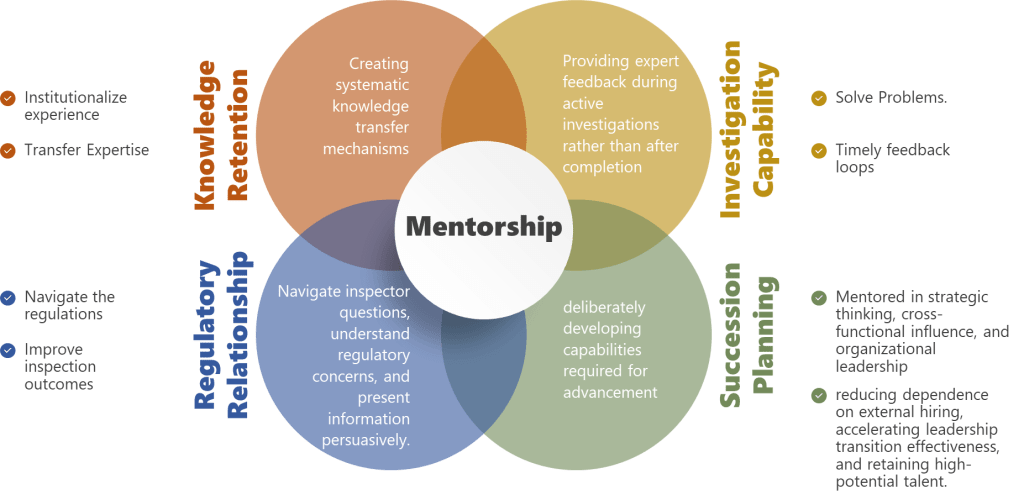
 Investigations of a Dog