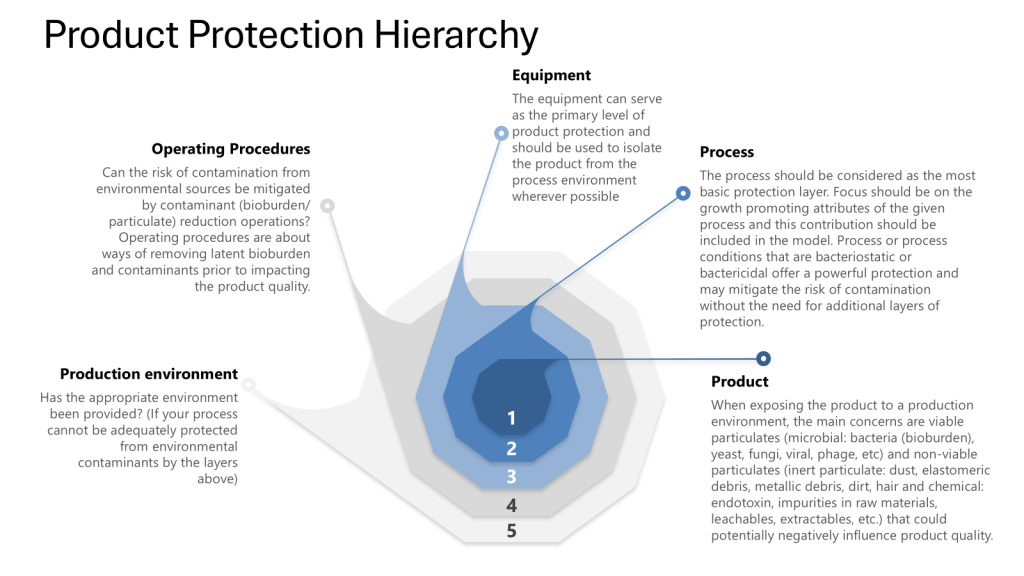
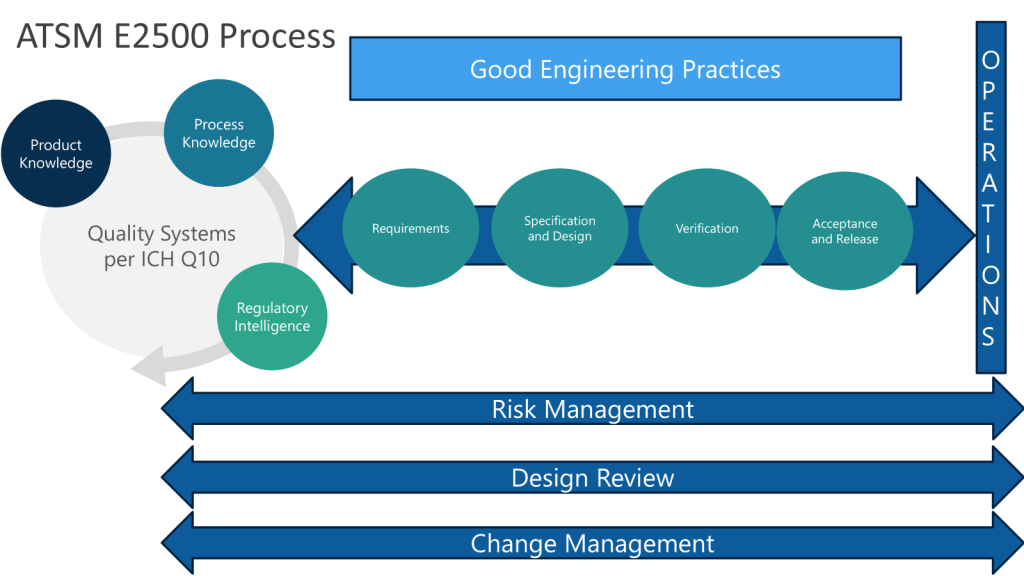
ASTM E2500 recognizes that Good Engineering Practices (GEP) are essential for pharmaceutical companies to ensure the consistent and reliable design, delivery, and operation of engineered systems in a manner suitable for their intended purpose.
Key Elements of Good Engineering Practices
Risk Management: Applying systematic processes to identify, assess, and control risks throughout the lifecycle of engineered systems. This includes quality risk management focused on product quality and patient safety.
Cost Management: Estimating, budgeting, monitoring and controlling costs for engineering projects and operations. This helps ensure projects deliver value and stay within budget constraints.
Organization and Control: Establishing clear organizational structures, roles and responsibilities for engineering activities. Implementing monitoring and control mechanisms to track performance.
Innovation and Continual Improvement: Fostering a culture of innovation and continuous improvement in engineering processes and systems.
Lifecycle Management: Applying consistent processes for change management, issue management, and document control throughout a system’s lifecycle from design to decommissioning.
Project Management: Following structured approaches for planning, executing and controlling engineering projects.
Design Practices: Applying systematic processes for requirements definition, design development, review and qualification.
Operational Support: Implementing asset management, calibration, maintenance and other practices to support systems during routine operations.
Key Steps for Implementation
Develop and document GEP policies, procedures and standards tailored to the company’s needs
Establish an Engineering Quality Process (EQP) to link GEP to the overall Pharmaceutical Quality System
Provide training on GEP principles and procedures to engineering staff
Implement risk-based approaches to focus efforts on critical systems and processes
Use structured project management methodologies for capital projects
Apply change control and issue management processes consistently
Maintain engineering documentation systems with appropriate controls
Conduct periodic audits and reviews of GEP implementation
Foster a culture of quality and continuous improvement in engineering
Ensure appropriate interfaces between engineering and quality/regulatory functions
The key is to develop a systematic, risk-based approach to GEP that is appropriate for the company’s size, products and operations. When properly implemented, GEP provides a foundation for regulatory compliance, operational efficiency and product quality in pharmaceutical manufacturing.
Invest in a Living, Breathing Engineering Quality Process (EQP)
The EQP establishes the formal connection between GEP and the Pharmaceutical Quality System it resides within, serving as the boundary between Quality oversight and engineering activities, particularly for implementing Quality Risk Management (QRM) based integrated Commissioning and Qualification (C&Q).
It should also provide an interface between engineering activities and other systems like business operations, health/safety/environment, or other site quality systems.
Based on the information provided in the document, here is a suggested table of contents for an Engineering Quality Process (EQP):
Table of Contents – Engineering Quality Process (EQP)
Application and Context 2.1 Relationship to Pharmaceutical Quality System (PQS) 2.2 Relationship to Good Engineering Practice (GEP) 2.3 Interface with Quality Risk Management (QRM)
EQP Elements 3.1 Policies and Procedures for the Asset Lifecycle and GEPs 3.2 Risk Assessment 3.3 Change Management 3.4 Document Control 3.5 Training 3.6 Auditing
Deliverables 4.1 GEP Documentation 4.2 Risk Assessments 4.3 Change Records 4.4 Training Records 4.5 Audit Reports
Roles and Responsibilities 5.1 Engineering 5.2 Quality 5.3 Operations 5.4 Other Stakeholders
EQP Implementation 6.1 Establishing the EQP 6.2 Maintaining the EQP 6.3 Continuous Improvement
Facility design and manufacturing processes are complex, multi-stage operations, fraught with difficulty. Ensuring the facility meets Good Manufacturing Practice (GMP) standards and other regulatory requirements is a major challenge. The complex regulations around biomanufacturing facilities require careful planning and documentation from the earliest design stages.
Which is why consensus standards like ASTM E2500 exist.
Central to these approaches are risk assessment, to which there are three primary components:
An understanding of the uncertainties in the design (which includes materials, processing, equipment, personnel, environment, detection systems, feedback control)
An identification of the hazards and failure mechanisms
An estimation of the risks associated with each hazard and failure
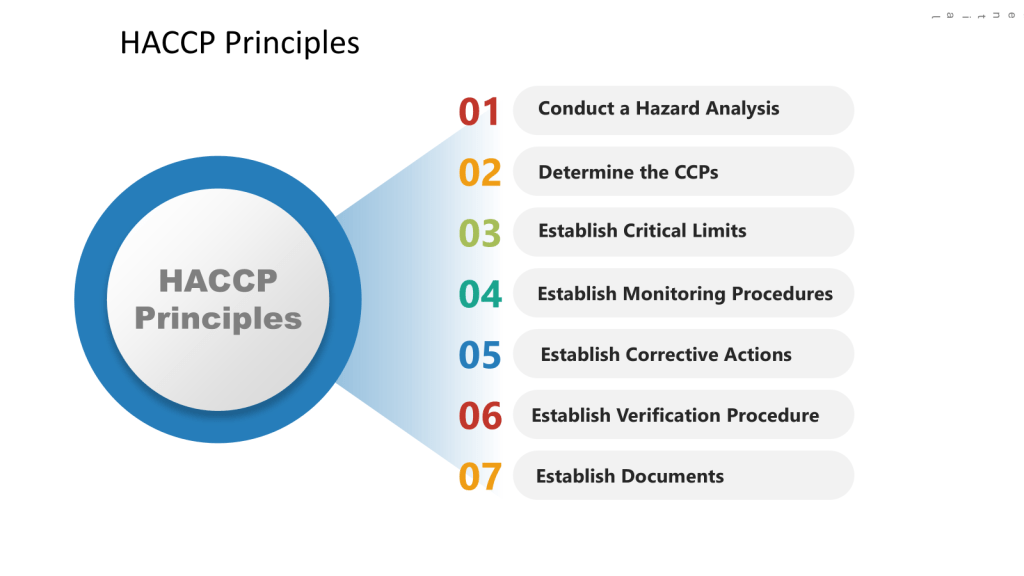
Folks often get tied up on what tool to use. Frankly, this is a phase approach. We start with a PHA for design, an FMEA for verification and a HACCP/Layers of Control Analysis for Acceptance. Throughout we use a bow-tie for communication.
Aspect
Bow-Tie
PHA (Preliminary Hazard Analysis)
FMEA (Failure Mode and Effects Analysis)
HACCP (Hazard Analysis and Critical Control Points)
Primary Focus
Visualizing risk pathways
Early hazard identification
Potential failure modes
Systematically identify, evaluate, and control hazards that could compromise product safety
Timing in Process
Any stage
Early development
Any stage, often design
Throughout production
Approach
Combines causes and consequences
Top-down
Bottom-up
Systematic prevention
Complexity
Moderate
Low to moderate
High
Moderate
Visual Representation
Central event with causes and consequences
Tabular format
Tabular format
Flow diagram with CCPs
Risk Quantification
Can include, not required
Basic risk estimation
Risk Priority Number (RPN)
Not typically quantified
Regulatory Alignment
Less common in pharma
Aligns with ISO 14971
Widely accepted in pharma
Less common in pharma
Critical Points
Identifies barriers
Does not specify
Identifies critical failure modes
Identifies Critical Control Points (CCPs)
Scope
Specific hazardous event
System-level hazards
Component or process-level failures
Process-specific hazards
Team Requirements
Cross-functional
Less detailed knowledge needed
Detailed system knowledge
Food safety expertise
Ongoing Management
Can be used for monitoring
Often updated periodically
Regularly updated
Continuous monitoring of CCPs
Output
Visual risk scenario
List of hazards and initial risk levels
Prioritized list of failure modes
HACCP plan with CCPs
Typical Use in Pharma
Risk communication
Early risk identification
Detailed risk analysis
Product Safety/Contamination Control
At BOSCON this year I’ll be talking about this fascinating detail, perhaps too much detail.
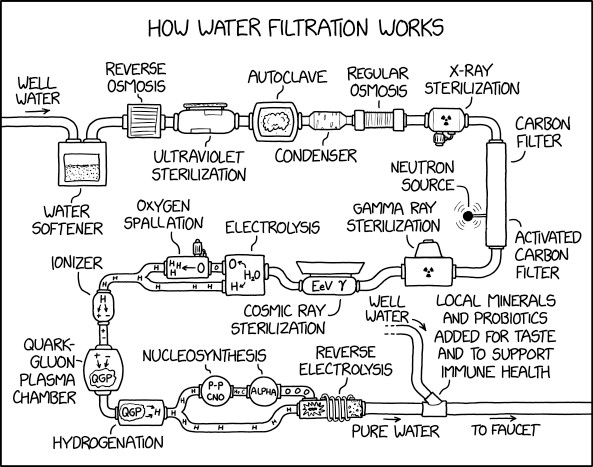
Everyone probably feels like the above illustration sooner or later about their water system.
The Critical Role of Water in Pharmaceutical Manufacturing
In the pharmaceutical industry, we often joke that we’re primarily water companies that happen to make drugs on the side. This quip underscores a fundamental truth: water is a crucial component in drug manufacturing processes. Its purity and quality are paramount to ensuring the safety and efficacy of pharmaceutical products.
Why Water Quality Matters
Water is ubiquitous in pharmaceutical manufacturing, used in everything from cleaning equipment to serving as a key ingredient in many formulations. Given its importance, regulatory bodies like the FDA and EMA have established stringent Good Manufacturing Practice (GMP) guidelines for water systems in pharmaceutical facilities.
GMP Requirements for Water Systems
The GMPs mandate that water systems be meticulously designed, constructed, installed, commissioned, qualified, monitored, and maintained. The primary goal? Preventing microbiological contamination. This comprehensive approach encompasses several key areas:
System Design: Water systems must be engineered to minimize the risk of contamination.
Construction and Installation: Materials and methods used must meet high standards to ensure system integrity.
Commissioning and Qualification: Rigorous testing is required to verify that the system performs as intended.
Monitoring: Ongoing surveillance is necessary to detect any deviations from established parameters.
Maintenance: Regular upkeep is crucial to maintain system performance and prevent degradation.
Key Regulatory Requirements
Agency
Title
Year
URL
EMA
Guideline on the quality of water for pharmaceutical use
To meet these GMP requirements, pharmaceutical manufacturers must implement several specific measures:
Minimizing Particulates
Particulate matter in water can compromise product quality and potentially harm patients. Filtration systems and regular cleaning protocols are essential to keep particulate levels in check.
Controlling Microbial Contamination
Microorganisms can proliferate rapidly in water systems if left unchecked. Strategies to prevent this include:
Regular sanitization procedures
Maintaining appropriate water temperatures
Implementing effective water treatment technologies (e.g., UV light, ozonation)
Preventing Endotoxin Formation
Endotoxins, produced by certain bacteria, can be particularly problematic in pharmaceutical water systems. Measures to prevent endotoxin formation include:
Minimizing areas where water can stagnate
Ensuring complete drainage of pipes
Regular system flushing
The Ongoing Challenge
Maintaining water quality in pharmaceutical manufacturing is not a one-time effort but an ongoing process. It requires constant vigilance, regular testing, and a commitment to continuous improvement. As regulations evolve and our understanding of potential contaminants grows, so too must our approaches to water system management.
Types of Water
These water types are defined and regulated by pharmacopeias such as the United States Pharmacopeia (USP), European Pharmacopoeia (Ph. Eur.), and other regional standards. Pharmaceutical manufacturers must adhere to the specific requirements outlined in these references to ensure water quality and safety in drug production.
Potable Water
Potable water, also known as drinking water, may be used for some pharmaceuticals bt is more commonly used in cosmetics. It can also be used for cleanings walls and floors in non-asceptic areas.
Key points:
Must comply with EPA standards or comparable regulations in the EU/Japan
Can be used to manufacture drug substances (bulk drugs)
Not suitable for preparing USP dosage forms or laboratory reagents
Purified Water (PW)
Purified water is widely used in pharmaceutical manufacturing for non-sterile preparations.
Specifications (USP <1231>):
Conductivity: ≤1.3 μS/cm at 25°C
Total organic carbon (TOC): ≤500 ppb
Microbial limits: ≤100 CFU/mL
Applications:
Non-parenteral preparations
Cleaning equipment for non-parenteral products
Preparation of some bulk chemicals
Water for Injection (WFI)
Water for Injection is used for parenteral drug products and has stricter quality standards.
Specifications (USP <1231>):
Conductivity: ≤1.3 μS/cm at 25°C
TOC: ≤500 ppb
Bacterial endotoxins: <0.25 EU/mL
Microbial limits: ≤10 CFU/100 mL
Production methods:
Distillation
Reverse osmosis (allowed by Ph. Eur. since 2017)
Sterile Water for Injection (SWFI)
SWFI is WFI that has been sterilized for direct administration.
Characteristics:
Sterile
Non-pyrogenic
Packaged in single-dose containers
Highly Purified Water (HPW)
Previously included in the European Pharmacopoeia, but now discontinued.
Type of Water
Description
USP Reference
EP Reference
Potable Water
Meets drinking water standards, used for early stages of manufacturing
Not applicable
Not applicable
Purified Water (PW)
Used for non-sterile preparations, cleaning equipment
USP <1231>
Ph. Eur. 0008
Water for Injection (WFI)
Used for parenteral products, higher purity than PW
USP <1231>
Ph. Eur. 0169
Sterile Water for Injection (SWFI)
WFI that has been sterilized for direct administration
USP <1231>
Ph. Eur. 0169
Bacteriostatic Water for Injection
Contains bacteriostatic agents, for multiple-dose use
USP <1231>
Ph. Eur. 0169
Sterile Water for Irrigation
Packaged in single-dose containers larger than 1L
USP <1231>
Ph. Eur. 1116
Sterile Water for Inhalation
For use in inhalators, less stringent endotoxin levels
USP <1231>
Ph. Eur. 1116
Water for Hemodialysis
Specially treated for use in hemodialysis, produced on-site
USP <1231>
Not specified
Additional relevant USP chapters:
USP <645>: Water for Pharmaceutical Purposes – Microbial Attributes
USP <85>: Bacterial Endotoxins Test
Always refer to the most current versions of the pharmacopoeial monographs and regulatory guidelines for detailed information.
Good Water System Design
Hygienic and Sanitary Design
The cornerstone of any good water system is its hygienic and sanitary design. This principle encompasses several aspects:
Smooth, cleanable surfaces: All surfaces in contact with water should be smooth, non-porous, and easily cleanable to prevent biofilm formation.
Self-draining components: Pipes and tanks should be designed to drain completely, eliminating standing water that could harbor microorganisms.
Accessibility: All parts of the system should be easily accessible for inspection, cleaning, and maintenance.
Material Selection
Choosing the right materials is crucial for maintaining water quality and system integrity:
Corrosion resistance: Use materials that resist corrosion, such as stainless steel (316L grade for high-purity applications) or appropriate food-grade plastics.
Smooth internal finish: Crevices are places where corrosion happens, electropolishing improves the resistance of stainless steel to corrosion.
Leachate prevention: Select materials that do not leach harmful substances into the water, even under prolonged contact or elevated temperatures.
Non-adsorptive surfaces: Avoid materials that may adsorb contaminants, which could later be released back into the water.
Microbial Control
Preventing microbial growth is essential for water system safety:
Elimination of dead legs: Design piping to avoid areas where water can stagnate and microorganisms can proliferate.
Temperature control: Maintain temperatures outside the optimal range for microbial growth (typically below 20°C or above 50°C).
Regular sanitization: Incorporate features that allow for effective and frequent sanitization of the entire system.
System Integrity
Ensuring the system remains sealed and leak-free is critical:
Proper sealing: Use appropriate gaskets and seals compatible with the system’s operating conditions.
Pressure testing: Implement regular pressure tests to identify and address potential leaks promptly.
Quality connections: Utilize sanitary fittings and connections designed for hygienic applications.
Cleaning and Sanitization Compatibility
The system must withstand regular cleaning and sanitization:
Chemical resistance: Choose materials and components that can tolerate cleaning and sanitizing agents without degradation.
Thermal stability: Ensure all parts can withstand thermal sanitization processes if applicable.
CIP/SIP design: Incorporate Clean-in-Place (CIP) or Steam-in-Place (SIP) features for efficient and thorough cleaning.
Capacity and Performance
Meeting output requirements while maintaining quality is crucial:
Proper sizing: Design the system to meet peak demand without compromising water quality or flow rates.
Redundancy: Consider incorporating redundant components for critical parts to ensure continuous operation.
Efficiency: Optimize the system layout to minimize pressure drops and energy consumption.
Monitoring and Control
Implement robust monitoring systems to ensure water quality:
Sampling points: Strategically place sampling ports throughout the system for regular quality checks.
Instrumentation: Install appropriate instruments to monitor critical parameters such as flow rate, pressure, temperature, and conductivity.
Control systems: Implement automated control systems to maintain consistent water quality and system performance.
Regulatory Compliance
Ensure the system design meets all relevant regulatory requirements:
Material compliance: Use only materials approved for contact with water in your specific application.
Documentation: Maintain detailed documentation of system design, materials, and operating procedures.
Validation: Conduct thorough system qualification to demonstrate consistent performance and quality.
By adhering to these principles, you can design a water system that not only meets your capacity requirements but also ensures the highest standards of safety and quality. Remember, good water system design is an ongoing process that requires regular review and updates to maintain its effectiveness over time.
In the world of pharmaceutical manufacturing, cleanroom classifications play a crucial role in ensuring product quality and patient safety. However, a significant hurdle in the global harmonization of regulations has been a pain in our sides for a long time, that highlights the persistent differences between major regulatory bodies, including the FDA, EMA, and others, despite efforts to align through organizations like the World Health Organization (WHO) and the Pharmaceutical Inspection Co-operation Scheme (PIC/S).
The Current Landscape
United States Approach
In the United States, cleanroom classifications are primarily governed by two key documents:
The FDA’s “Sterile Drug Products Produced by Aseptic Processing” guidance
ISO 14644-1 standard for cleanroom classifications
The ISO 14644-1 standard is particularly noteworthy as it’s a general standard applicable across various industries utilizing cleanrooms, not just pharmaceuticals.
European Union Approach
The European Union takes a different stance, employing a grading system outlined in the EU GMP guide:
Grades A through D are used for normal cleanroom operation
ISO 14644 is still utilized, but primarily for validation purposes
World Health Organization Alignment
The World Health Organization (WHO) aligns with the European approach, adopting the same A to D grading system in its GMP guidelines.
The Implications of Disharmony
This lack of harmonization in cleanroom classifications presents several challenges:
Regulatory Complexity: Companies operating globally must navigate different classification systems, potentially leading to confusion and increased compliance costs.
Technology Transfer Issues: Transferring manufacturing processes between regions becomes more complicated when cleanroom requirements differ.
Inspection Inconsistencies: Differences in classification systems can lead to varying interpretations during inspections by different regulatory bodies.
The Missed Opportunity in Annex 1
The recent update to Annex 1, a key document in GMP regulations, could have been a prime opportunity to address this disharmony. However, despite involvement from WHO and PIC/S (and through them the FDA), the update failed to bring about the hoped-for alignment in cleanroom classifications.
Moving Forward
As the pharmaceutical industry continues to globalize, the need for harmonized regulations continues to be central. I would love to see future efforts towards harmonization here that would:
Prioritize alignment on fundamental technical specifications like cleanroom classifications
Consider the practical implications for manufacturers operating across multiple jurisdictions
While the journey towards full regulatory harmonization may be long and challenging, addressing key discrepancies like cleanroom classifications would represent a significant step forward for the global pharmaceutical industry.
Facility design and control considerations for mitigating viral contamination risk is a holistic approach to facility design and controls, considering all potential routes of viral introduction and spread. A living risk management approach should be taken to identify vulnerabilities and implement appropriate mitigation measures.
Facility Considerations
Segregation of areas: Separate areas for cell banking, small-scale and large-scale upstream cell culture/fermentation, downstream processing, media/buffer preparation, materials management, corridors, and ancillary rooms (e.g. cold rooms, freezer rooms, storage areas).
Traffic flow: Control and minimize traffic flow of materials, personnel, equipment, and air within and between areas and corridors. Implement room segregation strategies.
Air handling systems: Design HVAC systems to maintain appropriate air quality and prevent cross-contamination between areas. Use HEPA filtration where needed.
Room Classifications
For open operations:
Open sterile and aseptic operations must be performed in an environment where the probability of contamination is acceptably low, i.e. an environment meeting the bioburden requirements for a Grade A space.
Open bioburden-controlled processing may be performed in an ISO Grade 8/EU Grade C or EU Grade D environment as appropriate for the unit operation.
Open aseptic operations require a Grade A environment. Maintaining a Grade A cleanroom for large bioreactors is not feasible.
For closed operations:
Closed systems do not require cleanroom environments. ICH Q7 states that closed or contained systems can be located outdoors if they provide adequate protection of the material.
When all equipment used to manufacture a product is closed, the surrounding environment becomes less critical. The cleanroom requirements should be based on a business risk assessment and could be categorized as unclassified.
Housing a closed aseptic process in a Grade C or Grade B cleanroom would not mitigate contamination risk compared to an unclassified environment.
For low bioburden closed operations, the manufacturing environment can be unclassified.
Equipment Considerations
Closed vs. open processing: Utilize closed processing operations where possible to prevent introduction/re-introduction of viruses. Implement additional controls for open processing steps.
Closure Level
Description
Closed Equipment
Single use, never been used, such as irradiated and autoclaved assembles; connections are made using sterile connectors or tube wielders/sealers
Functionally closed equipment: cleaned and sterilized
Open vessels or connections that undergo cleaning and sterilization prior to use and are then aseptically connected. The connection is then sterilized after being closed and remains closed during use.
Functionally closed equipment: cleaned and sanitized
Open vessels or connections that are CIPed including bioburden reducing flushes, but not sterilized before use and remain closed during use
Open
Connections open to the environment without subsequent cleaning, sanitization or sterilization prior to use
Operational Practices
Personnel controls: Implement rigorous training programs, safety policies and procedures for personnel working in critical areas.
Cleaning and sanitization: Establish frequent and thorough cleaning protocols for facilities, equipment, and processing areas using appropriate cleaning agents effective against viruses.
Material and equipment flow: Define procedures for disinfection and transfer of materials and equipment between areas to prevent contamination spread.
Storage practices: Implement proper storage procedures for product contact materials, intermediates, buffers, etc. Control access to cold rooms and freezers.
Additional Controls
Pest control: Implement comprehensive pest control strategies both inside and outside facilities, including regular treatments and monitoring.
Water systems: Design and maintain water systems to prevent microbial growth and contamination.
Process gases: Use appropriate filtration for process air and gases.