I am, by temperament, an intellectual magpie. I pick up ideas, frameworks, and images from papers, talks, conference slides, and conversations, and then carry them around in my head until they re-emerge—sometimes polished, sometimes altered, and, in this case, without the clear lineage they deserve. That tendency serves me well as a writer and quality professional, but it also comes with a responsibility to keep better track of where things come from.
In my recent article on USP <1220> and the analytical lifecycle, I included a figure that closely reflected a slide originally developed by Christopher Burgess and later incorporated into the ECA Foundation’s “Guide for an Integrated Lifecycle Approach to Analytical Instrument Qualification and System Validation,” Version 1.0, November 2023, Figure 13. While my version was redrawn, the structure and conceptual flow were clearly derived from that original work, and I did not provide proper attribution when I first published the post. That was my mistake, and I regret it.
I want to state clearly that the ECA guidance document, and the work of Christopher Burgess and Bob McDowall in particular, is excellent and deserves to be read in its original form by anyone serious about analytical lifecycle thinking. The “Guide for an Integrated Lifecycle Approach to Analytical Instrument Qualification and System Validation” is a rich, thoughtful piece of work that offers far more depth than any single blog figure can convey. If my article or the adapted graphic spoke to you, you should absolutely go to the source and read the ECA paper itself.
I am grateful to Dr. Markus Funk and the ECA Analytical Quality Control Group for reaching out in a collegial and constructive way, rather than assuming bad intent. Their note made it clear that they did not object to the use of the underlying concept, only to the lack of proper attribution. That distinction matters, because it reinforces a core principle in our community: ideas can and should circulate, but credit should travel with them.
In response, I have updated the original post to include an explicit reference to the ECA document and to identify the figure as an adaptation of their work, using the wording they suggested. That is a necessary corrective step, but it is not enough on its own. I also want to be transparent with you, my readers, about how this happened and what I plan to do differently going forward.
The honest explanation is not malice, but intellectual untidiness. I often sketch and rework ideas first for internal presentations or personal notes, then later re-use those visuals in blog posts when they seem generally useful. Over time, the original provenance can blur in my mind: what started as “inspired by X” slowly feels like “my standard way of explaining this,” and unless I am vigilant, the attribution falls away. That is still my responsibility, and “I forgot where I saw it” is not an acceptable standard for publication.
Intellectual humility, for me, means acknowledging that most of what I write sits on foundations laid by others. It means admitting, publicly, when I have failed to make those foundations visible. It also means tightening my own practices: keeping clearer notes on the origin of figures and concepts, double-checking sources before I hit “publish,” and erring on the side of over-attribution rather than under-attribution.
So to the authors of the ECA guidance document, to Dr. Funk and the ECA Foundation, and to you as readers: I apologize. I used a graphic that was substantively derived from their work without clearly crediting it, and that fell short of the standards I believe in and advocate for. I am committed to doing better, and I appreciate the chance to correct the record rather than quietly moving on.
If there is a positive takeaway here, I hope it is this: even in a niche world like analytical quality and validation, we are part of a living conversation. Being an “intellectual magpie” can be a strength when it helps us cross-pollinate ideas—but only if we are careful to honor the people and organizations who first did the hard work of thinking them through.
A Halloween confession from someone who spends their days investigating quality failures
Halloween seems like the perfect time for a personal confession: I’m a horror film devotee. Not the kind who seeks out the latest gore-fest or jump-scare factory, but someone drawn to the films that understand fear as something more complex than shock value. These ten films have shaped not just my appreciation for cinema, but my understanding of how we process uncertainty, confront the unknown, and maintain psychological safety in the face of genuine threat.
It strikes me that there’s something deeply familiar about the best horror films for someone who works in quality systems. Both domains are fundamentally about investigating what goes wrong, understanding the nature of threat, and building frameworks to manage the unmanageable. The films that have stayed with me longest are the ones that treat fear with the same seriousness I try to bring to quality investigations—as a signal worth understanding rather than a problem to be quickly resolved.
The Foundation: Four Classics
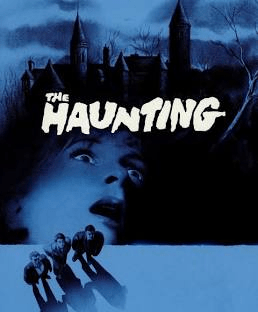
The Haunting (1963) remains the gold standard for atmospheric horror. Robert Wise’s adaptation of Shirley Jackson’s novel creates terror through suggestion, architecture, and Julie Harris’s powerhouse performance as Eleanor Lance. What makes this film essential is its understanding that the most effective horror comes from internal uncertainty rather than external threat. Eleanor’s breakdown mirrors the kind of systemic failure I see in quality investigations—a slow erosion of confidence until the very frameworks meant to provide safety become sources of fear.
The Thing (1982) represents John Carpenter at his paranoid peak. This Antarctic nightmare about shape-shifting aliens attacking a research station operates as both visceral horror and meditation on trust, isolation, and the breakdown of social systems. The film’s exploration of how groups respond to existential threat—the descent into suspicion, the collapse of collaborative decision-making, the way fear transforms competent professionals into reactive survivors—feels remarkably relevant to anyone who’s witnessed organizational crisis.
The Wicker Man (1973) stands as perhaps the greatest film about belief systems in collision. Edward Woodward’s devout Christian policeman investigating a missing child on a pagan Scottish island creates a masterclass in cultural investigation that ends in one of cinema’s most shocking conclusions. The film’s exploration of how our fundamental assumptions about right and wrong can become liabilities in unfamiliar contexts resonates with anyone who’s tried to implement quality systems across different organizational cultures.
The Exorcist (1973) anchors supernatural horror in mundane medical and institutional reality. William Friedkin’s methodical approach treats possession as a quality problem—ruling out rational explanations, bringing in specialists, following established procedures until those procedures fail. The film’s power comes from its recognition that some problems exceed our frameworks for understanding them, but that professional competence and human connection remain our best tools for confronting the incomprehensible.
The Art House Visionaries
Possession (1981) might be Andrzej Żuławski’s masterpiece of marital breakdown as cosmic horror. Isabelle Adjani and Sam Neill deliver performances of such raw intensity that the film becomes genuinely disturbing on multiple levels—domestic, psychological, and existential. Like the best quality investigations, the film refuses simple explanations, building layers of interpretation that deepen rather than resolve the central mystery. Its exploration of how personal and professional relationships disintegrate under stress feels uncomfortably relevant to anyone who’s worked through organizational crisis.
Don’t Look Now (1973) uses Nicolas Roeg’s innovative editing and Venice’s maze-like geography to create a ghost story that’s really about grief, memory, and the dangerous comfort of pattern recognition. Donald Sutherland and Julie Christie’s grieving couple chasing mysterious signs in the aftermath of their daughter’s drowning creates the same kind of interpretive challenge I encounter in complex quality investigations—when do meaningful patterns become dangerous obsessions? The film’s shocking ending suggests that our need to find meaning in tragedy can become its own form of blindness.
The Psychological Deep Cuts
Session 9 (2001) transforms an abandoned mental hospital into a meditation on workplace stress, environmental contamination, and the thin line between professional competence and psychological breakdown. Brad Anderson’s low-budget masterpiece follows asbestos removal workers slowly succumbing to the building’s malevolent influence, creating genuine atmospheric dread without relying on supernatural explanations. The film’s exploration of how work environments shape psychological states resonates with anyone who’s spent time investigating workplace safety and culture.
Cure (1997) stands as Kiyoshi Kurosawa’s masterpiece of J-horror psychological investigation. Detective Takabe’s pursuit of a serial killer who somehow compels ordinary people to commit murders creates a procedural that becomes increasingly surreal and disturbing. The film’s exploration of social disconnection, memory, and the infectious nature of certain ideas operates as both police procedural and existential horror. Its methodical approach to inexplicable events mirrors the investigative mindset required for complex quality problems.
Kill List (2011) begins as a gritty crime drama about two ex-military contractors taking a mysterious job, then transforms into something far more disturbing. Ben Wheatley’s exploration of violence, trauma, and masculine identity builds to one of the most shocking endings in recent horror. The film’s refusal to explain its supernatural elements creates the same interpretive challenge I encounter in quality investigations where the data suggests conclusions that exceed our frameworks for understanding.
The Contemporary Master
When Evil Lurks (2023) represents Demián Rugna’s breakthrough achievement in possession horror. This Argentinian film about two brothers trying to stop a demonic outbreak creates genuine dread through its systematic approach to supernatural contagion. The film’s exploration of how well-intentioned interventions can accelerate rather than resolve crisis resonates with anyone who’s witnessed quality initiatives that inadvertently destabilize the systems they’re meant to improve.
Candyman (1992) transcends typical slasher conventions through Bernard Rose’s exploration of urban legends, racial commentary, and the power of belief itself. Virginia Madsen’s academic investigation into the Candyman legend in Chicago’s Cabrini-Green projects becomes a meditation on how stories shape reality, how research changes researchers, and how some truths carry dangerous consequences. Tony Todd’s iconic performance and Philip Glass’s haunting score elevate what could have been exploitation into genuine social horror.
What Horror Teaches Quality
Reflecting on these films, I’m struck by how many of their themes echo the work I do in quality. The best horror films understand that fear isn’t about shock value—it’s about the breakdown of systems we depend on for safety and meaning. They explore how competent professionals respond when their frameworks fail, how groups make decisions under extreme stress, and how the investigation process itself can become a source of contamination.
Perhaps most importantly, these films understand that the most effective horror comes from taking time—building atmosphere, developing character, allowing dread to accumulate through patient observation rather than manufactured surprise. It’s the same patience required for effective quality work, the same recognition that sustainable solutions emerge from understanding systems rather than treating symptoms.
This Halloween, as I revisit these films, I’m reminded that horror at its best is really about resilience—how we maintain professional competence and human connection when everything familiar becomes unreliable. That’s a lesson worth carrying beyond October, into every quality investigation, every organizational crisis, every moment when the frameworks we depend on prove insufficient to the challenges we face.
The best horror films, like the best quality work, don’t provide easy answers. They create space for sitting with uncertainty, for maintaining curiosity in the face of fear, for remembering that our professional competence is most valuable precisely when our personal comfort is most threatened.
Perhaps that’s what I love most about these films: they treat fear as information rather than obstacle, as signal rather than noise. In a world that increasingly demands quick fixes and simple explanations, they offer something more valuable—the discipline of patient observation, the courage of sustained inquiry, and the recognition that some mysteries are worth living with rather than solving away.
What horror films have shaped your understanding of fear, uncertainty, or resilience? I’d love to hear about the films that have taught you something beyond scares, the ones that have changed how you think, as I am always looking for horror movie recommendations.
I’m excited to share that I recently had the opportunity to appear on the Risk Revolution podcast, joining host Valerie Mulholland for what turned out to be a provocative and deeply engaging conversation about the future of pharmaceutical quality management.
The episode, titled “Quality Theatre to Quality Science – Jeremiah Genest’s Playbook,” aired on September 28, 2025, and dives into one of my core arguments: that quality systems should be designed to fail predictably so we can learn purposefully. This isn’t about celebrating failure—it’s about building systems intelligent enough to fail in ways that generate learning rather than hiding in the shadows until catastrophic breakdown occurs.
Why This Conversation Matters
Valerie and I spent over an hour exploring what I call “intelligent failure”—a concept that challenges the feel-good metrics that dominate our industry dashboards. You know the ones I’m talking about: those green lights celebrating zero deviations that make everyone feel accomplished while potentially masking the unknowns lurking beneath the surface. As I argued in the episode, these metrics can hide systemic problems rather than prove actual control.
This discussion connects directly to themes I’ve been developing here on Investigations of a Dog, particularly my thoughts on the effectiveness paradox and the dangerous comfort of “nothing bad happened” thinking. The podcast gave me a chance to explore how zemblanity—the patterned recurrence of unfortunate events that we should have anticipated—manifests in quality systems that prioritize the appearance of control over genuine understanding.
The Perfect Platform for These Ideas
Risk Revolution proved to be the ideal venue for this conversation. Valerie brings over 25 years of hands-on experience across biopharmaceutical, pharmaceutical, medical device, and blood transfusion industries, but what sets her apart is her unique combination of practical expertise and cutting-edge research.
The podcast’s monthly format allows for the kind of deep, nuanced discussions that advance risk management maturity rather than recycling conference presentations. When I wrote about Valerie’s writing on the GI Joe Bias, I noted how her emphasis on systematic interventions rather than individual awareness represents exactly the kind of sophisticated thinking our industry needs. This podcast appearance let us explore these concepts in real-time conversation.
What made the discussion particularly engaging was Valerie’s ability to challenge my thinking while building on it. Her research-backed insights into cognitive bias management created a perfect complement to my practical experience with system failures and investigation patterns. We explored how quality professionals—precisely because of our expertise—become vulnerable to specific blind spots that systematic design can address.
Looking Forward
This Risk Revolution appearance represents more than just a podcast interview—it’s part of a broader conversation about advancing pharmaceutical quality management beyond surface-level compliance toward genuine excellence. The episode includes references to my blog work, the Deming philosophy, and upcoming industry conferences where these ideas will continue to evolve.
If you’re interested in how quality systems can be designed for intelligent learning rather than elegant hiding, this conversation offers both provocative challenges and practical frameworks. Fair warning: you might never look at a green dashboard the same way again.
The episode is available now, and I’d love to hear your thoughts on how we might move from quality theatre toward quality science in your own organization.
I’m greatly saddened to hear about the six sites Resilience is shutting down. This impacts a lot of good people, at a time when our industry has had a lot of announced layoffs. My heart goes out to everyone impacted. And please know whatever little help I can do, I will.
For me, there is also a lot of sadness for the site, which was a very definitive part of my career. It truly feels like the end of an era.
Current Status of the Allston Site
National Resilience’s Allston facility at 500 Soldiers Field Road is among the six manufacturing sites being closed as part of the company’s restructuring efforts. The site, which operates in a former Genzyme manufacturing plant built in 1991, is being wound down through legal proceedings initiated by a leaseholder affiliate.
The closure is part of National Resilience’s broader strategy to address overcapacity issues, as CEO William Marth acknowledged that “our capacity expansion has outpaced industry demand”. The company secured $250 million in bridge financing to support this consolidation and is pursuing additional debt financing for future operations. To be frank, some folks bet very poorly.
Harvard’s Property Ownership and Lease Arrangements
The Allston site sits on Harvard-owned land, and the property arrangement involves a complex ownership structure:
Land Ownership: Harvard University owns the underlying land at 500 Soldiers Field Road
Facility Operations: National Resilience took over the lease for the building from Sanofi in 2021, inheriting operations of the former Genzyme plant
Historical Context: Genzyme originally built the facility in 1991 on Harvard land through a long-term lease arrangement
When Sanofi (which had acquired Genzyme) decided to consolidate operations at its Framingham campus, it transferred the lease to National Resilience rather than selling the property outright. This transfer required termination of the site’s special tax-break status through the Boston Planning & Development Agency.
What Happens After National Resilience’s Departure
While I have no definitive answer, I’m fearing the following will drive the site closure and ceasing to be a manufacturing site:
Lease Structure: Since Harvard owns the land and National Resilience operates under a lease arrangement, the property would typically revert to Harvard’s direct control once the lease is terminated or expires.
Strategic Location: The site is strategically positioned within Harvard’s broader Allston development plans, sitting adjacent to the university’s Enterprise Research Campus project. Harvard’s construction updates consistently reference the facility as a landmark bordering their major mixed-use development.
Harvard’s Allston Holdings: The university owns approximately 360 acres in Allston and has been actively developing the area as part of its long-term expansion strategy. The 500 Soldiers Field Road site represents a significant piece of this puzzle.
Integration with Harvard’s Development Plans
Harvard’s ongoing Enterprise Research Campus development directly borders the National Resilience facility, with construction updates regularly using it as a reference point for the project boundaries. The campus will include:
Two laboratory buildings for research and development
A 343-unit residential building with affordable housing components
A hotel and conference center
Public green space and programming areas
The proximity and Harvard’s ownership structure suggest the Allston site could potentially be integrated into future phases of the university’s development plans, though no specific announcements have been made regarding immediate reuse plans.
I don’t think it will surprise anyone that Harvard had reached out to Sanofi many times to discuss taking back the site over the years.
It is odd enough now to drive by and know the site is a shadow of its former self. Knowing that later this year it will be fully closed down is heart breaking.


 Investigations of a Dog