
Master and Transactional Data Management

Mylan’s 483 observation states that changes were being made to a LIMS system outside of the site’s change control process.

This should obviously be read in light of data integrity requirements. And it looks like in this case there was no way to produce a list of changes, which is a big audit trail no-no.

It’s also an area where I’ve seen a lot of folks make miss-steps, and frankly, I’m not sure I’ve always got it right.

There is a real tendency to look at the use of our enterprise systems and want all actions and approvals to happen within the system. This makes sense, we want to reduce our touch points, but there are some important items to consider before moving ahead with that approach.

Changes control is about assessing, handling and releasing the change. Most importantly it is in light the validated and regulatory impact. It serves disposition. As such, it is a good thing to streamline our changes into one system. To ensure every change gets assessed equally, and then gets the right level of handling it needs, and has a proper release.

Allowing a computer system to balkanize your changes, in the end, doesn’t really simplify. And in this day of master data management, of heavily aligned and talking systems, to be nimble requires us to know with a high degree of certainty that when we apply a change we are applying it thoroughly.

The day of separated computer systems is long over. It is important that our change management system takes that into account and offers single-stop shopping.
Mylan gets a 32 page 483

The FDA’s April 483 for Mylan Pharmaceuticals has been in the fore-front of a lot of conversations in the last week. Let’s be honest, the FDA posts a 32 page, 13 observation 483 report on any manufacturer and it will be news. One as prominent as Mylan and doubly so. On the same day, the FDA also posted a 2016 483 and 2017 warning letter against a Mylan facility in India.

The 483 is a hit parade of observations, like the 1st observation of failure of the quality unit, including a reference to lack of quality approval of change controls.

What everyone has been intensely focusing on is the strong emphasis on cleaning, with 11 pages dedicated to failures in cleaning validation.

Which to be frank, is a big deal in a multi-product facility.

Read the 483, and when doing so evaluate your site’s cleaning program. Ask yourself some of these questions:

  • Are there appropriate cleaning procedures in place for all products-contact equipment, product contact accessories?
  • Are there appropriate cleaning procedures in place for facility cleaning (dispensing, sampling room…)?
  • Do your procedures include the sequence of the cleaning activities? Is it significantly detailed?
  • Do the procedures address the different scenarios (cleaning between different batches of the same product, cleaning between products changes, holding time before and after cleaning…)?
  • Do the procedures address who is responsible for performing the cleaning?
  • Does the validation study, the acceptance criteria and when revalidation justification and keys documentation approved by Quality? Does it include a clear status on the cleaning process?
  • Is the strategy used for the cleaning validation clearly established? (matrix approach, dedicated equipment, worst case scenario, grouping equipment, equipment train…)
  • Are batches that come after the cleaning validation run, released after completion of the cleaning validation?
  • Are the acceptance criteria (products, detergents, cleaning agent, micro… ) scientifically established and followed? Do these acceptance criteria include a safety margin?

Approval of cleaning validation is a key responsibility of the quality unit that involves some very specific requirements. These requirements should be built into the quality systems, including validation, deviation, and change management.

FDA Repays Industry by Rushing Risky Drugs to Market — ProPublica

As pharma companies underwrite three-fourths of the FDA’s budget for scientific reviews, the agency is increasingly fast-tracking expensive drugs with…
— Read on www.propublica.org/article/fda-repays-industry-by-rushing-risky-drugs-to-market

This is worth reading. I remember when I first started it was easier to get European approvals before US, and have been surprised by the switch over the last few years.

I also watch all these companies struggle with QbD and wonder if these two trends go hand in hand.

No answers from me, but I do recommend reading this article.

Data Integrity Thoughts

At the MHRA Blog, a GDP Inspector has posted some thoughts on Data Integrity. As always, it is valuable to read what an agency, or a representative, of an agency in this case, is thinking.

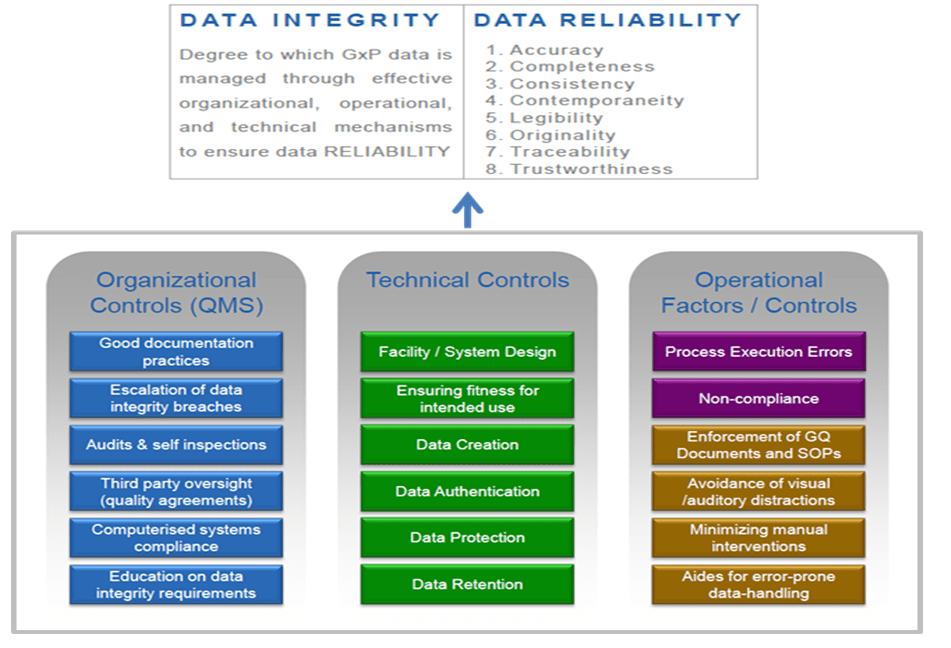
The post starts with a very good point, that I think needs to be continually reiterated. Data Integrity is not new, it is just an evolution of the best practices.

Data Integrity

It is good to see a focus on data integrity from this perspective. Too often we see a focus on the GCP and GMP side, so bringing distribution into the discussion should remind everyone that:

  • Data Integrity oversight and governance is inclusive of;
    • All aspects of the product lifecycle
    • All aspects of the GxP regulated data lifecycle, which begins at the time of creation to the point of use and extends throughout its storage (retention), archival, retrieval, and eventual disposal.

Posts like this should also remind folks that data integrity is still an evolving topic, and we should expect more guidance from the agencies from this in the near future. Make sure you are keeping data integrity in your sites and have a process in place to evaluate and improve.

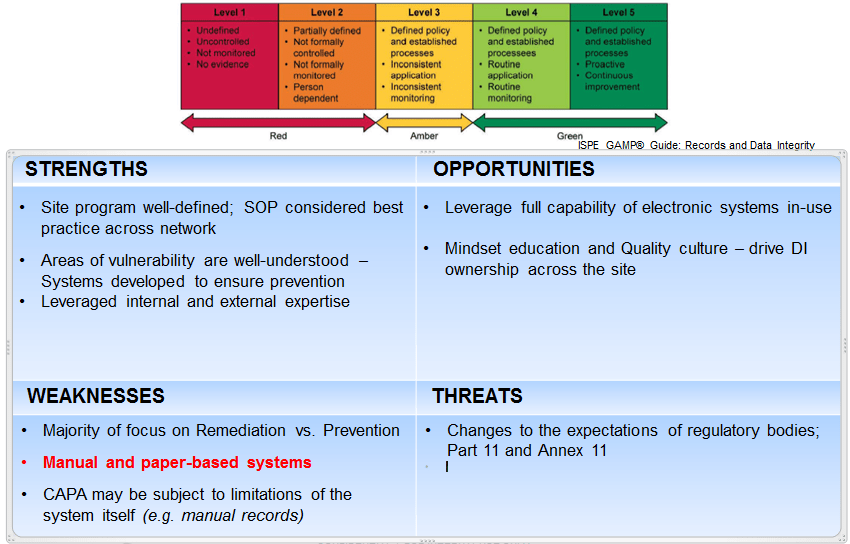
I recommend starting at the beginning, analyzing the health of your current program and doing a SWOT.

data integrity SWOT


Quality Metrics – Not Dead yet

Pink Sheet has an update this week on the FDA’s Quality Metrics initiative – US FDA Quality Metrics Initiative Continues Moving Forward … Quietly.

This is behind a firewall so may not be viewable by all.

The major takeaways were:

  1. The initiative is still happening
  2. the FDA wants to remind companies why they are doing this in the first place
  3. They are starting a pilot real “soon” now

These metrics have been a hard sell within Pharma. I’ll be curious what steps the FDA will be taking to rebrand the effort.