Multi-Criteria Decision-Making to Drive Risk Control

To be honest, too often, we perform a risk assessment not to make decisions but to justify an already existing risk assessment. The risk assessment may help define a few additional action items and determine how rigorous to be about a few things. It actually didn’t make much of an impact on the already-decided path forward. This is some pretty bad risk management and decision-making.

For highly important decisions with high uncertainty or complexity, it is useful to consider the options/alternatives that exist and assess the benefits and risks of each before deciding on a path forward. Thoroughly identifying options/alternatives and assessing the benefits and risks of each can help the decision-making process and ultimately reduce risk.

An effective, highly structured decision-making process can help answer the question, ‘How can we compare the consequences of the various options before deciding?

The most challenging risk decisions are characterized by having several different, important things to consider in an environment where there are often multiple stakeholders and, often, multiple decision-makers. 

In Multi-Criteria Decision-Making (MCDM), the primary objective is the structured consideration of the available alternatives (options) for achieving the objectives in order to make the most informed decision, leading to the best outcome.

In a Quality Risk Management context, the decision-making concerns making informed decisions in the face of uncertainty about risks related to the quality (and/or availability) of medicines.

Key Concepts of MCDM

  1. Conflicting Criteria: MCDM deals with situations where criteria conflict. For example, when purchasing a car, one might need to balance cost, comfort, safety, and fuel economy, which often do not align perfectly.
  2. Explicit Evaluation: Unlike intuitive decision-making, MCDM involves a structured approach to explicitly evaluate multiple criteria, which is crucial when the stakes are high, such as deciding whether to build additional manufacturing capacity for a product under development.
  3. Types of Problems:
  • Multiple-Criteria Evaluation Problems: These involve a finite number of alternatives known at the beginning. The goal is to find the best alternative or a set of good alternatives based on their performance across multiple criteria.
  • Multiple-Criteria Design Problems: In these problems, alternatives are not explicitly known and must be found by solving a mathematical model. The number of alternatives can be very large, often exponentially.

Preference Information: The methods used in MCDM often require preference information from decision-makers (DMs) to differentiate between solutions. This can be done at various stages of the decision-making process, such as prior articulation of preferences, which transforms the problem into a single-criterion problem.

MCDM focuses on risk and uncertainty by explicitly weighing criteria and trade-offs between them. Multi-criteria decision-making (MCDM) differs from traditional decision-making methods in several key ways:

  1. Explicit Consideration of Multiple Criteria: Traditional decision-making often focuses on a single criterion like cost or profit. MCDM explicitly considers multiple criteria simultaneously, which may be conflicting, such as cost, quality, safety, and environmental impact[1]. This allows for a more comprehensive evaluation of alternatives.
  2. Structured Approach: MCDM provides a structured framework for evaluating alternatives against multiple criteria rather than relying solely on intuition or experience. It involves techniques like weighting criteria, scoring alternatives, and aggregating scores to rank or choose the best option.
  3. Transparency and Consistency: MCDM methods aim to make decision-making more transparent, consistent, and less susceptible to individual biases. The criteria, weights, and evaluation process are explicitly defined, allowing for better justification and reproducibility of decisions.
  4. Quantitative Analysis: Many MCDM methods employ quantitative techniques, such as mathematical models, optimization algorithms, and decision support systems. This enables a more rigorous and analytical approach compared to traditional qualitative methods.
  5. Handling Complexity: MCDM is particularly useful for complex decision problems involving many alternatives, conflicting objectives, and multiple stakeholders. Traditional methods may struggle to handle such complexity effectively.
  6. Stakeholder Involvement: Some MCDM methods, like the Analytic Hierarchy Process (AHP), facilitate the involvement of multiple stakeholders and the incorporation of their preferences and judgments. This can lead to more inclusive and accepted decisions.
  7. Trade-off Analysis: MCDM techniques often involve analyzing trade-offs between criteria, helping decision-makers understand the implications of prioritizing certain criteria over others. This can lead to more informed and balanced decisions.

While traditional decision-making methods rely heavily on experience, intuition, and qualitative assessments, MCDM provides a more structured, analytical, and comprehensive approach, particularly in complex situations with conflicting criteria.

Multi-Criteria Decision-Making (MCDM) is typically performed following these steps:

  1. Define the Decision Problem: Clearly state the problem or decision to be made, identify the stakeholders involved, and determine the desired outcome or objective.
  2. Establish Criteria: Identify the relevant criteria that will be used to evaluate the alternatives. These criteria should be measurable, independent, and aligned with the objectives. Involve stakeholders in selecting and validating the criteria.
  3. Generate Alternatives: Develop a comprehensive list of potential alternatives or options that could solve the problem. Use techniques like brainstorming, benchmarking, or scenario analysis to generate diverse alternatives.
  4. Gather Performance Data: Assess how each alternative performs against each criterion. This may involve quantitative data, expert judgments, or qualitative assessments.
  5. Assign Criteria Weights: By assigning weights, determine each criterion’s relative importance or priority. This can be done through methods like pairwise comparisons, swing weighting, or direct rating. Stakeholder input is crucial here.
  6. Apply MCDM Method: Choose an appropriate MCDM technique based on the problem’s nature and the available data. Some popular methods include: Analytic Hierarchy Process (AHP); Technique for Order of Preference by Similarity to Ideal Solution (TOPSIS); ELimination and Choice Expressing REality (ELECTRE); Preference Ranking Organization METHod for Enrichment of Evaluations (PROMETHEE); and, Multi-Attribute Utility Theory (MAUT).
  7. Evaluate and Rank Alternatives: Apply the chosen MCDM method to evaluate and rank the alternatives based on their performance against the weighted criteria. This may involve mathematical models, software tools, or decision support systems.
  8. Sensitivity Analysis: Perform sensitivity analysis to assess the robustness of the results and understand how changes in criteria weights or performance scores might affect the ranking or choice of alternatives.
  9. Make the Decision: Based on the MCDM analysis, select the most preferred alternative or develop an action plan based on the ranking of alternatives. Involve stakeholders in the final decision-making process.
  10. Monitor and Review: Implement the chosen alternative and monitor its performance. Review the decision periodically, and if necessary, repeat the MCDM process to adapt to changing circumstances or new information.

MCDM is an iterative process; stakeholder involvement, transparency, and clear communication are crucial. Additionally, the specific steps and techniques may vary depending on the problem’s complexity, the data’s availability, and the decision-maker’s preferences.

MCDM TechniqueDescriptionApplicationKey Features
Analytic Hierarchy Process (AHP)A structured technique for organizing and analyzing complex decisions, using mathematics and psychology.Widely used in business, government, and healthcare for prioritizing and decision-making.Pairwise comparisons, consistency checks, and hierarchical structuring of criteria and alternatives.
Technique for Order Preference by Similarity to Ideal Solution (TOPSIS)Based on the concept that the chosen alternative should have the shortest geometric distance from the positive ideal solution and the longest geometric distance from the negative ideal solution.Frequently used in engineering, management, and human resource management for ranking and selection problems.Compensatory aggregation, normalization of criteria, and calculation of geometric distances.
Elimination and Choice Expressing Reality (ELECTRE)An outranking method that compares alternatives by considering both qualitative and quantitative criteria. It uses a pairwise comparison approach to eliminate less favorable alternatives.Commonly used in project selection, resource allocation, and environmental management.Use of concordance and discordance indices, handling of both qualitative and quantitative data, and ability to deal with incomplete rankings.
Preference Ranking Organization Method for Enrichment Evaluation (PROMETHEE)An outranking method that uses preference functions to compare alternatives based on multiple criteria. It provides a complete ranking of alternatives.Applied in various fields such as logistics, finance, and environmental management.Preference functions, visual interactive modules (GAIA), and sensitivity analysis.
Multi-Attribute Utility Theory (MAUT)Involves converting multiple criteria into a single utility function, which is then used to evaluate and rank alternatives. It takes into account the decision-maker’s risk preferences and uncertainties.Used in complex decision-making scenarios involving risk and uncertainty, such as policy analysis and strategic planning.Utility functions, probabilistic weights, and handling of uncertainty.
Popular MCDM Techniques

Why the Shift to Hazard Identification in ICH Q9(r1) Matters

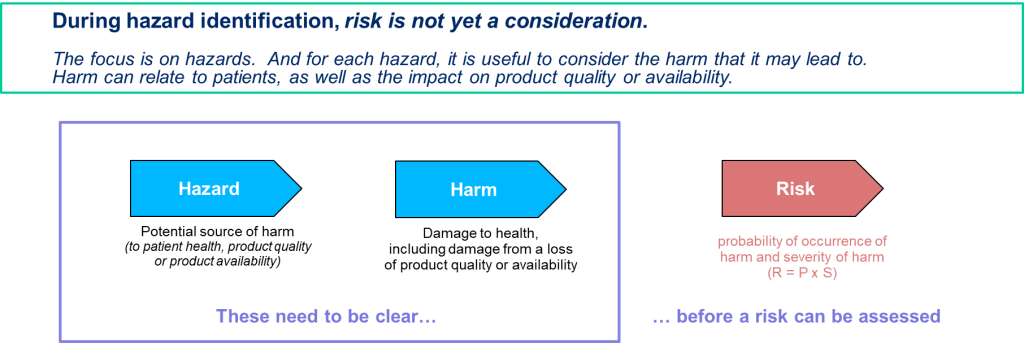
The revised ICH Q9 (R1) guideline shifts from “Risk Identification” to “Hazard Identification” to reflect a more precise approach to identifying potential sources of harm (hazards) rather than broadly identifying risks.

  1. Alignment with Risk Assessment Definition: The term “Hazard Identification” is more consistent with the established definition of Risk Assessment, which involves identifying hazards and analyzing and evaluating the associated risks.
  2. Clarity and Precision: By focusing on hazards, the guideline aims to improve the clarity and precision of the risk management process. This helps better understand and assess the potential harms associated with identified hazards, leading to more effective risk management.
  3. Improved Perception and Assessment: The change is expected to enhance how hazards are perceived and assessed, making the risk management process more robust and scientifically grounded. This is particularly important for ensuring patient safety and product quality.
  4. Consistency in Terminology: The revision aims to standardize the terminology used in quality risk management, reducing confusion and ensuring all stakeholders understand the terms and processes involved.
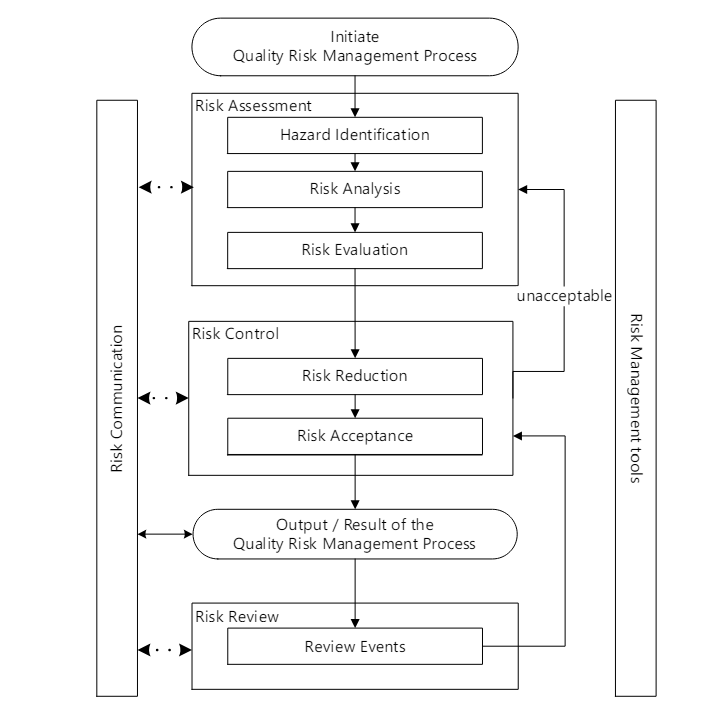
ICH Q9 (r1) Figure 1: Overview of a typical quality risk management process

This small change in terminology can lead to better risk-based decisions by highlighting the need to identify hazards and not risks during the first step of the risk assessment process to remove any distractions about risks that may interfere with the hazard identification activity. When a Risk Assessment team focuses only on identifying hazards, they do not have to think about any related probabilities of occurrence – they only have to consider the potential hazards concerning the risk question under consideration. This is also the case of the severity of harm during hazard identification. There is no need to work to estimate the severity of the harm that may be presented by a hazard that comes later after the hazards have been identified.  

Subject Matter Expert in Validation

In ASTM E2500, a Subject Matter Expert (SME) is an individual with specialized knowledge and technical understanding of critical aspects of manufacturing systems and equipment. The SME plays a crucial role throughout the project lifecycle, from defining needs to verifying and accepting systems. They are responsible for identifying critical aspects, reviewing system designs, developing verification strategies, and leading quality risk management efforts. SMEs ensure manufacturing systems are designed and verified to meet product quality and patient safety requirements.

In the ASTM E2500 process, the Subject Matter Experts (SME) has several key responsibilities critical to successfully implementing the standard. These responsibilities include:

  1. Definition of Needs: SMEs define the system’s needs and identify critical aspects that impact product quality and patient safety.
  2. Risk Management: SMEs participate in risk management activities, helping to identify, assess, and manage risks throughout the project lifecycle. This includes conducting quality risk analyses and consistently applying risk management principles.
  3. Verification Strategy Development: SMEs are responsible for planning and defining verification strategies. This involves selecting appropriate test methods, defining acceptance criteria, and ensuring that verification activities are aligned with the project’s critical aspects.
  4. System Design Review: SMEs review system designs to ensure they meet specified requirements and address identified risks. This includes participating in design reviews and providing technical input to optimize system functionality and compliance.
  5. Execution of Verification Tests: SMEs lead the execution of verification tests, ensuring that tests are conducted accurately and that results are thoroughly reviewed. They may also leverage vendor documentation and test results as part of the verification process, provided the vendor’s quality system and technical capabilities are deemed acceptable.
  6. Change Management: SMEs play a crucial role in change management, ensuring that any modifications to the system are properly evaluated, documented, and implemented. This helps maintain the system’s validated state and ensures continuous compliance with regulatory requirements.
  7. Continuous Improvement: SMEs are involved in continuous process improvement efforts, using operational and performance data to identify opportunities for enhancements. They also conduct root-cause analyses of failures and implement technically sound improvements based on gained product knowledge and understanding.

These responsibilities highlight the SME’s integral role in ensuring that manufacturing systems are designed, verified, and maintained to meet the highest standards of quality and safety, as outlined in ASTM E2500.

The ASTM E2500 SME is a Process Owner

ASTM E2500 uses the term SME in the same way we discuss process owners, or what is sometimes called product or molecule stewards. The term should probably be changed to reflect the special role of the SME and the relationship with other stakeholders.

A Molecule Steward has a specialized role within pharmaceutical and biotechnology companies and oversees the lifecycle of a specific molecule or drug product. This role involves a range of responsibilities, including:

  1. Technical Expertise: Acting as the subject matter expert per ASTM E2500.
  2. Product Control Strategies: Implementing appropriate product control strategies across development and manufacturing sites based on anticipated needs.
  3. Lifecycle Management: Providing end-to-end accountability for a given molecule, from development to late-stage lifecycle management.

A Molecule Steward ensures a drug product’s successful development, manufacturing, and lifecycle management, maintaining high standards of quality and compliance throughout the process.

The ASTM E2500 SME (Molecule Steward) and Stakeholders

In the ASTM E2500 approach, the Subject Matter Expert (Molecule Steward) collaborates closely with various project players to ensure the successful implementation of manufacturing systems.

Definition of Needs and Requirements

  • Collaboration with Project Teams: SMEs work with project teams from the beginning to define the system’s needs and requirements. This involves identifying critical aspects that impact product quality and patient safety.
  • Input from Multiple Departments: SMEs gather input from different departments, including product/process development, engineering, automation, and validation, to ensure that all critical quality attributes (CQAs) and critical process parameters (CPPs) are considered.

Risk Management

  • Quality Risk Analysis: SMEs lead the quality risk analysis process, collaborating with QA and other stakeholders to identify and assess risks. This helps focus on critical aspects and consistently apply risk management principles.
  • Vendor Collaboration: SMEs often work with vendors to leverage their expertise in conducting risk assessments and ensuring that vendor documentation meets quality requirements.

System Design Review

  • Design Review Meetings: SMEs participate in design review meetings with suppliers and project teams to ensure the system design meets the defined needs and critical aspects. This collaborative effort helps in reducing the need for modifications and repeat tests.
  • Supplier Engagement: SMEs engage with suppliers to ensure their design solutions are understood and integrated into the project. This includes reviewing supplier documentation and ensuring compliance with regulatory requirements.

Verification Strategy Development

  • Developing Verification Plans: SMEs collaborate with QA and engineering teams to develop verification strategies and plans. This involves selecting appropriate test methods, defining acceptance criteria, and ensuring verification activities align with project goals.
  • Execution of Verification Tests: SMEs may work with suppliers to conduct verification tests at the supplier’s site, ensuring that tests are performed accurately and efficiently. This collaboration helps achieve the “right test” at the “right time” objective.

Change Management

  • Managing Changes: SMEs play a crucial role in the change management process, working with project teams to evaluate, document, and implement changes. This ensures that the system remains in a validated state and continues to meet regulatory requirements.
  • Continuous Improvement: SMEs collaborate with other stakeholders to identify opportunities for process improvements and implement changes based on operational and performance data.

Documentation and Communication

  • Clear Communication: SMEs ensure clear communication and documentation of all verification activities and acceptance criteria. This involves working closely with QA to validate all critical aspects and ensure compliance with regulatory standards.

System Boundary

A system boundary for equipment or utility refers to the demarcation points that define the extent of a system’s components and the scope of its operations. This boundary is crucial for managing, validating, maintaining, and securing the system.

    • For utilities, the last valve before the system being supplied can be used as the boundary, which can also serve as a Lock Out Tag Out (LOTO) point.
    • Physical connections like tri-clamp connections or flanges can define the boundary for packaged systems or skids.
    • For critical and non-critical systems, such as air or HVAC systems, filters can be the boundary between systems.

    Defining system boundaries is crucial during the design of equipment and systems. It helps identify where the equipment starts and stops and where the breakpoints are situated. This ensures a smooth transition and handover during the commissioning process.

    1. Early Definition: Define system boundaries as early as possible in the system’s development life cycle to reduce costs and ensure effective security controls are implemented from the start.
    2. Stakeholder Involvement: Relevant stakeholders, such as system engineers, utility providers, and maintenance teams, should be involved in defining system boundaries to ensure alignment and a clear understanding of responsibilities.
    3. Documentation and Traceability: To ensure consistency and traceability, document and maintain system boundaries in relevant diagrams (e.g., P&IDs, system architecture diagrams) and commissioning/qualification protocols.
    4. Periodic Review: Regularly review and update system boundaries as the system evolves or the environment changes, using change management and configuration management processes to ensure consistency and completeness.
    5. Enterprise-level Coordination: At an enterprise level, coordinate and align system boundaries across all major systems to identify gaps, overlaps, and seamless coverage of security responsibilities.

    Applying Systems Thinking

    Systems thinking and modeling techniques are essential for managing and improving complex systems. These approaches help understand the interconnected nature of systems, identify key variables, and make informed decisions to enhance performance, reliability, and sustainability. Here’s how these methodologies can be applied:

    Holistic Approach

      • Systems thinking involves viewing the system as an integrated whole rather than isolated components. This approach acknowledges that the system has qualities that the sum of individual parts cannot explain.
      • When developing frameworks, models, and best practices for systems, consider the interactions between people, processes, technology, and the environment.

      Key Elements:

      • Interconnectedness: Recognize that all parts of the utility system are interconnected. Changes in one part can affect other parts, sometimes in unexpected ways.
      • Feedback Loops: Identify feedback loops where outputs from one part of the system influence other parts. These can be reinforcing or balancing loops that affect system behavior over time.
      • Time Consideration: Understand that effects rarely ripple through a complex system instantaneously. Consider how changes will affect the system over time.

      ASTM E2500 Approach to Validation

      ASTM E2500, the Standard Guide for Specification, Design, and Verification of Pharmaceutical and Biopharmaceutical Manufacturing Systems and Equipment, is intended to “satisfy international regulatory expectations in ensuring that manufacturing systems and equipment are fit for the intended use and to satisfy requirements for design, installation, operation, and performance.”

      The ASTM E2500 approach is a comprehensive framework for specification setting, design, and verification of pharmaceutical and biopharmaceutical manufacturing systems and equipment. It emphasizes a risk- and science-based methodology to ensure that systems are fit for their intended use, ultimately aiming to enhance product quality and patient safety.

      Despite its 17-year history, it is fair to say it is not the best-implemented standard. There are still many unrealized opportunities and some major challenges. I don’t think a single organization I’ve been in has fully aligned, and ASTM E2500 can feel aspirational.

      Key Principles

      1. Risk Management: The approach integrates risk management principles from ICH Q8, Q9, and Q10, focusing on identifying and mitigating risks to product quality and patient safety throughout the lifecycle of the manufacturing system.
      2. Good Engineering Practices (GEP): It incorporates GEP to ensure systems are correctly designed, installed, and operated.
      3. Flexibility and Efficiency: It strives for a more flexible and efficient organization of verification activities that can be adapted to each project’s specific context.

      Know your Process

      Regulatory agencies expect drugmakers to persuade them that we know our processes and that our facilities, equipment, systems, utilities, and procedures have been established based on concrete data and a thorough risk assessment. The ASTM E2500 standard provides a means of demonstrating that all of these factors have been validated in consideration of carefully evaluated risks.

      What the Standard Calls for

      Four Main Steps

      1. Requirements: Define the system’s needs and critical aspects. Subject Matter Experts (SMEs) play a crucial role in this phase by defining needs, identifying critical aspects, and developing the verification strategy.
      2. Specification & Design: Develop detailed specifications and design the system to meet the requirements. This step involves thorough design reviews and risk assessments to ensure the system functions as intended.
      3. Verification: Conduct verification activities to confirm that the system meets all specified requirements. This step replaces the traditional FAT/SAT/IQ/OQ/PQ sequence with a more streamlined verification process that can be tailored to the project’s needs.
      4. Acceptance & Release: Finalize the verification process and release the system for operational use. This step includes the final review and approval of all verification activities and documentation.

      Four Cross-Functional Processes

      1. Good Engineering Practices (GEP): Ensure all engineering activities adhere to industry standards and best practices.
      2. Quality Risk Management: Continuously assess and manage risks to product quality and patient safety throughout the project.
      3. Design Review: Regularly reviews the system design to ensure it meets all requirements and addresses identified risks.
      4. Change Management: Implement a structured process for managing system changes to ensure that all modifications are appropriately evaluated and documented.

      Applications and Benefits

      • Applicability: The ASTM E2500 approach can be applied to new and existing manufacturing systems, including laboratory, information, and medical device manufacturing systems.
      • Lifecycle Coverage: It applies throughout the manufacturing system’s lifecycle, from concept to retirement.
      • Regulatory Compliance: The approach is designed to conform with FDA, EU, and other international regulations, ensuring that systems are qualified and meet all regulatory expectations.
      • Efficiency and Cost Management: By focusing on critical aspects and leveraging risk management tools, the ASTM E2500 approach can streamline project execution, reduce time to market, and optimize resource utilization.

      The ASTM E2500 approach provides a structured, risk-based framework for specifying, designing, and verifying pharmaceutical and biopharmaceutical manufacturing systems. It emphasizes flexibility, efficiency, and regulatory compliance, making it a valuable tool for ensuring product quality and patient safety.

      What Makes it Different?

      ASTM E2500The more traditional approach
      Testing ApproachIt emphasizes a risk-based approach, focusing on identifying and managing risks to product quality and patient safety throughout the manufacturing system’s lifecycle. This approach allows for flexibility in organizing verification activities based on the specific context and critical aspects of the system.Typically follows a prescriptive sequence of tests (FAT, SAT, IQ, OQ, PQ) as outlined in guidelines like EU GMP Annex 15. This method is more rigid and less adaptable to the specific needs and risks of each project.
      Verification vs QualificationThe term “verification” encompasses all testing activities, which can be organized more freely and rationally to optimize efficiency. Verification activities are tailored to the project’s needs and focus on critical aspects.Follows a structured qualification process (Installation Qualification, Operational Qualification, Performance Qualification) with predefined steps and documentation requirements.
      Role of Subject Matter ExpertsSMEs play a crucial role from the start of the project, contributing to the definition of needs, identification of critical aspects, system design review, and development of the verification strategy. They are involved throughout the project lifecycle.SMEs are typically involved at specific points in the project lifecycle, primarily during the qualification phases, and may not have as continuous a role as in the ASTM E2500 approach.
      Integration of Good Engineering PracticesOffers greater flexibility in organizing verification activities, allowing for a more efficient and streamlined process. This can lead to reduced time to market and optimized resource utilization.While GEP is also important, the focus is more on the qualification steps rather than integrating GEP throughout the entire project lifecycle.
      Change ManagementIt emphasizes early and continuous change management, starting from the supplier’s site, to avoid test duplication and ensure that changes are properly evaluated and documented.It emphasizes early and continuous change management, starting from the supplier’s site, to avoid test duplication and ensure that changes are properly evaluated and documented.
      DocumentationDocumentation is focused on risk management and verification activities, ensuring compliance with international regulations (FDA, EU, ICH Q8, Q9, Q10). The approach is designed to meet regulatory expectations while allowing for flexibility in documentation.quires extensive documentation for each qualification step, which can be more cumbersome and less adaptable to specific project needs.

      Opinion

      I’m watching to see what the upcoming update to Annex 15 will do to address the difficulties some see between an ATSM E2500 approach and the European regulations. I also hope we will see an update to ISPE Baseline® Guide Volume 5: Commissioning and Qualification to align an approach.

      ISPE Baseline® Guide Volume 5ATSM E2500
      Design inputs
      Impact assessment
      Design Qualification
      Commissioning
      Multiple trial runs to get things right
      IQ, OQ, PQ, and acceptance criteria
      GEP Scope and QA Scope overlapped
      Focused on Documentation Deliverables
      Change Management
      Design inputs
      Design Review
      Risk Mitigation
      Critical Control Parameters define Acceptance Criteria
      Verification Testing
      Performance Testing
      GEP Scope and QA Scope have a clear boundary
      Process, Product Quality and Patient Safety
      Quality by Design, Design Space, and Continuous Improvement

      To be honest I don’t think ATSM E2500, ISPE Guide 5, or anything else has the balance just right. And your program ends up being a triangulation between these and the regulations. And don’t even bring in trying to align GAMP5 or USP <1058> or…or…or…

      And yes, I do consider this part of my 3-year plan. I look forward to the challenges of a culture shift, increased SME involvement, formalization of GEPs (and teaching engineers how to write), effective change management, timely risk assessments, and comprehensive implementation planning.