
Building Digital Trust: How Modern Infrastructure Transforms CxO-Sponsor Relationships Through Quality Agreements

The relationship between sponsors and contract organizations has evolved far beyond simple transactional exchanges. Digital infrastructure has become the cornerstone of trust, transparency, and operational excellence.

The trust equation is fundamentally changing due to the way our supply chains are being challenged.. Traditional quality agreements often functioned as static documents—comprehensive but disconnected from day-to-day operations. Today’s most successful partnerships are built on dynamic, digitally-enabled frameworks that provide real-time visibility into performance, compliance, and risk management.

Regulatory agencies are increasingly scrutinizing the effectiveness of sponsor oversight programs. The FDA’s emphasis on data integrity, combined with EMA’s evolving computerized systems requirements, means that sponsors can no longer rely on periodic audits and static documentation to demonstrate control over their outsourced activities.

Quality Agreements as Digital Trust Frameworks

The modern quality agreement must evolve from a compliance document to a digital trust framework. This transformation requires reimagining three fundamental components:

Dynamic Risk Assessment Integration

Traditional quality agreements categorize suppliers into static risk tiers (for example Category 1, 2, 2.5, or 3 based on material/service risk). Digital frameworks enable continuous risk profiling that adapts based on real-time performance data.

Integrate supplier performance metrics directly into your quality management system. When a Category 2 supplier’s on-time delivery drops below threshold or quality metrics deteriorate, the system should automatically trigger enhanced monitoring protocols without waiting for the next periodic review.

Automated Change Control Workflows

One of the most contentious areas in sponsor-CxO relationships involves change notifications and approvals. Digital infrastructure can transform this friction point into a competitive advantage.

The SMART approach to change control:

  • Standardized digital templates for change notifications
  • Machine-readable impact assessments
  • Automated routing based on change significance
  • Real-time status tracking for all stakeholders
  • Traceable decision logs with electronic signatures

Quality agreement language to include: “All change notifications shall be submitted through the designated digital platform within [X] business days of identification, with automated acknowledgment and preliminary impact assessment provided within [Y] hours.”

Transparent Performance Dashboards

The most innovative CxOs are moving beyond quarterly business reviews to continuous performance visibility. Quality agreements should build upon real-time access to key performance indicators (KPIs) that matter most to patient safety and product quality.

Examples of Essential KPIs for digital dashboards:

  • Batch disposition times and approval rates
  • Deviation investigation cycle times
  • CAPA effectiveness metrics
  • Environmental monitoring excursions and response times
  • Supplier change notification compliance rates

Communication Architecture for Transparency

Effective communication in pharmaceutical partnerships requires architectural thinking, not just protocol definition. The most successful CxO-sponsor relationships are built on what I call the “Three-Layer Communication Stack” which builds a rhythm of communication:

Layer 1: Operational Communication (Real-Time)

  • Purpose: Day-to-day coordination and issue resolution
  • Tools: Integrated messaging within quality management systems, automated alerts, mobile notifications
  • Quality agreement requirement: “Operational communications shall be conducted through validated, audit-trailed platforms with 24/7 availability and guaranteed delivery confirmation.”

Layer 2: Technical Communication (Scheduled)

  • Purpose: Performance reviews, trend analysis, continuous improvement
  • Tools: Shared analytics platforms, collaborative dashboards, video conferencing with screen sharing
  • Governance: Weekly operational reviews, monthly performance assessments, quarterly strategic alignments

Layer 3: Strategic Communication (Event-Driven)

  • Purpose: Relationship governance, escalation management, strategic planning
  • Stakeholders: Quality leadership, senior management, regulatory affairs
  • Framework: Joint steering committees, annual partnership reviews, regulatory alignment sessions

The Communication Plan Template

Every quality agreement should include a subsidiary Communication Plan that addresses:

  1. Stakeholder Matrix: Who needs what information, when, and in what format
  2. Escalation Protocols: Clear triggers for moving issues up the communication stack
  3. Performance Metrics: How communication effectiveness will be measured and improved
  4. Technology Requirements: Specified platforms, security requirements, and access controls
  5. Contingency Procedures: Alternative communication methods for system failures or emergencies

Include communication effectiveness as a measurable element in your supplier scorecards. Track metrics like response time to quality notifications, accuracy of status reporting, and proactive problem identification.

Data Governance as a Competitive Differentiator

Data integrity is more than just ensuring ALCOA+—it’s about creating a competitive moat through superior data governance. The organizations that master data sharing, analysis, and decision-making will dominate the next decade of pharmaceutical manufacturing and development.

The Modern Data Governance Framework

Data Architecture Definition

Your quality agreement must specify not just what data will be shared, but how it will be structured, validated, and integrated:

  • Master data management: Consistent product codes, batch numbering, and material identifiers across all systems
  • Data quality standards: Validation rules, completeness requirements, and accuracy thresholds
  • Integration protocols: APIs, data formats, and synchronization frequencies

Access Control and Security

With increasing regulatory focus on cybersecurity, your data governance plan must address:

  • Role-based access controls: Granular permissions based on job function and business need
  • Data classification: Confidentiality levels and handling requirements
  • Audit logging: Comprehensive tracking of data access, modification, and sharing

Analytics and Intelligence

The real competitive advantage comes from turning shared data into actionable insights:

  • Predictive analytics: Early warning systems for quality trends and supply chain disruptions
  • Benchmark reporting: Anonymous industry comparisons to identify improvement opportunities
  • Root cause analysis: Automated correlation of events across multiple systems and suppliers

The Data Governance Subsidiary Agreement

Consider creating a separate Data Governance Agreement that complements your quality agreement with specific sections covering data sharing objectives, technical architecture, governance oversight, and compliance requirements.

Veeva Summit

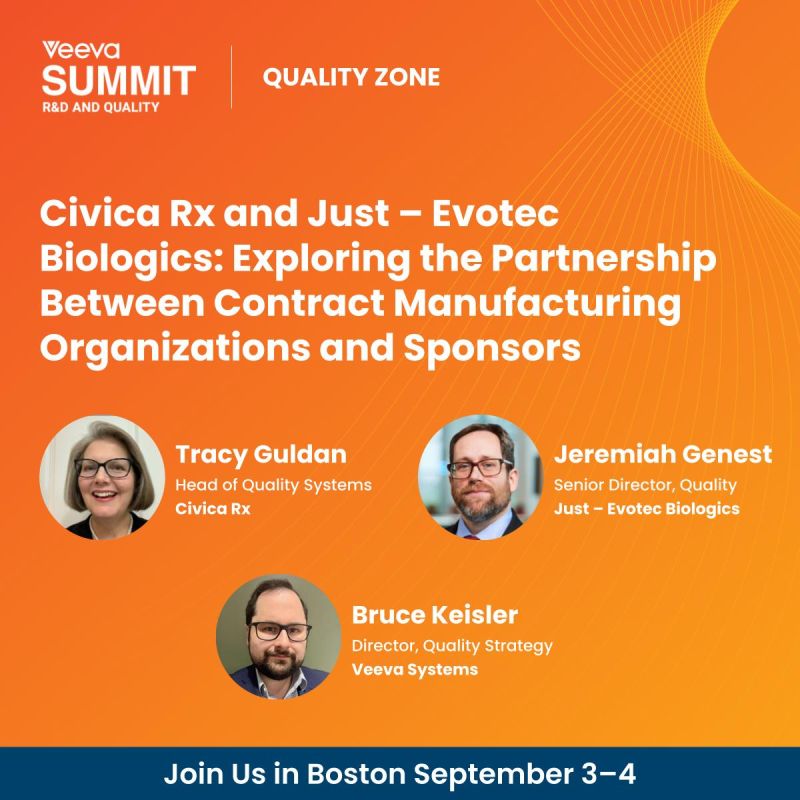
Next week I’ll be discussing this topic at the Veeva Summit, where I will bring some organizational learnings on to embrace digital infrastructure as a trust-building mechanism will forge stronger partnerships, achieve superior quality outcomes, and ultimately deliver better patient experiences.

Worker’s Rights: The Bedrock of True Quality Management – A May Day Reflection

As we celebrate International Workers’ Day this May 1st, it is an opportune moment to reflect on the profound connection between workers’ rights and effective quality management. The pursuit of quality cannot be separated from how we treat, empower, and respect the rights of those who create that quality daily. Today’s post examines this critical relationship, drawing from the principles I’ve advocated throughout my blog, and challenges us to reimagine quality management as fundamentally worker-centered.

The Historical Connection Between Workers’ Rights and Quality

International Workers’ Day commemorates the historic struggles and gains made by workers and the labor movement. This celebration reminds us that the evolution of quality management has paralleled the fight for workers’ rights. Quality is inherently a progressive endeavor, fundamentally anti-Taylorist in nature. Frederick Taylor’s scientific management approach reduced workers to interchangeable parts in a machine, stripping them of autonomy and creativity – precisely the opposite of what modern quality management demands.

The quality movement, from Deming onwards, has recognized that treating workers as mere cogs undermines the very foundations of quality. When we champion human rights and center those whose rights are challenged, we’re not engaging in politics separate from quality – we’re acknowledging the fundamental truth that quality cannot exist without empowered, respected workers.

Driving Out Fear: The Essential Quality Right

“No one can put in his best performance unless he feels secure,” wrote Deming thirty-five years ago. Yet today, fear remains ubiquitous in corporate culture, undermining the very quality we seek to create. As quality professionals, we must confront this reality at every opportunity.

Fear in the workplace manifests in multiple ways, each destructive to quality:

Source of FearDescriptionImpact on Quality
CompetitionManagers often view anxiety generated by competition between co-workers as positive, encouraging competition for scarce resources, power, and statusUndermines collaboration necessary for system-wide quality improvements
“Us and Them” CultureSilos proliferate, creating barriers between staff and supervisorsPrevents holistic quality approaches that span departmental boundaries
Blame CultureFocus on finding fault rather than improving systems, often centered around the concept of “human error”Discourages reporting of issues, driving quality problems underground

When workers operate in fear, quality inevitably suffers. They hide mistakes rather than report them, avoid innovation for fear of failure, and focus on protecting themselves rather than improving systems. Driving out fear isn’t just humane – it’s essential for quality.

Key Worker Rights in Quality Management

Quality management systems that respect workers’ rights create environments where quality can flourish. Based on workplace investigation principles, these rights extend naturally to all quality processes.

The Right to Information

In any quality system, clarity is essential. Workers have the right to understand quality requirements, the rationale behind procedures, and how their work contributes to the overall quality system. Transparency sets the stage for collaboration, where everyone works toward a common quality goal with full understanding.

The Right to Confidentiality and Non-Retaliation

Workers must feel safe reporting quality issues without fear of punishment. This means protecting their confidentiality when appropriate and establishing clear non-retaliation policies. One of the pillars of workplace equity is ensuring that employees are shielded from retaliation when they raise concerns, reinforcing a commitment to a culture where individuals can voice quality issues without fear.

The Right to Participation and Representation

The Who-What Matrix is a powerful tool to ensure the right people are involved in quality processes. By including a wider set of people, this approach creates trust, commitment, and a sense of procedural justice-all essential for quality success. Workers deserve representation in decisions that affect their ability to produce quality work.

Worker Empowerment: The Foundation of Quality Culture

Empowerment is not just a nice-to-have; it’s a foundational element of any true quality culture. When workers are entrusted with authority to make decisions, initiate actions, and take responsibility for outcomes, both job satisfaction and quality improve. Unfortunately, empowerment rhetoric is sometimes misused within quality frameworks like TQM, Lean, and Six Sigma to justify increased work demands rather than genuinely empowering workers.

The concept of empowerment has its roots in social movements, including civil rights and women’s rights, where it described the process of gaining autonomy and self-determination for marginalized groups. In quality management, this translates to giving workers real authority to improve processes and address quality issues.

Mary Parker Follett’s Approach to Quality Through Autonomy

Follett emphasized giving workers autonomy to complete their jobs effectively, believing that when workers have freedom, they become happier, more productive, and more engaged. Her “power with” principle suggests that power should be shared broadly rather than concentrated, fostering a collaborative environment where quality can thrive.

Rejecting the Great Man Fallacy

Quality regulations often fall into the trap of the “Great Man Fallacy” – the misguided notion that one person through education, experience, and authority can ensure product safety, efficacy, and quality. This approach is fundamentally flawed.

People only perform successfully when they operate within well-built systems. Process drives success by leveraging the right people at the right time making the right decisions with the right information. No single person can ensure quality, and thinking otherwise sets up both individuals and systems for failure.

Instead, we need to build processes that leverage teams, democratize decisions, and drive reliable results. This approach aligns perfectly with respecting workers’ rights and empowering them as quality partners rather than subjects of quality control.

Quality Management as a Program: Centering Workers’ Rights

Quality needs to be managed as a program, walking a delicate line between long-term goals, short-term objectives, and day-to-day operations. As quality professionals, we must integrate workers’ rights into this program approach.

The challenges facing quality today-from hyperautomation to shifting customer expectations-can only be addressed through worker empowerment. Consider how these challenges demand a worker-centered approach:

ChallengeImpact on Quality ManagementWorker-Centered Approach
Advanced AnalyticsRequires holistic data analysis and applicationDevelop talent strategies that upskill workers rather than replacing them
Hyper-AutomationTasks previously done by humans being automatedInvolve workers in automation decisions; focus on how automation can enhance rather than replace human work
Virtualization of WorkRethinking how quality is executed in digital environmentsEnsure workers have input on how virtual quality processes are designed
Shift to Resilient OperationsNeed to adapt to changing risk levels in real-timeEnable employees to make faster decisions by building quality-informed judgment
Digitally Native WorkforceChanged expectations for how work is managedConnect quality to values employees care about: autonomy, innovation, social issues

To meet these challenges, we must shift from viewing quality as a function to quality as an interdisciplinary, participatory process. We need to break down silos and build autonomy, encouraging personal buy-in through participatory quality management.

May Day as a Reminder of Our Quality Mission

As International Workers’ Day approaches, I’m reminded that our quality mission is inseparable from our commitment to workers’ rights. This May Day, I encourage all quality professionals to:

  1. Evaluate how your quality systems either support or undermine workers’ rights
  2. Identify and eliminate sources of fear in your quality processes
  3. Create mechanisms for meaningful worker participation in quality decisions
  4. Reject hierarchical quality models in favor of democratic, empowering approaches
  5. Recognize that centering workers’ rights isn’t just ethical-it’s essential for quality

Quality management without respect for workers’ rights is not just morally questionable-it’s ineffective. The future of quality lies in approaches that are predictive, connected, flexible, and embedded. These can only be achieved when workers are treated as valued partners with protected rights and real authority.

This May Day, let’s renew our commitment to driving out fear, empowering workers, and building quality systems that respect the dignity and rights of every person who contributes to them. In doing so, we honor not just the historical struggles of workers, but also the true spirit of quality that puts people at its center.

What steps will you take this International Workers’ Day to strengthen the connection between workers’ rights and quality in your organization?

Curiosity

To foster a culture of adaptability, engagement, and high performance on your team, you need to demonstrate consistent curiosity about your employees, yourself, and your organization. Here’s how:

  • Curiosity about employees. Organizations are a collection of the mindsets, attitudes, and values of the people that work within them. To shape your team’s culture, you need to understand people’s values and motivations. Talk to employees directly, formally survey them, or engage in focus groups about the team’s culture to tap into your collective wisdom.
  • Curiosity about yourself. As your culture evolves, you must too. Reflect with open-mindedness on your own role. Ask yourself: How have I evolved over time within this team and this organization? The better you understand your own position in the culture, the better suited you’ll be to lead and shape it.
  • Curiosity about the organization. Great leaders don’t just shape culture once—they stay curious about the changing nature of their companies and contexts over time. How have your organization’s mission, vision, and values changed? How has the personnel changed? And how have all of these factors affected the culture along the way? The more you understand your cultural context, the better equipped you’ll be to navigate it.
  • Curiosity about the domain: What are the changes in your field? What is current research? Regulatory shifts? Best practices? The more you understand the external landscape, the better equipped you are to establish a vision of excellence.
Happy little boy holding glass with soap foam by David Pereiras from Noun Project (CC BY-NC-ND 2.0)