
Operational Stability

At the heart of achieving consistent pharmaceutical quality lies operational stability—a fundamental concept that forms the critical middle layer in the House of Quality model. Operational stability serves as the bridge between cultural foundations and the higher-level outcomes of effectiveness, efficiency, and excellence. This critical positioning makes it worthy of detailed examination, particularly as regulatory bodies increasingly emphasize Quality Management Maturity (QMM) as a framework for evaluating pharmaceutical operations.
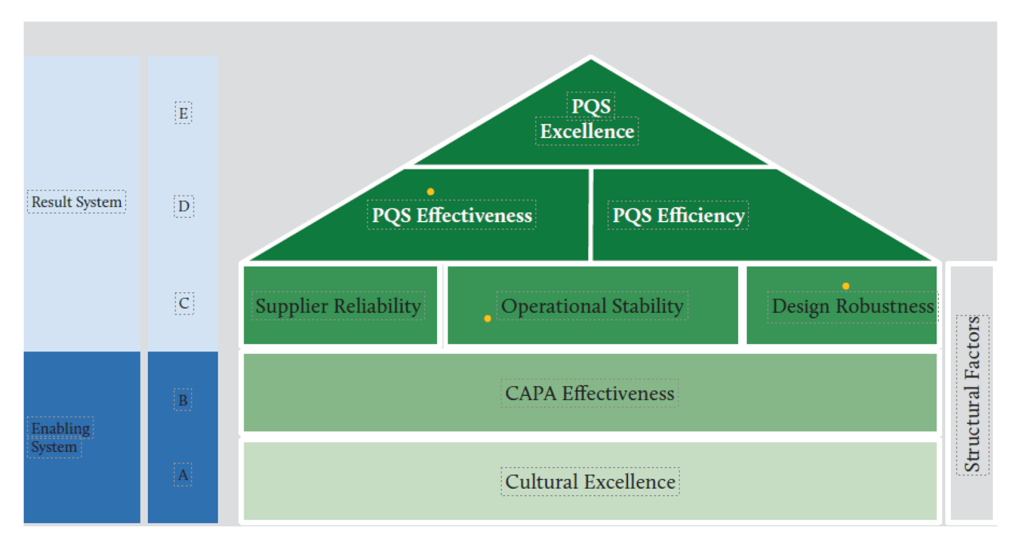
he image is a diagram in the shape of a house, illustrating a framework for PQS (Pharmaceutical Quality System) Excellence. The house is divided into several colored sections:

The roof is labeled "PQS Excellence."

Below the roof, two sections are labeled "PQS Effectiveness" and "PQS Efficiency."

Underneath, three blocks are labeled "Supplier Reliability," "Operational Stability," and "Design Robustness."

Below these, a larger block spans the width and is labeled "CAPA Effectiveness."

The base of the house is labeled "Cultural Excellence."

On the left side, two vertical sections are labeled "Enabling System" (with sub-levels A and B) and "Result System" (with sub-levels C, D, and E).

On the right side, a vertical label reads "Structural Factors."

The diagram uses different shades of green and blue to distinguish between sections and systems.

Understanding Operational Stability in Pharmaceutical Manufacturing

Operational stability represents the state where manufacturing and quality processes exhibit consistent, predictable performance over time with minimal unexpected variations. It refers to the capability of production systems to maintain control within defined parameters regardless of routine challenges that may arise. In pharmaceutical manufacturing, operational stability encompasses everything from batch-to-batch consistency to equipment reliability, from procedural adherence to supply chain resilience.

The essence of operational stability lies in its emphasis on reliability and predictability. A stable operation delivers consistent outcomes not by chance but by design—through robust systems that can withstand normal operating stresses without performance degradation. Pharmaceutical operations that achieve stability demonstrate the ability to maintain critical quality attributes within specified limits while accommodating normal variability in inputs such as raw materials, human operations, and environmental conditions.

According to the House of Quality model for pharmaceutical quality frameworks, operational stability occupies a central position between cultural foundations and higher-level performance outcomes. This positioning is not accidental—it recognizes that stability is both dependent on cultural excellence below it and necessary for the efficiency and effectiveness that lead to excellence above it.

The Path to Obtaining Operational Stability

Achieving operational stability requires a systematic approach that addresses several interconnected dimensions. This pursuit begins with establishing robust processes designed with sufficient control mechanisms and clear operating parameters. Process design should incorporate quality by design principles, ensuring that processes are inherently capable of consistent performance rather than relying on inspection to catch deviations.

Standard operating procedures form the backbone of operational stability. These procedures must be not merely documented but actively maintained, followed, and continuously improved. This principle applies broadly—authoritative documentation precedes execution, ensuring alignment and clarity.

Equipment reliability programs represent another critical component in achieving operational stability. Preventive maintenance schedules, calibration programs, and equipment qualification processes all contribute to ensuring that physical assets support rather than undermine stability goals. The FDA’s guidance on pharmaceutical CGMP regulation emphasizes the importance of the Facilities and Equipment System, which ensures that facilities and equipment are suitable for their intended use and maintained properly.

Supplier qualification and management play an equally important role. As pharmaceutical manufacturing becomes increasingly globalized, with supply chains spanning multiple countries and organizations, the stability of supplied materials becomes essential for operational stability. “Supplier Reliability” appears in the House of Quality model at the same level as operational stability, underscoring their interconnected nature1. Robust supplier qualification programs, ongoing monitoring, and collaborative relationships with key vendors all contribute to supply chain stability that supports overall operational stability.

Human factors cannot be overlooked in the pursuit of operational stability. Training programs, knowledge management systems, and appropriate staffing levels all contribute to consistent human performance. The establishment of a “zero-defect culture” underscores the importance of human factors in achieving true operational stability.
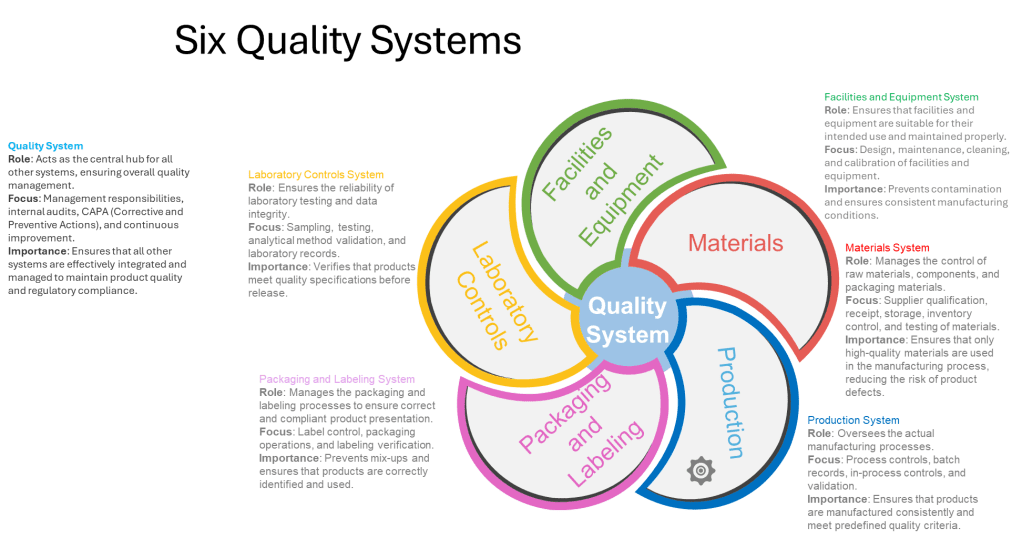
Main Content Overview:
The document outlines six key quality systems essential for effective quality management in regulated industries, particularly pharmaceuticals and related fields. Each system is described with its role, focus areas, and importance.

Detailed Alt Text
1. Quality System

Role: Central hub for all other systems, ensuring overall quality management.

Focus: Management responsibilities, internal audits, CAPA (Corrective and Preventive Actions), and continuous improvement.

Importance: Integrates and manages all systems to maintain product quality and regulatory compliance.

2. Laboratory Controls System

Role: Ensures reliability of laboratory testing and data integrity.

Focus: Sampling, testing, analytical method validation, and laboratory records.

Importance: Verifies products meet quality specifications before release.

3. Packaging and Labeling System

Role: Manages packaging and labeling to ensure correct and compliant product presentation.

Focus: Label control, packaging operations, and labeling verification.

Importance: Prevents mix-ups and ensures correct product identification and use.

4. Facilities and Equipment System

Role: Ensures facilities and equipment are suitable and maintained for intended use.

Focus: Design, maintenance, cleaning, and calibration.

Importance: Prevents contamination and ensures consistent manufacturing conditions.

5. Materials System

Role: Manages control of raw materials, components, and packaging materials.

Focus: Supplier qualification, receipt, storage, inventory control, and testing.

Importance: Ensures only high-quality materials are used, reducing risk of defects.

6. Production System

Role: Oversees manufacturing processes.

Focus: Process controls, batch records, in-process controls, and validation.

Importance: Ensures consistent manufacturing and adherence to quality criteria.

Image Description:
A diagram (not shown here) likely illustrates the interconnection of the six quality systems, possibly with the "Quality System" at the center and the other five systems branching out, indicating their relationship and integration within an overall quality management framework

Measuring Operational Stability: Key Metrics and Approaches

Measurement forms the foundation of any improvement effort. For operational stability, measurement approaches must capture both the state of stability and the factors that contribute to it. The pharmaceutical industry utilizes several key metrics to assess operational stability, ranging from process-specific measurements to broader organizational indicators.

Process capability indices (Cp, Cpk) provide quantitative measures of a process’s ability to meet specifications consistently. These statistical measures compare the natural variation in a process against specified tolerances. A process with high capability indices demonstrates the stability necessary for consistent output. These measures help distinguish between common cause variations (inherent to the process) and special cause variations (indicating potential instability).

Deviation rates and severity classification offer another window into operational stability. Tracking not just the volume but the nature and significance of deviations provides insight into systemic stability issues. The following table outlines how different deviation patterns might be interpreted:

Deviation PatternStability ImplicationRecommended Response
Low frequency, low severityGood operational stabilityContinue monitoring, seek incremental improvements
Low frequency, high severityCritical vulnerability despite apparent stabilityRoot cause analysis, systemic preventive actions
High frequency, low severityDegrading stability, risk of normalization of devianceProcess review, operator training, standard work reinforcement
High frequency, high severityFundamental stability issuesComprehensive process redesign, management system review

Equipment reliability metrics such as Mean Time Between Failures (MTBF) and Overall Equipment Effectiveness (OEE) provide visibility into the physical infrastructure supporting operations. These measures help identify whether equipment-related issues are undermining otherwise well-designed processes.

Batch cycle time consistency represents another valuable metric for operational stability. In stable operations, the time required to complete batch manufacturing should fall within a predictable range. Increasing variability in cycle times often serves as an early warning sign of degrading operational stability.

Right-First-Time (RFT) batch rates measure the percentage of batches that proceed through the entire manufacturing process without requiring rework, deviation management, or investigation. High and consistent RFT rates indicate strong operational stability.

Leveraging Operational Stability for Organizational Excellence

Once achieved, operational stability becomes a powerful platform for broader organizational excellence. Robust operational stability delivers substantial business benefits that extend throughout the organization.

Resource optimization represents one of the most immediate benefits. Stable operations require fewer resources dedicated to firefighting, deviation management, and rework. This allows for more strategic allocation of both human and financial resources. As noted in the St. Gallen reports “organizations with higher levels of cultural excellence, including employee engagement and continuous improvement mindsets supports both quality and efficiency improvements.”

Stable operations enable focused improvement efforts. Rather than dispersing improvement resources across multiple priority issues, organizations can target specific opportunities for enhancement. This focused approach yields more substantial gains and allows for the systematic building of capabilities over time.

Regulatory confidence grows naturally from demonstrated operational stability. Regulatory agencies increasingly look beyond mere compliance to assess the maturity of quality systems. The FDA’s Quality Management Maturity (QMM) program explicitly recognizes that mature quality systems are characterized by consistent, reliable processes that ensure quality objectives and promote continual improvement.

Market differentiation emerges as companies leverage their operational stability to deliver consistently high-quality products with reliable supply. In markets where drug shortages have become commonplace, the ability to maintain stable supply becomes a significant competitive advantage.

Innovation capacity expands when operational stability frees resources and attention previously consumed by basic operational problems. Organizations with stable operations can redirect energy toward innovation in products, processes, and business models.

Operational Stability within the House of Quality Model

The House of Quality model places operational stability in a pivotal middle position. This architectural metaphor is instructive—like the middle floors of a building, operational stability both depends on what lies beneath it and supports what rises above it. Understanding this positioning helps clarify operational stability’s role in the broader quality management system.

Cultural excellence lies at the foundation of the House of Quality. This foundation provides the mindset, values, and behaviors necessary for sustained operational stability. Without this cultural foundation, attempts to establish operational stability will likely prove short-lived. At a high level of quality management maturity, organizations operate optimally with clear signals of alignment, where quality and risk management stem from and support the organization’s objectives and values.

Above operational stability in the House of Quality model sit Effectiveness and Efficiency, which together lead to Excellence at the apex. This positioning illustrates that operational stability serves as the essential platform enabling both effectiveness (doing the right things) and efficiency (doing things right). Research from the St. Gallen reports found that “plants with more effective quality systems also tend to be more efficient in their operations,” although “effectiveness only explained about 4% of the variation in efficiency scores.”

The House of Quality model also places Supplier Reliability and Design Robustness at the same level as Operational Stability. This horizontal alignment stems from these three elements work in concert as the critical middle layer of the quality system. Collectively, they provide the stable platform necessary for higher-level performance.

ElementRelationship to Operational StabilityJoint Contribution to Upper Levels
Supplier ReliabilityProvides consistent input materials essential for operational stabilityEnables predictable performance and resource optimization
Operational StabilityCreates consistent process performance regardless of normal variationsEstablishes the foundation for systematic improvement and performance optimization
Design RobustnessEnsures processes and products can withstand variation without quality impactReduces the resource burden of controlling variation, freeing capacity for improvement

The Critical Middle: Why Operational Stability Enables PQS Effectiveness and Efficiency

Operational stability functions as the essential bridge between cultural foundations and higher-level performance outcomes. This positioning highlights its critical role in translating quality culture into tangible quality performance.

Operational stability enables PQS effectiveness by creating the conditions necessary for systems to function as designed. The PQS effectiveness visible in the upper portions of the House of Quality depends on reliable execution of core processes. When operations are unstable, even well-designed quality systems fail to deliver their intended outcomes.

Operational stability enables efficiency by reducing wasteful activities associated with unstable processes. Without stability, efficiency initiatives often fail to deliver sustainable results as resources continue to be diverted to managing instability.

The relationship between operational stability and the higher levels of the House of Quality follows a hierarchical pattern. Attempts to achieve efficiency without first establishing stability typically result in fragile systems that deliver short-term gains at the expense of long-term performance. Similarly, effectiveness cannot be sustained without the foundation of stability. The model implies a necessary sequence: first cultural excellence, then operational stability (alongside supplier reliability and design robustness), followed by effectiveness and efficiency, ultimately leading to excellence.

Balancing Operational Stability with Innovation and Adaptability

While operational stability provides numerous benefits, it must be balanced with innovation and adaptability to avoid organizational rigidity. There is a potential negative consequences of an excessive focus on efficiency, including reduced resilience and flexibility which can lead to stifled innovation and creativity.

The challenge lies in establishing sufficient stability to enable consistent performance while maintaining the adaptability necessary for continuous improvement and innovation. This balance requires thoughtful design of stability mechanisms, ensuring they control critical quality attributes without unnecessarily constraining beneficial innovation.

Process characterization plays an important role in striking this balance. By thoroughly understanding which process parameters truly impact critical quality attributes, organizations can focus stability efforts where they matter most while allowing flexibility elsewhere. This selective approach to stability creates what might be called “bounded flexibility”—freedom to innovate within well-understood boundaries.

Change management systems represent another critical mechanism for balancing stability with innovation. Well-designed change management ensures that innovations are implemented in a controlled manner that preserves operational stability. ICH Q10 specifically identifies Change Management Systems as a key element of the Pharmaceutical Quality System, emphasizing its importance in maintaining this balance.

Measuring Quality Management Maturity through Operational Stability

Regulatory agencies increasingly recognize operational stability as a key indicator of Quality Management Maturity (QMM). The FDA’s QMM program evaluates organizations across multiple dimensions, with operational performance being a central consideration.

Organizations can assess their own QMM level by examining the nature and pattern of their operational stability. The following table presents a maturity progression framework related to operational stability:

Maturity LevelOperational Stability CharacteristicsEvidence Indicators
Reactive (Level 1)Unstable processes requiring constant interventionHigh deviation rates, frequent batch rejections, unpredictable cycle times
Controlled (Level 2)Basic stability achieved through rigid controls and extensive oversightLow deviation rates but high oversight costs, limited process understanding
Predictive (Level 3)Processes demonstrate inherent stability with normal variation understoodStatistical process control effective, leading indicators utilized
Proactive (Level 4)Stability maintained through systemic approaches rather than individual effortsRoot causes addressed systematically, culture of ownership evident
Innovative (Level 5)Stability serves as platform for continuous improvement and innovationStability metrics consistently excellent, resources focused on value-adding activities

This maturity progression aligns with the FDA’s emphasis on QMM as “the state attained when drug manufacturers have consistent, reliable, and robust business processes to achieve quality objectives and promote continual improvement”.

Practical Approaches to Building Operational Stability

Building operational stability requires a comprehensive approach addressing process design, organizational capabilities, and management systems. Several practical methods have proven particularly effective in pharmaceutical manufacturing environments.

Statistical Process Control (SPC) provides a systematic approach to monitoring processes and distinguishing between common cause and special cause variation. By establishing control limits based on natural process variation, SPC helps identify when processes are operating stably within expected variation versus when they experience unusual variation requiring investigation. This distinction prevents over-reaction to normal variation while ensuring appropriate response to significant deviations.

Process validation activities establish scientific evidence that a process can consistently deliver quality products. Modern validation approaches emphasize ongoing process verification rather than point-in-time demonstrations, aligning with the continuous nature of operational stability.

Root cause analysis capabilities ensure that when deviations occur, they are investigated thoroughly enough to identify and address underlying causes rather than symptoms. This prevents recurrence and systematically improves stability over time. The CAPA (Corrective Action and Preventive Action) system plays a central role in this aspect of building operational stability.

Knowledge management systems capture and make accessible the operational knowledge that supports stability. By preserving institutional knowledge and making it available when needed, these systems reduce dependence on individual expertise and create more resilient operations. This aligns with ICH Q10’s emphasis on “expanding the body of knowledge”.

Training and capability development ensure that personnel possess the necessary skills to maintain operational stability. Investment in operator capabilities pays dividends through reduced variability in human performance, often a significant factor in overall operational stability.

Operational Stability as the Engine of Quality Excellence

Operational stability occupies a pivotal position in the House of Quality model—neither the foundation nor the capstone, but the essential middle that translates cultural excellence into tangible performance outcomes. Its position reflects its dual nature: dependent on cultural foundations for sustainability while enabling the effectiveness and efficiency that lead to excellence.

The journey toward operational stability is not merely technical but cultural and organizational. It requires systematic approaches, appropriate metrics, and balanced objectives that recognize stability as a means rather than an end. Organizations that achieve robust operational stability position themselves for both regulatory confidence and market leadership.

As regulatory frameworks evolve toward Quality Management Maturity models, operational stability will increasingly serve as a differentiator between organizations. Those that establish and maintain strong operational stability will find themselves well-positioned for both compliance and competition in an increasingly demanding pharmaceutical landscape.

The House of Quality model provides a valuable framework for understanding operational stability’s role and relationships. By recognizing its position between cultural foundations and performance outcomes, organizations can develop more effective strategies for building and leveraging operational stability. The result is a more robust quality system capable of delivering not just compliance but true quality excellence that benefits patients, practitioners, and the business itself.
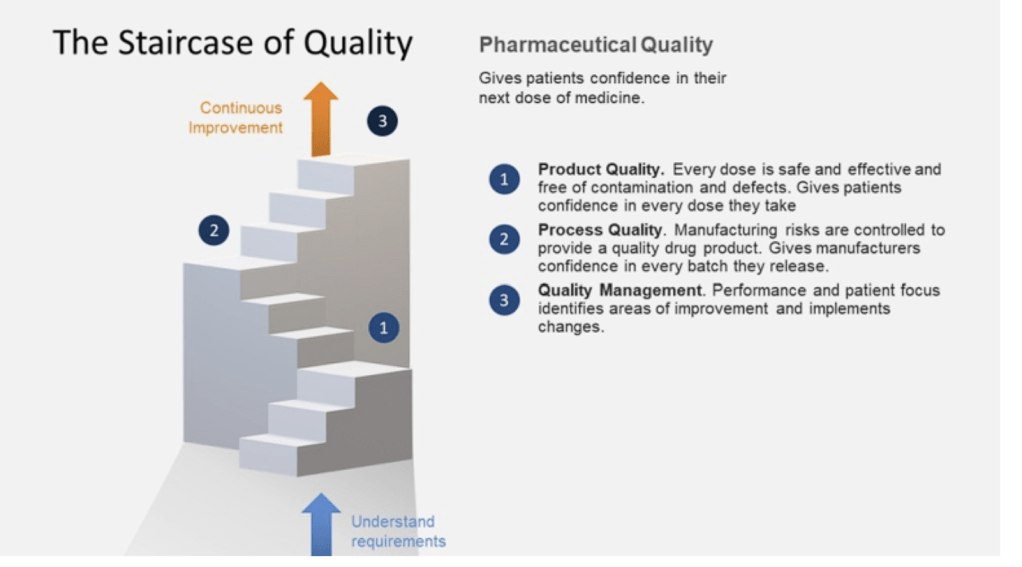
Pharmaceutical GMP Quality Systems: FDA, ICH Q10 and QMM

Recent LinkedIn discourse got me thinking of the wider pharmaceutical quality system and how it is reflected in ICH Q10 and in the FDA Guidance for Industry on Quality Systems Approach to Pharmaceutical CGMP Regulation.

ICH Q10

The International Conference on Harmonization (ICH) was established to harmonize the technical requirements for pharmaceutical product registration across Europe, Japan, and the United States. ICH Q10, finalized in June 2008, emerged from this initiative as a guideline for a comprehensive Pharmaceutical Quality System (PQS) applicable throughout the product lifecycle. It was adopted by the FDA in April 2009, following its implementation by the European Commission in July 2008.

ICH Q10 aims to provide a model for pharmaceutical manufacturers to develop and maintain effective quality management systems. The guideline emphasizes a lifecycle approach, integrating quality management principles from ISO standards and regional GMP requirements. The primary objectives of ICH Q10 include:

  • Ensuring consistent product quality that meets customer and regulatory requirements.
  • Establishing effective monitoring and control systems for process performance and product quality.
  • Promoting continual improvement and innovation throughout the product lifecycle.

The guideline outlines the key elements of management responsibilities, Corrective and Preventive Action (CAPA) , process performance and product quality monitoring, change management, and management review. ICH Q10 is usually considered part of the “Quality Trio” with ICH Q8 and Q9. Quality by design is only possible through proper risk management and a robust quality system.

FDA Guidance for Industry on Quality Systems Approach to Pharmaceutical CGMP Regulation

The FDA developed guidance on implementing modern quality systems and risk management practices to align with the CGMP (Current Good Manufacturing Practice) requirements outlined in parts 210 and 211 of the FDA regulations. These regulations govern the manufacturing of human and veterinary drugs, including biological products. Published in 2006, this guidance should be viewed as part of a continuum of thought with ICH Q10 and not as an earlier draft.

This guidance aims to assist manufacturers in meeting cGMP requirements by adopting a comprehensive quality systems model. It emphasizes the integration of quality systems with regulatory requirements to ensure full compliance without imposing new expectations on manufacturers. Key aspects of the guidance include:

  • Highlighting the consistency of the quality systems model with cGMP regulations.
  • Encouraging the use of risk management and quality systems to enhance compliance and product quality.
  • Providing a framework for manufacturers to gain control over their manufacturing processes.

Six-System Inspection Model

The FDA’s Six-System Inspection Model is a framework introduced in this guidance to ensure compliance with current Good Manufacturing Practice (CGMP) regulations in the pharmaceutical industry. This model helps FDA inspectors evaluate the robustness of a company’s quality management system by focusing on six key subsystems.

I am a huge fan of the six subsystem approach. Basically we have here the organization of the quality manual, a guide to what standards you need to write in a bigger company, and a franework for understanding the cGMPs as a whole (great for education purposes).

Here’s a detailed explanation of each subsystem:

1. Quality System

  • Role: Acts as the central hub for all other systems, ensuring overall quality management.
  • Focus: Management responsibilities, internal audits, CAPA (Corrective and Preventive Actions), and continuous improvement.
  • Importance: Ensures that all other systems are effectively integrated and managed to maintain product quality and regulatory compliance.

2. Facilities and Equipment System

  • Role: Ensures that facilities and equipment are suitable for their intended use and maintained properly.
  • Focus: Design, maintenance, cleaning, and calibration of facilities and equipment.
  • Importance: Prevents contamination and ensures consistent manufacturing conditions.

3. Materials System

  • Role: Manages the control of raw materials, components, and packaging materials.
  • Focus: Supplier qualification, receipt, storage, inventory control, and testing of materials.
  • Importance: Ensures that only high-quality materials are used in the manufacturing process, reducing the risk of product defects.

4. Production System

  • Role: Oversees the actual manufacturing processes.
  • Focus: Process controls, batch records, in-process controls, and validation.
  • Importance: Ensures that products are manufactured consistently and meet predefined quality criteria.

5. Packaging and Labeling System

  • Role: Manages the packaging and labeling processes to ensure correct and compliant product presentation.
  • Focus: Label control, packaging operations, and labeling verification.
  • Importance: Prevents mix-ups and ensures that products are correctly identified and used.

6. Laboratory Controls System

  • Role: Ensures the reliability of laboratory testing and data integrity.
  • Focus: Sampling, testing, analytical method validation, and laboratory records.
  • Importance: Verifies that products meet quality specifications before release.

Integration and Interdependence

  • Quality System as the Fulcrum: The quality system is the central element that integrates all other subsystems. It ensures that each subsystem functions correctly and is aligned with overall quality objectives.
  • State of Control: The primary goal of the six-system inspection model is to ensure that each subsystem is in a state of control, meaning it operates within predefined limits and consistently produces the desired outcomes.

The Six-System Inspection Model provides a structured approach for FDA inspectors to assess the compliance and effectiveness of a pharmaceutical company’s quality management system. By focusing on these six subsystems, the FDA ensures that all aspects of manufacturing, from raw materials to final product testing, are adequately controlled and managed to maintain high standards of product quality and safety.

A Complementary and Holistic Approach

Both ICH Q10 and the FDA’s guidance on quality systems approach aim to enhance the quality and safety of pharmaceutical products through robust quality management systems. ICH Q10 provides a harmonized model applicable across the product lifecycle, while the FDA guidance focuses on integrating quality systems with existing CGMP regulations. Together, they support the pharmaceutical industry in achieving consistent product quality and regulatory compliance.

AspectICH Q10FDA Guidance on CGMPISO 13485 and 21 CFR 820ISO 9000
Purpose and ScopeComprehensive model for pharmaceutical quality systems across the product lifecycle.Quality systems approach to ensure CGMP compliance in pharmaceuticals.Quality management system for medical devices, incorporating ISO 13485 and regulatory requirements of 21 CFR 820.Fundamentals and vocabulary for quality management systems applicable to any industry.
Industry FocusSpecifically for the pharmaceutical industry.Specifically for the pharmaceutical industry.Specifically for the medical device industry.Applicable to any industry.
Key ElementsManagement responsibilities, CAPA, process performance, change management, management review.Management responsibilities, quality systems, process validation, continuous improvement.Risk management, quality manual, documentation requirements (e.g., Device Master Records, Device History Records).Quality management principles, terms, and definitions.
Regulatory FocusStrong emphasis on regulatory compliance and lifecycle management.Strong emphasis on regulatory compliance with CGMP.Incorporates regulatory requirements specific to medical devices (21 CFR 820).Does not directly address regulatory compliance.
FlexibilityFlexible, adaptable to specific product and process needs.More prescriptive with specific compliance requirements.Harmonized with international standards but includes specific regulatory requirements.Provides a broad framework for customization.
Management InvolvementEmphasizes management’s role in quality and regulatory compliance.Emphasizes management’s role in quality and CGMP integration.Emphasizes management’s role in quality and risk-based decision making.Emphasizes management’s role in quality and customer satisfaction.
ImplementationTailored to pharmaceutical manufacturing, integrating quality management principles.Mandates oversight and controls over drug manufacturing processes.Requires a quality manual and specific documentation practices; aligned with international standards.Requires customization to specific industry needs.

These two documents were developed at the same time and represents the thinking twenty years ago in laying down an approach that still matters today. I usually regard the six system approach as a deepening and defining of what Q10 means by process performance and product quality monitoring.

What is the current agency thinking?

The FDA and other revulatory agencies haven’t stopped their thinking in 2008. Sixteen years later we see the continued push for quality culture and quality maturity. The FDA continues to make this a top priority, as we’ve been seeing in their annual drug shortage reports to Congress. There are a few themes we continue to see driven home.

The Patient is the Customer

Quality management must be customer-focused, ensuring that all processes and materials meet their intended use. Senior management’s commitment is crucial for a strong QMS, which emphasizes proactive quality assurance over reactive quality control. Robust supplier relationships and oversight programs are essential to manage variability in materials and processes.

This application of a core priciple in ISO 9000 may seem to basic to some, but I think it is central to a lot of messaging and should never be taken for granted.

Benefits of Better Quality Performance

A continued focus that a quality-focused culture leads to:

  • Early problem detection
  • Enhanced process stability and productivity
  • Fewer major deviations and failures
  • Efficient QA release of batches
  • Reduced customer complaints and returns
  • Protection of brand and competitiveness

Management Oversight of Drug Quality

Management must address sources of variability, including people, materials, methods, measurements, machines, and environment. Risk management should be dynamic and ongoing, facilitating continual learning and improvement.

Corrective Action and Preventive Action (CAPA)

A structured approach to investigating complaints, product rejections, nonconformances, recalls, deviations, audits, regulatory inspections, and trends is essential. CAPA should determine root causes and implement corrective actions.

Change Management

Timely and effective change management ensures corrections and improvements are undertaken efficiently. This includes implementing product quality improvements, process improvements, variability reduction, innovations, and pharmaceutical quality system enhancements.

Management Review

Management is responsible for quality policy, QMS effectiveness, internal communications, resource management, and supply chain oversight. This includes ensuring the quality of incoming materials and outsourced activities.

Quality Culture Driven by Top Management

A strong corporate quality culture is driven by daily decisions and executive oversight. Sustainable compliance requires aiming for high standards rather than just meeting minimum requirements. Quality management maturity involves proactive and preventive actions, iterative learning, and leveraging modern technologies.

Facility Lifecycle

Senior management must ensure the suitability of operational design, control, and maintenance. This includes addressing infrastructure reliability, appropriateness for new product demands, and mitigating equipment/facility degradation.

Risk Management in Manufacturing

Human factors and manual interventions pose significant risks in pharmaceutical manufacturing. Automation and separation technologies can mitigate these risks, but many facilities still rely on manually intensive processes. Leveraging new technologies and practices is a huge opportunity.

This approach is reflected in the FDA’s Quality Management Maturity (QMM), which promotes advanced quality management practices within drug manufacturing establishments.

Goals of the QMM Program

  1. Foster a Strong Quality Culture Mindset: Encourage establishments to integrate quality deeply into their organizational culture.
  2. Recognize Advanced Quality Management Practices: Acknowledge and reward establishments that go beyond basic CGMP (Current Good Manufacturing Practices) requirements.
  3. Identify Growth Opportunities: Provide suggestions for enhancing quality management practices.
  4. Minimize Risks to Product Availability: Ensure a reliable market supply by reducing quality-related failures and maintaining performance during supply chain disruptions.

Key Components of the QMM Program

  • Management Commitment to Quality: Leadership must prioritize quality, set clear objectives, and integrate these with business goals. Effective management review processes are crucial.
  • Business Continuity: Establishments should develop robust plans to handle disruptions, ensuring consistent operations and supply chain reliability.
  • Advanced Pharmaceutical Quality System (PQS): Implementing quality principles like Quality by Design (QbD) and risk management approaches to maintain system reliability and minimize production disruptions.
  • Technical Excellence: Emphasizing data management, innovative manufacturing processes, and advanced technologies to enhance quality and operational efficiency.
  • Employee Engagement and Empowerment: Encouraging employees to take ownership of quality, make suggestions, and understand their impact on product quality and patient safety.

Implementation and Assessment

  • The FDA has developed a prototype assessment protocol to evaluate QMM. This includes a standardized approach to minimize bias and ensure objectivity. Someday, eventually, it will move away from constant prototyping.
  • Assessments will focus on qualitative aspects, such as the establishment’s quality culture and how it uses data to drive improvements.

Benefits of QMM

  • Enhanced Supply Chain Reliability: By adopting mature quality management practices, establishments can reduce the occurrence of quality-related failures. The fact shortages continue to be so damning to our industry is a huge wake-up call.
  • Proactive Continual Improvement: Encourages a proactive approach to quality management, leveraging technological advancements and integrated business operations.
  • Long-term Cost Savings: Investing in a mature quality culture can lead to fewer compliance issues, reduced inspection needs, and overall cost reductions.

Conclusion

The FDA’s QMM program aims to transform how pharmaceutical quality is perceived, measured, and rewarded. The program seeks to ensure a more reliable drug supply and better patient outcomes by fostering a strong quality culture and recognizing advanced practices. It should be seen as part of a 20-year commitment from the agency in alignment with its international partners.

Phase Appropriate – An Unpacking

There is no term more misused and misunderstood than “Phase Appropriate.” It is one of those terms that just about everyone involved in FDA-regulated industries has an opinion on and one where we all get tripped up.

What do we mean by phase?

Drug development can be divided into discovery, preclinical studies, clinical development, and market approval. 

Each one of these phases is further broken down.

It is also important to remember that certain activities may start in earlier phases. For example, for manufacturing, tech transfer, and commercial manufacturing can start in Phase 3 (and more and more these days even 2!).

A similar approach can apply to medical devices.

Phase Appropriate GMPs

A Review of Regulations

21 CFR 210.2(c)An investigational drug for use in a phase 1 study, as described in § 312.21(a) of this chapter, is subject to the statutory requirements set forth in 21 U.S.C. 351(a)(2)(B). The production of such drug is exempt from compliance with the regulations in part 211 of this chapter. However, this exemption does not apply to an investigational drug for use in a phase 1 study once the investigational drug has been made available for use by or for the sponsor in a phase 2 or phase 3 study, as described in § 312.21(b) and (c) of this chapter, or the drug has been lawfully marketed. If the investigational drug has been made available in a phase 2 or phase 3 study or the drug has been lawfully marketed, the drug for use in the phase 1 study must comply with part 211.
FDA Guidance CGMP for Phase 1 Investigational Drugs
EMA/INS/GMP/258937/2022Guideline on the responsibilities of the sponsor with
regard to handling and shipping of investigational
medicinal products for human use in accordance with
Good Clinical Practice and Good Manufacturing Practice
Eudralex Volume 4 Annex 13Investigational Medicinal Products
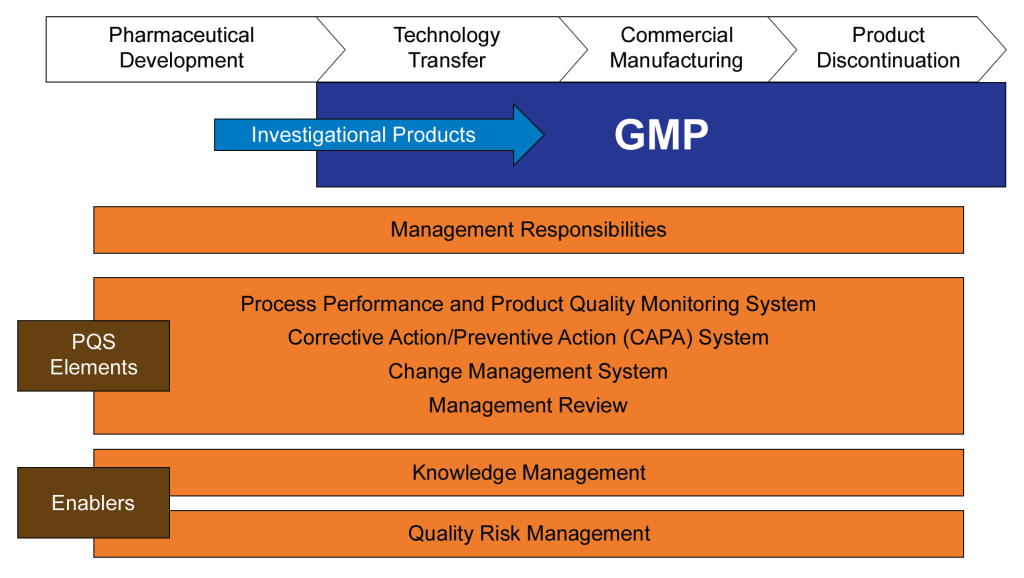
ICH Q10 Diagram of the ICH Q10 Pharmaceutical Quality System Model (Annex 2)

What Activities are Phase-specific for the GMPs

Phase 1:

  • Critical quality attributes identified with safety Critical Quality Attributes (CQAs) clearly documented
  • Process changes as information is accumulated
  • Controls for analytical methods

Phase 2:

  • Processes characterized and Production and Process Controls (PPC) identified
  • Analytical methods are qualified
  • Materials acceptance criteria
  • Critical vendors qualified

Phase 3:

  • Processes validated with Production and Process Controls (PPC) identified and controlled
  • Validation of analytical methods
  • Materials have been fully qualified and tested upon receipt as appropriate

What About the Quality System?

ICH Q10 clearly spells out the PQS requirements, breaking down into stages of Pharmaceutical Development (usually Phase 1 and earlier), Technology Transfer (usually phase 2), Commercial Manufacturing (which may start before approval) and Product Discontinuation. Q10 then lays out the expectations by these stages for the four key elements of:

  1. Process performance and product quality monitoring system
  2. Corrective action and preventive action (CAPA) system
  3. Change management system
  4. Management review of process performance and product quality.
 Pharmaceutical DevelopmentTechnology TransferCommercial ManufacturingProduct Discontinuation
Process Performance and Product QualityProcess and product knowledge generated and process and product monitoring conducted throughout development can be used to establish a control strategy for manufacturing.Monitoring during scale-up activities can provide a preliminary indication of process performance and the successful integration into manufacturing. Knowledge obtained during transfer and scale up activities can be useful in further developing the control strategy.A well-defined system for process performance and product quality monitoring should be applied to assure performance within a state of control and to identify improvement areas.Once manufacturing ceases, monitoring such as stability testing should continue to completion of the studies. Appropriate action on marketed product should continue to be executed according to regional regulations.
Corrective Action and Preventive ActionProduct or process variability is explored. CAPA methodology is useful where corrective actions and preventive actions are incorporated into the iterative design and development process.CAPA can be used as an effective system for feedback, feedforward and continual improvement.CAPA should be used and the effectiveness of the actions should be evaluated.CAPA should continue after the product is discontinued. The impact on product remaining on the market should be considered as well as other products which might be impacted.
Change ManagementChange is an inherent part of the development process and should be documented; the formality of the change management process should be consistent with the stage of pharmaceutical development.The change management system should provide management and documentation of adjustments made to the process during technology transfer activities.A formal change management system should be in place for commercial manufacturing. Oversight by the quality unit should provide assurance of appropriate science and risk based assessments.Any changes after product discontinuation should go through an appropriate change management system.
Management Review of Process Performance and Product QualityAspects of management review can be performed to ensure adequacy of the product and process design.Aspects of management review should be performed to ensure the developed product and process can be manufactured at commercial scale.Management review should be a structured system, as described above, and should support continual improvement.Management review should include such items as product stability and product quality complaints.
ICH Stage appropriate quality system elements

Together with ICH Q9, this sets forth a framework of building knowledge and risk management into all aspects of the system together with a robust issue management mindset. There are really three things driving this.

  1. Consistency in execution
  2. Document decision making
  3. Follow through

Some aspects remain pretty steady in all phases/stages, while others will grow as the organization develops.

The Difference Between Maturity and Phase Appropriate

People confuse phase appropriate with maturity all the time. Phase appropriate means doing the right activities in the right order. Maturity means the how is the most effective possible.

Quality Management Maturity (QMM) is the state attained when drug manufacturers have consistent, reliable, and robust business processes to achieve quality objectives and promote continual improvement. This is both composed of phase independent and phase dependent aspects.

Remember, a Quality Culture is the foundation that makes the rest of this happen.