
The Quality Toolbox

The Quality Toolbox by Nancy Tague is such a useful book that it belongs on everyone’s bookshelf.   Tools are included for generating and organizing ideas, evaluating ideas, analyzing processes, determining root causes, planning, and basic data-handling and statistics. From the seven basic quality tools to a wide variety of more sophisticated tools, this my first go-to when I am trying to figure out the best tool for a task, each  getting a solid write-up that can propel you into use.

The core spine of the book is a matrix that helps find the right tool base don three questions:

  1. What do you want to do with the tool (project planning, idea creation, process analysis, data collection and analysis, cause analysis and decision making)
  2. Where you are in process improvement methodology
  3. Whether you need to expand or focus thinking

Each tool gets a solid treatment, with examples and templates so it can be put into use.

Quality professionals tend to acquire a resources on specific tools. This book serves to easily consolidate tools, help you identify the right tool to use, and will probably also introduce you to a bunch of new tools.
Change Management and Communication

All changes need to be communicated to internal and external stakeholders. The development of the communication plan should be part of the change management system.

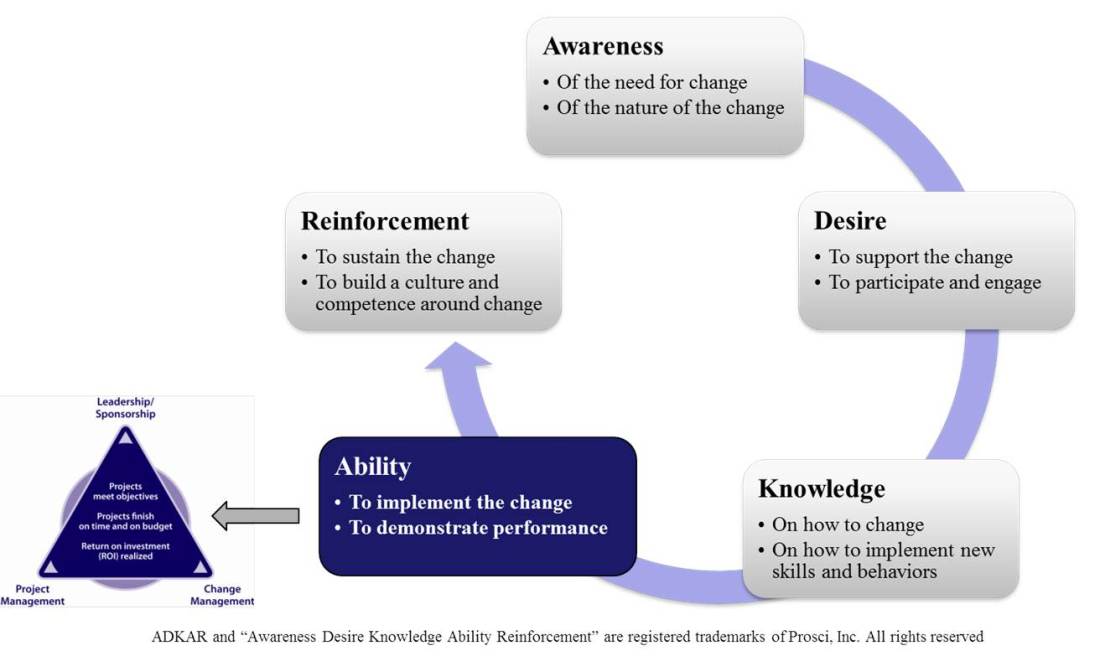
One of the better models I’ve used is Prosci’s ADKAR.

Picture1

This is a good model because it matches very nicely to the 4 major phases of change.

  • In Propose we focus on Awareness and Desire
  • In Evaluate we focus on Knowledge and Ability
  • in Implement we focus on Ability and Reinforcement
  • And in Close, we focus on sustained Reinforcement and perhaps Awareness of a new change.

Not every change is the same size, and not every change uses the same tactics of communication. Often these tactics are training.

A table, such as the one below, can help.

Item Description of What it is Audience Publication Date
List each of the proposed elements of your communication plan Be sure to include key stakeholder outreach along with all other tactics Who List the date you want the communication delivered

There are lots of good tools out there for communicating. This post was prompted by this post on elevator pitches, which are one of my favorite items in my toolkit. Every change, big or small, should have an elevator pitch ready to go. And make sure it evolves according to the change/process improvement lifecycle.

Change Control SIPOC

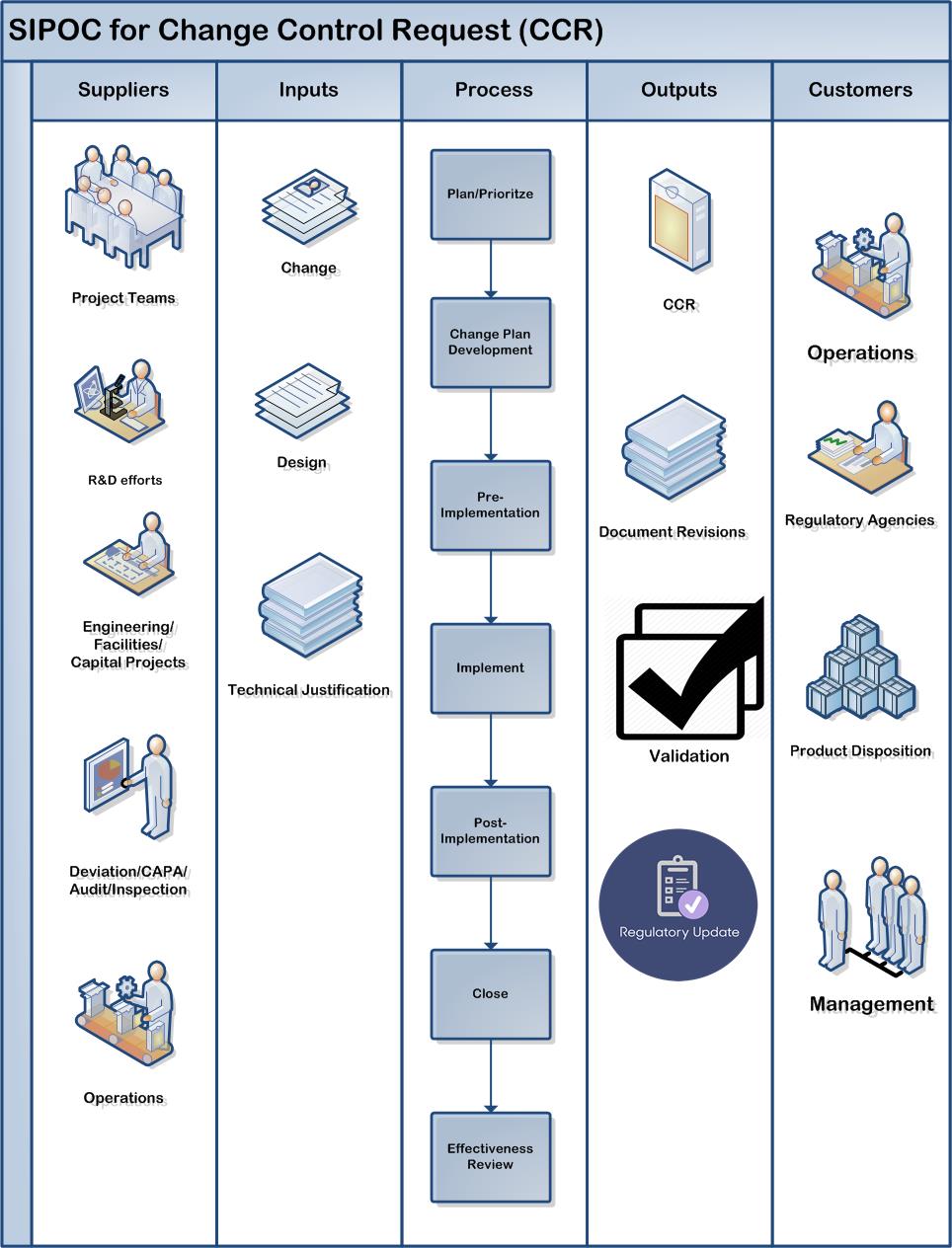
Always start with a SIPOC is a mantra many of us steeped in Six Sigma have heard a lot. There is some truth to having a good visual diagram that helps define a system or project. As this blog will be discussing change management and change control quite a bit, here is a SIPOC that governs change control.

SIPOC for CCR

This SIPOC represents change control from the perspective of a pharmaceutical manufacturing plant. But this will apply to many manufacturing industries, though the focus on regulatory might shift.