The Regulatory Red Herring: Why High-Level Compliance Requirements Have No Place in User Requirements Specifications

We have an unfortunate habit of conflating regulatory process requirements with specific system functionality requirements. This confusion manifests most perversely in User Requirements Specifications that contain nebulous statements like “the system shall comply with 21 CFR Part 11” or “the system must meet EU GMP Annex 11 requirements.” These high-level regulatory citations represent a fundamental misunderstanding of what user requirements should accomplish and demonstrate a dangerous abdication of the detailed thinking required for effective validation.

The core problem is simple yet profound: lifecycle, risk management, and validation are organizational processes, not system characteristics. When we embed these process-level concepts into system requirements, we create validation exercises that test compliance theater rather than functional reality.

The Distinction That Changes Everything

User requirements specifications serve as the foundational document identifying what a system must do to meet specific business needs, product requirements, and operational constraints. They translate high-level business objectives into measurable, testable, and verifiable system behaviors. User requirements focus on what the system must accomplish, not how the organization manages its regulatory obligations.

Consider the fundamental difference between these approaches:

Problematic High-Level Requirement: “The system shall comply with 21 CFR Part 11 validation requirements.”

Proper Detailed Requirements:

  • “The system shall generate time-stamped audit trails for all data modifications, including user ID, date/time, old value, new value, and reason for change”
  • “The system shall enforce unique user identification through username/password combinations with minimum 8-character complexity requirements”
  • “The system shall prevent deletion of electronic records while maintaining complete audit trail visibility”
  • “The system shall provide electronic signature functionality that captures the printed name, date/time, and meaning of the signature”

The problematic version tells us nothing about what the system actually needs to do. The detailed versions provide clear, testable criteria that directly support Part 11 compliance while specifying actual system functionality.

Process vs. System: Understanding the Fundamental Categories

Lifecycle management, risk assessment, and validation represent organizational processes that exist independently of any specific system implementation. These processes define how an organization approaches system development, operation, and maintenance—they are not attributes that can be “built into” software.

Lifecycle processes encompass the entire journey from initial system conception through retirement, including stages such as requirements definition, design, development, testing, deployment, operation, and eventual decommissioning. A lifecycle approach ensures systematic progression through these stages with appropriate documentation, review points, and decision criteria. However, lifecycle management cannot be embedded as a system requirement because it describes the framework within which system development occurs, not system functionality itself.

Risk management processes involve systematic identification, assessment, and mitigation of potential hazards throughout system development and operation. Risk management influences system design decisions and validation approaches, but risk management itself is not a system capability—it is an organizational methodology for making informed decisions about system requirements and controls.

Validation processes establish documented evidence that systems consistently perform as intended and meet all specified requirements. Validation involves planning, execution, and documentation of testing activities, but validation is something done to systems, not something systems possess as an inherent characteristic.

The Illusion of Compliance Through Citation

When user requirements specifications contain broad regulatory citations rather than specific functional requirements, they create several critical problems that undermine effective validation:

  • Untestable Requirements: How does one verify that a system “complies with Part 11”? Such requirements provide no measurable criteria, no specific behaviors to test, and no clear success/failure conditions. Verification becomes a subjective exercise in regulatory interpretation rather than objective measurement of system performance.
  • Validation Theater: Broad compliance statements encourage checkbox validation exercises where teams demonstrate regulatory awareness without proving functional capability. These validations often consist of mapping system features to regulatory sections rather than demonstrating that specific user needs are met.
  • Scope Ambiguity: Part 11 and Annex 11 contain numerous requirements, many of which may not apply to specific systems or use cases. Blanket compliance statements fail to identify which specific regulatory requirements are relevant and which system functions address those requirements.
  • Change Management Nightmares: When requirements reference entire regulatory frameworks rather than specific system behaviors, any regulatory update potentially impacts system validation status. This creates unnecessary re-validation burdens and regulatory uncertainty.

Building Requirements That Actually Work

Effective user requirements specifications address regulatory compliance through detailed, system-specific functional requirements that directly support regulatory objectives. This approach ensures that validation activities test actual system capabilities rather than regulatory awareness

Focus on Critical Quality Attributes: Rather than citing broad compliance frameworks, identify the specific product and process attributes that regulatory requirements are designed to protect. For pharmaceutical systems, this might include data integrity, product traceability, batch genealogy, or contamination prevention.

Translate Regulatory Intent into System Functions: Understand what each applicable regulation is trying to achieve, then specify system behaviors that accomplish those objectives. Part 11’s audit trail requirements, for example, aim to ensure data integrity and accountability—translate this into specific system capabilities for logging, storing, and retrieving change records.

Maintain Regulatory Traceability: Document the relationship between specific system requirements and regulatory drivers, but do so through traceability matrices or design rationale documents rather than within the requirements themselves. This maintains clear regulatory justification while keeping requirements focused on system functionality.

Enable Risk-Based Validation: Detailed functional requirements support risk-based validation approaches by clearly identifying which system functions are critical to product quality, patient safety, or data integrity. This enables validation resources to focus on genuinely important capabilities rather than comprehensive regulatory coverage.

The Process-System Interface: Getting It Right

The relationship between organizational processes and system requirements should be managed through careful analysis and translation, not through broad regulatory citations. Effective user requirements development involves several critical steps:

Process Analysis: Begin by understanding the organizational processes that the system must support. This includes manufacturing processes, quality control workflows, regulatory reporting requirements, and compliance verification activities. However, the focus should be on what the system must enable, not how the organization manages compliance.

Regulatory Gap Analysis: Identify specific regulatory requirements that apply to the intended system use. Analyze these requirements to understand their functional implications for system design, but avoid copying regulatory language directly into system requirements.

Functional Translation: Convert regulatory requirements into specific, measurable system behaviors. This translation process requires deep understanding of both regulatory intent and system capabilities, but produces requirements that can be objectively verified.

Organizational Boundary Management: Clearly distinguish between requirements for system functionality and requirements for organizational processes. System requirements should focus exclusively on what the technology must accomplish, while process requirements address how the organization will use, maintain, and govern that technology.

Real-World Consequences of the Current Approach

The practice of embedding high-level regulatory requirements in user requirements specifications has created systemic problems throughout the pharmaceutical industry:

  • Validation Inefficiency: Teams spend enormous resources demonstrating broad regulatory compliance rather than proving that systems meet specific user needs. This misallocation of validation effort undermines both regulatory compliance and system effectiveness.
  • Inspection Vulnerability: When regulatory inspectors evaluate systems against broad compliance claims, they often identify gaps between high-level assertions and specific system capabilities. Detailed functional requirements provide much stronger inspection support by demonstrating specific regulatory compliance mechanisms.
  • System Modification Complexity: Changes to systems with broad regulatory requirements often trigger extensive re-validation activities, even when the changes don’t impact regulatory compliance. Specific functional requirements enable more targeted change impact assessments.
  • Cross-Functional Confusion: Development teams, validation engineers, and quality professionals often interpret broad regulatory requirements differently, leading to inconsistent implementation and validation approaches. Detailed functional requirements provide common understanding and clear success criteria.

A Path Forward: Detailed Requirements for Regulatory Success

The solution requires fundamental changes in how the pharmaceutical industry approaches user requirements development and regulatory compliance documentation:

Separate Compliance Strategy from System Requirements: Develop comprehensive regulatory compliance strategies that identify applicable requirements and define organizational approaches for meeting them, but keep these strategies distinct from system functional requirements. Use the compliance strategy to inform requirements development, not replace it.

Invest in Requirements Translation: Build organizational capability for translating regulatory requirements into specific, testable system functions. This requires regulatory expertise, system knowledge, and requirements engineering skills working together.

Implement Traceability Without Embedding: Maintain clear traceability between system requirements and regulatory drivers through external documentation rather than embedded citations. This preserves regulatory justification while keeping requirements focused on system functionality.

Focus Validation on Function: Design validation approaches that test system capabilities directly rather than compliance assertions. This produces stronger regulatory evidence while ensuring system effectiveness.

Lifecycle, risk management, and validation are organizational processes that guide how we develop and maintain systems—they are not system requirements themselves. When we treat them as such, we undermine both regulatory compliance and system effectiveness. The time has come to abandon this regulatory red herring and embrace requirements practices worthy of the products and patients we serve.
The Problem with High-Level Regulatory User Requirements: Why “Meet Part 11” is Bad Form

Writing user requirements that simply state “the system shall meet FDA 21 CFR Part 11 requirements” or “the system shall comply with EU Annex 11” is fundamentally bad practice. These high-level regulatory statements create ambiguity, shift responsibility inappropriately, and fail to provide the specific, testable criteria that effective requirements demand.

The Core Problem: Regulatory References Aren’t Technical Requirements

User requirements must be specific, measurable, and testable. When we write “the system shall meet Annex 11 and Part 11 requirements,” we’re not writing a technical requirement at all—we’re writing a reference to a collection of regulatory provisions that may or may not apply to our specific system context. This creates several fundamental problems that undermine the entire validation and verification process.

The most critical issue is ambiguity of technical scope. Annex 11 and Part 11 contains numerous provisions, but not all apply to every system. Some provisions address closed systems, others open systems. Some apply only when electronic records replace paper records, others when organizations rely on electronic records to perform regulated activities. Without specifying which technical provisions apply and how they translate into system functionality, we leave interpretation to individual team members—a recipe for inconsistent implementation.

Technical verification becomes impossible with such high-level statements. How does a tester verify that a system “meets Part 11”? They would need to become regulatory experts, interpret which provisions apply, translate those into testable criteria, and then execute tests—work that should have been done during requirements definition. This shifting of analytical responsibility from requirements authors to testers violates fundamental engineering principles.

Why This Happens: The Path of Least Resistance

The temptation to write high-level regulatory requirements stems from several understandable but misguided motivations. Requirements authors often lack deep regulatory knowledge and find it easier to reference entire regulations rather than analyze which specific technical provisions apply to their system. This approach appears comprehensive while avoiding the detailed work of regulatory interpretation.

Time pressure exacerbates this tendency. Writing “meet Part 11” takes minutes; properly analyzing regulatory requirements, determining technical applicability, and translating them into specific, testable statements takes days or weeks. Under project pressure, teams often choose the quick path without considering downstream consequences.

There’s also a false sense of completeness. Referencing entire regulations gives the impression of thorough coverage when it actually provides no technical coverage at all. It’s the requirements equivalent of writing “the system shall work properly”, technically correct but utterly useless for implementation or testing purposes.

Better Approach: Technical User Requirements

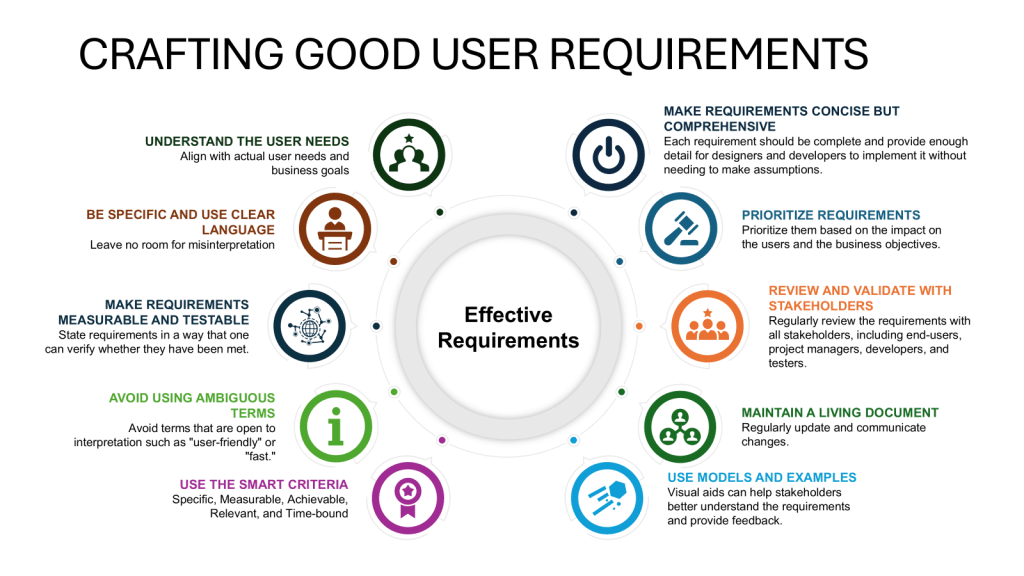
Effective regulatory user requirements break down high-level regulatory concepts into specific, measurable technical statements that directly address system functionality. Rather than saying “meet Part 11,” we need requirements that specify exactly what the system must do technically.

Access Control Requirements

Instead of: “The system shall meet Part 11 access control requirements”

Write:

  • “The system shall authenticate users through unique user ID and password combinations, where each combination is assigned to only one individual”
  • “The system shall automatically lock user sessions after 30 minutes of inactivity and require re-authentication”
  • “The system shall maintain an electronic log of all user authentication attempts, including failed attempts, with timestamps and user identifiers”

Electronic Record Generation Requirements

Instead of: “The system shall generate Part 11 compliant electronic records”

Write:

  • “The system shall generate electronic records that include all data required by the predicate rule, with no omission of required information”
  • “The system shall time-stamp all electronic records using computer-generated timestamps that cannot be altered by system users”
  • “The system shall detect and flag any unauthorized alterations to electronic records through checksum validation”

Audit Trail Requirements

Instead of: “The system shall maintain Part 11 compliant audit trails”

Write:

  • “The system shall automatically record the user ID, date, time, and type of action for all data creation, modification, and deletion operations”
  • “The system shall store audit trail records in a format that prevents user modification or deletion”
  • “The system shall provide audit trail search and filter capabilities by user, date range, and record type”

Electronic Signature Requirements

Instead of: “The system shall support Part 11 electronic signatures”

Write:

  • “Electronic signature records shall include the signer’s printed name, date and time of signing, and the purpose of the signature”
  • “The system shall verify signer identity through authentication requiring both user ID and password before accepting electronic signatures
  • “The system shall cryptographically link electronic signatures to their associated records to prevent signature transfer or copying”

Annex 11 Technical Examples

EU Annex 11 requires similar technical specificity but with some European-specific nuances. Here are better technical requirement examples:

System Security Requirements

Instead of: “The system shall meet Annex 11 security requirements”

Write:

  • “The system shall implement role-based access control where user privileges are assigned based on documented job responsibilities”
  • “The system shall encrypt all data transmission between system components using AES 256-bit encryption”
  • “The system shall maintain user session logs that record login time, logout time, and all system functions accessed during each session”

Data Integrity Requirements

Instead of: “The system shall ensure Annex 11 data integrity”

Write:

  • “The system shall implement automated backup procedures that create complete system backups daily and verify backup integrity”
  • “The system shall prevent simultaneous modification of the same record by multiple users through record locking mechanisms”
  • “The system shall maintain original raw data in unalterable format while allowing authorized users to add comments or corrections with full audit trails”

System Change Control Requirements

Instead of: “The system shall implement Annex 11 change control”

Write:

  • “The system shall require authorized approval through electronic workflow before implementing any configuration changes that affect GMP functionality”
  • “The system shall maintain a complete history of all system configuration changes including change rationale, approval records, and implementation dates”
  • “The system shall provide the ability to revert system configuration to any previous approved state through documented rollback procedures”

The Business Case for Technical Requirements

Technical requirements save time and money. While writing detailed requirements requires more upfront effort, it prevents costly downstream problems. Clear technical requirements eliminate the need for interpretation during design, reduce testing iterations, and prevent regulatory findings during inspections.

Technical traceability becomes meaningful when requirements are specific. We can trace from business needs through technical specifications to test cases and validation results. This traceability is essential for regulatory compliance and change control.

System quality improves systematically when everyone understands exactly what technical functionality needs to be built and tested. Vague requirements lead to assumption-driven development where different team members make different assumptions about what’s technically needed.

Implementation Strategy for Technical Requirements

Start by conducting regulatory requirement analysis as a separate technical activity before writing user requirements. Identify which regulatory provisions apply to your specific system and translate them into technical functionality. Document this analysis and use it as the foundation for technical requirement writing.

Engage both regulatory and technical experts early in the requirements process. Don’t expect requirements authors to become overnight regulatory experts, but do ensure they have access to both regulatory knowledge and technical understanding when translating regulatory concepts into system requirements.

Use technical requirement templates that capture the essential technical elements of common regulatory requirements. This ensures consistency across projects and reduces the analytical burden on individual requirements authors.

Review requirements for technical testability. Every requirement should have an obvious technical verification method. If you can’t immediately see how to test a requirement technically, it needs to be rewritten.

Technical Requirements That Actually Work

High-level regulatory references have no place in technical user requirements documents. They create technical ambiguity where clarity is needed, shift analytical work to inappropriate roles, and fail to provide the specific technical guidance necessary for successful system implementation.

Better technical requirements translate regulatory concepts into specific, measurable, testable statements that directly address system technical functionality. This approach requires more upfront effort but delivers better technical outcomes: clearer system designs, more efficient testing, stronger regulatory compliance, and systems that actually meet user technical needs.

The pharmaceutical industry has matured beyond accepting “it must be compliant” as adequate technical guidance. Our technical requirements must mature as well, providing the specific, actionable technical direction that modern development teams need to build quality systems that truly serve patients and regulatory expectations.

As I’ve emphasized in previous posts about crafting good user requirements and building FUSE(P) user requirements, technical specificity and testability remain the hallmarks of effective requirements writing. Regulatory compliance requirements demand this same technical rigor—perhaps more so, given the patient safety implications of getting the technical implementation wrong.

The Types of User Requirements

User requirements are typically divided into several categories to ensure comprehensive coverage of all aspects of product development, manufacturing, and quality control and to help guide the risk-based approach to verification.

Product User Requirements

These requirements relate directly to the product being manufactured and the processes involved in its production. They include:

  • Critical Quality Attributes (CQAs) of the product
  • Critical Process Parameters (CPPs)
  • Required throughput and production conditions
  • Specifications for raw materials and finished products

Quality Requirements

Quality requirements focus on ensuring that the product meets all necessary quality standards and regulatory compliance. This category includes:

  • Good Manufacturing Practices (GMP) compliance, including around cleaning, cross-contamination, etc to ensure compliance with various regulations such as FDA guidelines, EU GMP, and ICH standards.
  • Documentation and record-keeping standards
  • Contamination control strategies are a key part of quality requirements, as they are essential for maintaining product quality and patient safety.
  • Data integrity requirements fall under this category, as they are crucial for ensuring the quality and reliability of data.

Not everyone advocates for this breakdown but I am a huge proponent as it divides the product specific requirements for the more standard must’s of meeting the cGMPs that are not product specific. This really helps when you are a multi-product facility and it helps define what is in the PQ versus what is in the PPQ.

Safety User Requirements

Safety requirements address the safety of personnel, patients, and the environment. They encompass:

  • Occupational health and safety measures
  • Environmental protection protocols
  • Patient safety considerations in product design

General User Requirements

General requirements cover broader aspects of the manufacturing system and facility. These may include:

  • Facility design and layout
  • Equipment specifications
  • Utility requirements (e.g., power, water, HVAC)
  • Maintenance procedures

By categorizing user requirements in this way, pharmaceutical companies can ensure a comprehensive approach to product development and manufacturing, addressing all critical aspects from product quality to regulatory compliance and safety. This will help drive appropriate verification.

Building the FUSE(P) User Requirements in an ICH Q8, Q9 and Q10 World

“The specification for equipment, facilities, utilities or systems should be defined in a URS and/or a functional specification. The essential elements of quality need to be built in at this stage and any GMP risks mitigated to an acceptable level. The URS should be a point of reference throughout the validation life cycle.” – Annex 15, Section 3.2, Eudralex Volume 4

User Requirement Specifications serve as a cornerstone of quality in pharmaceutical manufacturing. They are not merely bureaucratic documents but vital tools that ensure the safety, efficacy, and quality of pharmaceutical products.

Defining the Essentials

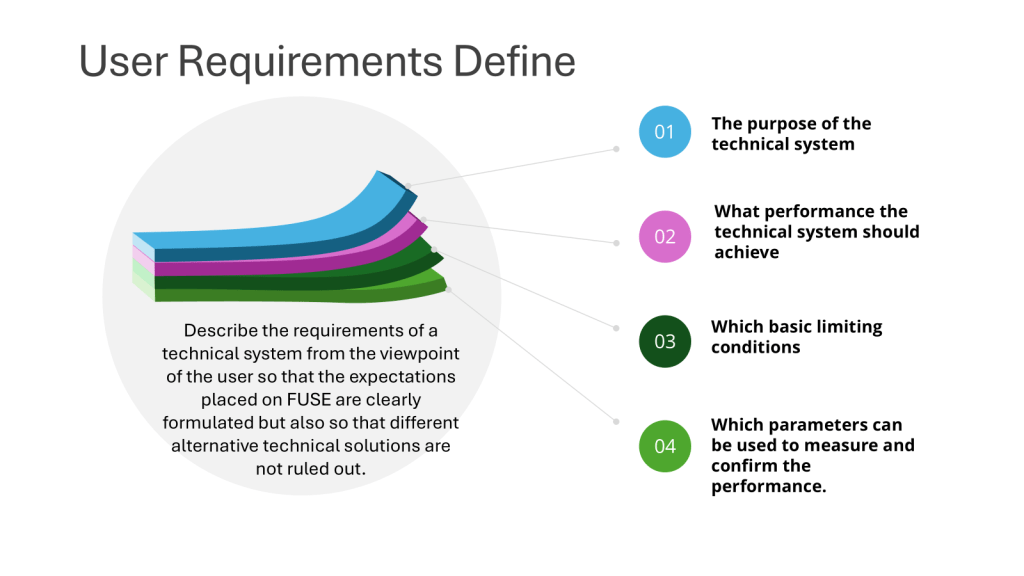
A well-crafted URS outlines the critical requirements for facilities, equipment, utilities, systems and processes in a regulated environment. It captures the fundamental aspects and scope of users’ needs, ensuring that all stakeholders have a clear understanding of what is expected from the final product or system.

Building Quality from the Ground Up

The phrase “essential elements of quality need to be built in at this stage” emphasizes the proactive approach to quality assurance. By incorporating quality considerations from the outset, manufacturers can:

  • Minimize the risk of errors and defects
  • Reduce the need for costly corrections later in the process
  • Ensure compliance with Good Manufacturing Practice (GMP) standards

Mitigating GMP Risks

Risk management is a crucial aspect of pharmaceutical manufacturing. The URS plays a vital role in identifying and addressing potential GMP risks early in the development process. By doing so, manufacturers can:

  • Implement appropriate control measures
  • Design systems with built-in safeguards
  • Ensure that the final product meets regulatory requirements

The URS as a Living Document

One of the key points in the regulations is that the URS should be “a point of reference throughout the validation life cycle.” This underscores the dynamic nature of the URS and its ongoing importance.

Continuous Reference

Throughout the development, implementation, and operation of a system or equipment, the URS serves as:

  • A benchmark for assessing progress
  • A guide for making decisions
  • A tool for resolving disputes or clarifying requirements

Adapting to Change

As projects evolve, the URS may need to be updated to reflect new insights, technological advancements, or changing regulatory requirements. This flexibility ensures that the final product remains aligned with user needs and regulatory expectations.

Practical Implications

  1. Involve multidisciplinary teams in creating the URS, including representatives from quality assurance, engineering, production, and regulatory affairs.
  2. Conduct thorough risk assessments to identify potential GMP risks and incorporate mitigation strategies into the URS.
  3. Ensure clear, objectively stated requirements that are verifiable during testing and commissioning.
  4. Align the URS with company objectives and strategies to ensure long-term relevance and support.
  5. Implement robust version control and change management processes for the URS throughout the validation lifecycle.

Executing the Control Space from the Design Space

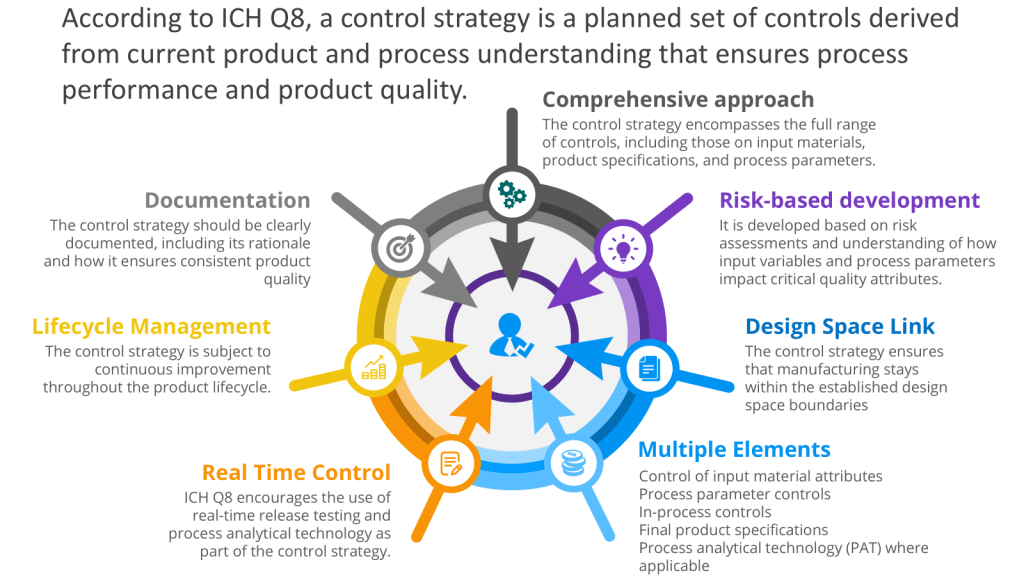
The User Requirements Specification (URS) is a mechanism for executing the control space, from the design space as outlined in ICH Q8. To understand that, let’s discuss the path from a Quality Target Product Profile (QTPP) to Critical Quality Attributes (CQAs) to Critical Process Parameters (CPPs) with Proven Acceptable Ranges (PARs), which is a crucial journey in pharmaceutical development using Quality by Design (QbD) principles. This systematic approach ensures that the final product meets the desired quality standards and user needs.

It is important to remember that this is usually a set of user requirements specifications, respecting the system boundaries.

From QTPP to CQAs

The journey begins with defining the Quality Target Product Profile (QTPP). The QTPP is a comprehensive summary of the quality characteristics that a drug product should possess to ensure its safety, efficacy, and overall quality. It serves as the foundation for product development and includes considerations such as:

  • Dosage strength
  • Delivery system
  • Dosage form
  • Container system
  • Purity
  • Stability
  • Sterility

Once the QTPP is established, the next step is to identify the Critical Quality Attributes (CQAs). CQAs are physical, chemical, biological, or microbiological properties that should be within appropriate limits to ensure the desired product quality. These attributes are derived from the QTPP and are critical to the safety and efficacy of the product.

From CQAs to CPPs

With the CQAs identified, the focus shifts to determining the Critical Process Parameters (CPPs). CPPs are process variables that have a direct impact on the CQAs. These parameters must be monitored and controlled to ensure that the product consistently meets the desired quality standards. Examples of CPPs include:

  • Temperature
  • pH
  • Cooling rate
  • Rotation speed

The relationship between CQAs and CPPs is established through risk assessment, experimentation, and data analysis. This step often involves Design of Experiments (DoE) to understand how changes in CPPs affect the CQAs. This is Process Characterization.

Establishing PARs

For each CPP, a Proven Acceptable Range (PAR) is determined. The PAR represents the operating range within which the CPP can vary while still ensuring that the CQAs meet the required specifications. PARs are established through rigorous testing and validation processes, often utilizing statistical tools and models.

Build the Requirements for the CPPs

The CPPs with PARs are process parameters that can affect critical quality attributes of the product and must be controlled within predetermined ranges. These are translated into user requirements. Many will specifically label these as Product User Requirements (PUR) to denote they are linked to the overall product capability. This helps to guide risk assessments and develop an overall verification approach.

Most of Us End Up on the Less than Happy Path

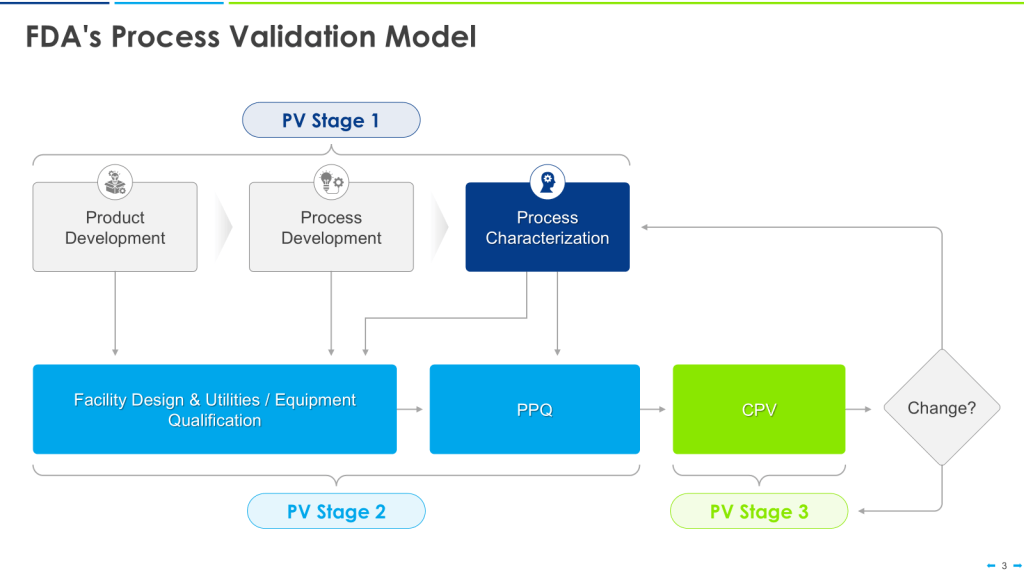
This approach is the happy path that aligns nicely with the FDA’s Process Validation Model.

This can quickly break down in the real world. Most of us go into CDMOs with already qualified equipment. We have platforms on which we’ve qualified our equipment, too. We don’t know the CPPs until just before PPQ.

This makes the user requirements even more important as living documents. Yes, we’ve qualified our equipment for these large ranges. Now that we have the CPPs, we update the user requirements for the Product User Requirements, perform an overall assessment of the gaps, and, with a risk-based approach, do additional verification activations either before or as part of Process Performance Qualification (PPQ).