Beyond Documents: Embracing Data-Centric Thinking

We live in a fascinating inflection point in quality management, caught between traditional document-centric approaches and the emerging imperative for data-centricity needed to fully realize the potential of digital transformation. For several decades, we’ve been in a process that continues to accelerate through a technology transition that will deliver dramatic improvements in operations and quality. This transformation is driven by three interconnected trends: Pharma 4.0, the Rise of AI, and the shift from Documents to Data.

The History and Evolution of Documents in Quality Management

The history of document management can be traced back to the introduction of the file cabinet in the late 1800s, providing a structured way to organize paper records. Quality management systems have even deeper roots, extending back to medieval Europe when craftsman guilds developed strict guidelines for product inspection. These early approaches established the document as the fundamental unit of quality management—a paradigm that persisted through industrialization and into the modern era.

The document landscape took a dramatic turn in the 1980s with the increasing availability of computer technology. The development of servers allowed organizations to store documents electronically in centralized mainframes, marking the beginning of electronic document management systems (eDMS). Meanwhile, scanners enabled conversion of paper documents to digital format, and the rise of personal computers gave businesses the ability to create and store documents directly in digital form.

In traditional quality systems, documents serve as the backbone of quality operations and fall into three primary categories: functional documents (providing instructions), records (providing evidence), and reports (providing specific information). This document trinity has established our fundamental conception of what a quality system is and how it operates—a conception deeply influenced by the physical limitations of paper.

Photo by Andrea Piacquadio on Pexels.com

Breaking the Paper Paradigm: Limitations of Document-Centric Thinking

The Paper-on-Glass Dilemma

The maturation path for quality systems typically progresses mainly from paper execution to paper-on-glass to end-to-end integration and execution. However, most life sciences organizations remain stuck in the paper-on-glass phase of their digital evolution. They still rely on the paper-on-glass data capture method, where digital records are generated that closely resemble the structure and layout of a paper-based workflow. In general, the wider industry is still reluctant to transition away from paper-like records out of process familiarity and uncertainty of regulatory scrutiny.

Paper-on-glass systems present several specific limitations that hamper digital transformation:

  1. Constrained design flexibility: Data capture is limited by the digital record’s design, which often mimics previous paper formats rather than leveraging digital capabilities. A pharmaceutical batch record system that meticulously replicates its paper predecessor inherently limits the system’s ability to analyze data across batches or integrate with other quality processes.
  2. Manual data extraction requirements: When data is trapped in digital documents structured like paper forms, it remains difficult to extract. This means data from paper-on-glass records typically requires manual intervention, substantially reducing data utilization effectiveness.
  3. Elevated error rates: Many paper-on-glass implementations lack sufficient logic and controls to prevent avoidable data capture errors that would be eliminated in truly digital systems. Without data validation rules built into the capture process, quality systems continue to allow errors that must be caught through manual review.
  4. Unnecessary artifacts: These approaches generate records with inflated sizes and unnecessary elements, such as cover pages that serve no functional purpose in a digital environment but persist because they were needed in paper systems.
  5. Cumbersome validation: Content must be fully controlled and managed manually, with none of the advantages gained from data-centric validation approaches.

Broader Digital Transformation Struggles

Pharmaceutical and medical device companies must navigate complex regulatory requirements while implementing new digital systems, leading to stalling initiatives. Regulatory agencies have historically relied on document-based submissions and evidence, reinforcing document-centric mindsets even as technology evolves.

Beyond Paper-on-Glass: What Comes Next?

What comes after paper-on-glass? The natural evolution leads to end-to-end integration and execution systems that transcend document limitations and focus on data as the primary asset. This evolution isn’t merely about eliminating paper—it’s about reconceptualizing how we think about the information that drives quality management.

In fully integrated execution systems, functional documents and records become unified. Instead of having separate systems for managing SOPs and for capturing execution data, these systems bring process definitions and execution together. This approach drives up reliability and drives out error, but requires fundamentally different thinking about how we structure information.

A prime example of moving beyond paper-on-glass can be seen in advanced Manufacturing Execution Systems (MES) for pharmaceutical production. Rather than simply digitizing batch records, modern MES platforms incorporate AI, IIoT, and Pharma 4.0 principles to provide the right data, at the right time, to the right team. These systems deliver meaningful and actionable information, moving from merely connecting devices to optimizing manufacturing and quality processes.

AI-Powered Documentation: Breaking Through with Intelligent Systems

A dramatic example of breaking free from document constraints comes from Novo Nordisk’s use of AI to draft clinical study reports. The company has taken a leap forward in pharmaceutical documentation, putting AI to work where human writers once toiled for weeks. The Danish pharmaceutical company is using Claude, an AI model by Anthropic, to draft clinical study reports—documents that can stretch hundreds of pages.

This represents a fundamental shift in how we think about documents. Rather than having humans arrange data into documents manually, we can now use AI to generate high-quality documents directly from structured data sources. The document becomes an output—a view of the underlying data—rather than the primary artifact of the quality system.

Data Requirements: The Foundation of Modern Quality Systems in Life Sciences

Shifting from document-centric to data-centric thinking requires understanding that documents are merely vessels for data—and it’s the data that delivers value. When we focus on data requirements instead of document types, we unlock new possibilities for quality management in regulated environments.

At its core, any quality process is a way to realize a set of requirements. These requirements come from external sources (regulations, standards) and internal needs (efficiency, business objectives). Meeting these requirements involves integrating people, procedures, principles, and technology. By focusing on the underlying data requirements rather than the documents that traditionally housed them, life sciences organizations can create more flexible, responsive quality systems.

ICH Q9(R1) emphasizes that knowledge is fundamental to effective risk management, stating that “QRM is part of building knowledge and understanding risk scenarios, so that appropriate risk control can be decided upon for use during the commercial manufacturing phase.” We need to recognize the inverse relationship between knowledge and uncertainty in risk assessment. As ICH Q9(R1) notes, uncertainty may be reduced “via effective knowledge management, which enables accumulated and new information (both internal and external) to be used to support risk-based decisions throughout the product lifecycle.”

This approach helps us ensure that our tools take into account that our processes are living and breathing, our tools should take that into account. This is all about moving to a process repository and away from a document mindset.

Documents as Data Views: Transforming Quality System Architecture

When we shift our paradigm to view documents as outputs of data rather than primary artifacts, we fundamentally transform how quality systems operate. This perspective enables a more dynamic, interconnected approach to quality management that transcends the limitations of traditional document-centric systems.

Breaking the Document-Data Paradigm

Traditionally, life sciences organizations have thought of documents as containers that hold data. This subtle but profound perspective has shaped how we design quality systems, leading to siloed applications and fragmented information. When we invert this relationship—seeing data as the foundation and documents as configurable views of that data—we unlock powerful capabilities that better serve the needs of modern life sciences organizations.

The Benefits of Data-First, Document-Second Architecture

When documents become outputs—dynamic views of underlying data—rather than the primary focus of quality systems, several transformative benefits emerge.

First, data becomes reusable across multiple contexts. The same underlying data can generate different documents for different audiences or purposes without duplication or inconsistency. For example, clinical trial data might generate regulatory submission documents, internal analysis reports, and patient communications—all from a single source of truth.

Second, changes to data automatically propagate to all relevant documents. In a document-first system, updating information requires manually changing each affected document, creating opportunities for errors and inconsistencies. In a data-first system, updating the central data repository automatically refreshes all document views, ensuring consistency across the quality ecosystem.

Third, this approach enables more sophisticated analytics and insights. When data exists independently of documents, it can be more easily aggregated, analyzed, and visualized across processes.

In this architecture, quality management systems must be designed with robust data models at their core, with document generation capabilities built on top. This might include:

  1. A unified data layer that captures all quality-related information
  2. Flexible document templates that can be populated with data from this layer
  3. Dynamic relationships between data entities that reflect real-world connections between quality processes
  4. Powerful query capabilities that enable users to create custom views of data based on specific needs

The resulting system treats documents as what they truly are: snapshots of data formatted for human consumption at specific moments in time, rather than the authoritative system of record.

Electronic Quality Management Systems (eQMS): Beyond Paper-on-Glass

Electronic Quality Management Systems have been adopted widely across life sciences, but many implementations fail to realize their full potential due to document-centric thinking. When implementing an eQMS, organizations often attempt to replicate their existing document-based processes in digital form rather than reconceptualizing their approach around data.

Current Limitations of eQMS Implementations

Document-centric eQMS systems treat functional documents as discrete objects, much as they were conceived decades ago. They still think it terms of SOPs being discrete documents. They structure workflows, such as non-conformances, CAPAs, change controls, and design controls, with artificial gaps between these interconnected processes. When a manufacturing non-conformance impacts a design control, which then requires a change control, the connections between these events often remain manual and error-prone.

This approach leads to compartmentalized technology solutions. Organizations believe they can solve quality challenges through single applications: an eQMS will solve problems in quality events, a LIMS for the lab, an MES for manufacturing. These isolated systems may digitize documents but fail to integrate the underlying data.

Data-Centric eQMS Approaches

We are in the process of reimagining eQMS as data platforms rather than document repositories. A data-centric eQMS connects quality events, training records, change controls, and other quality processes through a unified data model. This approach enables more effective risk management, root cause analysis, and continuous improvement.

For instance, when a deviation is recorded in a data-centric system, it automatically connects to relevant product specifications, equipment records, training data, and previous similar events. This comprehensive view enables more effective investigation and corrective action than reviewing isolated documents.

Looking ahead, AI-powered eQMS solutions will increasingly incorporate predictive analytics to identify potential quality issues before they occur. By analyzing patterns in historical quality data, these systems can alert quality teams to emerging risks and recommend preventive actions.

Manufacturing Execution Systems (MES): Breaking Down Production Data Silos

Manufacturing Execution Systems face similar challenges in breaking away from document-centric paradigms. Common MES implementation challenges highlight the limitations of traditional approaches and the potential benefits of data-centric thinking.

MES in the Pharmaceutical Industry

Manufacturing Execution Systems (MES) aggregate a number of the technologies deployed at the MOM level. MES as a technology has been successfully deployed within the pharmaceutical industry and the technology associated with MES has matured positively and is fast becoming a recognized best practice across all life science regulated industries. This is borne out by the fact that green-field manufacturing sites are starting with an MES in place—paperless manufacturing from day one.

The amount of IT applied to an MES project is dependent on business needs. At a minimum, an MES should strive to replace paper batch records with an Electronic Batch Record (EBR). Other functionality that can be applied includes automated material weighing and dispensing, and integration to ERP systems; therefore, helping the optimization of inventory levels and production planning.

Beyond Paper-on-Glass in Manufacturing

In pharmaceutical manufacturing, paper batch records have traditionally documented each step of the production process. Early electronic batch record systems simply digitized these paper forms, creating “paper-on-glass” implementations that failed to leverage the full potential of digital technology.

Advanced Manufacturing Execution Systems are moving beyond this limitation by focusing on data rather than documents. Rather than digitizing batch records, these systems capture manufacturing data directly, using sensors, automated equipment, and operator inputs. This approach enables real-time monitoring, statistical process control, and predictive quality management.

An example of a modern MES solution fully compliant with Pharma 4.0 principles is the Tempo platform developed by Apprentice. It is a complete manufacturing system designed for life sciences companies that leverages cloud technology to provide real-time visibility and control over production processes. The platform combines MES, EBR, LES (Laboratory Execution System), and AR (Augmented Reality) capabilities to create a comprehensive solution that supports complex manufacturing workflows.

Electronic Validation Management Systems (eVMS): Transforming Validation Practices

Validation represents a critical intersection of quality management and compliance in life sciences. The transition from document-centric to data-centric approaches is particularly challenging—and potentially rewarding—in this domain.

Current Validation Challenges

Traditional validation approaches face several limitations that highlight the problems with document-centric thinking:

  1. Integration Issues: Many Digital Validation Tools (DVTs) remain isolated from Enterprise Document Management Systems (eDMS). The eDMS system is typically the first step where vendor engineering data is imported into a client system. However, this data is rarely validated once—typically departments repeat this validation step multiple times, creating unnecessary duplication.
  2. Validation for AI Systems: Traditional validation approaches are inadequate for AI-enabled systems. Traditional validation processes are geared towards demonstrating that products and processes will always achieve expected results. However, in the digital “intellectual” eQMS world, organizations will, at some point, experience the unexpected.
  3. Continuous Compliance: A significant challenge is remaining in compliance continuously during any digital eQMS-initiated change because digital systems can update frequently and quickly. This rapid pace of change conflicts with traditional validation approaches that assume relative stability in systems once validated.

Data-Centric Validation Solutions

Modern electronic Validation Management Systems (eVMS) solutions exemplify the shift toward data-centric validation management. These platforms introduce AI capabilities that provide intelligent insights across validation activities to unlock unprecedented operational efficiency. Their risk-based approach promotes critical thinking, automates assurance activities, and fosters deeper regulatory alignment.

We need to strive to leverage the digitization and automation of pharmaceutical manufacturing to link real-time data with both the quality risk management system and control strategies. This connection enables continuous visibility into whether processes are in a state of control.

The 11 Axes of Quality 4.0

LNS Research has identified 11 key components or “axes” of the Quality 4.0 framework that organizations must understand to successfully implement modern quality management:

  1. Data: In the quality sphere, data has always been vital for improvement. However, most organizations still face lags in data collection, analysis, and decision-making processes. Quality 4.0 focuses on rapid, structured collection of data from various sources to enable informed and agile decision-making.
  2. Analytics: Traditional quality metrics are primarily descriptive. Quality 4.0 enhances these with predictive and prescriptive analytics that can anticipate quality issues before they occur and recommend optimal actions.
  3. Connectivity: Quality 4.0 emphasizes the connection between operating technology (OT) used in manufacturing environments and information technology (IT) systems including ERP, eQMS, and PLM. This connectivity enables real-time feedback loops that enhance quality processes.
  4. Collaboration: Breaking down silos between departments is essential for Quality 4.0. This requires not just technological integration but cultural changes that foster teamwork and shared quality ownership.
  5. App Development: Quality 4.0 leverages modern application development approaches, including cloud platforms, microservices, and low/no-code solutions to rapidly deploy and update quality applications.
  6. Scalability: Modern quality systems must scale efficiently across global operations while maintaining consistency and compliance.
  7. Management Systems: Quality 4.0 integrates with broader management systems to ensure quality is embedded throughout the organization.
  8. Compliance: While traditional quality focused on meeting minimum requirements, Quality 4.0 takes a risk-based approach to compliance that is more proactive and efficient.
  9. Culture: Quality 4.0 requires a cultural shift that embraces digital transformation, continuous improvement, and data-driven decision-making.
  10. Leadership: Executive support and vision are critical for successful Quality 4.0 implementation.
  11. Competency: New skills and capabilities are needed for Quality 4.0, requiring significant investment in training and workforce development.

The Future of Quality Management in Life Sciences

The evolution from document-centric to data-centric quality management represents a fundamental shift in how life sciences organizations approach quality. While documents will continue to play a role, their purpose and primacy are changing in an increasingly data-driven world.

By focusing on data requirements rather than document types, organizations can build more flexible, responsive, and effective quality systems that truly deliver on the promise of digital transformation. This approach enables life sciences companies to maintain compliance while improving efficiency, enhancing product quality, and ultimately delivering better outcomes for patients.

The journey from documents to data is not merely a technical transition but a strategic evolution that will define quality management for decades to come. As AI, machine learning, and process automation converge with quality management, the organizations that successfully embrace data-centricity will gain significant competitive advantages through improved agility, deeper insights, and more effective compliance in an increasingly complex regulatory landscape.

The paper may go, but the document—reimagined as structured data that enables insight and action—will continue to serve as the foundation of effective quality management. The key is recognizing that documents are vessels for data, and it’s the data that drives value in the organization.

Equipment Qualification for Multi-Purpose Manufacturing: Mastering Process Transitions with Single-Use Systems

In today’s pharmaceutical and biopharmaceutical manufacturing landscape, operational agility through multi-purpose equipment utilization has evolved from competitive advantage to absolute necessity. The industry’s shift toward personalized medicines, advanced therapies, and accelerated development timelines demands manufacturing systems capable of rapid, validated transitions between different processes and products. However, this operational flexibility introduces complex regulatory challenges that extend well beyond basic compliance considerations.

As pharmaceutical professionals navigate this dynamic environment, equipment qualification emerges as the cornerstone of a robust quality system—particularly when implementing multi-purpose manufacturing strategies with single-use technologies. Having guided a few organizations through these qualification challenges over the past decade, I’ve observed a fundamental misalignment between regulatory expectations and implementation practices that creates unnecessary compliance risk.

In this post, I want to explore strategies for qualifying equipment across different processes, with particular emphasis on leveraging single-use technologies to simplify transitions while maintaining robust compliance. We’ll explore not only the regulatory framework but the scientific rationale behind qualification requirements when operational parameters change. By implementing these systematized approaches, organizations can simultaneously satisfy regulatory expectations and enhance operational efficiency—transforming compliance activities from burden to strategic advantage.

The Fundamentals: Equipment Requalification When Parameters Change

When introducing a new process or expanding operational parameters, a fundamental GMP requirement applies: equipment qualification ranges must undergo thorough review and assessment. Regulatory guidance is unambiguous on this point: Whenever a new process is introduced the qualification ranges should be reviewed. If equipment has been qualified over a certain range and is required to operate over a wider range than before, prior to use it should be re-qualified over the wider range.

This requirement stems from the scientific understanding that equipment performance characteristics can vary significantly across different operational ranges. Temperature control systems that maintain precise stability at 37°C may exhibit unacceptable variability at 4°C. Mixing systems designed for aqueous formulations may create detrimental shear forces when processing more viscous products. Control algorithms optimized for specific operational setpoints might perform unpredictably at the extremes of their range.

There are a few risk-based models of verification, such as the 4Q qualification model—consisting of Design Qualification (DQ), Installation Qualification (IQ), Operational Qualification (OQ), and Performance Qualification (PQ)— or the W-Model which can provide a structured framework for evaluating equipment performance across varied operating conditions. These widely accepted approaches ensures comprehensive verification that equipment will consistently produce products meeting quality requirements. For multi-purpose equipment specifically, the Performance Qualification phase takes on heightened importance as it confirms consistent performance under varied processing conditions.

I cannot stress the importance of risk based approach of ASTM E2500 here which emphasizes a flexible verification strategy focused on critical aspects that directly impact product quality and patient safety. ASTM E2500 integrates several key principles that transform equipment qualification from a documentation exercise to a scientific endeavor:

Risk-based approach: Verification activities focus on critical aspects with the potential to affect product quality, with the level of effort and documentation proportional to risk. As stated in the standard, “The evaluation of risk to quality should be based on scientific knowledge and ultimately link to the protection of the patient”.

  • Science-based decisions: Product and process information, including critical quality attributes (CQAs) and critical process parameters (CPPs), drive verification strategies. This ensures that equipment verification directly connects to product quality requirements.
  • Quality by Design integration: Critical aspects are designed into systems during development rather than tested in afterward, shifting focus from testing quality to building it in from the beginning.
  • Subject Matter Expert (SME) leadership: Technical experts take leading roles in verification activities appropriate to their areas of expertise.
  • Good Engineering Practice (GEP) foundation: Engineering principles and practices underpin all specification, design, and verification activities, creating a more technically robust approach to qualification

Organizations frequently underestimate the technical complexity and regulatory significance of equipment requalification when operational parameters change. The common misconception that equipment qualified for one process can simply be repurposed for another without formal assessment creates not only regulatory vulnerability but tangible product quality risks. Each expansion of operational parameters requires systematic evaluation of equipment capabilities against new requirements—a scientific approach rather than merely a documentation exercise.

Single-Use Systems: Revolutionizing Multi-Purpose Manufacturing

Single-use technologies (SUT) have fundamentally transformed how organizations approach process transitions in biopharmaceutical manufacturing. By eliminating cleaning validation requirements and dramatically reducing cross-contamination risks, these systems enable significantly more rapid equipment changeovers between different products and processes. However, this operational advantage comes with distinct qualification considerations that require specialized expertise.

The qualification approach for single-use systems differs fundamentally from traditional stainless equipment due to the redistribution of quality responsibility across the supply chain. I conceptualize SUT validation as operating across three interconnected domains, each requiring distinct validation strategies:

  1. Process operation validation: This domain focuses on the actual processing parameters, aseptic operations, product hold times, and process closure requirements specific to each application. For multi-purpose equipment, this validation must address each process’s unique requirements while ensuring compatibility across all intended applications.
  2. Component manufacturing validation: This domain centers on the supplier’s quality systems for producing single-use components, including materials qualification, manufacturing controls, and sterilization validation. For organizations implementing multi-purpose strategies, supplier validation becomes particularly critical as component properties must accommodate all intended processes.
  3. Supply chain process validation: This domain ensures consistent quality and availability of single-use components throughout their lifecycle. For multi-purpose applications, supply chain robustness takes on heightened importance as component variability could affect process consistency across different applications.

This redistribution of quality responsibility creates both opportunities and challenges. Organizations can leverage comprehensive vendor validation packages to accelerate implementation, reducing qualification burden compared to traditional equipment. However, this necessitates implementing unusually robust supplier qualification programs that thoroughly evaluate manufacturer quality systems, change control procedures, and extractables/leachables studies applicable across all intended process conditions.

When qualifying single-use systems for multi-purpose applications, material science considerations become paramount. Each product formulation may interact differently with single-use materials, potentially affecting critical quality attributes through mechanisms like protein adsorption, leachable compound introduction, or particulate generation. These product-specific interactions must be systematically evaluated for each application, requiring specialized analytical capabilities and scientifically sound acceptance criteria.

Proving Effective Process Transitions Without Compromising Quality

For equipment designed to support multiple processes, qualification must definitively demonstrate the system can transition effectively between different applications without compromising performance or product quality. This demonstration represents a frequent focus area during regulatory inspections, where the integrity of product changeovers is routinely scrutinized.

When utilizing single-use systems, the traditional cleaning validation burden is substantially reduced since product-contact components are replaced between processes. However, several critical elements still require rigorous qualification:

Changeover procedures must be meticulously documented with detailed instructions for disassembly, disposal of single-use components, assembly of new components, and verification steps. These procedures should incorporate formal engineering assessments of mechanical interfaces to prevent connection errors during reassembly. Verification protocols should include explicit acceptance criteria for visual inspection of non-disposable components and connection points, with particular attention to potential entrapment areas where residual materials might accumulate.

Product-specific impact assessments represent another critical element, evaluating potential interactions between product formulations and equipment materials. For single-use systems specifically, these assessments should include:

  • Adsorption potential based on product molecular properties, including molecular weight, charge distribution, and hydrophobicity
  • Extractables and leachables unique to each formulation, with particular attention to how process conditions (temperature, pH, solvent composition) might affect extraction rates
  • Material compatibility across the full range of process conditions, including extreme parameter combinations that might accelerate degradation
  • Hold time limitations considering both product quality attributes and single-use material integrity under process-specific conditions

Process parameter verification provides objective evidence that critical parameters remain within acceptable ranges during transitions. This verification should include challenging the system at operational extremes with each product formulation, not just at nominal settings. For temperature-controlled processes, this might include verification of temperature recovery rates after door openings or evaluation of temperature distribution patterns under different loading configurations.

An approach I’ve found particularly effective is conducting “bracketing studies” that deliberately test worst-case combinations of process parameters with different product formulations. These studies specifically evaluate boundary conditions where performance limitations are most likely to manifest, such as minimum/maximum temperatures combined with minimum/maximum agitation rates. This provides scientific evidence that the equipment can reliably handle transitions between the most challenging operating conditions without compromising performance.

When applying the W-model approach to validation, special attention should be given to the verification stages for multi-purpose equipment. Each verification step must confirm not only that the system meets individual requirements but that it can transition seamlessly between different requirement sets without compromising performance or product quality.

Developing Comprehensive User Requirement Specifications

The foundation of effective equipment qualification begins with meticulously defined User Requirement Specifications (URS). For multi-purpose equipment, URS development requires exceptional rigor as it must capture the full spectrum of intended uses while establishing clear connections to product quality requirements.

A URS for multi-purpose equipment should include:

Comprehensive operational ranges for all process parameters across all intended applications. Rather than simply listing individual setpoints, the URS should define the complete operating envelope required for all products, including normal operating ranges, alert limits, and action limits. For temperature-controlled processes, this should specify not only absolute temperature ranges but stability requirements, recovery time expectations, and distribution uniformity standards across varied loading scenarios.

Material compatibility requirements for all product formulations, particularly critical for single-use technologies where material selection significantly impacts extractables profiles. These requirements should reference specific material properties (rather than just general compatibility statements) and establish explicit acceptance criteria for compatibility studies. For pH-sensitive processes, the URS should define the acceptable pH range for all contact materials and specify testing requirements to verify material performance across that range.

Changeover requirements detailing maximum allowable transition times, verification methodologies, and product-specific considerations. This should include clearly defined acceptance criteria for changeover verification, such as visual inspection standards, integrity testing parameters for assembled systems, and any product-specific testing requirements to ensure residual clearance.

Future flexibility considerations that build in reasonable operational margins beyond current requirements to accommodate potential process modifications without complete requalification. This forward-looking approach avoids the common pitfall of qualifying equipment for the minimum necessary range, only to require requalification when minor process adjustments are implemented.

Explicit connections between equipment capabilities and product Critical Quality Attributes (CQAs), demonstrating how equipment performance directly impacts product quality for each application. This linkage establishes the scientific rationale for qualification requirements, helping prioritize testing efforts around parameters with direct impact on product quality.

The URS should establish unambiguous, measurable acceptance criteria that will be used during qualification to verify equipment performance. These criteria should be specific, testable, and directly linked to product quality requirements. For temperature-controlled processes, rather than simply stating “maintain temperature of X°C,” specify “maintain temperature of X°C ±Y°C as measured at multiple defined locations under maximum and minimum loading conditions, with recovery to setpoint within Z minutes after a door opening event.”

Qualification Testing Methodologies: Beyond Standard Approaches

Qualifying multi-purpose equipment requires more sophisticated testing strategies than traditional single-purpose equipment. The qualification protocols must verify performance not only at standard operating conditions but across the full operational spectrum required for all intended applications.

Installation Qualification (IQ) Considerations

For multi-purpose equipment using single-use systems, IQ should verify proper integration of disposable components with permanent equipment, including:

  • Comprehensive documentation of material certificates for all product-contact components, with particular attention to material compatibility with all intended process conditions
  • Verification of proper connections between single-use assemblies and fixed equipment, including mechanical integrity testing of connection points under worst-case pressure conditions
  • Confirmation that utilities meet specifications across all intended operational ranges, not just at nominal settings
  • Documentation of system configurations for each process the equipment will support, including component placement, connection arrangements, and control system settings
  • Verification of sensor calibration across the full operational range, with particular attention to accuracy at the extremes of the required range

The IQ phase should be expanded for multi-purpose equipment to include verification that all components and instrumentation are properly installed to support each intended process configuration. When additional processes are added after the fact a retrospective fit-for-purpose assessment should be conducted and gaps addressed.

Operational Qualification (OQ) Approaches

OQ must systematically challenge the equipment across the full range of operational parameters required for all processes:

  • Testing at operational extremes, not just nominal setpoints, with particular attention to parameter combinations that represent worst-case scenarios
  • Challenge testing under boundary conditions for each process, including maximum/minimum loads, highest/lowest processing rates, and extreme parameter combinations
  • Verification of control system functionality across all operational ranges, including all alarms, interlocks, and safety features specific to each process
  • Assessment of performance during transitions between different parameter sets, evaluating control system response during significant setpoint changes
  • Robustness testing that deliberately introduces disturbances to evaluate system recovery capabilities under various operating conditions

For temperature-controlled equipment specifically, OQ should verify temperature accuracy and stability not only at standard operating temperatures but also at the extremes of the required range for each process. This should include assessment of temperature distribution patterns under different loading scenarios and recovery performance after system disturbances.

Performance Qualification (PQ) Strategies

PQ represents the ultimate verification that equipment performs consistently under actual production conditions:

  • Process-specific PQ protocols demonstrating reliable performance with each product formulation, challenging the system with actual production-scale operations
  • Process simulation tests using actual products or qualified substitutes to verify that critical quality attributes are consistently achieved
  • Multiple assembly/disassembly cycles when using single-use systems to demonstrate reliability during process transitions
  • Statistical evaluation of performance consistency across multiple runs, establishing confidence intervals for critical process parameters
  • Worst-case challenge tests that combine boundary conditions for multiple parameters simultaneously

For organizations implementing the W-model, the enhanced verification loops in this approach provide particular value for multi-purpose equipment, establishing robust evidence of equipment performance across varied operating conditions and process configurations.

Fit-for-Purpose Assessment Table: A Practical Tool

When introducing a new platform product to existing equipment, a systematic assessment is essential. The following table provides a comprehensive framework for evaluating equipment suitability across all relevant process parameters.

ColumnInstructions for Completion
Critical Process Parameter (CPP)List each process parameter critical to product quality or process performance. Include all parameters relevant to the unit operation (temperature, pressure, flow rate, mixing speed, pH, conductivity, etc.). Each parameter should be listed on a separate row. Parameters should be specific and measurable, not general capabilities.
Current Qualified RangeDocument the validated operational range from the existing equipment qualification documents. Include both the absolute range limits and any validated setpoints. Specify units of measurement. Note if the parameter has alerting or action limits within the qualified range. Reference the specific qualification document and section where this range is defined.
New Required RangeSpecify the range required for the new platform product based on process development data. Include target setpoint and acceptable operating range. Document the source of these requirements (e.g., process characterization studies, technology transfer documents, risk assessments). Specify units of measurement identical to those used in the Current Qualified Range column for direct comparison.
Gap AnalysisQuantitatively assess whether the new required range falls completely within the current qualified range, partially overlaps, or falls completely outside. Calculate and document the specific gap (numerical difference) between ranges. If the new range extends beyond the current qualified range, specify in which direction (higher/lower) and by how much. If completely contained within the current range, state “No Gap Identified.”
Equipment Capability AssessmentEvaluate whether the equipment has the physical/mechanical capability to operate within the new required range, regardless of qualification status. Review equipment specifications from vendor documentation to confirm design capabilities. Consult with equipment vendors if necessary to confirm operational capabilities not explicitly stated in documentation. Document any physical limitations that would prevent operation within the required range.
Risk AssessmentPerform a risk assessment evaluating the potential impact on product quality, process performance, and equipment integrity when operating at the new parameters. Use a risk ranking approach (High/Medium/Low) with clear justification. Consider factors such as proximity to equipment design limits, impact on material compatibility, effect on equipment lifespan, and potential failure modes. Reference any formal risk assessment documents that provide more detailed analysis.
Automation CapabilityAssess whether the current automation system can support the new required parameter ranges. Evaluate control algorithm suitability, sensor ranges and accuracy across the new parameters, control loop performance at extreme conditions, and data handling capacity. Identify any required software modifications, control strategy updates, or hardware changes to support the new operating ranges. Document testing needed to verify automation performance across the expanded ranges.
Alarm StrategyDefine appropriate alarm strategies for the new parameter ranges, including warning and critical alarm setpoints. Establish allowable excursion durations before alarm activation for dynamic parameters. Compare new alarm requirements against existing configured alarms, identifying gaps. Evaluate alarm prioritization and ensure appropriate operator response procedures exist for new or modified alarms. Consider nuisance alarm potential at expanded operating ranges and develop mitigation strategies.
Required ModificationsDocument any equipment modifications, control system changes, or additional components needed to achieve the new required range. Include both hardware and software modifications. Estimate level of effort and downtime required for implementation. If no modifications are needed, explicitly state “No modifications required.”
Testing ApproachOutline the specific qualification approach for verifying equipment performance within the new required range. Define whether full requalification is needed or targeted testing of specific parameters is sufficient. Specify test methodologies, sampling plans, and duration of testing. Detail how worst-case conditions will be challenged during testing. Reference any existing protocols that will be leveraged or modified. For single-use systems, address how single-use component integration will be verified.
Acceptance CriteriaDefine specific, measurable acceptance criteria that must be met to demonstrate equipment suitability. Criteria should include parameter accuracy, stability, reproducibility, and control precision. Specify statistical requirements (e.g., capability indices) if applicable. Ensure criteria address both steady-state operation and response to disturbances. For multi-product equipment, include criteria related to changeover effectiveness.
Documented Evidence RequiredList specific documentation required to support the fit-for-purpose determination. Include qualification protocols/reports, engineering assessments, vendor statements, material compatibility studies, and historical performance data. For single-use components, specify required vendor documentation (e.g., extractables/leachables studies, material certificates). Identify whether existing documentation is sufficient or new documentation is needed.
Impact on Concurrent ProductsAssess how qualification activities or equipment modifications for the new platform product might impact other products currently manufactured using the same equipment. Evaluate schedule conflicts, equipment availability, and potential changes to existing qualified parameters. Document strategies to mitigate any negative impacts on existing production.

Implementation Guidelines

The Equipment Fit-for-Purpose Assessment Table should be completed through structured collaboration among cross-functional stakeholders, with each Critical Process Parameter (CPP) evaluated independently while considering potential interaction effects.

  1. Form a cross-functional team including process engineering, validation, quality assurance, automation, and manufacturing representatives. For technically complex assessments, consider including representatives from materials science and analytical development to address product-specific compatibility questions.
  2. Start with comprehensive process development data to clearly define the required operational ranges for the new platform product. This should include data from characterization studies that establish the relationship between process parameters and Critical Quality Attributes, enabling science-based decisions about qualification requirements.
  3. Review existing qualification documentation to determine current qualified ranges and identify potential gaps. This review should extend beyond formal qualification reports to include engineering studies, historical performance data, and vendor technical specifications that might provide additional insights about equipment capabilities.
  4. Evaluate equipment design capabilities through detailed engineering assessment. This should include review of design specifications, consultation with equipment vendors, and potentially non-GMP engineering runs to verify equipment performance at extended parameter ranges before committing to formal qualification activities.
  5. Conduct parameter-specific risk assessments for identified gaps, focusing on potential impact to product quality. These assessments should apply structured methodologies like FMEA (Failure Mode and Effects Analysis) to quantify risks and prioritize qualification efforts based on scientific rationale rather than arbitrary standards.
  6. Develop targeted qualification strategies based on gap analysis and risk assessment results. These strategies should pay particular attention to Performance Qualification under process-specific conditions.
  7. Generate comprehensive documentation to support the fit-for-purpose determination, creating an evidence package that would satisfy regulatory scrutiny during inspections. This documentation should establish clear scientific rationale for all decisions, particularly when qualification efforts are targeted rather than comprehensive.

The assessment table should be treated as a living document, updated as new information becomes available throughout the implementation process. For platform products with established process knowledge, leveraging prior qualification data can significantly streamline the assessment process, focusing resources on truly critical parameters rather than implementing blanket requalification approaches.

When multiple parameters show qualification gaps, a science-based prioritization approach should guide implementation strategy. Parameters with direct impact on Critical Quality Attributes should receive highest priority, followed by those affecting process consistency and equipment integrity. This prioritization ensures that qualification efforts address the most significant risks first, creating the greatest quality benefit with available resources.

Building a Robust Multi-Purpose Equipment Strategy

As biopharmaceutical manufacturing continues evolving toward flexible, multi-product facilities, qualification of multi-purpose equipment represents both a regulatory requirement and strategic opportunity. Organizations that develop expertise in this area position themselves advantageously in an increasingly complex manufacturing landscape, capable of rapidly introducing new products while maintaining unwavering quality standards.

The systematic assessment approaches outlined in this article provide a scientific framework for equipment qualification that satisfies regulatory expectations while optimizing operational efficiency. By implementing tools like the Fit-for-Purpose Assessment Table and leveraging a risk-based validation model, organizations can navigate the complexities of multi-purpose equipment qualification with confidence.

Single-use technologies offer particular advantages in this context, though they require specialized qualification considerations focusing on supplier quality systems, material compatibility across different product formulations, and supply chain robustness. Organizations that develop systematic approaches to these considerations can fully realize the benefits of single-use systems while maintaining robust compliance.

The most successful organizations in this space recognize that multi-purpose equipment qualification is not merely a regulatory obligation but a strategic capability that enables manufacturing agility. By building expertise in this area, biopharmaceutical manufacturers position themselves to rapidly introduce new products while maintaining the highest quality standards—creating a sustainable competitive advantage in an increasingly dynamic market.

The Critical Role of Validation Systems: Ensuring Compliance Through Meta-Qualification

In the highly regulated pharmaceutical and biotechnology industries, the qualification of equipment and processes is non-negotiable. However, a less-discussed but equally critical aspect is the need to qualify the systems and instruments used to qualify other equipment. This “meta-qualification” ensures the reliability of validation processes themselves, forming a foundational layer of compliance.

I want to explore the regulatory framework and industry guidelines using practical examples of the Kaye Validator AVS to that underscore the importance of this practice.

Regulatory Requirements: A Multi-Layered Compliance Challenge

Regulatory bodies like the FDA and EMA mandate that all equipment influencing product quality undergo rigorous qualification. This approach is also reflected in WHO, ICH and PICS requirements. Key documents, including FDA’s Process Validation: General Principles and Practices and ICH Q7, emphasize several critical aspects of validation. First, they advocate for risk-based validation, which prioritizes systems with direct impact on product quality. This approach ensures that resources are allocated efficiently, focusing on equipment such as sterilization autoclaves and bioreactors that have the most significant influence on product safety and efficacy. Secondly, these guidelines stress the importance of documented evidence. This means maintaining traceable records of verification activities for all critical equipment. Such documentation serves as proof of compliance and allows for retrospective analysis if issues arise. Lastly, data integrity is paramount, with compliance to 21 CFR Part 11 and EMA Annex 11 for electronic records and signatures being a key requirement. This ensures that all digital data associated with validation processes is trustworthy, complete, and tamper-proof.

A critical nuance arises when the tools used for validation—such as temperature mapping systems or data loggers—themselves require qualification. This meta-qualification is essential because the reliability of all subsequent validations depends on the accuracy and performance of these tools. For example, if a thermal validation system is uncalibrated or improperly qualified, its use in autoclave PQ could compromise entire batches of sterile products. The consequences of such an oversight could be severe, ranging from regulatory non-compliance to potential patient safety issues. Therefore, establishing a robust system for qualifying validation equipment is not just good practice—it’s a critical safeguard for product quality and regulatory compliance.

The Hierarchy of Qualification: Why Validation Systems Need Validation

Qualification of Primary Equipment

Primary equipment, such as autoclaves, freeze dryers, and bioreactors, forms the backbone of pharmaceutical manufacturing processes. These systems undergo a comprehensive qualification process.

  • IQ phase verifies that the equipment is installed correctly according to design specifications. This includes checking physical installation parameters, utility connections, and any required safety features.
  • OQ focuses on demonstrating functionality across operational ranges. During this phase, the equipment is tested under various conditions to ensure it can perform its intended functions consistently and accurately.
  • PQ assesses the equipment’s ability to perform consistently under real-world conditions. This often involves running the equipment as it would be used in actual production, sometimes with placebo or test products, to verify that it can maintain required parameters over extended periods and across multiple runs.

Qualification of Validation Systems

Instruments like the Kaye Validator AVS, which are used to validate primary equipment, must themselves undergo a rigorous qualification process. This meta-qualification is crucial to ensure the accuracy, reproducibility, and compliance of the validation data they generate. The qualification of these systems typically focuses on three key areas. First, accuracy is paramount. These systems must demonstrate traceable calibration to national standards, such as those set by NIST (National Institute of Standards and Technology). This ensures that the measurements taken during validation activities are reliably accurate and can stand up to regulatory scrutiny. Secondly, reproducibility is essential. Validation systems must show that they can produce consistent results across repeated tests, even under varying environmental conditions. This reproducibility is critical for establishing the reliability of validation data over time. Lastly, these systems must adhere to regulatory standards for electronic data. This compliance ensures that all data generated, stored, and reported by the system maintains its integrity and can be trusted for making critical quality decisions.

The Kaye Validator AVS serves as an excellent example of a validation system requiring comprehensive qualification. Its qualification process includes several key steps. Sensor calibration is automated against high- and low-temperature references, ensuring accuracy across the entire operating range. The system’s software undergoes IQ/OQ to verify the integrity of its metro-style interface and reporting tools, ensuring that data handling and reporting meet regulatory requirements. Additionally, the Kaye AVS, like all validation systems, requires periodic requalification, typically annually, to maintain its compliance status and ensure ongoing reliability. This regular requalification process helps catch any drift in performance or accuracy that could compromise validation activities.

Case Study: Kaye Validator AVS in Action

The Kaye Validator AVS exemplifies a system designed to qualify other equipment while meeting stringent regulatory demands. Its comprehensive qualification process encompasses both hardware and software components, ensuring a holistic approach to compliance and performance. The hardware qualification of the Kaye AVS follows the standard IQ/OQ/PQ model, but with specific focus areas tailored to its function as a validation tool. The Installation Qualification (IQ) verifies the correct installation of critical components such as sensor interface modules (SIMs) and docking stations. This ensures that the physical setup of the system is correct and ready for operation. The Operational Qualification (OQ) goes deeper, testing the system’s core functionalities. This includes verifying the input accuracy to within ±0.003% of reading and confirming that the system can scan 48 channels in 2 seconds as specified. These performance checks are crucial as they directly impact the system’s ability to accurately capture data during validation runs. The Performance Qualification (PQ) takes testing a step further, validating the AVS’s performance under stress conditions that mimic real-world usage. This might include operation in extreme environments like -80°C freezers or during 140°C Steam-In-Place (SIP) cycles, ensuring the system can maintain accuracy and reliability even in challenging conditions.

On the software side, the Kaye AVS is designed with compliance in mind. It comes with pre-loaded, locked-down software that minimizes the IT validation burden for end-users. This approach not only streamlines the implementation process but also reduces the risk of inadvertent non-compliance due to software modifications. The system’s software is built to align with FDA 21 CFR Part 11 requirements, incorporating features like audit trails and electronic signatures. These features ensure data integrity and traceability, critical aspects in regulatory compliance. Furthermore, the Kaye AVS employs an asset-centric data management approach. This means it stores calibration records, validation protocols, and equipment histories in a centralized database, facilitating easy access and comprehensive oversight of validation activities. The system’s ability to generate Pass/Fail reports based on established standards like EN285 and ISO17665 further streamlines the validation process, providing clear, actionable results that can be easily interpreted and used for regulatory documentation.

Regulatory Pitfalls and Best Practices

In the complex landscape of pharmaceutical validation, several common pitfalls can compromise compliance efforts. One of the most critical errors is using uncalibrated sensors for Performance Qualification (PQ). This oversight can lead to erroneous approvals of equipment or processes that may not actually meet required specifications. The consequences of such a mistake can be far-reaching, potentially affecting product quality and patient safety. Another frequent issue is the inadequate requalification of validation systems after firmware updates. As software and firmware evolve, it’s crucial to reassess and requalify these systems to ensure they continue to meet regulatory requirements and perform as expected. Failing to do so can introduce undetected errors or compliance gaps into the validation process.

Lastly, rigorous documentation remains a cornerstone of effective validation practices. Maintaining traceable records for audits, including detailed sensor calibration certificates and comprehensive software validation reports, is essential. This documentation not only demonstrates compliance to regulators but also provides a valuable resource for troubleshooting and continuous improvement efforts. By adhering to these best practices, pharmaceutical companies can build robust, efficient validation processes that stand up to regulatory scrutiny and support the production of high-quality, safe pharmaceutical products.

Conclusion: Building a Culture of Meta-Qualification

Qualifying the tools that qualify other equipment is not just a regulatory checkbox—it’s a strategic imperative in the pharmaceutical industry. This meta-qualification process forms the foundation of a robust quality assurance system, ensuring that every layer of the validation process is reliable and compliant. By adhering to good verification practices, companies can implement a risk-based approach that focuses resources on the most critical aspects of validation, improving efficiency without compromising quality. Leveraging advanced systems like the Kaye Validator AVS allows organizations to automate many aspects of the validation process, reducing human error and ensuring consistent, reproducible results. These systems, with their built-in compliance features and comprehensive data management capabilities, serve as powerful tools in maintaining regulatory adherence.

Moreover, embedding risk-based thinking into validation workflows enables pharmaceutical manufacturers to anticipate and mitigate potential issues before they become regulatory concerns. This proactive approach not only enhances compliance but also contributes to overall operational excellence. In an era of increasing regulatory scrutiny, meta-qualification emerges as the linchpin of trust in pharmaceutical quality systems. It provides assurance not just to regulators, but to all stakeholders—including patients—that every aspect of the manufacturing process, down to the tools used for validation, meets the highest standards of quality and reliability. By fostering a culture that values and prioritizes meta-qualification, pharmaceutical companies can build a robust foundation for compliance, quality, and continuous improvement, ultimately supporting their mission to deliver safe, effective medications to patients worldwide.

Timely Equipment/Facility Upgrades

One of the many fascinating items in the recent Warning Letter to Sanofi is the FDA’s direction to provide a plan to perform “timely technological upgrades to the equipment/facility infrastructure.” This point drives home the point that staying current with technological advancements is crucial for maintaining compliance, improving efficiency, and ensuring product quality. Yet, I think it is fair to say we rarely see it this bluntly put as a requirement.

One of the many reasons this Warning Letter stands out is that this is (as far as I can tell) the same facility that won the ISPE’s Facility of the Year award in 2020. This means it is still a pretty new facility, and since it is one of the templates that many single-use biotech manufacturing facilities are based on, we had best pay attention. If a failure to maintain a state-of-the-art facility can contribute to this sort of Warning Letter, then many companies had best be paying close attention. There is a lot to unpack and learn here.

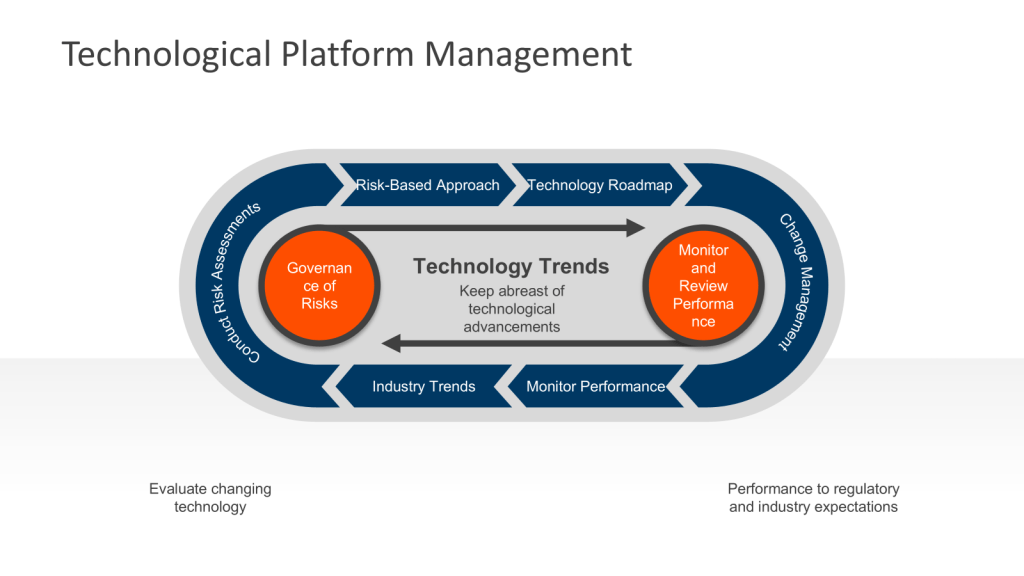
Establishing an Ongoing Technology Platform Process

To meet regulatory requirements and industry standards, facilities should implement a systematic approach to technological upgrades.

1. Conduct Regular Assessments

At least annually, perform comprehensive evaluations of your facility’s equipment, systems, and processes. This assessment should include:

  • Review of equipment performance and maintenance, including equipment effectiveness
  • Analysis of deviation reports and quality issues
  • Evaluation of current technologies against emerging industry standards
  • Assessment of facility design and layout for potential improvements

This should be captured as part of the FUSE metrics plan and appropriately evaluated as part of quality governance.

2. Stay Informed on Industry Trends

Keep abreast of technological advancements in biotech manufacturing at minimum by:

  • Attending industry conferences and workshops
  • Participating in working groups for key consensus standard writers, such as ISPE and ASTM
  • Subscribing to relevant publications and regulatory updates
  • Engaging with equipment vendors and technology providers

3. Develop a Risk-Based Approach

Prioritize upgrades based on their potential impact on product quality, patient safety, and regulatory compliance. Utilize living risk assessments to get a sense of where issues are developing. These should be the evolution of the risk management that built the facility.

4. Create a Technology Roadmap

Develop a long-term plan for implementing upgrades, considering:

  • Budget constraints and return on investment
  • Regulatory timelines for submissions and approvals
  • Production schedules and potential downtime
  • Integration with existing systems and processes

5. Implement Change Management Procedures

Ensure there is a robust change management process in place to ensure that upgrades are implemented safely and effectively. This should include:

6. Appropriate Verification – Commissioning, Qualification and Validation

Conduct thorough verification activities to demonstrate that the upgraded equipment or systems meet predetermined specifications and regulatory requirements.

7. Monitor and Review Performance

Continuously monitor the performance of upgraded systems and equipment to ensure they meet expectations and comply with cGMP requirements. Conduct periodic reviews to identify any necessary adjustments or further improvements. This is all part of Stage 3 of the FDA’s process validation model focusing on ongoing assurance that the process remains in a state of control during routine commercial manufacture. This stage is designed to:

  • Anticipate and prevent issues before they occur
  • Detect unplanned deviations from the process
  • Identify and correct problems

Leveraging Advanced Technologies

To stay ahead of regulatory expectations and industry trends, consider incorporating advanced technologies into your upgrade plans:

  • Single-Use Systems (SUS): Implement disposable components to reduce cleaning and validation requirements while improving flexibility.
  • Modern Microbial Methods (MMM): Implement advanced techniques used in microbiology that offer significant advantages over traditional culture-based methods
  • Process Analytical Technology (PAT): Integrate real-time monitoring and control systems to enhance product quality and process understanding.
  • Data Analytics and Artificial Intelligence: Implement advanced data analysis tools to identify trends, predict maintenance needs, and optimize processes.

Conclusion

Maintaining a state-of-the-art biotech facility requires a proactive and systematic approach to technological upgrades. By establishing an ongoing process for identifying and implementing improvements, facilities can ensure compliance with FDA requirements, align with industry standards, and stay competitive in the rapidly evolving biotech landscape.

Remember that the goal is not just to meet current regulatory expectations but to anticipate future requirements and position your facility at the forefront of biotech manufacturing excellence. By following this comprehensive approach and staying informed on industry developments, you can create a robust, flexible, and compliant manufacturing environment that supports the production of high-quality biopharmaceutical products.

Models of Verification

In the pharmaceutical industry, qualification and validation is a critical process to ensure the quality, safety, and efficacy of products. Over the years, several models have emerged to guide efforts for facilities, utilities, systems, equipment, and processes. This blog post will explore three prominent models: the 4Q model, the V-model, and the W-model. We’ll also discuss relevant regulatory guidelines and industry standards.

The 4Q Model

The 4Q model is a widely accepted approach to qualification in the pharmaceutical industry. It consists of four stages:

  1. Design Qualification (DQ): This initial stage focuses on documenting that the design of facilities, systems, and equipment is suitable for the intended purpose. DQ should verify that the proposed design of facilities, systems, and equipment is suitable for the intended purpose. The requirements of the user requirements specification (URS) should be verified during DQ.
  2. Installation Qualification (IQ): IQ verifies that the equipment or system has been properly installed according to specifications. IQ should include verification of the correct installation of components and instrumentation against engineering drawings and specifications — the pre-defined criteria.
  3. Operational Qualification (OQ): This stage demonstrates that the equipment or system operates as intended across the expected operating ranges. OQ should ensure the system is operating as designed, confirming the upper and lower operating limits, and/or “worst case” conditions. Depending on the complexity of the equipment, OQ may be performed as a combined Installation/Operation Qualification (IOQ). The completion of a successful OQ should allow for the finalization of standard operating and cleaning procedures, operator training, and preventative maintenance requirements.
  4. Performance Qualification (PQ): PQ confirms that the equipment or system consistently performs as expected under routine production conditions. PQ should normally follow the successful completion of IQ and OQ, though in some cases, it may be appropriate to perform PQ in conjunction with OQ or Process Validation. PQ should include tests using production materials, qualified substitutes, or simulated products proven to have equivalent behavior under normal operating conditions with worst-case batch sizes. The extent of PQ tests depends on the results from development and the frequency of sampling during PQ should be justified.

The V-Model

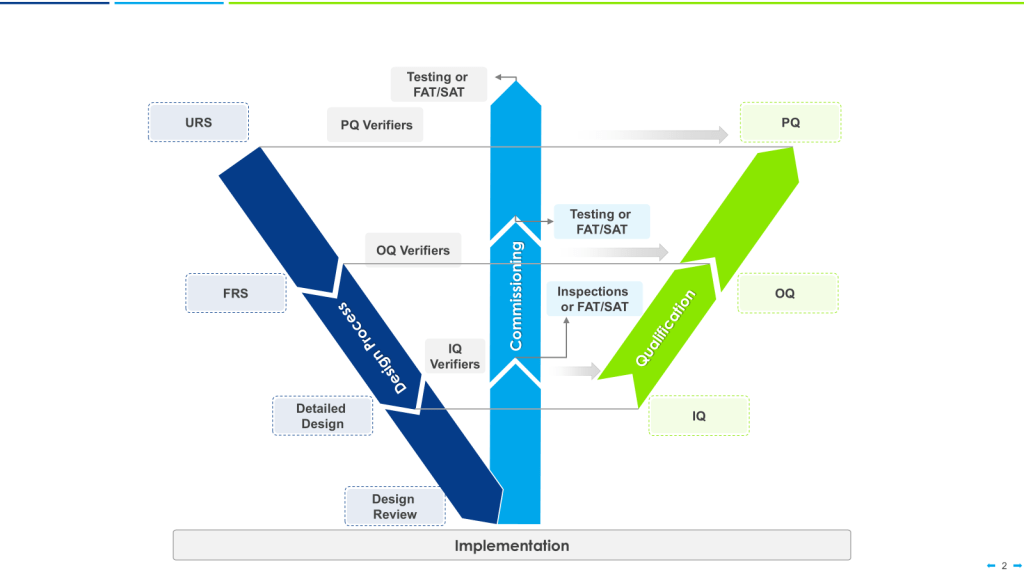
The V-model, introduced by the International Society of Pharmaceutical Engineers (ISPE) in 1994, provides a visual representation of the qualification process:

  1. The left arm of the “V” represents the planning and specification phases.
  2. The bottom of the “V” represents the build and unit testing phases.
  3. The right arm represents the execution and qualification phases.

This model emphasizes the relationship between each development stage and its corresponding testing phase, promoting a systematic approach to validation.

The W-Model

The W-model is an extension of the V-model that explicitly incorporates commissioning activities:

  1. The first “V” represents the traditional V-model stages.
  2. The center portion of the “W” represents commissioning activities.
  3. The second “V” represents qualification activities.

This model provides more granularity to what is identified as “verification testing,” including both commissioning (e.g., FAT, SAT) and qualification testing (IQ, OQ, PQ).

Aspect4Q ModelV-ModelW-Model
StagesDQ, IQ, OQ, PQUser Requirements, Functional Specs, Design Specs, IQ, OQ, PQUser Requirements, Functional Specs, Design Specs, Commissioning, IQ, OQ, PQ
FocusSequential qualification stagesLinking development and testing phasesIntegrating commissioning with qualification
FlexibilityModerateHighHigh
Emphasis on CommissioningLimitedLimitedExplicit
Risk-based ApproachCan be incorporatedCan be incorporatedInherently risk-based

Where Qualifcation Fits into the Regulatory Landscape and Industry Guidelines

WHO Guidelines

The World Health Organization (WHO) provides guidance on validation and qualification in its “WHO good manufacturing practices for pharmaceutical products: main principles”. While not explicitly endorsing a specific model, WHO emphasizes the importance of a systematic approach to validation.

EMA Guidelines

The European Medicines Agency (EMA) has published guidelines on process validation for the manufacture of biotechnology-derived active substances and data to be provided in regulatory submissions. These guidelines align with the principles of ICH Q8, Q9, and Q10, promoting a lifecycle approach to validation.

Annex 15 provides guidance on qualification and validation in pharmaceutical manufacturing. Regarding Design Qualification (DQ), Installation Qualification (IQ), Operational Qualification (OQ), and Performance Qualification (PQ) which is pretty much either the V or W model.

Annex 15 emphasizes a lifecycle approach to validation, considering all stages from initial development of the user requirements specification through to the end of use of the equipment, facility, utility, or system. The main stages of qualification and some suggested criteria are indicated as a “could” option, allowing for flexibility in approach.

Annex 15 provides a structured yet flexible approach to qualification, allowing pharmaceutical manufacturers to adapt their validation strategies to the complexity of their equipment and processes while maintaining compliance with regulatory requirements.

FDA Guidance

The U.S. Food and Drug Administration (FDA) issued its “Guidance for Industry: Process Validation: General Principles and Practices” in 2011. This guidance emphasizes a lifecycle approach to process validation, consisting of three stages: process design, process qualification, and continued process verification.

ASTM E2500

ASTM E2500, “Standard Guide for Specification, Design, and Verification of Pharmaceutical and Biopharmaceutical Manufacturing Systems and Equipment,” provides a risk-based approach to validation. It introduces the concept of “verification” as an alternative to traditional qualification steps, allowing for more flexible and efficient validation processes.

ISPE Guidelines

The International Society for Pharmaceutical Engineering (ISPE) has published several baseline guides and good practice guides that complement regulatory requirements. These include guides on commissioning and qualification, as well as on the implementation of ASTM E2500.

Baseline Guide Vol 5: Commissioning & Qualification (Second Edition)

This guide offers practical guidance on implementing a science and risk-based approach to commissioning and qualification (C&Q). Key aspects include:

  • Applying Quality Risk Management to C&Q
  • Best practices for User Requirements Specification, Design Review, Design Qualification, and acceptance/release
  • Efficient use of change management to support C&Q
  • Good Engineering Practice documentation standards

The guide aims to simplify and improve the C&Q process by integrating concepts from regulatory guidances (EMA, FDA, ISO) and replacing certain aspects of previous approaches with Quality Risk Management and Good Engineering Practice concepts.

Conclusion

While the 4Q, V, and W models provide structured approaches to validation, the pharmaceutical industry is increasingly moving towards risk-based and science-driven methodologies. Regulatory agencies and industry organizations are promoting flexible approaches that focus on critical aspects of product quality and patient safety.

By leveraging guidelines such as ASTM E2500 and ISPE recommendations, pharmaceutical companies can develop efficient validation strategies that meet regulatory requirements while optimizing resources. The key is to understand the principles behind these models and guidelines and apply them in a way that best suits the specific needs of each facility, system, or process.