FDA Warning Letter Analysis: Critical CGMP Violations at BEO Pharmaceuticals

The FDA’s recent warning letter to BEO Pharmaceuticals highlights significant compliance failures that serve as crucial lessons for pharmaceutical manufacturers. The inspection conducted in late 2024 revealed multiple violations of Current Good Manufacturing Practice (CGMP) regulations, spanning from inadequate component testing to serious process validation deficiencies. This analysis examines the key issues identified, contextualizes them within regulatory frameworks, and extracts valuable insights for pharmaceutical quality professionals.

Component Testing and Supplier Qualification Failures

BEO Pharmaceuticals failed to adequately test incoming raw materials used in their over-the-counter (OTC) liquid drug products, violating the fundamental requirements outlined in 21 CFR 211.84(d)(1) and 211.84(d)(2). These regulations mandate testing each component for identity and conformity with written specifications, plus validating supplier test analyses at appropriate intervals.

Most concerning was BEO’s failure to test high-risk components for diethylene glycol (DEG) and ethylene glycol (EG) contamination. The FDA emphasized that components like glycerin require specific identity testing that includes limit tests for these potentially lethal contaminants. The applicable United States Pharmacopeia-National Formulary (USP-NF) monographs establish a safety limit of not more than 0.10% for DEG and EG. Historical context makes this violation particularly serious, as DEG contamination has been responsible for numerous fatal poisoning incidents worldwide.

While BEO eventually tested retained samples after FDA discussions and found no contamination, this reactive approach fundamentally undermines the preventive philosophy of CGMP. The regulations are clear: manufacturers must test each shipment of each lot of high-risk components before incorporating them into drug products9.

Regulatory Perspective on Component Testing

According to 21 CFR 211.84, pharmaceutical manufacturers must establish the reliability of their suppliers’ analyses through validation at appropriate intervals if they intend to rely on certificates of analysis (COAs). BEO’s failure to implement this requirement demonstrates a concerning gap in their supplier qualification program that potentially compromised product safety.

Quality Unit Authority and Product Release Violations

Premature Product Release Without Complete Testing

The warning letter cites BEO’s quality unit for approving the release of a batch before receiving complete microbiological test results-a clear violation of 21 CFR 211.165(a). BEO shipped product on January 8, 2024, though microbial testing results weren’t received until January 10, 2024.

BEO attempted to justify this practice by referring to “Under Quarantine” shipping agreements with customers, who purportedly agreed to hold products until receiving final COAs. The FDA unequivocally rejected this practice, stating: “It is not permissible to ship finished drug products ‘Under Quarantine’ status. Full release testing, including microbial testing, must be performed before drug product release and distribution”.

This violation reveals a fundamental misunderstanding of quarantine principles. A proper quarantine procedure is designed to isolate potentially non-conforming products within the manufacturer’s control-not to transfer partially tested products to customers. The purpose of quarantine is to ensure products with abnormalities are not processed or delivered until their disposition is clear, which requires complete evaluation before leaving the manufacturer’s control.

Missing Reserve Samples

BEO also failed to maintain reserve samples of incoming raw materials, including APIs and high-risk components, as required by their own written procedures. This oversight eliminates a critical safeguard that would enable investigation of material-related issues should quality concerns arise later in the product lifecycle.

Process Validation Deficiencies

Inadequate Process Validation Approach

Perhaps the most extensive violations identified in the warning letter related to BEO’s failure to properly validate their manufacturing processes. Process validation is defined as “the collection and evaluation of data, from the process design stage through commercial production, which establishes scientific evidence that a process is capable of consistently delivering quality product”.

The FDA identified several critical deficiencies in BEO’s approach to process validation:

  1. BEO shipped products as early as May 2023, but only prepared and approved validation reports in October 2024-a clear indication that validation was retroactively conducted rather than implemented prior to commercial distribution.
  2. Process validation reports lacked essential details such as comprehensive equipment lists, appropriate critical process parameters, adequate sampling instructions, and clear acceptance criteria.
  3. Several validation reports relied on outdated data from 2011-2015 from manufacturing operations at a different facility under a previous business entity.

These findings directly contradict the FDA’s established process validation guidance, which outlines a systematic, three-stage approach:

  1. Process Design: Defining the commercial manufacturing process based on development and scale-up activities.
  2. Process Qualification: Evaluating process capability for reproducible commercial manufacturing.
  3. Continued Process Verification: Ongoing assurance during routine production that the process remains controlled.

The FDA guidance emphasizes that “before any batch from the process is commercially distributed for use by consumers, a manufacturer should have gained a high degree of assurance in the performance of the manufacturing process”. BEO’s retroactive approach to validation fundamentally violated this principle.

Pharmaceutical Water System Failures

A particularly concerning finding was BEO’s failure to establish that their purified water system was “adequately designed, controlled, maintained, and monitored to ensure it is consistently producing water that meets the USP monograph for purified water and appropriate microbial limits”. This water was used both as a component in liquid drug products and for cleaning manufacturing equipment and utensils.

Water for pharmaceutical use must meet strict quality standards depending on its intended application. Purified water systems used in non-sterile product manufacturing must meet FDA’s established action limit of not more than 100 CFU/mL. The European Medicines Agency similarly emphasizes that the control of the quality of water throughout the production, storage and distribution processes, including microbiological and chemical quality, is a major concern.

BEO’s current schedule for water system maintenance and microbiological testing was deemed “insufficient”-a critical deficiency considering water’s role as both a product component and cleaning agent. This finding underscores the importance of comprehensive water system validation and monitoring programs as fundamental elements of pharmaceutical manufacturing.

Laboratory Controls and Test Method Validation

BEO failed to demonstrate that their microbiological test methods were suitable for their intended purpose, violating 21 CFR 211.160(b). Specifically, BEO couldn’t provide evidence that their contract laboratory’s methods could effectively detect objectionable microorganisms in their specific drug product formulations.

The FDA noted that while BEO eventually provided system suitability documentation, “the system suitability protocols for the methods specified in USP <60> and USP <62> lacked the final step to confirm the identity of the recovered microorganisms in the tests”. This detail critically undermines the reliability of their microbiological testing program, as method validation must demonstrate that the specific test can detect relevant microorganisms in each product matrix.

Strategic Implications for Pharmaceutical Manufacturers

The BEO warning letter illustrates several persistent challenges in pharmaceutical CGMP compliance:

  1. Component risk assessment requires special attention for high-risk ingredients with known historical safety concerns. The DEG/EG testing requirements for glycerin and similar components represent non-negotiable safeguards based on tragic historical incidents.
  2. Process validation must be prospective, not retroactive. The industry standard clearly establishes that validation provides assurance before commercial distribution, not after.
  3. Water system qualification is fundamental to product quality. Pharmaceutical grade water systems require comprehensive validation, regular monitoring, and appropriate maintenance schedules to ensure consistent quality.
  4. Quality unit authority must be respected. The quality unit’s independence and decision-making authority cannot be compromised by commercial pressures or incomplete testing.
  5. Testing methods must be fully validated for each specific application. This is especially critical for microbiological methods where product-specific matrix effects can impact detectability of contaminants.
Business Process Management: The Symbiosis of Framework and Methodology – A Deep Dive into Process Architecture’s Strategic Role

Building on our foundational exploration of process mapping as a scaling solution and the interplay of methodologies, frameworks, and tools in quality management, it is essential to position Business Process Management (BPM) as a dynamic discipline that harmonizes structural guidance with actionable execution. At its core, BPM functions as both an adaptive enterprise framework and a prescriptive methodology, with process architecture as the linchpin connecting strategic vision to operational reality. By integrating insights from our prior examinations of process landscapes, SIPOC analysis, and systems thinking principles, we unravel how organizations can leverage BPM’s dual nature to drive scalable, sustainable transformation.

BPM’s Dual Identity: Structural Framework and Execution Pathway

Business Process Management operates simultaneously as a conceptual framework and an implementation methodology. As a framework, BPM establishes the scaffolding for understanding how processes interact across an organization. It provides standardized visualization templates like BPMN (Business Process Model and Notation) and value chain models, which create a common language for cross-functional collaboration. This framework perspective aligns with our earlier discussion of process landscapes, where hierarchical diagrams map core processes to supporting activities, ensuring alignment with strategic objectives.

Yet BPM transcends abstract structuring by embedding methodological rigor through its improvement lifecycle. This lifecycle-spanning scoping, modeling, automation, monitoring, and optimization-mirrors the DMAIC (Define, Measure, Analyze, Improve, Control) approach applied in quality initiatives. For instance, the “As-Is” modeling phase employs swimlane diagrams to expose inefficiencies in handoffs between departments, while the “To-Be” design phase leverages BPMN simulations to stress-test proposed workflows. These methodological steps operationalize the framework, transforming architectural blueprints into executable workflows.

The interdependence between BPM’s framework and methodology becomes evident in regulated industries like pharmaceuticals, where process architectures must align with ICH Q10 guidelines while methodological tools like change control protocols ensure compliance during execution. This duality enables organizations to maintain strategic coherence while adapting tactical approaches to shifting demands.

Process Architecture: The Structural Catalyst for Scalable Operations

Process architecture transcends mere process cataloging; it is the engineered backbone that ensures organizational processes collectively deliver value without redundancy or misalignment. Drawing from our exploration of process mapping as a scaling solution, effective architectures integrate three critical layers:

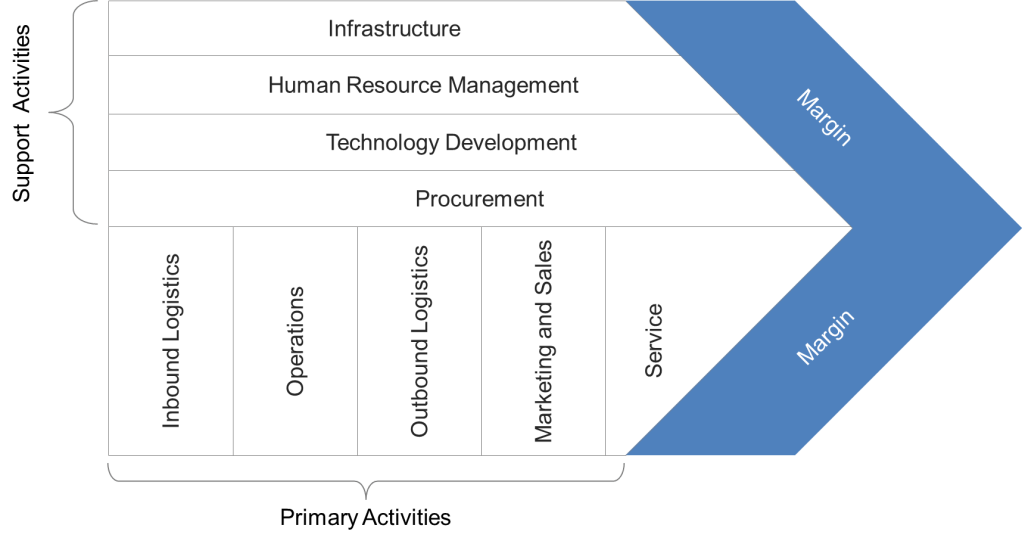
Value Chain
  1. Strategic Layer: Anchored in Porter’s Value Chain, this layer distinguishes primary activities (e.g., manufacturing, service delivery) from support processes (e.g., HR, IT). By mapping these relationships through high-level process landscapes, leaders can identify which activities directly impact competitive advantage and allocate resources accordingly.
  2. Operational Layer: Here, SIPOC (Supplier-Input-Process-Output-Customer) diagrams define process boundaries, clarifying dependencies between internal workflows and external stakeholders. For example, a SIPOC analysis in a clinical trial supply chain might reveal that delayed reagent shipments from suppliers (an input) directly impact patient enrollment timelines (an output), prompting architectural adjustments to buffer inventory.
  3. Execution Layer: Detailed swimlane maps and BPMN models translate strategic and operational designs into actionable workflows. These tools, as discussed in our process mapping series, prevent scope creep by explicitly assigning responsibilities (via RACI matrices) and specifying decision gates.

Implementing Process Architecture: A Phased Approach
Developing a robust process architecture requires methodical execution:

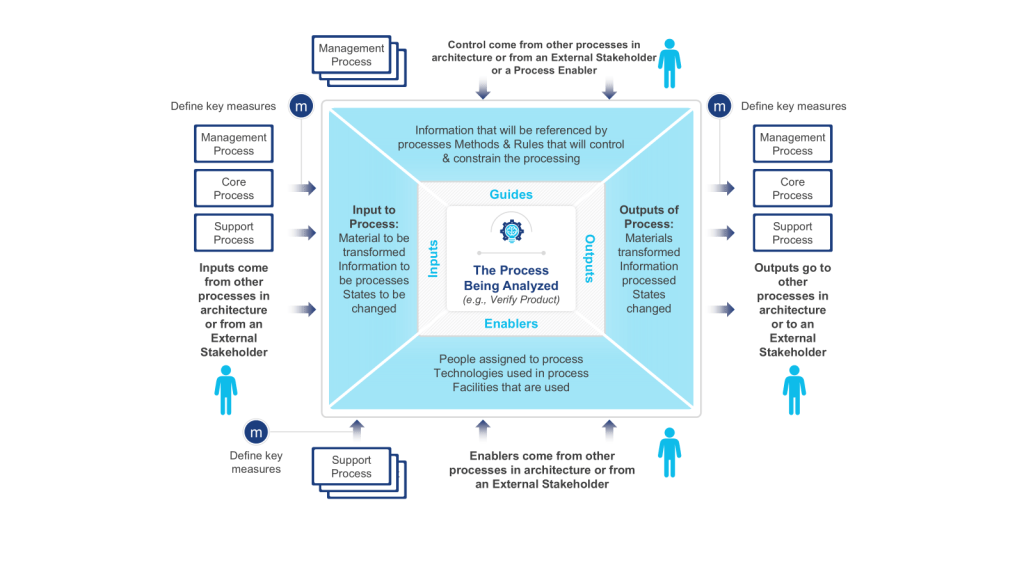
  • Value Identification: Begin with value chain analysis to isolate core customer-facing processes. IGOE (Input-Guide-Output-Enabler) diagrams help validate whether each architectural component contributes to customer value. For instance, a pharmaceutical company might use IGOEs to verify that its clinical trial recruitment process directly enables faster drug development (a strategic objective).
  • Interdependency Mapping: Cross-functional workshops map handoffs between departments using BPMN collaboration diagrams. These sessions often reveal hidden dependencies-such as quality assurance’s role in batch release decisions-that SIPOC analyses might overlook. By embedding RACI matrices into these models, organizations clarify accountability at each process juncture.
  • Governance Integration: Architectural governance ties process ownership to performance metrics. A biotech firm, for example, might assign a Process Owner for drug substance manufacturing, linking their KPIs (e.g., yield rates) to architectural review cycles. This mirrors our earlier discussions about sustaining process maps through governance protocols.

Sustaining Architecture Through Dynamic Process Mapping

Process architectures are not static artifacts; they require ongoing refinement to remain relevant. Our prior analysis of process mapping as a scaling solution emphasized the need for iterative updates-a principle that applies equally to architectural maintenance:

  • Quarterly SIPOC Updates: Revisiting supplier and customer relationships ensures inputs/outputs align with evolving conditions. A medical device manufacturer might adjust its SIPOC for component sourcing post-pandemic, substituting single-source suppliers with regional alternatives to mitigate supply chain risks.
  • Biannual Landscape Revisions: Organizational restructuring (e.g., mergers, departmental realignments) necessitates value chain reassessment. When a diagnostics lab integrates AI-driven pathology services, its process landscape must expand to include data governance workflows, ensuring compliance with new digital health regulations.
  • Trigger-Based IGOE Analysis: Regulatory changes or technological disruptions (e.g., adopting blockchain for data integrity) demand rapid architectural adjustments. IGOE diagrams help isolate which enablers (e.g., IT infrastructure) require upgrades to support updated processes.

This maintenance cycle transforms process architecture from a passive reference model into an active decision-making tool, echoing our findings on using process maps for real-time operational adjustments.

Unifying Framework and Methodology: A Blueprint for Execution

The true power of BPM emerges when its framework and methodology dimensions converge. Consider a contract manufacturing organization (CMO) implementing BPM to reduce batch release timelines:

  1. Framework Application:
    • A value chain model prioritizes “Batch Documentation Review” as a critical path activity.
    • SIPOC analysis identifies regulatory agencies as key customers of the release process.
  2. Methodological Execution:
    • Swimlane mapping exposes delays in quality control’s document review step.
    • BPMN simulation tests a revised workflow where parallel document checks replace sequential approvals.
    • The organization automates checklist routing, cutting review time by 40%.
  3. Architectural Evolution:
    • Post-implementation, the process landscape is updated to reflect QC’s reduced role in routine reviews.
    • KPIs shift from “Documents Reviewed per Day” to “Right-First-Time Documentation Rate,” aligning with strategic goals for quality culture.

Strategic Insights for Practitioners

Architecture-Informed Problem Solving

A truly effective approach to process improvement begins with a clear understanding of the organization’s process architecture. When inefficiencies arise, it is vital to anchor any improvement initiative within the specific architectural layer where the issue is most pronounced. This means that before launching a solution, leaders and process owners should first diagnose whether the root cause of the problem lies at the strategic, operational, or tactical level of the process architecture. For instance, if an organization is consistently experiencing raw material shortages, the problem is situated within the operational layer. Addressing this requires a granular analysis of the supply chain, often using tools like SIPOC (Supplier, Input, Process, Output, Customer) diagrams to map supplier relationships and identify bottlenecks or gaps. The solution might involve renegotiating contracts with suppliers, diversifying the supplier base, or enhancing inventory management systems. On the other hand, if the organization is facing declining customer satisfaction, the issue likely resides at the strategic layer. Here, improvement efforts should focus on value chain realignment-re-examining how the organization delivers value to its customers, possibly by redesigning service offerings, improving customer touchpoints, or shifting strategic priorities. By anchoring problem-solving efforts in the appropriate architectural layer, organizations ensure that solutions are both targeted and effective, addressing the true source of inefficiency rather than just its symptoms.

Methodology Customization

No two organizations are alike, and the maturity of an organization’s processes should dictate the methods and tools used for business process management (BPM). Methodology customization is about tailoring the BPM lifecycle to fit the unique needs, scale, and sophistication of the organization. For startups and rapidly growing companies, the priority is often speed and adaptability. In these environments, rapid prototyping with BPMN (Business Process Model and Notation) can be invaluable. By quickly modeling and testing critical workflows, startups can iterate and refine their processes in real time, responding nimbly to market feedback and operational challenges. Conversely, larger enterprises with established Quality Management Systems (QMS) and more complex process landscapes require a different approach. Here, the focus shifts to integrating advanced tools such as process mining, which enables organizations to monitor and analyze process performance at scale. Process mining provides data-driven insights into how processes actually operate, uncovering hidden inefficiencies and compliance risks that might not be visible through manual mapping alone. In these mature organizations, BPM methodologies are often more formalized, with structured governance, rigorous documentation, and continuous improvement cycles embedded in the organizational culture. The key is to match the BPM approach to the organization’s stage of development, ensuring that process management practices are both practical and impactful.

Metrics Harmonization

For process improvement initiatives to drive meaningful and sustainable change, it is essential to align key performance indicators (KPIs) with the organization’s process architecture. This harmonization ensures that metrics at each architectural layer support and inform one another, creating a cascade of accountability that links day-to-day operations with strategic objectives. At the strategic layer, high-level metrics such as Time-to-Patient provide a broad view of organizational performance and customer impact. These strategic KPIs should directly influence the targets set at the operational layer, such as Batch Record Completion Rates, On-Time Delivery, or Defect Rates. By establishing this alignment, organizations can ensure that improvements made at the operational level contribute directly to strategic goals, rather than operating in isolation. Our previous work on dashboards for scaling solutions illustrates how visualizing these relationships can enhance transparency and drive performance. Dashboards that integrate metrics from multiple architectural layers enable leaders to quickly identify where breakdowns are occurring and to trace their impact up and down the value chain. This integrated approach to metrics not only supports better decision-making but also fosters a culture of shared accountability, where every team understands how their performance contributes to the organization’s overall success.

Process Boundary

A process boundary is the clear definition of where a process starts and where it ends. It sets the parameters for what is included in the process and, just as importantly, what is not. The boundary marks the transition points: the initial trigger that sets the process in motion and the final output or result that signals its completion. By establishing these boundaries, organizations can identify the interactions and dependencies between processes, ensuring that each process is manageable, measurable, and aligned with objectives.

Why Are Process Boundaries Important?

Defining process boundaries is essential for several reasons:

  • Clarity and Focus: Boundaries help teams focus on the specific activities, roles, and outcomes that are relevant to the process at hand, avoiding unnecessary complexity and scope creep.
  • Effective Resource Allocation: With clear boundaries, organizations can allocate resources efficiently and prioritize improvement efforts where they will have the greatest impact.
  • Accountability: Boundaries clarify who is responsible for each part of the process, making it easier to assign ownership and measure performance.
  • Process Optimization: Well-defined boundaries make it possible to analyze, improve, and optimize processes systematically, as each process can be evaluated on its own terms before considering its interfaces with others.

How to Determine Process Boundaries

Determining process boundaries is both an art and a science. Here’s a step-by-step approach, drawing on best practices from process mapping and business process analysis:

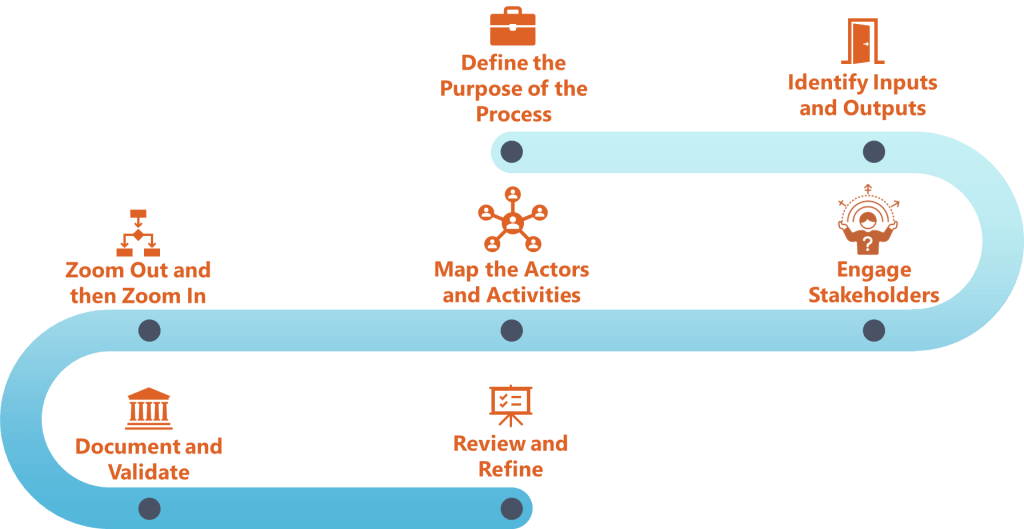
1. Define the Purpose of the Process

Before mapping, clarify the purpose of the process. What transformation or value does it deliver? For example, is the process about onboarding a new supplier, designing new process equipment, or resolving a non-conformance? Knowing the purpose helps you focus on the relevant start and end points.

2. Identify Inputs and Outputs

Every process transforms inputs into outputs. Clearly articulate what triggers the process (the input) and what constitutes its completion (the output). For instance, in a cake-baking process, the input might be “ingredients assembled,” and the output is “cake baked.” This transformation defines the process boundary.

3. Engage Stakeholders

Involve process owners, participants, and other stakeholders in boundary definition. They bring practical knowledge about where the process naturally starts and ends, as well as insights into handoffs and dependencies with other processes. Workshops, interviews, and surveys can be effective for gathering these perspectives.

4. Map the Actors and Activities

Decide which roles (“actors”) and activities are included within the boundary. Are you mapping only the activities of a laboratory analyst, or also those of supervisors, internal customers who need the results, or external partners? The level of detail should match your mapping purpose-whether you’re looking at a high-level overview or a detailed workflow.

5. Zoom Out, Then Zoom In

Start by zooming out to see the process as a whole in the context of the organization, then zoom in to set precise start and end points. This helps avoid missing upstream dependencies or downstream impacts that could affect the process’s effectiveness.

6. Document and Validate

Once you’ve defined the boundaries, document them clearly in your process map or supporting documentation. Validate your boundaries with stakeholders to ensure accuracy and buy-in. This step helps prevent misunderstandings and ensures the process map will be useful for analysis and improvement.

7. Review and Refine

Process boundaries are not set in stone. As the organization evolves or as you learn more through process analysis, revisit and adjust boundaries as needed to reflect changes in scope, objectives, or business environment.

Common Pitfalls and How to Avoid Them

  • Scope Creep: Avoid letting the process map expand beyond its intended boundaries. Stick to the defined start and end points unless there’s a compelling reason to adjust them7.
  • Overlapping Boundaries: Ensure that processes don’t overlap unnecessarily, which can create confusion about ownership and accountability.
  • Ignoring Interfaces: While focusing on boundaries, don’t neglect to document key interactions and handoffs with other processes. These interfaces are often sources of risk or inefficiency.

Conclusion

Defining process boundaries is a foundational step in business process mapping and analysis. It provides the clarity needed to manage, measure, and improve processes effectively. By following a structured approach-clarifying purpose, identifying inputs and outputs, engaging stakeholders, and validating your work-you set the stage for successful process optimization and organizational growth. Remember: a well-bounded process is a manageable process, and clarity at the boundaries is the first step toward operational excellence.

Why ‘First-Time Right’ is a Dangerous Myth in Continuous Manufacturing

In manufacturing circles, “First-Time Right” (FTR) has become something of a sacred cow-a philosophy so universally accepted that questioning it feels almost heretical. Yet as continuous manufacturing processes increasingly replace traditional batch production, we need to critically examine whether this cherished doctrine serves us well or creates dangerous blind spots in our quality assurance frameworks.

The Seductive Promise of First-Time Right

Let’s start by acknowledging the compelling appeal of FTR. As commonly defined, First-Time Right is both a manufacturing principle and KPI that denotes the percentage of end-products leaving production without quality defects. The concept promises a manufacturing utopia: zero waste, minimal costs, maximum efficiency, and delighted customers receiving perfect products every time.

The math seems straightforward. If you produce 1,000 units and 920 are defect-free, your FTR is 92%. Continuous improvement efforts should steadily drive that percentage upward, reducing the resources wasted on imperfect units.

This principle finds its intellectual foundation in Six Sigma methodology, which can tend to give it an air of scientific inevitability. Yet even Six Sigma acknowledges that perfection remains elusive. This subtle but crucial nuance often gets lost when organizations embrace FTR as an absolute expectation rather than an aspiration.

First-Time Right in biologics drug substance manufacturing refers to the principle and performance metric of producing a biological drug substance that meets all predefined quality attributes and regulatory requirements on the first attempt, without the need for rework, reprocessing, or batch rejection. In this context, FTR emphasizes executing each step of the complex, multi-stage biologics manufacturing process correctly from the outset-starting with cell line development, through upstream (cell culture/fermentation) and downstream (purification, formulation) operations, to the final drug substance release.

Achieving FTR is especially challenging in biologics because these products are made from living systems and are highly sensitive to variations in raw materials, process parameters, and environmental conditions. Even minor deviations can lead to significant quality issues such as contamination, loss of potency, or batch failure, often requiring the entire batch to be discarded.

In biologics manufacturing, FTR is not just about minimizing waste and cost; it is critical for patient safety, regulatory compliance, and maintaining supply reliability. However, due to the inherent variability and complexity of biologics, FTR is best viewed as a continuous improvement goal rather than an absolute expectation. The focus is on designing and controlling processes to consistently deliver drug substances that meet all critical quality attributes-recognizing that, despite best efforts, some level of process variation and deviation is inevitable in biologics production

The Unique Complexities of Continuous Manufacturing

Traditional batch processing creates natural boundaries-discrete points where production pauses, quality can be assessed, and decisions about proceeding can be made. In contrast, continuous manufacturing operates without these convenient checkpoints, as raw materials are continuously fed into the manufacturing system, and finished products are continuously extracted, without interruption over the life of the production run.

This fundamental difference requires a complete rethinking of quality assurance approaches. In continuous environments:

  • Quality must be monitored and controlled in real-time, without stopping production
  • Deviations must be detected and addressed while the process continues running
  • The interconnected nature of production steps means issues can propagate rapidly through the system
  • Traceability becomes vastly more complex

Regulatory agencies recognize these unique challenges, acknowledging that understanding and managing risks is central to any decision to greenlight CM in a production-ready environment. When manufacturing processes never stop, quality assurance cannot rely on the same methodologies that worked for discrete batches.

The Dangerous Complacency of Perfect-First-Time Thinking

The most insidious danger of treating FTR as an achievable absolute is the complacency it breeds. When leadership becomes fixated on achieving perfect FTR scores, several dangerous patterns emerge:

Overconfidence in Automation

While automation can significantly improve quality, it is important to recognize the irreplaceable value of human oversight. Automated systems, no matter how advanced, are ultimately limited by their programming, design, and maintenance. Human operators bring critical thinking, intuition, and the ability to spot subtle anomalies that machines may overlook. A vigilant human presence can catch emerging defects or process deviations before they escalate, providing a layer of judgment and adaptability that automation alone cannot replicate. Relying solely on automation creates a dangerous blind spot-one where the absence of human insight can allow issues to go undetected until they become major problems. True quality excellence comes from the synergy of advanced technology and engaged, knowledgeable people working together.

Underinvestment in Deviation Management

If perfection is expected, why invest in systems to handle imperfections? Yet robust deviation management-the processes used to identify, document, investigate, and correct deviations becomes even more critical in continuous environments where problems can cascade rapidly. Organizations pursuing FTR often underinvest in the very systems that would help them identify and address the inevitable deviations.

False Sense of Process Robustness

Process robustness refers to the ability of a manufacturing process to tolerate the variability of raw materials, process equipment, operating conditions, environmental conditions and human factors. An obsession with FTR can mask underlying fragility in processes that appear to be performing well under normal conditions. When we pretend our processes are infallible, we stop asking critical questions about their resilience under stress.

Quality Culture Deterioration

When FTR becomes dogma, teams may become reluctant to report or escalate potential issues, fearing they’ll be seen as failures. This creates a culture of silence around deviations-precisely the opposite of what’s needed for effective quality management in continuous manufacturing. When perfection is the only acceptable outcome, people hide imperfections rather than address them.

Magical Thinking in Quality Management

The belief that we can eliminate all errors in complex manufacturing processes amounts to what organizational psychologists call “magical thinking” – the delusional belief that one can do the impossible. In manufacturing, this often manifests as pretending that doing more tasks with less resources will not hurt the work quality.

This is a pattern I’ve observed repeatedly in my investigations of quality failures. When leadership subscribes to the myth that perfection is not just desirable but achievable, they create the conditions for quality disasters. Teams stop preparing for how to handle deviations and start pretending deviations won’t occur.

The irony is that this approach actually undermines the very goal of FTR. By acknowledging the possibility of failure and building systems to detect and learn from it quickly, we actually increase the likelihood of getting things right.

Building a Healthier Quality Culture for Continuous Manufacturing

Rather than chasing the mirage of perfect FTR, organizations should focus on creating systems and cultures that:

  1. Detect deviations rapidly: Continuous monitoring through advanced process control systems becomes essential for monitoring and regulating critical parameters throughout the production process. The question isn’t whether deviations will occur but how quickly you’ll know about them.
  2. Investigate transparently: When issues occur, the focus should be on understanding root causes rather than assigning blame. The culture must prioritize learning over blame.
  3. Implement robust corrective actions: Deviations should be thoroughly documented including details about when and where it occurred, who identified it, a detailed description of the nonconformance, initial actions taken, results of the investigation into the cause, actions taken to correct and prevent recurrence, and a final evaluation of the effectiveness of these actions.
  4. Learn systematically: Each deviation represents a valuable opportunity to strengthen processes and prevent similar issues in the future. The organization that learns fastest wins, not the one that pretends to be perfect.

Breaking the Groupthink Cycle

The FTR myth thrives in environments characterized by groupthink, where challenging the prevailing wisdom is discouraged. When leaders obsess over FTR metrics while punishing those who report deviations, they create the perfect conditions for quality disasters.

This connects to a theme I’ve explored repeatedly on this blog: the dangers of losing institutional memory and critical thinking in quality organizations. When we forget that imperfection is inevitable, we stop building the systems and cultures needed to manage it effectively.

Embracing Humility, Vigilance, and Continuous Learning

True quality excellence comes not from pretending that errors don’t occur, but from embracing a more nuanced reality:

  • Perfection is a worthy aspiration but an impossible standard
  • Systems must be designed not just to prevent errors but to detect and address them
  • A healthy quality culture prizes transparency and learning over the appearance of perfection
  • Continuous improvement comes from acknowledging and understanding imperfections, not denying them

The path forward requires humility to recognize the limitations of our processes, vigilance to catch deviations quickly when they occur, and an unwavering commitment to learning and improving from each experience.

In the end, the most dangerous quality issues aren’t the ones we detect and address-they’re the ones our systems and culture allow to remain hidden because we’re too invested in the myth that they shouldn’t exist at all. First-Time Right should remain an aspiration that drives improvement, not a dogma that blinds us to reality.

From Perfect to Perpetually Improving

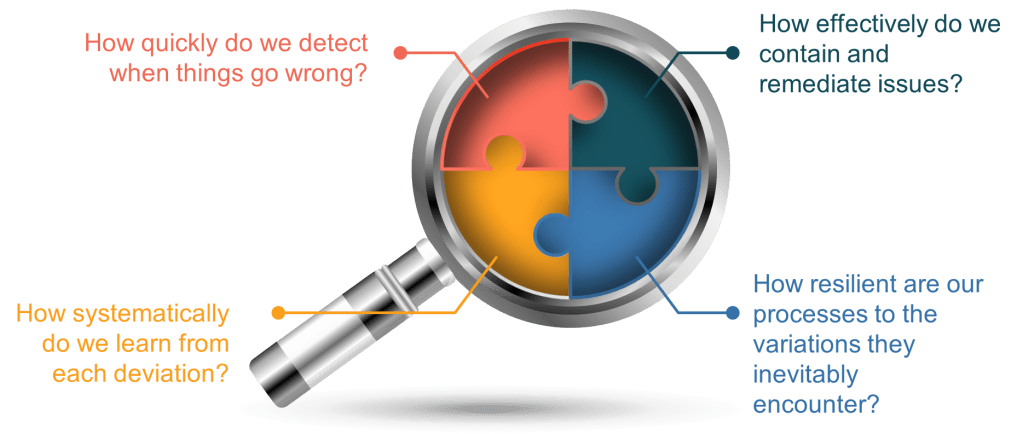
As continuous manufacturing becomes the norm rather than the exception, we need to move beyond the simplistic FTR myth toward a more sophisticated understanding of quality. Rather than asking, “Did we get it perfect the first time?” we should be asking:

  • How quickly do we detect when things go wrong?
  • How effectively do we contain and remediate issues?
  • How systematically do we learn from each deviation?
  • How resilient are our processes to the variations they inevitably encounter?

These questions acknowledge the reality of manufacturing-that imperfection is inevitable-while focusing our efforts on what truly matters: building systems and cultures capable of detecting, addressing, and learning from deviations to drive continuous improvement.

The companies that thrive in the continuous manufacturing future won’t be those with the most impressive FTR metrics on paper. They’ll be those with the humility to acknowledge imperfection, the systems to detect and address it quickly, and the learning cultures that turn each deviation into an opportunity for improvement.

FDA Under Fire: The Troubling Impacts of Trump’s First 100 Days

The first 100 days of President Trump’s second term have been nothing short of seismic for the Food and Drug Administration (FDA). Sweeping layoffs, high-profile firings, and a mass exodus of experienced staff have left the agency reeling, raising urgent questions about the safety of drugs, devices, and food in the United States.

Unprecedented Layoffs and Firings

Mass Layoffs and Restructuring

On April 1, 2025, the Department of Health and Human Services (HHS) executed a reduction in force that eliminated 3,500 FDA employees. This was part of a larger federal downsizing that saw at least 121,000 federal workers dismissed across 30 agencies in Trump’s first 100 days, with health agencies like the FDA, CDC, and NIH particularly hard hit. Security guards barred entry to some FDA staff just hours after they received termination notices, underscoring the abruptness and scale of the cuts.

The layoffs were not limited to support staff. Policy experts, project managers, regulatory scientists, and communications professionals were let go, gutting the agency’s capacity to write guidance documents, manage application reviews, test product safety, and communicate risks to the public. Even before the April layoffs, industry had noticed a sharp decline in FDA responsiveness to routine and nonessential queries-a problem now set to worsen.

High-Profile Departures and Forced Resignations

The leadership vacuum is equally alarming. Key figures forced out or resigning under pressure include:

  • Dr. Peter Marks, CBER Director and the nation’s top vaccine official, dismissed after opposing the administration’s vaccine safety stance.
  • Dr. Robert Temple, a 52-year FDA veteran and regulatory pioneer, retired amidst the turmoil.
  • Dr. Namandjé N. Bumpus, Deputy Commissioner; Dr. Doug Throckmorton, Deputy Director for regulatory programs; Celia Witten, CBER Deputy Director; Peter Stein, Director of the Office of Drugs; and Brian King, head of the Center for Tobacco Products, all departed-some resigning when faced with termination.
  • Communications, compliance, and policy offices were decimated, with all FDA communications now centralized under HHS, ending decades of agency independence.

The new FDA Commissioner, Martin “Marty” Makary, inherits an agency stripped of much of its institutional memory and scientific expertise. Add to this very real questions about about Makary’s capabilities and approach:

1. Lack of FDA Institutional Memory and Support: Makary steps into the role just as the FDA’s deep bench of experienced scientists, regulators, and administrators has been depleted. The departure of key leaders and thousands of staff means Makary cannot rely on the usual institutional memory or internal expertise that historically guided complex regulatory decisions. The agency’s diminished capacity raises concerns about whether Makary can maintain the rigorous review standards and enforcement practices needed to protect public health.

2. Unconventional Background and Public Persona: While Makary is an accomplished surgeon and health policy researcher, his career has been marked by a willingness to challenge medical orthodoxy and criticize federal health agencies, including the FDA itself. His public rhetoric-often sharply critical and sometimes inflammatory-contrasts with the FDA’s traditionally cautious, evidence-based communication style. For example, Makary has accused government agencies of “lying” about COVID-19 boosters and has called the U.S. food supply “poison,” positions that have worried many in the scientific and public health communities.

3. Alignment with Political Leadership and Potential Conflicts: Makary’s views align closely with those of HHS Secretary Robert F. Kennedy Jr., particularly in their skepticism of certain mainstream public health measures and their focus on food additives, pesticides, and environmental contributors to chronic disease. This alignment raises questions about the degree to which Makary will prioritize political directives over established scientific consensus, especially in controversial areas like vaccine policy, food safety, and chemical regulation.

4. Contrarianism and a Tendency Towards Conspiracy: Makary’s recent writings, such as his book Blind Spots, emphasize his distrust of medical consensus and advocacy for challenging “groupthink” in health policy. Critics worry this may lead to the dismissal of well-established scientific standards in favor of less-tested or more ideologically driven policies. As Harvard’s Dr. Aaron Kesselheim notes, Makary will need to make decisions based on evolving evidence, even if that means occasionally being wrong-a process that requires humility and openness to expert input, both of which could be hampered by the loss of institutional expertise.

5. Immediate Regulatory and Ethical Challenges: Makary inherits unresolved, high-stakes regulatory issues, such as the controversy over compounded GLP-1 drugs and the agency’s approach to ultra-processed foods and food additives. His prior involvement with telehealth companies and outspoken positions on food chemicals could present conflicts of interest or at least the appearance of bias, further complicating his ability to act as an impartial regulator.

Impact on Patient Health and Safety

Reduced Oversight and Enforcement

The loss of thousands of staff-including scientists and specialists-means fewer eyes on the safety of drugs, devices, and food. Despite HHS assurances that product reviewers and inspectors were spared, the reality is that critical support staff who enable and assist reviews and inspections were let go. This has already resulted in:

  • Delays and unpredictability in drug and device approvals, as fewer project managers are available to coordinate and communicate with industry.
  • A likely reduction in inspections, as administrative staff who book travel and provide translation for inspectors are gone, forcing inspectors to take on additional tasks and leading to bottlenecks.
  • The pausing of FDA’s unannounced foreign inspection pilot program, raising the risk of substandard or adulterated imported products entering the U.S. market.

Diminished Public Communication

With the elimination of FDA’s communications staff and the centralization of messaging under HHS, the agency’s ability to quickly inform the public about recalls, safety alerts, and emerging health threats is severely compromised. This loss of transparency and direct communication could delay critical warnings about unsafe products or outbreaks.

Loss of Scientific Capacity

The departure of regulatory scientists and the decimation of the National Center for Toxicological Research threaten the FDA’s ability to conduct the regulatory science that underpins product safety and efficacy standards. As former Commissioner Robert Califf warned, “The FDA as we’ve known it is over, with most leaders who possess knowledge and deep understanding product development safety no longer in their positions… I believe that history will regard this as a grave error”.

Impact on Clinical Studies

Oversight and Ethical Safeguards Eroded

FDA oversight of clinical trials has plummeted. During Trump’s previous term, the agency sent far fewer warning letters for clinical trial violations than under Obama (just 12 in Trump’s first three years, compared to 99 in Obama’s first three), a trend likely to worsen with the latest staff cuts. The loss of experienced reviewers and compliance staff means less scrutiny of trial protocols, informed consent, and data integrity, potentially exposing participants to greater risk and undermining the credibility of U.S. clinical research.

Delays and Uncertainty for Sponsors

With fewer staff to provide guidance, answer questions, and manage applications, sponsors of clinical trials and new product applications face longer wait times and less predictable review timelines. The loss of informal dispute resolution mechanisms and scientific advisory capacity further complicates the regulatory landscape, making the U.S. a less attractive environment for innovation.

Impact on Good Manufacturing Practices (GMPs)

Inspections and Compliance at Risk

While HHS claims inspectors were not cut, the loss of support staff and administrative personnel is already affecting the FDA’s inspection regime. Inspectors now must handle both investigative and administrative tasks, increasing the risk of missed deficiencies and delayed responses to manufacturing problems. The FDA may increasingly rely on remote, paper-based inspections, which proved less effective during the COVID-19 pandemic and could allow GMP violations to go undetected.

Global Supply Chain Vulnerabilities

The rollback of foreign inspection programs and diminished regulatory science capacity further expose the U.S. to risks from overseas manufacturers, particularly in countries with less robust regulatory oversight. This could lead to more recalls, shortages, and public health emergencies.

A Historic Setback for Public Health

The Trump administration’s first 100 days have left the FDA a shell of its former self. The mass layoffs, firings, and resignations have gutted the agency’s scientific, regulatory, and communications capacity, with immediate and long-term consequences for patient safety, clinical research, and the integrity of the U.S. medical supply. The loss of institutional knowledge, the erosion of oversight, and the retreat from global leadership represent a profound setback for public health-one that will take years, if not decades, to repair.

As former FDA Commissioner Califf put it, “No segment of FDA is untouched. No one knows what the plan is”. The nation-and the world-are watching to see if the agency can recover from this unprecedented upheaval.

Citations: