When Water Systems Fail: Unpacking the LeMaitre Vascular Warning Letter

The FDA’s August 11, 2025 warning letter to LeMaitre Vascular reads like a masterclass in how fundamental water system deficiencies can cascade into comprehensive quality system failures. This warning letter offers lessons about the interconnected nature of pharmaceutical water systems and the regulatory expectations that surround them.

The Foundation Cracks

What makes this warning letter particularly instructive is how it demonstrates that water systems aren’t just utilities—they’re critical manufacturing infrastructure whose failures ripple through every aspect of product quality. LeMaitre’s North Brunswick facility, which manufactures Artegraft Collagen Vascular Grafts, found itself facing six major violations, with water system inadequacies serving as the primary catalyst.

The Artegraft device itself—a bovine carotid artery graft processed through enzymatic digestion and preserved in USP purified water and ethyl alcohol—places unique demands on water system reliability. When that foundation fails, everything built upon it becomes suspect.

Water Sampling: The Devil in the Details

The first violation strikes at something discussed extensively in previous posts: representative sampling. LeMaitre’s USP water sampling procedures contained what the FDA termed “inconsistent and conflicting requirements” that fundamentally compromised the representativeness of their sampling.

Consider the regulatory expectation here. As outlined in ISPE guideline, “sampling a POU must include any pathway that the water travels to reach the process”. Yet LeMaitre was taking samples through methods that included purging, flushing, and disinfection steps that bore no resemblance to actual production use. This isn’t just a procedural misstep—it’s a fundamental misunderstanding of what water sampling is meant to accomplish.

The FDA’s criticism centers on three critical sampling failures:

  • Sampling Location Discrepancies: Taking samples through different pathways than production water actually follows. This violates the basic principle that quality control sampling should “mimic the way the water is used for manufacturing”.
  • Pre-Sampling Conditioning: The procedures required extensive purging and cleaning before sampling—activities that would never occur during normal production use. This creates “aspirational data”—results that reflect what we wish our system looked like rather than how it actually performs.
  • Inconsistent Documentation: Failure to document required replacement activities during sampling, creating gaps in the very records meant to demonstrate control.

The Sterilant Switcheroo

Perhaps more concerning was LeMaitre’s unauthorized change of sterilant solutions for their USP water system sanitization. The company switched sterilants sometime in 2024 without documenting the change control, assessing biocompatibility impacts, or evaluating potential contaminant differences.

This represents a fundamental failure in change control—one of the most basic requirements in pharmaceutical manufacturing. Every change to a validated system requires formal assessment, particularly when that change could affect product safety. The fact that LeMaitre couldn’t provide documentation allowing for this change during inspection suggests a broader systemic issue with their change control processes.

Environmental Monitoring: Missing the Forest for the Trees

The second major violation addressed LeMaitre’s environmental monitoring program—specifically, their practice of cleaning surfaces before sampling. This mirrors issues we see repeatedly in pharmaceutical manufacturing, where the desire for “good” data overrides the need for representative data.

Environmental monitoring serves a specific purpose: to detect contamination that could reasonably be expected to occur during normal operations. When you clean surfaces before sampling, you’re essentially asking, “How clean can we make things when we try really hard?” rather than “How clean are things under normal operating conditions?”

The regulatory expectation is clear: environmental monitoring should reflect actual production conditions, including normal personnel traffic and operational activities. LeMaitre’s procedures required cleaning surfaces and minimizing personnel traffic around air samplers—creating an artificial environment that bore little resemblance to actual production conditions.

Sterilization Validation: Building on Shaky Ground

The third violation highlighted inadequate sterilization process validation for the Artegraft products. LeMaitre failed to consider bioburden of raw materials, their storage conditions, and environmental controls during manufacturing—all fundamental requirements for sterilization validation.

This connects directly back to the water system failures. When your water system monitoring doesn’t provide representative data, and your environmental monitoring doesn’t reflect actual conditions, how can you adequately assess the bioburden challenges your sterilization process must overcome?

The FDA noted that LeMaitre had six out-of-specification bioburden results between September 2024 and March 2025, yet took no action to evaluate whether testing frequency should be increased. This represents a fundamental misunderstanding of how bioburden data should inform sterilization validation and ongoing process control.

CAPA: When Process Discipline Breaks Down

The final violations addressed LeMaitre’s Corrective and Preventive Action (CAPA) system, where multiple CAPAs exceeded their own established timeframes by significant margins. A high-risk CAPA took 81 days instead of the required timeframe, while medium and low-risk CAPAs exceeded deadlines by 120-216 days.

This isn’t just about missing deadlines—it’s about the erosion of process discipline. When CAPA systems lose their urgency and rigor, it signals a broader cultural issue where quality requirements become suggestions rather than requirements.

The Recall That Wasn’t

Perhaps most concerning was LeMaitre’s failure to report a device recall to the FDA. The company distributed grafts manufactured using raw material from a non-approved supplier, with one graft implanted in a patient before the recall was initiated. This constituted a reportable removal under 21 CFR Part 806, yet LeMaitre failed to notify the FDA as required.

This represents the ultimate failure: when quality system breakdowns reach patients. The cascade from water system failures to inadequate environmental monitoring to poor change control ultimately resulted in a product safety issue that required patient intervention.

Gap Assessment Questions

For organizations conducting their own gap assessments based on this warning letter, consider these critical questions:

Water System Controls

  • Are your water sampling procedures representative of actual production use conditions?
  • Do you have documented change control for any modifications to water system sterilants or sanitization procedures?
  • Are all water system sampling activities properly documented, including any maintenance or replacement activities?
  • Have you assessed the impact of any sterilant changes on product biocompatibility?

Environmental Monitoring

  • Do your environmental monitoring procedures reflect normal production conditions?
  • Are surfaces cleaned before environmental sampling, and if so, is this representative of normal operations?
  • Does your environmental monitoring capture the impact of actual personnel traffic and operational activities?
  • Are your sampling frequencies and locations justified by risk assessment?

Sterilization and Bioburden Control

  • Does your sterilization validation consider bioburden from all raw materials and components?
  • Have you established appropriate bioburden testing frequencies based on historical data and risk assessment?
  • Do you have procedures for evaluating when bioburden testing frequency should be increased based on out-of-specification results?
  • Are bioburden results from raw materials and packaging components included in your sterilization validation?

CAPA System Integrity

  • Are CAPA timelines consistently met according to your established procedures?
  • Do you have documented rationales for any CAPA deadline extensions?
  • Is CAPA effectiveness verification consistently performed and documented?
  • Are supplier corrective actions properly tracked and their effectiveness verified?

Change Control and Documentation

  • Are all changes to validated systems properly documented and assessed?
  • Do you have procedures for notifying relevant departments when suppliers change materials or processes?
  • Are the impacts of changes on product quality and safety systematically evaluated?
  • Is there a formal process for assessing when changes require revalidation?

Regulatory Compliance

  • Are all required reports (corrections, removals, MDRs) submitted within regulatory timeframes?
  • Do you have systems in place to identify when product removals constitute reportable events?
  • Are all regulatory communications properly documented and tracked?

Learning from LeMaitre’s Missteps

This warning letter serves as a reminder that pharmaceutical manufacturing is a system of interconnected controls, where failures in fundamental areas like water systems can cascade through every aspect of operations. The path from water sampling deficiencies to patient safety issues is shorter than many organizations realize.

The most sobering aspect of this warning letter is how preventable these violations were. Representative sampling, proper change control, and timely CAPA completion aren’t cutting-edge regulatory science—they’re fundamental GMP requirements that have been established for decades.

For quality professionals, this warning letter reinforces the importance of treating utility systems with the same rigor we apply to manufacturing processes. Water isn’t just a raw material—it’s a critical quality attribute that deserves the same level of control, monitoring, and validation as any other aspect of your manufacturing process.

The question isn’t whether your water system works when everything goes perfectly. The question is whether your monitoring and control systems will detect problems before they become patient safety issues. Based on LeMaitre’s experience, that’s a question worth asking—and answering—before the FDA does it for you.
Building Digital Trust: How Modern Infrastructure Transforms CxO-Sponsor Relationships Through Quality Agreements

The relationship between sponsors and contract organizations has evolved far beyond simple transactional exchanges. Digital infrastructure has become the cornerstone of trust, transparency, and operational excellence.

The trust equation is fundamentally changing due to the way our supply chains are being challenged.. Traditional quality agreements often functioned as static documents—comprehensive but disconnected from day-to-day operations. Today’s most successful partnerships are built on dynamic, digitally-enabled frameworks that provide real-time visibility into performance, compliance, and risk management.

Regulatory agencies are increasingly scrutinizing the effectiveness of sponsor oversight programs. The FDA’s emphasis on data integrity, combined with EMA’s evolving computerized systems requirements, means that sponsors can no longer rely on periodic audits and static documentation to demonstrate control over their outsourced activities.

Quality Agreements as Digital Trust Frameworks

The modern quality agreement must evolve from a compliance document to a digital trust framework. This transformation requires reimagining three fundamental components:

Dynamic Risk Assessment Integration

Traditional quality agreements categorize suppliers into static risk tiers (for example Category 1, 2, 2.5, or 3 based on material/service risk). Digital frameworks enable continuous risk profiling that adapts based on real-time performance data.

Integrate supplier performance metrics directly into your quality management system. When a Category 2 supplier’s on-time delivery drops below threshold or quality metrics deteriorate, the system should automatically trigger enhanced monitoring protocols without waiting for the next periodic review.

Automated Change Control Workflows

One of the most contentious areas in sponsor-CxO relationships involves change notifications and approvals. Digital infrastructure can transform this friction point into a competitive advantage.

The SMART approach to change control:

  • Standardized digital templates for change notifications
  • Machine-readable impact assessments
  • Automated routing based on change significance
  • Real-time status tracking for all stakeholders
  • Traceable decision logs with electronic signatures

Quality agreement language to include: “All change notifications shall be submitted through the designated digital platform within [X] business days of identification, with automated acknowledgment and preliminary impact assessment provided within [Y] hours.”

Transparent Performance Dashboards

The most innovative CxOs are moving beyond quarterly business reviews to continuous performance visibility. Quality agreements should build upon real-time access to key performance indicators (KPIs) that matter most to patient safety and product quality.

Examples of Essential KPIs for digital dashboards:

  • Batch disposition times and approval rates
  • Deviation investigation cycle times
  • CAPA effectiveness metrics
  • Environmental monitoring excursions and response times
  • Supplier change notification compliance rates

Communication Architecture for Transparency

Effective communication in pharmaceutical partnerships requires architectural thinking, not just protocol definition. The most successful CxO-sponsor relationships are built on what I call the “Three-Layer Communication Stack” which builds a rhythm of communication:

Layer 1: Operational Communication (Real-Time)

  • Purpose: Day-to-day coordination and issue resolution
  • Tools: Integrated messaging within quality management systems, automated alerts, mobile notifications
  • Quality agreement requirement: “Operational communications shall be conducted through validated, audit-trailed platforms with 24/7 availability and guaranteed delivery confirmation.”

Layer 2: Technical Communication (Scheduled)

  • Purpose: Performance reviews, trend analysis, continuous improvement
  • Tools: Shared analytics platforms, collaborative dashboards, video conferencing with screen sharing
  • Governance: Weekly operational reviews, monthly performance assessments, quarterly strategic alignments

Layer 3: Strategic Communication (Event-Driven)

  • Purpose: Relationship governance, escalation management, strategic planning
  • Stakeholders: Quality leadership, senior management, regulatory affairs
  • Framework: Joint steering committees, annual partnership reviews, regulatory alignment sessions

The Communication Plan Template

Every quality agreement should include a subsidiary Communication Plan that addresses:

  1. Stakeholder Matrix: Who needs what information, when, and in what format
  2. Escalation Protocols: Clear triggers for moving issues up the communication stack
  3. Performance Metrics: How communication effectiveness will be measured and improved
  4. Technology Requirements: Specified platforms, security requirements, and access controls
  5. Contingency Procedures: Alternative communication methods for system failures or emergencies

Include communication effectiveness as a measurable element in your supplier scorecards. Track metrics like response time to quality notifications, accuracy of status reporting, and proactive problem identification.

Data Governance as a Competitive Differentiator

Data integrity is more than just ensuring ALCOA+—it’s about creating a competitive moat through superior data governance. The organizations that master data sharing, analysis, and decision-making will dominate the next decade of pharmaceutical manufacturing and development.

The Modern Data Governance Framework

Data Architecture Definition

Your quality agreement must specify not just what data will be shared, but how it will be structured, validated, and integrated:

  • Master data management: Consistent product codes, batch numbering, and material identifiers across all systems
  • Data quality standards: Validation rules, completeness requirements, and accuracy thresholds
  • Integration protocols: APIs, data formats, and synchronization frequencies

Access Control and Security

With increasing regulatory focus on cybersecurity, your data governance plan must address:

  • Role-based access controls: Granular permissions based on job function and business need
  • Data classification: Confidentiality levels and handling requirements
  • Audit logging: Comprehensive tracking of data access, modification, and sharing

Analytics and Intelligence

The real competitive advantage comes from turning shared data into actionable insights:

  • Predictive analytics: Early warning systems for quality trends and supply chain disruptions
  • Benchmark reporting: Anonymous industry comparisons to identify improvement opportunities
  • Root cause analysis: Automated correlation of events across multiple systems and suppliers

The Data Governance Subsidiary Agreement

Consider creating a separate Data Governance Agreement that complements your quality agreement with specific sections covering data sharing objectives, technical architecture, governance oversight, and compliance requirements.

Veeva Summit

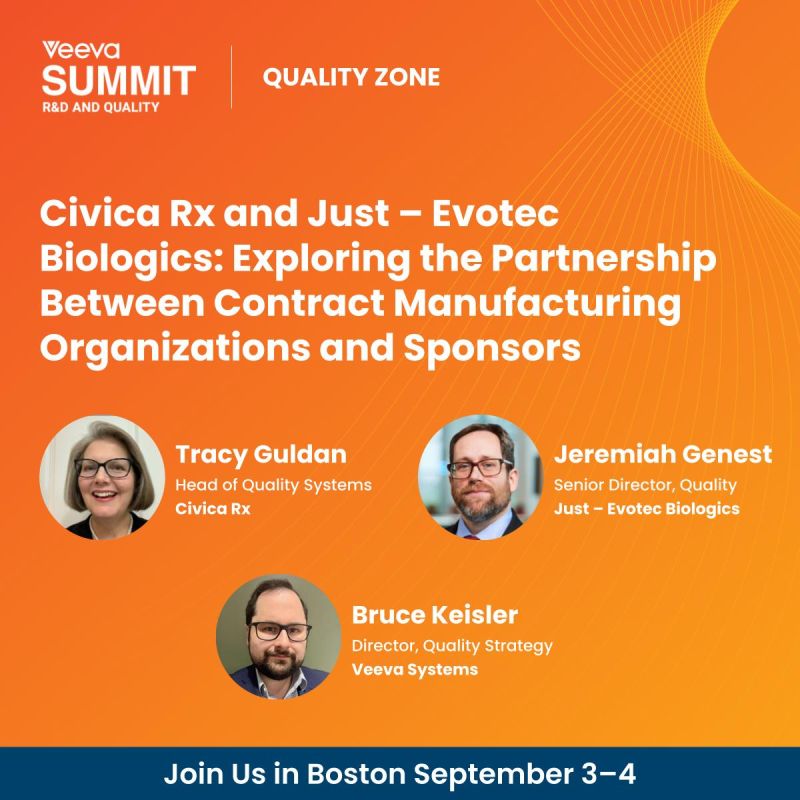
Next week I’ll be discussing this topic at the Veeva Summit, where I will bring some organizational learnings on to embrace digital infrastructure as a trust-building mechanism will forge stronger partnerships, achieve superior quality outcomes, and ultimately deliver better patient experiences.

Strategic Decision Delegation in Quality Leadership

If you are like me, you face a fundamental choice on a daily (or hourly basis): we can either develop distributed decision-making capability throughout our organizations, or we can create bottlenecks that compromise our ability to respond effectively to quality events, regulatory changes, and operational challenges. The reactive control mindset—where senior quality leaders feel compelled to personally approve every decision—creates dangerous delays in an industry where timing can directly impact patient safety.

It makes sense, we are an experience based profession, so decisions tend to need by more experienced people. But that can really lead to an over tendency to make decisions. Next time you are being asked to make a decision as these four questions.

1. Who is Closest to the Action?

Proximity is a form of expertise. The quality team member completing batch record reviews has direct insight into manufacturing anomalies that executive summaries cannot capture. The QC analyst performing environmental monitoring understands contamination patterns that dashboards obscure. The validation specialist working on equipment qualification sees risk factors that organizational charts miss.

Consider routine decisions about cleanroom environmental monitoring deviations. The microbiologist analyzing the data understands the contamination context, seasonal patterns, and process-specific risk factors better than any senior leader reviewing summary reports. When properly trained and given clear escalation criteria, they can make faster, more scientifically grounded decisions about investigation scope and corrective actions.

2. Pattern Recognition and Systematization

Quality systems are rich with pattern decisions—deviation classifications, supplier audit findings, cleaning validation deviations, or analytical method deviations. These decisions often follow established precedent and can be systematized through clear criteria derived from your quality risk management framework.

This connects directly to ICH Q9(R1)’s principle of formality in quality risk management. The level of delegation should be commensurate with the risk level, but routine decisions with established precedent and clear acceptance criteria represent prime candidates for systematic delegation.

3. Leveraging Specialized Expertise

In pharmaceutical quality, technical depth often trumps hierarchical position in decision quality. The microbiologist analyzing contamination events may have specialized knowledge that outweighs organizational seniority. The specialist tracking FDA guidance may see compliance implications that escape broader quality leadership attention.

Consider biologics manufacturing decisions where process characterization data must inform manufacturing parameters. The bioprocess engineer analyzing cell culture performance data possesses specialized insight that generic quality management cannot match. When decision authority is properly structured, these technical experts can make more informed decisions about process adjustments within validated ranges.

4. Eliminating Decision Bottlenecks

Quality systems are particularly vulnerable to momentum-stalling bottlenecks. CAPA timelines extend, investigations languish, and validation activities await approvals because decision authority remains unclear. In our regulated environment, the risk isn’t just a suboptimal decision—it’s often no decision at all, which can create far greater compliance and patient safety risks.

Contamination control strategies, environmental monitoring programs, and cleaning validation protocols all suffer when every decision must flow through senior quality leadership. Strategic delegation creates clear authority for qualified team members to act within defined parameters while maintaining appropriate oversight.

Building Decision Architecture in Quality Systems

Effective delegation in pharmaceutical quality requires systematic implementation:

Phase 1: Decision Mapping and Risk Assessment

Using quality risk management principles, catalog your current decision types:

  • High-risk, infrequent decisions: Major CAPA approvals, manufacturing process changes, regulatory submission decisions (retain centralized authority)
  • Medium-risk, pattern decisions: Routine deviation investigations, supplier performance assessments, analytical method variations (candidates for structured delegation)
  • Low-risk, high-frequency decisions: Environmental monitoring trend reviews, routine calibration approvals, standard training completions (ideal for delegation)

Phase 2: Competency-Based Authority Matrix

Develop decision authority levels tied to demonstrated competencies rather than just organizational hierarchy. This should include:

  • Technical qualifications required for specific decision categories
  • Experience thresholds for handling various risk levels
  • Training requirements for expanded decision authority
  • Documentation standards for delegated decisions

Phase 3: Oversight Evolution

Transition from pre-decision approval to post-decision coaching. This requires:

  • Quality metrics tracking decision effectiveness across the organization
  • Regular review of delegated decisions for continuous improvement
  • Feedback systems that support decision-making development
  • Clear escalation pathways for complex situations

Two Paths in Our Regulatory World: Leading Through Strategic Engagement

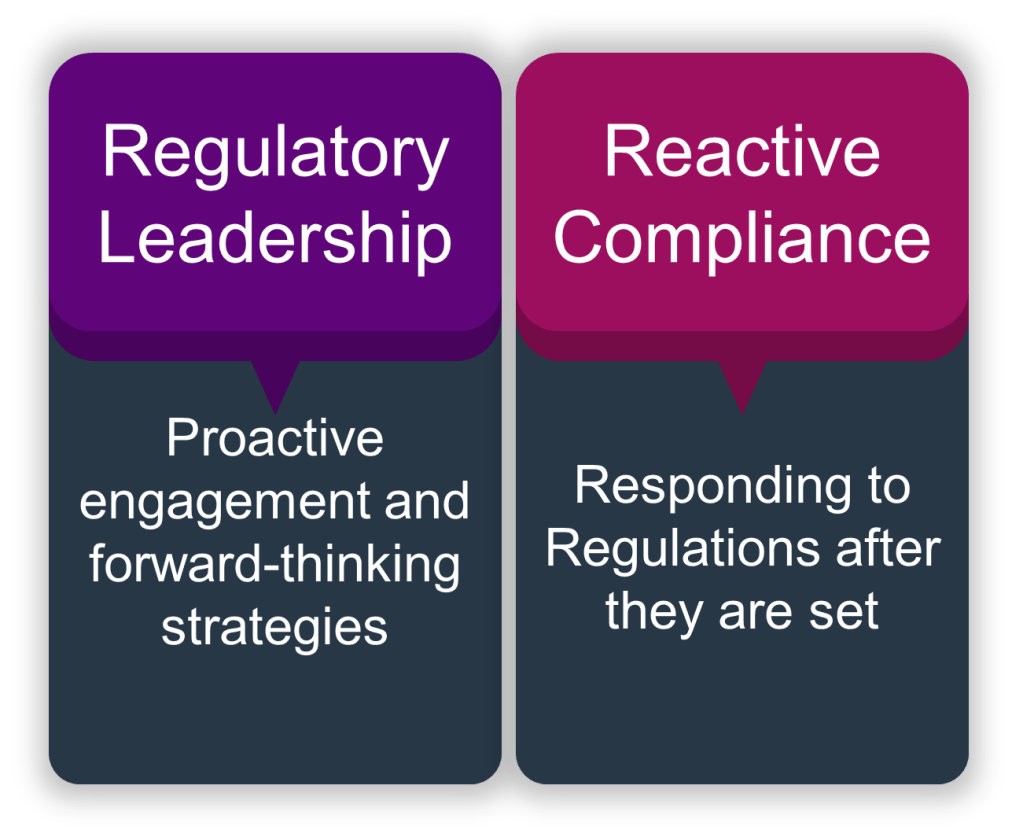
In pharmaceutical quality, we face a fundamental choice that defines our trajectory: we can either help set the direction of our regulatory landscape, or we can struggle to keep up with changes imposed upon us. As quality leaders, this choice isn’t just about compliance—it’s about positioning our organizations to drive meaningful change while delivering better patient outcomes.

The reactive compliance mindset has dominated our industry for too long, where companies view regulators as adversaries and quality as a cost center. This approach treats regulatory guidance as something that happens to us rather than something we actively shape. Companies operating in this mode find themselves perpetually behind the curve, scrambling to interpret new requirements, implement last-minute changes, and justify their approaches to skeptical regulators.

But there’s another way—one where quality professionals actively engage with the regulatory ecosystem to influence the development of standards before they become mandates.

The Strategic Value of Industry Group Engagement

Organizations like BioPhorum, NIIMBL, ISPE, and PDA represent far more than networking opportunities—they are the laboratories where tomorrow’s regulatory expectations are forged today. These groups don’t just discuss new regulations; they actively participate in defining what excellence looks like through standard-setting initiatives, white papers, and direct dialogue with regulatory authorities.

BioPhorum, with its collaborative network of 160+ manufacturers and suppliers deploying over 7,500 subject matter experts, demonstrates the power of collective engagement. Their success stories speak to tangible outcomes: harmonized approaches to routine environmental monitoring that save weeks on setup time, product yield improvements of up to 44%, and flexible manufacturing lines that reduce costs while maintaining regulatory compliance. Most significantly, their quality phorum launched in 2024 provides a dedicated space for quality professionals to collaborate on shared industry challenges.

NIIMBL exemplifies the strategic integration of industry voices with federal priorities, bringing together pharmaceutical manufacturers with academic institutions and government agencies to advance biopharmaceutical manufacturing standards. Their public-private partnership model demonstrates how industry engagement can shape policy while advancing technical capabilities that benefit all stakeholders.

ISPE and PDA provide complementary platforms where technical expertise translates into regulatory influence. Through their guidance documents, technical reports, and direct responses to regulatory initiatives, these organizations ensure that industry perspectives inform regulatory development. Their members don’t just consume regulatory intelligence—they help create it.

The Big Company Advantage—And Why Smaller Companies Must Close This Gap

Large pharmaceutical companies understand this dynamic intuitively. They maintain dedicated teams whose sole purpose is to engage with these industry groups, contribute to standard-setting activities, and maintain ongoing relationships with regulatory authorities. They recognize that regulatory intelligence isn’t just about monitoring changes—it’s about influencing the trajectory of those changes before they become requirements.

The asymmetry is stark: while multinational corporations deploy key leaders to these forums, smaller innovative companies often view such engagement as a luxury they cannot afford. This creates a dangerous gap where the voices shaping regulatory policy come predominantly from established players, potentially disadvantaging the very companies driving the most innovative therapeutic approaches.

But here’s the critical insight from my experience working with quality systems: smaller companies cannot afford NOT to be at these tables. When you’re operating with limited resources, you need every advantage in predicting regulatory direction, understanding emerging expectations, and building the credibility that comes from being recognized as a thoughtful contributor to industry discourse.

Consider the TESTED framework I’ve previously discussed—structured hypothesis formation requires deep understanding of regulatory thinking that only comes from being embedded in these conversations. When BioPhorum members collaborate on cleaning validation approaches or manufacturing flexibility standards, they’re not just sharing best practices—they’re establishing the scientific foundation for future regulatory expectations. When the ISPE comes out with a new good practice guide they are doing the same. The list goes on.

Making the Business Case: Job Descriptions and Performance Evaluation

Good regulatory intelligence practices requires systematically building this engagement into our organizational DNA. This means making industry participation an explicit component of senior quality roles and measuring our leaders’ contributions to the broader regulatory dialogue.

For quality directors and above, job descriptions should explicitly include:

  • Active participation in relevant industry working groups and technical committees
  • Contribution to industry white papers, guidance documents, and technical reports
  • Maintenance of productive relationships with regulatory authorities through formal and informal channels
  • Intelligence gathering and strategic assessment of emerging regulatory trends
  • Internal education and capability building based on industry insights

Performance evaluations must reflect these priorities:

  • Measure contributions to industry publications and standard-setting activities
  • Assess the quality and strategic value of regulatory intelligence gathered through industry networks
  • Evaluate success in anticipating and preparing for regulatory changes before they become requirements
  • Track the organization’s reputation within industry forums as a thoughtful contributor

This isn’t about checking boxes or accumulating conference attendance credits. It’s about recognizing that in our interconnected regulatory environment, isolation equals irrelevance. The companies that will thrive in tomorrow’s regulatory landscape are those whose leaders are actively shaping that landscape today.

Development plans for individuals should have clear milestones based on these requirements, so as individuals work their way up in an organization they are building good behaviors.

The Competitive Advantage of Regulatory Leadership

When we engage strategically with industry groups, we gain access to three critical advantages that reactive companies lack. First, predictive intelligence—understanding not just what regulations say today, but where regulatory thinking is headed. Second, credibility capital—the trust that comes from being recognized as a thoughtful contributor rather than a passive recipient of regulatory requirements. Third, collaborative problem-solving—access to the collective expertise needed to address complex quality challenges that no single organization can solve alone.

The pharmaceutical industry is moving toward more sophisticated quality metrics, risk-based approaches, and integrated lifecycle management. Companies that help develop these approaches will implement them more effectively than those who wait for guidance to arrive as mandates.c

As I’ve explored in previous discussions of hypothesis-driven quality systems, the future belongs to organizations that can move beyond compliance toward genuine quality leadership. This requires not just technical excellence, but strategic engagement with the regulatory ecosystem that shapes our industry’s direction.

The choice is ours: we can continue struggling to keep up with changes imposed upon us, or we can help set the direction through strategic engagement with the organizations and forums that define excellence in our field. For senior quality leaders, this isn’t just a career opportunity—it’s a strategic imperative that directly impacts our organizations’ ability to deliver innovative therapies to patients who need them.

The bandwidth required for this engagement isn’t overhead—it’s investment in the intelligence and relationships that make everything else we do more effective. In a world where regulatory agility determines competitive advantage, being at the table where standards are set isn’t optional—it’s essential.

Building Decision-Making with Structured Hypothesis Formation

In my previous post, “The Effectiveness Paradox: Why ‘Nothing Bad Happened’ Doesn’t Prove Your Quality System Works”, I challenged a core assumption underpinning how the pharmaceutical industry evaluates its quality systems. We have long mistaken the absence of negative events—no deviations, no recalls, no adverse findings—for evidence of effectiveness. As I argued, this is not proof of success, but rather a logical fallacy: conflating absence of evidence with evidence of absence, and building unfalsifiable systems that teach us little about what truly works.

But recognizing the limits of “nothing bad happened” as a quality metric is only the starting point. The real challenge is figuring out what comes next: How do we move from defensive, unfalsifiable quality posturing toward a framework where our systems can be genuinely and rigorously tested? How do we design quality management approaches that not only anticipate success but are robust enough to survive—and teach us from—failure?

The answer begins with transforming the way we frame and test our assumptions about quality performance. Enter structured hypothesis formation: a disciplined, scientific approach that takes us from passive observation to active, falsifiable prediction. This methodology doesn’t just close the door on the effectiveness paradox—it opens a new frontier for quality decision-making grounded in scientific rigor, predictive learning, and continuous improvement.

The Science of Structured Hypothesis Formation

Structured hypothesis formation differs fundamentally from traditional quality planning by emphasizing falsifiability and predictive capability over compliance demonstration. Where traditional approaches ask “How can we prove our system works?” structured hypothesis formation asks “What specific predictions can our quality system make, and how can these predictions be tested?”

The core principles of structured hypothesis formation in quality systems include:

Explicit Prediction Generation: Quality hypotheses must make specific, measurable predictions about system behavior under defined conditions. Rather than generic statements like “our cleaning process prevents cross-contamination,” effective hypotheses specify conditions: “our cleaning procedure will reduce protein contamination below 10 ppm within 95% confidence when contact time exceeds 15 minutes at temperatures above 65°C.”

Testable Mechanisms: Hypotheses should articulate the underlying mechanisms that drive quality outcomes. This moves beyond correlation toward causation, enabling genuine process understanding rather than statistical association.

Failure Mode Specification: Effective quality hypotheses explicitly predict how and when systems will fail, creating opportunities for proactive detection and mitigation rather than reactive response.

Uncertainty Quantification: Rather than treating uncertainty as weakness, structured hypothesis formation treats uncertainty quantification as essential for making informed quality decisions under realistic conditions.

Framework for Implementation: The TESTED Approach

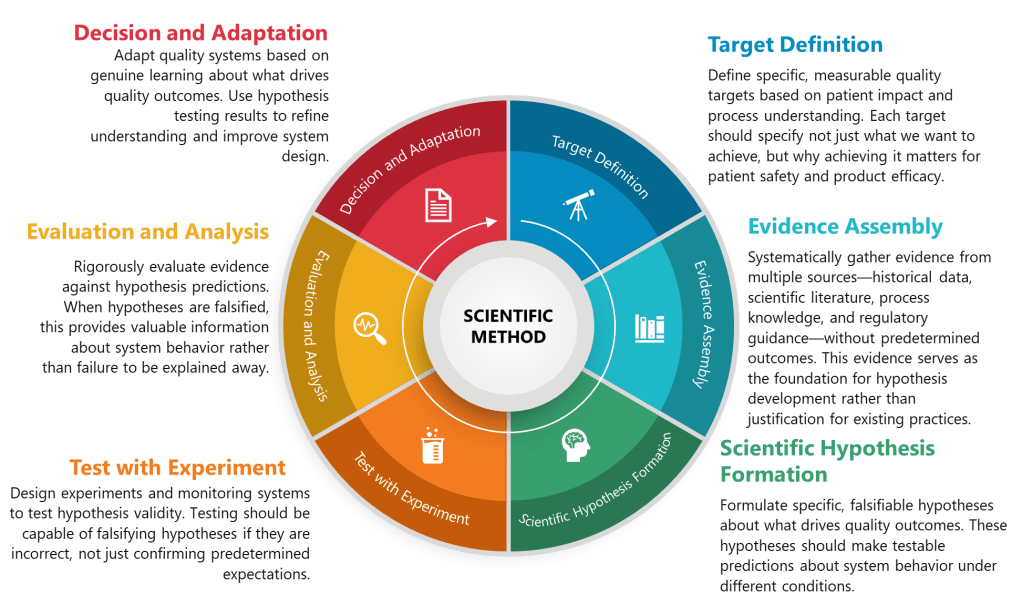
The practical implementation of structured hypothesis formation in pharmaceutical quality systems can be systematized through what I call the TESTED framework—a six-phase approach that transforms traditional quality activities into hypothesis-driven scientific inquiry:

T – Target Definition

Traditional Approach: Identify potential quality risks through brainstorming or checklist methods.
TESTED Approach: Define specific, measurable quality targets based on patient impact and process understanding. Each target should specify not just what we want to achieve, but why achieving it matters for patient safety and product efficacy.

E – Evidence Assembly

Traditional Approach: Collect available data to support predetermined conclusions.
TESTED Approach: Systematically gather evidence from multiple sources—historical data, scientific literature, process knowledge, and regulatory guidance—without predetermined outcomes. This evidence serves as the foundation for hypothesis development rather than justification for existing practices.

S – Scientific Hypothesis Formation

Traditional Approach: Develop risk assessments based on expert judgment and generic failure modes.
TESTED Approach: Formulate specific, falsifiable hypotheses about what drives quality outcomes. These hypotheses should make testable predictions about system behavior under different conditions.

T – Testing Design

Traditional Approach: Design validation studies to demonstrate compliance with predetermined acceptance criteria.
TESTED Approach: Design experiments and monitoring systems to test hypothesis validity. Testing should be capable of falsifying hypotheses if they are incorrect, not just confirming predetermined expectations.

E – Evaluation and Analysis

Traditional Approach: Analyze results to demonstrate system adequacy.
TESTED Approach: Rigorously evaluate evidence against hypothesis predictions. When hypotheses are falsified, this provides valuable information about system behavior rather than failure to be explained away.

D – Decision and Adaptation

Traditional Approach: Implement controls based on risk assessment outcomes.
TESTED Approach: Adapt quality systems based on genuine learning about what drives quality outcomes. Use hypothesis testing results to refine understanding and improve system design.

Application Examples

Cleaning Validation Transformation

Traditional Approach: Demonstrate that cleaning procedures consistently achieve residue levels below acceptance criteria.

TESTED Implementation:

  • Target: Prevent cross-contamination between products while optimizing cleaning efficiency
  • Evidence: Historical contamination data, scientific literature on cleaning mechanisms, process capability data
  • Hypothesis: Contact time with cleaning solution above 12 minutes combined with mechanical action intensity >150 RPM will achieve >99.9% protein removal regardless of product sequence, with failure probability <1% when both parameters are maintained simultaneously
  • Testing: Designed experiments varying contact time and mechanical action across different product sequences
  • Evaluation: Results confirmed the importance of the interaction but revealed that product sequence affects required contact time by up to 40%
  • Decision: Revised cleaning procedure to account for product-specific requirements while maintaining hypothesis-driven monitoring

Process Control Strategy Development

Traditional Approach: Establish critical process parameters and control limits based on process validation studies.

TESTED Implementation:

  • Target: Ensure consistent product quality while enabling process optimization
  • Evidence: Process development data, literature on similar processes, regulatory precedents
  • Hypothesis: Product quality is primarily controlled by the interaction between temperature (±2°C) and pH (±0.1 units) during the reaction phase, with environmental factors contributing <5% to overall variability when these parameters are controlled
  • Testing: Systematic evaluation of parameter interactions using designed experiments
  • Evaluation: Temperature-pH interaction confirmed, but humidity found to have >10% impact under specific conditions
  • Decision: Enhanced control strategy incorporating environmental monitoring with hypothesis-based action limits