Whataboutism

Whataboutism is the common term for a version of the tu quoque fallacy, a diversionary tactic to shift the focus off of an issue and avoid having to directly address it by twisting criticism back onto the critic and in doing so revealing the original critic’s hypocrisy.

Whataboutism often results in a comparison of issues as pure deflection. We see it when individuals are always focused on why others get ahead and they don’t, looking for comparisons and reasons they are being treated unfairly instead of focusing on their own opportunities for improvement. It is so easy to use when we are faced with criticism, “Well, what about … ?”

We also see whataboutism in our cultures. Maybe it is a tendency to excuse your own team’s shortcomings because obviously the sins of another team is so much worse. This is a result of, and strengthens, silo-thinking.

Building the feedback process to reduce and eventually eliminate whataboutism is critical.
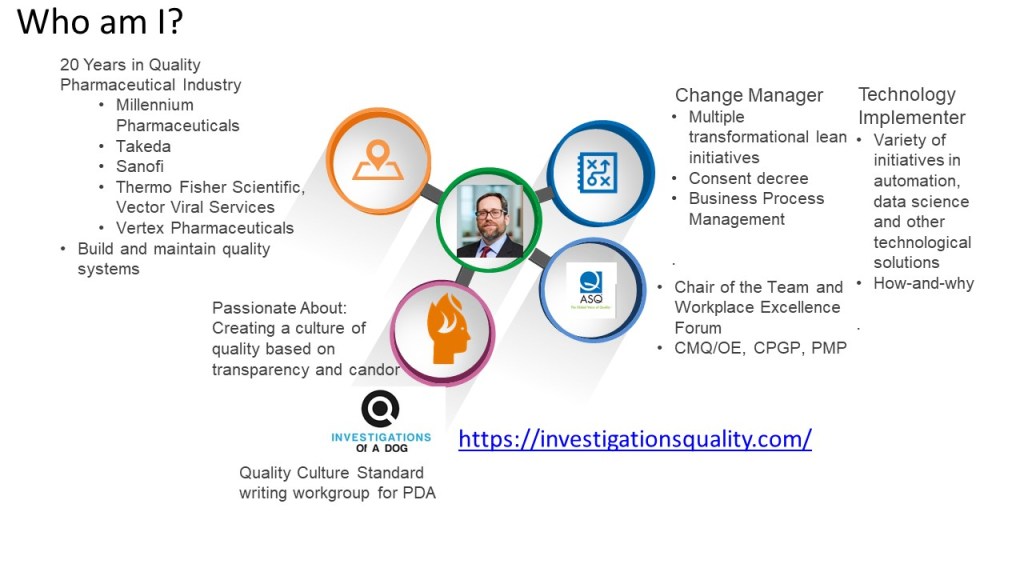
Reintroductions

When I first joined my current company I spent a lot of time introducing myself. I’ve been here now a year, and there are new folks, new relationships and most important we are getting ready to change our way of working by introducing hybrid work.

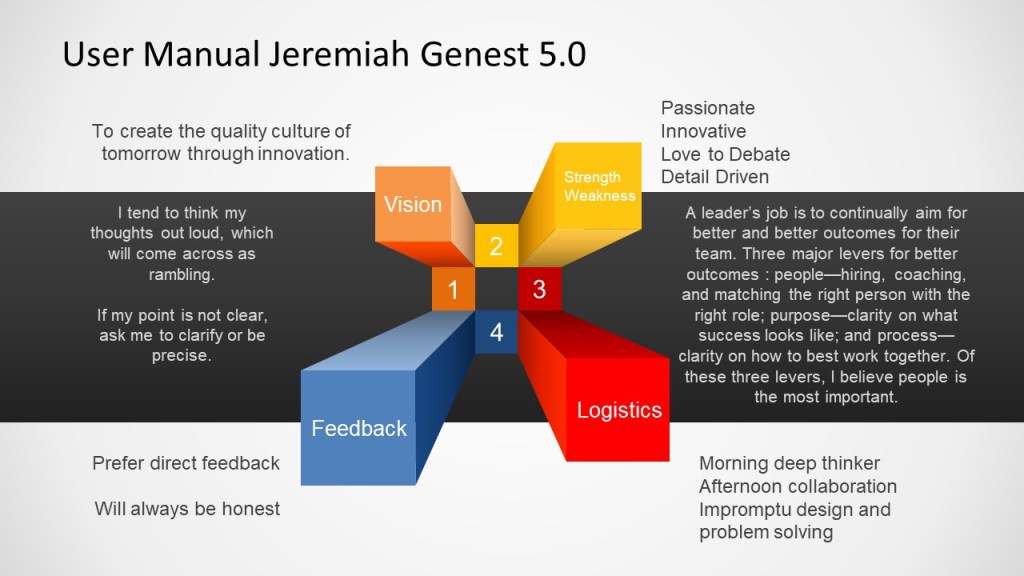
As a leader it’s important to be honest in who you are and how you work. The best technique I’ve seen for this is a user manual, a quick way to express what works and what does not work for interacting with me.

Mine looks like this:

My User Manual

I’ll be updating this as part of my team establishing a new team governance charter.

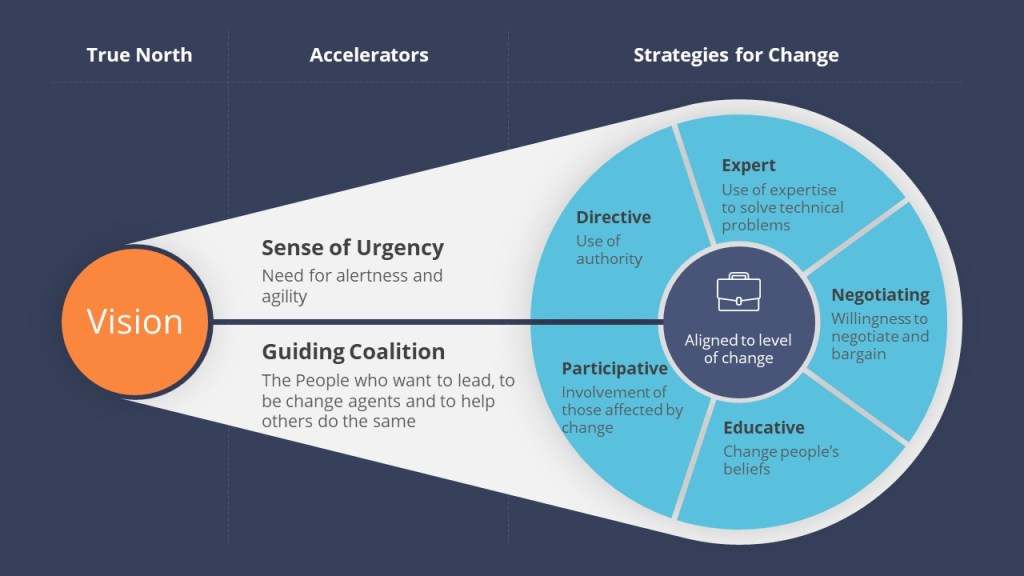
Change Strategies for Accelerating Changes

The five change strategies that leaders can utilize:

  • Directive strategy – the manager uses his authority and imposes change with little or no involvement of other people.
  • Expert strategy – usually involves expertise to manage and solve technical problems that result from the change.
  • Negotiating strategy – manager shows willingness to negotiate and bargain in order to effect change with timely adjustments and concessions.
  • Educative strategy – when the manager plans to change peoples’ values and beliefs.
  • Participative strategy – when the manager stresses the full involvement of all of those involved and affected by the anticipated changes.

These are not mutually exclusive. It is not uncommon to use 2 or 3 or even all five on larger, more complicated changes.

Critical ATMP Deficiencies

ERC The Netherlands B.V. received thirteen deficiencies from a recent inspection, one of which was classified as a critical deficiency.


These were mainly related to five main components:

  • Quality and safety of starting materials. Inspection of chemicals and consumables is insufficient.
  • The quality and safety of the final product is not guaranteed. The product is not sufficiently defined and characterized.
  • The effectiveness of a gama irradiation step, and therefore the safety of the product, is not guaranteed.
  • The change for the transition from Contractor 1 to Contractor 2 for gamma irradiation of cells has not been carried out as referred to in the GMP for ATMPs.
  • Prevention of (cross) contamination is not sufficiently guaranteed. 
  • The environmental monitoring program and personnel monitoring are inadequate.

Reviewing this together with Emergent’s 483 (and resulting actions) starts to define a set of concerns in the ATMP world.

Lilly in the news

“rewrites factual data provided by subject matter experts to formulate responses she feels are more beneficial.”

“Lilly hit by staff accusations, FDA scrutiny at COVID drug factories“

Yesterday Reuters published a piece based on a purported recent internal complaint at Lilly on a Quality leader purportedly falsifying data.

This comes on top of a March report that “Insider alleges Eli Lilly blocked her efforts to sound alarms about U.S. drug factory.”

Lilly has had several decades of “promising to address GMP issues.” Are these signs of not addressing cultural issues? Of the balkanization of fixes? Of the infamous pendulum swing? I have no insight, but as an individual who was involved in the work of consent decree remediation at another company, I certainly have lots of questions about what is up at Lilly.