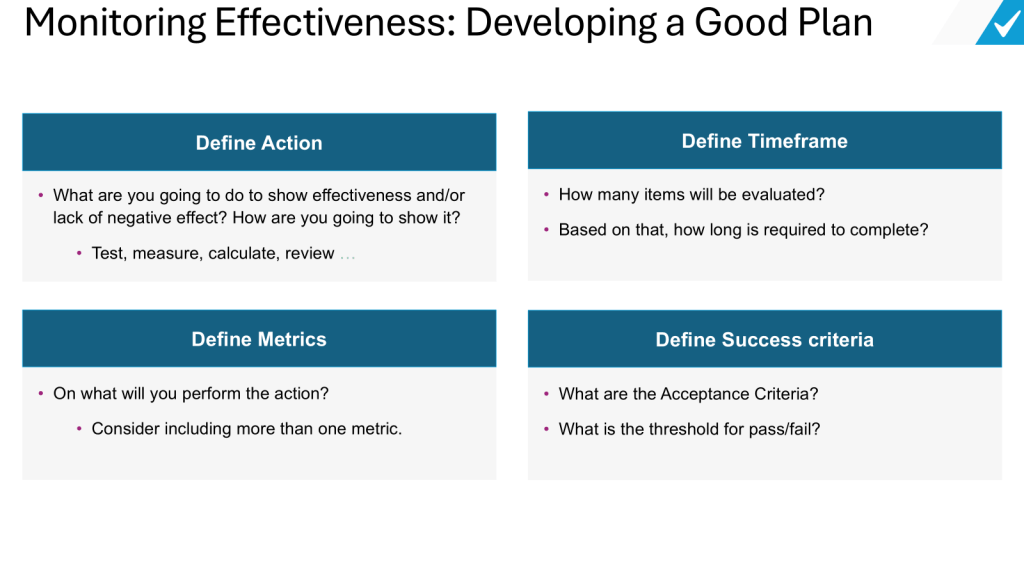
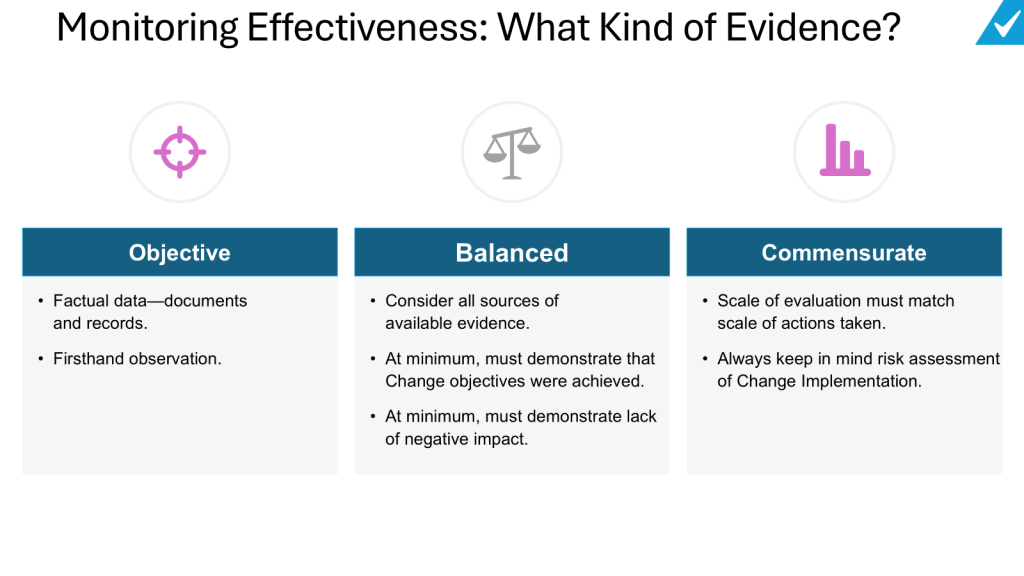
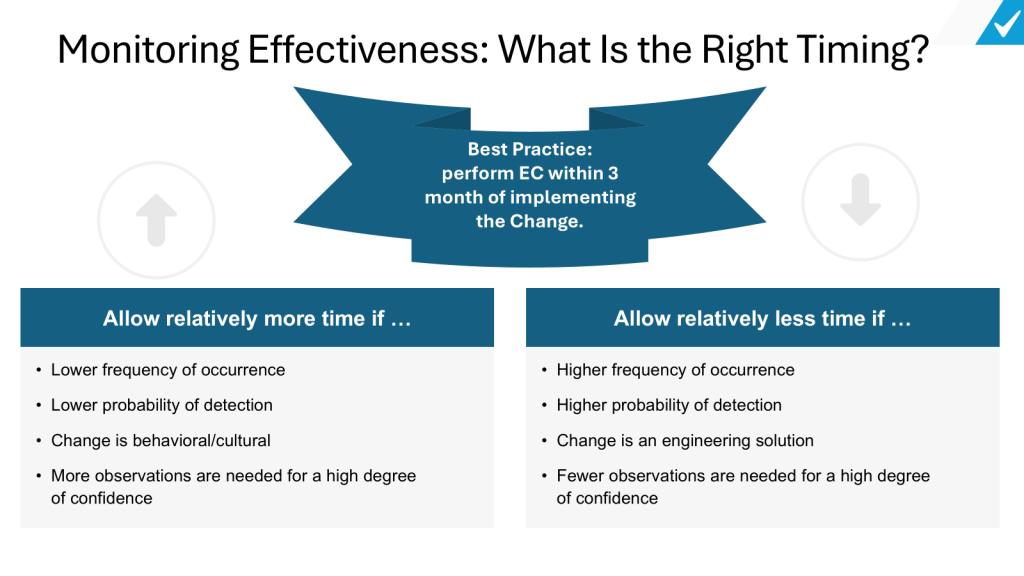
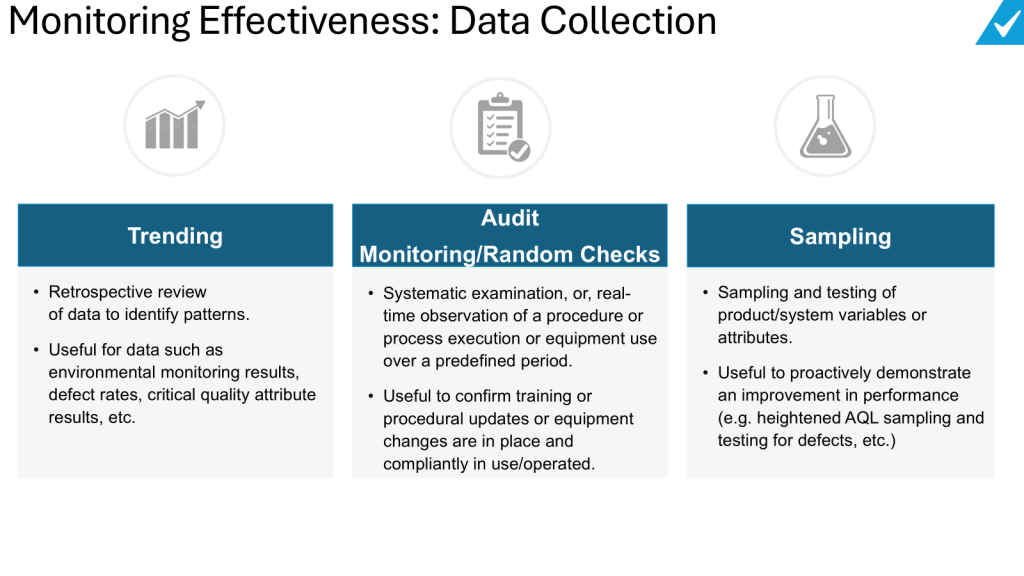
The Importance of a Quality Plan

In the ever-evolving landscape of pharmaceutical manufacturing, quality management has become a cornerstone of success. Two key frameworks guiding this pursuit of excellence are the ICH Q10 Pharmaceutical Quality System and the FDA’s Quality Management Maturity (QMM) program. At the heart of these initiatives lies the quality plan – a crucial document that outlines an organization’s approach to ensuring consistent product quality and continuous improvement.

What is a Quality Plan?

A quality plan serves as a roadmap for achieving quality objectives and ensuring that all stakeholders are aligned in their pursuit of excellence.

Key components of a quality plan typically include:

  1. Organizational objectives to drive quality
  2. Steps involved in the processes
  3. Allocation of resources, responsibilities, and authority
  4. Specific documented standards, procedures, and instructions
  5. Testing, inspection, and audit programs
  6. Methods for measuring achievement of quality objectives

Aligning with ICH Q10 Management Responsibilities

ICH Q10 provides a model for an effective pharmaceutical quality system that goes beyond the basic requirements of Good Manufacturing Practice (GMP). To meet ICH Q10 management responsibilities, a quality plan should address the following areas:

1. Management Commitment

The quality plan should clearly articulate top management’s commitment to quality. This includes allocating necessary resources, participating in quality system oversight, and fostering a culture of quality throughout the organization.

2. Quality Policy and Objectives

Align your quality plan with your organization’s overall quality policy. Define specific, measurable quality objectives that support the broader goals of quality realization, establishing and maintaining a state of control, and facilitating continual improvement.

3. Planning

Outline the strategic approach to quality management, including how quality considerations are integrated into product lifecycle stages from development through to discontinuation.

4. Resource Management

Detail how resources (human, financial, and infrastructural) will be allocated to support quality initiatives. This includes provisions for training and competency development of personnel.

5. Management Review

Establish a process for regular management review of the quality system’s performance. This should include assessing the need for changes to the quality policy, objectives, and other elements of the quality system.

Aligning with FDA’s Quality Management Maturity Model

The FDA’s QMM program aims to encourage pharmaceutical manufacturers to go beyond basic compliance and foster a culture of quality and continuous improvement. To align your quality plan with QMM principles, consider incorporating the following elements:

1. Quality Culture

Describe how your organization will foster a strong quality culture mindset. This includes promoting open communication, encouraging employee engagement in quality initiatives, and recognizing quality-focused behaviors.

2. Continuous Improvement

Detail processes for identifying areas where quality management practices can be enhanced. This might include regular assessments, benchmarking against industry best practices, and implementing improvement projects.

3. Risk Management

Outline a proactive approach to risk management that goes beyond basic compliance. This should include processes for identifying, assessing, and mitigating risks to product quality and supply chain reliability.

4. Performance Metrics

Define key performance indicators (KPIs) that will be used to measure and monitor quality performance. These metrics should align with the FDA’s focus on product quality, patient safety, and supply chain reliability.

5. Knowledge Management

Describe systems and processes for capturing, sharing, and utilizing knowledge gained throughout the product lifecycle. This supports informed decision-making and continuous improvement.

The SOAR Analysis

A SOAR Analysis is a strategic planning framework that focuses on an organization’s positive aspects and future potential. The acronym SOAR stands for Strengths, Opportunities, Aspirations, and Results.

Key Components

  1. Strengths: This quadrant identifies what the organization excels at, its assets, capabilities, and greatest accomplishments.
  2. Opportunities: This section explores external circumstances, potential for growth, and how challenges can be reframed as opportunities.
  3. Aspirations: This part focuses on the organization’s vision for the future, dreams, and what it aspires to achieve.
  4. Results: This quadrant outlines the measurable outcomes that will indicate success in achieving the organization’s aspirations.

Characteristics and Benefits

  • Positive Focus: Unlike SWOT analysis, SOAR emphasizes strengths and opportunities rather than weaknesses and threats.
  • Collaborative Approach: It engages stakeholders at all levels of the organization, promoting a shared vision.
  • Action-Oriented: SOAR is designed to guide constructive conversations and lead to actionable strategies.
  • Future-Focused: While addressing current strengths and opportunities, SOAR also projects a vision for the future.

Application

SOAR analysis is typically conducted through team brainstorming sessions and visualized using a 2×2 matrix. It can be applied to various contexts, including business strategy, personal development, and organizational change.

By leveraging existing strengths and opportunities to pursue shared aspirations and measurable results, SOAR analysis provides a framework for positive organizational growth and strategic planning.

The SOAR Analysis for Quality Plan Writing

Utilizing a SOAR (Strengths, Opportunities, Aspirations, Results) analysis can be an effective approach to drive the writing of a quality plan. This strategic planning tool focuses on positive aspects and future potential, making it particularly useful for developing a forward-looking quality plan. Here’s how you can leverage SOAR analysis in this process:

Conducting the SOAR Analysis

Strengths

Begin by identifying your organization’s current strengths related to quality. Consider:

  • Areas where your organization excels in quality management
  • Significant quality-related accomplishments
  • Unique quality offerings that set you apart from competitors

Ask questions like:

  • What are our greatest quality-related assets and capabilities?
  • Where do we consistently meet or exceed quality standards?

Opportunities

Next, explore external opportunities that could enhance your quality initiatives. Look for:

  • Emerging technologies that could improve quality processes
  • Market trends that emphasize quality
  • Potential partnerships or collaborations to boost quality efforts

Consider:

  • How can we leverage external circumstances to improve our quality?
  • What new skills or resources could elevate our quality standards?

Aspirations

Envision your preferred future state for quality in your organization. This step involves:

  • Defining what you want to be known for in terms of quality
  • Aligning quality goals with overall organizational vision

Ask:

  • What is our ideal quality scenario?
  • How can we integrate quality excellence into our long-term strategy?

Results

Finally, determine measurable outcomes that will indicate success in your quality initiatives. This includes:

  • Specific, quantifiable quality metrics
  • Key performance indicators (KPIs) for quality improvement
  • Key behavior indicators (KBIs) and Key risk indicators (KRIs)

Consider:

  • How will we measure progress towards our quality goals?
  • What tangible results will demonstrate our quality aspirations have been achieved?

Writing the Quality Plan

With the SOAR analysis complete, use the insights gained to craft your quality plan:

  1. Executive Summary: Provide an overview of your quality vision, highlighting key strengths and opportunities identified in the SOAR analysis.
  2. Quality Objectives: Translate your aspirations into concrete, measurable objectives. Ensure these align with the strengths and opportunities identified.
  3. Strategic Initiatives: Develop action plans that leverage your strengths to capitalize on opportunities and achieve your quality aspirations. For each initiative, specify:
    • Resources required
    • Timeline for implementation
    • Responsible parties
  4. Performance Metrics: Establish a system for tracking the results identified in your SOAR analysis. Include both leading and lagging indicators of quality performance.
  5. Continuous Improvement: Outline processes for regular review and refinement of the quality plan, incorporating feedback and new insights as they emerge.
  6. Resource Allocation: Based on the strengths and opportunities identified, detail how resources will be allocated to support quality initiatives.
  7. Training and Development: Address any skill gaps identified during the SOAR analysis, outlining plans for employee training and development in quality-related areas.
  8. Risk Management: While SOAR focuses on positives, acknowledge potential challenges and outline strategies to mitigate risks to quality objectives.

By utilizing the SOAR analysis framework, your quality plan will be grounded in your organization’s strengths, aligned with external opportunities, inspired by aspirational goals, and focused on measurable results. This approach ensures a positive, forward-looking quality strategy that engages stakeholders and drives continuous improvement.

A well-crafted quality plan serves as a bridge between regulatory requirements, industry best practices, and an organization’s specific quality goals. By aligning your quality plan with ICH Q10 management responsibilities and the FDA’s Quality Management Maturity model, you create a robust framework for ensuring product quality, fostering continuous improvement, and building a resilient, quality-focused organization.

When to Widen the Investigation

“there is no retrospective review of batch records for batches within expiry, to identify any other process deviations performed without the appropriate corresponding documentation including risk assessment(s).” – 2025 Warning Letter from the US FDA to Sanofi

This comment is about an instance where Sanofi deviated from the validated process by using an unvalidated single use component. Instead of self-identifying, creating a deviation and doing the right change control activities, the company just kept on deviating by using a non-controlled document.

This is a big problem for lots of reasons, from uncontrolled documents, to not using the change control system, to breaking the validated state. What the language quoted above really brings to bear is the question, when should we evaluate our records for other similar instances of this happening, so we can address it.

When a deviation investigation reveals recurring bad decision-making, it is crucial to expand the investigation and conduct a retrospective review of batch records. A good cutoff of this can be only for batches within expiry. This expanded investigation helps identify any other process deviations that may have occurred but were not discovered or documented at the time. Here’s when and how to approach this situation:

Triggers for Expanding the Investigation

  1. Recurring Deviations: If the same or similar deviations are found to be recurring, it indicates a systemic issue that requires a broader investigation.
  2. Pattern of Human Errors: When a pattern of human errors or poor decision-making is identified, it suggests potential underlying issues in training, procedures, or processes.
  3. Critical Deviations: For deviations classified as critical, a more thorough investigation is typically warranted, including a retrospective review.
  4. Potential Impact on Product Quality: If there’s a strong possibility that undiscovered deviations could affect product quality or patient safety, an expanded investigation becomes necessary.

Conducting the Retrospective Review

  1. Timeframe: Review batch records for all batches within expiry, typically covering at least two years of production. Similarily for issues in the FUSE program you might look since the last requalification, or from a decide to go backwards in concentric circles based on what you find.
  2. Scope: Examine not only the specific process where the deviation was found but also related processes or areas that could be affected. Reviewing related processes is critical.
  3. Data Analysis: Utilize statistical tools and trending analysis techniques to identify patterns or anomalies in the historical data.
  4. Cross-Functional Approach: Involve a team of subject matter experts from relevant departments to ensure a comprehensive review.
  5. Documentation Review: Examine batch production records, laboratory control records, equipment logs, and any other relevant documentation.
  6. Root Cause Analysis: Apply root cause analysis techniques to understand the underlying reasons for the recurring issues.

Key Considerations

  • Risk Assessment: Prioritize the review based on the potential risk to product quality and patient safety.
  • Data Integrity: Ensure that any retrospective data used is reliable and has maintained its integrity.
  • Corrective Actions: Develop and implement corrective and preventive actions (CAPAs) based on the findings of the expanded investigation.
  • Regulatory Reporting: Assess the need for notifying regulatory authorities based on the severity and impact of the findings.

By conducting a thorough retrospective review when recurring bad decision-making is identified, companies can uncover hidden issues, improve their quality systems, and prevent future deviations. This proactive approach not only enhances compliance but also contributes to continuous improvement in pharmaceutical manufacturing processes.

In the case of an issue that rises to a regulatory observation this becomes a firm must. The agency has raised a significant concern and they will want proof that this is a limited issue or that you are holistically dealing with it across the organization.

Concentric Circles of Investigation

Each layer of the investigation may require holistic looks. Utilizing the example above we have:

Layer of ProblemFurther Investigation to Answer
Use of unassessed component outside of GMP controlsWhat other unassessed components were used in the manufacturing process(s)
Failure to document a temporary changeWhere else were temporary changes not executed
Deviated from validated processWhere else were there significant deviations from validated processes there were not reported
Problems with componentsWhat other components are having problems that are not being reported and addressed

Take a risk-based approach here is critical.

The Culture Wars Strike Clinical Trials

In recent years, the importance of diversity in clinical trials has gained significant attention in the medical research community. This focus is not just a matter of inclusivity; it’s a crucial scientific and ethical imperative that directly impacts the quality and applicability of medical research.

Why Diversity in Clinical Trials is Essential

Scientific Validity and Generalizability

Different populations may respond differently to the same treatment due to variations in genetics, lifestyle, and environmental factors. By including diverse participants, researchers can better understand how a treatment works across various groups, leading to more accurate and widely applicable results.

Addressing Health Disparities

Minority groups often experience poorer health outcomes in various diseases. Including these groups in clinical trials is a crucial step towards understanding and addressing these disparities, potentially leading to more targeted and effective treatments for underserved populations.

Innovation and Discovery

Diversity in clinical trials can lead to unexpected discoveries. For instance, the identification of PCSK9, which revolutionized our understanding of cholesterol homeostasis, was a result of studying variations in cardiovascular risk factors among different racial groups.

Alignment with ICH Guidelines

The International Council for Harmonisation (ICH) has recognized the importance of diversity in its updated guidelines, particularly in ICH E6(R3) and ICH E8(R1).

ICH E6(R3)

This guideline emphasizes the importance of including diverse patient populations in clinical trials. It encourages the use of innovative trial designs and technologies to enable wider participation and inclusion of diverse populations. The guideline also stresses the need for quality by design (QbD) and a focus on critical-to-quality factors, which inherently includes considerations of diversity to ensure the reliability of trial results.

ICH E8(R1)

ICH E8(R1) focuses on the general considerations for clinical studies and emphasizes the importance of engaging with a broader range of stakeholders, including patients and patient advocacy groups. This approach naturally leads to more diverse perspectives in trial design and conduct, potentially increasing participation from underrepresented groups.

The Impact of Recent Policy Changes

The recent purge of FDA pages on clinical trial diversity, as reported by STAT News, raises significant concerns about the future of inclusive clinical. This action, part of a wider executive order banning diversity, equity, and inclusion (DEI) initiatives, could have far-reaching consequences:

  1. Reduced Guidance: The removal of these resources may leave researchers and pharmaceutical companies with less clear direction on how to ensure diverse representation in their trials.
  2. Potential Setbacks: Years of progress in improving trial diversity could be undermined, potentially leading to less representative studies and, consequently, less generalizable results.
  3. Health Equity Concerns: This move could exacerbate existing health disparities by reducing the focus on including underrepresented groups in clinical research.
  4. Scientific Integrity: The quality and applicability of clinical trial data may be compromised if diversity is not actively pursued, potentially affecting the safety and efficacy of new treatments for certain populations.

Moving Forward

Despite this setback, the scientific and pharma community must continue to prioritize diversity in clinical trials. The principles outlined in ICH E6(R3) and E8(R1) provide a strong foundation for this effort. Researchers, pharmaceutical companies, and regulatory bodies should:

  1. Continue to develop innovative recruitment strategies to reach diverse populations.
  2. Engage with community leaders and organizations to build trust and awareness about clinical trials.
  3. Design trials with flexibility to improve access for all populations, including the use of decentralized trial elements.
  4. Maintain a focus on quality by design, ensuring that diversity considerations are built into trial planning from the outset.

It is important to remember that E6(r3) is the regulation in Europe, while it is a guidance in the US. So companies need to follow it for their EMA approval possibilities.

In conclusion, diversity in clinical trials is not just a matter of equity; it’s a scientific necessity that ensures the development of safe and effective treatments for all populations. While recent policy changes may present challenges, the medical research community must remain committed to this crucial aspect of clinical research, guided by international standards and ethical imperatives.

Determining Causative Laboratory Error in Bioburden, Endotoxin, and Environmental Monitoring OOS Results

In the previous post, we discussed the critical importance of thorough investigations into deviations, as highlighted by the recent FDA warning letter to Sanofi. Let us delve deeper into a specific aspect of these investigations: determining whether an invalidated out-of-specification (OOS) result for bioburden, endotoxin, or environmental monitoring action limit excursions conclusively demonstrates causative laboratory error.

When faced with an OOS result in microbiological testing, it’s crucial to conduct a thorough investigation before invalidating the result. The FDA expects companies to provide scientific justification and evidence that conclusively demonstrates a causative laboratory error if a result is to be invalidated.

Key Steps in Evaluating Laboratory Error

1. Review of Test Method and Procedure

  • Examine the standard operating procedure (SOP) for the test method
  • Verify that all steps were followed correctly
  • Check for any deviations from the established procedure

2. Evaluation of Equipment and Materials

Evaluation of Equipment and Materials is a critical step in determining whether laboratory error caused an out-of-specification (OOS) result, particularly for bioburden, endotoxin, or environmental monitoring tests. Here’s a detailed approach to performing this evaluation:

Equipment Assessment

Functionality Check
  • Run performance verification tests on key equipment used in the analysis
  • Review equipment logs for any recent malfunctions or irregularities
  • Verify that all equipment settings were correct for the specific test performed
Calibration Review
  • Check calibration records to ensure equipment was within its calibration period
  • Verify that calibration standards used were traceable and not expired
  • Review any recent calibration data for trends or shifts
Maintenance Evaluation
  • Examine maintenance logs for adherence to scheduled maintenance
  • Look for any recent repairs or adjustments that could affect performance
  • Verify that all preventive maintenance tasks were completed as required

Materials Evaluation

Reagent Quality Control
  • Check expiration dates of all reagents used in the test
  • Review storage conditions to ensure reagents were stored properly
  • Verify that quality control checks were performed on reagents before use
Media Assessment (for Bioburden and Environmental Monitoring)
  • Review growth promotion test results for culture media
  • Check pH and sterility of prepared media
  • Verify that media was stored at the correct temperature
Water Quality (for Endotoxin Testing)
  • Review records of water quality used for reagent preparation
  • Check for any recent changes in water purification systems
  • Verify endotoxin levels in water used for testing

Environmental Factors

Laboratory Conditions
  • Review temperature and humidity logs for the testing area
  • Check for any unusual events (e.g., power outages, HVAC issues) around the time of testing
  • Verify that environmental conditions met the requirements for the test method
Contamination Control
  • Examine cleaning logs for the laboratory area and equipment
  • Review recent environmental monitoring results for the testing area
  • Check for any breaches in aseptic technique during testing

Documentation Review

Standard Operating Procedures (SOPs)
  • Verify that the most current version of the SOP was used
  • Check for any recent changes to the SOP that might affect the test
  • Ensure all steps in the SOP were followed and documented
Equipment and Material Certifications
  • Review certificates of analysis for critical reagents and standards
  • Check equipment qualification documents (IQ/OQ/PQ) for compliance
  • Verify that all required certifications were current at the time of testing

By thoroughly evaluating equipment and materials using these detailed steps, laboratories can more conclusively determine whether an OOS result was due to laboratory error or represents a true product quality issue. This comprehensive approach helps ensure the integrity of microbiological testing and supports robust quality control in pharmaceutical manufacturing.

3. Assessment of Analyst Performance

Here are key aspects to consider when evaluating analyst performance during an OOS investigation:

Review Training Records

  • Examine the analyst’s training documentation to ensure they are qualified to perform the specific test method.
  • Verify that the analyst has completed all required periodic refresher training.
  • Check if the analyst has demonstrated proficiency in the particular test method recently.

Evaluate Recent Performance History

  • Review the analyst’s performance on similar tests over the past few months.
  • Look for any patterns or trends in the analyst’s results, such as consistently high or low readings.
  • Compare the analyst’s results with those of other analysts performing the same tests.

Conduct Interviews

  • Interview the analyst who performed the test to gather detailed information about the testing process.
  • Ask open-ended questions to encourage the analyst to describe any unusual occurrences or deviations from standard procedures.
  • Inquire about the analyst’s workload and any potential distractions during testing.

Observe Technique

  • If possible, have the analyst demonstrate the test method while being observed by a supervisor or senior analyst.
  • Pay attention to the analyst’s technique, including sample handling, reagent preparation, and equipment operation.
  • Note any deviations from standard operating procedures (SOPs) or good practices.

Review Documentation Practices

  • Examine the analyst’s laboratory notebooks and test records for completeness and accuracy.
  • Verify that all required information was recorded contemporaneously.
  • Check for any unusual notations or corrections in the documentation.

Assess Knowledge of Method and Equipment

  • Quiz the analyst on critical aspects of the test method and equipment operation.
  • Verify their understanding of acceptance criteria, potential sources of error, and troubleshooting procedures.
  • Ensure the analyst is aware of recent changes to SOPs or equipment calibration requirements.

Evaluate Workload and Environment

  • Consider the analyst’s workload at the time of testing, including any time pressures or competing priorities.
  • Assess the laboratory environment for potential distractions or interruptions that could have affected performance.
  • Review any recent changes in the analyst’s responsibilities or work schedule.

Perform Comparative Testing

  • Have another qualified analyst repeat the test using the same sample and equipment, if possible.
  • Compare the results to determine if there are significant discrepancies between analysts.
  • If discrepancies exist, investigate potential reasons for the differences.

Review Equipment Use Records

  • Check equipment logbooks to verify proper use and any noted issues during the time of testing.
  • Confirm that the analyst used the correct equipment and that it was properly calibrated and maintained.

Consider Human Factors

  • Assess any personal factors that could have affected the analyst’s performance, such as fatigue, illness, or personal stress.
  • Review the analyst’s work schedule leading up to the OOS result for any unusual patterns or extended hours.

By thoroughly assessing analyst performance using these methods, investigators can determine whether human error contributed to the OOS result and identify areas for improvement in training, procedures, or work environment. It’s important to approach this assessment objectively and supportively, focusing on systemic improvements rather than individual blame.

4. Examination of Environmental Factors

  • Review environmental monitoring data for the testing area
  • Check for any unusual events or conditions that could have affected the test

5. Data Analysis and Trending

  • Compare the OOS result with historical data and trends
  • Look for any patterns or anomalies that might explain the result

Conclusive vs. Inconclusive Evidence

Conclusive Evidence of Laboratory Error

To conclusively demonstrate laboratory error, you should be able to:

  • Identify a specific, documented error in the testing process
  • Reproduce the error and show how it leads to the OOS result
  • Demonstrate that correcting the error leads to an in-specification result

Examples of conclusive evidence might include:

  • Documented use of an expired reagent
  • Verified malfunction of testing equipment
  • Confirmed contamination of a negative control

Inconclusive Evidence

If the investigation reveals potential issues but cannot definitively link them to the OOS result, the evidence is considered inconclusive. This might include:

  • Minor deviations from SOPs that don’t clearly impact the result
  • Slight variations in environmental conditions
  • Analyst performance issues that aren’t directly tied to the specific test

Special Considerations for Microbiological Testing

Bioburden, endotoxin, and environmental monitoring tests present unique challenges due to their biological nature.

Bioburden Testing

  • Consider the possibility of sample contamination during collection or processing
  • Evaluate the recovery efficiency of the test method
  • Assess the potential for microbial growth during sample storage

Endotoxin Testing

  • Review the sample preparation process, including any dilution steps
  • Evaluate the potential for endotoxin masking or enhancement
  • Consider the impact of product formulation on the test method

Environmental Monitoring

  • Assess the sampling technique and equipment used
  • Consider the potential for transient environmental contamination
  • Evaluate the impact of recent cleaning or maintenance activities

Documenting the Investigation

Regardless of the outcome, it’s crucial to thoroughly document the investigation process. This documentation should include:

  • A clear description of the OOS result and initial observations
  • Detailed accounts of all investigative steps taken
  • Raw data and analytical results from the investigation
  • A comprehensive analysis of the evidence
  • A scientifically justified conclusion

Conclusion

Determining whether an invalidated OOS result conclusively demonstrates causative laboratory error requires a systematic, thorough, and well-documented investigation. For microbiological tests like bioburden, endotoxin, and environmental monitoring, this process can be particularly challenging due to the complex and sometimes variable nature of biological systems.

Remember, the goal is not to simply invalidate OOS results, but to understand the root cause and implement corrective and preventive actions. Only through rigorous investigation and continuous improvement can we ensure the quality and safety of pharmaceutical products. When investigating environmental and in-process results we are investigating the whole house of contamination control.

Failure to Investigate Critical Deviations: A Cautionary Tale from Sanofi’s FDA Warning Letter

The recent FDA warning letter issued to Sanofi on January 15, 2025 highlights a critical issue that continues to plague pharmaceutical manufacturers – inadequate investigation of deviations. Specifically, the FDA cited Sanofi for “failure to thoroughly investigate any unexplained discrepancy or failure of a batch or any of its components to meet any of its specifications, whether or not the batch has already been distributed.”

This observation underscores the importance of robust deviation investigation and CAPA (Corrective and Preventive Action) systems.

The Importance of Thorough Investigations

Investigating deviations is not just a regulatory requirement – it’s a critical part of ensuring product quality and patient safety. The objective of an investigation is not merely to perform the investigation, but to improve the reliability of our manufacturing operations, the ultimate objective being increased quality and availability of those regulated healthcare products.

When companies fail to thoroughly investigate deviations, they miss opportunities to:

  1. Identify root causes of quality issues
  2. Implement effective corrective actions
  3. Prevent recurrence of similar problems
  4. Improve overall manufacturing processes and controls

Common Pitfalls in Deviation Investigations

Some common reasons why deviation investigations fall short include:

  • Lack of trained, competent investigators
  • Inadequate time and resources allocated to investigations
  • Pressure to close investigations quickly
  • Failure to look beyond the immediate symptoms to identify true root causes
  • Over-reliance on “human error” as a root cause
  • Poor documentation of investigation activities and rationale

Building Better Investigation and CAPA Processes

To overcome these challenges and build more effective investigation and CAPA systems, companies should consider the following approaches:

1. Develop Investigator Competencies

Having competent investigators is crucial. Companies should:

  • Define required competencies for investigators
  • Provide comprehensive training on investigation techniques and tools
  • Implement mentoring programs for new investigators
  • Regularly assess and refresh investigator skills

2. Implement a Risk-Based Approach

Not all deviations require the same level of investigation. Using a risk-based approach allows companies to:

  • Prioritize critical deviations for in-depth investigation
  • Allocate appropriate resources based on potential impact
  • Ensure thorough investigations for high-risk issues

3. Use Structured Investigation Methods

Adopting structured investigation methods helps ensure consistency and thoroughness. Some useful tools include:

  • Fishbone diagrams for brainstorming potential causes
  • Why-Why analysis for drilling down to root causes
  • Fault tree analysis for complex issues
  • Timeline analysis to understand the sequence of events

4. Look Beyond Human Error

Human error is not a root cause. Instead of stopping at “operator error”, investigators should dig deeper to understand:

  • Why the error occurred
  • What system or process factors contributed to the error
  • How similar errors can be prevented in the future

5. Improve Documentation Practices

Thorough documentation is essential for demonstrating the adequacy of investigations to regulators. Key elements include:

  • Clear description of the deviation
  • Investigation steps taken
  • Data and evidence collected
  • Root cause analysis
  • Rationale for conclusions
  • Corrective and preventive actions

6. Implement Effective CAPAs

The investigation is only the first step – implementing effective corrective and preventive actions is crucial. Companies should:

  • Ensure CAPAs directly address identified root causes
  • Consider both short-term corrections and long-term preventive measures
  • Assess potential risks of proposed CAPAs
  • Establish clear timelines and accountability for CAPA implementation
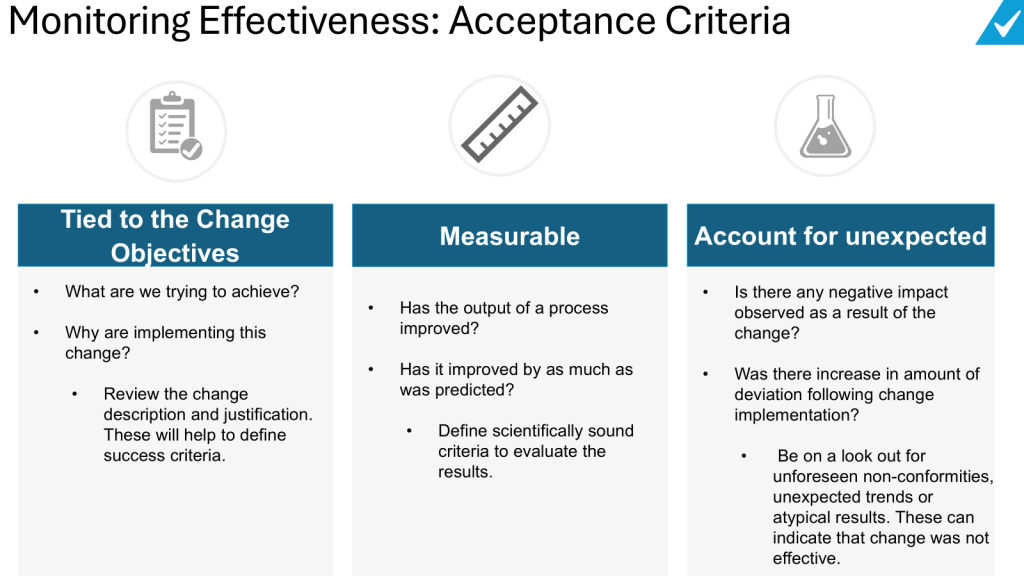
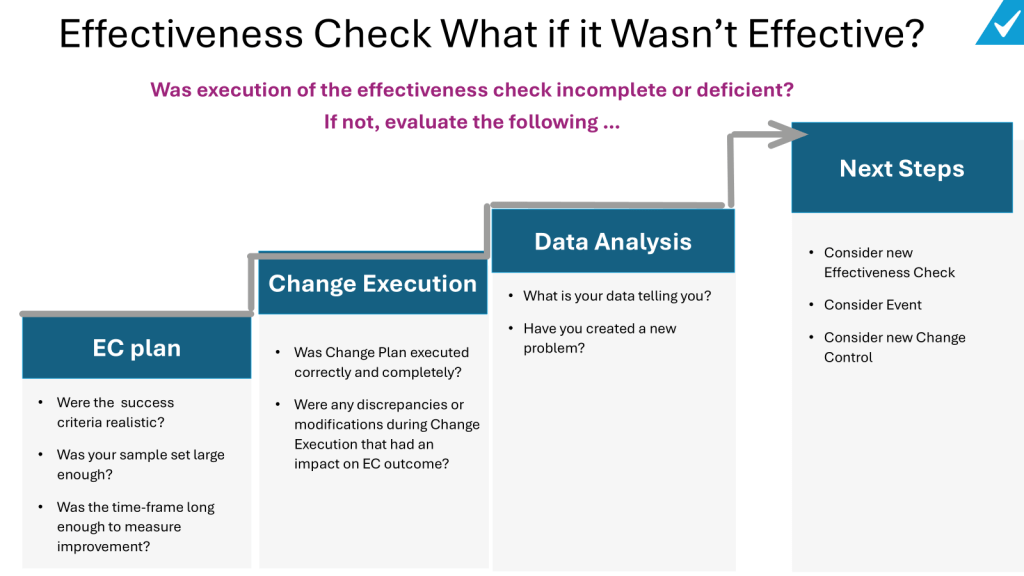
  • Conduct effectiveness checks to verify CAPA impact

7. Foster a Culture of Quality

Management plays a critical role in creating an environment that supports thorough investigations.

  • Providing adequate time and resources for investigations
  • Encouraging open reporting of deviations without fear of blame
  • Recognizing and rewarding thorough investigation practices
  • Leading by example in prioritizing quality and patient safety

Common Pitfalls in Investigating Microbiological Contamination Events

When investigating microbiological contamination events there are often several pitfalls that can hinder the effectiveness of their investigations.

Inadequate Root Cause Analysis

One of the most significant pitfalls is failing to conduct a thorough root cause analysis. Investigators may be tempted to attribute contamination to superficial causes like “human error” without digging deeper into systemic issues. This shallow approach often leads to ineffective corrective actions that fail to prevent recurrence. Build in safeguards to avoid jumping to conclusion.

Overlooking Environmental Factors

Investigators sometimes neglect to consider the broader environmental context of contamination events. Factors such as air handling systems, water quality, and even compressed air can harbor contaminants. Failing to examine these potential sources may result in missed opportunities for identifying the true origin of contamination.

Insufficient Microbial Identification

Relying solely on phenotypic identification methods can lead to misidentification of contaminants. Phenotypic results can incorrectly point to laboratory contamination, while genotypic testing revealed a production-related issue. Using a combination of identification methods, including genotypic techniques, can provide more accurate and actionable results.

Premature Conclusion of Investigations

Pressure to close investigations quickly can lead to premature conclusions. This was evident in the Sanofi warning letter, where the FDA noted that investigations into critical deviations, including multiple microbiological contamination events, were inadequate. Rushing the process can result in overlooking important details and failing to implement effective corrective actions.

Failure to Consider Cross-Contamination

Investigators may not always consider the possibility of cross-contamination between products or areas within the facility. The presence of drug-resistant microbial contaminants, as observed in some studies, underscores the importance of examining potential routes of transmission and implementing strict hygiene procedures.

Inadequate Documentation

Poor documentation of investigation activities and rationale can undermine the credibility of findings and make it difficult to justify conclusions to regulators. The FDA’s warning letter to Sanofi highlighted this issue, noting that not all investigational activities were documented.

Neglecting Trending and Data Analysis

Failing to analyze contamination events in the context of historical data and trends can lead to missed patterns and recurring issues. Establishing and maintaining a comprehensive microflora database is essential for effective contamination control strategies and can provide valuable insights for investigations.

Insufficient Training of Investigators

Lack of properly trained and competent investigators can significantly impact the quality of contamination investigations. Ensuring that personnel have the necessary skills and knowledge to conduct thorough, science-based investigations is crucial for identifying true root causes and implementing effective corrective actions.

Conclusion

The Sanofi warning letter serves as a reminder of the critical importance of thorough deviation investigations in pharmaceutical manufacturing. By implementing robust investigation and CAPA processes, companies can not only avoid regulatory action but also drive continuous improvement in their operations. This requires ongoing commitment to developing investigator competencies, using structured methods, looking beyond superficial causes, and fostering a culture that values quality and learning from deviations.

As the industry continues to evolve, effective investigation practices will be essential for ensuring product quality, patient safety, and regulatory compliance. By viewing deviations not as failures but as opportunities for improvement, pharmaceutical manufacturers can build more resilient and reliable production systems.