Change as Catalyst: Navigating Pharmaceutical Transformations with Purpose and People-First Leadership

As someone deeply embedded in the quality and regulatory systems that define our industry’s backbone, I’ve been a part of almost a dozen organizational upheavals in my 30 years, and witnessed from afar countless others. Some companies emerge stronger, their teams galvanized by new possibilities. Others fragment, losing critical talent and institutional knowledge just when they need it most. The difference invariably comes down to how leadership approaches the most human aspect of change: the emotional journey that every team member must navigate.

The Emotional Reality of Change

Let’s address what many executives prefer to sidestep: change is grief. When your familiar processes disappear, when trusted colleagues move to different roles, when the very systems you’ve mastered become obsolete—these losses are real and profound.The process of organizational grief follows a pattern similar to J. William Worden’s Four Tasks of Mourning: accepting the reality of what has been lost, processing the emotional pain of transition, adjusting to the new organizational reality, and finding ways to maintain connection to valuable aspects of the past while embracing the future.

In pharmaceutical M&As, this emotional cycle plays out with particular intensity. A quality manager who spent years perfecting validation protocols suddenly faces entirely new systems. A regulatory affairs specialist discovers their hard-won agency relationships may become irrelevant in a restructured organization. A manufacturing technician watches as decades of process knowledge gets labeled “legacy” and marked for replacement.

The instinct among well-meaning leaders is often to minimize these concerns or rush past them toward “more productive” discussions about synergies and efficiencies. This is a critical mistake. Research consistently shows that ignoring the emotional dimensions of change leads to higher resistance, decreased productivity, and catastrophic talent loss. In our industry, where specialized knowledge takes years to develop and regulatory missteps can cost millions, we cannot afford such oversight.

The Merger Reality Check

The numbers tell a sobering story. McKinsey research indicates that 47% of employees leave within the first year following a merger, with turnover reaching 75% within three years. In pharmaceutical companies, where regulatory expertise and process knowledge are irreplaceable assets, such exodus represents value destruction that far exceeds any projected synergies.

But these statistics reflect a choice, not an inevitability. Companies that approach M&A with genuine people-first principles achieve dramatically different outcomes. They recognize that every employee carries not just technical skills, but institutional memory, client relationships, and innovation potential that cannot be easily replaced.

Consider the emotional journey that unfolds in any significant merger. Initial excitement about growth opportunities quickly gives way to anxiety about job security. Questions multiply faster than answers: Will my role survive? Who will my new manager be? How will our proven quality systems integrate with theirs? The uncertainty creates what researchers call “change fatigue”—a state where even high-performing employees become disengaged and start planning their exit.

The Leadership Response: Compassion Meets Strategy

Effective leaders during transformation periods understand that acknowledging grief isn’t a sign of weakness—it’s a prerequisite for moving forward. Just as we would never expect someone who has lost a loved one to immediately return to peak performance, we cannot expect employees experiencing organizational loss to seamlessly adapt without support and time.

This doesn’t mean wallowing in nostalgia or avoiding necessary changes. Instead, it means creating space for honest dialogue about what’s being lost, what’s being gained, and how we’ll navigate the journey together. In practical terms, this involves several key strategies:

Transparent Communication as Foundation

Regular town halls, one-on-one conversations, and written updates that acknowledge both opportunities and challenges. Successful change requires consistent messaging about how the change will enhance rather than replace existing capabilities.

Structured Listening Programs

Creating formal mechanisms for employees to voice concerns, ask questions, and propose solutions. The best leaders understand that frontline employees often have the clearest view of integration challenges and opportunities.

Milestone Recognition

Celebrating both old achievements and new progress. This helps bridge the psychological gap between what was valuable before and what will be valuable going forward.

People Development as Transformation Strategy

Here’s where the opportunity truly lies: periods of organizational change, however challenging, represent unparalleled opportunities for individual growth and development. When done thoughtfully, transformation initiatives can accelerate employee capabilities in ways that benefit both individuals and organizations for years to come.

The most successful pharmaceutical companies approach M&A not as a cost-cutting exercise, but as a talent multiplication opportunity. They recognize that bringing together diverse teams with different expertise creates potential for innovation that neither organization could achieve alone.

Expanded Learning Opportunities

Mergers naturally create needs for new skills—from understanding different regulatory frameworks to mastering unfamiliar technologies. Forward-thinking companies invest heavily in training programs that help employees not just adapt, but excel in the expanded environment.

Cross-Functional Exposure

Integration projects provide unique opportunities for employees to work outside their usual domains. A quality assurance specialist might contribute to IT system selection. A regulatory affairs manager might help design new manufacturing processes. These experiences broaden skill sets and create more versatile, valuable team members.

Leadership Development Acceleration

Transformation periods naturally identify emerging leaders—those who step up during uncertainty, build bridges between different teams, and help others navigate change. Smart companies fast-track development programs for these individuals, recognizing that they represent the leadership pipeline for the integrated organization.

Innovation Through Integration

When teams from different companies combine their approaches, the result is often superior to either original method. This collaborative innovation process not only solves immediate integration challenges but builds creative problem-solving capabilities that benefit future projects.

The Regulatory Dimension

In our industry, change management takes on additional complexity due to regulatory requirements. Every process modification, system integration, or organizational restructure must comply with stringent guidelines from FDA, EMA, and other global agencies. This creates both challenges and opportunities for employee development.

The challenge is that regulatory compliance cannot be compromised during transition periods. Quality systems must remain validated, audit trails must stay intact, and critical processes cannot experience disruption. This constraint can make change feel slower and more bureaucratic than in other industries.

The opportunity, however, is significant. Employees who master change management within regulatory frameworks develop highly transferable skills. They learn to think systematically about risk, document decisions thoroughly, and maintain compliance while driving innovation. These capabilities are increasingly valuable as the industry embraces digital transformation and advanced manufacturing technologies.

Supporting Your People: Practical Strategies

Leading people through pharmaceutical industry changes requires specific, actionable approaches:

Create Psychological Safety
Team members must feel safe to express concerns, admit knowledge gaps, and ask for help without fear of job loss or career damage. This is particularly crucial in our industry where admitting uncertainty about regulatory requirements or quality procedures can feel risky.

Provide Multiple Development Pathways
Different employees will respond to change differently. Some thrive on new challenges, others prefer stability. Successful integration programs offer various ways for people to contribute and grow.

Maintain Connection to Purpose
Help employees understand how their individual roles contribute to the larger mission of improving patient outcomes. This connection provides stability during periods of organizational flux.

Invest in Skill-Building
Use integration challenges as opportunities to build capabilities that will serve employees throughout their careers. This might include project management skills, cross-cultural communication, or advanced technical training.

Recognize and Reward Adaptation
Publicly acknowledge employees who embrace change, help others through transitions, or find innovative solutions to integration challenges. This reinforces the behaviors you want to see more of.

The Long View: Building Resilient Organizations

The pharmaceutical companies that will thrive in the coming decade aren’t just those with the strongest pipelines or the largest market caps—they’re the ones with the most adaptable, engaged, and continuously developing workforce. In an industry where change is accelerating due to technological advancement, regulatory evolution, and competitive pressure, organizational resilience depends entirely on people resilience.

This means shifting from viewing change as a necessary evil to embracing it as a competitive advantage. Companies that become excellent at helping their people navigate transitions don’t just survive disruption—they seek it out as a source of growth and innovation.

The most successful pharmaceutical leaders I’ve observed share a common trait: they understand that every change initiative is fundamentally a people development initiative. They ask not just “How do we integrate these systems?” but “How do we help our people become more capable through this integration?” They measure success not just in synergies captured but in employees retained, skills developed, and innovation unlocked.

Moving Forward Together

Change in the pharmaceutical industry isn’t slowing down. If anything, the pace is accelerating as companies race to develop next-generation therapies, implement AI-driven processes, and adapt to evolving regulatory landscapes. The question isn’t whether your organization will face significant transitions—it’s whether you’ll use those transitions to strengthen your most valuable asset: your people.

The path forward requires courage to acknowledge the emotional reality of change, wisdom to invest in people development during difficult periods, and persistence to maintain focus on long-term capability building even when short-term pressures are intense. It means accepting that some sadness about what’s changing is not only normal but necessary—and that supporting people through that sadness is not just compassionate leadership, but strategic necessity.

As we navigate this era of transformation, let’s remember that behind every quality system, every regulatory filing, and every breakthrough therapy are real people with real concerns, real aspirations, and real potential. Our success in managing change will be measured not just by the deals we complete or the synergies we capture, but by the careers we launch, the capabilities we build, and the culture of continuous growth we create.

The future belongs to organizations that can transform while honoring their people, innovate while maintaining their values, and grow while nurturing the human connections that make all achievement possible. In an industry dedicated to healing, surely we can extend that same spirit of care to the transformation of our own organizations.
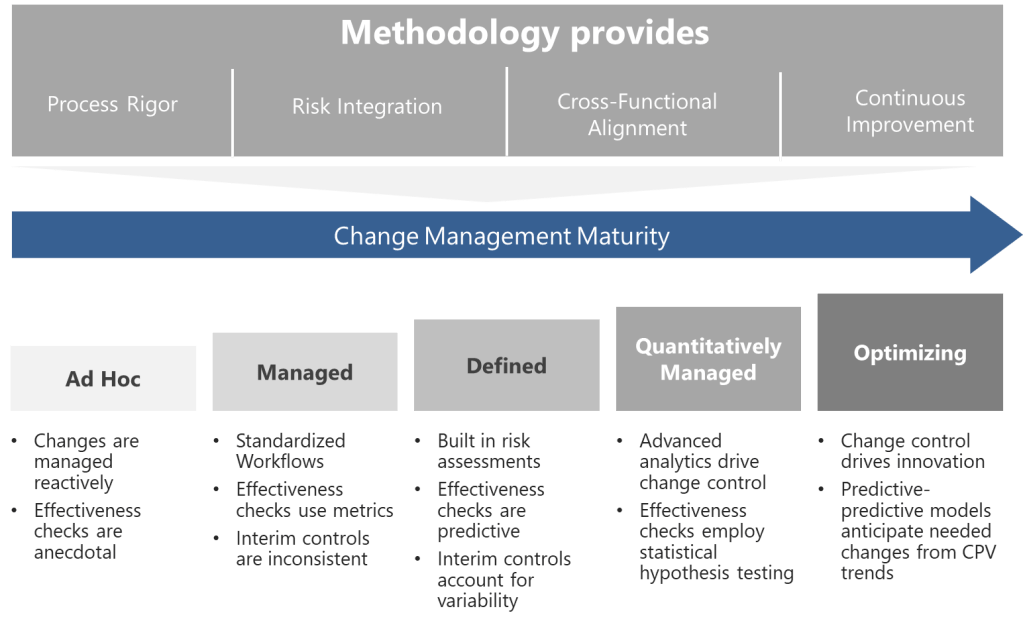
Building a Maturity Model for Pharmaceutical Change Control: Integrating ICH Q8-Q10

ICH Q8 (Pharmaceutical Development), Q9 (Quality Risk Management), and Q10 (Pharmaceutical Quality System) provide a comprehensive framework for transforming change management from a reactive compliance exercise into a strategic enabler of quality and innovation.

The ICH Q8-Q10 triad is my favorite framework pharmaceutical quality systems: Q8’s Quality by Design (QbD) principles establish proactive identification of critical quality attributes (CQAs) and design spaces, shifting the paradigm from retrospective testing to prospective control; Q9 provides the scaffolding for risk-based decision-making, enabling organizations to prioritize resources based on severity, occurrence, and detectability of risks; and, Q10 closes the loop by embedding these concepts into a lifecycle-oriented quality system, emphasizing knowledge management and continual improvement.

These guidelines create a robust foundation for change control. Q8 ensures changes align with product and process understanding, Q9 enables risk-informed evaluation, and Q10 mandates systemic integration across the product lifecycle. This triad rejects the notion of change control as a standalone procedure, instead positioning it as a manifestation of organizational quality culture.

The PIC/S Perspective: Risk-Based Change Management

The PIC/S guidance (PI 054-1) reinforces ICH principles by offering a methodology that emphasizes effectiveness as the cornerstone of change management. It outlines four pillars:

  1. Proposal and Impact Assessment: Systematic evaluation of cross-functional impacts, including regulatory filings, process interdependencies, and stakeholder needs.
  2. Risk Classification: Stratifying changes as critical/major/minor based on potential effects on product quality, patient safety, and data integrity.
  3. Implementation with Interim Controls: Bridging current and future states through mitigations like enhanced monitoring or temporary procedural adjustments.
  4. Effectiveness Verification: Post-implementation reviews using metrics aligned with change objectives, supported by tools like statistical process control (SPC) or continued process verification (CPV).

This guidance operationalizes ICH concepts by mandating traceability from change rationale to verified outcomes, creating accountability loops that prevent “paper compliance.”

A Five-Level Maturity Model for Change Control

Building on these foundations, I propose a maturity model that evaluates organizational capability across four dimensions, each addressing critical aspects of pharmaceutical change control systems:

  1. Process Rigor
    • Assesses the standardization, documentation, and predictability of change control workflows.
    • Higher maturity levels incorporate design space utilization (ICH Q8), automated risk thresholds, and digital tools like Monte Carlo simulations for predictive impact modeling.
    • Progresses from ad hoc procedures to AI-driven, self-correcting systems that preemptively identify necessary changes via CPV trends.
  2. Risk Integration
    • Measures how effectively quality risk management (ICH Q9) is embedded into decision-making.
    • Includes risk-based classification (critical/major/minor), use of the right tool, and dynamic risk thresholds tied to process capability indices (CpK/PpK).
    • At advanced levels, machine learning models predict failure probabilities, enabling proactive mitigations.
  3. Cross-Functional Alignment
    • Evaluates collaboration between QA, regulatory, manufacturing, and supply chain teams during change evaluation.
    • Maturity is reflected in centralized review boards, real-time data integration (e.g., ERP/LIMS connectivity), and harmonized procedures across global sites.
  4. Continuous Improvement
    • Tracks the organization’s ability to learn from past changes and innovate.
    • Incorporates metrics like “first-time regulatory acceptance rate” and “change-related deviation reduction.”
    • Top-tier organizations use post-change data to refine design spaces and update control strategies.

Level 1: Ad Hoc (Chaotic)

At this initial stage, changes are managed reactively. Procedures exist but lack standardization—departments use disparate tools, and decisions rely on individual expertise rather than systematic risk assessment. Effectiveness checks are anecdotal, often reduced to checkbox exercises. Organizations here frequently experience regulatory citations related to undocumented changes or inadequate impact assessments.

Progression Strategy: Begin by mapping all change types and aligning them with ICH Q9 risk principles. Implement a centralized change control procedure with mandatory risk classification.

Level 2: Managed (Departmental)

Changes follow standardized workflows within functions, but silos persist. Risk assessments are performed but lack cross-functional input, leading to unanticipated impacts. Effectiveness checks use basic metrics (e.g., # of changes), yet data analysis remains superficial. Interim controls are applied inconsistently, often overcompensating with excessive conservatism or being their in name only.

Progression Strategy: Establish cross-functional change review boards. Introduce the right level of formality of risk for changes and integrate CPV data into effectiveness reviews.

Level 3: Defined (Integrated)

The organization achieves horizontal integration. Changes trigger automated risk assessments using predefined criteria from ICH Q8 design spaces. Effectiveness checks leverage predictive analytics, comparing post-change performance against historical baselines. Knowledge management systems capture lessons learned, enabling proactive risk identification. Interim controls are fully operational, with clear escalation paths for unexpected variability.

Progression Strategy: Develop a unified change control platform that connects to manufacturing execution systems (MES) and laboratory information management systems (LIMS). Implement real-time dashboards for change-related KPIs.

Level 4: Quantitatively Managed (Predictive)

Advanced analytics drive change control. Machine learning models predict change impacts using historical data, reducing assessment timelines. Risk thresholds dynamically adjust based on process capability indices (CpK/PpK). Effectiveness checks employ statistical hypothesis testing, with sample sizes calculated via power analysis. Regulatory submissions for post-approval changes are partially automated through ICH Q12-enabled platforms.

Progression Strategy: Pilot digital twins for high-complexity changes, simulating outcomes before implementation. Formalize partnerships with regulators for parallel review of major changes.

Level 5: Optimizing (Self-Correcting)

Change control becomes a source of innovation. Predictive-predictive models anticipate needed changes from CPV trends. Change histories provide immutable audit trails across the product. Autonomous effectiveness checks trigger corrective actions via integrated CAPA systems. The organization contributes to industry-wide maturity through participation in various consensus standard and professional associations.

Progression Strategy: Institutionalize a “change excellence” function focused on benchmarking against emerging technologies like AI-driven root cause analysis.

Methodological Pillars: From Framework to Practice

Translating this maturity model into practice requires three methodological pillars:

1. QbD-Driven Change Design
Leverage Q8’s design space concepts to predefine allowable change ranges. Changes outside the design space trigger Q9-based risk assessments, evaluating impacts on CQAs using tools like cause-effect matrices. Fully leverage Q12.

2. Risk-Based Resourcing
Apply Q9’s risk prioritization to allocate resources proportionally. A minor packaging change might require a 2-hour review by QA, while a novel drug product process change engages R&D, regulatory, and supply chain teams in a multi-week analysis. Remember, the “level of effort commensurate with risk” prevents over- or under-management.

3. Closed-Loop Verification
Align effectiveness checks with Q10’s lifecycle approach. Post-change monitoring periods are determined by statistical confidence levels rather than fixed durations. For instance, a formulation change might require 10 consecutive batches within CpK >1.33 before closure. PIC/S-mandated evaluations of unintended consequences are automated through anomaly detection algorithms.

Overcoming Implementation Barriers

Cultural and technical challenges abound in maturity progression. Common pitfalls include:

  • Overautomation: Implementing digital tools before standardizing processes, leading to “garbage in, gospel out” scenarios.
  • Risk Aversion: Misapplying Q9 to justify excessive controls, stifling continual improvement.
  • Siloed Metrics: Tracking change closure rates without assessing long-term quality impacts.

Mitigation strategies involve:

  • Co-developing procedures with frontline staff to ensure usability.
  • Training on “right-sized” QRM—using ICH Q9 to enable, not hinder, innovation.
  • Adopting balanced scorecards that link change metrics to business outcomes (e.g., time-to-market, cost of quality).

The Future State: Change Control as a Competitive Advantage

Change control maturity increasingly differentiates market leaders. Organizations reaching Level 5 capabilities can leverage:

  • Adaptive Regulatory Strategies: Real-time submission updates via ICH Q12’s Established Conditions framework.
  • AI-Enhanced Decision Making: Predictive analytics for change-related deviations, reducing downstream quality events.
  • Patient-Centric Changes: Direct integration of patient-reported outcomes (PROs) into change effectiveness criteria.

Maturity as a Journey, Not a Destination

The proposed model provides a roadmap—not a rigid prescription—for advancing change control. By grounding progression in ICH Q8-Q10 and PIC/S principles, organizations can systematically enhance their change agility while maintaining compliance. Success requires viewing maturity not as a compliance milestone but as a cultural commitment to excellence, where every change becomes an opportunity to strengthen quality and accelerate innovation.

In an era of personalized medicines and decentralized manufacturing, the ability to manage change effectively will separate thriving organizations from those merely surviving. The journey begins with honest self-assessment against this model and a willingness to invest in the systems, skills, and culture that make maturity possible.

The Effective Date of Documents

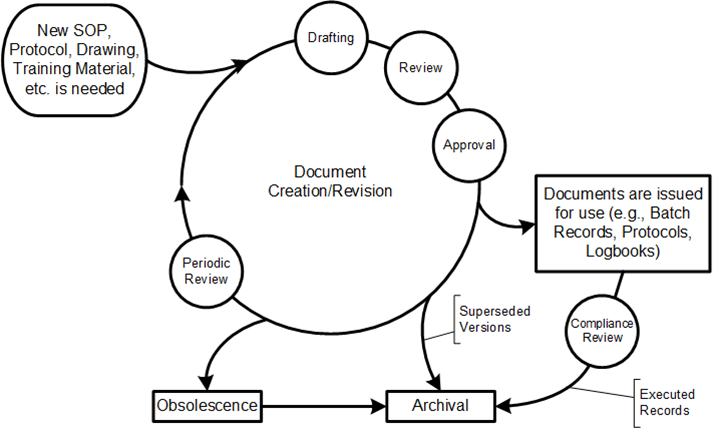
Document change control has a core set of requirements for managing critical information throughout its lifecycle. These requirements encompass:

  1. Approval of documents based on fit-for-purpose and fit-for-use before issuance
  2. Review and document updates as needed (including reapprovals)
  3. Managing changes and revision status
  4. Ensuring availability of current versions
  5. Maintaining document legibility and identification
  6. Controlling distribution of external documents

This lifecycle usually has three critical dates associated with approval:

  • Approval Date: When designated authorities have reviewed and approved the document
  • Issuance Date: When the document is released into the document management system
  • Effective Date: When the document officially takes effect and must be followed

These dates are dependent on the type of document and can change as a result of workflow decisions.

Type of DocumentApproval DateIssuance dateEffective Date
Functional Date Approved by final approver (sequential or parallel)Date Training Made AvailableEnd of Training Period
RecordDate Approved by final approver (sequential or parallel)Usually automated to be same as Date ApprovedUsually same as Date Approved
ReportDate Approved by final approver (sequential or parallel)Usually automated to be same as Date ApprovedUsually same as Date Approved

At the heart of the difference between these three days is the question of implementation and the Effective Date. At its core, the effective date is the date on which the requirements, instructions, or obligations in a document become binding for all affected parties. In the context of GxP document management, this represents the moment when:

  • Previous versions of the document are officially superseded
  • All operations must follow the new procedures outlined in the document
  • Training on the new procedures must be completed
  • Compliance audits will use the new document as their reference standard

Why Training Periods Matter in GxP Environments

One of the most frequently overlooked aspects of document management is the implementation period between document approval and its effective date. This period serves a critical purpose: ensuring that all affected personnel understand the document’s content and can execute its requirements correctly before it becomes binding.

In order to implement a new process change in a compliant manner, people must be trained in the new procedure before the document becomes effective. This fundamental principle ensures that by the time a new process goes “live,” everyone is prepared to perform the revised activity correctly and training records have been completed. Without this preparation period, organizations risk introducing non-compliance at the very moment they attempt to improve quality.

The implementation period bridges the gap between formal approval and practical application, addressing the human element of quality systems that automated solutions alone cannot solve.

Selecting Appropriate Implementation Periods

When configuring document change control systems, organizations must establish clear guidelines for determining implementation periods. The most effective approach is to build this determination into the change control workflow itself.

Several factors should influence the selection of implementation periods:

  • Urgency: In cases of immediate risk to patient safety or product quality, implementation periods may be compressed while still ensuring adequate training.
  • Risk Assessment: Higher-risk changes typically require more extensive training and therefore longer implementation periods.
  • Operational Impact: Changes affecting critical operations may need carefully staged implementation.
  • Training Complexity: Documents requiring hands-on training necessitate longer periods than read-only procedures.
  • Resource Availability: Consider the availability of trainers and affected personnel

Determining Appropriate Training Periods

The time required for training should be determined during the impact assessment phase of the change approval process. This assessment should consider:

  1. The number of people requiring training
  2. The complexity of the procedural changes
  3. The type of training required (read-only versus observed assessment)
  4. Operational constraints (shift patterns, production schedules)

Many organizations standardize on a default period (typically two weeks), but the most effective approach tailors the implementation period to each document’s specific requirements. For critical processes with many stakeholders, longer periods may be necessary, while simple updates affecting few staff might require only minimal time.

Consider this scenario: Your facility operates two shifts with 70 people during the day and 30 at night. An updated SOP requires all operators to complete not just read-only training but also a one-hour classroom assessment. If manufacturing schedules permit only 10 operators per shift to attend training, you would need a minimum of 7 days before the document becomes effective. Without this calculated implementation period, every operator would instantly become non-compliant when the new procedure takes effect.

Early Use of Documents

The distinction between a procedure’s approval date and its effective date serves a critical purpose. This gap allows for proper training and implementation before the procedure becomes binding. However, there are specific circumstances when personnel might appropriately use a procedure they’ve been trained on before its official effective date.

1. Urgent Safety or Quality Concerns

When there is an immediate risk to patient safety or product quality, the time between approval and effectiveness may be compressed. For these cases there should be a mechanism to move up the effective date.

In such cases, the organization should prioritize training and implementation while still maintaining proper documentation of the accelerated timeline.

2. During Implementation Period for Training Purposes

The implementation period itself is designed to allow for training and controlled introduction of the new procedure. During this time, a limited number of trained personnel may need to use the new procedure to:

  • Train others on the new requirements
  • Test the procedure in a controlled environment
  • Prepare systems and equipment for the full implementation

These are all tasks that should be captured in the change control.

3. For Qualification and Validation Activities

During qualification protocol execution, procedures that have been approved but are not yet effective may be used under controlled conditions to validate systems, equipment, or processes. These activities typically occur before full implementation and are carefully documented to demonstrate compliance. Again these are captured in the change control and appropriate validation plan.

In some regulatory contexts, such as IRB approvals in clinical research, there are provisions for “approval with conditions” where certain activities may proceed before all requirements are finalized2. While not directly analogous to procedure implementation, this demonstrates regulatory recognition of staged implementation approaches.

Required Controls When Using Pre-Effective Procedures

If an organization determines it necessary to use an approved but not yet effective procedure, the following controls should be in place:

  1. Documented Risk Assessment: A risk assessment should be conducted and documented to justify the early use of the procedure, especially considering potential impacts on product quality, data integrity, or patient safety.
  2. Authorization: Special authorization from management and quality assurance should be obtained and documented.
  3. Verification of Training: Evidence must be available confirming that the individuals using the procedure have been properly trained and assessed on the new requirements.

What About Parallel Compliance with Current Effective Procedures?

In all cases, the currently effective procedure must still be followed until the new procedure’s effective date. However there are changes, usually as a result of process improvement, usually in knowledge work processes where it is possible to use parts of the new procedure. For example, the new version of the deviation procedure adds additional requirements for assessing the deviation, or a new risk management tool is rolled out. In these cases you can meet the new compliance path without violating the current compliance path. The organization should demonstrate how both compliance paths are being maintained.

In cases where the new compliance path does not contain the old, but instead offers a new pathway, it is critical to maintain one way of work-as-prescribed and the effective date is a solid line.

Organizations should remember that the implementation period exists to ensure a smooth, compliant transition between procedures. Any exception to this standard approach should be carefully considered, well-justified, and thoroughly documented to maintain GxP compliance and minimize regulatory risk.

Effectiveness Check Strategy

Effectiveness checks are a critical component of a robust change management system, as outlined in ICH Q10 and emphasized in the PIC/S guidance on risk-based change control. These checks serve to verify that implemented changes have achieved their intended objectives without introducing unintended consequences. The importance of effectiveness checks cannot be overstated, as they provide assurance that changes have been successful and that product quality and patient safety have been maintained or improved.

When designing effectiveness checks, organizations should consider the complexity and potential impact of the change. For low-risk changes, a simple review of relevant quality data may suffice. However, for more complex or high-risk changes, a comprehensive evaluation plan may be necessary, potentially including enhanced monitoring, additional testing, or even focused stability studies. The duration and scope of effectiveness checks should be commensurate with the nature of the change and the associated risks.

The PIC/S guidance emphasizes the need for a risk-based approach to change management, including effectiveness checks. This aligns well with the principles of ICH Q9 on quality risk management. By applying risk assessment techniques, companies can determine the appropriate level of scrutiny for each change and tailor their effectiveness checks accordingly. This risk-based approach ensures that resources are allocated efficiently while maintaining a high level of quality assurance.

An interesting question arises when considering the relationship between effectiveness checks and continuous process verification (CPV) as described in the FDA’s guidance on process validation. CPV involves ongoing monitoring and analysis of process performance and product quality data to ensure that a state of control is maintained over time. This approach provides a wealth of data that could potentially be leveraged for change control effectiveness checks.

While CPV does not eliminate the need for effectiveness checks in change control, it can certainly complement and enhance them. The robust data collection and analysis inherent in CPV can provide valuable insights into the impact of changes on process performance and product quality. This continuous stream of data can be particularly useful for detecting subtle shifts or trends that might not be apparent in short-term, targeted effectiveness checks.

To leverage CPV mechanisms for change control effectiveness checks, organizations should consider integrating change-specific monitoring parameters into their CPV plans when implementing significant changes. This could involve temporarily increasing the frequency of data collection for relevant parameters, adding new monitoring points, or implementing statistical tools specifically designed to detect the expected impacts of the change.

For example, if a change is made to improve the consistency of a critical quality attribute, the CPV plan could be updated to include more frequent testing of that attribute, along with statistical process control charts designed to detect the anticipated improvement. This approach allows for a seamless integration of change effectiveness monitoring into the ongoing CPV activities.

It’s important to note, however, that while CPV can provide valuable data for effectiveness checks, it should not completely replace targeted assessments. Some changes may require specific, time-bound evaluations that go beyond the scope of routine CPV. Additionally, the formal documentation of effectiveness check conclusions remains a crucial part of the change management process, even when leveraging CPV data.

In conclusion, while continuous process verification offers a powerful tool for monitoring process performance and product quality, it should be seen as complementary to, rather than a replacement for, traditional effectiveness checks in change control. By thoughtfully integrating CPV mechanisms into the change management process, organizations can create a more robust and data-driven approach to ensuring the effectiveness of changes while maintaining compliance with regulatory expectations. This integrated approach represents a best practice in modern pharmaceutical quality management, aligning with the principles of ICH Q10 and the latest regulatory guidance on risk-based change management.

Building a Good Effectiveness Check

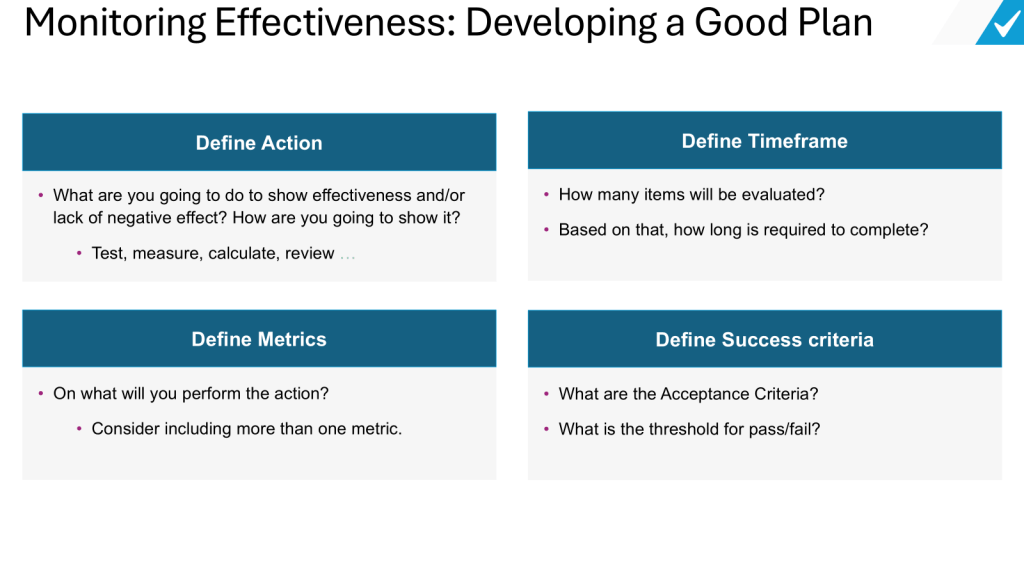
To build a good effectiveness check for a change control, consider the following key elements:

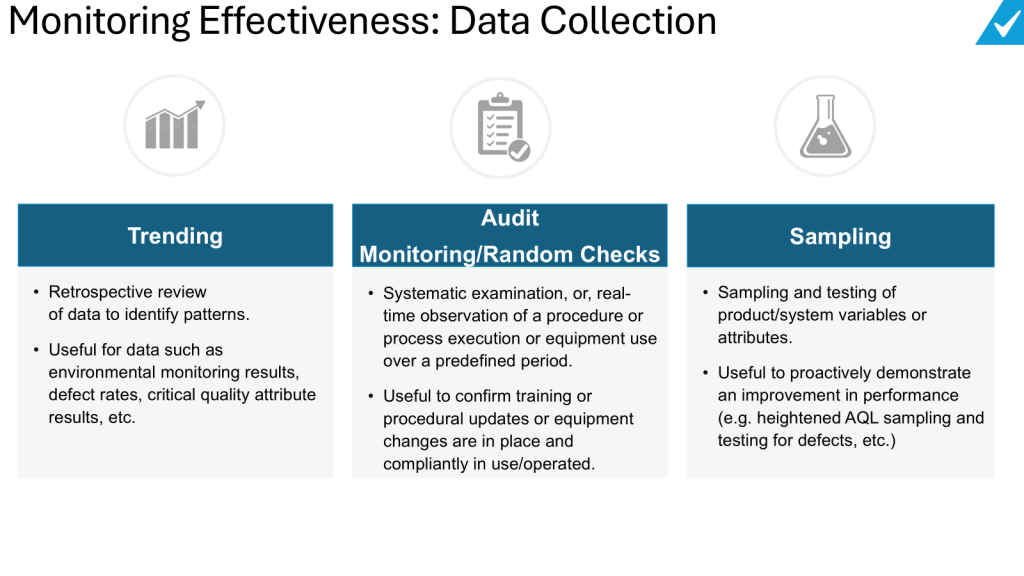
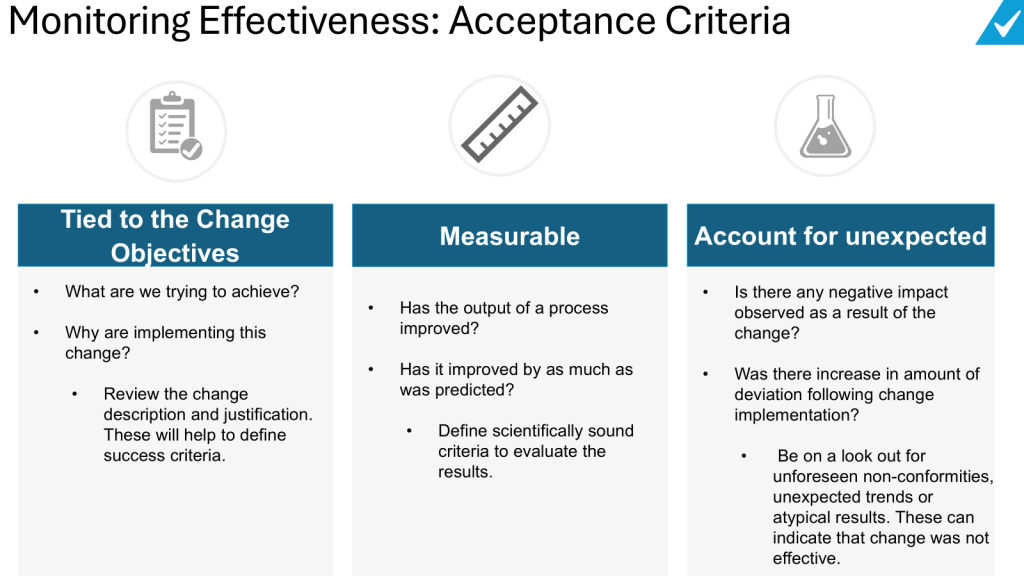
Define clear objectives: Clearly state what the change is intended to achieve. The effectiveness check should measure whether these specific objectives were met.

Establish measurable criteria: Develop quantitative and/or qualitative criteria that can be objectively assessed to determine if the change was effective. These could include metrics like reduced defect rates, improved yields, decreased cycle times, etc.

Set an appropriate timeframe: Allow sufficient time after implementation for the change to take effect and for meaningful data to be collected. This may range from a few weeks to several months depending on the nature of the change.

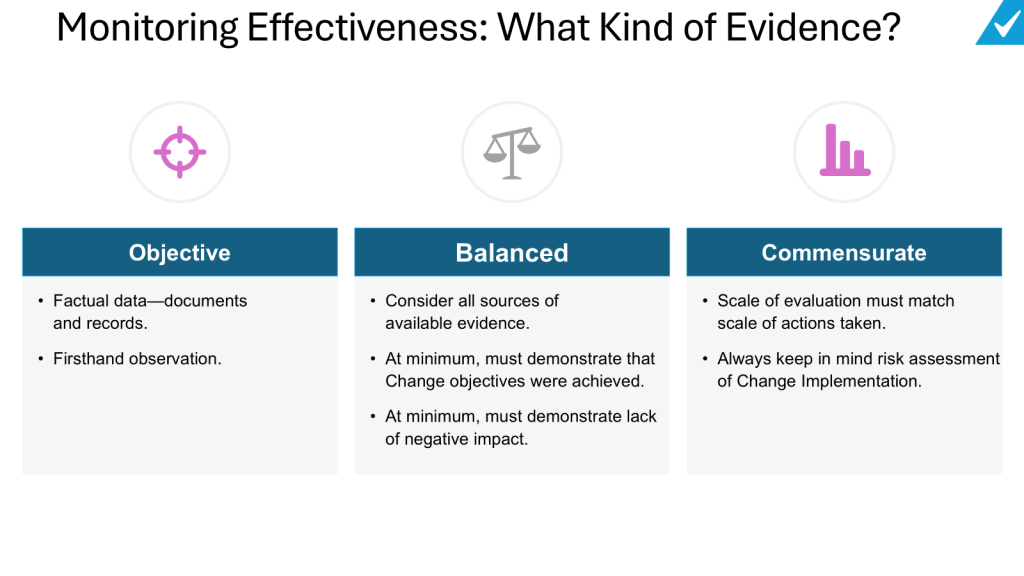
Use multiple data sources: Incorporate various relevant data sources to get a comprehensive view of effectiveness. This could include process data, quality metrics, customer feedback, employee input, etc.

Data collection and data source selection. When collecting data to assess change effectiveness, it’s important to consider multiple relevant data sources that can provide objective evidence. This may include process data, quality metrics, customer feedback, employee input, and other key performance indicators related to the specific change. The data sources should be carefully selected to ensure they can meaningfully demonstrate whether the change objectives were achieved. Both quantitative and qualitative data should be considered. Quantitative data like process parameters, defect rates, or cycle times can provide concrete metrics, while qualitative data from stakeholder feedback can offer valuable context. The timeframe for data collection should be appropriate to allow the change to take effect and for meaningful trends to emerge. Where possible, comparing pre-change and post-change data can help illustrate the impact. Overall, a thoughtful approach to data collection and source selection is essential for conducting a comprehensive evaluation of change effectiveness.

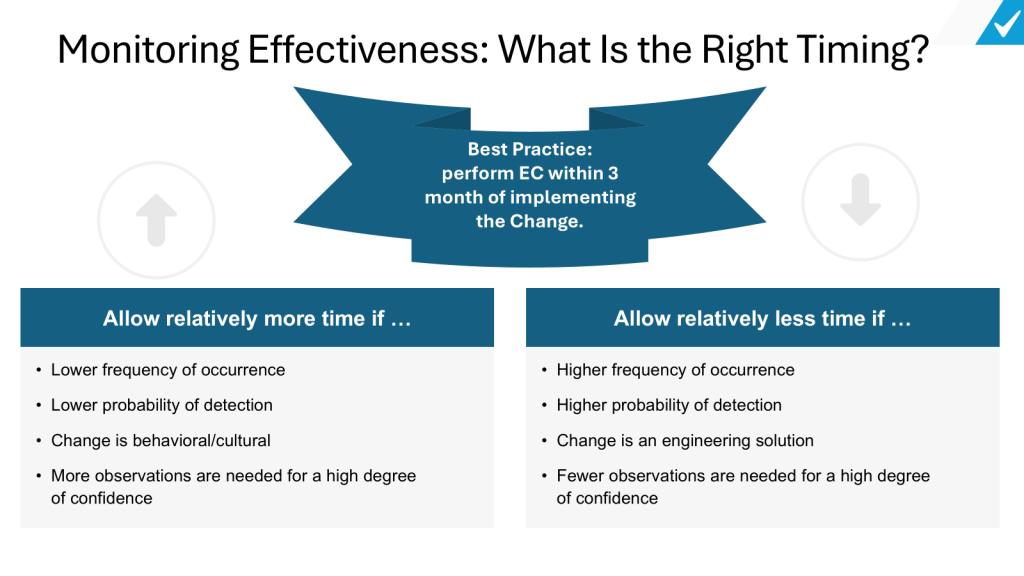
Determine the ideal timeframe. The appropriate duration should allow sufficient time for the change to be fully implemented and for its impacts to be observed, while still being timely enough to detect and address any issues. Generally, organizations should allow relatively more time for changes that have a lower frequency of occurrence, lower probability of detection, involve behavioral or cultural shifts, or require more observations to reach a high degree of confidence. Conversely, less time may be needed for changes with higher frequency, higher detectability, engineering-based solutions, or where fewer observations can provide sufficient confidence. As a best practice, many organizations aim to perform effectiveness checks within 3 months of implementing a change. However, the specific timeframe should be tailored to the nature and complexity of each individual change. The key is to strike a balance – allowing enough time to gather meaningful data on the change’s impact, while still enabling timely corrective actions if needed.

Compare pre- and post-change data: Analyze data from before and after the change implementation to demonstrate improvement.

Consider unintended consequences: Look for any negative impacts or unintended effects of the change, not just the intended benefits.

Involve relevant stakeholders: Get input from operators, quality personnel, and other impacted parties when designing and executing the effectiveness check.

Document the plan: Clearly document the effectiveness check plan, including what will be measured, how, when, and by whom. This should be approved with the change plan.

Define review and approval: Establish who will review the effectiveness check results and approve closure of the change.

Link to continuous improvement: Use the results to drive further improvements and inform future changes.

    By incorporating these elements, you can build a robust effectiveness check that provides meaningful data on whether the change achieved its intended purpose without introducing new issues. The key is to make the effectiveness check specific to the change being implemented while keeping it practical to execute.

    Determining the effectiveness of a change involves several key steps, as outlined in the provided document and aligned with best practices in change management:

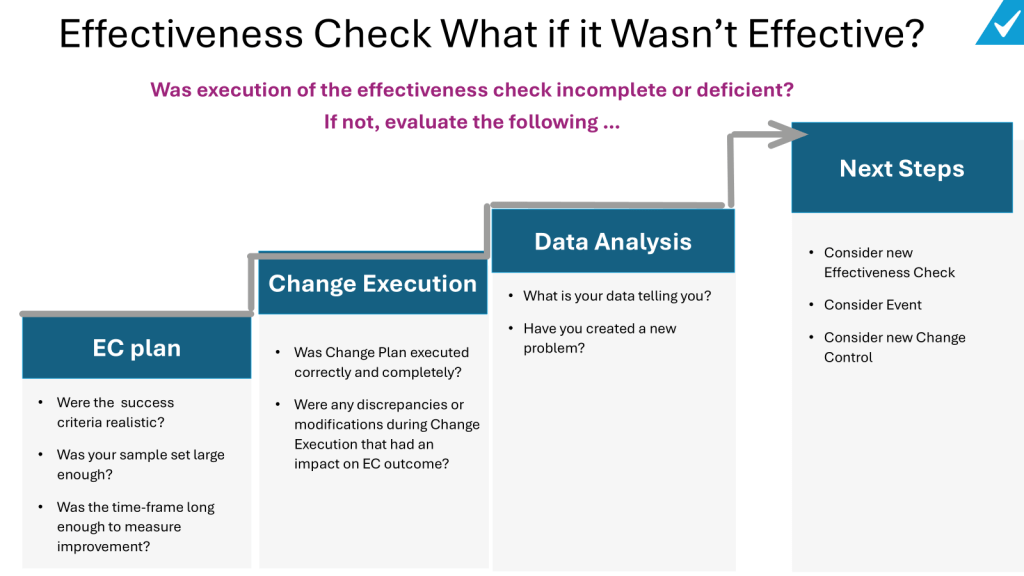
    What to Do If the Change Is Not Effective

    If the effectiveness check reveals that the change did not meet its objectives or introduced unintended consequences, several steps can be taken:

    1. Re-evaluate the Change Plan: Consider whether the change was executed as planned. Were there any discrepancies or modifications during execution that might have impacted the outcome?
    2. Assess Success Criteria: Reflect on whether the success criteria were realistic. Were they too ambitious or not aligned with the change’s potential impact?
    3. Consider Additional Data Collection: Determine if the sample size was adequate or if the timeframe for data collection was sufficient. Sometimes, more data or a longer observation period may be needed to accurately assess effectiveness.
    4. Identify New Problems: If the change introduced new issues, these should be documented and addressed. This might involve initiating new corrective actions or revising the change to mitigate these effects.
    5. Develop a New Effectiveness Check or Change Control: If the initial effectiveness check was incomplete or inadequate, consider developing a new plan. This might involve revising the metrics, data collection methods, or acceptance criteria to better assess the change’s impact.
    6. Document Lessons Learned: Regardless of the outcome, document the findings and any lessons learned. This information can be invaluable for improving future change management processes and ensuring that changes are more effective.

    By following these steps, organizations can ensure that changes are thoroughly evaluated and that any issues are promptly addressed, ultimately leading to continuous improvement in their processes and products.

    Handling Standard and Normal Changes from GAMP5

    The folks behind GAMP5 are perhaps the worst in naming things. And one of the worse is the whole standard versus normal changes. Maybe when naming two types of changes do not use strong synonyms. Seems like good advice in general, when naming categories don’t draw from a list of synonyms.

    Based on the search results, here are the key differences between a standard change and a normal change in GAMP 5:

    Standard Change

    1. Pre-approved changes that are considered relatively low risk and performed frequently.
    2. Follows a documented process that has been reviewed and approved by Change Management.
    3. Does not require approval each time it is implemented.
    4. Often tracked as part of the IT Service Request process rather than the GxP Change Control process.
    5. Can be automated to increase efficiency.
    6. Has well-defined, repeatable steps.

    So a standard change is one that is always done the same way, can be proceduralized, and is of low risk. In exchange for doing all that work, you get to do them by a standard process without the evaluation of a GxP change control, because you have already done all the evaluation and the implementation is the same every single time. If you need to perform evaluation or create an action plan, it is not a standard change.

    Normal Change

    1. Any change that is not a Standard change or Emergency change.
    2. Requires full Change Management review for each occurrence.
    3. Raised as a GxP Change Control.
    4. Approved or rejected by the Change Manager, which usually means Quality review.
    5. Often involves non-trivial changes to services, processes, or infrastructure.
    6. May require somewhat unique or novel approaches.
    7. Undergoes assessment and action planning.

    The key distinction is that Standard changes have pre-approved processes and do not require individual approval, while Normal changes go through the full change management process each time. Standard changes are meant for routine, low-risk activities, while Normal changes are for more significant modifications that require careful review and approval.

    What About Emergency Changes

    An emergency change is a change that must be implemented immediately to address an unexpected situation that requires urgent action to:

    1. Ensure continued operations
    2. Address a critical issue or crisis

    Key characteristics of emergency changes in GAMP 5:

    1. They need to be expedited quickly to obtain authorization and approval before implementation.
    2. They follow a fast-track process compared to normal changes.
    3. A full change control should be filed for evaluation within a few business days after execution.
    4. Impacted items are typically withheld from further use pending evaluation of the emergency change.
    5. They represent a situation where there is an acceptable level of risk expected due to the urgent nature.
    6. Specific approvals and authorizations are still required, but through an accelerated process.
    7. Emergency changes may not be as thoroughly tested as normal changes due to time constraints.
    8. A remediation or back-out process should be included in case issues arise from the rapid implementation.
    9. The goal is to address the critical situation while minimizing impact to live services.

    The key difference from standard or normal changes is that emergency changes follow an expedited process to deal with urgent, unforeseen issues that require immediate action, while still maintaining some level of control and documentation. However, they should still be evaluated and fully documented after implementation.