
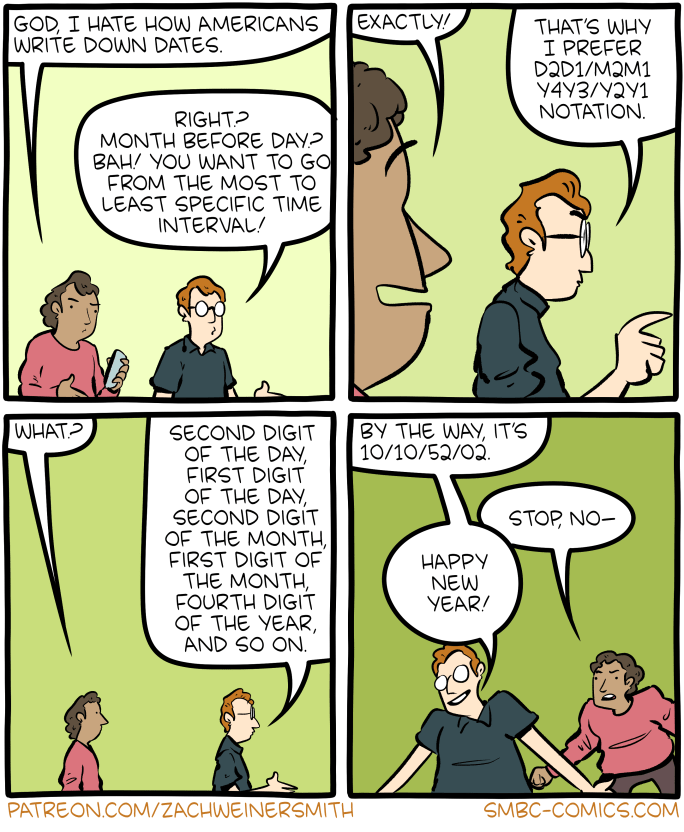
Ah, the New Year. A time of trying to remember how to write the correct date and mostly failing. A time where I practice my capability to make simple corrections on forms still completed by hand.
Ah, the New Year. A time of trying to remember how to write the correct date and mostly failing. A time where I practice my capability to make simple corrections on forms still completed by hand.
I spend a lot of time discussing uncertainty and how to address it in our quality system and within our organization. However, we often find ourselves at a crossroads, faced with uncertainty and the unknown in our careers – certainly, the last few years have been hard in biotech. My current approach has been to reframe this uncertainty not as an obstacle but as a feature of my journey—something it might have taken me 54 years to learn. I am striving to embrace the concept of “trusting the process” personally and as a quality practitioner so I can navigate life’s twists and turns with greater ease and purpose. As we go into the New Year, here are my current approaches.
If you are like me, it is easy to get lost in the day-to-day pressures of work. There is always a new issue, a new course correction. It is easy to focus on the overwhelming big picture to our next best steps and forget that the journey counts. My QA problem-solving self often wants to focus on problem-solving and forgets that we must strike a balance between action and acceptance, recognizing that while we can’t control every outcome, we can control our response to each situation. I am working to maintain agency in the present moment while surrendering to the unfolding path ahead.
Uncertainty, often viewed as a source of anxiety, can actually be a powerful catalyst for growth and innovation. By reframing uncertainty as a feature, we can open ourselves up to new possibilities and unexpected opportunities. This mindset shift encourages us to:
One practical way to embrace uncertainty is through the practice of running small experiments. These controlled tests allow us to:
We create a culture of continuous learning and improvement by incorporating regular experimentation into our personal and professional lives. This approach is particularly valuable when balancing the demands of serving an organization while pursuing personal growth.
The challenge of running small experiments while fulfilling organizational responsibilities is common. Here are some strategies to help strike that balance:
Trusting the journey is not about blind faith or passivity. Instead, it’s about developing a deep relationship with your wisdom and decision-making process. This trust is built over time through:
As you cultivate this trust, you’ll find yourself better equipped to navigate uncertainty confidently and gracefully.
Trusting the journey can feel counterintuitive in a world that often demands certainty and immediate results. However, by embracing uncertainty as a feature of our growth process, we open ourselves to a richer, more fulfilling experience. Through small experiments, mindful action, and a willingness to surrender to the unknown, we can create a life and career that is both purposeful and adaptable.
Remember, the journey itself is where true growth and discovery happen. By trusting the process and focusing on our next best steps, we can navigate the complexities of life with greater ease and authenticity. So, take that first step, run that small experiment, and trust that the journey will unfold in ways you may never have imagined.
This is my New Year’s plan: to continue to apply to my personal space the skills and mindsets that have made my career so fruitful.
It has been a wild ride this past week. I know my family and I have been on an emotional rollercoaster, and I bet many of you are feeling the same way. One question that keeps popping up in our household (and probably yours too) is: “What does this mean for my job, and should I be freaking out?”
First things first, take a deep breath. In the immediate future, it’s unlikely that we’ll see any massive shifts in pharma world. Most of us can probably continue our daily grind without too much disruption. So, for now, it’s business as usual, folks! Unfortunately that business has been pretty tough the last two years.
Now, here’s where things get a bit murky. The long-term outlook? Well, it’s like trying to predict the weather a year from now – pretty darn tricky. What we do know is that this situation has cranked up the uncertainty dial, and let’s face it, uncertainty in the pharmaceutical world is very unwelcome.
We already have a hefty dose of uncertainty due to the 2024 Supreme Court decisions, which are slowly starting to have impact but the boundaries are really unknown. Add to that an incoming administration with a noted dislike (and a set of vendettas) against the HHS and FDA, and government employees. And on top of that we have the wild card of Robert F. Kennedy Jr. being able to “go wild on health” – whatever that ends up meaning but my fear is nothing good.
But I also need to be pragmatic, and as a quality individual involved in risk management and managing uncertainty, I need to start evaluating impacts. Here are the things I am looking at.
On-Shoring has been a growing conversation for years. We are an incredibly global industry and have been hard hit by a variety of supply disruptions:
Add to this cocktail the ongoing GMP issues with sites in key manufacturing countries like India and China, and you’ve got a recipe for some serious supply chain headache,
Add to that we have a whole lot of talk of tariffs. The incoming Trump administration is practically drooling to raise tariffs which will have some serious implications:
Here’s where things get scary. We are seeing an increase in both price and availability issues for critical raw materials and components. And it is not just about overseas suppliers – even our domestic suppliers are feeling the heat. Remember the great plastics shortage that hit our Single-Use System (SUS) component suppliers? That is potentially just the tip of the iceberg.
Now, let’s connect the dots:
Here are my fears where RFK Jr can really do damage. He may push for less stringent approval processes for certain drugs or treatments he favors, potentially allowing more alternative or “natural” products to enter the market. Conversely, he could impose stricter regulations on vaccines and other pharmaceutical products he views skeptically (which is all of them).
There may be efforts to roll back regulatory controls that currently protect public health, potentially allowing unproven treatments to reach consumers more easily. All of this uncertainty is going to be difficult and will impact company’s ability to raise funds. Which will impact the job market. And it has been a bad couple of years for layoffs.
I’m often asked where we’ll first see the real impact of AI/ML in GMP. I don’t think I’ve hidden my skepticism on the topic in the past, but people keep asking, so here’s one of the first places I think it will really impact our field.
AI algorithms, coupled with advanced sensing technology, can detect and respond to minute changes in critical parameters. I can, today, easily imagine a system that not only detects abnormal temperatures but also automatically adjusts pressure and pH levels to maintain optimal conditions to a level of responsiveness not possible in today’s automation system, with continuous monitoring of every aspect of the production process in real-time. This will drive huge gains in predictive maintenance and data-driven decision making for improved product quality through early defect detection, especially in continuous manufacturing processes.
AI and machine learning algorithms will more and more empower manufacturers to analyze complex data sets, revealing hidden patterns and trends that were previously undetectable. This deep analysis will allow for more informed decision-making and process optimization, leading to significant improvements in manufacturing efficiency. Including:
There is a lot of hype in this area, I personally do not see us as close as some would say, but we are seeing real implementations in this area, and I think we are on the cusp of some very interesting capabilities.
It probably is good for the public interest, and frankly for the manufacturing ecosystem, for the FDA to be directed (and given the authority) to disclose the third party whose “facility-related deficiencies” identified during a Current Good Manufacturing Practices (cGMP) results in a CRL.
A little public shaming would probably help deal with widespread structural deficiencies amongst CDMOs.
Something certainly needs to happen, this is happening way to often.
 Investigations of a Dog