USP <1225> Revised: Aligning Compendial Validation with ICH Q2(R2) and Q14’s Lifecycle Vision

The United States Pharmacopeia’s proposed revision of General Chapter <1225> Validation of Compendial Procedures, published in Pharmacopeial Forum 51(6), represents the continuation of a fundamental shift in how we conceptualize analytical method validation—moving from static demonstration of compliance toward dynamic lifecycle management of analytical capability.

This gets to the heart of a challenge us to think differently about what validation actually means. The revised chapter introduces concepts like reportable result, fitness for purpose, replication strategy, and combined evaluation of accuracy and precision that force us to confront uncomfortable questions: What are we actually validating? For what purpose? Under what conditions? And most critically—how do we know our analytical procedures remain fit for purpose once validation is “complete”?

The timing of this revision is deliberate. USP is working to align <1225> more closely with ICH Q2(R2) Validation of Analytical Procedures and ICH Q14 Analytical Procedure Development, both finalized in 2023. Together with the already-official USP <1220> Analytical Procedure Life Cycle (May 2022), these documents form an interconnected framework that demands we abandon the comfortable fiction that validation is a discrete event rather than an ongoing commitment to analytical quality.

Traditional validation approaches cn create the illusion of control without delivering genuine analytical reliability. Methods that “passed validation” fail when confronted with real-world variability. System suitability tests that looked rigorous on paper prove inadequate for detecting performance drift. Acceptance criteria established during development turn out to be disconnected from what actually matters for product quality decisions.

The revised USP <1225> offers conceptual tools to address these failures—if we’re willing to use them honestly rather than simply retrofitting compliance theater onto existing practices. This post explores what the revision actually says, how it relates to ICH Q2(R2) and Q14, and what it demands from quality leaders who want to build genuinely robust analytical systems rather than just impressive validation packages.

The Validation Paradigm Shift: From Compliance Theater to Lifecycle Management

Traditional analytical method validation follows a familiar script. We conduct studies demonstrating acceptable performance for specificity, accuracy, precision, linearity, range, and (depending on the method category) detection and quantitation limits. We generate validation reports showing data meets predetermined acceptance criteria. We file these reports in regulatory submission dossiers or archive them for inspection readiness. Then we largely forget about them until transfer, revalidation, or regulatory scrutiny forces us to revisit the method’s performance characteristics.

This approach treats validation as what Sidney Dekker would call “safety theater”—a performance of rigor that may or may not reflect the method’s actual capability to generate reliable results under routine conditions. The validation study represents work-as-imagined: controlled experiments conducted by experienced analysts using freshly prepared standards and reagents, with carefully managed environmental conditions and full attention to procedural details. What happens during routine testing—work-as-done—often looks quite different.

The lifecycle perspective championed by ICH Q14 and USP <1220> fundamentally challenges this validation-as-event paradigm. From a lifecycle view, validation becomes just one stage in a continuous process of ensuring analytical fitness for purpose. Method development (Stage 1 in USP <1220>) generates understanding of how method parameters affect performance. Validation (Stage 2) confirms the method performs as intended under specified conditions. But the critical innovation is Stage 3—ongoing performance verification that treats method capability as dynamic rather than static.

The revised USP <1225> attempts to bridge these worldviews. It maintains the structure of traditional validation studies while introducing concepts that only make sense within a lifecycle framework. Reportable result—the actual output of the analytical procedure that will be used for quality decisions—forces us to think beyond individual measurements to what we’re actually trying to accomplish. Fitness for purpose demands we articulate specific performance requirements linked to how results will be used, not just demonstrate acceptable performance against generic criteria. Replication strategy acknowledges that the variability observed during validation must reflect the variability expected during routine use.

These aren’t just semantic changes. They represent a shift from asking “does this method meet validation acceptance criteria?” to “will this method reliably generate results adequate for their intended purpose under actual operating conditions?” That second question is vastly more difficult to answer honestly, which is why many organizations will be tempted to treat the new concepts as compliance checkboxes rather than genuine analytical challenges.

I’ve advocated on this blog for falsifiable quality systems—systems that make testable predictions that could be proven wrong through empirical observation. The lifecycle validation paradigm, properly implemented, is inherently more falsifiable than traditional validation. Instead of a one-time demonstration that a method “works,” lifecycle validation makes an ongoing claim: “This method will continue to generate results of acceptable quality when operated within specified conditions.” That claim can be tested—and potentially falsified—every time the method is used. The question is whether we’ll design our Stage 3 performance verification systems to actually test that claim or simply monitor for obviously catastrophic failures.

Core Concepts in the Revised USP <1225>

The revised chapter introduces several concepts that deserve careful examination because they change not just what we do but how we think about analytical validation.

Reportable Result: The Target That Matters

Reportable result may be the most consequential new concept in the revision. It’s defined as the final analytical result that will be reported and used for quality decisions—not individual sample preparations, not replicate injections, but the actual value that appears on a Certificate of Analysis or stability report.

This distinction matters enormously because validation historically focused on demonstrating acceptable performance of individual measurements without always considering how those measurements would be combined to generate reportable values. A method might show excellent repeatability for individual injections while exhibiting problematic variability when the full analytical procedure—including sample preparation, multiple preparations, and averaging—is executed under intermediate precision conditions.

The reportable result concept forces us to validate what we actually use. If our SOP specifies reporting the mean of duplicate sample preparations, each prepared in duplicate and injected in triplicate, then validation should evaluate the precision and accuracy of that mean value, not just the repeatability of individual injections. This seems obvious when stated explicitly, but review your validation protocols and ask honestly: are you validating the reportable result or just demonstrating that the instrument performs acceptably?

This concept aligns perfectly with the Analytical Target Profile (ATP) from ICH Q14, which specifies required performance characteristics for the reportable result. Together, these frameworks push us toward outcome-focused validation rather than activity-focused validation. The question isn’t “did we complete all the required validation experiments?” but “have we demonstrated that the reportable results this method generates will be adequate for their intended use?”

Fitness for Purpose: Beyond Checkbox Validation

Fitness for purpose appears throughout the revised chapter as an organizing principle for validation strategy. But what does it actually mean beyond regulatory rhetoric?

In the falsifiable quality systems framework I’ve been developing, fitness for purpose requires explicit articulation of how analytical results will be used and what performance characteristics are necessary to support those decisions. An assay method used for batch release needs different performance characteristics than the same method used for stability trending. A method measuring a critical quality attribute directly linked to safety or efficacy requires more stringent validation than a method monitoring a process parameter with wide acceptance ranges.

The revised USP <1225> pushes toward risk-based validation strategies that match validation effort to analytical criticality and complexity. This represents a significant shift from the traditional category-based approach (Categories I-IV) that prescribed specific validation parameters based on method type rather than method purpose.

However, fitness for purpose creates interpretive challenges that could easily devolve into justification for reduced rigor. Organizations might claim methods are “fit for purpose” with minimal validation because “we’ve been using this method for years without problems.” This reasoning commits what I call the effectiveness fallacy—assuming that absence of detected failures proves adequate performance. In reality, inadequate analytical methods often fail silently, generating subtly inaccurate results that don’t trigger obvious red flags but gradually degrade our understanding of product quality.

True fitness for purpose requires explicit, testable claims about method performance: “This method will detect impurity X at levels down to 0.05% with 95% confidence” or “This assay will measure potency within ±5% of true value under normal operating conditions.” These are falsifiable statements that ongoing performance verification can test. Vague assertions that methods are “adequate” or “appropriate” are not.

Replication Strategy: Understanding Real Variability

The replication strategy concept addresses a fundamental disconnect in traditional validation: the mismatch between how we conduct validation experiments and how we’ll actually use the method. Validation studies often use simplified replication schemes optimized for experimental efficiency rather than reflecting the full procedural reality of routine testing.

The revised chapter emphasizes that validation should employ the same replication strategy that will be used for routine sample analysis to generate reportable results. If your SOP calls for analyzing samples in duplicate on separate days, validation should incorporate that time-based variability. If sample preparation involves multiple extraction steps that might be performed by different analysts, intermediate precision studies should capture that source of variation.

This requirement aligns validation more closely with work-as-done rather than work-as-imagined. But it also makes validation more complex and time-consuming. Organizations accustomed to streamlined validation protocols will face pressure to either expand their validation studies or simplify their routine testing procedures to match validation replication strategies.

From a quality systems perspective, this tension reveals important questions: Have we designed our analytical procedures to be unnecessarily complex? Are we requiring replication beyond what’s needed for adequate measurement uncertainty? Or conversely, are our validation replication schemes unrealistically simplified compared to the variability we’ll encounter during routine use?

The replication strategy concept forces these questions into the open rather than allowing validation and routine operation to exist in separate conceptual spaces.

Statistical Intervals: Combined Accuracy and Precision

Perhaps the most technically sophisticated addition in the revised chapter is guidance on combined evaluation of accuracy and precision using statistical intervals. Traditional validation treats these as separate performance characteristics evaluated through different experiments. But in reality, what matters for reportable results is the total error combining both bias (accuracy) and variability (precision).

The chapter describes approaches for computing statistical intervals that account for both accuracy and precision simultaneously. These intervals can then be compared against acceptance criteria to determine if the method is validated. If the computed interval falls completely within acceptable limits, the method demonstrates adequate performance for both characteristics together.

This approach is more scientifically rigorous than separate accuracy and precision evaluations because it recognizes that these characteristics interact. A highly precise method with moderate bias might generate reportable results within acceptable ranges, while a method with excellent accuracy but poor precision might not. Traditional validation approaches that evaluate these characteristics separately can miss such interactions.

However, combined evaluation requires more sophisticated statistical expertise than many analytical laboratories possess. The chapter provides references to USP <1210> Statistical Tools for Procedure Validation, which describes appropriate methodologies, but implementation will challenge organizations lacking strong statistical support for their analytical functions.

This creates risk of what I’ve called procedural simulation—going through the motions of applying advanced statistical methods without genuine understanding of what they reveal about method performance. Quality leaders need to ensure that if their teams adopt combined accuracy-precision evaluation approaches, they actually understand the results rather than just feeding data into software and accepting whatever output emerges.

Knowledge Management: Building on What We Know

The revised chapter emphasizes knowledge management more explicitly than previous versions, acknowledging that validation doesn’t happen in isolation from development activities and prior experience. Data generated during method development, platform knowledge from similar methods, and experience with related products all constitute legitimate inputs to validation strategy.

This aligns with ICH Q14’s enhanced approach and ICH Q2(R2)’s acknowledgment that development data can support validation. But it also creates interpretive challenges around what constitutes adequate prior knowledge and how to appropriately leverage it.

In my experience leading quality organizations, knowledge management is where good intentions often fail in practice. Organizations claim to be “leveraging prior knowledge” while actually just cutting corners on validation studies. Platform approaches that worked for previous products get applied indiscriminately to new products with different critical quality attributes. Development data generated under different conditions gets repurposed for validation without rigorous evaluation of its applicability.

Effective knowledge management requires disciplined documentation of what we actually know (with supporting evidence), explicit identification of knowledge gaps, and honest assessment of when prior experience is genuinely applicable versus superficially similar. The revised USP <1225> provides the conceptual framework for this discipline but can’t force organizations to apply it honestly.

Comparing the Frameworks: USP <1225>, ICH Q2(R2), and ICH Q14

Understanding how these three documents relate—and where they diverge—is essential for quality professionals trying to build coherent analytical validation programs.

Analytical Target Profile: Q14’s North Star

ICH Q14 introduced the Analytical Target Profile (ATP) as a prospective description of performance characteristics needed for an analytical procedure to be fit for its intended purpose. The ATP specifies what needs to be measured (the quality attribute), required performance criteria (accuracy, precision, specificity, etc.), and the anticipated performance based on product knowledge and regulatory requirements.

The ATP concept doesn’t explicitly appear in revised USP <1225>, though the chapter’s emphasis on fitness for purpose and reportable result requirements creates conceptual space for ATP-like thinking. This represents a subtle tension between the documents. ICH Q14 treats the ATP as foundational for both enhanced and minimal approaches to method development, while USP <1225> maintains its traditional structure without explicitly requiring ATP documentation.

In practice, this means organizations can potentially comply with revised USP <1225> without fully embracing the ATP concept. They can validate methods against acceptance criteria without articulating why those particular criteria are necessary for the reportable result’s intended use. This risks perpetuating validation-as-compliance-exercise rather than forcing honest engagement with whether methods are actually adequate.

Quality leaders serious about lifecycle validation should treat the ATP as essential even when working with USP <1225>, using it to bridge method development, validation, and ongoing performance verification. The ATP makes explicit what traditional validation often leaves implicit—the link between analytical performance and product quality requirements.

Performance Characteristics: Evolution from Q2(R1) to Q2(R2)

ICH Q2(R2) substantially revises the performance characteristics framework from the 1996 Q2(R1) guideline. Key changes include:

Specificity/Selectivity are now explicitly addressed together rather than treated as equivalent. The revision acknowledges these terms have been used inconsistently across regions and provides unified definitions. Specificity refers to the ability to assess the analyte unequivocally in the presence of expected components, while selectivity relates to the ability to measure the analyte in a complex mixture. In practice, most analytical methods need to demonstrate both, and the revised guidance provides clearer expectations for this demonstration.

Range now explicitly encompasses non-linear calibration models, acknowledging that not all analytical relationships follow simple linear functions. The guidance describes how to demonstrate that methods perform adequately across the reportable range even when the underlying calibration relationship is non-linear. This is particularly relevant for biological assays and certain spectroscopic techniques where non-linearity is inherent to the measurement principle.

Accuracy and Precision can be evaluated separately or through combined approaches, as discussed earlier. This flexibility accommodates both traditional methodology and more sophisticated statistical approaches while maintaining the fundamental requirement that both characteristics be adequate for intended use.

Revised USP <1225> incorporates these changes while maintaining its compendial focus. The chapter continues to reference validation categories (I-IV) as a familiar framework while noting that risk-based approaches considering the method’s intended use should guide validation strategy. This creates some conceptual tension—the categories imply that method type determines validation requirements, while fitness-for-purpose thinking suggests that method purpose should drive validation design.

Organizations need to navigate this tension thoughtfully. The categories provide useful starting points for validation planning, but they shouldn’t become straitjackets preventing appropriate customization based on specific analytical needs and risks.

The Enhanced Approach: When and Why

ICH Q14 distinguishes between minimal and enhanced approaches to analytical procedure development. The minimal approach uses traditional univariate optimization and risk assessment based on prior knowledge and analyst experience. The enhanced approach employs systematic risk assessment, design of experiments, establishment of parameter ranges (PARs or MODRs), and potentially multivariate analysis.

The enhanced approach offers clear advantages: deeper understanding of method performance, identification of critical parameters and their acceptable ranges, and potentially more robust control strategies that can accommodate changes without requiring full revalidation. But it also demands substantially more development effort, statistical expertise, and time.

Neither ICH Q2(R2) nor revised USP <1225> mandates the enhanced approach, though both acknowledge it as a valid strategy. This leaves organizations facing difficult decisions about when enhanced development is worth the investment. In my experience, several factors should drive this decision:

  • Product criticality and lifecycle stage: Biologics products with complex quality profiles and long commercial lifecycles benefit substantially from enhanced analytical development because the upfront investment pays dividends in robust control strategies and simplified change management.
  • Analytical complexity: Multivariate spectroscopic methods (NIR, Raman, mass spectrometry) are natural candidates for enhanced approaches because their complexity demands systematic exploration of parameter spaces that univariate approaches can’t adequately address.
  • Platform potential: When developing methods that might be applied across multiple products, enhanced approaches can generate knowledge that benefits the entire platform, amortizing development costs across the portfolio.
  • Regulatory landscape: Biosimilar programs and products in competitive generic spaces may benefit from enhanced approaches that strengthen regulatory submissions and simplify lifecycle management in response to originator changes.

However, enhanced approaches can also become expensive validation theater if organizations go through the motions of design of experiments and parameter range studies without genuine commitment to using the resulting knowledge for method control and change management. I’ve seen impressive MODRs filed in regulatory submissions that are then completely ignored during commercial manufacturing because operational teams weren’t involved in development and don’t understand or trust the parameter ranges.

The decision between minimal and enhanced approaches should be driven by honest assessment of whether the additional knowledge generated will actually improve method performance and lifecycle management, not by belief that “enhanced” is inherently better or that regulators will be impressed by sophisticated development.

Validation Categories vs Risk-Based Approaches

USP <1225> has traditionally organized validation requirements using four method categories:

  • Category I: Methods for quantitation of major components (assay methods)
  • Category II: Methods for quantitation of impurities and degradation products
  • Category III: Methods for determination of performance characteristics (dissolution, drug release)
  • Category IV: Identification tests

Each category specifies which performance characteristics require evaluation. This framework provides clarity and consistency, making it easy to design validation protocols for common method types.

However, the category-based approach can create perverse incentives. Organizations might design methods to fit into categories with less demanding validation requirements rather than choosing the most appropriate analytical approach for their specific needs. A method capable of quantitating impurities might be deliberately operated only as a limit test (Category II modified) to avoid full quantitation validation requirements.

The revised chapter maintains the categories while increasingly emphasizing that fitness for purpose should guide validation strategy. This creates interpretive flexibility that can be used constructively or abused. Quality leaders need to ensure their teams use the categories as starting points for validation design, not as rigid constraints or opportunities for gaming the system.

Risk-based validation asks different questions than category-based approaches: What decisions will be made using this analytical data? What happens if results are inaccurate or imprecise beyond acceptable limits? How critical is this measurement to product quality and patient safety? These questions should inform validation design regardless of which traditional category the method falls into.

Specificity/Selectivity: Terminology That Matters

The evolution of specificity/selectivity terminology across these documents deserves attention because terminology shapes how we think about analytical challenges. ICH Q2(R1) treated the terms as equivalent, leading to regional confusion as different pharmacopeias and regulatory authorities developed different preferences.

ICH Q2(R2) addresses this by defining both terms clearly and acknowledging they address related but distinct aspects of method performance. Specificity is the ability to assess the analyte unequivocally—can we be certain our measurement reflects only the intended analyte and not interference from other components? Selectivity is the ability to measure the analyte in the presence of other components—can we accurately quantitate our analyte even in a complex matrix?

For monoclonal antibody product characterization, for instance, a method might be specific for the antibody molecule versus other proteins but show poor selectivity among different glycoforms or charge variants. Distinguishing these concepts helps us design studies that actually demonstrate what we need to know rather than generically “proving the method is specific.”

Revised USP <1225> adopts the ICH Q2(R2) terminology while acknowledging that compendial procedures typically focus on specificity because they’re designed for relatively simple matrices (standards and reference materials). The chapter notes that when compendial procedures are applied to complex samples like drug products, selectivity may need additional evaluation during method verification or extension.

This distinction has practical implications for how we think about method transfer and method suitability. A method validated for drug substance might require additional selectivity evaluation when applied to drug product, even though the fundamental specificity has been established. Recognizing this prevents the false assumption that validation automatically confers suitability for all potential applications.

The Three-Stage Lifecycle: Where USP <1220>, <1225>, and ICH Guidelines Converge

The analytical procedure lifecycle framework provides the conceptual backbone for understanding how these various guidance documents fit together. USP <1220> explicitly describes three stages:

Stage 1: Procedure Design and Development

This stage encompasses everything from initial selection of analytical technique through systematic development and optimization to establishment of an analytical control strategy. ICH Q14 provides detailed guidance for this stage, describing both minimal and enhanced approaches.

Key activities include:

  • Knowledge gathering: Understanding the analyte, sample matrix, and measurement requirements based on the ATP or intended use
  • Risk assessment: Identifying analytical procedure parameters that might impact performance, using tools from ICH Q9
  • Method optimization: Systematically exploring parameter spaces through univariate or multivariate experiments
  • Robustness evaluation: Understanding how method performance responds to deliberate variations in parameters
  • Analytical control strategy: Establishing set points, acceptable ranges (PARs/MODRs), and system suitability criteria

Stage 1 generates the knowledge that makes Stage 2 validation more efficient and Stage 3 performance verification more meaningful. Organizations that short-cut development—rushing to validation with poorly understood methods—pay for those shortcuts through validation failures, unexplained variability during routine use, and inability to respond effectively to performance issues.

The causal reasoning approach I’ve advocated for investigations applies equally to method development. When development experiments produce unexpected results, the instinct is often to explain them away or adjust conditions to achieve desired outcomes. But unexpected results during development are opportunities to understand causal mechanisms governing method performance. Methods developed with genuine understanding of these mechanisms prove more robust than methods optimized through trial and error.

Stage 2: Procedure Performance Qualification (Validation)

This is where revised USP <1225> and ICH Q2(R2) provide detailed guidance. Stage 2 confirms that the method performs as intended under specified conditions, generating reportable results of adequate quality for their intended use.

The knowledge generated in Stage 1 directly informs Stage 2 protocol design. Risk assessment identifies which performance characteristics need most rigorous evaluation. Robustness studies reveal which parameters need tight control versus which have wide acceptable ranges. The analytical control strategy defines system suitability criteria and measurement conditions.

However, validation historically has been treated as disconnected from development, with validation protocols designed primarily to satisfy regulatory expectations rather than genuinely confirm method fitness. The revised documents push toward more integrated thinking—validation should test the specific knowledge claims generated during development.

From a falsifiable systems perspective, validation makes explicit predictions about method performance: “When operated within these conditions, this method will generate results meeting these performance criteria.” Stage 3 exists to continuously test whether those predictions hold under routine operating conditions.

Organizations that treat validation as a compliance hurdle rather than a genuine test of method fitness often discover that methods “pass validation” but perform poorly in routine use. The validation succeeded at demonstrating compliance but failed to establish that the method would actually work under real operating conditions with normal analyst variability, standard material lot changes, and equipment variations.

Stage 3: Continued Procedure Performance Verification

Stage 3 is where lifecycle validation thinking diverges most dramatically from traditional approaches. Once a method is validated and in routine use, traditional practice involved occasional revalidation driven by changes or regulatory requirements, but no systematic ongoing verification of performance.

USP <1220> describes Stage 3 as continuous performance verification through routine monitoring of performance-related data. This might include:

  • System suitability trending: Not just pass/fail determination but statistical trending to detect performance drift
  • Control charting: Monitoring QC samples, reference standards, or replicate analyses to track method stability
  • Comparative testing: Periodic evaluation against orthogonal methods or reference laboratories
  • Investigation of anomalous results: Treating unexplained variability or atypical results as potential signals of method performance issues

Stage 3 represents the “work-as-done” reality of analytical methods—how they actually perform under routine conditions with real samples, typical analysts, normal equipment status, and unavoidable operational variability. Methods that looked excellent during validation (work-as-imagined) sometimes reveal limitations during Stage 3 that weren’t apparent in controlled validation studies.

Neither ICH Q2(R2) nor revised USP <1225> provides detailed Stage 3 guidance. This represents what I consider the most significant gap in the current guidance landscape. We’ve achieved reasonable consensus around development (ICH Q14) and validation (ICH Q2(R2), USP <1225>), but Stage 3—arguably the longest and most important phase of the analytical lifecycle—remains underdeveloped from a regulatory guidance perspective.

Organizations serious about lifecycle validation need to develop robust Stage 3 programs even without detailed regulatory guidance. This means defining what ongoing verification looks like for different method types and criticality levels, establishing monitoring systems that generate meaningful performance data, and creating processes that actually respond to performance trending before methods drift into inadequate performance.

Practical Implications for Quality Professionals

Understanding what these documents say matters less than knowing how to apply their principles to build better analytical quality systems. Several practical implications deserve attention.

Moving Beyond Category I-IV Thinking

The validation categories provided useful structure when analytical methods were less diverse and quality systems were primarily compliance-focused. But modern pharmaceutical development, particularly for biologics, involves analytical challenges that don’t fit neatly into traditional categories.

An LC-MS method for characterizing post-translational modifications might measure major species (Category I), minor variants (Category II), and contribute to product identification (Category IV) simultaneously. Multivariate spectroscopic methods like NIR or Raman might predict multiple attributes across ranges spanning both major and minor components.

Rather than contorting methods to fit categories or conducting redundant validation studies to satisfy multiple category requirements, risk-based thinking asks: What do we need this method to do? What performance is necessary for those purposes? What validation evidence would demonstrate adequate performance?

This requires more analytical thinking than category-based validation, which is why many organizations resist it. Following category-based templates is easier than designing fit-for-purpose validation strategies. But template-based validation often generates massive data packages that don’t actually demonstrate whether methods will perform adequately under routine conditions.

Quality leaders should push their teams to articulate validation strategies in terms of fitness for purpose first, then verify that category-based requirements are addressed, rather than simply executing category-based templates without thinking about what they’re actually demonstrating.

Robustness: From Development to Control Strategy

Traditional validation often treated robustness as an afterthought—a set of small deliberate variations tested at the end of validation to identify factors that might influence performance. ICH Q2(R1) explicitly stated that robustness evaluation should be considered during development, not validation.

ICH Q2(R2) and Q14 formalize this by moving robustness firmly into Stage 1 development. The purpose shifts from demonstrating that small variations don’t affect performance to understanding how method parameters influence performance and establishing appropriate control strategies.

This changes what robustness studies look like. Instead of testing whether pH ±0.2 units or temperature ±2°C affect performance, enhanced approaches use design of experiments to systematically map performance across parameter ranges, identifying critical parameters that need tight control versus robust parameters that can vary within wide ranges.

The analytical control strategy emerging from this work defines what needs to be controlled, how tightly, and how that control will be verified through system suitability. Parameters proven robust across wide ranges don’t need tight control or continuous monitoring. Parameters identified as critical get appropriate control measures and verification.

Revised USP <1225> acknowledges this evolution while maintaining compatibility with traditional robustness testing for organizations using minimal development approaches. The practical implication is that organizations need to decide whether their robustness studies are compliance exercises demonstrating nothing really matters, or genuine explorations of parameter effects informing control strategies.

In my experience, most robustness studies fall into the former category—demonstrating that the developer knew enough about the method to avoid obviously critical parameters when designing the robustness protocol. Studies that actually reveal important parameter sensitivities are rare because developers already controlled those parameters tightly during development.

Platform Methods and Prior Knowledge

Biotechnology companies developing multiple monoclonal antibodies or other platform products can achieve substantial efficiency through platform analytical methods—methods developed once with appropriate robustness and then applied across products with minimal product-specific validation.

ICH Q2(R2) and revised USP <1225> both acknowledge that prior knowledge and platform experience constitute legitimate validation input. A platform charge variant method that has been thoroughly validated for multiple products can be applied to new products with reduced validation, focusing on product-specific aspects like impurity specificity and acceptance criteria rather than repeating full performance characterization.

However, organizations often claim platform status for methods that aren’t genuinely robust across the platform scope. A method that worked well for three high-expressing stable molecules might fail for a molecule with unusual post-translational modifications or stability challenges. Declaring something a “platform method” doesn’t automatically make it appropriate for all platform products.

Effective platform approaches require disciplined knowledge management documenting what’s actually known about method performance across product diversity, explicit identification of product attributes that might challenge method suitability, and honest assessment of when product-specific factors require more extensive validation.

The work-as-done reality is that platform methods often perform differently across products but these differences go unrecognized because validation strategies assume platform applicability rather than testing it. Quality leaders should ensure that platform method programs include ongoing monitoring of performance across products, not just initial validation studies.

What This Means for Investigations

The connection between analytical method validation and quality investigations is profound but often overlooked. When products fail specification, stability trends show concerning patterns, or process monitoring reveals unexpected variability, investigations invariably rely on analytical data. The quality of those investigations depends entirely on whether the analytical methods actually perform as assumed.

I’ve advocated for causal reasoning in investigations—focusing on what actually happened and why rather than cataloging everything that didn’t happen. This approach demands confidence in analytical results. If we can’t trust that our analytical methods are accurately measuring what we think they’re measuring, causal reasoning becomes impossible. We can’t identify causal mechanisms when we can’t reliably observe the phenomena we’re investigating.

The lifecycle validation paradigm, properly implemented, strengthens investigation capability by ensuring analytical methods remain fit for purpose throughout their use. Stage 3 performance verification should detect analytical performance drift before it creates false signals that trigger fruitless investigations or masks genuine quality issues that should be investigated.

However, this requires that investigation teams understand analytical method limitations and consider measurement uncertainty when evaluating results. An assay result of 98% when specification is 95-105% doesn’t necessarily represent genuine process variation if the method’s measurement uncertainty spans several percentage points. Understanding what analytical variation is normal versus unusual requires engagement with the analytical validation and ongoing verification data—engagement that happens far too rarely in practice.

Quality organizations should build explicit links between their analytical lifecycle management programs and investigation processes. Investigation templates should prompt consideration of measurement uncertainty. Trending programs should monitor analytical variation separately from product variation. Investigation training should include analytical performance concepts so investigators understand what questions to ask when analytical results seem anomalous.

The Work-as-Done Reality of Method Validation

Perhaps the most important practical implication involves honest reckoning with how validation actually happens versus how guidance documents describe it. Validation protocols present idealized experimental sequences with carefully controlled conditions and expert execution. The work-as-imagined of validation assumes adequate resources, appropriate timeline, skilled analysts, stable equipment, and consistent materials.

Work-as-done validation often involves constrained timelines driving corner-cutting, resource limitations forcing compromise, analyst skill gaps requiring extensive supervision, equipment variability creating unexplained results, and material availability forcing substitutions. These conditions shape validation study quality in ways that rarely appear in validation reports.

Organizations under regulatory pressure to validate quickly might conduct studies before development is genuinely complete, generating data that meets protocol acceptance criteria without establishing genuine confidence in method fitness. Analytical labs struggling with staffing shortages might rely on junior analysts for validation studies that require expert judgment. Equipment with marginal suitability might be used because better alternatives aren’t available within timeline constraints.

These realities don’t disappear because we adopt lifecycle validation frameworks or implement ATP concepts. Quality leaders must create organizational conditions where work-as-done validation can reasonably approximate work-as-imagined validation. This means adequate resources, appropriate timelines that don’t force rushing, investment in analyst training and equipment capability, and willingness to acknowledge when validation studies reveal genuine limitations requiring method redevelopment.

The alternative is validation theater—impressive documentation packages describing validation studies that didn’t actually happen as reported or didn’t genuinely demonstrate what they claim to demonstrate. Such theater satisfies regulatory inspections while creating quality systems built on foundations of misrepresentation—exactly the kind of organizational inauthenticity that Sidney Dekker’s work warns against.

Critical Analysis: What USP <1225> Gets Right (and Where Questions Remain)

The revised USP <1225> deserves credit for several important advances while also raising questions about implementation and potential for misuse.

Strengths of the Revision

Lifecycle integration: By explicitly connecting to USP <1220> and acknowledging ICH Q14 and Q2(R2), the chapter positions compendial validation within the broader analytical lifecycle framework. This represents significant conceptual progress from treating validation as an isolated event.

Reportable result focus: Emphasizing that validation should address the actual output used for quality decisions rather than intermediate measurements aligns validation with its genuine purpose—ensuring reliable decision-making data.

Combined accuracy-precision evaluation: Providing guidance on total error approaches acknowledges the statistical reality that these characteristics interact and should be evaluated together when appropriate.

Knowledge management: Explicit acknowledgment that development data, prior knowledge, and platform experience constitute legitimate validation inputs encourages more efficient validation strategies and better integration across analytical lifecycle stages.

Flexibility for risk-based approaches: While maintaining traditional validation categories, the revision provides conceptual space for fitness-for-purpose thinking and risk-based validation strategies.

Potential Implementation Challenges

Statistical sophistication requirements: Combined accuracy-precision evaluation and other advanced approaches require statistical expertise many analytical laboratories lack. Without adequate support, organizations might misapply statistical methods or avoid them entirely, losing the benefits the revision offers.

Interpretive ambiguity: Concepts like fitness for purpose and appropriate use of prior knowledge create interpretive flexibility that can be used constructively or abused. Without clear examples and expectations, organizations might claim compliance while failing to genuinely implement lifecycle thinking.

Resource implications: Validating with replication strategies matching routine use, conducting robust Stage 3 verification, and maintaining appropriate knowledge management all require resources beyond traditional validation. Organizations already stretched thin might struggle to implement these practices meaningfully.

Integration with existing systems: Companies with established validation programs built around traditional category-based approaches face significant effort to transition toward lifecycle validation thinking, particularly for legacy methods already in use.

Regulatory expectations uncertainty: Until regulatory agencies provide clear inspection and review expectations around the revised chapter’s concepts, organizations face uncertainty about what will be considered adequate implementation versus what might trigger deficiency citations.

The Risk of New Compliance Theater

My deepest concern about the revision is that organizations might treat new concepts as additional compliance checkboxes rather than genuine analytical challenges. Instead of honestly grappling with whether methods are fit for purpose, they might add “fitness for purpose justification” sections to validation reports that provide ritualistic explanations without meaningful analysis.

Reportable result definitions could become templates copied across validation protocols without consideration of what’s actually being reported. Replication strategies might nominally match routine use while validation continues to be conducted under unrealistically controlled conditions. Combined accuracy-precision evaluations might be performed because the guidance mentions them without understanding what the statistical intervals reveal about method performance.

This theater would be particularly insidious because it would satisfy document review while completely missing the point. Organizations could claim to be implementing lifecycle validation principles while actually maintaining traditional validation-as-event practices with updated terminology.

Preventing this outcome requires quality leaders who understand the conceptual foundations of lifecycle validation and insist on genuine implementation rather than cosmetic compliance. It requires analytical organizations willing to acknowledge when they don’t understand new concepts and seek appropriate expertise. It requires resource commitment to do lifecycle validation properly rather than trying to achieve it within existing resource constraints.

Questions for the Pharmaceutical Community

Several questions deserve broader community discussion as organizations implement the revised chapter:

How will regulatory agencies evaluate fitness-for-purpose justifications? What level of rigor is expected? How will reviewers distinguish between thoughtful risk-based strategies and efforts to minimize validation requirements?

What constitutes adequate Stage 3 verification for different method types and criticality levels? Without detailed guidance, organizations must develop their own programs. Will regulatory consensus emerge around what adequate verification looks like?

How should platform methods be validated and verified? What documentation demonstrates platform applicability? How much product-specific validation is expected?

What happens to legacy methods validated under traditional approaches? Is retrospective alignment with lifecycle concepts expected? How should organizations prioritize analytical lifecycle improvement efforts?

How will contract laboratories implement lifecycle validation? Many analytical testing organizations operate under fee-for-service models that don’t easily accommodate ongoing Stage 3 verification. How will sponsor oversight adapt?

These questions don’t have obvious answers, which means early implementers will shape emerging practices through their choices. Quality leaders should engage actively with peers, standards bodies, and regulatory agencies to help develop community understanding of reasonable implementation approaches.

Building Falsifiable Analytical Systems

Throughout this blog, I’ve advocated for falsifiable quality systems—systems designed to make testable predictions that could be proven wrong through empirical observation. The lifecycle validation paradigm, properly implemented, enables genuinely falsifiable analytical systems.

Traditional validation generates unfalsifiable claims: “This method was validated according to ICH Q2 requirements” or “Validation demonstrated acceptable performance for all required characteristics.” These statements can’t be proven false because they describe historical activities rather than making predictions about ongoing performance.

Lifecycle validation creates falsifiable claims: “This method will generate reportable results meeting the Analytical Target Profile requirements when operated within the defined analytical control strategy.” This prediction can be tested—and potentially falsified—through Stage 3 performance verification.

Every batch tested, every stability sample analyzed, every investigation that relies on analytical results provides opportunity to test whether the method continues performing as validation claimed it would. System suitability results, QC sample trending, interlaboratory comparisons, and investigation findings all generate evidence that either supports or contradicts the fundamental claim that the method remains fit for purpose.

Building falsifiable analytical systems requires:

  • Explicit performance predictions: The ATP or fitness-for-purpose justification must articulate specific, measurable performance criteria that can be objectively verified, not vague assertions of adequacy.
  • Ongoing performance monitoring: Stage 3 verification must actually measure the performance characteristics claimed during validation and detect degradation before methods drift into inadequate performance.
  • Investigation of anomalies: Unexpected results, system suitability failures, or performance trending outside normal ranges should trigger investigation of whether the method continues to perform as validated, not just whether samples or equipment caused the anomaly.
  • Willingness to invalidate: Organizations must be willing to acknowledge when ongoing evidence falsifies validation claims—when methods prove inadequate despite “passing validation”—and take appropriate corrective action including method redevelopment or replacement.

This last requirement is perhaps most challenging. Admitting that a validated method doesn’t actually work threatens regulatory commitments, creates resource demands for method improvement, and potentially reveals years of questionable analytical results. The organizational pressure to maintain the fiction that validated methods remain adequate is immense.

But genuinely robust quality systems require this honesty. Methods that seemed adequate during validation sometimes prove inadequate under routine conditions. Technology advances reveal limitations in historical methods. Understanding of critical quality attributes evolves, changing performance requirements. Falsifiable analytical systems acknowledge these realities and adapt, while unfalsifiable systems maintain comforting fictions about adequacy until external pressure forces change.

The connection to investigation excellence is direct. When investigations rely on analytical results generated by methods known to be marginal but maintained because they’re “validated,” investigation findings become questionable. We might be investigating analytical artifacts rather than genuine quality issues, or failing to investigate real issues because inadequate analytical methods don’t detect them.

Investigations founded on falsifiable analytical systems can have greater confidence that anomalous results reflect genuine events worth investigating rather than analytical noise. This confidence enables the kind of causal reasoning that identifies true mechanisms rather than documenting procedural deviations that might or might not have contributed to observed results.

The Validation Revolution We Need

The convergence of revised USP <1225>, ICH Q2(R2), and ICH Q14 represents potential for genuine transformation in how pharmaceutical organizations approach analytical validation—if we’re willing to embrace the conceptual challenges these documents present rather than treating them as updated compliance templates.

The core shift is from validation-as-event to validation-as-lifecycle-stage. Methods aren’t validated once and then assumed adequate until problems force revalidation. They’re developed with systematic understanding, validated to confirm fitness for purpose, and continuously verified to ensure they remain adequate under evolving conditions. Knowledge accumulates across the lifecycle, informing method improvements and transfer while building organizational capability.

This transformation demands intellectual honesty about whether our methods actually perform as claimed, organizational willingness to invest resources in genuine lifecycle management rather than minimal compliance, and leadership that insists on substance over theater. These demands are substantial, which is why many organizations will implement the letter of revised requirements while missing their spirit.

For quality leaders committed to building genuinely robust analytical systems, the path forward involves:

  • Developing organizational capability in lifecycle validation thinking, ensuring analytical teams understand concepts beyond superficial compliance requirements and can apply them thoughtfully to specific analytical challenges.
  • Creating systems and processes that support Stage 3 verification, not just Stage 2 validation, acknowledging that ongoing performance monitoring is where lifecycle validation either succeeds or fails in practice.
  • Building bridges between analytical validation and other quality functions, particularly investigations, trending, and change management, so that analytical performance information actually informs decision-making across the quality system.
  • Maintaining falsifiability in analytical systems, insisting on explicit, testable performance claims rather than vague adequacy assertions, and creating organizational conditions where evidence of inadequate performance prompts honest response rather than rationalization.
  • Engaging authentically with what methods can and cannot do, avoiding the twin errors of assuming validated methods are perfect or maintaining methods known to be inadequate because they’re “validated.”

The pharmaceutical industry has an opportunity to advance analytical quality substantially through thoughtful implementation of lifecycle validation principles. The revised USP <1225>, aligned with ICH Q2(R2) and Q14, provides the conceptual framework. Whether we achieve genuine transformation or merely update compliance theater depends on choices quality leaders make about how to implement these frameworks in practice.

The stakes are substantial. Analytical methods are how we know what we think we know about product quality. When those methods are inadequate—whether because validation was theatrical, ongoing performance has drifted, or fitness for purpose was never genuinely established—our entire quality system rests on questionable foundations. We might be releasing product that doesn’t meet specifications, investigating artifacts rather than genuine quality issues, or maintaining comfortable confidence in systems that don’t actually work as assumed.

Lifecycle validation, implemented with genuine commitment to falsifiable quality systems, offers a path toward analytical capabilities we can actually trust rather than merely document. The question is whether pharmaceutical organizations will embrace this transformation or simply add new compliance layers onto existing practices while fundamental problems persist.

The answer to that question will emerge not from reading guidance documents but from how quality leaders choose to lead, what they demand from their analytical organizations, and what they’re willing to acknowledge about the gap between validation documents and validation reality. The revised USP <1225> provides tools for building better analytical systems. Whether we use those tools constructively or merely as updated props for compliance theater is entirely up to us.

Material Tracking Models in Continuous Manufacturing: Development, Validation, and Lifecycle Management

Continuous manufacturing represents one of the most significant paradigm shifts in pharmaceutical production since the adoption of Good Manufacturing Practices. Unlike traditional batch manufacturing, where discrete lots move sequentially through unit operations with clear temporal and spatial boundaries, continuous manufacturing integrates operations into a flowing system where materials enter, transform, and exit in a steady state. This integration creates extraordinary opportunities for process control, quality assurance, and operational efficiency—but it also creates a fundamental challenge that batch manufacturing never faced: how do you track material identity and quality when everything is always moving?

Material Tracking (MT) models answer that question. These mathematical models, typically built on Residence Time Distribution (RTD) principles, enable manufacturers to predict where specific materials are within the continuous system at any given moment. More importantly, they enable the real-time decisions that continuous manufacturing demands: when to start collecting product, when to divert non-conforming material, which raw material lots contributed to which finished product units, and whether the system has reached steady state after a disturbance.

For organizations implementing continuous manufacturing, MT models are not optional enhancements or sophisticated add-ons. They are regulatory requirements. ICH Q13 explicitly addresses material traceability and diversion as essential elements of continuous manufacturing control strategies. FDA guidance on continuous manufacturing emphasizes that material tracking enables the batch definition and lot traceability that regulators require for product recalls, complaint investigations, and supply chain integrity. When an MT model informs GxP decisions—such as accepting or rejecting material for final product—it becomes a medium-impact model under ICH Q13, subject to validation requirements commensurate with its role in the control strategy.

This post examines what MT models are, what they’re used for, how to validate them according to regulatory expectations, and how to maintain their validated state through continuous verification. The stakes are high: MT models built on data from non-qualified equipment, validated through inadequate protocols, or maintained without ongoing verification create compliance risk, product quality risk, and ultimately patient safety risk. Understanding the regulatory framework and validation lifecycle for these models is essential for any organization moving from batch to continuous manufacturing—or for any quality professional evaluating whether proposed shortcuts during model development will survive regulatory scrutiny.

What is a Material Tracking Model?

A Material Tracking model is a mathematical representation of how materials flow through a continuous manufacturing system over time. At its core, an MT model answers a deceptively simple question: if I introduce material X into the system at time T, when and where will it exit, and what will be its composition?

The mathematical foundation for most MT models is Residence Time Distribution (RTD). RTD characterizes how long individual parcels of material spend within a unit operation or integrated line. It’s a probability distribution: some material moves through quickly (following the fastest flow paths), some material lingers (trapped in dead zones or recirculation patterns), and most material falls somewhere in between. The shape of this distribution—narrow and symmetric for plug flow, broad and tailed for well-mixed systems—determines how disturbances propagate, how quickly composition changes appear downstream, and how much material must be diverted when problems occur.

RTD can be characterized through several methodologies, each with distinct advantages and regulatory considerations. Tracer studies introduce a detectable substance (often a colored dye, a UV-absorbing compound, or in some cases the API itself at altered concentration) into the feed stream and measure its appearance at the outlet over time. The resulting concentration-time curve is the RTD. Step-change testing alters feed composition quantitatively and tracks the response, avoiding the need for external tracers. In silico modeling uses computational fluid dynamics or discrete element modeling to simulate flow based on equipment geometry, material properties, and operating conditions, then validates predictions against experimental data.

The methodology matters for validation. Tracer studies using materials dissimilar to the actual product require justification that the tracer’s flow behavior represents the commercial material. In silico models require demonstrated accuracy across the operating range and rigorous sensitivity analysis to understand which input parameters most influence predictions. Step-change approaches using the actual API or excipients provide the most representative data but may be constrained by analytical method capabilities or material costs during development.

Once RTD is characterized for individual unit operations, MT models integrate these distributions to track material through the entire line. For a continuous direct compression line, this might involve linking feeder RTDs → blender RTD → tablet press RTD, accounting for material transport between units. For biologics, it could involve perfusion bioreactor → continuous chromatography → continuous viral inactivation, with each unit’s RTD contributing to the overall system dynamics.

Material Tracking vs Material Traceability: A Critical Distinction

The terms are often used interchangeably, but they represent different capabilities. Material tracking is the real-time, predictive function: the MT model tells you right now where material is in the system and what its composition should be based on upstream inputs and process parameters. This enables prospective decisions: start collecting product, divert to waste, adjust feed rates.

Material traceability is the retrospective, genealogical function: after production, you can trace backwards from a specific finished product unit to identify which raw material lots, at what quantities, contributed to that unit. This enables regulatory compliance: lot tracking for recalls, complaint investigations, and supply chain documentation.

MT models enable both functions. The same RTD equations that predict real-time composition also allow backwards calculation to assign raw material lots to finished goods. But the data requirements differ. Real-time tracking demands low-latency calculations and robust model performance under transient conditions. Traceability demands comprehensive documentation, validated data storage, and demonstrated accuracy across the full range of commercial operation.

Why MT Models Are Medium-Impact Under ICH Q13

ICH Q13 categorizes process models by their impact on product quality and the consequences of model failure. Low-impact models are used for monitoring or optimization but don’t directly control product acceptance. Medium-impact models inform control strategy decisions, including material diversion, feed-forward control, or batch disposition. High-impact models serve as the sole basis for accepting product in the absence of other testing (e.g., as surrogate endpoints for release testing).

MT models typically fall into the medium-impact category because they inform diversion decisions—when to stop collecting product and when to restart—and batch definition—which material constitutes a traceable lot. These are GxP decisions with direct quality implications. If the model fails (predicts steady state when the system is disturbed, or calculates incorrect material composition), non-conforming product could reach patients.

Medium-impact models require documented development rationale, validation against experimental data using statistically sound approaches, and ongoing performance monitoring. They do not require the exhaustive worst-case testing demanded of high-impact models, but they cannot be treated as informal calculations or unvalidated spreadsheets. The validation must be commensurate with risk: sufficient to provide high assurance that model predictions support reliable GxP decisions, documented to demonstrate regulatory compliance, and maintained to ensure the model remains accurate as the process evolves.

What Material Tracking Models Are Used For

MT models serve multiple functions in continuous manufacturing, each with distinct regulatory and operational implications. Understanding these use cases clarifies why model validation matters and what the consequences of model failure might be.

Material Traceability for Regulatory Compliance

Pharmaceutical regulations require that manufacturers maintain records linking raw materials to finished products. When a raw material lot is found to be contaminated, out of specification, or otherwise compromised, the manufacturer must identify all affected finished goods and initiate appropriate actions—potentially including recall. In batch manufacturing, this traceability is straightforward: batch records document which raw material lots were charged to which batch, and the batch number appears on the finished product label.

Continuous manufacturing complicates this picture. There are no discrete batches in the traditional sense. Raw material hoppers are refilled on the fly. Multiple lots of API or excipients may be in the system simultaneously at different positions along the line. A single tablet emerging from the press contains contributions from materials that entered the system over a span of time determined by the RTD.

MT models solve this by calculating, for each unit of finished product, the probabilistic contribution of each raw material lot. Using the RTD and timestamps for when each lot entered the system, the model assigns a percentage contribution: “Tablet X contains 87% API Lot A, 12% API Lot B, 1% API Lot C.” This enables regulatory-compliant traceability. If API Lot B is later found to be contaminated, the manufacturer can identify all tablets with non-zero contribution from that lot and calculate whether the concentration of contaminant exceeds safety thresholds.

This application demands validated accuracy of the MT model across the full commercial operating range. A model that slightly misestimates RTD during steady-state operation might incorrectly assign lot contributions, potentially failing to identify affected product during a recall or unnecessarily recalling unaffected material. The validation must demonstrate that lot assignments are accurate, documented to withstand regulatory scrutiny, and maintained through change control when the process or model changes.

Diversion of Non-Conforming Material

Continuous processes experience transient upsets: startup and shutdown, feed interruptions, equipment fluctuations, raw material variability. During these periods, material may be out of specification even though the process quickly returns to control. In batch manufacturing, the entire batch would be rejected or reworked. In continuous manufacturing, only the affected material needs to be diverted, but you must know which material was affected and when it exits the system.

This is where MT models become operationally critical. When a disturbance occurs—say, a feeder calibration drift causes API concentration to drop below spec for 45 seconds—the MT model calculates when the low-API material will reach the tablet press (accounting for blender residence time and transport delays) and how long diversion must continue (until all affected material clears the system). The model triggers automated diversion valves, routes material to waste, and signals when product collection can resume.

The model’s accuracy directly determines product quality. If the model underestimates residence time, low-API tablets reach finished goods. If it overestimates, excess conforming material is unnecessarily diverted—operationally wasteful but not a compliance failure. The asymmetry means validation must demonstrate conservative accuracy: the model should err toward over-diversion rather than under-diversion, with acceptance criteria that account for this risk profile.

ICH Q13 explicitly requires that control strategies for continuous manufacturing address diversion, and that the amount diverted account for RTD, process dynamics, and measurement uncertainty. This isn’t optional. MT models used for diversion decisions must be validated, and the validation must address worst-case scenarios: disturbances at different process positions, varying disturbance durations, and the impact of simultaneous disturbances in multiple unit operations.

Batch Definition and Lot Tracking

Regulatory frameworks define “batch” or “lot” as a specific quantity of material produced in a defined process such that it is expected to be homogeneous. Continuous manufacturing challenges this definition because the process never stops—material is continuously added and removed. How do you define a batch when there are no discrete temporal boundaries?

ICH Q13 allows flexible batch definitions for continuous manufacturing: based on time (e.g., one week of production), quantity (e.g., 100,000 tablets), or process state (e.g., the material produced while all process parameters were within validated ranges during a single campaign). The MT model enables all three approaches by tracking when material entered and exited the system, its composition, and its relationship to process parameters.

For time-based batches, the model calculates which raw material lots contributed to the product collected during the defined period. For quantity-based batches, it tracks accumulation until the target amount is reached and documents the genealogy. For state-based batches, it links finished product to the process conditions experienced during manufacturing—critical for real-time release testing.

The validation requirement here is demonstrated traceability accuracy. The model must correctly link upstream events (raw material charges, process parameters) to downstream outcomes (finished product composition). This is typically validated by comparing model predictions to measured tablet assay across multiple deliberate feed changes, demonstrating that the model correctly predicts composition shifts within defined acceptance criteria.

Material Tracking in Continuous Upstream: Perfusion Bioreactors

Perfusion culture represents the upstream foundation of continuous biologics manufacturing. Unlike fed-batch bioreactors where material residence time is defined by batch duration (typically 10-14 days for mAb production), perfusion systems operate at steady state with continuous material flow. Fresh media enters, depleted media (containing product) exits through cell retention devices, and cells remain in the bioreactor at controlled density through a cell bleed stream.

The Material Tracking Challenge in Perfusion

In perfusion systems, product residence time distribution becomes critical for quality. Therapeutic proteins experience post-translational modifications, aggregation, fragmentation, and degradation as a function of time spent in the bioreactor environment. The longer a particular antibody molecule remains in culture—exposed to proteases, reactive oxygen species, temperature fluctuations, and pH variations—the greater the probability of quality attribute changes.

Traditional fed-batch systems have inherently broad product RTD: the first antibody secreted on Day 1 remains in the bioreactor until harvest on Day 14, while antibodies produced on Day 13 are harvested within 24 hours. This 13-day spread in residence time contributes to batch-to

Process Control and Disturbance Management

Beyond material disposition, MT models enable advanced process control. Feed-forward control uses upstream measurements (e.g., API concentration in the blend) combined with the RT model to predict downstream quality (e.g., tablet assay) and adjust process parameters proactively. Feedback control uses downstream measurements to infer upstream conditions that occurred residence-time ago, enabling diagnosis and correction.

For example, if tablet assay begins trending low, the MT model can “look backwards” through the RTD to identify when the low-assay material entered the blender, correlate that time with feeder operation logs, and identify whether a specific feeder experienced a transient upset. This accelerates root cause investigations and enables targeted interventions rather than global process adjustments.

This application highlights why MT models must be validated across dynamic conditions, not just steady state. Process control operates during transients, startups, and disturbances—exactly when model accuracy is most critical and most difficult to achieve. Validation must include challenge studies that deliberately create disturbances and demonstrate that the model correctly predicts their propagation through the system.

Real-Time Release Testing Enablement

Real-Time Release Testing (RTRT) is the practice of releasing product based on process data and real-time measurements rather than waiting for end-product testing. ICH Q13 describes RTRT as a “can” rather than a “must” for continuous manufacturing, but many organizations pursue it for the operational advantages: no waiting for assay results, immediate batch disposition, reduced work-in-process inventory.

MT models are foundational for RTRT because they link in-process measurements (taken at accessible locations, often mid-process) to finished product quality (the attribute regulators care about). An NIR probe measuring API concentration in the blend feed frame, combined with an MT model predicting how that material transforms during compression and coating, enables real-time prediction of final tablet assay without destructive testing.

But this elevates the MT model to potentially high-impact status if it becomes the sole basis for release. Validation requirements intensify: the model must be validated against the reference method (HPLC, dissolution testing) across the full specification range, demonstrate specificity (ability to detect out-of-spec material), and include ongoing verification that the model remains accurate. Any change to the process, equipment, or analytical method may require model revalidation.

The regulatory scrutiny of RTRT is intense because traditional quality oversight—catching failures through end-product testing—is eliminated. The MT model becomes a control replacing testing, and regulators expect validation rigor commensurate with that role. This is why I emphasize in discussions with manufacturing teams: RTRT is operationally attractive but validation-intensive. The MT model validation is your new rate-limiting step for continuous manufacturing implementation.

Regulatory Framework: Validating MT Models Per ICH Q13

The validation of MT models sits at the intersection of process validation, equipment qualification, and software validation. Understanding how these frameworks integrate is essential for designing a compliant validation strategy.

ICH Q13: Process Models in Continuous Manufacturing

ICH Q13 dedicates an entire section (3.1.7) to process models, reflecting their central role in continuous manufacturing control strategies. The guidance establishes several foundational principles:

Models must be validated for their intended use. The validation rigor should be commensurate with model impact (low/medium/high). A medium-impact MT model used for diversion decisions requires more extensive validation than a low-impact model used only for process understanding, but less than a high-impact model used as the sole basis for release decisions.

Model development requires understanding of underlying assumptions. For RT models, this means explicitly stating whether the model assumes plug flow, perfect mixing, tanks-in-series, or some hybrid. These assumptions must remain valid across the commercial operating range. If the model assumes plug flow but the blender operates in a transitional regime between plug and mixed flow at certain speeds, the validation must address this discrepancy or narrow the operating range.

Model performance depends on input quality. RT models require inputs like mass flow rates, equipment speeds, and material properties. If these inputs are noisy, drifting, or measured inaccurately, model predictions will be unreliable. The validation must characterize how input uncertainty propagates through the model and ensure that the measurement systems providing inputs are adequate for the model’s intended use.

Model validation assesses fitness for intended use based on predetermined acceptance criteria using statistically sound approaches. This is where many organizations stumble. “Validation” is not a single campaign of three runs demonstrating the model works. It’s a systematic assessment across the operating range, under both steady-state and dynamic conditions, with predefined statistical acceptance criteria that account for both model uncertainty and measurement uncertainty.

Model monitoring and maintenance must occur routinely and when process changes are implemented. Models are not static. They require ongoing verification that predictions remain accurate, periodic review of model performance data, and revalidation when changes occur that could affect model validity (e.g., equipment modifications, raw material changes, process parameter range extensions).

These principles establish that MT model validation is a lifecycle activity, not a one-time event. Organizations must plan for initial validation during Stage 2 (Process Qualification) and ongoing verification during Stage 3 (Continued Process Verification), with appropriate triggers for revalidation documented in change control procedures.

FDA Process Validation Lifecycle Applied to Models

The FDA’s 2011 Process Validation Guidance describes a three-stage lifecycle: Process Design (Stage 1), Process Qualification (Stage 2), and Continued Process Verification (Stage 3). MT models participate in all three stages, but their role evolves.

Stage 1: Process Design

During process design, MT models are developed based on laboratory or pilot-scale data. The RTD is characterized through tracer studies or in silico modeling. Model structure is selected (tanks-in-series, axial dispersion, etc.) and parameters are fit to experimental data. Sensitivity analysis identifies which inputs most influence predictions. The design space for model operation is defined—the range of equipment settings, flow rates, and material properties over which the model is expected to remain accurate.

This stage establishes the scientific foundation for the model but does not constitute validation. The data are generated on development-scale equipment, often under idealized conditions. The model’s behavior at commercial scale remains unproven. What Stage 1 provides is a validated approach—confidence that the RTD methodology is sound, the model structure is appropriate, and the development data support moving to qualification.

Stage 2: Process Qualification

Stage 2 is where MT model validation occurs in the traditional sense. The model is deployed on commercial-scale equipment, and experiments are conducted to demonstrate that predictions match actual system behavior. This requires:

Qualified equipment. The commercial or scale-representative equipment used to generate validation data must be qualified per FDA and EMA expectations (IQ/OQ/PQ). Using non-qualified equipment introduces uncontrolled variability that cannot be distinguished from model error, rendering the validation inconclusive.

Predefined validation protocol. The protocol specifies what will be tested (steady-state accuracy, dynamic response, worst-case disturbances), how success will be measured (acceptance criteria for prediction error, typically expressed as mean absolute error or confidence intervals), and how many runs are required to demonstrate reproducibility.

Challenge studies. Deliberate disturbances are introduced (feed composition changes, flow rate adjustments, equipment speed variations) and the model’s predictions are compared to measured outcomes. The model must correctly predict when downstream composition changes, by how much, and for how long.

Statistical evaluation. Validation data are analyzed using appropriate statistical methods—not just “the model was close enough,” but quantitative assessment of bias, precision, and prediction intervals. The acceptance criteria must account for both model uncertainty and measurement method uncertainty.

Documentation. Everything is documented: the validation protocol, raw data, statistical analysis, deviations from protocol, and final validation report. This documentation will be reviewed during regulatory inspections, and deficiencies will result in 483 observations.

Successful Stage 2 validation provides documented evidence that the MT model performs as intended under commercial conditions and can reliably support GxP decisions.

Stage 3: Continued Process Verification

Stage 3 extends model validation into routine manufacturing. The model doesn’t stop needing validation once commercial production begins—it requires ongoing verification that it remains accurate as the process operates over time, materials vary within specifications, and equipment ages.

For MT models, Stage 3 verification includes:

  • Periodic comparison of predictions vs. actual measurements. During routine production, predictions of downstream composition (based on upstream measurements and the MT model) are compared to measured values. Discrepancies beyond expected variation trigger investigation.
  • Trending of model performance. Statistical tools like control charts or capability indices track whether model accuracy is drifting over time. A model that was accurate during validation but becomes biased six months into commercial production indicates something has changed—equipment wear, material property shifts, or model degradation.
  • Review triggered by process changes. Any change that could affect the RTD—equipment modification, operating range extension, formulation change—requires evaluation of whether the model remains valid or needs revalidation.
  • Annual product quality review. Model performance data are reviewed as part of broader process performance assessment, ensuring that the model’s continued fitness for use is formally evaluated and documented.

This lifecycle approach aligns with how I describe CPV in previous posts: validation is not a gate you pass through once, it’s a state you maintain through ongoing verification. MT models are no exception.

Equipment Qualification: The Foundation for GxP Models

Here’s where organizations often stumble, and where the regulatory expectations are unambiguous: GxP models require GxP data, and GxP data require qualified equipment.

21 CFR 211.63 requires that equipment used in manufacturing be “of appropriate design, adequate size, and suitably located to facilitate operations for its intended use.” The FDA’s Process Validation Guidance makes clear that equipment qualification (IQ/OQ/PQ) is an integral part of process validation. ICH Q7 requires equipment qualification to support data validity. EMA Annex 15 requires qualification of critical systems before use.

The logic is straightforward: if the equipment used to generate MT model validation data is not qualified—meaning its installation, operation, and performance have not been documented to meet specifications—then you have not established that the equipment is suitable for its intended use. Any data generated on that equipment are of uncertain quality. The flow rates might be inaccurate. The mixing performance might differ from the qualified units. The control system might behave inconsistently.

This uncertainty is precisely what validation is meant to eliminate. When you validate an MT model using data from qualified equipment, you’re demonstrating: “This model, when applied to equipment operating within qualified parameters, produces reliable predictions.” When you validate using non-qualified equipment, you’re demonstrating: “This model, when applied to equipment of unknown state, produces predictions of unknown reliability.”

The Risk Assessment Fallacy

Some organizations propose using Risk Assessments to justify generating MT model validation data on non-qualified equipment. The argument goes: “The equipment is the same make and model as our qualified production units, we’ll operate it under the same conditions, and we’ll perform a Risk Assessment to identify any gaps.”

This approach conflates two different types of risk. A Risk Assessment can identify which equipment attributes are critical to the process and prioritize qualification activities. But it cannot retroactively establish that equipment meets its specifications. Qualification provides documented evidence that equipment performs as intended. A risk assessment without that evidence is speculative: “We believe the equipment is probably suitable, based on similarity arguments.”

Regulators do not accept speculative suitability for GxP activities. The whole point of qualification is to eliminate speculation through documented testing. For exploratory work—algorithm development, feasibility studies, preliminary model structure selection—using non-qualified equipment is acceptable because the data are not used for GxP decisions. But for MT model validation that will support accept/reject decisions in manufacturing, equipment qualification is not optional.

Data Requirements for GxP Models

ICH Q13 and regulatory guidance establish that data used to validate GxP models must be generated under controlled conditions. This means:

  • Calibrated instruments. Flow meters, scales, NIR probes, and other sensors must have current calibration records demonstrating traceability to standards.
  • Documented operating procedures. The experiments conducted to validate the model must follow written protocols, with deviations documented and justified.
  • Qualified analysts. Personnel conducting validation studies must be trained and qualified for the activities they perform.
  • Data integrity. Electronic records must comply with 21 CFR Part 11 or equivalent standards, ensuring that data are attributable, legible, contemporaneous, original, and accurate (ALCOA+).
  • GMP environment. While development activities can occur in non-GMP settings, validation data used to support commercial manufacturing typically must be generated under GMP or GMP-equivalent conditions.

These requirements are not bureaucratic obstacles. They ensure that the data underpinning GxP decisions are trustworthy. An MT model validated using uncalibrated flow meters, undocumented procedures, and un-audited data would not withstand regulatory scrutiny—and more importantly, would not provide the assurance that the model reliably supports product quality decisions.

Model Development: From Tracer Studies to Implementation

Developing a validated MT model is a structured process that moves from conceptual design through experimental characterization to software implementation. Each step requires both scientific rigor and regulatory foresight.

Characterizing RTD Through Experiments

The first step is characterizing the RTD for each unit operation in the continuous line. For a direct compression line, this means separately characterizing feeders, blender, material transfer systems, and tablet press. For integrated biologics processes, it might include perfusion bioreactor, chromatography columns, and hold tanks.

Tracer studies are the gold standard. A pulse of tracer is introduced at the unit inlet, and its concentration is measured at the outlet over time. The normalized concentration-time curve is the RTD. For solid oral dosage manufacturing, tracers might include:

  • Colored excipients (e.g., colored lactose) detected by visual inspection or optical sensors
  • UV-absorbing compounds detected by inline UV spectroscopy
  • NIR-active materials detected by NIR probes
  • The API itself, stepped up or down in concentration and detected by NIR or online HPLC

The tracer must satisfy two requirements: it must flow identically to the material it represents (matching particle size, density, flowability), and it must be detectable with adequate sensitivity and temporal resolution. A tracer that segregates from the bulk material will produce an unrepresentative RTD. A tracer with poor detectability will create noisy data that obscure the true distribution shape.

Step-change studies avoid external tracers by altering feed composition. For example, switching from API Lot A to API Lot B (with distinguishable NIR spectra) and tracking the transition at the outlet. This approach is more representative because it uses actual process materials, but it requires analytical methods capable of real-time discrimination and may consume significant API during validation.

In silico modeling uses computational simulations—Discrete Element Modeling (DEM) for particulate flow, Computational Fluid Dynamics (CFD) for liquid or gas flow—to predict RTD from first principles. These approaches are attractive because they avoid consuming material and can explore conditions difficult to test experimentally (e.g., very low flow rates, extreme compositions). However, they require extensive validation: the simulation parameters must be calibrated against experimental data, and the model’s predictive accuracy must be demonstrated across the operating range.

Tracer Studies in Biologics: Relevance and Unique Considerations

Tracer studies remain the gold standard experimental methodology for characterizing residence time distribution in biologics continuous manufacturing, but they require substantially different approaches than their small molecule counterparts. The fundamental challenge is straightforward: a therapeutic protein—typically 150 kDa for a monoclonal antibody, with specific charge characteristics, hydrophobicity, and binding affinity to chromatography resins—will not behave like sodium nitrate, methylene blue, or other simple chemical tracers. The tracer must represent the product, or the RTD you characterize will not represent the reality your MT model must predict.

ICH Q13 explicitly recognizes tracer studies as an appropriate methodology for RTD characterization but emphasizes that tracers “should not interfere with the process dynamics, and the characterization should be relevant to the commercial process.” This requirement is more stringent for biologics than for small molecules. A dye tracer moving through a tablet press powder bed provides reasonable RTD approximation because the API and excipients have similar particle flow properties. That same dye injected into a protein A chromatography column will not bind to the resin, will flow only through interstitial spaces, and will completely fail to represent how antibody molecules—which bind, elute, and experience complex partitioning between mobile and stationary phases—actually traverse the column. The tracer selection for biologics is not a convenience decision; it’s a scientific requirement that directly determines whether the characterized RTD has any validity.

For perfusion bioreactors, the tracer challenge is somewhat less severe. Inert tracers like sodium nitrate or acetone can adequately characterize bulk fluid mixing and holdup volume because these properties are primarily hydrodynamic—they depend on impeller design, agitation speed, and vessel geometry more than molecular properties. Research groups have used methylene blue, fluorescent dyes, and inert salts to characterize perfusion bioreactor RTD with reasonable success. However, even here, complications arise. The presence of cells—at densities of 50-100 million cells/mL in high-density perfusion—creates non-Newtonian rheology and potential dead zones that affect mixing. An inert tracer dissolved in the liquid phase may not accurately represent the RTD experienced by secreted antibody molecules, which must diffuse away from cells through the pericellular environment before entering bulk flow. For development purposes, inert tracers provide valuable process understanding, but validation-level confidence requires either using the therapeutic protein itself or validating that the tracer RTD matches product RTD under the conditions of interest.

Continuous chromatography presents the most significant tracer selection challenge. Fluorescently labeled antibodies have become the industry standard for characterizing protein A capture RTD, polishing chromatography dynamics, and integrated downstream process behavior. These tracers—typically monoclonal antibodies conjugated with Alexa Fluor dyes or similar fluorophores—provide real-time detection at nanogram concentrations, enabling high-resolution RTD measurement without consuming large quantities of expensive therapeutic protein. But fluorescent labeling is not benign. Research demonstrates that labeled antibodies can exhibit different binding affinities, altered elution profiles, and shifted retention times compared to unlabeled proteins, even when labeling ratios are kept low (1-2 fluorophores per antibody molecule). The hydrophobic fluorophore can increase non-specific binding, alter aggregation propensity, or change the protein’s effective charge, any of which affects chromatography behavior.

The validation requirement, therefore, is not just characterizing RTD with a fluorescently labeled tracer—it’s demonstrating that the tracer-derived RTD represents unlabeled therapeutic protein behavior within acceptable limits. This typically involves comparative studies: running both labeled tracer and unlabeled protein through the same chromatography system under identical conditions, comparing retention times, peak shapes, and recovery, and establishing that differences fall within predefined acceptance criteria. If the labeled tracer elutes 5% faster than unlabeled product, your MT model must account for this offset, or your predictions of when material will exit the column will be systematically wrong. For GxP validation, this tracer qualification becomes part of the overall model validation documentation.

An alternative approach—increasingly preferred for validation on qualified equipment—is step-change studies using the actual therapeutic protein. Rather than introducing an external tracer into the GMP system, you alter the concentration of the product itself (stepping from one concentration to another) or switch between distinguishable lots (if they can be differentiated by Process Analytical Technology). Online UV absorbance, NIR spectroscopy, or inline HPLC enables real-time tracking of the concentration change as it propagates through the system. This approach provides the most representative RTD possible because there is no tracer-product mismatch. The disadvantage is material consumption—step-changes require significant product quantities, particularly for large-volume systems—and the need for real-time analytical capability with sufficient sensitivity and temporal resolution.

During development, tracer studies provide immense value. You can explore operating ranges, test different process configurations, optimize cycle times, and characterize worst-case scenarios using inexpensive tracers on non-qualified pilot equipment. Green Fluorescent Protein, a recombinant protein expressed in E. coli and available at relatively low cost, serves as an excellent model protein for early development work. GFP’s molecular weight (~27 kDa) is smaller than antibodies but large enough to experience protein-like behavior in chromatography and filtration. For mixing studies, acetone, salts, or dyes suffice for characterizing hydrodynamics before transitioning to more expensive protein tracers. The key is recognizing the distinction: development-phase tracer studies build process understanding and inform model structure selection, but they do not constitute validation.

When transitioning to validation, the equipment qualification requirement intersects with tracer selection strategy. As discussed throughout this post, GxP validation data must come from qualified equipment. But now you face an additional decision: will you introduce tracers into qualified GMP equipment, or will you rely on step-changes with actual product? Both approaches have regulatory precedent, but the logistics differ substantially. Introducing fluorescently labeled antibodies into a qualified protein A column requires contamination control procedures—documented cleaning validation demonstrating tracer removal, potential hold-time studies if the tracer remains in the system between runs, and Quality oversight ensuring GMP materials are not cross-contaminated. Some organizations conclude this burden exceeds the value and opt for step-change validation studies exclusively, accepting the higher material cost.

For viral inactivation RTD characterization, inert tracers remain standard even during validation. Packed bed continuous viral inactivation reactors must demonstrate minimum residence time guarantees—every molecule experiencing at least 60 minutes of low pH exposure. Tracer studies with sodium nitrate or similar inert compounds characterize the leading edge of the RTD (the first material to exit, representing minimum residence time) across the validated flow rate range. Because viral inactivation occurs in a dedicated reactor with well-defined cleaning procedures, and because the inert tracer has no similarity to product that could create confusion, the contamination concerns are minimal. Validation protocols explicitly include tracer RTD characterization as part of demonstrating adequate viral clearance capability.

The integration of tracer studies into the MT model validation lifecycle follows the Stage 1/2/3 framework. During Stage 1 (Process Design), tracer studies on non-qualified development equipment characterize RTD for each unit operation, inform model structure selection, and establish preliminary parameter ranges. The data are exploratory, supporting scientific decisions about how to build the model but not yet constituting validation. During Stage 2 (Process Qualification), tracer studies—either with representative tracers on qualified equipment or step-changes with product—validate the MT model by demonstrating that predictions match experimental RTD within acceptance criteria. These are GxP studies, fully documented, conducted per approved protocols, and generating the evidence required to deploy the model for manufacturing decisions. During Stage 3 (Continued Process Verification), ongoing verification typically does not use tracers; instead, routine process data (predicted vs. measured compositions during normal manufacturing) provide continuous verification of model accuracy, with periodic tracer studies triggered only when revalidation is required after process changes.

For integrated continuous bioprocessing—where perfusion bioreactor connects to continuous protein A capture, viral inactivation, polishing, and formulation—the end-to-end MT model is the convolution of individual unit operation RTDs. Practically, this means you cannot run a single tracer study through the entire integrated line and expect to characterize each unit operation’s contribution. Instead, you characterize segments independently: perfusion RTD separately, protein A RTD separately, viral inactivation separately. The computational model integrates these characterized RTDs to predict integrated behavior. Validation then includes both segment-level verification (do individual RTDs match predictions?) and end-to-end verification (does the integrated model correctly predict when material introduced at the bioreactor appears at final formulation?). This hierarchical validation approach manages complexity and enables troubleshooting when predictions fail—you can determine whether the issue is in a specific unit operation’s RTD or in the integration logic.

A final consideration: documentation and regulatory scrutiny. Tracer studies conducted during development can be documented in laboratory notebooks, technical reports, or development summaries. Tracer studies conducted during validation require protocol-driven documentation: predefined acceptance criteria, approved procedures, qualified analysts, calibrated instrumentation, data integrity per 21 CFR Part 11, and formal validation reports. The tracer selection rationale must be documented and defensible: why was this tracer chosen, how does it represent the product, what validation was performed to establish representativeness, and what are the known limitations? During regulatory inspections, if your MT model relies on tracer-derived RTD, inspectors will review this documentation and assess whether the tracer studies support the conclusions drawn. The quality of this documentation—and the scientific rigor behind tracer selection and validation—determines whether your MT model validation survives scrutiny.

Tracer studies are not just relevant for biologics MT development—they are essential. But unlike small molecules where tracer selection is straightforward, biologics require careful consideration of molecular similarity, validation of tracer representativeness, integration with GMP contamination control, and clear documentation of rationale and limitations. Organizations that treat biologics tracers as simple analogs to small molecule dyes discover during validation that their RTD characterization is inadequate, their MT model predictions are inaccurate, and their validation documentation cannot withstand inspection. Tracer studies for biologics demand the same rigor as any other aspect of MT model validation: scientifically sound methodology, qualified equipment, documented procedures, and validated fitness for GxP use.

Model Selection and Parameterization

Once experimental RTD data are collected, a mathematical model is fit to the data. Common structures include:

Plug Flow with Delay. Material travels as a coherent plug with minimal mixing, exiting after a fixed delay time. Appropriate for short transfer lines or well-controlled conveyors.

Continuous Stirred Tank Reactor (CSTR). Material is perfectly mixed within the unit, with an exponential RTD. Appropriate for agitated vessels or blenders with high-intensity mixing.

Tanks-in-Series. A cascade of N idealized CSTRs approximates real equipment, with the number of tanks (N) tuning the distribution breadth. Higher N → narrower distribution, approaching plug flow. Lower N → broader distribution, more back-mixing. Blenders typically fall in the N = 3-10 range.

Axial Dispersion Model. Combines plug flow with diffusion-like spreading, characterized by a Peclet number. Used for tubular reactors or screw conveyors where both bulk flow and back-mixing occur.

Hybrid/Empirical Models. Combinations of the above, or fully empirical fits (e.g., gamma distributions) that match experimental data without mechanistic interpretation.

Model selection is both scientific and pragmatic. Scientifically, the model should reflect the equipment’s actual mixing behavior. Pragmatically, it should be simple enough for real-time computation and robust enough that parameter estimation from experimental data is stable.

Parameters are estimated by fitting the model to experimental RTD data—typically by minimizing the sum of squared errors between predicted and observed concentrations. The quality of fit is assessed statistically (R², residual analysis) and visually (overlay plots of predicted vs. actual). Importantly, the fitted parameters must be physically meaningful. If the model predicts a mean residence time of 30 seconds for a blender with 20 kg holdup and 10 kg/hr throughput (implying 7200 seconds), something is wrong with the model structure or the data.

Sensitivity Analysis

Sensitivity analysis identifies which model inputs most influence predictions. For MT models, key inputs include:

  • Mass flow rates (from loss-in-weight feeders)
  • Equipment speeds (blender RPM, press speed)
  • Material properties (bulk density, particle size, moisture content)
  • Fill levels (hopper mass, blender holdup)

Sensitivity analysis systematically varies each input (typically ±10% or across the specification range) and quantifies the change in model output. Inputs that cause large output changes are critical and require tight control and accurate measurement. Inputs with negligible effect can be treated as constants.

This analysis informs control strategy: which parameters need real-time monitoring, which require periodic verification, and which can be set at nominal values. It also informs validation strategy: validation studies must span the range of critical inputs to demonstrate model accuracy across the conditions that most influence predictions.

Model Performance Criteria

What does it mean for an MT model to be “accurate enough”? Acceptance criteria must balance two competing concerns: tight criteria provide high assurance of model reliability but may be difficult to meet, especially for complex systems with measurement uncertainty. Loose criteria are easy to meet but provide insufficient confidence in model predictions.

Typical acceptance criteria for MT models include:

  • Mean Absolute Error (MAE): The average absolute difference between predicted and measured composition.
  • Prediction Intervals: The model should correctly predict 95% of observations within a specified confidence interval (e.g., ±3% of predicted value).
  • Bias: Systematic over- or under-prediction across the operating range should be within defined limits (e.g., bias ≤ 1%).
  • Temporal Accuracy: For diversion applications, the model should predict disturbance arrival time within ±X seconds (where X depends on the residence time and diversion valve response).

These criteria are defined during Stage 1 (development) and formalized in the Stage 2 validation protocol. They must be achievable given the measurement method uncertainty and realistic given the model’s complexity. Setting acceptance criteria that are tighter than the analytical method’s reproducibility is nonsensical—you cannot validate a model more accurately than you can measure the truth.

Integration with PAT and Control Systems

The final step in model development is software implementation for real-time use. The MT model must be integrated with:

  • Process Analytical Technology (PAT). NIR probes, online HPLC, Raman spectroscopy, or other real-time sensors provide the inputs (e.g., upstream composition) that the model uses to predict downstream quality.
  • Control systems. The Distributed Control System (DCS) or Manufacturing Execution System (MES) executes the model calculations, triggers diversion decisions, and logs predictions alongside process data.
  • Data historians. All model inputs, predictions, and actual measurements are stored for trending, verification, and regulatory documentation.

This integration requires software validation per 21 CFR Part 11 and GAMP 5 principles. The model code must be version-controlled, tested to ensure calculations are implemented correctly, and validated to demonstrate that the integrated system (sensors + model + control actions) performs reliably. Change control must govern any modifications to model parameters, equations, or software implementation.

The integration also requires failure modes analysis: what happens if a sensor fails, the model encounters invalid inputs, or calculations time out? The control strategy must include contingencies—reverting to conservative diversion strategies, halting product collection until the issue is resolved, or triggering alarms for operator intervention.

Continuous Verification: Maintaining Model Performance Throughout Lifecycle

Validation doesn’t end when the model goes live. ICH Q13 explicitly requires ongoing monitoring of model performance, and the FDA’s Stage 3 CPV expectations apply equally to process models as to processes themselves. MT models require lifecycle management—a structured approach to verifying continued fitness for use and responding to changes.

Stage 3 CPV Applied to Models

Continued Process Verification for MT models involves several activities:

  • Routine Comparison of Predictions vs. Measurements. During commercial production, the model continuously generates predictions (e.g., “downstream API concentration will be 98.5% of target in 120 seconds”). These predictions are compared to actual measurements when the material reaches the measurement point. Discrepancies are trended.
  • Statistical Process Control (SPC). Control charts track model prediction error over time. If error begins trending (indicating model drift), action limits trigger investigation. Was there an undetected process change? Did equipment performance degrade? Did material properties shift within spec but beyond the model’s training range?
  • Periodic Validation Exercises. At defined intervals (e.g., annually, or after producing X batches), formal validation studies are repeated: deliberate feed changes are introduced and model accuracy is re-demonstrated. This provides documented evidence that the model remains in a validated state.
  • Integration with Annual Product Quality Review (APQR). Model performance data are reviewed as part of the APQR, alongside other process performance metrics. Trends, deviations, and any revalidation activities are documented and assessed for whether the model’s fitness for use remains acceptable.

These activities transform model validation from a one-time qualification into an ongoing state—a validation lifecycle paralleling the process validation lifecycle.

Model Monitoring Strategies

Effective model monitoring requires both prospective metrics (real-time indicators of model health) and retrospective metrics (post-hoc analysis of model performance).

Prospective metrics include:

  • Input validity checks: Are sensor readings within expected ranges? Are flow rates positive? Are material properties within specifications?
  • Prediction plausibility checks: Does the model predict physically possible outcomes? (e.g., concentration cannot exceed 100%)
  • Temporal consistency: Are predictions stable, or do they oscillate in ways inconsistent with process dynamics?

Retrospective metrics include:

  • Prediction accuracy: Mean error, bias, and variance between predicted and measured values
  • Coverage: What percentage of predictions fall within acceptance criteria?
  • Outlier frequency: How often do large errors occur, and can they be attributed to known disturbances?

The key to effective monitoring is distinguishing model error from process variability. If model predictions are consistently accurate during steady-state operation but inaccurate during disturbances, the model may not adequately capture transient behavior—indicating a need for revalidation or model refinement. If predictions are randomly scattered around measured values with no systematic bias, the issue may be measurement noise rather than model inadequacy.

Trigger Points for Model Maintenance

Not every process change requires model revalidation, but some changes clearly do. Defining triggers for model reassessment ensures that significant changes don’t silently invalidate the model.

Common triggers include:

  • Equipment changes. Replacement of a blender, modification of a feeder design, or reconfiguration of material transfer lines can alter RTD. The model’s parameters may no longer apply.
  • Operating range extensions. If the validated model covered flow rates of 10-30 kg/hr and production now requires 35 kg/hr, the model must be revalidated at the new condition.
  • Formulation changes. Altering API concentration, particle size, or excipient ratios can change material flow behavior and invalidate RTD assumptions.
  • Analytical method changes. If the NIR method used to measure composition is updated (new calibration model, different wavelengths), the relationship between model predictions and measurements may shift.
  • Performance drift. If SPC data show that model accuracy is degrading over time, even without identified changes, revalidation may be needed to recalibrate parameters or refine model structure.

Each trigger should be documented in a Model Lifecycle Management Plan—a living document that specifies when revalidation is required, what the revalidation scope should be, and who is responsible for evaluation and approval.

Change Control for Model Updates

When a trigger is identified, change control governs the response. The change control process for MT models mirrors that for processes:

  1. Change request: Describes the proposed change (e.g., “Update model parameters to reflect new blender impeller design”) and justifies the need.
  2. Impact assessment: Evaluates whether the change affects model validity, requires revalidation, or can be managed through verification.
  3. Risk assessment: Assess the risk of proceeding with or without revalidation. For a medium-impact MT model used in diversion decisions, the risk of invalidated predictions leading to product quality failures is typically high, justifying revalidation.
  4. Revalidation protocol: If revalidation is required, a protocol is developed, approved, and executed. The protocol scope should be commensurate with the change—a minor parameter adjustment might require focused verification, while a major equipment change might require full revalidation.
  5. Documentation and approval: All activities are documented (protocols, data, reports) and reviewed by Quality. The updated model is approved for use, and training is conducted for affected personnel.

This process ensures that model changes are managed with the same rigor as process changes—because from a GxP perspective, the model is part of the process.

Living Model Validation Approach

The concept of living validation—continuous, data-driven reassessment of validated status—applies powerfully to MT models. Rather than treating validation as a static state achieved once and maintained passively, living validation treats it as a dynamic state continuously verified through real-world performance data.

In this paradigm, every batch produces data that either confirms or challenges the model’s validity. SPC charts tracking prediction error function as ongoing validation, with control limits serving as acceptance criteria. Deviations from expected performance trigger investigation, potentially leading to model refinement or revalidation.

This approach aligns with modern quality paradigms—ICH Q10’s emphasis on continual improvement, PAT’s focus on real-time quality assurance, and the shift from retrospective testing to prospective control. For MT models, living validation means the model is only as valid as its most recent performance—not validated because it passed qualification three years ago, but validated because it continues to meet acceptance criteria today.

The Qualified Equipment Imperative

Throughout this discussion, one theme recurs: MT models used for GxP decisions must be validated on qualified equipment. This requirement deserves focused attention because it’s where well-intentioned shortcuts often create compliance risk.

Why Equipment Qualification Matters for MT Models

Equipment qualification establishes documented evidence that equipment is suitable for its intended use and performs reliably within specified parameters. For MT models, this matters in two ways:

First, equipment behavior determines the RTD. If the blender you use for validation is poorly mixed (due to worn impellers, imbalanced shaft, or improper installation), the RTD you characterize will reflect that poor performance—not the RTD of properly functioning equipment. When you deploy the model on qualified production equipment (which is properly mixed), predictions will be systematically wrong. You’ve validated a model of broken equipment, not functional equipment.

Second, equipment variability introduces uncertainty. Even if non-qualified development equipment happens to perform similarly to production equipment, you cannot demonstrate that similarity without qualification. The whole point of qualification is to document—through IQ verification of installation, OQ testing of functionality, and PQ demonstration of consistent performance—that equipment meets specifications. Without that documentation, claims of similarity are unverifiable speculation.

21 CFR 211.63 and Equipment Design Requirements

21 CFR 211.63 states that equipment used in manufacture “shall be of appropriate design, adequate size, and suitably located to facilitate operations for its intended use.” Generating validation data for a GxP model is part of manufacturing operations—it’s creating the documented evidence required to support accept/reject decisions. Equipment used for this purpose must be appropriate, adequate, and suitable—demonstrated through qualification.

The FDA has consistently reinforced this in warning letters. A 2023 Warning Letter to a continuous manufacturing facility cited lack of equipment qualification as part of process validation deficiencies, noting that “equipment qualification is an integral part of the process validation program.” The inspection findings emphasized that data from non-qualified equipment cannot support validation because equipment performance has not been established.

Data Integrity from Qualified Systems

Beyond performance verification, qualification ensures data integrity. Qualified equipment has documented calibration of sensors, validated control systems, and traceable data collection. When validation data are generated on qualified systems:

  • Flow meters are calibrated, so measured flow rates are accurate
  • Temperature and pressure sensors are verified, so operating conditions are documented correctly
  • NIR or other PAT tools are validated, so composition measurements are reliable
  • Data logging systems comply with 21 CFR Part 11, so records are attributable and tamper-proof

Non-qualified equipment may lack these controls. Uncalibrated sensors introduce measurement error that confounds model validation—you cannot distinguish model inaccuracy from sensor inaccuracy. Un-validated data systems raise data integrity concerns—can the validation data be trusted, or could they have been manipulated?

Distinction Between Exploratory and GxP Data

The qualification imperative applies to GxP data, not all data. Early model development—exploring different RTD structures, conducting initial tracer studies to understand mixing behavior, or testing modeling software—can occur on non-qualified equipment. These are exploratory activities generating data used to design the model, not validate it.

The distinction is purpose. Exploratory data inform scientific decisions: “Does a tanks-in-series model fit better than an axial dispersion model?” GxP data inform quality decisions: “Does this model reliably predict composition within acceptance criteria, thereby supporting accept/reject decisions in manufacturing?”

Once the model structure is selected and development is complete, GxP validation begins—and that requires qualified equipment. Organizations sometimes blur this boundary, using exploratory equipment for validation or claiming that “similarity” to qualified equipment makes validation data acceptable. Regulators reject this logic. The equipment must be qualified for the purpose of generating validation data, not merely qualified for some other purpose.

Risk Assessment Limitations for Retroactive Qualification

Some organizations propose performing validation on non-qualified equipment, then “closing gaps” through risk assessment or retroactive qualification. This approach is fundamentally flawed.

A risk assessment can identify what should be qualified and prioritize qualification efforts. It cannot substitute for qualification. Qualification provides documented evidence of equipment suitability. A risk assessment without that evidence is a documented guess—”We believe the equipment probably meets requirements, based on these assumptions.”

Retroactive qualification—attempting to qualify equipment after data have been generated—faces similar problems. Qualification is not just about testing equipment today; it’s about documenting that the equipment was suitable when the data were generated. If validation occurred six months ago on non-qualified equipment, you cannot retroactively prove the equipment met specifications at that time. You can test it now, but that doesn’t establish historical performance.

The regulatory expectation is unambiguous: qualify first, validate second. Equipment qualification precedes and enables process validation. Attempting the reverse creates documentation challenges, introduces uncertainty, and signals to inspectors that the organization did not understand or follow regulatory expectations.

Practical Implementation Considerations

Beyond regulatory requirements, successful MT model implementation requires attention to practical realities: software systems, organizational capabilities, and common failure modes.

Integration with MES/C-MES Systems

MT models must integrate with Manufacturing Execution Systems (MES) or Continuous MES (C-MES) to function in production. The MES provides inputs to the model (feed rates, equipment speeds, material properties from PAT) and receives outputs (predicted composition, diversion commands, lot assignments).

This integration requires:

  • Real-time data exchange. The model must execute frequently enough to support timely decisions—typically every few seconds for diversion decisions. Data latency (delays between measurement and model calculation) must be minimized to avoid diverting incorrect material.
  • Fault tolerance. If a sensor fails or the model encounters invalid inputs, the system must fail safely—typically by reverting to conservative diversion (divert everything until the issue is resolved) rather than allowing potentially non-conforming material to pass.
  • Audit trails. All model predictions, input data, and diversion decisions must be logged for regulatory traceability. The audit trail must be tamper-proof and retained per data retention policies.
  • User interface. Operators need displays showing model status, predicted composition, and diversion status. Quality personnel need tools for reviewing model performance data and investigating discrepancies.

This integration is a software validation effort in its own right, governed by GAMP 5 and 21 CFR Part 11 requirements. The validated model is only one component; the entire integrated system must be validated.

Software Validation Requirements

MT models implemented in software require validation addressing:

  • Requirements specification. What should the model do? (Predict composition, trigger diversion, assign lots)
  • Design specification. How will it be implemented? (Programming language, hardware platform, integration architecture)
  • Code verification. Does the software correctly implement the mathematical model? (Unit testing, regression testing, verification against hand calculations)
  • System validation. Does the integrated system (sensors + model + control + data logging) perform as intended? (Integration testing, performance testing, user acceptance testing)
  • Change control. How are software updates managed? (Version control, regression testing, approval workflows)

Organizations often underestimate the software validation burden for MT models, treating them as informal calculations rather than critical control systems. For a medium-impact model informing diversion decisions, software validation is non-negotiable.

Training and Competency

MT models introduce new responsibilities and require new competencies:

  • Operators must understand what the model does (even if they don’t understand the math), how to interpret model outputs, and what to do when model status indicates problems.
  • Process engineers must understand model assumptions, operating range, and when revalidation is needed. They are typically the SMEs evaluating change impacts on model validity.
  • Quality personnel must understand validation status, ongoing verification requirements, and how to review model performance data during deviations or inspections.
  • Data scientists or modeling specialists must understand the regulatory framework, validation requirements, and how model development decisions affect GxP compliance.

Training must address both technical content (how the model works) and regulatory context (why it must be validated, what triggers revalidation, how to maintain validated status). Competency assessment should include scenario-based evaluations: “If the model predicts high variability during a batch, what actions would you take?”

Common Pitfalls and How to Avoid Them

Several failure modes recur across MT model implementations:

Pitfall 1: Using non-qualified equipment for validation. Addressed throughout this post—the solution is straightforward: qualify first, validate second.

Pitfall 2: Under-specifying acceptance criteria. Vague criteria like “predictions should be reasonable” or “model should generally match data” are not scientifically or regulatorily acceptable. Define quantitative, testable acceptance criteria during protocol development.

Pitfall 3: Validating only steady state. MT models must work during disturbances—that’s when they’re most critical. Validation must include challenge studies creating deliberate upsets.

Pitfall 4: Neglecting ongoing verification. Validation is not one-and-done. Establish Stage 3 monitoring before going live, with defined metrics, frequencies, and escalation paths.

Pitfall 5: Inadequate change control. Process changes, equipment modifications, or material substitutions can silently invalidate models. Robust change control with clear triggers for reassessment is essential.

Pitfall 6: Poor documentation. Model development decisions, validation data, and ongoing performance records must be documented to withstand regulatory scrutiny. “We think the model works” is not sufficient—”Here is the documented evidence that the model meets predefined acceptance criteria” is what inspectors expect.

Avoiding these pitfalls requires integrating MT model validation into the broader validation lifecycle, treating models as critical control elements deserving the same rigor as equipment or processes.

Conclusion

Material Tracking models represent both an opportunity and an obligation for continuous manufacturing. The opportunity is operational: MT models enable material traceability, disturbance management, and advanced control strategies that batch manufacturing cannot match. They make continuous manufacturing practical by solving the “where is my material?” problem that would otherwise render continuous processes uncontrollable.

The obligation is regulatory: MT models used for GxP decisions—diversion, batch definition, lot assignment—require validation commensurate with their impact. This validation is not a bureaucratic formality but a scientific demonstration that the model reliably supports quality decisions. It requires qualified equipment, documented protocols, statistically sound acceptance criteria, and ongoing verification through the commercial lifecycle.

Organizations implementing continuous manufacturing often underestimate the validation burden for MT models, treating them as informal tools rather than critical control systems. This perspective creates risk. When a model makes accept/reject decisions, it is part of the control strategy, and regulators expect validation rigor appropriate to that role. Data generated on non-qualified equipment, models validated without adequate challenge studies, or systems deployed without ongoing verification will not survive regulatory inspection.

The path forward is integration: integrating MT model validation into the process validation lifecycle (Stages 1-3), integrating model development with equipment qualification, and integrating model performance monitoring with Continued Process Verification. Validation is not a separate workstream but an embedded discipline—models are validated because the process is validated, and the process depends on the models.

For quality professionals navigating continuous manufacturing implementation, the imperative is clear: treat MT models as the mission-critical systems they are. Validate them on qualified equipment. Define rigorous acceptance criteria. Monitor performance throughout the lifecycle. Manage changes through formal change control. Document everything.

And when colleagues propose shortcuts—using non-qualified equipment “just for development,” skipping challenge studies because “the model looks good in steady state,” or deferring verification plans because “we’ll figure it out later”—recognize these as the validation gaps they are. MT models are not optional enhancements or nice-to-have tools. They are regulatory requirements enabling continuous manufacturing, and they deserve validation practices that acknowledge their criticality.

The future of pharmaceutical manufacturing is continuous. The foundation of continuous manufacturing is material tracking. And the foundation of material tracking is validated models built on qualified equipment, maintained through lifecycle verification, and managed with the same rigor we apply to any system that stands between process variability and patient safety.

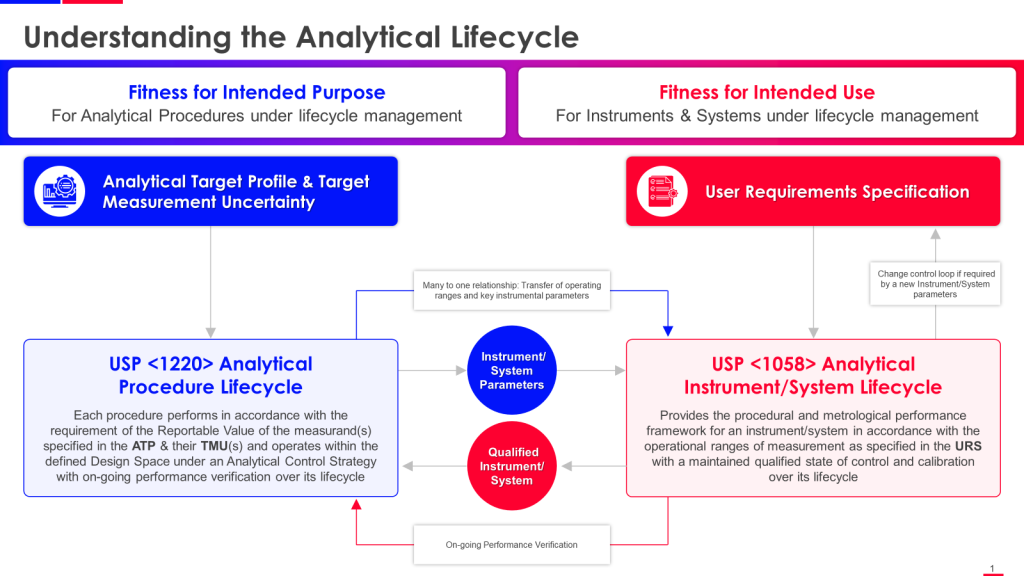
Beyond Malfunction Mindset: Normal Work, Adaptive Quality, and the Future of Pharmaceutical Problem-Solving

Beyond the Shadow of Failure

Problem-solving is too often shaped by the assumption that the system is perfectly understood and fully specified. If something goes wrong—a deviation, a batch out-of-spec, or a contamination event—our approach is to dissect what “failed” and fix that flaw, believing this will restore order. This way of thinking, which I call the malfunction mindset, is as ingrained as it is incomplete. It assumes that successful outcomes are the default, that work always happens as written in SOPs, and that only failure deserves our scrutiny.

But here’s the paradox: most of the time, our highly complex manufacturing environments actually succeed—often under imperfect, shifting, and not fully understood conditions. If we only study what failed, and never question how our systems achieve their many daily successes, we miss the real nature of pharmaceutical quality: it is not the absence of failure, but the presence of robust, adaptive work. Taking this broader, more nuanced perspective is not just an academic exercise—it’s essential for building resilient operations that truly protect patients, products, and our organizations.

Drawing from my thinking through zemblanity (the predictable but often overlooked negative outcomes of well-intentioned quality fixes), the effectiveness paradox (why “nothing bad happened” isn’t proof your quality system works), and the persistent gap between work-as-imagined and work-as-done, this post explores why the malfunction mindset persists, how it distorts investigations, and what future-ready quality management should look like.

The Allure—and Limits—of the Failure Model

Why do we reflexively look for broken parts and single points of failure? It is, as Sidney Dekker has argued, both comforting and defensible. When something goes wrong, you can always point to a failed sensor, a missed checklist, or an operator error. This approach—introducing another level of documentation, another check, another layer of review—offers a sense of closure and regulatory safety. After all, as long as you can demonstrate that you “fixed” something tangible, you’ve fulfilled investigational due diligence.

Yet this fails to account for how quality is actually produced—or lost—in the real world. The malfunction model treats systems like complicated machines: fix the broken gear, oil the creaky hinge, and the machine runs smoothly again. But, as Dekker reminds us in Drift Into Failure, such linear thinking ignores the drift, adaptation, and emergent complexity that characterize real manufacturing environments. The truth is, in complex adaptive systems like pharmaceutical manufacturing, it often takes more than one “error” for failure to manifest. The system absorbs small deviations continuously, adapting and flexing until, sometimes, a boundary is crossed and a problem surfaces.

W. Edwards Deming’s wisdom rings truer than ever: “Most problems result from the system itself, not from individual faults.” A sustainable approach to quality is one that designs for success—and that means understanding the system-wide properties enabling robust performance, not just eliminating isolated malfunctions.

Procedural Fundamentalism: The Work-as-Imagined Trap

One of the least examined, yet most impactful, contributors to the malfunction mindset is procedural fundamentalism—the belief that the written procedure is both a complete specification and an accurate description of work. This feels rigorous and provides compliance comfort, but it is a profound misreading of how work actually happens in pharmaceutical manufacturing.

Work-as-imagined, as elucidated by Erik Hollnagel and others, represents an abstraction: it is how distant architects of SOPs visualize the “correct” execution of a process. Yet, real-world conditions—resource shortages, unexpected interruptions, mismatched raw materials, shifting priorities—force adaptation. Operators, supervisors, and Quality professionals do not simply “follow the recipe”: they interpret, improvise, and—crucially—adjust on the fly.

When we treat procedures as authoritative descriptions of reality, we create the proxy problem: our investigations compare real operations against an imagined baseline that never fully existed. Deviations become automatically framed as problem points, and success is redefined as rigid adherence, regardless of context or outcome.

Complexity, Performance Variability, and Real Success

So, how do pharmaceutical operations succeed so reliably despite the ever-present complexity and variability of daily work?

The answer lies in embracing performance variability as a feature of robust systems, not a flaw. In high-reliability environments—from aviation to medicine to pharmaceutical manufacturing—success is routinely achieved not by demanding strict compliance, but by cultivating adaptive capacity.

Consider environmental monitoring in a sterile suite: The procedure may specify precise times and locations, but a seasoned operator, noticing shifts in people flow or equipment usage, might proactively sample a high-risk area more frequently. This adaptation—not captured in work-as-imagined—actually strengthens data integrity. Yet, traditional metrics would treat this as a procedural deviation.

This is the paradox of the malfunction mindset: in seeking to eliminate all performance variability, we risk undermining precisely those adaptive behaviors that produce reliable quality under uncertainty.

Why the Malfunction Mindset Persists: Cognitive Comfort and Regulatory Reinforcement

Why do organizations continue to privilege the malfunction mindset, even as evidence accumulates of its limits? The answer is both psychological and cultural.

Component breakdown thinking is psychologically satisfying—it offers a clear problem, a specific cause, and a direct fix. For regulatory agencies, it is easy to measure and audit: did the deviation investigation determine the root cause, did the CAPA address it, does the documentation support this narrative? Anything that doesn’t fit this model is hard to defend in audits or inspections.

Yet this approach offers, at best, a partial diagnosis and, at worst, the illusion of control. It encourages organizations to catalog deviations while blindly accepting a much broader universe of unexamined daily adaptations that actually determine system robustness.

Complexity Science and the Art of Organizational Success

To move toward a more accurate—and ultimately more effective—model of quality, pharmaceutical leaders must integrate the insights of complexity science. Drawing from the work of Stuart Kauffman and others at the Santa Fe Institute, we understand that the highest-performing systems operate not at the edge of rigid order, but at the “edge of chaos,” where structure is balanced with adaptability.

In these systems, success and failure both arise from emergent properties—the patterns of interaction between people, procedures, equipment, and environment. The most meaningful interventions, therefore, address how the parts interact, not just how each part functions in isolation.

This explains why traditional root cause analysis, focused on the parts, often fails to produce lasting improvements; it cannot account for outcomes that emerge only from the collective dynamics of the system as a whole.

Investigating for Learning: The Take-the-Best Heuristic

A key innovation needed in pharmaceutical investigations is a shift to what Hollnagel calls Safety-II thinking: focusing on how things go right as well as why they occasionally go wrong.

Here, the take-the-best heuristic becomes crucial. Instead of compiling lists of all deviations, ask: Among all contributing factors, which one, if addressed, would have the most powerful positive impact on future outcomes, while preserving adaptive capacity? This approach ensures investigations generate actionable, meaningful learning, rather than feeding the endless paper chase of “compliance theater.”

Building Systems That Support Adaptive Capability

Taking complexity and adaptive performance seriously requires practical changes to how we design procedures, train, oversee, and measure quality.

  • Procedure Design: Make explicit the distinction between objectives and methods. Procedures should articulate clear quality goals, specify necessary constraints, but deliberately enable workers to choose methods within those boundaries when faced with new conditions.
  • Training: Move beyond procedural compliance. Develop adaptive expertise in your staff, so they can interpret and adjust sensibly—understanding not just “what” to do, but “why” it matters in the bigger system.
  • Oversight and Monitoring: Audit for adaptive capacity. Don’t just track “compliance” but also whether workers have the resources and knowledge to adapt safely and intelligently. Positive performance variability (smart adaptations) should be recognized and studied.
  • Quality System Design: Build systematic learning from both success and failure. Examine ordinary operations to discern how adaptive mechanisms work, and protect these capabilities rather than squashing them in the name of “control.”

Leadership and Systems Thinking

Realizing this vision depends on a transformation in leadership mindset—from one seeking control to one enabling adaptive capacity. Deming’s profound knowledge and the principles of complexity leadership remind us that what matters is not enforcing ever-stricter compliance, but cultivating an organizational context where smart adaptation and genuine learning become standard.

Leadership must:

  • Distinguish between complicated and complex: Apply detailed procedures to the former (e.g., calibration), but support flexible, principles-based management for the latter.
  • Tolerate appropriate uncertainty: Not every problem has a clear, single answer. Creating psychological safety is essential for learning and adaptation during ambiguity.
  • Develop learning organizations: Invest in deep understanding of operations, foster regular study of work-as-done, and celebrate insights from both expected and unexpected sources.

Practical Strategies for Implementation

Turning these insights into institutional practice involves a systematic, research-inspired approach:

  • Start procedure development with observation of real work before specifying methods. Small scale and mock exercises are critical.
  • Employ cognitive apprenticeship models in training, so that experience, reasoning under uncertainty, and systems thinking become core competencies.
  • Begin investigations with appreciative inquiry—map out how the system usually works, not just how it trips up.
  • Measure leading indicators (capacity, information flow, adaptability) not just lagging ones (failures, deviations).
  • Create closed feedback loops for corrective actions—insisting every intervention be evaluated for impact on both compliance and adaptive capacity.

Scientific Quality Management and Adaptive Systems: No Contradiction

The tension between rigorous scientific quality management (QbD, process validation, risk management frameworks) and support for adaptation is a false dilemma. Indeed, genuine scientific quality management starts with humility: the recognition that our understanding of complex systems is always partial, our controls imperfect, and our frameworks provisional.

A falsifiable quality framework embeds learning and adaptation at its core—treating deviations as opportunities to test and refine models, rather than simply checkboxes to complete.

The best organizations are not those that experience the fewest deviations, but those that learn fastest from both expected and unexpected events, and apply this knowledge to strengthen both system structure and adaptive capacity.

Embracing Normal Work: Closing the Gap

Normal pharmaceutical manufacturing is not the story of perfect procedural compliance; it’s the story of people, working together to achieve quality goals under diverse, unpredictable, and evolving conditions. This is both more challenging—and more rewarding—than any plan prescribed solely by SOPs.

To truly move the needle on pharmaceutical quality, organizations must:

  • Embrace performance variability as evidence of adaptive capacity, not just risk.
  • Investigate for learning, not blame; study success, not just failure.
  • Design systems to support both structure and flexible adaptation—never sacrificing one entirely for the other.
  • Cultivate leadership that values humility, systems thinking, and experimental learning, creating a culture comfortable with complexity.

This approach will not be easy. It means questioning decades of compliance custom, organizational habit, and intellectual ease. But the payoff is immense: more resilient operations, fewer catastrophic surprises, and, above all, improved safety and efficacy for the patients who depend on our products.

The challenge—and the opportunity—facing pharmaceutical quality management is to evolve beyond compliance theater and malfunction thinking into a new era of resilience and organizational learning. Success lies not in the illusory comfort of perfectly executed procedures, but in the everyday adaptations, intelligent improvisation, and system-level capabilities that make those successes possible.

The call to action is clear: Investigate not just to explain what failed, but to understand how, and why, things so often go right. Protect, nurture, and enhance the adaptive capacities of your organization. In doing so, pharmaceutical quality can finally become more than an after-the-fact audit; it will become the creative, resilient capability that patients, regulators, and organizations genuinely want to hire.

Applying Jobs-to-Be-Done to Risk Management

In my recent exploration of the Jobs-to-Be-Done (JTBD) tool for process improvement, I examined how this customer-centric approach could revolutionize our understanding of deviation management. I want to extend that analysis to another fundamental challenge in pharmaceutical quality: risk management.

As we grapple with increasing regulatory complexity, accelerating technological change, and the persistent threat of risk blindness, most organizations remain trapped in what I call “compliance theater”—performing risk management activities that satisfy auditors but fail to build genuine organizational resilience. JTBD is a useful tool as we move beyond this theater toward risk management that actually creates value.

The Risk Management Jobs Users Actually Hire

When quality professionals, executives, and regulatory teams engage with risk management processes, what job are they really trying to accomplish? The answer reveals a profound disconnect between organizational intent and actual capability.

The Core Functional Job

“When facing uncertainty that could impact product quality, patient safety, or business continuity, I want to systematically understand and address potential threats, so I can make confident decisions and prevent surprise failures.”

This job statement immediately exposes the inadequacy of most risk management systems. They focus on documentation rather than understanding, assessment rather than decision enablement, and compliance rather than prevention.

The Consumption Jobs: The Hidden Workload

Risk management involves numerous consumption jobs that organizations often ignore:

  • Evaluation and Selection: “I need to choose risk assessment methodologies that match our operational complexity and regulatory environment.”
  • Implementation and Training: “I need to build organizational risk capability without creating bureaucratic overhead.”
  • Maintenance and Evolution: “I need to keep our risk approach current as our business and threat landscape evolves.”
  • Integration and Communication: “I need to ensure risk insights actually influence business decisions rather than gathering dust in risk registers.”

These consumption jobs represent the difference between risk management systems that organizations grudgingly tolerate and those they genuinely want to “hire.”

The Eight-Step Risk Management Job Map

Applying JTBD’s universal job map to risk management reveals where current approaches systematically fail:

1. Define: Establishing Risk Context

What users need: Clear understanding of what they’re assessing, why it matters, and what decisions the risk analysis will inform.

Current reality: Risk assessments often begin with template completion rather than context establishment, leading to generic analyses that don’t support actual decision-making.

2. Locate: Gathering Risk Intelligence

What users need: Access to historical data, subject matter expertise, external intelligence, and tacit knowledge about how things actually work.

Current reality: Risk teams typically work from documentation rather than engaging with operational reality, missing the pattern recognition and apprenticeship dividend that experienced practitioners possess.

3. Prepare: Creating Assessment Conditions

What users need: Diverse teams, psychological safety for honest risk discussions, and structured approaches that challenge rather than confirm existing assumptions.

Current reality: Risk assessments often involve homogeneous teams working through predetermined templates, perpetuating the GI Joe fallacy—believing that knowledge of risk frameworks prevents risky thinking.

4. Confirm: Validating Assessment Readiness

What users need: Confidence that they have sufficient information, appropriate expertise, and clear success criteria before proceeding.

Current reality: Risk assessments proceed regardless of information quality or team readiness, driven by schedule rather than preparation.

5. Execute: Conducting Risk Analysis

What users need: Systematic identification of risks, analysis of interconnections, scenario testing, and development of robust mitigation strategies.

Current reality: Risk analysis often becomes risk scoring—reducing complex phenomena to numerical ratings that provide false precision rather than genuine insight.

6. Monitor: Tracking Risk Reality

What users need: Early warning systems that detect emerging risks and validate the effectiveness of mitigation strategies.

Current reality: Risk monitoring typically involves periodic register updates rather than active intelligence gathering, missing the dynamic nature of risk evolution.

7. Modify: Adapting to New Information

What users need: Responsive adjustment of risk strategies based on monitoring feedback and changing conditions.

Current reality: Risk assessments often become static documents, updated only during scheduled reviews rather than when new information emerges.

8. Conclude: Capturing Risk Learning

What users need: Systematic capture of risk insights, pattern recognition, and knowledge transfer that builds organizational risk intelligence.

Current reality: Risk analysis conclusions focus on compliance closure rather than learning capture, missing opportunities to build the organizational memory that prevents risk blindness.

The Emotional and Social Dimensions

Risk management involves profound emotional and social jobs that traditional approaches ignore:

  • Confidence: Risk practitioners want to feel genuinely confident that significant threats have been identified and addressed, not just that procedures have been followed.
  • Intellectual Satisfaction: Quality professionals are attracted to rigorous analysis and robust reasoning—risk management should engage their analytical capabilities, not reduce them to form completion.
  • Professional Credibility: Risk managers want to be perceived as strategic enablers rather than bureaucratic obstacles—as trusted advisors who help organizations navigate uncertainty rather than create administrative burden.
  • Organizational Trust: Executive teams want assurance that their risk management capabilities are genuinely protective, not merely compliant.

What’s Underserved: The Innovation Opportunities

JTBD analysis reveals four critical areas where current risk management approaches systematically underserve user needs:

Risk Intelligence

Current systems document known risks but fail to develop early warning capabilities, pattern recognition across multiple contexts, or predictive insights about emerging threats. Organizations need risk management that builds institutional awareness, not just institutional documentation.

Decision Enablement

Risk assessments should create confidence for strategic decisions, enable rapid assessment of time-sensitive opportunities, and provide scenario planning that prepares organizations for multiple futures. Instead, most risk management creates decision paralysis through endless analysis.

Organizational Capability

Effective risk management should build risk literacy across all levels, create cultural resilience that enables honest risk conversations, and develop adaptive capacity to respond when risks materialize. Current approaches often centralize risk thinking rather than distributing risk capability.

Stakeholder Trust

Risk management should enable transparent communication about threats and mitigation strategies, demonstrate competence in risk anticipation, and provide regulatory confidence in organizational capabilities. Too often, risk management creates opacity rather than transparency.

Canvas representation of the JBTD

Moving Beyond Compliance Theater

The JTBD framework helps us address a key challenge in risk management: many organizations place excessive emphasis on “table stakes” such as regulatory compliance and documentation requirements, while neglecting vital aspects like intelligence, enablement, capability, and trust that contribute to genuine resilience.

This represents a classic case of process myopia—becoming so focused on risk management activities that we lose sight of the fundamental job those activities should accomplish. Organizations perfect their risk registers while remaining vulnerable to surprise failures, not because they lack risk management processes, but because those processes fail to serve the jobs users actually need accomplished.

Design Principles for User-Centered Risk Management

  • Context Over Templates: Begin risk analysis with clear understanding of decisions to be informed rather than forms to be completed.
  • Intelligence Over Documentation: Prioritize systems that build organizational awareness and pattern recognition rather than risk libraries.
  • Engagement Over Compliance: Create risk processes that attract rather than burden users, recognizing that effective risk management requires active intellectual participation.
  • Learning Over Closure: Structure risk activities to build institutional memory and capability rather than simply completing assessment cycles.
  • Integration Over Isolation: Ensure risk insights flow naturally into operational decisions rather than remaining in separate risk management systems.

Hiring Risk Management for Real Jobs

The most dangerous risk facing pharmaceutical organizations may be risk management systems that create false confidence while building no real capability. JTBD analysis reveals why: these systems optimize for regulatory approval rather than user needs, creating elaborate processes that nobody genuinely wants to “hire.”

True risk management begins with understanding what jobs users actually need accomplished: building confidence for difficult decisions, developing organizational intelligence about threats, creating resilience against surprise failures, and enabling rather than impeding business progress. Organizations that design risk management around these jobs will develop competitive advantages in an increasingly uncertain world.

The choice is clear: continue performing compliance theater, or build risk management systems that organizations genuinely want to hire. In a world where zemblanity—the tendency to encounter negative, foreseeable outcomes—threatens every quality system, only the latter approach offers genuine protection.

Risk management should not be something organizations endure. It should be something they actively seek because it makes them demonstrably better at navigating uncertainty and protecting what matters most.

The Jobs-to-Be-Done (JTBD): Origins, Function, and Value for Quality Systems

In the relentless march of quality and operational improvement, frameworks, methodologies and tools abound but true breakthrough is rare. There is a persistent challenge: organizations often become locked into their own best practices, relying on habitual process reforms that seldom address the deeper why of operational behavior. This “process myopia”—where the visible sequence of tasks occludes the real purpose—runs in parallel to risk blindness, leaving many organizations vulnerable to the slow creep of inefficiency, bias, and ultimately, quality failures.

The Jobs-to-Be-Done (JTBD) tool offers an effective method for reorientation. Rather than focusing on processes or systems as static routines, JTBD asks a deceptively simple question: What job are people actually hiring this process or tool to do? In deviation management, audit response, even risk assessment itself, the answer to this question is the gravitational center on which effective redesign can be based.

What Does It Mean to Hire a Process?

To “hire” a process—even when it is a regulatory obligation—means viewing the process not merely as a compliance requirement, but as a tool or mechanism that stakeholders use to achieve specific, desirable outcomes beyond simple adherence. In Jobs-to-Be-Done (JTBD), the idea of “hiring” a process reframes organizational behavior: stakeholders (such as quality professionals, operators, managers, or auditors) are seen as engaging with the process to get particular jobs done—such as ensuring product safety, demonstrating control to regulators, reducing future risk, or creating operational transparency.

When a process is regulatory-mandated—such as deviation management, change control, or batch release—the “hiring” metaphor recognizes two coexisting realities:

Dual Functions: Compliance and Value Creation

  • Compliance Function: The organization must follow the process to satisfy legal, regulatory, or contractual obligations. Not following is not an option; it’s legally or organizationally enforced.
  • Functional “Hiring”: Even for required processes, users “hire” the process to accomplish additional jobs—like protecting patients, facilitating learning from mistakes, or building organizational credibility. A well-designed process serves both external (regulatory) and internal (value-creating) goals.

Implications for Process Design

  • Stakeholders still have choices in how they interact with the process—they can engage deeply (to learn and improve) or superficially (for box-checking), depending on how well the process helps them do their “real” job.
  • If a process is viewed only as a regulatory tax, users will find ways to shortcut, minimally comply, or bypass the spirit of the requirement, undermining learning and risk mitigation.
  • Effective design ensures the process delivers genuine value, making “compliance” a natural by-product of a process stakeholders genuinely want to “hire”—because it helps them achieve something meaningful and important.

Practical Example: Deviation Management

  • Regulatory “Must”: Deviations must be documented and investigated under GMP.
  • Users “Hire” the Process to: Identify real risks early, protect quality, learn from mistakes, and demonstrate control in audits.
  • If the process enables those jobs well, it will be embraced and used effectively. If not, it becomes paperwork compliance—and loses its potential as a learning or risk-reduction tool.

To “hire” a process under regulatory obligation is to approach its use intentionally, ensuring it not only satisfies external requirements but also delivers real value for those required to use it. The ultimate goal is to design a process that people would choose to “hire” even if it were not mandatory—because it supports their intrinsic goals, such as maintaining quality, learning, and risk control.

Unpacking Jobs-to-Be-Done: The Roots of Customer-Centricity

Historical Genesis: From Marketing Myopia to Outcome-Driven Innovation

The JTBD’s intellectual lineage traces back to Theodore Levitt’s famous adage: “People don’t want to buy a quarter-inch drill. They want a quarter-inch hole.” This insight, presented in his seminal 1960 Harvard Business Review article “Marketing Myopia,” underscores the fatal flaw of most process redesigns: overinvestment in features, tools, and procedures, while neglecting the underlying human need or outcome.

This thinking resonates strongly with Peter Drucker’s core dictum that “the purpose of a business is to create and keep a customer”—and that marketing and innovation, not internal optimization, are the only valid means to this end. Both Drucker and Levitt’s insights form the philosophical substrate for JTBD, framing the product, system, or process not as an end in itself, but as a means to enable desired change in someone’s “real world”.

Modern JTBD: Ulwick, Christensen, and Theory Development

Tony Ulwick, after experiencing firsthand the failure of IBM’s PCjr product, launched a search to discover how organizations could systematically identify the outcomes customers (or process users) use to judge new offerings. Ulwick formalized jobs-as-process thinking, and by marrying Six Sigma concepts with innovation research, developed the “Outcome-Driven Innovation” (ODI) method, later shared with Clayton Christensen at Harvard.

Clayton Christensen, in his disruption theory research, sharpened the framing: customers don’t simply buy products—they “hire” them to get a job done, to make progress in their lives or work. He and Bob Moesta extended this to include the emotional and social dimensions of these jobs, and added nuance on how jobs can signal category-breaking opportunities for disruptive innovation. In essence, JTBD isn’t just about features; it’s about the outcome and the experience of progress.

The JTBD tool is now well-established in business, product development, health care, and increasingly, internal process improvement.

What Is a “Job” and How Does JTBD Actually Work?

Core Premise: The “Job” as the Real Center of Process Design

A “Job” in JTBD is not a task or activity—it is the progress someone seeks in a specific context. In regulated quality systems, this reframing prompts a pivotal question: For every step in the process, what is the user actually trying to achieve?

JTBD Statement Structure:

When [situation], I want to [job], so I can [desired outcome].

  • “When a process deviation occurs, I want to quickly and accurately assess impact, so I can protect product quality without delaying production.”
  • “When reviewing supplier audit responses, I want to identify meaningful risk signals, so I can challenge assumptions before they become failures.”

The Mechanics: Job Maps, Outcome Statements, and Dimensional Analysis

Job Map:

JTBD practitioners break the “job” down into a series of steps—the job map—outlining the user’s journey to achieve the desired progress. Ulwick’s “Universal Job Map” includes steps like: Define and plan, Locate inputs, Prepare, Confirm and validate, Execute, Monitor, Modify, and Conclude.

Dimension Analysis:
A full JTBD approach considers not only the functional needs (what must be accomplished), but also emotional (how users want to feel), social (how users want to appear), and cost (what users have to give up).

Outcome Statements:
JTBD expresses desired process outcomes in solution-agnostic language: To [achieve a specific goal], [user] must [perform action] to [produce a result].

The Relationship Between Job Maps and Process Maps

Job maps and process maps represent fundamentally different approaches to understanding and documenting work, despite both being visual tools that break down activities into sequential steps. Understanding their relationship reveals why each serves distinct purposes in organizational improvement efforts.

Core Distinction: Purpose vs. Execution

Job Maps focus on what customers or users are trying to accomplish—their desired outcomes and progress independent of any specific solution or current method. A job map asks: “What is the person fundamentally trying to achieve at each step?”

Process Maps focus on how work currently gets done—the specific activities, decisions, handoffs, and systems involved in executing a workflow. A process map asks: “What are the actual steps, roles, and systems involved in completing this work?”

Job Map Structure

Job maps follow a universal eight-step method regardless of industry or solution:

  1. Define – Determine goals and plan resources
  2. Locate – Gather required inputs and information
  3. Prepare – Set up the environment for execution
  4. Confirm – Verify readiness to proceed
  5. Execute – Carry out the core activity
  6. Monitor – Assess progress and performance
  7. Modify – Make adjustments as needed
  8. Conclude – Finish or prepare for repetition

Process Map Structure

Process maps vary significantly based on the specific workflow being documented and typically include:

  • Tasks and activities performed by different roles
  • Decision points where choices affect the flow
  • Handoffs between departments or systems
  • Inputs and outputs at each step
  • Time and resource requirements
  • Exception handling and alternate paths

Perspective and Scope

Job Maps maintain a solution-agnostic perspective. We can actually get pretty close to universal industry job maps, because whatever approach an individual organization takes, the job map remains the same because it captures the underlying functional need, not the method of fulfillment. A job map starts an improvement effort, helping us understand what needs to exist.

Process Maps are solution-specific. They document exactly how a particular organization, system, or workflow operates, including specific tools, roles, and procedures currently in use. The process map defines what is, and is an outcome of process improvement.

JTBD vs. Design Thinking, and Other Process Redesign Models

Most process improvement methodologies—including classic “design thinking”—center around incremental improvement, risk minimization, and stakeholder consensus. As previously critiqued , design thinking’s participatory workshops and empathy prototypes can often reinforce conservative bias, indirectly perpetuating the status quo. The tendency to interview, ideate, and choose the “least disruptive” option can perpetuate “GI Joe Fallacy”: knowing is not enough; action emerges only through challenged structures and direct engagement.

JTBD’s strength?

It demands that organizations reframe the purpose and metrics of every step and tool: not “How do we optimize this investigation template?”; but rather, “Does this investigation process help users make actual progress towards safer, more effective risk detection?” JTBD uncovers latent needs, both explicit and tacit, that design thinking’s post-it note workshops often fail to surface.

Why JTBD Is Invaluable for Process Design in Quality Systems

JTBD Enables Auditable Process Redesign

In pharmaceutical manufacturing, deviation management is a linchpin process—defining how organizations identify, document, investigate, and respond to events that depart from expected norms. Classic improvement initiatives target cycle time, documentation accuracy, or audit readiness. But JTBD pushes deeper.

Example JTBD Analysis for Deviations:

  • Trigger: A deviation is detected.
  • Job: “I want to report and contextualize the event accurately, so I can ensure an effective response without causing unnecessary disruption.”
  • Desired Outcome: Minimized product quality risk, transparency of root causes, actionable learning, regulatory confidence.

By mapping out the jobs of different deviation process stakeholders—production staff, investigation leaders, quality approvers, regulatory auditors—organizations can surface unmet needs: e.g., “Accelerating cross-functional root cause analysis while maintaining unbiased investigation integrity”; “Helping frontline operators feel empowered rather than blamed for honest reporting”; “Ensuring remediation is prioritized and tracked.”

Revealing Hidden Friction and Underserved Needs

JTBD methodology surfaces both overt and tacit pain points, often ignored in traditional process audits:

  • Operators “hire” process workarounds when formal documentation is slow or punitive.
  • Investigators seek intuitive data access, not just fields for “root cause.”
  • Approvers want clarity, not bureaucracy.
  • Regulatory reviewers “hire” the deviation process to provide organizational intelligence—not just box-checking.

A JTBD-based diagnostic invariably shows where job performance is low, but process compliance is high—a warning sign of process myopia and risk blindness.

Practical JTBD for Deviation Management: Step-by-Step Example

Job Statement and Context Definition

Define user archetypes:

  • Frontline Production Staff: “When a deviation occurs, I want a frictionless way to report it, so I can get support and feedback without being blamed.”
  • Quality Investigator: “When reviewing deviations, I want accessible, chronological data so I can detect patterns and act swiftly before escalation.”
  • Quality Leader: “When analyzing deviation trends, I want systemic insights that allow for proactive action—not just retrospection.”

Job Mapping: Stages of Deviation Lifecycle

  • Trigger/Detection: Event recognition (pattern recognition)—often leveraging both explicit SOPs and staff tacit knowledge.
  • Reporting: Document the event in a way that preserves context and allows for nuanced understanding.
  • Assessment: Rapid triage—“Is this risk emergent or routine? Is there unseen connection to a larger trend?” “Does this impact the product?”
  • Investigation: “Does the process allow multidisciplinary problem-solving, or does it force siloed closure? Are patterns shared across functions?”
  • Remediation: Job statement: “I want assurance that action will prevent recurrence and create meaningful learning.”
  • Closure and Learning Loop: “Does the process enable reflective practice and cognitive diversity—can feedback loops improve risk literacy?”

JTBD mapping reveals specific breakpoints: documentation systems that prioritize completeness over interpretability, investigation timelines that erode engagement, premature closure.

Outcome Statements for Metrics

Instead of “deviations closed on time,” measure:

  • Number of deviations generating actionable cross-functional insights.
  • Staff perception of process fairness and learning.
  • Time to credible remediation vs. time to closure.
  • Audit reviewer alignment with risk signals detected pre-close, not only post-mortem.

JTBD and the Apprenticeship Dividend: Pattern Recognition and Tacit Knowledge

JTBD, when deployed authentically, actively supports the development of deeper pattern recognition and tacit knowledge—qualities essential for risk resilience.

  • Structured exposure programs ensure users “hire” the process to learn common and uncommon risks.
  • Cognitive diversity teams ensures the job of “challenging assumptions” is not just theoretical.
  • True process improvement emerges when the system supports practice, reflection, and mentoring—outcomes unmeasurable by conventional improvement metrics.

JTBD Limitations: Caveats and Critical Perspective

No methodology is infallible. JTBD is only as powerful as the organization’s willingness to confront uncomfortable truths and challenge compliance-driven inertia:

  • Rigorous but Demanding: JTBD synthesis is non-“snackable” and lacks the pop-management immediacy of other tools.
  • Action Over Awareness: Knowing the job to be done is not sufficient; structures must enable action.
  • Regulatory Realities: Quality processes must satisfy regulatory standards, which are not always aligned with lived user experience. JTBD should inform, not override, compliance strategies.
  • Skill and Culture: Successful use demands qualitative interviewing skill, genuine cross-functional buy-in, and a culture of psychological safety—conditions not easily created.

Despite these challenges, JTBD remains unmatched for surfacing hidden process failures, uncovering underserved needs, and catalyzing redesign where it matters most.

Breaking Through the Status Quo

Many organizations pride themselves on their calibration routines, investigation checklists, and digital documentation platforms. But the reality is that these systems are often “hired” not to create learning—but to check boxes, push responsibility, and sustain the illusion of control. This leads to risk blindess and organizations systematically make themselves vulnerable when process myopia replaces real learning – zemblanity.

JTBD’s foundational question—“What job are we hiring this process to do?”—is more than a strategic exercise. It is a countermeasure against stagnation and blindness. It insists on radical honesty, relentless engagement, and humility before the complexity of operational reality. For deviation management, JTBD is a tool not just for compliance, but for organizational resilience and quality excellence.

Quality leaders should invest in JTBD not as a “one more tool,” but as a philosophical commitment: a way to continually link theory to action, root cause to remediation, and process improvement to real progress. Only then will organizations break free of procedural conservatism, cure risk blindness, and build systems worthy of trust and regulatory confidence.