Finding Rhythm in Quality Risk Management: Moving Beyond Control to Adaptive Excellence

The pharmaceutical industry has long operated under what Michael Hudson aptly describes in his recent Forbes article as “symphonic control, “carefully orchestrated strategies executed with rigid precision, where quality units can function like conductors trying to control every note. But as Hudson observes, when our meticulously crafted risk assessments collide with chaotic reality, what emerges is often discordant. The time has come for quality risk management to embrace what I am going to call “rhythmic excellence,” a jazz-inspired approach that maintains rigorous standards while enabling adaptive performance in our increasingly BANI (Brittle, Anxious, Non-linear, and Incomprehensible) regulatory and manufacturing environment.

And since I love a good metaphor, I bring you:

Rhythmic Quality Risk Management

Recent research by Amy Edmondson and colleagues at Harvard Business School provides compelling evidence for rhythmic approaches to complex work. After studying more than 160 innovation teams, they found that performance suffered when teams mixed reflective activities (like risk assessments and control strategy development) with exploratory activities (like hazard identification and opportunity analysis) in the same time period. The highest-performing teams established rhythms that alternated between exploration and reflection, creating distinct beats for different quality activities.

This finding resonates deeply with the challenges we face in pharmaceutical quality risk management. Too often, our risk assessment meetings become frantic affairs where hazard identification, risk analysis, control strategy development, and regulatory communication all happen simultaneously. Teams push through these sessions exhausted and unsatisfied, delivering risk assessments they aren’t proud of—what Hudson describes as “cognitive whiplash”.

From Symphonic Control to Jazz-Based Quality Leadership

The traditional approach to pharmaceutical quality risk management mirrors what Hudson calls symphonic leadership—attempting to impose top-down structure as if more constraint and direction are what teams need to work with confidence. We create detailed risk assessment procedures, prescriptive FMEA templates, and rigid review schedules, then wonder why our teams struggle to adapt when new hazards emerge or when manufacturing conditions change unexpectedly.

Karl Weick’s work on organizational sensemaking reveals why this approach undermines our quality objectives: complex manufacturing environments require “mindful organizing” and the ability to notice subtle changes and respond fluidly. Setting a quality rhythm and letting go of excessive control provides support without constraint, giving teams the freedom to explore emerging risks, experiment with novel control strategies, and make sense of the quality challenges they face.

This represents a fundamental shift in how we conceptualize quality risk management leadership. Instead of being the conductor trying to orchestrate every risk assessment note, quality leaders should function as the rhythm section—establishing predictable beats that keep everyone synchronized while allowing individual expertise to flourish.

The Quality Rhythm Framework: Four Essential Beats

Drawing from Hudson’s research-backed insights and integrating them with ICH Q9(R1) requirements, I envision a Quality Rhythm Framework built on four essential beats:

Beat 1: Find Your Risk Cadence

Establish predictable rhythms that create temporal anchors for your quality team while maintaining ICH Q9 compliance. Weekly hazard identification sessions, daily deviation assessments, monthly control strategy reviews, and quarterly risk communication cycles aren’t just meetings—they’re the beats that keep everyone synchronized while allowing individual risk management expression.

The ICH Q9(R1) revision’s emphasis on proportional formality aligns perfectly with this rhythmic approach. High-risk processes require more frequent beats, while lower-risk areas can operate with extended rhythms. The key is consistency within each risk category, creating what Weick calls “structured flexibility”—the ability to respond creatively within clear boundaries.

Consider implementing these quality-specific rhythmic structures:

  • Daily Risk Pulse: Brief stand-ups focused on emerging quality signals—not comprehensive risk assessments, but awareness-building sessions that keep the team attuned to the manufacturing environment.
  • Weekly Hazard Identification Sessions: Dedicated time for exploring “what could go wrong” and, following ISO 31000 principles, “what could go better than expected.” These sessions should alternate between different product lines or process areas to maintain focus.
  • Monthly Control Strategy Reviews: Deeper evaluations of existing risk controls, including assessment of whether they remain appropriate and identification of optimization opportunities.
  • Quarterly Risk Communication Cycles: Structured information sharing with stakeholders, including regulatory bodies when appropriate, ensuring that risk insights flow effectively throughout the organization.

Beat 2: Pause for Quality Breaths

Hudson emphasizes that jazz musicians know silence is as important as sound, and quality risk management desperately needs structured pauses. Build quality breaths into your organizational rhythm—moments for reflection, integration, and recovery from the intense focus required for effective risk assessment.

Research by performance expert Jim Loehr demonstrates that sustainable excellence requires oscillation, not relentless execution. In quality contexts, this means creating space between intensive risk assessment activities and implementation of control strategies. These pauses allow teams to process complex risk information, integrate diverse perspectives, and avoid the decision fatigue that leads to poor risk judgments.

Practical quality breaths include:

  • Post-Assessment Integration Time: Following comprehensive risk assessments, build in periods where team members can reflect on findings, consult additional resources, and refine their thinking before finalizing control strategies.
  • Cross-Functional Synthesis Sessions: Regular meetings where different functions (Quality, Operations, Regulatory, Technical) come together not to make decisions, but to share perspectives and build collective understanding of quality risks.
  • Knowledge Capture Moments: Structured time for documenting lessons learned, updating risk models based on new experience, and creating institutional memory that enhances future risk assessments.

Beat 3: Encourage Quality Experimentation

Within your rhythmic structure, create psychological safety and confidence that team members can explore novel risk identification approaches without fear of hitting “wrong notes.” When learning and reflection are part of a predictable beat, trust grows and experimentation becomes part of the quality flow.

The ICH Q9(R1) revision’s focus on managing subjectivity in risk assessments creates opportunities for experimental approaches. Instead of viewing subjectivity as a problem to eliminate, we can experiment with structured methods for harnessing diverse perspectives while maintaining analytical rigor.

Hudson’s research shows that predictable rhythm facilitates innovation—when people are comfortable with the rhythm, they’re free to experiment with the melody. In quality risk management, this means establishing consistent frameworks that enable creative hazard identification and innovative control strategy development.

Experimental approaches might include:

  • Success Mode and Benefits Analysis (SMBA): As I’ve discussed previously, complement traditional FMEA with systematic identification of positive potential outcomes. Experiment with different SMBA formats and approaches to find what works best for specific process areas.
  • Cross-Industry Risk Insights: Dedicate portions of risk assessment sessions to exploring how other industries handle similar quality challenges. These experiments in perspective-taking can reveal blind spots in traditional pharmaceutical approaches.
  • Scenario-Based Risk Planning: Experiment with “what if” exercises that go beyond traditional failure modes to explore complex, interdependent risk situations that might emerge in dynamic manufacturing environments.

Beat 4: Enable Quality Solos

Just as jazz musicians trade solos while the ensemble provides support, look for opportunities for individual quality team members to drive specific risk management initiatives. This distributed leadership approach builds capability while maintaining collective coherence around quality objectives.

Hudson’s framework emphasizes that adaptive leaders don’t try to be conductors but create conditions for others to lead. In quality risk management, this means identifying team members with specific expertise or interest areas and empowering them to lead risk assessments in those domains.

Quality leadership solos might include:

  • Process Expert Risk Leadership: Assign experienced operators or engineers to lead risk assessments for processes they know intimately, with quality professionals providing methodological support.
  • Cross-Functional Risk Coordination: Empower individuals to coordinate risk management across organizational boundaries, taking ownership for ensuring all relevant perspectives are incorporated.
  • Innovation Risk Championship: Designate team members to lead risk assessments for new technologies or novel approaches, building expertise in emerging quality challenges.

The Rhythmic Advantage: Three Quality Transformation Benefits

Mastering these rhythmic approaches to quality risk management provide three advantages that mirror Hudson’s leadership research:

Fluid Quality Structure

A jazz ensemble can improvise because musicians share a rhythm. Similarly, quality rhythms keep teams functioning together while offering freedom to adapt to emerging risks, changing regulatory requirements, or novel manufacturing challenges. Management researchers call this “structured flexibility”—exactly what ICH Q9(R1) envisions when it emphasizes proportional formality.

When quality teams operate with shared rhythms, they can respond more effectively to unexpected events. A contamination incident doesn’t require completely reinventing risk assessment approaches—teams can accelerate their established rhythms, bringing familiar frameworks to bear on novel challenges while maintaining analytical rigor.

Sustainable Quality Energy

Quality risk management is inherently demanding work that requires sustained attention to complex, interconnected risks. Traditional approaches often lead to burnout as teams struggle with relentless pressure to identify every possible hazard and implement perfect controls. Rhythmic approaches prevent this exhaustion by regulating pace and integrating recovery.

More importantly, rhythmic quality management aligns teams around purpose and vision rather than merely compliance deadlines. This enables what performance researchers call “sustainable high performance”—quality excellence that endures rather than depletes organizational energy.

When quality professionals find rhythm in their risk management work, they develop what Mihaly Csikszentmihalyi identified as “flow state,” moments when attention is fully focused and performance feels effortless. These states are crucial for the deep thinking required for effective hazard identification and the creative problem-solving needed for innovative control strategies.

Enhanced Quality Trust and Innovation

The paradox Hudson identifies, that some constraint enables creativity, applies directly to quality risk management. Predictable rhythms don’t stifle innovation; they provide the stable foundation from which teams can explore novel approaches to quality challenges.

When quality teams know they have regular, structured opportunities for risk exploration, they’re more willing to raise difficult questions, challenge assumptions, and propose unconventional solutions. The rhythm creates psychological safety for intellectual risk-taking within the controlled environment of systematic risk assessment.

This enhanced innovation capability is particularly crucial as pharmaceutical manufacturing becomes increasingly complex, with continuous manufacturing, advanced process controls, and novel drug modalities creating quality challenges that traditional risk management approaches weren’t designed to address.

Integrating Rhythmic Principles with ICH Q9(R1) Compliance

The beauty of rhythmic quality risk management lies in its fundamental compatibility with ICH Q9(R1) requirements. The revision’s emphasis on scientific knowledge, proportional formality, and risk-based decision-making aligns perfectly with rhythmic approaches that create structured flexibility for quality teams.

Rhythmic Risk Assessment Enhancement

ICH Q9 requires systematic hazard identification, risk analysis, and risk evaluation. Rhythmic approaches enhance these activities by establishing regular, focused sessions for each component rather than trying to accomplish everything in marathon meetings.

During dedicated hazard identification beats, teams can employ diverse techniques—traditional brainstorming, structured what-if analysis, cross-industry benchmarking, and the Success Mode and Benefits Analysis I’ve advocated. The rhythm ensures these activities receive appropriate attention while preventing the cognitive overload that reduces identification effectiveness.

Risk analysis benefits from rhythmic separation between data gathering and interpretation activities. Teams can establish rhythms for collecting process data, manufacturing experience, and regulatory intelligence, followed by separate beats for analyzing this information and developing risk models.

Rhythmic Risk Control Development

The ICH Q9(R1) emphasis on risk-based decision-making aligns perfectly with rhythmic approaches to control strategy development. Instead of rushing from risk assessment to control implementation, rhythmic approaches create space for thoughtful strategy development that considers multiple options and their implications.

Rhythmic control development might include beats for:

  • Control Strategy Ideation: Creative sessions focused on generating potential control approaches without immediate evaluation of feasibility or cost.
  • Implementation Planning: Separate sessions for detailed planning of selected control strategies, including resource requirements, timeline development, and change management considerations.
  • Effectiveness Assessment: Regular rhythms for evaluating implemented controls, gathering performance data, and identifying optimization opportunities.

Rhythmic Risk Communication

ICH Q9’s communication requirements benefit significantly from rhythmic approaches. Instead of ad hoc communication when problems arise, establish regular rhythms for sharing risk insights, control strategy updates, and lessons learned.

Quality communication rhythms should align with organizational decision-making cycles, ensuring that risk insights reach stakeholders when they’re most useful for decision-making. This might include monthly updates to senior leadership, quarterly reports to regulatory affairs, and annual comprehensive risk reviews for long-term strategic planning.

Practical Implementation: Building Your Quality Rhythm

Implementing rhythmic quality risk management requires systematic integration rather than wholesale replacement of existing approaches. Start by evaluating your current risk management processes to identify natural rhythm points and opportunities for enhancement.

Phase 1: Rhythm Assessment and Planning

Map your existing quality risk management activities against rhythmic principles. Identify where teams experience the cognitive whiplash Hudson describes—trying to accomplish too many different types of thinking in single sessions. Look for opportunities to separate exploration from analysis, strategy development from implementation planning, and individual reflection from group decision-making.

Establish criteria for quality rhythm frequency based on risk significance, process complexity, and organizational capacity. High-risk processes might require daily pulse checks and weekly deep dives, while lower-risk areas might operate effectively with monthly assessment rhythms.

Train quality teams on rhythmic principles and their application to risk management. Help them understand how rhythm enhances rather than constrains their analytical capabilities, providing structure that enables deeper thinking and more creative problem-solving.

Phase 2: Pilot Program Development

Select pilot areas where rhythmic approaches are most likely to demonstrate clear benefits. New product development projects, technology implementation initiatives, or process improvement activities often provide ideal testing grounds because their inherent uncertainty creates natural opportunities for both risk management and opportunity identification.

Design pilot programs to test specific rhythmic principles:

  • Rhythm Separation: Compare traditional comprehensive risk assessment meetings with rhythmic approaches that separate hazard identification, risk analysis, and control strategy development into distinct sessions.
  • Quality Breathing: Experiment with structured pauses between intensive risk assessment activities and measure their impact on decision quality and team satisfaction.
  • Distributed Leadership: Identify opportunities for team members to lead specific aspects of risk management and evaluate the impact on engagement and expertise development.

Phase 3: Organizational Integration

Based on pilot results, develop systematic approaches for scaling rhythmic quality risk management across the organization. This requires integration with existing quality systems, regulatory processes, and organizational governance structures.

Consider how rhythmic approaches will interact with regulatory inspection activities, change control processes, and continuous improvement initiatives. Ensure that rhythmic flexibility doesn’t compromise documentation requirements or audit trail integrity.

Establish metrics for evaluating rhythmic quality risk management effectiveness, including both traditional risk management indicators (incident rates, control effectiveness, regulatory compliance) and rhythm-specific measures (team engagement, innovation frequency, decision speed).

Phase 4: Continuous Enhancement and Cultural Integration

Like all aspects of quality risk management, rhythmic approaches require continuous improvement based on experience and changing needs. Regular assessment of rhythm effectiveness helps refine approaches over time and ensures sustained benefits.

The ultimate goal is cultural integration—making rhythmic thinking a natural part of how quality professionals approach risk management challenges. This requires consistent leadership modeling, recognition of rhythmic successes, and integration of rhythmic principles into performance expectations and career development.

Measuring Rhythmic Quality Success

Traditional quality metrics focus primarily on negative outcome prevention: deviation rates, batch failures, regulatory findings, and compliance scores. While these remain important, rhythmic quality risk management requires expanded measurement approaches that capture both defensive effectiveness and adaptive capability.

Enhanced metrics should include:

  • Rhythm Consistency Indicators: Frequency of established quality rhythms, participation rates in rhythmic activities, and adherence to planned cadences.
  • Innovation and Adaptation Measures: Number of novel risk identification approaches tested, implementation rate of creative control strategies, and frequency of process improvements emerging from risk management activities.
  • Team Engagement and Development: Participation in quality leadership opportunities, cross-functional collaboration frequency, and professional development within risk management capabilities.
  • Decision Quality Indicators: Time from risk identification to control implementation, stakeholder satisfaction with risk communication, and long-term effectiveness of implemented controls.

Regulatory Considerations: Communicating Rhythmic Value

Regulatory agencies are increasingly interested in risk-based approaches that demonstrate genuine process understanding and continuous improvement capabilities. Rhythmic quality risk management strengthens regulatory relationships by showing sophisticated thinking about process optimization and quality enhancement within established frameworks.

When communicating with regulatory agencies, emphasize how rhythmic approaches improve process understanding, enhance control strategy development, and support continuous improvement objectives. Show how structured flexibility leads to better patient protection through more responsive and adaptive quality systems.

Focus regulatory communications on how enhanced risk understanding leads to better quality outcomes rather than on operational efficiency benefits that might appear secondary to regulatory objectives. Demonstrate how rhythmic approaches maintain analytical rigor while enabling more effective responses to emerging quality challenges.

The Future of Quality Risk Management: Beyond Rhythm to Resonance

As we master rhythmic approaches to quality risk management, the next evolution involves what I call “quality resonance”—the phenomenon that occurs when individual quality rhythms align and amplify each other across organizational boundaries. Just as musical instruments can create resonance that produces sounds more powerful than any individual instrument, quality organizations can achieve resonant states where risk management effectiveness transcends the sum of individual contributions.

Resonant quality organizations share several characteristics:

  • Synchronized Rhythm Networks: Quality rhythms in different departments, processes, and product lines align to create organization-wide patterns of risk awareness and response capability.
  • Harmonic Risk Communication: Information flows between quality functions create harmonics that amplify important signals while filtering noise, enabling more effective decision-making at all organizational levels.
  • Emergent Quality Intelligence: The interaction of multiple rhythmic quality processes generates insights and capabilities that wouldn’t be possible through individual efforts alone.

Building toward quality resonance requires sustained commitment to rhythmic principles, continuous refinement of quality cadences, and patient development of organizational capability. The payoff, however, is transformational: quality risk management that not only prevents problems but actively creates value through enhanced understanding, improved processes, and strengthened competitive position.

Finding Your Quality Beat

Uncertainty is inevitable in pharmaceutical manufacturing, regulatory environments, and global supply chains. As Hudson emphasizes, the choice is whether to exhaust ourselves trying to conduct every quality note or to lay down rhythms that enable entire teams to create something extraordinary together.

Tomorrow morning, when you walk into that risk assessment meeting, you’ll face this choice in real time. Will you pick up the conductor’s baton, trying to control every analytical voice? Or will you sit at the back of the stage and create the beat on which your quality team can find its flow?

The research is clear: rhythmic approaches to complex work create better outcomes, higher engagement, and more sustainable performance. The ICH Q9(R1) framework provides the flexibility needed to implement rhythmic quality risk management while maintaining regulatory compliance. The tools and techniques exist to transform quality risk management from a defensive necessity into an adaptive capability that drives innovation and competitive advantage.

The question isn’t whether rhythmic quality risk management will emerge—it’s whether your organization will lead this transformation or struggle to catch up. The teams that master quality rhythm first will be best positioned to thrive in our increasingly BANI pharmaceutical world, turning uncertainty into opportunity while maintaining the rigorous standards our patients deserve.

Start with one beat. Find one aspect of your current quality risk management where you can separate exploration from analysis, create space for reflection, or enable someone to lead. Feel the difference that rhythm makes. Then gradually expand, building the quality jazz ensemble that our complex manufacturing world demands.

The rhythm section is waiting. It’s time to find your quality beat.

Meeting Worst-Case Testing Requirements Through Hypothesis-Driven Validation

The integration of hypothesis-driven validation with traditional worst-case testing requirements represents a fundamental evolution in how we approach pharmaceutical process validation. Rather than replacing worst-case concepts, the hypothesis-driven approach provides scientific rigor and enhanced understanding while fully satisfying regulatory expectations for challenging process conditions under extreme scenarios.

The Evolution of Worst-Case Concepts in Modern Validation

The concept of “worst-case” testing has undergone significant refinement since the original 1987 FDA guidance, which defined worst-case as “a set of conditions encompassing upper and lower limits and circumstances, including those within standard operating procedures, which pose the greatest chance of process or product failure when compared to ideal conditions”. The FDA’s 2011 Process Validation guidance shifted emphasis from conducting validation runs under worst-case conditions to incorporating worst-case considerations throughout the process design and qualification phases.

This evolution aligns perfectly with hypothesis-driven validation principles. Rather than conducting three validation batches under artificially extreme conditions that may not represent actual manufacturing scenarios, the modern lifecycle approach integrates worst-case testing throughout process development, qualification, and continued verification stages. Hypothesis-driven validation enhances this approach by making the scientific rationale for worst-case selection explicit and testable.

Guidance/RegulationAgencyYear PublishedPageRequirement
EU Annex 15 Qualification and ValidationEMA20155PPQ should include tests under normal operating conditions with worst case batch sizes
EU Annex 15 Qualification and ValidationEMA201516Definition: Worst Case – A condition or set of conditions encompassing upper and lower processing limits and circumstances, within standard operating procedures, which pose the greatest chance of product or process failure
EMA Process Validation for Biotechnology-Derived Active SubstancesEMA20165Evaluation of selected step(s) operating in worst case and/or non-standard conditions (e.g. impurity spiking challenge) can be performed to support process robustness
EMA Process Validation for Biotechnology-Derived Active SubstancesEMA201610Evaluation of purification steps operating in worst case and/or non-standard conditions (e.g. process hold times, spiking challenge) to document process robustness
EMA Process Validation for Biotechnology-Derived Active SubstancesEMA201611Studies conducted under worst case conditions and/or non-standard conditions (e.g. higher temperature, longer time) to support suitability of claimed conditions
WHO GMP Validation Guidelines (Annex 3)WHO2015125Where necessary, worst-case situations or specific challenge tests should be considered for inclusion in the qualification and validation
PIC/S Validation Master Plan Guide (PI 006-3)PIC/S200713Challenge element to determine robustness of the process, generally referred to as a “worst case” exercise using starting materials on the extremes of specification
FDA Process Validation General Principles and PracticesFDA2011Not specifiedWhile not explicitly requiring worst case testing for PPQ, emphasizes understanding and controlling variability and process robustness

Scientific Framework for Worst-Case Integration

Hypothesis-Based Worst-Case Definition

Traditional worst-case selection often relies on subjective expert judgment or generic industry practices. The hypothesis-driven approach transforms this into a scientifically rigorous process by developing specific, testable hypotheses about which conditions truly represent the most challenging scenarios for process performance.

For the mAb cell culture example, instead of generically testing “upper and lower limits” of all parameters, we develop specific hypotheses about worst-case interactions:

Hypothesis-Based Worst-Case Selection: The combination of minimum pH (6.95), maximum temperature (37.5°C), and minimum dissolved oxygen (35%) during high cell density phase (days 8-12) represents the worst-case scenario for maintaining both titer and product quality, as this combination will result in >25% reduction in viable cell density and >15% increase in acidic charge variants compared to center-point conditions.

This hypothesis is falsifiable and provides clear scientific justification for why these specific conditions constitute “worst-case” rather than other possible extreme combinations.

Process Design Stage Integration

ICH Q7 and modern validation approaches emphasize that worst-case considerations should be integrated during process design rather than only during validation execution. The hypothesis-driven approach strengthens this integration by ensuring worst-case scenarios are based on mechanistic understanding rather than arbitrary parameter combinations.

Design Space Boundary Testing

During process development, systematic testing of design space boundaries provides scientific evidence for worst-case identification. For example, if our hypothesis predicts that pH-temperature interactions are critical, we systematically test these boundaries to identify the specific combinations that represent genuine worst-case conditions rather than simply testing all possible parameter extremes.

Regulatory Compliance Through Enhanced Scientific Rigor

EMA Biotechnology Guidance Alignment

The EMA guidance on biotechnology-derived active substances specifically requires that “Studies conducted under worst case conditions should be performed to document the robustness of the process”. The hypothesis-driven approach exceeds these requirements by:

  1. Scientific Justification: Providing mechanistic understanding of why specific conditions represent worst-case scenarios
  2. Predictive Capability: Enabling prediction of process behavior under conditions not directly tested
  3. Risk-Based Assessment: Linking worst-case selection to patient safety through quality attribute impact assessment

ICH Q7 Process Validation Requirements

ICH Q7 requires that process validation demonstrate “that the process operates within established parameters and yields product meeting its predetermined specifications and quality characteristics”. The hypothesis-driven approach satisfies these requirements while providing additional value

Traditional ICH Q7 Compliance:

  • Demonstrates process operates within established parameters
  • Shows consistent product quality
  • Provides documented evidence

Enhanced Hypothesis-Driven Compliance:

  • Demonstrates process operates within established parameters
  • Shows consistent product quality
  • Provides documented evidence
  • Explains why parameters are set at specific levels
  • Predicts process behavior under untested conditions
  • Provides scientific basis for parameter range justification

Practical Implementation of Worst-Case Hypothesis Testing

Cell Culture Bioreactor Example

For a CHO cell culture process, worst-case testing integration follows this structured approach:

Phase 1: Worst-Case Hypothesis Development

Instead of testing arbitrary parameter combinations, develop specific hypotheses about failure mechanisms:

Metabolic Stress Hypothesis: The worst-case metabolic stress condition occurs when glucose depletion coincides with high lactate accumulation (>4 g/L) and elevated CO₂ (>10%) simultaneously, leading to >50% reduction in specific productivity within 24 hours.

Product Quality Degradation Hypothesis: The worst-case condition for charge variant formation is the combination of extended culture duration (>14 days) with pH drift above 7.2 for >12 hours, resulting in >10% increase in acidic variants.

Phase 2: Systematic Worst-Case Testing Design

Rather than three worst-case validation batches, integrate systematic testing throughout process qualification:

Study PhaseTraditional ApproachHypothesis-Driven Integration
Process DevelopmentLimited worst-case explorationSystematic boundary testing to validate worst-case hypotheses
Process Qualification3 batches under arbitrary worst-caseMultiple studies testing specific worst-case mechanisms
Commercial MonitoringReactive deviation investigationProactive monitoring for predicted worst-case indicators

Phase 3: Worst-Case Challenge Studies

Design specific studies to test worst-case hypotheses under controlled conditions:

Controlled pH Deviation Study:

  • Deliberately induce pH drift to 7.3 for 18 hours during production phase
  • Testable Prediction: Acidic variants will increase by 8-12%
  • Falsification Criteria: If variant increase is <5% or >15%, hypothesis requires revision
  • Regulatory Value: Demonstrates process robustness under worst-case pH conditions

Metabolic Stress Challenge:

  • Create controlled glucose limitation combined with high CO₂ environment
  • Testable Prediction: Cell viability will drop to <80% within 36 hours
  • Falsification Criteria: If viability remains >90%, worst-case assumptions are incorrect
  • Regulatory Value: Provides quantitative data on process failure mechanisms

Meeting Matrix and Bracketing Requirements

Traditional validation often uses matrix and bracketing approaches to reduce validation burden while ensuring worst-case coverage. The hypothesis-driven approach enhances these strategies by providing scientific justification for grouping and worst-case selection decisions.

Enhanced Matrix Approach

Instead of grouping based on similar equipment size or configuration, group based on mechanistic similarity as defined by validated hypotheses:

Traditional Matrix Grouping: All 1000L bioreactors with similar impeller configuration are grouped together.

Hypothesis-Driven Matrix Grouping: All bioreactors where oxygen mass transfer coefficient (kLa) falls within 15% and mixing time is <30 seconds are grouped together, as validated hypotheses demonstrate these parameters control product quality variability.

Scientific Bracketing Strategy

The hypothesis-driven approach transforms bracketing from arbitrary extreme testing to mechanistically justified boundary evaluation:

Bracketing Hypothesis: If the process performs adequately under maximum metabolic demand conditions (highest cell density with minimum nutrient feeding rate) and minimum metabolic demand conditions (lowest cell density with maximum feeding rate), then all intermediate conditions will perform within acceptable ranges because metabolic stress is the primary driver of process failure.

This hypothesis can be tested and potentially falsified, providing genuine scientific basis for bracketing strategies rather than regulatory convenience.

Enhanced Validation Reports

Hypothesis-driven validation reports provide regulators with significantly more insight than traditional approaches:

Traditional Worst-Case Documentation: Three validation batches were executed under worst-case conditions (maximum and minimum parameter ranges). All batches met specifications, demonstrating process robustness.

Hypothesis-Driven Documentation: Process robustness was demonstrated through systematic testing of six specific hypotheses about failure mechanisms. Worst-case conditions were scientifically selected based on mechanistic understanding of metabolic stress, pH sensitivity, and product degradation pathways. Results confirm process operates reliably even under conditions that challenge the primary failure mechanisms.

Regulatory Submission Enhancement

The hypothesis-driven approach strengthens regulatory submissions by providing:

  1. Scientific Rationale: Clear explanation of worst-case selection criteria
  2. Predictive Capability: Evidence that process behavior can be predicted under untested conditions
  3. Risk Assessment: Quantitative understanding of failure probability under different scenarios
  4. Continuous Improvement: Framework for ongoing process optimization based on mechanistic understanding

Integration with Quality by Design (QbD) Principles

The hypothesis-driven approach to worst-case testing aligns perfectly with ICH Q8-Q11 Quality by Design principles while satisfying traditional validation requirements:

Design Space Verification

Instead of arbitrary worst-case testing, systematically verify design space boundaries through hypothesis testing:

Design Space Hypothesis: Operation anywhere within the defined design space (pH 6.95-7.10, Temperature 36-37°C, DO 35-50%) will result in product meeting CQA specifications with >95% confidence.

Worst-Case Verification: Test this hypothesis by deliberately operating at design space boundaries and measuring CQA response, providing scientific evidence for design space validity rather than compliance demonstration.

Control Strategy Justification

Hypothesis-driven worst-case testing provides scientific justification for control strategy elements:

Traditional Control Strategy: pH must be controlled between 6.95-7.10 based on validation data.

Enhanced Control Strategy: pH must be controlled between 6.95-7.10 because validated hypotheses demonstrate that pH excursions above 7.15 for >8 hours increase acidic variants beyond specification limits, while pH below 6.90 reduces cell viability by >20% within 12 hours.

Scientific Rigor Enhances Regulatory Compliance

The hypothesis-driven approach to validation doesn’t circumvent worst-case testing requirements—it elevates them from compliance exercises to genuine scientific inquiry. By developing specific, testable hypotheses about what constitutes worst-case conditions and why, we satisfy regulatory expectations while building genuine process understanding that supports continuous improvement and regulatory flexibility.

This approach provides regulators with the scientific evidence they need to have confidence in process robustness while giving manufacturers the process understanding necessary for lifecycle management, change control, and optimization. The result is validation that serves both compliance and business objectives through enhanced scientific rigor rather than additional bureaucracy.

The integration of worst-case testing with hypothesis-driven validation represents the evolution of pharmaceutical process validation from documentation exercises toward genuine scientific methodology. An evolution that strengthens rather than weakens regulatory compliance while providing the process understanding necessary for 21st-century pharmaceutical manufacturing.

The Effectiveness Paradox: Why “Nothing Bad Happened” Doesn’t Prove Your Quality System Works

The pharmaceutical industry has long operated under a fundamental epistemological fallacy that undermines our ability to truly understand the effectiveness of our quality systems. We celebrate zero deviations, zero recalls, zero adverse events, and zero regulatory observations as evidence that our systems are working. But a fundamental fact we tend to ignore is that we are confusing the absence of evidence with evidence of absence—a logical error that not only fails to prove effectiveness but actively impedes our ability to build more robust, science-based quality systems.

This challenge strikes at the heart of how we approach quality risk management. When our primary evidence of “success” is that nothing bad happened, we create unfalsifiable systems that can never truly be proven wrong.

The Philosophical Foundation: Falsifiability in Quality Risk Management

Karl Popper’s theory of falsification fundamentally challenges how we think about scientific validity. For Popper, the distinguishing characteristic of genuine scientific theories is not that they can be proven true, but that they can be proven false. A theory that cannot conceivably be refuted by any possible observation is not scientific—it’s metaphysical speculation.

Applied to quality risk management, this creates an uncomfortable truth: most of our current approaches to demonstrating system effectiveness are fundamentally unscientific. When we design quality systems around preventing negative outcomes and then use the absence of those outcomes as evidence of effectiveness, we create what Popper would call unfalsifiable propositions. No possible observation could ever prove our system ineffective as long as we frame effectiveness in terms of what didn’t happen.

Consider the typical pharmaceutical quality narrative: “Our manufacturing process is validated because we haven’t had any quality failures in twelve months.” This statement is unfalsifiable because it can always accommodate new information. If a failure occurs next month, we simply adjust our understanding of the system’s reliability without questioning the fundamental assumption that absence of failure equals validation. We might implement corrective actions, but we rarely question whether our original validation approach was capable of detecting the problems that eventually manifested.

Most of our current risk models are either highly predictive but untestable (making them useful for operational decisions but scientifically questionable) or neither predictive nor testable (making them primarily compliance exercises). The goal should be to move toward models are both scientifically rigorous and practically useful.

This philosophical foundation has practical implications for how we design and evaluate quality risk management systems. Instead of asking “How can we prevent bad things from happening?” we should be asking “How can we design systems that will fail in predictable ways when our underlying assumptions are wrong?” The first question leads to unfalsifiable defensive strategies; the second leads to falsifiable, scientifically valid approaches to quality assurance.

Why “Nothing Bad Happened” Isn’t Evidence of Effectiveness

The fundamental problem with using negative evidence to prove positive claims extends far beyond philosophical niceties, it creates systemic blindness that prevents us from understanding what actually drives quality outcomes. When we frame effectiveness in terms of absence, we lose the ability to distinguish between systems that work for the right reasons and systems that appear to work due to luck, external factors, or measurement limitations.

ScenarioNull Hypothesis What Rejection ProvesWhat Non-Rejection ProvesPopperian Assessment
Traditional Efficacy TestingNo difference between treatment and controlTreatment is effectiveCannot prove effectivenessFalsifiable and useful
Traditional Safety TestingNo increased riskTreatment increases riskCannot prove safetyUnfalsifiable for safety
Absence of Events (Current)No safety signal detectedCannot prove anythingCannot prove safetyUnfalsifiable
Non-inferiority ApproachExcess risk > acceptable marginTreatment is acceptably safeCannot prove safetyPartially falsifiable
Falsification-Based SafetySafety controls are inadequateCurrent safety measures failSafety controls are adequateFalsifiable and actionable

The table above demonstrates how traditional safety and effectiveness assessments fall into unfalsifiable categories. Traditional safety testing, for example, attempts to prove that something doesn’t increase risk, but this can never be definitively demonstrated—we can only fail to detect increased risk within the limitations of our study design. This creates a false confidence that may not be justified by the actual evidence.

The Sampling Illusion: When we observe zero deviations in a batch of 1000 units, we often conclude that our process is in control. But this conclusion conflates statistical power with actual system performance. With typical sampling strategies, we might have only 10% power to detect a 1% defect rate. The “zero observations” reflect our measurement limitations, not process capability.

The Survivorship Bias: Systems that appear effective may be surviving not because they’re well-designed, but because they haven’t yet encountered the conditions that would reveal their weaknesses. Our quality systems are often validated under ideal conditions and then extrapolated to real-world operations where different failure modes may dominate.

The Attribution Problem: When nothing bad happens, we attribute success to our quality systems without considering alternative explanations. Market forces, supplier improvements, regulatory changes, or simple random variation might be the actual drivers of observed outcomes.

Observable OutcomeTraditional InterpretationPopperian CritiqueWhat We Actually KnowTestable Alternative
Zero adverse events in 1000 patients“The drug is safe”Absence of evidence does not equal  Evidence of absenceNo events detected in this sampleTest limits of safety margin
Zero manufacturing deviations in 12 months“The process is in control”No failures observed does not equal a Failure-proof systemNo deviations detected with current methodsChallenge process with stress conditions
Zero regulatory observations“The system is compliant”No findings does not equal No problems existNo issues found during inspectionAudit against specific failure modes
Zero product recalls“Quality is assured”No recalls does not equal No quality issuesNo quality failures reached marketTest recall procedures and detection
Zero patient complaints“Customer satisfaction achieved”No complaints does not equal No problemsNo complaints received through channelsActively solicit feedback mechanisms

This table illustrates how traditional interpretations of “positive” outcomes (nothing bad happened) fail to provide actionable knowledge. The Popperian critique reveals that these observations tell us far less than we typically assume, and the testable alternatives provide pathways toward more rigorous evaluation of system effectiveness.

The pharmaceutical industry’s reliance on these unfalsifiable approaches creates several downstream problems. First, it prevents genuine learning and improvement because we can’t distinguish effective interventions from ineffective ones. Second, it encourages defensive mindsets that prioritize risk avoidance over value creation. Third, it undermines our ability to make resource allocation decisions based on actual evidence of what works.

The Model Usefulness Problem: When Predictions Don’t Match Reality

George Box’s famous aphorism that “all models are wrong, but some are useful” provides a pragmatic framework for this challenge, but it doesn’t resolve the deeper question of how to determine when a model has crossed from “useful” to “misleading.” Popper’s falsifiability criterion offers one approach: useful models should make specific, testable predictions that could potentially be proven wrong by future observations.

The challenge in pharmaceutical quality management is that our models often serve multiple purposes that may be in tension with each other. Models used for regulatory submission need to demonstrate conservative estimates of risk to ensure patient safety. Models used for operational decision-making need to provide actionable insights for process optimization. Models used for resource allocation need to enable comparison of risks across different areas of the business.

When the same model serves all these purposes, it often fails to serve any of them well. Regulatory models become so conservative that they provide little guidance for actual operations. Operational models become so complex that they’re difficult to validate or falsify. Resource allocation models become so simplified that they obscure important differences in risk characteristics.

The solution isn’t to abandon modeling, but to be more explicit about the purpose each model serves and the criteria by which its usefulness should be judged. For regulatory purposes, conservative models that err on the side of safety may be appropriate even if they systematically overestimate risks. For operational decision-making, models should be judged primarily on their ability to correctly rank-order interventions by their impact on relevant outcomes. For scientific understanding, models should be designed to make falsifiable predictions that can be tested through controlled experiments or systematic observation.

Consider the example of cleaning validation, where we use models to predict the probability of cross-contamination between manufacturing campaigns. Traditional approaches focus on demonstrating that residual contamination levels are below acceptance criteria—essentially proving a negative. But this approach tells us nothing about the relative importance of different cleaning parameters, the margin of safety in our current procedures, or the conditions under which our cleaning might fail.

A more falsifiable approach would make specific predictions about how changes in cleaning parameters affect contamination levels. We might hypothesize that doubling the rinse time reduces contamination by 50%, or that certain product sequences create systematically higher contamination risks. These hypotheses can be tested and potentially falsified, providing genuine learning about the underlying system behavior.

From Defensive to Testable Risk Management

The evolution from defensive to testable risk management represents a fundamental shift in how we conceptualize quality systems. Traditional defensive approaches ask, “How can we prevent failures?” Testable approaches ask, “How can we design systems that fail predictably when our assumptions are wrong?” This shift moves us from unfalsifiable defensive strategies toward scientifically rigorous quality management.

This transition aligns with the broader evolution in risk thinking documented in ICH Q9(R1) and ISO 31000, which recognize risk as “the effect of uncertainty on objectives” where that effect can be positive, negative, or both. By expanding our definition of risk to include opportunities as well as threats, we create space for falsifiable hypotheses about system performance.

The integration of opportunity-based thinking with Popperian falsifiability creates powerful synergies. When we hypothesize that a particular quality intervention will not only reduce defects but also improve efficiency, we create multiple testable predictions. If the intervention reduces defects but doesn’t improve efficiency, we learn something important about the underlying system mechanics. If it improves efficiency but doesn’t reduce defects, we gain different insights. If it does neither, we discover that our fundamental understanding of the system may be flawed.

This approach requires a cultural shift from celebrating the absence of problems to celebrating the presence of learning. Organizations that embrace falsifiable quality management actively seek conditions that would reveal the limitations of their current systems. They design experiments to test the boundaries of their process capabilities. They view unexpected results not as failures to be explained away, but as opportunities to refine their understanding of system behavior.

The practical implementation of testable risk management involves several key elements:

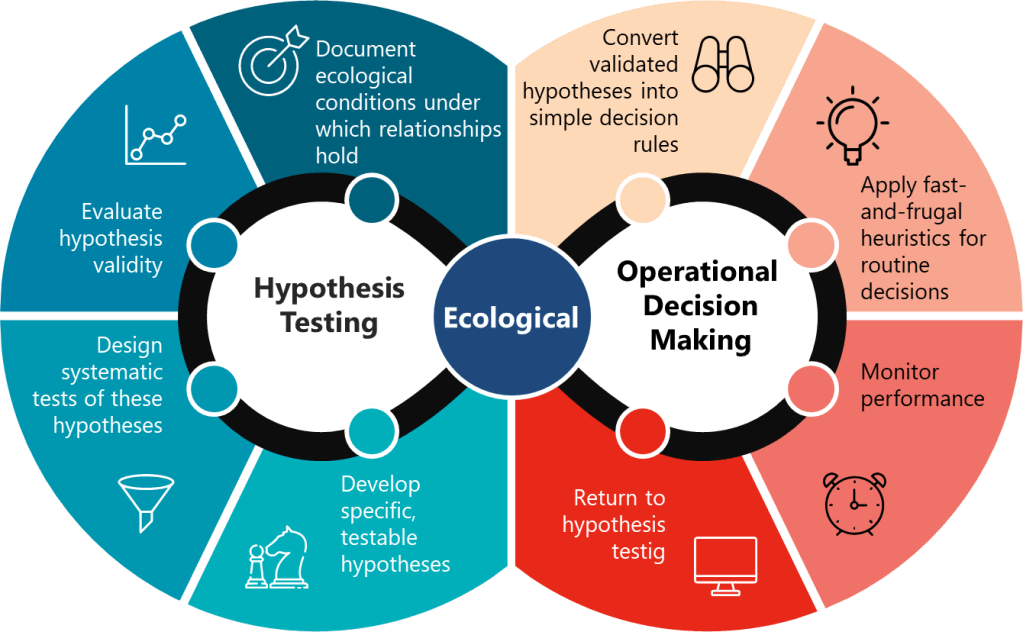
Hypothesis-Driven Validation: Instead of demonstrating that processes meet specifications, validation activities should test specific hypotheses about process behavior. For example, rather than proving that a sterilization cycle achieves a 6-log reduction, we might test the hypothesis that cycle modifications affect sterility assurance in predictable ways. Instead of demonstrating that the CHO cell culture process consistently produces mAb drug substance meeting predetermined specifications, hypothesis-driven validation would test the specific prediction that maintaining pH at 7.0 ± 0.05 during the production phase will result in final titers that are 15% ± 5% higher than pH maintained at 6.9 ± 0.05, creating a falsifiable hypothesis that can be definitively proven wrong if the predicted titer improvement fails to materialize within the specified confidence intervals

Falsifiable Control Strategies: Control strategies should include specific predictions about how the system will behave under different conditions. These predictions should be testable and potentially falsifiable through routine monitoring or designed experiments.

Learning-Oriented Metrics: Key indicators should be designed to detect when our assumptions about system behavior are incorrect, not just when systems are performing within specification. Metrics that only measure compliance tell us nothing about the underlying system dynamics.

Proactive Stress Testing: Rather than waiting for problems to occur naturally, we should actively probe the boundaries of system performance through controlled stress conditions. This approach reveals failure modes before they impact patients while providing valuable data about system robustness.

Designing Falsifiable Quality Systems

The practical challenge of designing falsifiable quality systems requires a fundamental reconceptualization of how we approach quality assurance. Instead of building systems designed to prevent all possible failures, we need systems designed to fail in instructive ways when our underlying assumptions are incorrect.

This approach starts with making our assumptions explicit and testable. Traditional quality systems often embed numerous unstated assumptions about process behavior, material characteristics, environmental conditions, and human performance. These assumptions are rarely articulated clearly enough to be tested, making the systems inherently unfalsifiable. A falsifiable quality system makes these assumptions explicit and designs tests to evaluate their validity.

Consider the design of a typical pharmaceutical manufacturing process. Traditional approaches focus on demonstrating that the process consistently produces product meeting specifications under defined conditions. This demonstration typically involves process validation studies that show the process works under idealized conditions, followed by ongoing monitoring to detect deviations from expected performance.

A falsifiable approach would start by articulating specific hypotheses about what drives process performance. We might hypothesize that product quality is primarily determined by three critical process parameters, that these parameters interact in predictable ways, and that environmental variations within specified ranges don’t significantly impact these relationships. Each of these hypotheses can be tested and potentially falsified through designed experiments or systematic observation of process performance.

The key insight is that falsifiable quality systems are designed around testable theories of what makes quality systems effective, rather than around defensive strategies for preventing all possible problems. This shift enables genuine learning and continuous improvement because we can distinguish between interventions that work for the right reasons and those that appear to work for unknown or incorrect reasons.

Structured Hypothesis Formation: Quality requirements should be built around explicit hypotheses about cause-and-effect relationships in critical processes. These hypotheses should be specific enough to be tested and potentially falsified through systematic observation or experimentation.

Predictive Monitoring: Instead of monitoring for compliance with specifications, systems should monitor for deviations from predicted behavior. When predictions prove incorrect, this provides valuable information about the accuracy of our underlying process understanding.

Experimental Integration: Routine operations should be designed to provide ongoing tests of system hypotheses. Process changes, material variations, and environmental fluctuations should be treated as natural experiments that provide data about system behavior rather than disturbances to be minimized.

Failure Mode Anticipation: Quality systems should explicitly anticipate the ways failures might happen and design detection mechanisms for these failure modes. This proactive approach contrasts with reactive systems that only detect problems after they occur.

The Evolution of Risk Assessment: From Compliance to Science

The evolution of pharmaceutical risk assessment from compliance-focused activities to genuine scientific inquiry represents one of the most significant opportunities for improving quality outcomes. Traditional risk assessments often function primarily as documentation exercises designed to satisfy regulatory requirements rather than tools for genuine learning and improvement.

ICH Q9(R1) recognizes this limitation and calls for more scientifically rigorous approaches to quality risk management. The updated guidance emphasizes the need for risk assessments to be based on scientific knowledge and to provide actionable insights for quality improvement. This represents a shift away from checklist-based compliance activities toward hypothesis-driven scientific inquiry.

The integration of falsifiability principles with ICH Q9(R1) requirements creates opportunities for more rigorous and useful risk assessments. Instead of asking generic questions about what could go wrong, falsifiable risk assessments develop specific hypotheses about failure modes and design tests to evaluate these hypotheses. This approach provides more actionable insights while meeting regulatory expectations for systematic risk evaluation.

Consider the evolution of Failure Mode and Effects Analysis (FMEA) from a traditional compliance tool to a falsifiable risk assessment method. Traditional FMEA often devolves into generic lists of potential failures with subjective probability and impact assessments. The results provide limited insight because the assessments can’t be systematically tested or validated.

A falsifiable FMEA would start with specific hypotheses about failure mechanisms and their relationships to process parameters, material characteristics, or operational conditions. These hypotheses would be tested through historical data analysis, designed experiments, or systematic monitoring programs. The results would provide genuine insights into system behavior while creating a foundation for continuous improvement.

This evolution requires changes in how we approach several key risk assessment activities:

Hazard Identification: Instead of brainstorming all possible things that could go wrong, risk identification should focus on developing testable hypotheses about specific failure mechanisms and their triggers.

Risk Analysis: Probability and impact assessments should be based on testable models of system behavior rather than subjective expert judgment. When models prove inaccurate, this provides valuable information about the need to revise our understanding of system dynamics.

Risk Control: Control measures should be designed around testable theories of how interventions affect system behavior. The effectiveness of controls should be evaluated through systematic monitoring and periodic testing rather than assumed based on their implementation.

Risk Review: Risk review activities should focus on testing the accuracy of previous risk predictions and updating risk models based on new evidence. This creates a learning loop that continuously improves the quality of risk assessments over time.

Practical Framework for Falsifiable Quality Risk Management

The implementation of falsifiable quality risk management requires a systematic framework that integrates Popperian principles with practical pharmaceutical quality requirements. This framework must be sophisticated enough to generate genuine scientific insights while remaining practical for routine quality management activities.

The foundation of this framework rests on the principle that effective quality systems are built around testable theories of what drives quality outcomes. These theories should make specific predictions that can be evaluated through systematic observation, controlled experimentation, or historical data analysis. When predictions prove incorrect, this provides valuable information about the need to revise our understanding of system behavior.

Phase 1: Hypothesis Development

The first phase involves developing specific, testable hypotheses about system behavior. These hypotheses should address fundamental questions about what drives quality outcomes in specific operational contexts. Rather than generic statements about quality risks, hypotheses should make specific predictions about relationships between process parameters, material characteristics, environmental conditions, and quality outcomes.

For example, instead of the generic hypothesis that “temperature variations affect product quality,” a falsifiable hypothesis might state that “temperature excursions above 25°C for more than 30 minutes during the mixing phase increase the probability of out-of-specification results by at least 20%.” This hypothesis is specific enough to be tested and potentially falsified through systematic data collection and analysis.

Phase 2: Experimental Design

The second phase involves designing systematic approaches to test the hypotheses developed in Phase 1. This might involve controlled experiments, systematic analysis of historical data, or structured monitoring programs designed to capture relevant data about hypothesis validity.

The key principle is that testing approaches should be capable of falsifying the hypotheses if they are incorrect. This requires careful attention to statistical power, measurement systems, and potential confounding factors that might obscure true relationships between variables.

Phase 3: Evidence Collection

The third phase focuses on systematic collection of evidence relevant to hypothesis testing. This evidence might come from designed experiments, routine monitoring data, or systematic analysis of historical performance. The critical requirement is that evidence collection should be structured around hypothesis testing rather than generic performance monitoring.

Evidence collection systems should be designed to detect when hypotheses are incorrect, not just when systems are performing within specifications. This requires more sophisticated approaches to data analysis and interpretation than traditional compliance-focused monitoring.

Phase 4: Hypothesis Evaluation

The fourth phase involves systematic evaluation of evidence against the hypotheses developed in Phase 1. This evaluation should follow rigorous statistical methods and should be designed to reach definitive conclusions about hypothesis validity whenever possible.

When hypotheses are falsified, this provides valuable information about the need to revise our understanding of system behavior. When hypotheses are supported by evidence, this provides confidence in our current understanding while suggesting areas for further testing and refinement.

Phase 5: System Adaptation

The final phase involves adapting quality systems based on the insights gained through hypothesis testing. This might involve modifying control strategies, updating risk assessments, or redesigning monitoring programs based on improved understanding of system behavior.

The critical principle is that system adaptations should be based on genuine learning about system behavior rather than reactive responses to compliance issues or external pressures. This creates a foundation for continuous improvement that builds cumulative knowledge about what drives quality outcomes.

Implementation Challenges

The transition to falsifiable quality risk management faces several practical challenges that must be addressed for successful implementation. These challenges range from technical issues related to experimental design and statistical analysis to cultural and organizational barriers that may resist more scientifically rigorous approaches to quality management.

Technical Challenges

The most immediate technical challenge involves designing falsifiable hypotheses that are relevant to pharmaceutical quality management. Many quality professionals have extensive experience with compliance-focused activities but limited experience with experimental design and hypothesis testing. This skills gap must be addressed through targeted training and development programs.

Statistical power represents another significant technical challenge. Many quality systems operate with very low baseline failure rates, making it difficult to design experiments with adequate power to detect meaningful differences in system performance. This requires sophisticated approaches to experimental design and may necessitate longer observation periods or larger sample sizes than traditionally used in quality management.

Measurement systems present additional challenges. Many pharmaceutical quality attributes are difficult to measure precisely, introducing uncertainty that can obscure true relationships between process parameters and quality outcomes. This requires careful attention to measurement system validation and uncertainty quantification.

Cultural and Organizational Challenges

Perhaps more challenging than technical issues are the cultural and organizational barriers to implementing more scientifically rigorous quality management approaches. Many pharmaceutical organizations have deeply embedded cultures that prioritize risk avoidance and compliance over learning and improvement.

The shift to falsifiable quality management requires cultural change that embraces controlled failure as a learning opportunity rather than something to be avoided at all costs. This represents a fundamental change in how many organizations think about quality management and may encounter significant resistance.

Regulatory relationships present additional organizational challenges. Many quality professionals worry that more rigorous scientific approaches to quality management might raise regulatory concerns or create compliance burdens. This requires careful communication with regulatory agencies to demonstrate that falsifiable approaches enhance rather than compromise patient safety.

Strategic Solutions

Successfully implementing falsifiable quality risk management requires strategic approaches that address both technical and cultural challenges. These solutions must be tailored to specific organizational contexts while maintaining scientific rigor and regulatory compliance.

Pilot Programs: Implementation should begin with carefully selected pilot programs in areas where falsifiable approaches can demonstrate clear value. These pilots should be designed to generate success stories that support broader organizational adoption while building internal capability and confidence.

Training and Development: Comprehensive training programs should be developed to build organizational capability in experimental design, statistical analysis, and hypothesis testing. These programs should be tailored to pharmaceutical quality contexts and should emphasize practical applications rather than theoretical concepts.

Regulatory Engagement: Proactive engagement with regulatory agencies should emphasize how falsifiable approaches enhance patient safety through improved understanding of system behavior. This communication should focus on the scientific rigor of the approach rather than on business benefits that might appear secondary to regulatory objectives.

Cultural Change Management: Systematic change management programs should address cultural barriers to embracing controlled failure as a learning opportunity. These programs should emphasize how falsifiable approaches support regulatory compliance and patient safety rather than replacing these priorities with business objectives.

Case Studies: Falsifiability in Practice

The practical application of falsifiable quality risk management can be illustrated through several case studies that demonstrate how Popperian principles can be integrated with routine pharmaceutical quality activities. These examples show how hypotheses can be developed, tested, and used to improve quality outcomes while maintaining regulatory compliance.

Case Study 1: Cleaning Validation Optimization

A biologics manufacturer was experiencing occasional cross-contamination events despite having validated cleaning procedures that consistently met acceptance criteria. Traditional approaches focused on demonstrating that cleaning procedures reduced contamination below specified limits, but provided no insight into the factors that occasionally caused this system to fail.

The falsifiable approach began with developing specific hypotheses about cleaning effectiveness. The team hypothesized that cleaning effectiveness was primarily determined by three factors: contact time with cleaning solution, mechanical action intensity, and rinse water temperature. They further hypothesized that these factors interacted in predictable ways and that current procedures provided a specific margin of safety above minimum requirements.

These hypotheses were tested through a designed experiment that systematically varied each cleaning parameter while measuring residual contamination levels. The results revealed that current procedures were adequate under ideal conditions but provided minimal margin of safety when multiple factors were simultaneously at their worst-case levels within specified ranges.

Based on these findings, the cleaning procedure was modified to provide greater margin of safety during worst-case conditions. More importantly, ongoing monitoring was redesigned to test the continued validity of the hypotheses about cleaning effectiveness rather than simply verifying compliance with acceptance criteria.

Case Study 2: Process Control Strategy Development

A pharmaceutical manufacturer was developing a control strategy for a new manufacturing process. Traditional approaches would have focused on identifying critical process parameters and establishing control limits based on process validation studies. Instead, the team used a falsifiable approach that started with explicit hypotheses about process behavior.

The team hypothesized that product quality was primarily controlled by the interaction between temperature and pH during the reaction phase, that these parameters had linear effects on product quality within the normal operating range, and that environmental factors had negligible impact on these relationships.

These hypotheses were tested through systematic experimentation during process development. The results confirmed the importance of the temperature-pH interaction but revealed nonlinear effects that weren’t captured in the original hypotheses. More importantly, environmental humidity was found to have significant effects on process behavior under certain conditions.

The control strategy was designed around the revised understanding of process behavior gained through hypothesis testing. Ongoing process monitoring was structured to continue testing key assumptions about process behavior rather than simply detecting deviations from target conditions.

Case Study 3: Supplier Quality Management

A biotechnology company was managing quality risks from a critical raw material supplier. Traditional approaches focused on incoming inspection and supplier auditing to verify compliance with specifications and quality system requirements. However, occasional quality issues suggested that these approaches weren’t capturing all relevant quality risks.

The falsifiable approach started with specific hypotheses about what drove supplier quality performance. The team hypothesized that supplier quality was primarily determined by their process control during critical manufacturing steps, that certain environmental conditions increased the probability of quality issues, and that supplier quality system maturity was predictive of long-term quality performance.

These hypotheses were tested through systematic analysis of supplier quality data, enhanced supplier auditing focused on specific process control elements, and structured data collection about environmental conditions during material manufacturing. The results revealed that traditional quality system assessments were poor predictors of actual quality performance, but that specific process control practices were strongly predictive of quality outcomes.

The supplier management program was redesigned around the insights gained through hypothesis testing. Instead of generic quality system requirements, the program focused on specific process control elements that were demonstrated to drive quality outcomes. Supplier performance monitoring was structured around testing continued validity of the relationships between process control and quality outcomes.

Measuring Success in Falsifiable Quality Systems

The evaluation of falsifiable quality systems requires fundamentally different approaches to performance measurement than traditional compliance-focused systems. Instead of measuring the absence of problems, we need to measure the presence of learning and the accuracy of our predictions about system behavior.

Traditional quality metrics focus on outcomes: defect rates, deviation frequencies, audit findings, and regulatory observations. While these metrics remain important for regulatory compliance and business performance, they provide limited insight into whether our quality systems are actually effective or merely lucky. Falsifiable quality systems require additional metrics that evaluate the scientific validity of our approach to quality management.

Predictive Accuracy Metrics

The most direct measure of a falsifiable quality system’s effectiveness is the accuracy of its predictions about system behavior. These metrics evaluate how well our hypotheses about quality system behavior match observed outcomes. High predictive accuracy suggests that we understand the underlying drivers of quality outcomes. Low predictive accuracy indicates that our understanding needs refinement.

Predictive accuracy metrics might include the percentage of process control predictions that prove correct, the accuracy of risk assessments in predicting actual quality issues, or the correlation between predicted and observed responses to process changes. These metrics provide direct feedback about the validity of our theoretical understanding of quality systems.

Learning Rate Metrics

Another important category of metrics evaluates how quickly our understanding of quality systems improves over time. These metrics measure the rate at which falsified hypotheses lead to improved system performance or more accurate predictions. High learning rates indicate that the organization is effectively using falsifiable approaches to improve quality outcomes.

Learning rate metrics might include the time required to identify and correct false assumptions about system behavior, the frequency of successful process improvements based on hypothesis testing, or the rate of improvement in predictive accuracy over time. These metrics evaluate the dynamic effectiveness of falsifiable quality management approaches.

Hypothesis Quality Metrics

The quality of hypotheses generated by quality risk management processes represents another important performance dimension. High-quality hypotheses are specific, testable, and relevant to important quality outcomes. Poor-quality hypotheses are vague, untestable, or focused on trivial aspects of system performance.

Hypothesis quality can be evaluated through structured peer review processes, assessment of testability and specificity, and evaluation of relevance to critical quality attributes. Organizations with high-quality hypothesis generation processes are more likely to gain meaningful insights from their quality risk management activities.

System Robustness Metrics

Falsifiable quality systems should become more robust over time as learning accumulates and system understanding improves. Robustness can be measured through the system’s ability to maintain performance despite variations in operating conditions, changes in materials or equipment, or other sources of uncertainty.

Robustness metrics might include the stability of process performance across different operating conditions, the effectiveness of control strategies under stress conditions, or the system’s ability to detect and respond to emerging quality risks. These metrics evaluate whether falsifiable approaches actually lead to more reliable quality systems.

Regulatory Implications and Opportunities

The integration of falsifiable principles with pharmaceutical quality risk management creates both challenges and opportunities in regulatory relationships. While some regulatory agencies may initially view scientific approaches to quality management with skepticism, the ultimate result should be enhanced regulatory confidence in quality systems that can demonstrate genuine understanding of what drives quality outcomes.

The key to successful regulatory engagement lies in emphasizing how falsifiable approaches enhance patient safety rather than replacing regulatory compliance with business optimization. Regulatory agencies are primarily concerned with patient safety and product quality. Falsifiable quality systems support these objectives by providing more rigorous and reliable approaches to ensuring quality outcomes.

Enhanced Regulatory Submissions

Regulatory submissions based on falsifiable quality systems can provide more compelling evidence of system effectiveness than traditional compliance-focused approaches. Instead of demonstrating that systems meet minimum requirements, falsifiable approaches can show genuine understanding of what drives quality outcomes and how systems will behave under different conditions.

This enhanced evidence can support regulatory flexibility in areas such as process validation, change control, and ongoing monitoring requirements. Regulatory agencies may be willing to accept risk-based approaches to these activities when they’re supported by rigorous scientific evidence rather than generic compliance activities.

Proactive Risk Communication

Falsifiable quality systems enable more proactive and meaningful communication with regulatory agencies about quality risks and mitigation strategies. Instead of reactive communication about compliance issues, organizations can engage in scientific discussions about system behavior and improvement strategies.

This proactive communication can build regulatory confidence in organizational quality management capabilities while providing opportunities for regulatory agencies to provide input on scientific approaches to quality improvement. The result should be more collaborative regulatory relationships based on shared commitment to scientific rigor and patient safety.

Regulatory Science Advancement

The pharmaceutical industry’s adoption of more scientifically rigorous approaches to quality management can contribute to the advancement of regulatory science more broadly. Regulatory agencies benefit from industry innovations in risk assessment, process understanding, and quality assurance methods.

Organizations that successfully implement falsifiable quality risk management can serve as case studies for regulatory guidance development and can provide evidence for the effectiveness of science-based approaches to quality assurance. This contribution to regulatory science advancement creates value that extends beyond individual organizational benefits.

Toward a More Scientific Quality Culture

The long-term vision for falsifiable quality risk management extends beyond individual organizational implementations to encompass fundamental changes in how the pharmaceutical industry approaches quality assurance. This vision includes more rigorous scientific approaches to quality management, enhanced collaboration between industry and regulatory agencies, and continuous advancement in our understanding of what drives quality outcomes.

Industry-Wide Learning Networks

One promising direction involves the development of industry-wide learning networks that share insights from falsifiable quality management implementations. These networks facilitate collaborative hypothesis testing, shared learning from experimental results, and development of common methodologies for scientific approaches to quality assurance.

Such networks accelerate the advancement of quality science while maintaining appropriate competitive boundaries. Organizations should share methodological insights and general findings while protecting proprietary information about specific processes or products. The result would be faster advancement in quality management science that benefits the entire industry.

Advanced Analytics Integration

The integration of advanced analytics and machine learning techniques with falsifiable quality management approaches represents another promising direction. These technologies can enhance our ability to develop testable hypotheses, design efficient experiments, and analyze complex datasets to evaluate hypothesis validity.

Machine learning approaches are particularly valuable for identifying patterns in complex quality datasets that might not be apparent through traditional analysis methods. However, these approaches must be integrated with falsifiable frameworks to ensure that insights can be validated and that predictive models can be systematically tested and improved.

Regulatory Harmonization

The global harmonization of regulatory approaches to science-based quality management represents a significant opportunity for advancing patient safety and regulatory efficiency. As individual regulatory agencies gain experience with falsifiable quality management approaches, there are opportunities to develop harmonized guidance that supports consistent global implementation.

ICH Q9(r1) was a great step. I would love to see continued work in this area.

Embracing the Discomfort of Scientific Rigor

The transition from compliance-focused to scientifically rigorous quality risk management represents more than a methodological change—it requires fundamentally rethinking how we approach quality assurance in pharmaceutical manufacturing. By embracing Popper’s challenge that genuine scientific theories must be falsifiable, we move beyond the comfortable but ultimately unhelpful world of proving negatives toward the more demanding but ultimately more rewarding world of testing positive claims about system behavior.

The effectiveness paradox that motivates this discussion—the problem of determining what works when our primary evidence is that “nothing bad happened”—cannot be resolved through better compliance strategies or more sophisticated documentation. It requires genuine scientific inquiry into the mechanisms that drive quality outcomes. This inquiry must be built around testable hypotheses that can be proven wrong, not around defensive strategies that can always accommodate any possible outcome.

The practical implementation of falsifiable quality risk management is not without challenges. It requires new skills, different cultural approaches, and more sophisticated methodologies than traditional compliance-focused activities. However, the potential benefits—genuine learning about system behavior, more reliable quality outcomes, and enhanced regulatory confidence—justify the investment required for successful implementation.

Perhaps most importantly, the shift to falsifiable quality management moves us toward a more honest assessment of what we actually know about quality systems versus what we merely assume or hope to be true. This honesty is uncomfortable but essential for building quality systems that genuinely serve patient safety rather than organizational comfort.

The question is not whether pharmaceutical quality management will eventually embrace more scientific approaches—the pressures of regulatory evolution, competitive dynamics, and patient safety demands make this inevitable. The question is whether individual organizations will lead this transition or be forced to follow. Those that embrace the discomfort of scientific rigor now will be better positioned to thrive in a future where quality management is evaluated based on genuine effectiveness rather than compliance theater.

As we continue to navigate an increasingly complex regulatory and competitive environment, the organizations that master the art of turning uncertainty into testable knowledge will be best positioned to deliver consistent quality outcomes while maintaining the flexibility needed for innovation and continuous improvement. The integration of Popperian falsifiability with modern quality risk management provides a roadmap for achieving this mastery while maintaining the rigorous standards our industry demands.

The path forward requires courage to question our current assumptions, discipline to design rigorous tests of our theories, and wisdom to learn from both our successes and our failures. But for those willing to embrace these challenges, the reward is quality systems that are not only compliant but genuinely effective. Systems that we can defend not because they’ve never been proven wrong, but because they’ve been proven right through systematic, scientific inquiry.

Embracing the Upside: How ISO 31000’s Risk-as-Opportunities Approach Can Transform Your Quality Risk Management Program

The pharmaceutical industry has long operated under a defensive mindset when it comes to risk management. We identify what could go wrong, assess the likelihood and impact of failure modes, and implement controls to prevent or mitigate negative outcomes. This approach, while necessary and required by ICH Q9, represents only half the risk equation. What our quality risk management program could become not just a compliance necessity, but a strategic driver of innovation, efficiency, and competitive advantage?

Enter the ISO 31000 perspective on risk—one that recognizes risk as “the effect of uncertainty on objectives,” where that effect can be positive, negative, or both. This broader definition opens up transformative possibilities for how we approach quality risk management in pharmaceutical manufacturing. Rather than solely focusing on preventing bad things from happening, we can start identifying and capitalizing on good things that might occur.

The Evolution of Risk Thinking in Pharmaceuticals

For decades, our industry’s risk management approach has been shaped by regulatory necessity and liability concerns. The introduction of ICH Q9 in 2005—and its recent revision in 2023—provided a structured framework for quality risk management that emphasizes scientific knowledge, proportional formality, and patient protection. This framework has served us well, establishing systematic approaches to risk assessment, control, communication, and review.

However, the updated ICH Q9(R1) recognizes that we’ve been operating with significant blind spots. The revision addresses issues including “high levels of subjectivity in risk assessments,” “failing to adequately manage supply and product availability risks,” and “lack of clarity on risk-based decision-making”. These challenges suggest that our traditional approach to risk management, while compliant, may not be fully leveraging the strategic value that comprehensive risk thinking can provide.

The ISO 31000 standard offers a complementary perspective that can address these gaps. By defining risk as uncertainty’s effect on objectives—with explicit recognition that this effect can create opportunities as well as threats—ISO 31000 provides a framework for risk management that is inherently more strategic and value-creating.

Understanding Risk as Opportunity in the Pharmaceutical Context

Lot us start by establishing a clear understanding of what “positive risk” or “opportunity” means in our context. In pharmaceutical quality management, opportunities are uncertain events or conditions that, if they occur, would enhance our ability to achieve quality objectives beyond our current expectations.

Consider these examples:

Manufacturing Process Opportunities: A new analytical method validates faster than anticipated, allowing for reduced testing cycles and increased throughput. The uncertainty around validation timelines created an opportunity that, when realized, improved operational efficiency while maintaining quality standards.

Supply Chain Opportunities: A raw material supplier implements process improvements that result in higher-purity ingredients at lower cost. This positive deviation from expected quality created opportunities for enhanced product stability and improved margins.

Technology Integration Opportunities: Implementation of process analytical technology (PAT) tools not only meets their intended monitoring purpose but reveals previously unknown process insights that enable further optimization opportunities.

Regulatory Opportunities: A comprehensive quality risk assessment submitted as part of a regulatory filing demonstrates such thorough understanding of the product and process that regulators grant additional manufacturing flexibility, creating opportunities for more efficient operations.

These scenarios illustrate how uncertainty—the foundation of all risk—can work in our favor when we’re prepared to recognize and capitalize on positive outcomes.

The Strategic Value of Opportunity-Based Risk Management

Integrating opportunity recognition into your quality risk management program delivers value across multiple dimensions:

Enhanced Innovation Capability

Traditional risk management often creates conservative cultures where “safe” decisions are preferred over potentially transformative ones. By systematically identifying and evaluating opportunities, we can make more balanced decisions that account for both downside risks and upside potential. This leads to greater willingness to explore innovative approaches to quality challenges while maintaining appropriate risk controls.

Improved Resource Allocation

When we only consider negative risks, we tend to over-invest in protective measures while under-investing in value-creating activities. Opportunity-oriented risk management helps optimize resource allocation by identifying where investments might yield unexpected benefits beyond their primary purpose.

Strengthened Competitive Position

Companies that effectively identify and capitalize on quality-related opportunities can develop competitive advantages through superior operational efficiency, faster time-to-market, enhanced product quality, or innovative approaches to regulatory compliance.

Cultural Transformation

Perhaps most importantly, embracing opportunities transforms the perception of risk management from a necessary burden to a strategic enabler. This cultural shift encourages proactive thinking, innovation, and continuous improvement throughout the organization.

Mapping ISO 31000 Principles to ICH Q9 Requirements

The beauty of integrating ISO 31000’s opportunity perspective with ICH Q9 compliance lies in their fundamental compatibility. Both frameworks emphasize systematic, science-based approaches to risk management with proportional formality based on risk significance. The key difference is scope—ISO 31000’s broader definition of risk naturally encompasses opportunities alongside threats.

Risk Assessment Enhancement

ICH Q9 requires risk assessment to include hazard identification, analysis, and evaluation. The ISO 31000 approach enhances this by expanding identification beyond failure modes to include potential positive outcomes. During hazard analysis and risk assessment (HARA), we can systematically ask not only “what could go wrong?” but also “what could go better than expected?” and “what positive outcomes might emerge from this uncertainty?”

For example, when assessing risks associated with implementing a new manufacturing technology, traditional ICH Q9 assessment would focus on potential failures, integration challenges, and validation risks. The enhanced approach would also identify opportunities for improved process understanding, unexpected efficiency gains, or novel approaches to quality control that might emerge during implementation.

Risk Control Expansion

ICH Q9’s risk control phase traditionally focuses on risk reduction and risk acceptance. The ISO 31000 perspective adds a third dimension: opportunity enhancement. This involves implementing controls or strategies that not only mitigate negative risks but also position the organization to capitalize on positive uncertainties should they occur.

Consider controls designed to manage analytical method transfer risks. Traditional controls might include extensive validation studies, parallel testing, and contingency procedures. Opportunity-enhanced controls might also include structured data collection protocols designed to identify process insights, cross-training programs that build broader organizational capabilities, or partnerships with equipment vendors that could lead to preferential access to new technologies.

Risk Communication and Opportunity Awareness

ICH Q9 emphasizes the importance of risk communication among stakeholders. When we expand this to include opportunity communication, we create organizational awareness of positive possibilities that might otherwise go unrecognized. This enhanced communication helps ensure that teams across the organization are positioned to identify and report positive deviations that could represent valuable opportunities.

Risk Review and Opportunity Capture

The risk review process required by ICH Q9 becomes more dynamic when it includes opportunity assessment. Regular reviews should evaluate not only whether risk controls remain effective, but also whether any positive outcomes have emerged that could be leveraged for further benefit. This creates a feedback loop that continuously enhances both risk management and opportunity realization.

Implementation Framework

Implementing opportunity-based risk management within your existing ICH Q9 program requires systematic integration rather than wholesale replacement. Here’s a practical framework for making this transition:

Phase 1: Assessment and Planning

Begin by evaluating your current risk management processes to identify integration points for opportunity assessment. Review existing risk assessments to identify cases where positive outcomes might have been overlooked. Establish criteria for what constitutes a meaningful opportunity in your context—this might include potential cost savings, quality improvements, efficiency gains, or innovation possibilities above defined thresholds.

Key activities include:

  • Mapping current risk management processes against ISO 31000 principles
  • Perform a readiness evaluation
  • Training risk management teams on opportunity identification techniques
  • Developing templates and tools that prompt opportunity consideration
  • Establishing metrics for tracking opportunity identification and realization

Readiness Evaluation

Before implementing opportunity-based risk management, conduct a thorough assessment of organizational readiness and capability. This includes evaluating current risk management maturity, cultural factors that might support or hinder adoption, and existing processes that could be enhanced.

Key assessment areas include:

  • Current risk management process effectiveness and consistency
  • Organizational culture regarding innovation and change
  • Leadership support for expanded risk management approaches
  • Available resources for training and process enhancement
  • Existing cross-functional collaboration capabilities

Phase 2: Process Integration

Systematically integrate opportunity assessment into your existing risk management workflows. This doesn’t require new procedures—rather, it involves enhancing existing processes to ensure opportunity identification receives appropriate attention alongside threat assessment.

Modify risk assessment templates to include opportunity identification sections. Train teams to ask opportunity-focused questions during risk identification sessions. Develop criteria for evaluating opportunity significance using similar approaches to threat assessment—considering likelihood, impact, and detectability.

Update risk control strategies to include opportunity enhancement alongside risk mitigation. This might involve designing controls that serve dual purposes or implementing monitoring systems that can detect positive deviations as well as negative ones.

This is the phase I am currently working through. Make sure to do a pilot program!

Pilot Program Development

Start with pilot programs in areas where opportunities are most likely to be identified and realized. This might include new product development projects, technology implementation initiatives, or process improvement activities where uncertainty naturally creates both risks and opportunities.

Design pilot programs to:

  • Test opportunity identification and evaluation methods
  • Develop organizational capability and confidence
  • Create success stories that support broader adoption
  • Refine processes and tools based on practical experience

Phase 3: Cultural Integration

The success of opportunity-based risk management ultimately depends on cultural adoption. Teams need to feel comfortable identifying and discussing positive possibilities without being perceived as overly optimistic or insufficiently rigorous.

Establish communication protocols that encourage opportunity reporting alongside issue escalation. Recognize and celebrate cases where teams successfully identify and capitalize on opportunities. Incorporate opportunity realization into performance metrics and success stories.

Scaling and Integration Strategy

Based on pilot program results, develop a systematic approach for scaling opportunity-based risk management across the organization. This should include timelines, resource requirements, training programs, and change management strategies.

Consider factors such as:

  • Process complexity and risk management requirements in different areas
  • Organizational change capacity and competing priorities
  • Resource availability and investment requirements
  • Integration with other improvement and innovation initiatives

Phase 4: Continuous Enhancement

Like all aspects of quality risk management, opportunity integration requires continuous improvement. Regular assessment of the program’s effectiveness in identifying and capitalizing on opportunities helps refine the approach over time.

Conduct periodic reviews of opportunity identification accuracy—are teams successfully recognizing positive outcomes when they occur? Evaluate opportunity realization effectiveness—when opportunities are identified, how successfully does the organization capitalize on them? Use these insights to enhance training, processes, and organizational support for opportunity-based risk management.

Long-term Sustainability Planning

Ensure that opportunity-based risk management becomes embedded in organizational culture and processes rather than remaining dependent on individual champions or special programs. This requires systematic integration into standard operating procedures, performance metrics, and leadership expectations.

Plan for:

  • Ongoing training and capability development programs
  • Regular assessment and continuous improvement of opportunity identification processes
  • Integration with career development and advancement criteria
  • Long-term resource allocation and organizational support

Tools and Techniques for Opportunity Integration

Include a Success Mode and Benefits Analysis in your FMEA (Failure Mode and Effects Analysis)

Traditional FMEA focuses on potential failures and their effects. Opportunity-enhanced FMEA includes “Success Mode and Benefits Analysis” (SMBA) that systematically identifies potential positive outcomes and their benefits. For each process step, teams assess not only what could go wrong, but also what could go better than expected and how to position the organization to benefit from such outcomes.

A Success Mode and Benefits Analysis (SMBA) is the positive complement to the traditional Failure Mode and Effects Analysis (FMEA). While FMEA identifies where things can go wrong and how to prevent or mitigate failures, SMBA systematically evaluates how things can go unexpectedly right—helping organizations proactively capture, enhance, and realize benefits that arise from process successes, innovations, or positive deviations.

What Does a Success Mode and Benefits Analysis Look Like?

The SMBA is typically structured as a table or worksheet with a format paralleling the FMEA, but with a focus on positive outcomes and opportunities. A typical SMBA process includes the following columns and considerations:

Step/ColumnDescription
Process Step/FunctionThe specific process, activity, or function under investigation.
Success ModeDescription of what could go better than expected or intended—what’s the positive deviation?
Benefits/EffectsThe potential beneficial effects if the success mode occurs (e.g., improved yield, faster cycle, enhanced quality, regulatory flexibility).
Likelihood (L)Estimated probability that the success mode will occur.
Magnitude of Benefit (M)Qualitative or quantitative evaluation of how significant the benefit would be (e.g., minor, moderate, major; or by quantifiable metrics).
DetectabilityCan the opportunity be spotted early? What are the triggers or signals of this benefit occurring?
Actions to Capture/EnhanceSteps or controls that could help ensure the success is recognized and benefits are realized (e.g., monitoring plans, training, adaptation of procedures).
Benefit Priority Number (BPN)An optional calculated field (e.g., L × M) to help the team prioritize follow-up actions.
  • Proactive Opportunity Identification: Instead of waiting for positive results to emerge, the process prompts teams to seek out “what could go better than planned?”.
  • Systematic Benefit Analysis: Quantifies or qualifies benefits just as FMEA quantifies risk.
  • Follow-Up Actions: Establishes ways to amplify and institutionalize successes.

When and How to Use SMBA

  • Use SMBA alongside FMEA during new technology introductions, process changes, or annual reviews.
  • Integrate into cross-functional risk assessments to balance risk aversion with innovation.
  • Use it to foster a culture that not just “prevents failure,” but actively “captures opportunity” and learns from success.

Opportunity-Integrated Risk Matrices

Traditional risk matrices plot likelihood versus impact for negative outcomes. Enhanced matrices include separate quadrants or scales for positive outcomes, allowing teams to visualize both threats and opportunities in the same framework. This provides a more complete picture of uncertainty and helps prioritize actions based on overall risk-opportunity balance.

Scenario Planning with Upside Cases

While scenario planning typically focuses on “what if” situations involving problems, opportunity-oriented scenario planning includes “what if” situations involving unexpected successes. This helps teams prepare to recognize and capitalize on positive outcomes that might otherwise be missed.

Innovation-Focused Risk Assessments

When evaluating new technologies, processes, or approaches, include systematic assessment of innovation opportunities that might emerge. This involves considering not just whether the primary objective will be achieved, but what secondary benefits or unexpected capabilities might develop during implementation.

Organizational Considerations

Leadership Commitment and Cultural Change

Successful integration of opportunity-based risk management requires genuine leadership commitment to cultural change. Leaders must model behavior that values both threat mitigation and opportunity creation. This means celebrating teams that identify valuable opportunities alongside those that prevent significant risks.

Leadership should establish clear expectations that risk management includes opportunity identification as a core responsibility. Performance metrics, recognition programs, and resource allocation decisions should reflect this balanced approach to uncertainty management.

Training and Capability Development

Teams need specific training to develop opportunity identification skills. While threat identification often comes naturally in quality-conscious cultures, opportunity recognition requires different cognitive approaches and tools.

Training programs should include:

  • Techniques for identifying positive potential outcomes
  • Methods for evaluating opportunity significance and likelihood
  • Approaches for designing controls that enhance opportunities while mitigating risks
  • Communication skills for discussing opportunities without compromising analytical rigor

Cross-Functional Integration

Opportunity-based risk management is most effective when integrated across organizational functions. Quality teams might identify process improvement opportunities, while commercial teams recognize market advantages, and technical teams discover innovation possibilities.

Establishing cross-functional opportunity review processes ensures that identified opportunities receive appropriate evaluation and resource allocation regardless of their origin. Regular communication between functions helps build organizational capability to recognize and act on opportunities systematically.

Measuring Success in Opportunity-Based Risk Management

Existing risk management metrics typically focus on negative outcome prevention: deviation rates, incident frequency, compliance scores, and similar measures. While these remain important, opportunity-based programs should also track positive outcome realization.

Enhanced metrics might include:

  • Number of opportunities identified per risk assessment
  • Percentage of identified opportunities that are successfully realized
  • Value generated from opportunity realization (cost savings, quality improvements, efficiency gains)
  • Time from opportunity identification to realization

Innovation and Improvement Indicators

Opportunity-focused risk management should drive increased innovation and continuous improvement. Tracking metrics related to process improvements, technology adoption, and innovation initiatives provides insight into the program’s effectiveness in creating value beyond compliance.

Consider monitoring:

  • Rate of process improvement implementation
  • Success rate of new technology adoptions
  • Number of best practices developed and shared across the organization
  • Frequency of positive deviations that lead to process optimization

Cultural and Behavioral Measures

The ultimate success of opportunity-based risk management depends on cultural integration. Measuring changes in organizational attitudes, behaviors, and capabilities provides insight into program sustainability and long-term impact.

Relevant measures include:

  • Employee engagement with risk management processes
  • Frequency of voluntary opportunity reporting
  • Cross-functional collaboration on risk and opportunity initiatives
  • Leadership participation in opportunity evaluation and resource allocation

Regulatory Considerations and Compliance Integration

Maintaining ICH Q9 Compliance

The opportunity-enhanced approach must maintain full compliance with ICH Q9 requirements while adding value through expanded scope. This means ensuring that all required elements of risk assessment, control, communication, and review continue to receive appropriate attention and documentation.

Regulatory submissions should clearly demonstrate that opportunity identification enhances rather than compromises systematic risk evaluation. Documentation should show how opportunity assessment strengthens process understanding and control strategy development.

Communicating Value to Regulators

Regulators are increasingly interested in risk-based approaches that demonstrate genuine process understanding and continuous improvement capabilities. Opportunity-based risk management can strengthen regulatory relationships by demonstrating sophisticated thinking about process optimization and quality enhancement.

When communicating with regulatory agencies, emphasize how opportunity identification improves process understanding, enhances control strategy development, and supports continuous improvement objectives. Show how the approach leads to better risk control through deeper process knowledge and more robust quality systems.

Global Harmonization Considerations

Different regulatory regions may have varying levels of comfort with opportunity-focused risk management discussions. While the underlying risk management activities remain consistent with global standards, communication approaches should be tailored to regional expectations and preferences.

Focus regulatory communications on how enhanced risk understanding leads to better patient protection and product quality, rather than on business benefits that might appear secondary to regulatory objectives.

Conclusion

Integrating ISO 31000’s opportunity perspective with ICH Q9 compliance represents more than a process enhancement and is a shift toward strategic risk management that positions quality organizations as value creators rather than cost centers. By systematically identifying and capitalizing on positive uncertainties, we can transform quality risk management from a defensive necessity into an offensive capability that drives innovation, efficiency, and competitive advantage.

The framework outlined here provides a practical path forward that maintains regulatory compliance while unlocking the strategic value inherent in comprehensive risk thinking. Success requires leadership commitment, cultural change, and systematic implementation, but the potential returns—in terms of operational excellence, innovation capability, and competitive position—justify the investment.

As we continue to navigate an increasingly complex and uncertain business environment, organizations that master the art of turning uncertainty into opportunity will be best positioned to thrive. The integration of ISO 31000’s risk-as-opportunities approach with ICH Q9 compliance provides a roadmap for achieving this mastery while maintaining the rigorous standards our industry demands.

The Regulatory Red Herring: Why High-Level Compliance Requirements Have No Place in User Requirements Specifications

We have an unfortunate habit of conflating regulatory process requirements with specific system functionality requirements. This confusion manifests most perversely in User Requirements Specifications that contain nebulous statements like “the system shall comply with 21 CFR Part 11” or “the system must meet EU GMP Annex 11 requirements.” These high-level regulatory citations represent a fundamental misunderstanding of what user requirements should accomplish and demonstrate a dangerous abdication of the detailed thinking required for effective validation.

The core problem is simple yet profound: lifecycle, risk management, and validation are organizational processes, not system characteristics. When we embed these process-level concepts into system requirements, we create validation exercises that test compliance theater rather than functional reality.

The Distinction That Changes Everything

User requirements specifications serve as the foundational document identifying what a system must do to meet specific business needs, product requirements, and operational constraints. They translate high-level business objectives into measurable, testable, and verifiable system behaviors. User requirements focus on what the system must accomplish, not how the organization manages its regulatory obligations.

Consider the fundamental difference between these approaches:

Problematic High-Level Requirement: “The system shall comply with 21 CFR Part 11 validation requirements.”

Proper Detailed Requirements:

  • “The system shall generate time-stamped audit trails for all data modifications, including user ID, date/time, old value, new value, and reason for change”
  • “The system shall enforce unique user identification through username/password combinations with minimum 8-character complexity requirements”
  • “The system shall prevent deletion of electronic records while maintaining complete audit trail visibility”
  • “The system shall provide electronic signature functionality that captures the printed name, date/time, and meaning of the signature”

The problematic version tells us nothing about what the system actually needs to do. The detailed versions provide clear, testable criteria that directly support Part 11 compliance while specifying actual system functionality.

Process vs. System: Understanding the Fundamental Categories

Lifecycle management, risk assessment, and validation represent organizational processes that exist independently of any specific system implementation. These processes define how an organization approaches system development, operation, and maintenance—they are not attributes that can be “built into” software.

Lifecycle processes encompass the entire journey from initial system conception through retirement, including stages such as requirements definition, design, development, testing, deployment, operation, and eventual decommissioning. A lifecycle approach ensures systematic progression through these stages with appropriate documentation, review points, and decision criteria. However, lifecycle management cannot be embedded as a system requirement because it describes the framework within which system development occurs, not system functionality itself.

Risk management processes involve systematic identification, assessment, and mitigation of potential hazards throughout system development and operation. Risk management influences system design decisions and validation approaches, but risk management itself is not a system capability—it is an organizational methodology for making informed decisions about system requirements and controls.

Validation processes establish documented evidence that systems consistently perform as intended and meet all specified requirements. Validation involves planning, execution, and documentation of testing activities, but validation is something done to systems, not something systems possess as an inherent characteristic.

The Illusion of Compliance Through Citation

When user requirements specifications contain broad regulatory citations rather than specific functional requirements, they create several critical problems that undermine effective validation:

  • Untestable Requirements: How does one verify that a system “complies with Part 11”? Such requirements provide no measurable criteria, no specific behaviors to test, and no clear success/failure conditions. Verification becomes a subjective exercise in regulatory interpretation rather than objective measurement of system performance.
  • Validation Theater: Broad compliance statements encourage checkbox validation exercises where teams demonstrate regulatory awareness without proving functional capability. These validations often consist of mapping system features to regulatory sections rather than demonstrating that specific user needs are met.
  • Scope Ambiguity: Part 11 and Annex 11 contain numerous requirements, many of which may not apply to specific systems or use cases. Blanket compliance statements fail to identify which specific regulatory requirements are relevant and which system functions address those requirements.
  • Change Management Nightmares: When requirements reference entire regulatory frameworks rather than specific system behaviors, any regulatory update potentially impacts system validation status. This creates unnecessary re-validation burdens and regulatory uncertainty.

Building Requirements That Actually Work

Effective user requirements specifications address regulatory compliance through detailed, system-specific functional requirements that directly support regulatory objectives. This approach ensures that validation activities test actual system capabilities rather than regulatory awareness

Focus on Critical Quality Attributes: Rather than citing broad compliance frameworks, identify the specific product and process attributes that regulatory requirements are designed to protect. For pharmaceutical systems, this might include data integrity, product traceability, batch genealogy, or contamination prevention.

Translate Regulatory Intent into System Functions: Understand what each applicable regulation is trying to achieve, then specify system behaviors that accomplish those objectives. Part 11’s audit trail requirements, for example, aim to ensure data integrity and accountability—translate this into specific system capabilities for logging, storing, and retrieving change records.

Maintain Regulatory Traceability: Document the relationship between specific system requirements and regulatory drivers, but do so through traceability matrices or design rationale documents rather than within the requirements themselves. This maintains clear regulatory justification while keeping requirements focused on system functionality.

Enable Risk-Based Validation: Detailed functional requirements support risk-based validation approaches by clearly identifying which system functions are critical to product quality, patient safety, or data integrity. This enables validation resources to focus on genuinely important capabilities rather than comprehensive regulatory coverage.

The Process-System Interface: Getting It Right

The relationship between organizational processes and system requirements should be managed through careful analysis and translation, not through broad regulatory citations. Effective user requirements development involves several critical steps:

Process Analysis: Begin by understanding the organizational processes that the system must support. This includes manufacturing processes, quality control workflows, regulatory reporting requirements, and compliance verification activities. However, the focus should be on what the system must enable, not how the organization manages compliance.

Regulatory Gap Analysis: Identify specific regulatory requirements that apply to the intended system use. Analyze these requirements to understand their functional implications for system design, but avoid copying regulatory language directly into system requirements.

Functional Translation: Convert regulatory requirements into specific, measurable system behaviors. This translation process requires deep understanding of both regulatory intent and system capabilities, but produces requirements that can be objectively verified.

Organizational Boundary Management: Clearly distinguish between requirements for system functionality and requirements for organizational processes. System requirements should focus exclusively on what the technology must accomplish, while process requirements address how the organization will use, maintain, and govern that technology.

Real-World Consequences of the Current Approach

The practice of embedding high-level regulatory requirements in user requirements specifications has created systemic problems throughout the pharmaceutical industry:

  • Validation Inefficiency: Teams spend enormous resources demonstrating broad regulatory compliance rather than proving that systems meet specific user needs. This misallocation of validation effort undermines both regulatory compliance and system effectiveness.
  • Inspection Vulnerability: When regulatory inspectors evaluate systems against broad compliance claims, they often identify gaps between high-level assertions and specific system capabilities. Detailed functional requirements provide much stronger inspection support by demonstrating specific regulatory compliance mechanisms.
  • System Modification Complexity: Changes to systems with broad regulatory requirements often trigger extensive re-validation activities, even when the changes don’t impact regulatory compliance. Specific functional requirements enable more targeted change impact assessments.
  • Cross-Functional Confusion: Development teams, validation engineers, and quality professionals often interpret broad regulatory requirements differently, leading to inconsistent implementation and validation approaches. Detailed functional requirements provide common understanding and clear success criteria.

A Path Forward: Detailed Requirements for Regulatory Success

The solution requires fundamental changes in how the pharmaceutical industry approaches user requirements development and regulatory compliance documentation:

Separate Compliance Strategy from System Requirements: Develop comprehensive regulatory compliance strategies that identify applicable requirements and define organizational approaches for meeting them, but keep these strategies distinct from system functional requirements. Use the compliance strategy to inform requirements development, not replace it.

Invest in Requirements Translation: Build organizational capability for translating regulatory requirements into specific, testable system functions. This requires regulatory expertise, system knowledge, and requirements engineering skills working together.

Implement Traceability Without Embedding: Maintain clear traceability between system requirements and regulatory drivers through external documentation rather than embedded citations. This preserves regulatory justification while keeping requirements focused on system functionality.

Focus Validation on Function: Design validation approaches that test system capabilities directly rather than compliance assertions. This produces stronger regulatory evidence while ensuring system effectiveness.

Lifecycle, risk management, and validation are organizational processes that guide how we develop and maintain systems—they are not system requirements themselves. When we treat them as such, we undermine both regulatory compliance and system effectiveness. The time has come to abandon this regulatory red herring and embrace requirements practices worthy of the products and patients we serve.