The future is now. Industry 4.0 probably means you have algorithms in your process. For example, if you aren’t using algorithims to analyze deviations, you probably soon will.
And with those algorithms come a whole host of questions on how to validate and how to ensure they work properly over time. The FDA has indicated that ““we want to get an understanding of your general idea for model maintenance.” FDA also wants to know the “trigger” for updating the model, the criteria for recalibration, and the level of validation of the model.”
Kate Crawford at Microsoft speaks about “data fundamentalism” – the notion that massive datasets are repositories that yield reliable and objective truths, if only we can extract them using machine learning tools. It shouldn’t take much to realize the reasons why this trap can produce some very bad decision making. Our algorithm’s have biases, just as human beings have biases. They are dependent on the data models used to build and refine them.
Based on reported FDA thinking, and given where European regulators are in other areas, it is very clear we need to be able to explain and justify our algorithmic decisions. Machine learning in here now and will only grow more important.
Basic model of data science
Ask an Interesting Question
The first step is to be very clear on why there is a need for this system and what problem it is trying to solve. Having alignment across all the stakeholders is key to guarantee that the entire team is here with the same purpose. Here we start building a framework
Get the Data
The solution will only be as good as what it learns from. Following the common saying “garbage in, garbage out”, the problem is not with the machine learning tool itself, it lies with how it’s been trained and what data it is learning from.
Explore the Data
Look at the raw data. Look at data summary. Visualize the data. Do it all again a different way. Notice things. Do it again. Probably get more data. Design experiments with the data.
Model the Data
The only true way to validate a model is to observe, iterate and audit. If we take a traditional csv model to machine learning, we are in for a lot of hurt. We need to take the framework we built and validate to it. Ensure there are emchanisms to observe to this framework and audit to performance over time.
Appropriate controls shall be exercised over computer or related systems to assure that changes in master production and control records or other records are instituted only by authorized personnel. Input to and output from the computer or related system of formulas or other records or data shall be checked for accuracy. The degree and frequency of input/output verification shall be based on the complexity and reliability of the computer or related system. A backup file of data entered into the computer or related system shall be maintained except where certain data, such as calculations performed in connection with laboratory analysis, are eliminated by computerization or other automated processes. In such instances a written record of the program shall be maintained along with appropriate validation data. Hard copy or alternative systems, such as duplicates, tapes, or microfilm, designed to assure that backup data are exact and complete and that it is secure from alteration, inadvertent erasures, or loss shall be maintained.
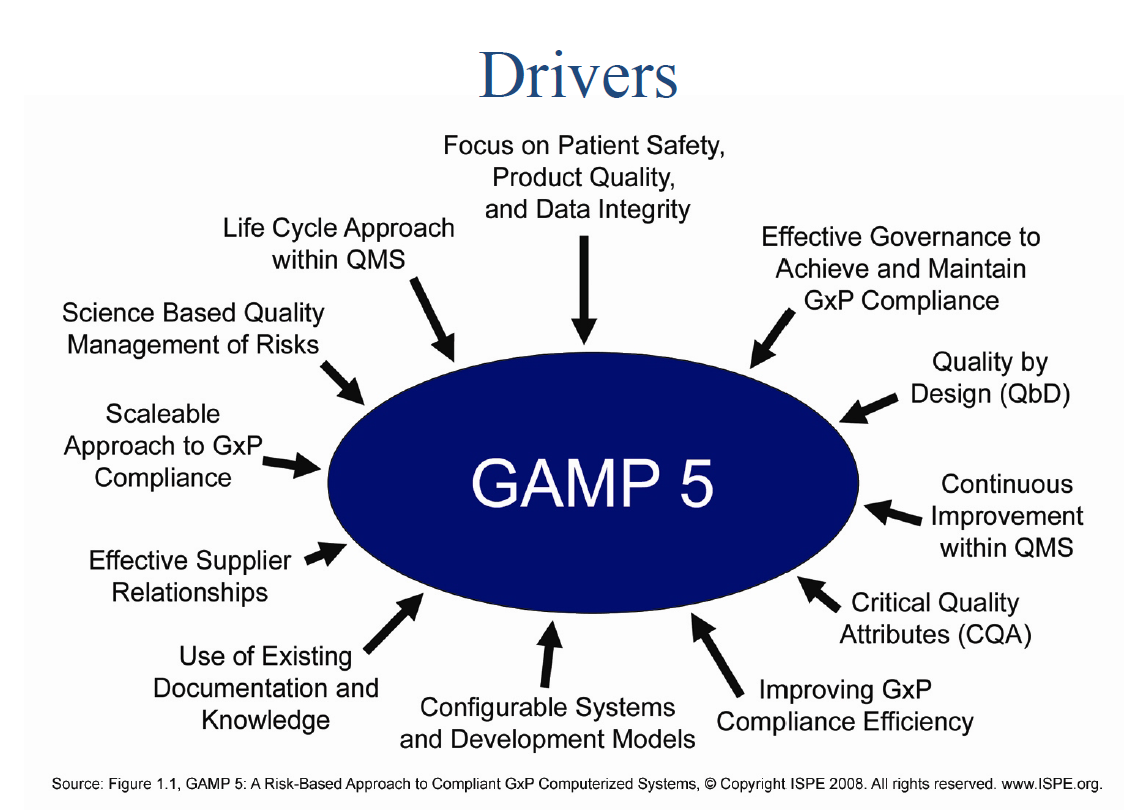
Kris Kelly over at Advantu got me thinking about GAMP5 today. As a result I went to the FDA’s Inspection Observations page and was quickly reminded me that in 2017 one of the top ten highest citations was against 211.68(b), with the largest frequency being “Appropriate controls are not exercised over computers or related systems to assure that changes in master production and control records or other records are instituted only by authorized personnel. ”
Similar requirements are found throughout the regulations of all major markets (for example EU 5.25) and data integrity is a big piece of this pie.
When building your change management system remember that your change is both a change to a validated change and a change to a process, and needs to go through the same appropriate rigor on both ends. Companies continue to get in a lot of trouble on this. Especially when you add in the impact of master data.
Make sure your IT organization is fully aligned. There’s a tendency at many companies (including mine) to build walls between an ITIL orientated change process and process changes. This needs to be driven by a risk based approach, and find the opportunities to tear down walls. I’m spending a lot of my time finding ways to do this, and to be honest, worry that there aren’t enough folks on the IT side of the fence willing to help tear down the fence.
So yes, GAMP5 is a great tool. Maybe one of the best frameworks we have available.
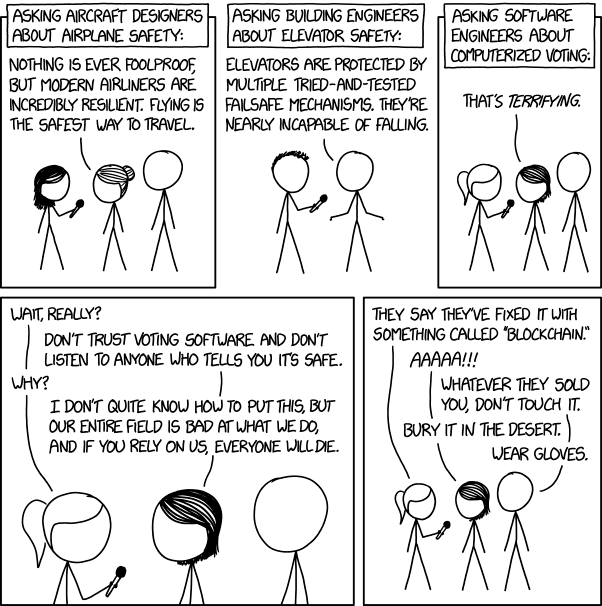
This xkcd comic basically sums up my recent life. WFI system? Never seems to be a problem. Bioreactors? Work like clockwork. Cell growth? We go that covered. The list goes on. And then we get to pure software systems, and I spend all my time and effort on them. I wish it was just my company, but lets be frank, this stuff is harder than it should be and don’t trust a single software company or consultant who wants to tell you otherwise.
I am both terrified and ecstatic as everything moves to the cloud. Terrified because these are the same people who can’t get stuff like time clocks right, ecstatic because maybe when we all have the exact same problem we will see some changes (misery loves company, this is why we all go to software conferences).
So, confessional moment done, let us turn to a few elements of a competent computer systems validation program (csv).
Remember your system is more than software and hardware
Any system is made up of Process, Technology, People and Organization. All four need to be evaluated, planned for, and tested every step of the way. Too many computer systems fall flat because they focus on technology and maybe a little process.
Utilize a risk based approach regarding the impact of a computer system impact on product quality, patient and consumer safety, or related data integrity.
Risk assessments allow for a detailed, analytical review of potential risks posed by a process or system. Not every computer system has the same expectations on its data. Health authorities recognize that, and accept a risk based approach. This is reflected across the various guidances and regulations, best practices (GAMP 5, for instance) and the ISOs (14971 is a great example).
Some of the benefits of taking this risk based approach include:
Help to focus verification and validation efforts, which will allow you to better focus of resources on the higher-risk items
Determine which aspects of the system and/or business process around the system, require risk mitigation controls to reduce risk related to patient safety, product quality, data integrity, or business risk
Build a better understanding of systems and processes from a quality and risk-based perspective
Don’t short the user requirements
A good user requirement process is critical. User requirements should include, among other things:
Technical Requirements: Should include things like capacity, performance, and hardware requirements.
System Functions: Should include things like calculations, logical security, audit trails, use of electronic signature.
Data: Should describe the data handling, definition of electronic records, required fields.
Environment: Should describe the physical conditions that the system will be required to operate in.
Interface: What and how will this system interface with other systems
Constraints: discuss compatibility, maximum allowable periods for downtime, user skill levels.
Lifecycle Requirements: Include mandatory design methods or special testing requirements.
Evaluate each of people, process, technology and organization.
This user requirement will be critical for performing a proper risk assessment. Said risk assessment is often iterative.
Build and test your system to mitigate risk
Eliminating risk through process or system redesign
Reduce risk by reducing the probability of a failure occurring (redundant design, more reliable solution)
Reduce risk by increasing the in-process detectability of a failure
Reduce risk by establishing downstream checks or error traps (e.g., fail-safe, or controlled fail state)
Increased rigor of verification testing may reduce the likelihood by providing new information to allow for a better assessment
After performing verification and validation activities, return to your risk assessment.
Perform periodic reviews of the system. This should include: current range of functionality, access and training, process robustness (do the current operating procedures provide the desired outcome), incident and deviation review, change history (including upgrades), performance, reliability, security and a general review of the current verified/validated state.
Ensure the risk assessment is returned to. On a periodic basis return to it and refresh based on new knowledge gained from the periodic review and other activities.
Do not separate any of this from your project management and development methodology
Too many times I’ve seen the hot new development lifecycle consider all this as an after thought to be done when the software is complete. That approach is expense, and oh so frustrating


 Investigations of a Dog