
Communication Loops and Silos: A Barrier to Effective Decision Making in Complex Industries

In complex industries such as aviation and biotechnology, effective communication is crucial for ensuring safety, quality, and efficiency. However, the presence of communication loops and silos can significantly hinder these efforts. The concept of the “Tower of Babel” problem, as explored in the aviation sector by Follet, Lasa, and Mieusset in HS36, highlights how different professional groups develop their own languages and operate within isolated loops, leading to misunderstandings and disconnections. This article has really got me thinking about similar issues in my own industry.

The Tower of Babel Problem: A Thought-Provoking Perspective

The HS36 article provides a thought-provoking perspective on the “Tower of Babel” problem, where each aviation professional feels in control of their work but operates within their own loop. This phenomenon is reminiscent of the biblical story where a common language becomes fragmented, causing confusion and separation among people. In modern industries, this translates into different groups using their own jargon and working in isolation, making it difficult for them to understand each other’s perspectives and challenges.

For instance, in aviation, air traffic controllers (ATCOs), pilots, and managers each have their own “loop,” believing they are in control of their work. However, when these loops are disconnected, it can lead to miscommunication, especially when each group uses different terminology and operates under different assumptions about how work should be done (work-as-prescribed vs. work-as-done). This issue is equally pertinent in the biotech industry, where scientists, quality assurance teams, and regulatory affairs specialists often work in silos, which can impede the development and approval of new products.

Tower of Babel by Joos de Momper, Old Masters Museum

Impact on Decision Making

Decision making in biotech is heavily influenced by Good Practice (GxP) guidelines, which emphasize quality, safety, and compliance – and I often find that the aviation industry, as a fellow highly regulated industry, is a great place to draw perspective.

When communication loops are disconnected, decisions may not fully consider all relevant perspectives. For example, in GMP (Good Manufacturing Practice) environments, quality control teams might focus on compliance with regulatory standards, while research and development teams prioritize innovation and efficiency. If these groups do not effectively communicate, decisions might overlook critical aspects, such as the practicality of implementing new manufacturing processes or the impact on product quality.

Furthermore, ICH Q9(R1) guideline emphasizes the importance of reducing subjectivity in Quality Risk Management (QRM) processes. Subjectivity can arise from personal opinions, biases, or inconsistent interpretations of risks by stakeholders, impacting every stage of QRM. To combat this, organizations must adopt structured approaches that prioritize scientific knowledge and data-driven decision-making. Effective knowledge management is crucial in this context, as it involves systematically capturing, organizing, and applying internal and external knowledge to inform QRM activities.

Academic Research on Communication Loops

Research in organizational behavior and communication highlights the importance of bridging these silos. Studies have shown that informal interactions and social events can significantly improve relationships and understanding among different professional groups (Katz & Fodor, 1963). In the biotech industry, fostering a culture of open communication can help ensure that GxP decisions are well-rounded and effective.

Moreover, the concept of “work-as-done” versus “work-as-prescribed” is relevant in biotech as well. Operators may adapt procedures to fit practical realities, which can lead to discrepancies between intended and actual practices. This gap can be bridged by encouraging feedback and continuous improvement processes, ensuring that decisions reflect both regulatory compliance and operational feasibility.

Case Studies and Examples

  1. Aviation Example: The HS36 article provides a compelling example of how disconnected loops can hinder effective decision making in aviation. For instance, when a standardized phraseology was introduced, frontline operators felt that this change did not account for their operational needs, leading to resistance and potential safety issues. This illustrates how disconnected loops can hinder effective decision making.
  2. Product Development: In the development of a new biopharmaceutical, different teams might have varying priorities. If the quality assurance team focuses solely on regulatory compliance without fully understanding the manufacturing challenges faced by production teams, this could lead to delays or quality issues. By fostering cross-functional communication, these teams can align their efforts to ensure both compliance and operational efficiency.
  3. ICH Q9(R1) Example: The revised ICH Q9(R1) guideline emphasizes the need to manage and minimize subjectivity in QRM. For instance, in assessing the risk of a new manufacturing process, a structured approach using historical data and scientific evidence can help reduce subjective biases. This ensures that decisions are based on comprehensive data rather than personal opinions.
  4. Technology Deployment: . A recent FDA Warning Letter to Sanofi highlighted the importance of timely technological upgrades to equipment and facility infrastructure. This emphasizes that staying current with technological advancements is essential for maintaining regulatory compliance and ensuring product quality. However the individual loops of decision making amongst the development teams, operations and quality can lead to major mis-steps.

Strategies for Improvement

To overcome the challenges posed by communication loops and silos, organizations can implement several strategies:

  • Promote Cross-Functional Training: Encourage professionals to explore other roles and challenges within their organization. This can help build empathy and understanding across different departments.
  • Foster Informal Interactions: Organize social events and informal meetings where professionals from different backgrounds can share experiences and perspectives. This can help bridge gaps between silos and improve overall communication.
  • Define Core Knowledge: Establish a minimum level of core knowledge that all stakeholders should possess. This can help ensure that everyone has a basic understanding of each other’s roles and challenges.
  • Implement Feedback Loops: Encourage continuous feedback and improvement processes. This allows organizations to adapt procedures to better reflect both regulatory requirements and operational realities.
  • Leverage Knowledge Management: Implement robust knowledge management systems to reduce subjectivity in decision-making processes. This involves capturing, organizing, and applying internal and external knowledge to inform QRM activities.

Combating Subjectivity in Decision Making

In addition to bridging communication loops, reducing subjectivity in decision making is crucial for ensuring quality and safety. The revised ICH Q9(R1) guideline provides several strategies for this:

  • Structured Approaches: Use structured risk assessment tools and methodologies to minimize personal biases and ensure that decisions are based on scientific evidence.
  • Data-Driven Decision Making: Prioritize data-driven decision making by leveraging historical data and real-time information to assess risks and opportunities.
  • Cognitive Bias Awareness: Train stakeholders to recognize and mitigate cognitive biases that can influence risk assessments and decision-making processes.

Conclusion

In complex industries effective communication is essential for ensuring safety, quality, and efficiency. The presence of communication loops and silos can lead to misunderstandings and poor decision making. By promoting cross-functional understanding, fostering informal interactions, and implementing feedback mechanisms, organizations can bridge these gaps and improve overall performance. Additionally, reducing subjectivity in decision making through structured approaches and data-driven decision making is critical for ensuring compliance with GxP guidelines and maintaining product quality. As industries continue to evolve, addressing these communication challenges will be crucial for achieving success in an increasingly interconnected world.


References:

  • Follet, S., Lasa, S., & Mieusset, L. (n.d.). The Tower of Babel Problem in Aviation. In HindSight Magazine, HS36. Retrieved from https://skybrary.aero/sites/default/files/bookshelf/hs36/HS36-Full-Magazine-Hi-Res-Screen-v3.pdf
  • Katz, D., & Fodor, J. (1963). The Structure of a Semantic Theory. Language, 39(2), 170–210.
  • Dekker, S. W. A. (2014). The Field Guide to Understanding Human Error. Ashgate Publishing.
  • Shorrock, S. (2023). Editorial. Who are we to judge? From work-as-done to work-as-judged. HindSight, 35, Just Culture…Revisited. Brussels: EUROCONTROL.
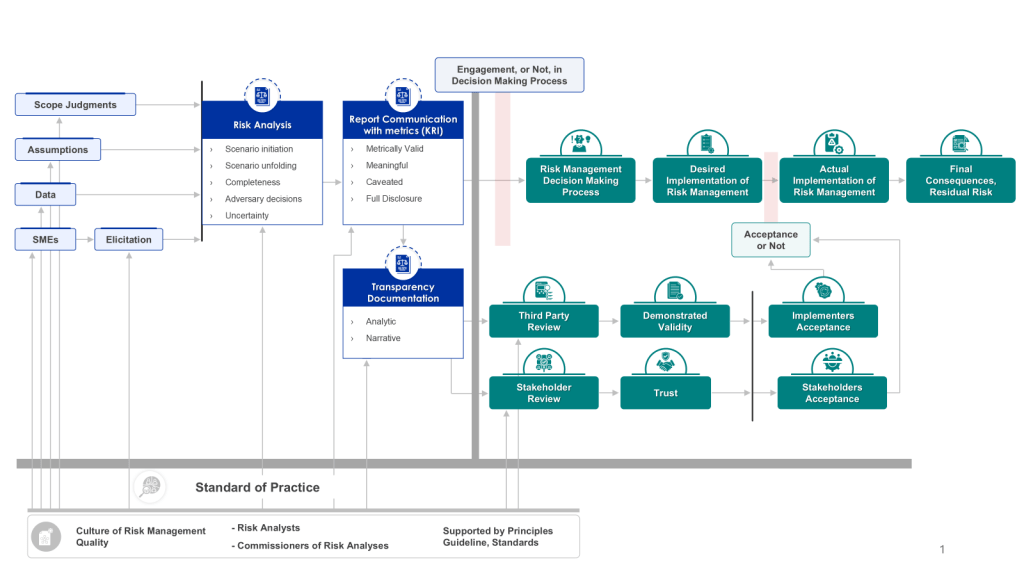
Measuring the Effectiveness of Risk Analysis in Engaging the Risk Management Decision-Making Process

Effective risk analysis is crucial for informed decision-making and robust risk management. Simply conducting a risk analysis is not enough; its effectiveness in engaging the risk management decision-making process is paramount. This effectiveness is largely driven by the transparency and documentation of the analysis, which supports both stakeholder and third-party reviews. Let’s explore how we can measure this effectiveness and why it matters.

The Importance of Transparency and Documentation

Transparency and documentation form the backbone of an effective risk analysis process. They ensure that the methodology, assumptions, and results of the analysis are clear and accessible to all relevant parties. This clarity is essential for:

  1. Building trust among stakeholders
  2. Facilitating informed decision-making
  3. Enabling thorough reviews by internal and external parties
  4. Ensuring compliance with regulatory requirements

Key Metrics for Measuring Effectiveness

To gauge the effectiveness of risk analysis in engaging the decision-making process, consider the following metrics:

1. Stakeholder Engagement Level

Measure the degree to which stakeholders actively participate in the risk analysis process and utilize its outputs. This can be quantified by:

  • Number of stakeholder meetings or consultations
  • Frequency of stakeholder feedback on risk reports
  • Percentage of stakeholders actively involved in risk discussions

2. Decision Influence Rate

Assess how often risk analysis findings directly influence management decisions. Track:

  • Percentage of decisions that reference risk analysis outputs
  • Number of risk mitigation actions implemented based on analysis recommendations

3. Risk Reporting Quality

Evaluate the clarity and comprehensiveness of risk reports. Consider:

  • Readability scores of risk documentation
  • Completeness of risk data presented
  • Timeliness of risk reporting

This is a great place to leverage a rubric.

4. Third-Party Review Outcomes

Analyze the results of internal and external audits or reviews:

  • Number of findings or recommendations from reviews
  • Time taken to address review findings
  • Improvement in review scores over time

5. Risk Analysis Utilization

Measure how frequently risk analysis tools and outputs are accessed and used:

  • Frequency of access to risk dashboards or reports
  • Number of departments utilizing risk analysis outputs
  • Time spent by decision-makers reviewing risk information

Implementing Effective Measurement

To implement these metrics effectively:

  1. Establish Baselines: Determine current performance levels for each metric to track improvements over time.
  2. Set Clear Targets: Define specific, measurable goals for each metric aligned with organizational objectives.
  3. Utilize Technology: Implement risk management software to automate data collection and analysis, improving accuracy and timeliness.
  4. Regular Reporting: Create a schedule for regular reporting of these metrics to relevant stakeholders.
  5. Continuous Improvement: Use the insights gained from these measurements to refine the risk analysis process continually.

Enhancing Transparency and Documentation

To improve the effectiveness of risk analysis through better transparency and documentation:

Standardize Risk Reporting

Develop standardized templates and formats for risk reports to ensure consistency and completeness. This standardization facilitates easier comparison and analysis across different time periods or business units.

Implement a Risk Taxonomy

Create a common language for risk across the organization. A well-defined risk taxonomy ensures that all stakeholders understand and interpret risk information consistently.

Leverage Visualization Tools

Utilize data visualization techniques to present risk information in an easily digestible format. Visual representations can make complex risk data more accessible to a broader audience, enhancing engagement in the decision-making process.

Maintain a Comprehensive Audit Trail

Document all steps of the risk analysis process, including data sources, methodologies, assumptions, and decision rationales. This audit trail is crucial for both internal reviews and external audits.

Foster a Culture of Transparency

Encourage open communication about risks throughout the organization. This cultural shift can lead to more honest and accurate risk reporting, ultimately improving the quality of risk analysis.

Conclusion

Measuring the effectiveness of risk analysis in engaging the risk management decision-making process is crucial for organizations seeking to optimize their risk management strategies. By focusing on transparency and documentation, and implementing key metrics to track performance, organizations can ensure that their risk analysis efforts truly drive informed decision-making and robust risk management.

Remember, the goal is not just to conduct risk analysis, but to make it an integral part of the organization’s decision-making fabric. By continuously measuring and improving the effectiveness of risk analysis, organizations can build resilience, enhance stakeholder trust, and navigate uncertainties with greater confidence.

Prioritization: MoSCoW, Binary and Pairwise

Prioritization tools are essential for effective decision-making. They help teams decide where to focus their efforts, ensuring that the most critical tasks are completed first.

MoSCoW Prioritization

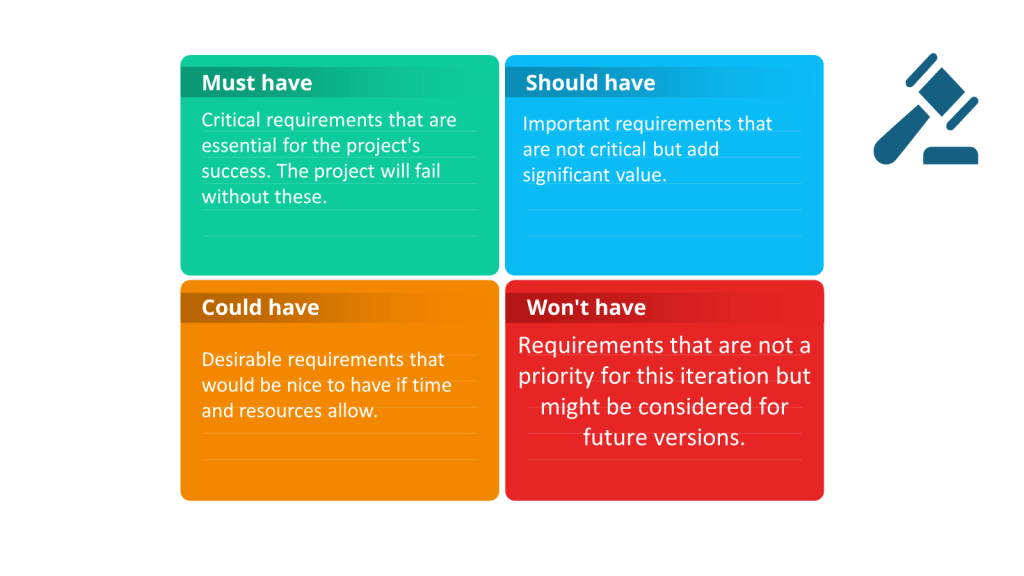
The MoSCoW method is a widely used prioritization technique in project management, particularly within agile frameworks. It categorizes tasks or requirements into four distinct categories:

  • Must Have: Essential requirements that are critical for the project’s success. Without these, the project is considered a failure.
  • Should Have: Important but not critical requirements. These can be deferred if necessary but should be included if possible.
  • Could Have: Desirable but not necessary requirements. These are nice-to-haves that can be included if time and resources permit.
  • Won’t Have: Requirements agreed to be excluded from the current project scope. These might be considered for future phases.

Advantages:

  • Clarity and Focus: Clearly distinguish between essential and non-essential requirements, helping teams focus on what truly matters.
  • Stakeholder Alignment: Facilitates discussions and alignment among stakeholders regarding priorities.
  • Flexibility: Can be adapted to various project types and industries.

Disadvantages:

  • Ambiguity: May not provide clear guidance on prioritizing within each category.
  • Subjectivity: Decisions can be influenced by stakeholder biases or political considerations.
  • Resource Allocation: Requires careful allocation of resources to ensure that “Must Have” items are prioritized appropriately.

Binary Prioritization

Binary prioritization, often implemented using a binary search tree, is a method for systematically comparing and ranking requirements. Each requirement is compared against others, creating a hierarchical list of priorities.

Process:

  1. Root Node: Start with one requirement as the root node.
  2. Comparison: Compare each succeeding requirement to the root node, establishing child nodes based on priority.
  3. Hierarchy: Continue creating a long list of prioritized requirements, forming a binary tree structure.

Advantages:

  • Systematic Approach: Provides a clear, structured way to compare and rank requirements.
  • Granularity: Offers detailed prioritization, ensuring that each requirement is evaluated against others.
  • Objectivity: Reduces subjectivity by using a consistent comparison method.

Disadvantages:

  • Complexity: Can be complex and time-consuming, especially for large projects with many requirements.
  • Resource Intensive: Requires significant effort to compare each requirement systematically.
  • Scalability: It may become unwieldy with many requirements, making it difficult to manage.

Pairwise Comparison

Pairwise or paired comparison is a method for prioritizing and ranking multiple options by comparing them in pairs. This technique is particularly useful when quantitative, objective data is not available, and decisions need to be made based on subjective criteria.

How Pairwise Comparison Works

  1. Define Criteria: Establish clear criteria for evaluation, such as cost, strategic importance, urgency, resource allocation, or alignment with objectives.
  2. Create a Matrix: List all the items to be compared along its rows and columns. Each cell in the matrix represents a comparison between two items.
  3. Make Comparisons: For each pair of items, decide which item is more important or preferred based on the established criteria. Mark the preferred item in the corresponding cell of the matrix.
  4. Calculate Scores: After all comparisons are made, count the times each item was preferred. The item with the highest count is ranked highest in priority.

Benefits of Pairwise Comparison

  • Simplicity: It is easy to understand and implement, requiring no special training[3].
  • Objectivity: Reduces bias and emotional influence in decision-making by focusing on direct comparisons.
  • Clarity: Provides a clear ranking of options, making it easier to prioritize tasks or decisions.
  • Engagement: Encourages collaborative discussions among team members, leading to a better understanding of different perspectives.

Limitations of Pairwise Comparison

  • Scalability: The number of comparisons increases significantly with the number of items, making it less practical for large lists.
  • Relative Importance: Does not allow for measuring the intensity of preferences, only the relative ranking.
  • Cognitive Load: Can be mentally taxing if the list of items is long or the criteria are complex.

Applications of Pairwise Comparison

  • Project Management: Prioritizing project tasks or deliverables.
  • Product Development: Ranking features or requirements based on customer needs.
  • Survey Research: Understanding preferences and establishing relative rankings in surveys.
  • Strategic Decision-Making: Informing decisions by comparing strategic options or initiatives.

Example of Pairwise Comparison

Imagine a project team needs to prioritize seven project deliverables labeled A to G. They create a pairwise comparison matrix and compare each deliverable against the others. For instance, deliverable A is compared to B, then A to C, and so on. The team marks the preferred deliverable in each comparison. After completing all comparisons, they count the number of times each deliverable was preferred to determine the final ranking.

Comparison of MoSCoW Prioritization, Binary Prioritization, and Pairwise Comparison

Here’s a detailed comparison of the three prioritization methods in a tabular format:

AspectMoSCoW PrioritizationBinary PrioritizationPairwise Comparison
Key AspectsCategorizes tasks into Must, Should, Could, and Won’t haveCompares requirements in pairs to create a hierarchical listCompares options in pairs to determine relative preferences
AdvantagesSimple to understand, clear categorization, stakeholder alignmentSystematic approach, detailed prioritization, reduces subjectivityIntuitive, suitable for long lists, provides numerical results
DisadvantagesSubjective categorization, may oversimplify complex projectsTime-consuming for large projects, may become complexCan be cognitively difficult, potential for inconsistency (transitivity violations)
ClarityHigh-level categorizationDetailed prioritization within a hierarchyProvides clear ranking based on direct comparisons
Stakeholder InvolvementHigh involvement and alignment requiredLess direct involvement, more systematicEncourages collaborative discussions, but can be intensive
FlexibilityAdaptable to various projectsBest suited for projects with clear requirementsSuitable for both small and large lists, but can be complex for very large sets
ComplexitySimple to understand and implementMore complex and time-consumingCan be cognitively taxing, especially for large numbers of comparisons
Resource AllocationRequires careful planningSystematic but resource-intensiveRequires significant effort for large sets of comparisons

Conclusion

Each prioritization method has its own strengths and weaknesses, making them suitable for different contexts:

  • MoSCoW Prioritization is ideal for projects needing clear, high-level categorization and strong stakeholder alignment. It is simple and effective for initial prioritization but may lack the granularity needed for more complex projects.
  • Binary Prioritization offers a systematic and detailed approach, reducing subjectivity. However, it can be time-consuming and complex, especially for large projects.
  • Pairwise Comparison is intuitive and provides clear numerical results, making it suitable for long lists of options. It encourages collaborative decision-making but can be cognitively challenging and may lead to inconsistencies if not carefully managed.

Choosing the right method depends on the specific needs and context of the decision, including the number of items to prioritize, the level of detail required, and the involvement of stakeholders.

Multi-Criteria Decision-Making to Drive Risk Control

To be honest, too often, we perform a risk assessment not to make decisions but to justify an already existing risk assessment. The risk assessment may help define a few additional action items and determine how rigorous to be about a few things. It actually didn’t make much of an impact on the already-decided path forward. This is some pretty bad risk management and decision-making.

For highly important decisions with high uncertainty or complexity, it is useful to consider the options/alternatives that exist and assess the benefits and risks of each before deciding on a path forward. Thoroughly identifying options/alternatives and assessing the benefits and risks of each can help the decision-making process and ultimately reduce risk.

An effective, highly structured decision-making process can help answer the question, ‘How can we compare the consequences of the various options before deciding?

The most challenging risk decisions are characterized by having several different, important things to consider in an environment where there are often multiple stakeholders and, often, multiple decision-makers. 

In Multi-Criteria Decision-Making (MCDM), the primary objective is the structured consideration of the available alternatives (options) for achieving the objectives in order to make the most informed decision, leading to the best outcome.

In a Quality Risk Management context, the decision-making concerns making informed decisions in the face of uncertainty about risks related to the quality (and/or availability) of medicines.

Key Concepts of MCDM

  1. Conflicting Criteria: MCDM deals with situations where criteria conflict. For example, when purchasing a car, one might need to balance cost, comfort, safety, and fuel economy, which often do not align perfectly.
  2. Explicit Evaluation: Unlike intuitive decision-making, MCDM involves a structured approach to explicitly evaluate multiple criteria, which is crucial when the stakes are high, such as deciding whether to build additional manufacturing capacity for a product under development.
  3. Types of Problems:
  • Multiple-Criteria Evaluation Problems: These involve a finite number of alternatives known at the beginning. The goal is to find the best alternative or a set of good alternatives based on their performance across multiple criteria.
  • Multiple-Criteria Design Problems: In these problems, alternatives are not explicitly known and must be found by solving a mathematical model. The number of alternatives can be very large, often exponentially.

Preference Information: The methods used in MCDM often require preference information from decision-makers (DMs) to differentiate between solutions. This can be done at various stages of the decision-making process, such as prior articulation of preferences, which transforms the problem into a single-criterion problem.

MCDM focuses on risk and uncertainty by explicitly weighing criteria and trade-offs between them. Multi-criteria decision-making (MCDM) differs from traditional decision-making methods in several key ways:

  1. Explicit Consideration of Multiple Criteria: Traditional decision-making often focuses on a single criterion like cost or profit. MCDM explicitly considers multiple criteria simultaneously, which may be conflicting, such as cost, quality, safety, and environmental impact[1]. This allows for a more comprehensive evaluation of alternatives.
  2. Structured Approach: MCDM provides a structured framework for evaluating alternatives against multiple criteria rather than relying solely on intuition or experience. It involves techniques like weighting criteria, scoring alternatives, and aggregating scores to rank or choose the best option.
  3. Transparency and Consistency: MCDM methods aim to make decision-making more transparent, consistent, and less susceptible to individual biases. The criteria, weights, and evaluation process are explicitly defined, allowing for better justification and reproducibility of decisions.
  4. Quantitative Analysis: Many MCDM methods employ quantitative techniques, such as mathematical models, optimization algorithms, and decision support systems. This enables a more rigorous and analytical approach compared to traditional qualitative methods.
  5. Handling Complexity: MCDM is particularly useful for complex decision problems involving many alternatives, conflicting objectives, and multiple stakeholders. Traditional methods may struggle to handle such complexity effectively.
  6. Stakeholder Involvement: Some MCDM methods, like the Analytic Hierarchy Process (AHP), facilitate the involvement of multiple stakeholders and the incorporation of their preferences and judgments. This can lead to more inclusive and accepted decisions.
  7. Trade-off Analysis: MCDM techniques often involve analyzing trade-offs between criteria, helping decision-makers understand the implications of prioritizing certain criteria over others. This can lead to more informed and balanced decisions.

While traditional decision-making methods rely heavily on experience, intuition, and qualitative assessments, MCDM provides a more structured, analytical, and comprehensive approach, particularly in complex situations with conflicting criteria.

Multi-Criteria Decision-Making (MCDM) is typically performed following these steps:

  1. Define the Decision Problem: Clearly state the problem or decision to be made, identify the stakeholders involved, and determine the desired outcome or objective.
  2. Establish Criteria: Identify the relevant criteria that will be used to evaluate the alternatives. These criteria should be measurable, independent, and aligned with the objectives. Involve stakeholders in selecting and validating the criteria.
  3. Generate Alternatives: Develop a comprehensive list of potential alternatives or options that could solve the problem. Use techniques like brainstorming, benchmarking, or scenario analysis to generate diverse alternatives.
  4. Gather Performance Data: Assess how each alternative performs against each criterion. This may involve quantitative data, expert judgments, or qualitative assessments.
  5. Assign Criteria Weights: By assigning weights, determine each criterion’s relative importance or priority. This can be done through methods like pairwise comparisons, swing weighting, or direct rating. Stakeholder input is crucial here.
  6. Apply MCDM Method: Choose an appropriate MCDM technique based on the problem’s nature and the available data. Some popular methods include: Analytic Hierarchy Process (AHP); Technique for Order of Preference by Similarity to Ideal Solution (TOPSIS); ELimination and Choice Expressing REality (ELECTRE); Preference Ranking Organization METHod for Enrichment of Evaluations (PROMETHEE); and, Multi-Attribute Utility Theory (MAUT).
  7. Evaluate and Rank Alternatives: Apply the chosen MCDM method to evaluate and rank the alternatives based on their performance against the weighted criteria. This may involve mathematical models, software tools, or decision support systems.
  8. Sensitivity Analysis: Perform sensitivity analysis to assess the robustness of the results and understand how changes in criteria weights or performance scores might affect the ranking or choice of alternatives.
  9. Make the Decision: Based on the MCDM analysis, select the most preferred alternative or develop an action plan based on the ranking of alternatives. Involve stakeholders in the final decision-making process.
  10. Monitor and Review: Implement the chosen alternative and monitor its performance. Review the decision periodically, and if necessary, repeat the MCDM process to adapt to changing circumstances or new information.

MCDM is an iterative process; stakeholder involvement, transparency, and clear communication are crucial. Additionally, the specific steps and techniques may vary depending on the problem’s complexity, the data’s availability, and the decision-maker’s preferences.

MCDM TechniqueDescriptionApplicationKey Features
Analytic Hierarchy Process (AHP)A structured technique for organizing and analyzing complex decisions, using mathematics and psychology.Widely used in business, government, and healthcare for prioritizing and decision-making.Pairwise comparisons, consistency checks, and hierarchical structuring of criteria and alternatives.
Technique for Order Preference by Similarity to Ideal Solution (TOPSIS)Based on the concept that the chosen alternative should have the shortest geometric distance from the positive ideal solution and the longest geometric distance from the negative ideal solution.Frequently used in engineering, management, and human resource management for ranking and selection problems.Compensatory aggregation, normalization of criteria, and calculation of geometric distances.
Elimination and Choice Expressing Reality (ELECTRE)An outranking method that compares alternatives by considering both qualitative and quantitative criteria. It uses a pairwise comparison approach to eliminate less favorable alternatives.Commonly used in project selection, resource allocation, and environmental management.Use of concordance and discordance indices, handling of both qualitative and quantitative data, and ability to deal with incomplete rankings.
Preference Ranking Organization Method for Enrichment Evaluation (PROMETHEE)An outranking method that uses preference functions to compare alternatives based on multiple criteria. It provides a complete ranking of alternatives.Applied in various fields such as logistics, finance, and environmental management.Preference functions, visual interactive modules (GAIA), and sensitivity analysis.
Multi-Attribute Utility Theory (MAUT)Involves converting multiple criteria into a single utility function, which is then used to evaluate and rank alternatives. It takes into account the decision-maker’s risk preferences and uncertainties.Used in complex decision-making scenarios involving risk and uncertainty, such as policy analysis and strategic planning.Utility functions, probabilistic weights, and handling of uncertainty.
Popular MCDM Techniques

Bias

There are many forms of bias that we must be cognizant during problem solving and decision making.

That chart can be a little daunting. I’m just going to mention three of the more common biases.

  • Attribution bias: When we do something well, we tend to think it’s because of our own merit. When we do something poorly, we tend to believe it was due to external factors (e.g. other people’s actions). When it comes to other people, we tend to think the opposite – if they did something well, we consider them lucky, and if they did something poorly, we tend to think it’s due to their personality or lack of skills.
  • Confirmation bias: The tendency to seek out evidence that supports decisions and positions we’ve already embraced – regardless of whether the information is true – and putting less weight on facts that contradict them.
  • Hindsight bias: The tendency to believe an event was predictable or preventable when looking at the sequence of events in hindsight. This can result in oversimplification of cause and effect and an exaggerated view that a person involved with an event could’ve prevented it. They didn’t know the outcome like you do now and likely couldn’t have predicted it with the information available at the time.

A few ways to address our biases include:

  • Bouncing ideas off of others, especially those not involved in the discussion or decision.
  • Surround yourself with a diverse group of people and do not be afraid to consider dissenting views. Actively listen.
  • Imagine yourself in other’s shoes.
  • Be mindful of your internal environment. If you’re struggling with a decision, take a moment to breathe. Don’t make decisions tired, hungry or stressed.
  • Consider who is impacted by your decision (or lack of decision). Sometimes, looking at how others will be impacted by a given decision will help to clarify the decision for you.

The advantage of focusing on decision quality is that we have a process that allows us to ensure we are doing the right things consistently. By building mindfulness we can strive for good decisions, reducing subjectivity and effective problem-solving.