
Document Management Excellence in Good Engineering Practices

Traditional document management approaches, rooted in paper-based paradigms, create artificial boundaries between engineering activities and quality oversight. These silos become particularly problematic when implementing Quality Risk Management-based integrated Commissioning and Qualification strategies. The solution lies not in better document control procedures, but in embracing data-centric architectures that treat documents as dynamic views of underlying quality data rather than static containers of information.

The Engineering Quality Process: Beyond Document Control

The Engineering Quality Process (EQP) represents an evolution beyond traditional document management, establishing the critical interface between Good Engineering Practice and the Pharmaceutical Quality System. This integration becomes particularly crucial when we consider that engineering documents are not merely administrative artifacts—they are the embodiment of technical knowledge that directly impacts product quality and patient safety.

EQP implementation requires understanding that documents exist within complex data ecosystems where engineering specifications, risk assessments, change records, and validation protocols are interconnected through multiple quality processes. The challenge lies in creating systems that maintain this connectivity while ensuring ALCOA+ principles are embedded throughout the document lifecycle.

Building Systematic Document Governance

The foundation of effective GEP document management begins with recognizing that documents serve multiple masters—engineering teams need technical accuracy and accessibility, quality assurance requires compliance and traceability, and operations demands practical usability. This multiplicity of requirements necessitates what I call “multi-dimensional document governance”—systems that can simultaneously satisfy engineering, quality, and operational needs without creating redundant or conflicting documentation streams.

Effective governance structures must establish clear boundaries between engineering autonomy and quality oversight while ensuring seamless information flow across these interfaces. This requires moving beyond simple approval workflows toward sophisticated quality risk management integration where document criticality drives the level of oversight and control applied.

Electronic Quality Management System Integration: The Technical Architecture

The integration of eQMS platforms with engineering documentation can be surprisingly complex. The fundamental issue is that most eQMS solutions were designed around quality department workflows, while engineering documents flow through fundamentally different processes that emphasize technical iteration, collaborative development, and evolutionary refinement.

Core Integration Principles

Unified Data Models: Rather than treating engineering documents as separate entities, leading implementations create unified data models where engineering specifications, quality requirements, and validation protocols share common data structures. This approach eliminates the traditional handoffs between systems and creates seamless information flow from initial design through validation and into operational maintenance.

Risk-Driven Document Classification: We need to move beyond user driven classification and implement risk classification algorithms that automatically determine the level of quality oversight required based on document content, intended use, and potential impact on product quality. This automated classification reduces administrative burden while ensuring critical documents receive appropriate attention.

Contextual Access Controls: Advanced eQMS platforms provide dynamic permission systems that adjust access rights based on document lifecycle stage, user role, and current quality status. During active engineering development, technical teams have broader access rights, but as documents approach finalization and quality approval, access becomes more controlled and audited.

Validation Management System Integration

The integration of electronic Validation Management Systems (eVMS) represents a particularly sophisticated challenge because validation activities span the boundary between engineering development and quality assurance. Modern implementations create bidirectional data flows where engineering documents automatically populate validation protocols, while validation results feed back into engineering documentation and quality risk assessments.

Protocol Generation: Advanced systems can automatically generate validation protocols from engineering specifications, user requirements, and risk assessments. This automation ensures consistency between design intent and validation activities while reducing the manual effort typically required for protocol development.

Evidence Linking: Sophisticated eVMS platforms create automated linkages between engineering documents, validation protocols, execution records, and final reports. These linkages ensure complete traceability from initial requirements through final qualification while maintaining the data integrity principles essential for regulatory compliance.

Continuous Verification: Modern systems support continuous verification approaches aligned with ASTM E2500 principles, where validation becomes an ongoing process integrated with change management rather than discrete qualification events.

Data Integrity Foundations: ALCOA+ in Engineering Documentation

The application of ALCOA+ principles to engineering documentation can create challenges because engineering processes involve significant collaboration, iteration, and refinement—activities that can conflict with traditional interpretations of data integrity requirements. The solution lies in understanding that ALCOA+ principles must be applied contextually, with different requirements during active development versus finalized documentation.

Attributability in Collaborative Engineering

Engineering documents often represent collective intelligence rather than individual contributions. Address this challenge through granular attribution mechanisms that can track individual contributions to collaborative documents while maintaining overall document integrity. This includes sophisticated version control systems that maintain complete histories of who contributed what content, when changes were made, and why modifications were implemented.

Contemporaneous Recording in Design Evolution

Traditional interpretations of contemporaneous recording can conflict with engineering design processes that involve iterative refinement and retrospective analysis. Implement design evolution tracking that captures the timing and reasoning behind design decisions while allowing for the natural iteration cycles inherent in engineering development.

Managing Original Records in Digital Environments

The concept of “original” records becomes complex in engineering environments where documents evolve through multiple versions and iterations. Establish authoritative record concepts where the system maintains clear designation of authoritative versions while preserving complete historical records of all iterations and the reasoning behind changes.

Best Practices for eQMS Integration

Systematic Architecture Design

Effective eQMS integration begins with architectural thinking rather than tool selection. Organizations must first establish clear data models that define how engineering information flows through their quality ecosystem. This includes mapping the relationships between user requirements, functional specifications, design documents, risk assessments, validation protocols, and operational procedures.

Cross-Functional Integration Teams: Successful implementations establish integrated teams that include engineering, quality, IT, and operations representatives from project inception. These teams ensure that system design serves all stakeholders’ needs rather than optimizing for a single department’s workflows.

Phased Implementation Strategies: Rather than attempting wholesale system replacement, leading organizations implement phased approaches that gradually integrate engineering documentation with quality systems. This allows for learning and refinement while maintaining operational continuity.

Change Management Integration

The integration of change management across engineering and quality systems represents a critical success factor. Create unified change control processes where engineering changes automatically trigger appropriate quality assessments, risk evaluations, and validation impact analyses.

Automated Impact Assessment: Ensure your system can automatically assess the impact of engineering changes on existing validation status, quality risk profiles, and operational procedures. This automation ensures that changes are comprehensively evaluated while reducing the administrative burden on technical teams.

Stakeholder Notification Systems: Provide contextual notifications to relevant stakeholders based on change impact analysis. This ensures that quality, operations, and regulatory affairs teams are informed of changes that could affect their areas of responsibility.

Knowledge Management Integration

Capturing Engineering Intelligence

One of the most significant opportunities in modern GEP document management lies in systematically capturing engineering intelligence that traditionally exists only in informal networks and individual expertise. Implement knowledge harvesting mechanisms that can extract insights from engineering documents, design decisions, and problem-solving approaches.

Design Decision Rationale: Require and capture the reasoning behind engineering decisions, not just the decisions themselves. This creates valuable organizational knowledge that can inform future projects while providing the transparency required for quality oversight.

Lessons Learned Integration: Rather than maintaining separate lessons learned databases, integrate insights directly into engineering templates and standard documents. This ensures that organizational knowledge is immediately available to teams working on similar challenges.

Expert Knowledge Networks

Create dynamic expert networks where subject matter experts are automatically identified and connected based on document contributions, problem-solving history, and technical expertise areas. These networks facilitate knowledge transfer while ensuring that critical engineering knowledge doesn’t remain locked in individual experts’ experience.

Technology Platform Considerations

System Architecture Requirements

Effective GEP document management requires platform architectures that can support complex data relationships, sophisticated workflow management, and seamless integration with external engineering tools. This includes the ability to integrate with Computer-Aided Design systems, engineering calculation tools, and specialized pharmaceutical engineering software.

API Integration Capabilities: Modern implementations require robust API frameworks that enable integration with the diverse tool ecosystem typically used in pharmaceutical engineering. This includes everything from CAD systems to process simulation software to specialized validation tools.

Scalability Considerations: Pharmaceutical engineering projects can generate massive amounts of documentation, particularly during complex facility builds or major system implementations. Platforms must be designed to handle this scale while maintaining performance and usability.

Validation and Compliance Framework

The platforms supporting GEP document management must themselves be validated according to pharmaceutical industry standards. This creates unique challenges because engineering systems often require more flexibility than traditional quality management applications.

GAMP 5 Compliance: Follow GAMP 5 principles for computerized system validation while maintaining the flexibility required for engineering applications. This includes risk-based validation approaches that focus validation efforts on critical system functions.

Continuous Compliance: Modern systems support continuous compliance monitoring rather than point-in-time validation. This is particularly important for engineering systems that may receive frequent updates to support evolving project needs.

Building Organizational Maturity

Cultural Transformation Requirements

The successful implementation of integrated GEP document management requires cultural transformation that goes beyond technology deployment. Engineering organizations must embrace quality oversight as value-adding rather than bureaucratic, while quality organizations must understand and support the iterative nature of engineering development.

Cross-Functional Competency Development: Success requires developing transdisciplinary competence where engineering professionals understand quality requirements and quality professionals understand engineering processes. This shared understanding is essential for creating systems that serve both communities effectively.

Evidence-Based Decision Making: Organizations must cultivate cultures that value systematic evidence gathering and rigorous analysis across both technical and quality domains. This includes establishing standards for what constitutes adequate evidence for engineering decisions and quality assessments.

Maturity Model Implementation

Organizations can assess and develop their GEP document management capabilities using maturity model frameworks that provide clear progression paths from reactive document control to sophisticated knowledge-enabled quality systems.

Level 1 – Reactive: Basic document control with manual processes and limited integration between engineering and quality systems.

Level 2 – Developing: Electronic systems with basic workflow automation and beginning integration between engineering and quality processes.

Level 3 – Systematic: Comprehensive eQMS integration with risk-based document management and sophisticated workflow automation.

Level 4 – Integrated: Unified data architectures with seamless information flow between engineering, quality, and operational systems.

Level 5 – Optimizing: Knowledge-enabled systems with predictive analytics, automated intelligence extraction, and continuous improvement capabilities.

Future Directions and Emerging Technologies

Artificial Intelligence Integration

The convergence of AI technologies with GEP document management creates unprecedented opportunities for intelligent document analysis, automated compliance checking, and predictive quality insights. The promise is systems that can analyze engineering documents to identify potential quality risks, suggest appropriate validation strategies, and automatically generate compliance reports.

Natural Language Processing: AI-powered systems can analyze technical documents to extract key information, identify inconsistencies, and suggest improvements based on organizational knowledge and industry best practices.

Predictive Analytics: Advanced analytics can identify patterns in engineering decisions and their outcomes, providing insights that improve future project planning and risk management.

Building Excellence Through Integration

The transformation of GEP document management from compliance-driven bureaucracy to value-creating knowledge systems represents one of the most significant opportunities available to pharmaceutical organizations. Success requires moving beyond traditional document control paradigms toward data-centric architectures that treat documents as dynamic views of underlying quality data.

The integration of eQMS platforms with engineering workflows, when properly implemented, creates seamless quality ecosystems where engineering intelligence flows naturally through validation processes and into operational excellence. This integration eliminates the traditional handoffs and translation losses that have historically plagued pharmaceutical quality systems while maintaining the oversight and control required for regulatory compliance.

Organizations that embrace these integrated approaches will find themselves better positioned to implement Quality by Design principles, respond effectively to regulatory expectations for science-based quality systems, and build the organizational knowledge capabilities required for sustained competitive advantage in an increasingly complex regulatory environment.

The future belongs to organizations that can seamlessly blend engineering excellence with quality rigor through sophisticated information architectures that serve both engineering creativity and quality assurance requirements. The technology exists; the regulatory framework supports it; the question remaining is organizational commitment to the cultural and architectural transformations required for success.

As we continue evolving toward more evidence-based quality practice, the organizations that invest in building coherent, integrated document management systems will find themselves uniquely positioned to navigate the increasing complexity of pharmaceutical quality requirements while maintaining the engineering innovation essential for bringing life-saving products to market efficiently and safely.
Performing Design Review and Design Qualification

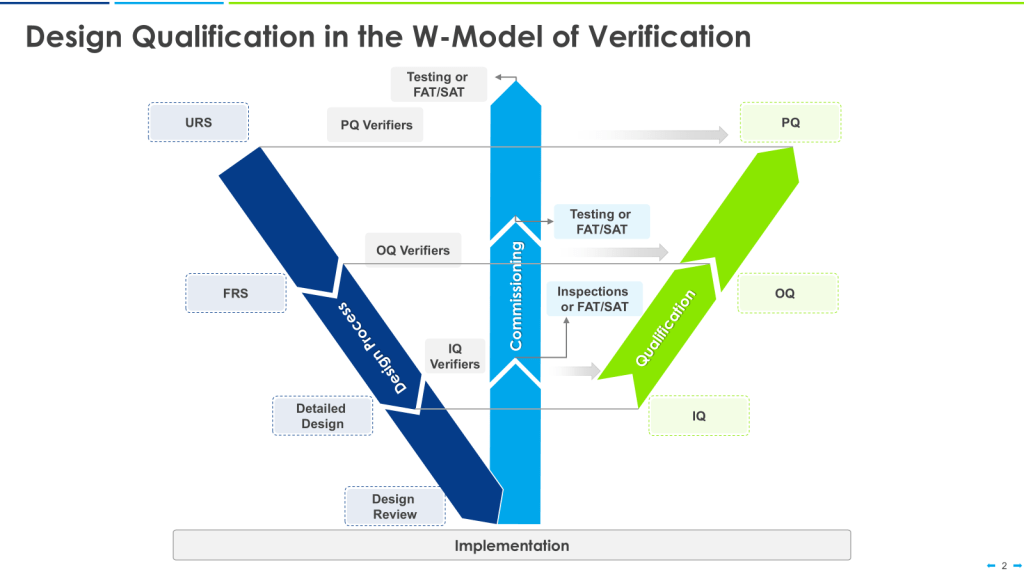
A critical step in ensuring the quality and safety of processes as part of verification is Design Review, which is sometimes expanded to Design Qualification.

Design Review: The Foundation of Quality

Design Review is a systematic, documented examination of a proposed design to evaluate its adequacy and identify potential issues early in the development process. Here’s how to conduct an effective Design Review:

  1. Plan Systematically: Schedule reviews at appropriate stages of development, ensuring they align with your project timeline.
  2. Involve the Right People: Include representatives from all relevant functions and an independent reviewer not directly responsible for the design stage being evaluated.
  3. Focus on Critical Aspects: Prioritize design elements that directly impact product quality and patient safety.
  4. Document Thoroughly: Record all findings, including the design under review, participants, date, and any proposed actions.
  5. Iterate as Needed: Conduct reviews iteratively as supplier design documents are published, allowing for early issue identification and correction.

Design Qualification: Verifying Suitability

Design Qualification (DQ) is the documented verification that the proposed design of facilities, equipment, or systems is suitable for its intended purpose. Here’s how to implement DQ effectively:

  1. Develop User Requirements: Create a detailed User Requirements Specification (URS) outlining what the equipment or system is expected to do.
  2. Create Functional Specifications: Translate user requirements into technical specifications that guide the design process.
  3. Perform Risk Assessment: Identify potential risks associated with the design and develop mitigation strategies.
  4. Review Design Specifications: Ensure the design meets all specified requirements, including GMP and regulatory standards.
  5. Document and Approve: Formally document the DQ process and obtain approval from key stakeholders, including quality assurance personnel.

Integrating Design Review and DQ

To maximize the effectiveness of these processes:

  1. Use a Risk-Based Approach: Prioritize efforts based on the level of risk to product quality and patient safety.
  2. Leverage Subject Matter Experts: Involve SMEs from the start to contribute their expertise throughout the process.
  3. Implement Change Management: Establish a robust system to manage design changes effectively and avoid late-stage issues.
  4. Ensure Quality Oversight: Have Quality Assurance provide oversight to maintain compliance with current regulations and GMP requirements.
  5. Document Comprehensively: Maintain thorough records of all reviews, qualifications, and decisions made during the process.

Implementing a systematic approach to Design Review and Design Qualification not only helps meet regulatory expectations but also contributes to operational efficiency and product excellence. As the pharmaceutical landscape evolves, staying committed to these foundational practices will remain crucial for success in this highly regulated industry.

Good Engineering Practices Under ASTM E2500

ASTM E2500 recognizes that Good Engineering Practices (GEP) are essential for pharmaceutical companies to ensure the consistent and reliable design, delivery, and operation of engineered systems in a manner suitable for their intended purpose.

Key Elements of Good Engineering Practices

  1. Risk Management: Applying systematic processes to identify, assess, and control risks throughout the lifecycle of engineered systems. This includes quality risk management focused on product quality and patient safety.
  2. Cost Management: Estimating, budgeting, monitoring and controlling costs for engineering projects and operations. This helps ensure projects deliver value and stay within budget constraints.
  3. Organization and Control: Establishing clear organizational structures, roles and responsibilities for engineering activities. Implementing monitoring and control mechanisms to track performance.
  4. Innovation and Continual Improvement: Fostering a culture of innovation and continuous improvement in engineering processes and systems.
  5. Lifecycle Management: Applying consistent processes for change management, issue management, and document control throughout a system’s lifecycle from design to decommissioning.
  6. Project Management: Following structured approaches for planning, executing and controlling engineering projects.
  7. Design Practices: Applying systematic processes for requirements definition, design development, review and qualification.
  8. Operational Support: Implementing asset management, calibration, maintenance and other practices to support systems during routine operations.

Key Steps for Implementation

  • Develop and document GEP policies, procedures and standards tailored to the company’s needs
  • Establish an Engineering Quality Process (EQP) to link GEP to the overall Pharmaceutical Quality System
  • Provide training on GEP principles and procedures to engineering staff
  • Implement risk-based approaches to focus efforts on critical systems and processes
  • Use structured project management methodologies for capital projects
  • Apply change control and issue management processes consistently
  • Maintain engineering documentation systems with appropriate controls
  • Conduct periodic audits and reviews of GEP implementation
  • Foster a culture of quality and continuous improvement in engineering
  • Ensure appropriate interfaces between engineering and quality/regulatory functions

The key is to develop a systematic, risk-based approach to GEP that is appropriate for the company’s size, products and operations. When properly implemented, GEP provides a foundation for regulatory compliance, operational efficiency and product quality in pharmaceutical manufacturing.

Invest in a Living, Breathing Engineering Quality Process (EQP)

The EQP establishes the formal connection between GEP and the Pharmaceutical Quality System it resides within, serving as the boundary between Quality oversight and engineering activities, particularly for implementing Quality Risk Management (QRM) based integrated Commissioning and Qualification (C&Q).

It should also provide an interface between engineering activities and other systems like business operations, health/safety/environment, or other site quality systems.

Based on the information provided in the document, here is a suggested table of contents for an Engineering Quality Process (EQP):

Table of Contents – Engineering Quality Process (EQP)

  1. Introduction
    1.1 Purpose
    1.2 Scope
    1.3 Definitions
  2. Application and Context
    2.1 Relationship to Pharmaceutical Quality System (PQS)
    2.2 Relationship to Good Engineering Practice (GEP)
    2.3 Interface with Quality Risk Management (QRM)
  3. EQP Elements
    3.1 Policies and Procedures for the Asset Lifecycle and GEPs
    3.2 Risk Assessment
    3.3 Change Management
    3.4 Document Control
    3.5 Training
    3.6 Auditing
  4. Deliverables
    4.1 GEP Documentation
    4.2 Risk Assessments
    4.3 Change Records
    4.4 Training Records
    4.5 Audit Reports
  5. Roles and Responsibilities
    5.1 Engineering
    5.2 Quality
    5.3 Operations
    5.4 Other Stakeholders
  6. EQP Implementation
    6.1 Establishing the EQP
    6.2 Maintaining the EQP
    6.3 Continuous Improvement
  7. References
  8. Appendices

Preventive Maintenance and Calibration

I find that folks often confuse preventive maintenance and calibration. While both processes contribute to overall asset reliability and performance, preventive maintenance focuses on maintaining general functionality, while calibration ensures measurement accuracy. In many cases, calibration can be considered a specialized form of preventive maintenance for measuring instruments. Some equipment may require preventive maintenance and calibration to ensure optimal performance and accuracy. Understanding the difference can be vital to the asset lifecycle. Misunderstanding can lead to poor asset control (and maybe an audit finding or two).

Preventive Maintenance

Preventive maintenance (PM) is a proactive approach to equipment and asset management involving regularly scheduled inspections, cleaning, lubrication, adjustments, repairs, and replacement parts. The goal is to prevent unexpected breakdowns and extend the lifespan of assets.

Purpose

  • Prevent equipment failures before they occur
  • Extend asset lifespan
  • Reduce unplanned downtime
  • Improve overall equipment reliability and efficiency

Types

  • Time-Based Maintenance (TBM): This involves performing maintenance tasks at fixed time intervals, regardless of the asset’s condition. For example, servicing equipment every 3 months or annually.
  • Usage-Based Maintenance: Maintenance is scheduled based on an asset’s actual utilization or operational hours.
  • Condition-Based Maintenance (CBM): This approach involves monitoring the actual condition of assets to determine when maintenance should be performed.
  • Predictive Maintenance (PdM): This uses data analysis tools and techniques to predict when an asset will likely fail and should be maintained.
  • Failure-finding maintenance (FFM) detects hidden failures, typically in protective devices and backup systems.
  • Risk-Based Maintenance (RBM): Maintenance activities are prioritized based on the risk assessment of equipment downtime and its impact.
  • Prescriptive Maintenance: This predicts when failure will occur, analyzes why, and determines different options to mitigate risks.
  • Meter-Based Maintenance: Similar to usage-based maintenance, this type schedules tasks based on equipment meter readings.

These different types of preventive maintenance can be used individually or in combination, depending on the organization’s specific needs, the criticality of the assets, and the available resources. The goal is to prevent unexpected breakdowns, extend equipment life, and optimize maintenance costs

Key components

  • Regular inspections
  • Cleaning and lubrication
  • Adjustments and calibrations
  • Minor repairs and parts replacements

Benefits

  • Reduced unexpected breakdowns and associated costs
  • Improved equipment reliability and performance
  • Extended asset lifespan
  • Enhanced safety for operators and employees
  • Better compliance with warranties and regulations
  • Increased productivity due to reduced downtime

Implementation

  • Identify critical assets requiring PM
  • Develop maintenance schedules based on manufacturer recommendations and historical data.
  • Use preventive maintenance software or CMMS (Computerized Maintenance Management System) to manage schedules and work orders.
  • Train maintenance staff on PM procedures
  • Regularly review and optimize the PM program.

Calibration

Calibration is the act or process of comparing an instrument’s measurements to be calibrated against a traceable reference standard of known accuracy. It involves establishing a relationship between the measurement values of the device under test and those of the calibration standard.

Purpose

  • To ensure the accuracy and precision of measuring instruments
  • To determine and minimize measurement errors
  • To maintain the reliability of measurement results

Process:

  • Comparing the device under test with a calibration standard
  • Documenting the comparison results
  • Adjusting the device if necessary (although, strictly speaking, adjustment is not part of the formal definition of calibration)

Key components

  1. Traceability: Calibration standards should be traceable through an unbroken chain of comparisons to national or international standards, each with stated uncertainties.
  2. Uncertainty: Calibration includes the concept of measurement uncertainty, which defines the range of probable values of the measurand and indicates the “goodness” of the calibration process.
  3. Applications: Calibration is used in various fields, including metrology, engineering, science, and industry. It applies to a wide range of measuring instruments, from simple thermometers to complex electronic devices.
  4. Frequency: Instruments may require calibration for various reasons, including:
  • When new or after repairs
  • After a specified time period or usage
  • Before critical measurements
  • After exposure to conditions that might affect accuracy

Documentation: Calibration procedures are typically documented in specific test methods, capturing all the steps needed to perform a successful calibration.

      AspectPreventive MaintenanceCalibration
      PurposePrevent equipment failures and extend asset lifespanEnsure accuracy and precision of measuring instruments
      ScopeWide range of activities to keep equipment in good working conditionFocused on measurement accuracy of instruments and devices
      FrequencyRegular schedule based on time intervals or usageSpecific intervals, after repairs, or when accuracy is critical
      OutcomeImproved reliability, reduced downtime, extended asset lifeAccurate and reliable measurements within acceptable tolerances
      ProcessCleaning, lubrication, parts replacement, visual inspectionsComparing readings to known standards, making adjustments
      ApplicabilityWide range of equipment and machinerySpecific to measuring instruments and devices
      comparison of the key differences between preventive maintenance and calibration

      ASTM E2500 Approach to Validation

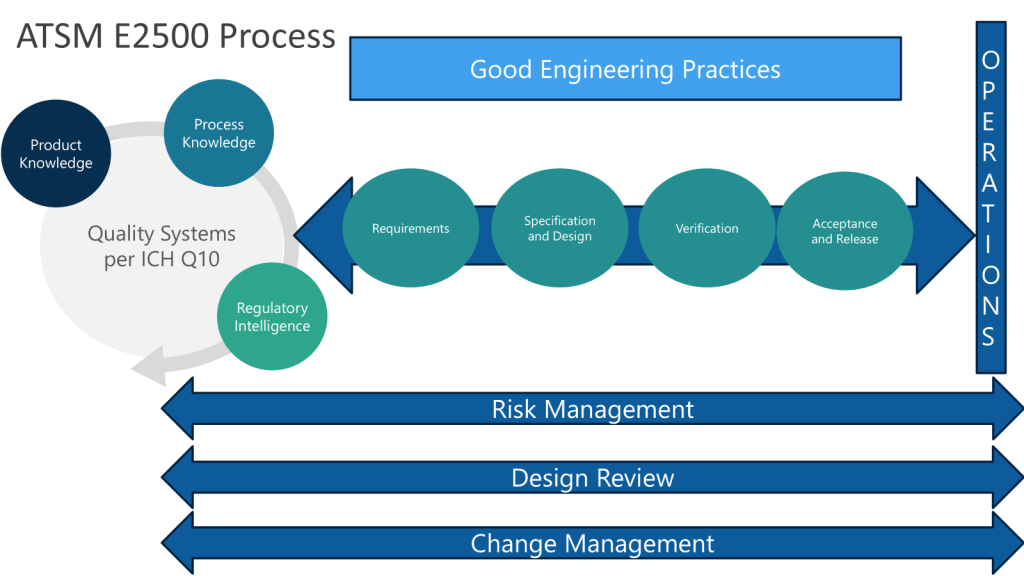
      ASTM E2500, the Standard Guide for Specification, Design, and Verification of Pharmaceutical and Biopharmaceutical Manufacturing Systems and Equipment, is intended to “satisfy international regulatory expectations in ensuring that manufacturing systems and equipment are fit for the intended use and to satisfy requirements for design, installation, operation, and performance.”

      The ASTM E2500 approach is a comprehensive framework for specification setting, design, and verification of pharmaceutical and biopharmaceutical manufacturing systems and equipment. It emphasizes a risk- and science-based methodology to ensure that systems are fit for their intended use, ultimately aiming to enhance product quality and patient safety.

      Despite its 17-year history, it is fair to say it is not the best-implemented standard. There are still many unrealized opportunities and some major challenges. I don’t think a single organization I’ve been in has fully aligned, and ASTM E2500 can feel aspirational.

      Key Principles

      1. Risk Management: The approach integrates risk management principles from ICH Q8, Q9, and Q10, focusing on identifying and mitigating risks to product quality and patient safety throughout the lifecycle of the manufacturing system.
      2. Good Engineering Practices (GEP): It incorporates GEP to ensure systems are correctly designed, installed, and operated.
      3. Flexibility and Efficiency: It strives for a more flexible and efficient organization of verification activities that can be adapted to each project’s specific context.

      Know your Process

      Regulatory agencies expect drugmakers to persuade them that we know our processes and that our facilities, equipment, systems, utilities, and procedures have been established based on concrete data and a thorough risk assessment. The ASTM E2500 standard provides a means of demonstrating that all of these factors have been validated in consideration of carefully evaluated risks.

      What the Standard Calls for

      Four Main Steps

      1. Requirements: Define the system’s needs and critical aspects. Subject Matter Experts (SMEs) play a crucial role in this phase by defining needs, identifying critical aspects, and developing the verification strategy.
      2. Specification & Design: Develop detailed specifications and design the system to meet the requirements. This step involves thorough design reviews and risk assessments to ensure the system functions as intended.
      3. Verification: Conduct verification activities to confirm that the system meets all specified requirements. This step replaces the traditional FAT/SAT/IQ/OQ/PQ sequence with a more streamlined verification process that can be tailored to the project’s needs.
      4. Acceptance & Release: Finalize the verification process and release the system for operational use. This step includes the final review and approval of all verification activities and documentation.

      Four Cross-Functional Processes

      1. Good Engineering Practices (GEP): Ensure all engineering activities adhere to industry standards and best practices.
      2. Quality Risk Management: Continuously assess and manage risks to product quality and patient safety throughout the project.
      3. Design Review: Regularly reviews the system design to ensure it meets all requirements and addresses identified risks.
      4. Change Management: Implement a structured process for managing system changes to ensure that all modifications are appropriately evaluated and documented.

      Applications and Benefits

      • Applicability: The ASTM E2500 approach can be applied to new and existing manufacturing systems, including laboratory, information, and medical device manufacturing systems.
      • Lifecycle Coverage: It applies throughout the manufacturing system’s lifecycle, from concept to retirement.
      • Regulatory Compliance: The approach is designed to conform with FDA, EU, and other international regulations, ensuring that systems are qualified and meet all regulatory expectations.
      • Efficiency and Cost Management: By focusing on critical aspects and leveraging risk management tools, the ASTM E2500 approach can streamline project execution, reduce time to market, and optimize resource utilization.

      The ASTM E2500 approach provides a structured, risk-based framework for specifying, designing, and verifying pharmaceutical and biopharmaceutical manufacturing systems. It emphasizes flexibility, efficiency, and regulatory compliance, making it a valuable tool for ensuring product quality and patient safety.

      What Makes it Different?

      ASTM E2500The more traditional approach
      Testing ApproachIt emphasizes a risk-based approach, focusing on identifying and managing risks to product quality and patient safety throughout the manufacturing system’s lifecycle. This approach allows for flexibility in organizing verification activities based on the specific context and critical aspects of the system.Typically follows a prescriptive sequence of tests (FAT, SAT, IQ, OQ, PQ) as outlined in guidelines like EU GMP Annex 15. This method is more rigid and less adaptable to the specific needs and risks of each project.
      Verification vs QualificationThe term “verification” encompasses all testing activities, which can be organized more freely and rationally to optimize efficiency. Verification activities are tailored to the project’s needs and focus on critical aspects.Follows a structured qualification process (Installation Qualification, Operational Qualification, Performance Qualification) with predefined steps and documentation requirements.
      Role of Subject Matter ExpertsSMEs play a crucial role from the start of the project, contributing to the definition of needs, identification of critical aspects, system design review, and development of the verification strategy. They are involved throughout the project lifecycle.SMEs are typically involved at specific points in the project lifecycle, primarily during the qualification phases, and may not have as continuous a role as in the ASTM E2500 approach.
      Integration of Good Engineering PracticesOffers greater flexibility in organizing verification activities, allowing for a more efficient and streamlined process. This can lead to reduced time to market and optimized resource utilization.While GEP is also important, the focus is more on the qualification steps rather than integrating GEP throughout the entire project lifecycle.
      Change ManagementIt emphasizes early and continuous change management, starting from the supplier’s site, to avoid test duplication and ensure that changes are properly evaluated and documented.It emphasizes early and continuous change management, starting from the supplier’s site, to avoid test duplication and ensure that changes are properly evaluated and documented.
      DocumentationDocumentation is focused on risk management and verification activities, ensuring compliance with international regulations (FDA, EU, ICH Q8, Q9, Q10). The approach is designed to meet regulatory expectations while allowing for flexibility in documentation.quires extensive documentation for each qualification step, which can be more cumbersome and less adaptable to specific project needs.

      Opinion

      I’m watching to see what the upcoming update to Annex 15 will do to address the difficulties some see between an ATSM E2500 approach and the European regulations. I also hope we will see an update to ISPE Baseline® Guide Volume 5: Commissioning and Qualification to align an approach.

      ISPE Baseline® Guide Volume 5ATSM E2500
      Design inputs
      Impact assessment
      Design Qualification
      Commissioning
      Multiple trial runs to get things right
      IQ, OQ, PQ, and acceptance criteria
      GEP Scope and QA Scope overlapped
      Focused on Documentation Deliverables
      Change Management
      Design inputs
      Design Review
      Risk Mitigation
      Critical Control Parameters define Acceptance Criteria
      Verification Testing
      Performance Testing
      GEP Scope and QA Scope have a clear boundary
      Process, Product Quality and Patient Safety
      Quality by Design, Design Space, and Continuous Improvement

      To be honest I don’t think ATSM E2500, ISPE Guide 5, or anything else has the balance just right. And your program ends up being a triangulation between these and the regulations. And don’t even bring in trying to align GAMP5 or USP <1058> or…or…or…

      And yes, I do consider this part of my 3-year plan. I look forward to the challenges of a culture shift, increased SME involvement, formalization of GEPs (and teaching engineers how to write), effective change management, timely risk assessments, and comprehensive implementation planning.