Risk Management Addresses Uncertainty

The ICH Q9 guideline on Quality Risk Management (QRM), including its revised version ICH Q9(R1), addresses the concept of uncertainty as a critical component in risk management within the pharmaceutical industry.

Understanding Uncertainty in ICH Q9

Uncertainty in the context of ICH Q9 refers to the lack of complete knowledge about a process and its expected or unexpected variability. This uncertainty can stem from various sources, including gaps in knowledge about pharmaceutical science, process understanding, and potential failure modes.

Key Points on Uncertainty from ICH Q9(R1)

Sources of Uncertainty:

    • Knowledge Gaps: Incomplete understanding of the scientific and technical aspects of processes.
    • Process Variability: Both expected and unexpected changes in process performance.
    • Failure Modes: Unidentified or poorly understood potential points of failure in processes or systems.

    Managing Uncertainty:

      • Risk-Based Decision Making: The guideline emphasizes that decisions should be made based on the level of uncertainty, importance, and complexity of the situation. This means that more formal and structured approaches should be used when uncertainty is high.
      • Formality in QRM: ICH Q9(R1) introduces the concept of formality as a spectrum, suggesting that the degree of formality in risk management activities should be commensurate with the level of uncertainty. Less formal methods may be appropriate for well-understood processes, while highly structured methods are necessary for areas with high uncertainty.

      Reducing Subjectivity:

        • The guideline acknowledges that subjectivity can impact the effectiveness of risk management. It recommends strategies to minimize subjectivity, such as using well-recognized risk assessment tools and involving cross-functional teams to provide diverse perspectives.

        Continuous Improvement:

          • ICH Q9(R1) stresses the importance of continual improvement in risk management processes. This involves regularly updating risk assessments and control measures as new information becomes available, thereby reducing uncertainty over time.

          Practical Implementation

          In practice, managing uncertainty within the framework of ICH Q9 involves:

          • Conducting thorough risk assessments to identify potential hazards and their associated risks.
          • Applying appropriate risk control measures based on the level of uncertainty and the criticality of the process.
          • Documenting and reviewing risk management activities to ensure they remain relevant and effective as new information is obtained.

          Conclusion

          The ICH Q9 approach to uncertainty underscores the importance of a structured, knowledge-based approach to risk management in the pharmaceutical industry. By addressing uncertainty through rigorous risk assessments and appropriate control measures, organizations can enhance the reliability and safety of their processes and products, ultimately safeguarding patient health and safety.

          Why the Shift to Hazard Identification in ICH Q9(r1) Matters

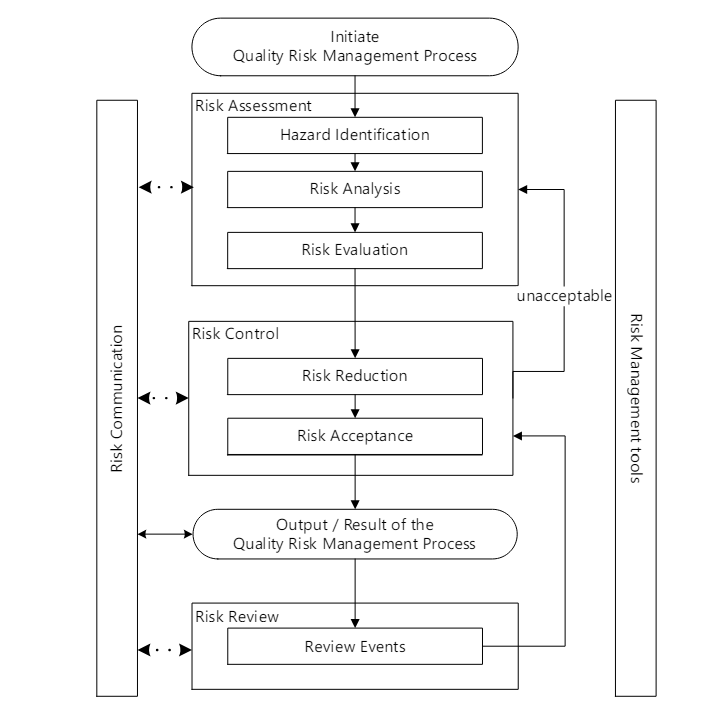
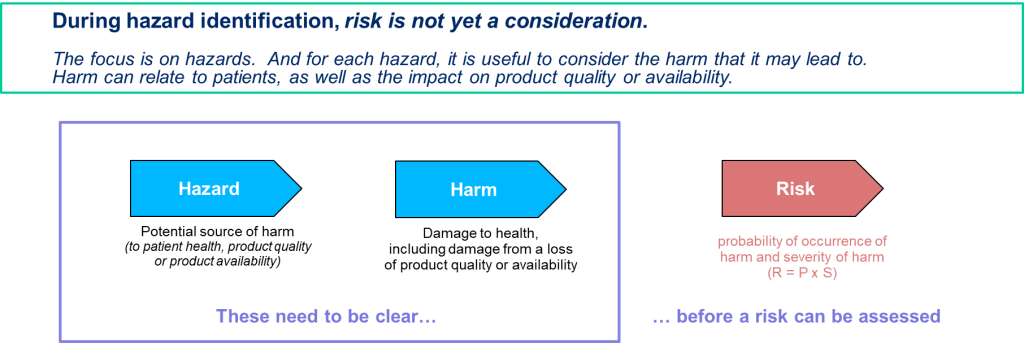
          The revised ICH Q9 (R1) guideline shifts from “Risk Identification” to “Hazard Identification” to reflect a more precise approach to identifying potential sources of harm (hazards) rather than broadly identifying risks.

          1. Alignment with Risk Assessment Definition: The term “Hazard Identification” is more consistent with the established definition of Risk Assessment, which involves identifying hazards and analyzing and evaluating the associated risks.
          2. Clarity and Precision: By focusing on hazards, the guideline aims to improve the clarity and precision of the risk management process. This helps better understand and assess the potential harms associated with identified hazards, leading to more effective risk management.
          3. Improved Perception and Assessment: The change is expected to enhance how hazards are perceived and assessed, making the risk management process more robust and scientifically grounded. This is particularly important for ensuring patient safety and product quality.
          4. Consistency in Terminology: The revision aims to standardize the terminology used in quality risk management, reducing confusion and ensuring all stakeholders understand the terms and processes involved.
          ICH Q9 (r1) Figure 1: Overview of a typical quality risk management process

          This small change in terminology can lead to better risk-based decisions by highlighting the need to identify hazards and not risks during the first step of the risk assessment process to remove any distractions about risks that may interfere with the hazard identification activity. When a Risk Assessment team focuses only on identifying hazards, they do not have to think about any related probabilities of occurrence – they only have to consider the potential hazards concerning the risk question under consideration. This is also the case of the severity of harm during hazard identification. There is no need to work to estimate the severity of the harm that may be presented by a hazard that comes later after the hazards have been identified.