The Evolution of ALCOA: From Inspector’s Tool to Global Standard e

In the annals of pharmaceutical regulation, few acronyms have generated as much discussion, confusion, and controversy as ALCOA. What began as a simple mnemonic device for FDA inspectors in the 1990s has evolved into a complex framework that has sparked heated debates across regulatory agencies, industry associations, and boardrooms worldwide. The story of ALCOA’s evolution from a five-letter inspector’s tool to the comprehensive ALCOA++ framework represents one of the most significant regulatory harmonization challenges of the modern pharmaceutical era.

With the publication of Draft EU GMP Chapter 4 in 2025, this three-decade saga of definitional disputes, regulatory inconsistencies, and industry resistance finally reaches its definitive conclusion. For the first time in regulatory history, a major jurisdiction has provided comprehensive, legally binding definitions for all ten ALCOA++ principles, effectively ending years of interpretive debates and establishing the global gold standard for pharmaceutical data integrity.

The Genesis: Stan Woollen’s Simple Solution

The ALCOA story begins in the early 1990s with Stan W. Woollen, an FDA inspector working in the Office of Enforcement. Faced with the challenge of training fellow GLP inspectors on data quality assessment, Woollen needed a memorable framework that could be easily applied during inspections. Drawing inspiration from the ubiquitous aluminum foil manufacturer, he created the ALCOA acronym: Attributable, Legible, Contemporaneous, Original, and Accurate.

“The ALCOA acronym was first coined by me while serving in FDA’s Office of Enforcement back in the early 1990’s,” Woollen later wrote in a 2010 retrospective. “Exactly when I first used the acronym I don’t recall, but it was a simple tool to help inspectors evaluate data quality”.

Woollen’s original intent was modest—create a practical checklist for GLP inspections. He explicitly noted that “the individual elements of ALCOA were already present in existing Good Manufacturing Practice (GMP) and GLP regulations. What he did was organize them into an easily memorized acronym”. This simple organizational tool would eventually become the foundation for a global regulatory framework.

The First Expansion: EMA’s ALCOA+ Revolution

The pharmaceutical landscape of 2010 bore little resemblance to Woollen’s 1990s GLP world. Electronic systems had proliferated, global supply chains had emerged, and data integrity violations were making headlines. Recognizing that the original five ALCOA principles, while foundational, were insufficient for modern pharmaceutical operations, the European Medicines Agency took a bold step.

In their 2010 “Reflection paper on expectations for electronic source data and data transcribed to electronic data collection tools in clinical trials,” the EMA introduced four additional principles: Complete, Consistent, Enduring, and Available—creating ALCOA+. This expansion represented the first major regulatory enhancement to Woollen’s original framework and immediately sparked industry controversy.

The Industry Backlash

The pharmaceutical industry’s response to ALCOA+ was swift and largely negative. Trade associations argued that the original five principles were sufficient and that additional requirements represented regulatory overreach. “The industry argued that the original 5 were sufficient; regulators needed modern additions,” as contemporary accounts noted.

The resistance wasn’t merely philosophical—it was economic. Each new principle required system validations, process redesigns, and staff retraining. For companies operating legacy paper-based systems, the “Enduring” and “Available” requirements posed particular challenges, often necessitating expensive digitization projects.

The Fragmentation: Regulatory Babel

What followed ALCOA+’s introduction was a period of regulatory fragmentation that would plague the industry for over a decade. Different agencies adopted different interpretations, creating a compliance nightmare for multinational pharmaceutical companies.

FDA’s Conservative Approach

The FDA, despite being the birthplace of ALCOA, initially resisted the European additions. Their 2016 “Data Integrity and Compliance with CGMP Guidance for Industry” focused primarily on the original five ALCOA principles, with only implicit references to the additional requirements8. This created a transatlantic divide where companies faced different standards depending on their regulatory jurisdiction.

MHRA’s Independent Path

The UK’s MHRA further complicated matters by developing their own interpretations in their 2018 “GxP Data Integrity Guidance.” While generally supportive of ALCOA+, the MHRA included unique provisions such as their emphasis on “permanent and understandable” under “legible,” creating yet another variant.

WHO’s Evolving Position

The World Health Organization initially provided excellent guidance in their 2016 document, which included comprehensive ALCOA explanations in Appendix 1. However, their 2021 revision removed much of this detail.

PIC/S Harmonization Attempt

The Pharmaceutical Inspection Co-operation Scheme (PIC/S) attempted to bridge these differences with their 2021 “Guidance on Data Integrity,” which formally adopted ALCOA+ principles. However, even this harmonization effort failed to resolve fundamental definitional inconsistencies between agencies.

The Traceability Controversy: ALCOA++ Emerges

Just as the industry began adapting to ALCOA+, European regulators introduced another disruption. The EMA’s 2023 “Guideline on computerised systems and electronic data in clinical trials” added a tenth principle: Traceability, creating ALCOA++.

The Redundancy Debate

The addition of Traceability sparked the most intense regulatory debate in ALCOA’s history. Industry experts argued that traceability was already implicit in the original ALCOA principles. As R.D. McDowall noted in Spectroscopy Online, “Many would argue that the criterion ‘traceable’ is implicit in ALCOA and ALCOA+. However, the implication of the term is the problem; it is always better in data regulatory guidance to be explicit”.

The debate wasn’t merely academic. Companies that had invested millions in ALCOA+ compliance now faced another round of system upgrades and validations. The terminology confusion was equally problematic—some agencies used ALCOA++, others preferred ALCOA+ with implied traceability, and still others created their own variants like ALCOACCEA.

Industry Frustration

By 2023, industry frustration had reached a breaking point. Pharmaceutical executives complained about “multiple naming conventions (ALCOA+, ALCOA++, ALCOACCEA) created market confusion”. Quality professionals struggled to determine which version applied to their operations, leading to over-engineering in some cases and compliance gaps in others.

The regulatory inconsistencies created particular challenges for multinational companies. A facility manufacturing for both US and European markets might need to maintain different data integrity standards for the same product, depending on the intended market—an operationally complex and expensive proposition.

The Global Harmonization Failure

Despite multiple attempts at harmonization through ICH, PIC/S, and bilateral agreements, the regulatory community failed to establish a unified ALCOA standard. Each agency maintained sovereign authority over their interpretations, leading to:

Definitional Inconsistencies: The same ALCOA principle had different definitions across agencies. “Attributable” might emphasize individual identification in one jurisdiction while focusing on system traceability in another.

Technology-Specific Variations: Some agencies provided technology-neutral guidance while others specified different requirements for paper versus electronic systems.

Enforcement Variations: Inspection findings varied significantly between agencies, with some inspectors focusing on traditional ALCOA elements while others emphasized ALCOA+ additions.

Economic Inefficiencies: Companies faced redundant validation efforts, multiple audit preparations, and inconsistent training requirements across their global operations.

Draft EU Chapter 4: The Definitive Resolution

Against this backdrop of regulatory fragmentation and industry frustration, the European Commission’s Draft EU GMP Chapter 4 represents a watershed moment in pharmaceutical regulation. For the first time in ALCOA’s three-decade history, a major regulatory jurisdiction has provided comprehensive, legally binding definitions for all ten ALCOA++ principles.

Comprehensive Definitions

The draft chapter doesn’t merely list the ALCOA++ principles—it provides detailed, unambiguous definitions for each. The “Attributable” definition spans multiple sentences, covering not just identity but also timing, change control, and system attribution. The “Legible” definition explicitly addresses dynamic data and search capabilities, resolving years of debate about electronic system requirements.

Technology Integration

Unlike previous guidance documents that treated paper and electronic systems separately, Chapter 4 provides unified definitions that apply regardless of technology. The “Original” definition explicitly addresses both static (paper) and dynamic (electronic) data, stating that “Information that is originally captured in a dynamic state should remain available in that state”.

Risk-Based Framework

The draft integrates ALCOA++ principles into a broader risk-based data governance framework, addressing long-standing industry concerns about proportional implementation. The risk-based approach considers both data criticality and data risk, allowing companies to tailor their ALCOA++ implementations accordingly.

Hybrid System Recognition

Acknowledging the reality of modern pharmaceutical operations, the draft provides specific guidance for hybrid systems that combine paper and electronic elements—a practical consideration absent from earlier ALCOA guidance.

The End of Regulatory Babel

Draft Chapter 4’s comprehensive approach should effectively ends the definitional debates that have plagued ALCOA implementation for over a decade. By providing detailed, legally binding definitions, the EU has created the global gold standard that other agencies will likely adopt or reference.

Global Influence

The EU’s pharmaceutical market represents approximately 20% of global pharmaceutical sales, making compliance with EU standards essential for most major manufacturers. When EU GMP requirements are updated, they typically influence global practices due to the market’s size and regulatory sophistication.

Regulatory Convergence

Early indications suggest other agencies are already referencing the EU’s ALCOA++ definitions in their guidance development. The comprehensive nature of Chapter 4’s definitions makes them attractive references for agencies seeking to update their own data integrity requirements.

Industry Relief

For pharmaceutical companies, Chapter 4 represents regulatory clarity after years of uncertainty. Companies can now design global data integrity programs based on the EU’s comprehensive definitions, confident that they meet or exceed requirements in other jurisdictions.

Lessons from the ALCOA Evolution

The three-decade evolution of ALCOA offers several important lessons for pharmaceutical regulation:

  • Organic Growth vs. Planned Development: ALCOA’s organic evolution from inspector tool to global standard demonstrates how regulatory frameworks can outgrow their original intent. The lack of coordinated development led to inconsistencies that persisted for years.
  • Industry-Regulatory Dialogue Importance: The most successful ALCOA developments occurred when regulators engaged extensively with industry. The EU’s consultation process for Chapter 4, while not without controversy, produced a more practical and comprehensive framework than previous unilateral developments.
  • Technology Evolution Impact: Each ALCOA expansion reflected technological changes in pharmaceutical manufacturing. The original principles addressed paper-based GLP labs, ALCOA+ addressed electronic clinical systems, and ALCOA++ addresses modern integrated manufacturing environments.
  • Global Harmonization Challenges: Despite good intentions, regulatory harmonization proved extremely difficult to achieve through international cooperation. The EU’s unilateral approach may prove more successful in creating de facto global standards.

The Future of Data Integrity

With Draft Chapter 4’s comprehensive ALCOA++ framework, the regulatory community has finally established a mature, detailed standard for pharmaceutical data integrity. The decades of debate, expansion, and controversy have culminated in a framework that addresses the full spectrum of modern pharmaceutical operations.

Implementation Timeline

The EU’s implementation timeline provides the industry with adequate preparation time while establishing clear deadlines for compliance. Companies have approximately 18-24 months to align their systems with the new requirements, allowing for systematic implementation without rushed remediation efforts.

Global Adoption

Early indications suggest rapid global adoption of the EU’s ALCOA++ definitions. Regulatory agencies worldwide are likely to reference or adopt these definitions in their own guidance updates, finally achieving the harmonization that eluded the international community for decades.

Technology Integration

The framework’s technology-neutral approach while addressing specific technology requirements positions it well for future technological developments. Whether dealing with artificial intelligence, blockchain, or yet-to-be-developed technologies, the comprehensive definitions provide a stable foundation for ongoing innovation.

Conclusion: From Chaos to Clarity

The evolution of ALCOA from Stan Woollen’s simple inspector tool to the comprehensive ALCOA++ framework represents one of the most significant regulatory development sagas in pharmaceutical history. Three decades of expansion, controversy, and fragmentation have finally culminated in the European Union’s definitive resolution through Draft Chapter 4.

For an industry that has struggled with regulatory inconsistencies, definitional debates, and implementation uncertainties, Chapter 4 represents more than just updated guidance—it represents regulatory maturity. The comprehensive definitions, risk-based approach, and technology integration provide the clarity that has been absent from data integrity requirements for over a decade.

The pharmaceutical industry can now move forward with confidence, implementing data integrity programs based on clear, comprehensive, and legally binding definitions. The era of ALCOA debates is over; the era of ALCOA++ implementation has begun.

As we look back on this regulatory journey, Stan Woollen’s simple aluminum foil-inspired acronym has evolved into something he likely never envisioned—a comprehensive framework for ensuring data integrity across the global pharmaceutical industry. The transformation from inspector’s tool to global standard demonstrates how regulatory innovation, while often messy and contentious, ultimately serves the critical goal of ensuring pharmaceutical product quality and patient safety.

The Draft EU Chapter 4 doesn’t just end the ALCOA debates—it establishes the foundation for the next generation of pharmaceutical data integrity requirements. For an industry built on evidence and data, having clear, comprehensive standards for data integrity represents a fundamental advancement in regulatory science and pharmaceutical quality assurance.

References

Cognitive Foundations of Risk Management Excellence

The Hidden Architecture of Risk Assessment Failure

Peter Baker‘s blunt assessment, “We allowed all these players into the market who never should have been there in the first place, ” hits at something we all recognize but rarely talk about openly. Here’s the uncomfortable truth: even seasoned quality professionals with decades of experience and proven methodologies can miss critical risks that seem obvious in hindsight. Recognizing this truth is not about competence or dedication. It is about acknowledging that our expertise, no matter how extensive, operates within cognitive frameworks that can create blind spots. The real opportunity lies in understanding how these mental patterns shape our decisions and building knowledge systems that help us see what we might otherwise miss. When we’re honest about these limitations, we can strengthen our approaches and create more robust quality systems.

The framework of risk management, designed to help avoid the monsters of bad decision-making, can all too often fail us. Luckily, the Pharmaceutical Inspection Co-operation Scheme (PIC/S) guidance document PI 038-2 “Assessment of Quality Risk Management Implementation” identifies three critical observations that reveal systematic vulnerabilities in risk management practice: unjustified assumptions, incomplete identification of risks or inadequate information, and lack of relevant experience with inappropriate use of risk assessment tools. These observations represent something more profound than procedural failures—they expose cognitive and knowledge management vulnerabilities that can undermine even the most well-intentioned quality systems..

Understanding these vulnerabilities through the lens of cognitive behavioral science and knowledge management principles provides a pathway to more robust and resilient quality systems. Instead of viewing these failures as isolated incidents or individual shortcomings, we should recognize them as predictable patterns that emerge from systematic limitations in how humans process information and organizations manage knowledge. This recognition opens the door to designing quality systems that work with, rather than against, these cognitive realities

The Framework Foundation of Risk Management Excellence

Risk management operates fundamentally as a framework rather than a rigid methodology, providing the structural architecture that enables systematic approaches to identifying, assessing, and controlling uncertainties that could impact pharmaceutical quality objectives. This distinction proves crucial for understanding how cognitive biases manifest within risk management systems and how excellence-driven quality systems can effectively address them.

A framework establishes the high-level structure, principles, and processes for managing risks systematically while allowing flexibility in execution and adaptation to specific organizational contexts. The framework defines structural components like governance and culture, strategy and objective-setting, and performance monitoring that establish the scaffolding for risk management without prescribing inflexible procedures.

Within this framework structure, organizations deploy specific methodological elements as tools for executing particular risk management tasks. These methodologies include techniques such as Failure Mode and Effects Analysis (FMEA), brainstorming sessions, SWOT analysis, and risk surveys for identification activities, while assessment methodologies encompass qualitative and quantitative approaches including statistical models and scenario analysis. The critical insight is that frameworks provide the systematic architecture that counters cognitive biases, while methodologies are specific techniques deployed within this structure.

This framework approach directly addresses the three PIC/S observations by establishing systematic requirements that counter natural cognitive tendencies. Standardized framework processes force systematic consideration of risk factors rather than allowing teams to rely on intuitive pattern recognition that might be influenced by availability bias or anchoring on familiar scenarios. Documented decision rationales required by framework approaches make assumptions explicit and subject to challenge, preventing the perpetuation of unjustified beliefs that may have become embedded in organizational practices.

The governance components inherent in risk management frameworks address the expertise and knowledge management challenges identified in PIC/S guidance by establishing clear roles, responsibilities, and requirements for appropriate expertise involvement in risk assessment activities. Rather than leaving expertise requirements to chance or individual judgment, frameworks systematically define when specialized knowledge is required and how it should be accessed and validated.

ICH Q9’s approach to Quality Risk Management in pharmaceuticals demonstrates this framework principle through its emphasis on scientific knowledge and proportionate formality. The guideline establishes framework requirements that risk assessments be “based on scientific knowledge and linked to patient protection” while allowing methodological flexibility in how these requirements are met. This framework approach provides systematic protection against the cognitive biases that lead to unjustified assumptions while supporting the knowledge management processes necessary for complete risk identification and appropriate tool application.

The continuous improvement cycles embedded in mature risk management frameworks provide ongoing validation of cognitive bias mitigation effectiveness through operational performance data. These systematic feedback loops enable organizations to identify when initial assumptions prove incorrect or when changing conditions alter risk profiles, supporting the adaptive learning required for sustained excellence in pharmaceutical risk management.

The Systematic Nature of Risk Assessment Failure

Unjustified Assumptions: When Experience Becomes Liability

The first PIC/S observation—unjustified assumptions—represents perhaps the most insidious failure mode in pharmaceutical risk management. These are decisions made without sufficient scientific evidence or rational basis, often arising from what appears to be strength: extensive experience with familiar processes. The irony is that the very expertise we rely upon can become a source of systematic error when it leads to unfounded confidence in our understanding.

This phenomenon manifests most clearly in what cognitive scientists call anchoring bias—the tendency to rely too heavily on the first piece of information encountered when making decisions. In pharmaceutical risk assessments, this might appear as teams anchoring on historical performance data without adequately considering how process changes, equipment aging, or supply chain modifications might alter risk profiles. The assumption becomes: “This process has worked safely for five years, so the risk profile remains unchanged.”

Confirmation bias compounds this issue by causing assessors to seek information that confirms their existing beliefs while ignoring contradictory evidence. Teams may unconsciously filter available data to support predetermined conclusions about process reliability or control effectiveness. This creates a self-reinforcing cycle where assumptions become accepted facts, protected from challenge by selective attention to supporting evidence.

The knowledge management dimension of this failure is equally significant. Organizations often lack systematic approaches to capturing and validating the assumptions embedded in institutional knowledge. Tacit knowledge—the experiential, intuitive understanding that experts develop over time—becomes problematic when it remains unexamined and unchallenged. Without explicit processes to surface and test these assumptions, they become invisible constraints on risk assessment effectiveness.

Incomplete Risk Identification: The Boundaries of Awareness

The second observation—incomplete identification of risks or inadequate information—reflects systematic failures in the scope and depth of risk assessment activities. This represents more than simple oversight; it demonstrates how cognitive limitations and organizational boundaries constrain our ability to identify potential hazards comprehensively.

Availability bias plays a central role in this failure mode. Risk assessment teams naturally focus on hazards that are easily recalled or recently experienced, leading to overemphasis on dramatic but unlikely events while underestimating more probable but less memorable risks. A team might spend considerable time analyzing the risk of catastrophic equipment failure while overlooking the cumulative impact of gradual process drift or material variability.

The knowledge management implications are profound. Organizations often struggle with knowledge that exists in isolated pockets of expertise. Critical information about process behaviors, failure modes, or control limitations may be trapped within specific functional areas or individual experts. Without systematic mechanisms to aggregate and synthesize distributed knowledge, risk assessments operate on fundamentally incomplete information.

Groupthink and organizational boundaries further constrain risk identification. When risk assessment teams are composed of individuals from similar backgrounds or organizational levels, they may share common blind spots that prevent recognition of certain hazard categories. The pressure to reach consensus can suppress dissenting views that might identify overlooked risks.

Inappropriate Tool Application: When Methodology Becomes Mythology

The third observation—lack of relevant experience with process assessment and inappropriate use of risk assessment tools—reveals how methodological sophistication can mask fundamental misunderstanding. This failure mode is particularly dangerous because it generates false confidence in risk assessment conclusions while obscuring the limitations of the analysis.

Overconfidence bias drives teams to believe they have more expertise than they actually possess, leading to misapplication of complex risk assessment methodologies. A team might apply Failure Mode and Effects Analysis (FMEA) to a novel process without adequate understanding of either the methodology’s limitations or the process’s unique characteristics. The resulting analysis appears scientifically rigorous while providing misleading conclusions about risk levels and control effectiveness.

This connects directly to knowledge management failures in expertise distribution and access. Organizations may lack systematic approaches to identifying when specialized knowledge is required for risk assessments and ensuring that appropriate expertise is available when needed. The result is risk assessments conducted by well-intentioned teams who lack the specific knowledge required for accurate analysis.

The problem is compounded when organizations rely heavily on external consultants or standardized methodologies without developing internal capabilities for critical evaluation. While external expertise can be valuable, sole reliance on these resources may result in inappropriate conclusions or a lack of ownership of the assessment, as the PIC/S guidance explicitly warns.

The Role of Negative Reasoning in Risk Assessment

The research on causal reasoning versus negative reasoning from Energy Safety Canada provides additional insight into systematic failures in pharmaceutical risk assessments. Traditional root cause analysis often focuses on what did not happen rather than what actually occurred—identifying “counterfactuals” such as “operators not following procedures” or “personnel not stopping work when they should have.”

This approach, termed “negative reasoning,” is fundamentally flawed because what was not happening cannot create the outcomes we experienced. These counterfactuals “exist only in retrospection and never actually influenced events,” yet they dominate many investigation conclusions. In risk assessment contexts, this manifests as teams focusing on the absence of desired behaviors or controls rather than understanding the positive factors that actually influence system performance.

The shift toward causal reasoning requires understanding what actually occurred and what factors positively influenced the outcomes observed.

Knowledge-Enabled Decision Making

The intersection of cognitive science and knowledge management reveals how organizations can design systems that support better risk assessment decisions. Knowledge-enabled decision making requires structures that make relevant information accessible at the point of decision while supporting the cognitive processes necessary for accurate analysis.

This involves several key elements:

Structured knowledge capture that explicitly identifies assumptions, limitations, and context for recorded information. Rather than simply documenting conclusions, organizations must capture the reasoning process and evidence base that supports risk assessment decisions.

Knowledge validation systems that systematically test assumptions embedded in organizational knowledge. This includes processes for challenging accepted wisdom and updating mental models when new evidence emerges.

Expertise networks that connect decision-makers with relevant specialized knowledge when required. Rather than relying on generalist teams for all risk assessments, organizations need systematic approaches to accessing specialized expertise when process complexity or novelty demands it.

Decision support systems that prompt systematic consideration of potential biases and alternative explanations.

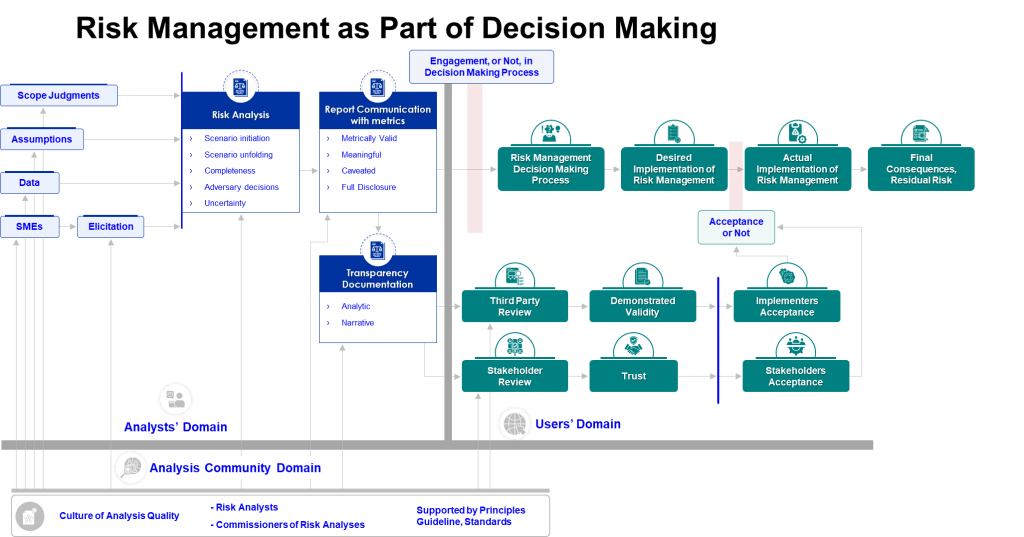
Alt Text for Risk Management Decision-Making Process Diagram
Main Title: Risk Management as Part of Decision Making

Overall Layout: The diagram is organized into three horizontal sections - Analysts' Domain (top), Analysis Community Domain (middle), and Users' Domain (bottom), with various interconnected process boxes and workflow arrows.

Left Side Input Elements:

Scope Judgments (top)

Assumptions

Data

SMEs (Subject Matter Experts)

Elicitation (connecting SMEs to the main process flow)

Central Process Flow (Analysts' Domain):
Two main blue boxes containing:

Risk Analysis - includes bullet points for Scenario initiation, Scenario unfolding, Completeness, Adversary decisions, and Uncertainty

Report Communication with metrics - includes Metrically Valid, Meaningful, Caveated, and Full Disclosure

Transparency Documentation - includes Analytic and Narrative components

Decision-Making Process Flow (Users' Domain):
A series of connected teal/green boxes showing:

Risk Management Decision Making Process

Desired Implementation of Risk Management

Actual Implementation of Risk Management

Final Consequences, Residual Risk

Secondary Process Elements:

Third Party Review → Demonstrated Validity

Stakeholder Review → Trust

Implementers Acceptance and Stakeholders Acceptance (shown in parallel)

Key Decision Points:

"Engagement, or Not, in Decision Making Process" (shown in light blue box at top)

"Acceptance or Not" (shown in gray box in middle section)

Visual Design Elements:

Uses blue boxes for analytical processes

Uses teal/green boxes for decision-making and implementation processes

Shows workflow with directional arrows connecting all elements

Includes small icons next to major process boxes

Divides content into clearly labeled domain sections at bottom

The diagram illustrates the complete flow from initial risk analysis through stakeholder engagement to final implementation and residual risk outcomes, emphasizing the interconnected nature of analytical work and decision-making processes.

Excellence and Elegance: Designing Quality Systems for Cognitive Reality

Structured Decision-Making Processes

Excellence in pharmaceutical quality systems requires moving beyond hoping that individuals will overcome cognitive limitations through awareness alone. Instead, organizations must design structured decision-making processes that systematically counter known biases while supporting comprehensive risk identification and analysis.

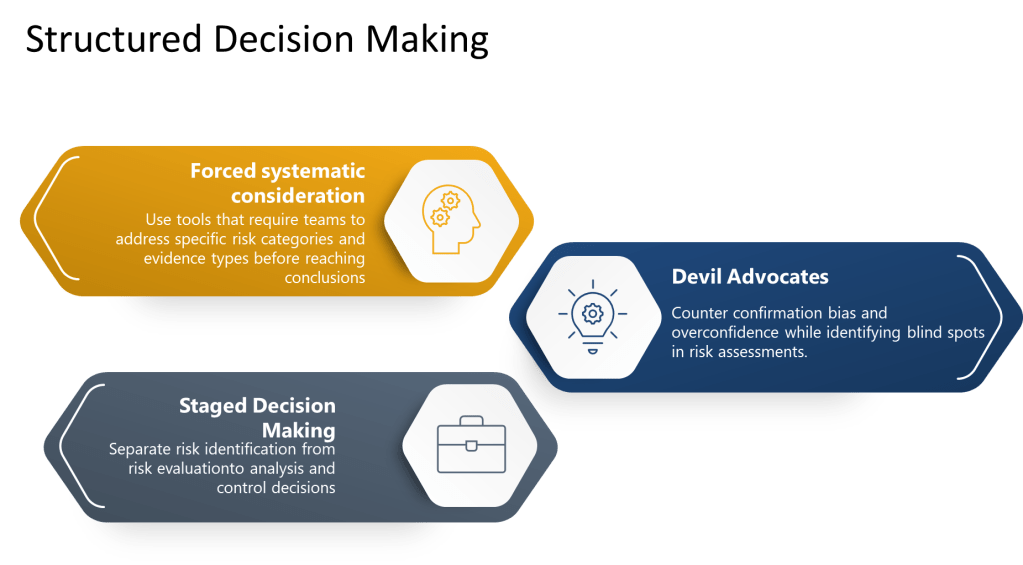
Forced systematic consideration involves using checklists, templates, and protocols that require teams to address specific risk categories and evidence types before reaching conclusions. Rather than relying on free-form discussion that may be influenced by availability bias or groupthink, these tools ensure comprehensive coverage of relevant factors.

Devil’s advocate processes systematically introduce alternative perspectives and challenge preferred conclusions. By assigning specific individuals to argue against prevailing views or identify overlooked risks, organizations can counter confirmation bias and overconfidence while identifying blind spots in risk assessments.

Staged decision-making separates risk identification from risk evaluation, preventing premature closure and ensuring adequate time for comprehensive hazard identification before moving to analysis and control decisions.

Structured Decision Making infographic showing three interconnected hexagonal components. At the top left, an orange hexagon labeled 'Forced systematic consideration' with a head and gears icon, describing 'Use tools that require teams to address specific risk categories and evidence types before reaching conclusions.' At the top right, a dark blue hexagon labeled 'Devil Advocates' with a lightbulb and compass icon, describing 'Counter confirmation bias and overconfidence while identifying blind spots in risk assessments.' At the bottom, a gray hexagon labeled 'Staged Decision Making' with a briefcase icon, describing 'Separate risk identification from risk evaluation to analysis and control decisions.' The three hexagons are connected by curved arrows indicating a cyclical process.

Multi-Perspective Analysis and Diverse Assessment Teams

Cognitive diversity in risk assessment teams provides natural protection against individual and group biases. This goes beyond simple functional representation to include differences in experience, training, organizational level, and thinking styles that can identify risks and solutions that homogeneous teams might miss.

Cross-functional integration ensures that risk assessments benefit from different perspectives on process performance, control effectiveness, and potential failure modes. Manufacturing, quality assurance, regulatory affairs, and technical development professionals each bring different knowledge bases and mental models that can reveal different aspects of risk.

External perspectives through consultants, subject matter experts from other sites, or industry benchmarking can provide additional protection against organizational blind spots. However, as the PIC/S guidance emphasizes, these external resources should facilitate and advise rather than replace internal ownership and accountability.

Rotating team membership for ongoing risk assessment activities prevents the development of group biases and ensures fresh perspectives on familiar processes. This also supports knowledge transfer and prevents critical risk assessment capabilities from becoming concentrated in specific individuals.

Evidence-Based Analysis Requirements

Scientific justification for all risk assessment conclusions requires teams to base their analysis on objective, verifiable data rather than assumptions or intuitive judgments. This includes collecting comprehensive information about process performance, material characteristics, equipment reliability, and environmental factors before drawing conclusions about risk levels.

Assumption documentation makes implicit beliefs explicit and subject to challenge. Any assumptions made during risk assessment must be clearly identified, justified with available evidence, and flagged for future validation. This transparency helps identify areas where additional data collection may be needed and prevents assumptions from becoming accepted facts over time.

Evidence quality assessment evaluates the strength and reliability of information used to support risk assessment conclusions. This includes understanding limitations, uncertainties, and potential sources of bias in the data itself.

Structured uncertainty analysis explicitly addresses areas where knowledge is incomplete or confidence is low. Rather than treating uncertainty as a weakness to be minimized, mature quality systems acknowledge uncertainty and design controls that remain effective despite incomplete information.

Continuous Monitoring and Reassessment Systems

Performance validation provides ongoing verification of risk assessment accuracy through operational performance data. The PIC/S guidance emphasizes that risk assessments should be “periodically reviewed for currency and effectiveness” with systems to track how well predicted risks align with actual experience.

Assumption testing uses operational data to validate or refute assumptions embedded in risk assessments. When monitoring reveals discrepancies between predicted and actual performance, this triggers systematic review of the original assessment to identify potential sources of bias or incomplete analysis.

Feedback loops ensure that lessons learned from risk assessment performance are incorporated into future assessments. This includes both successful risk predictions and instances where significant risks were initially overlooked.

Adaptive learning systems use accumulated experience to improve risk assessment methodologies and training programs. Organizations can track patterns in assessment effectiveness to identify systematic biases or knowledge gaps that require attention.

Knowledge Management as the Foundation of Cognitive Excellence

The Critical Challenge of Tacit Knowledge Capture

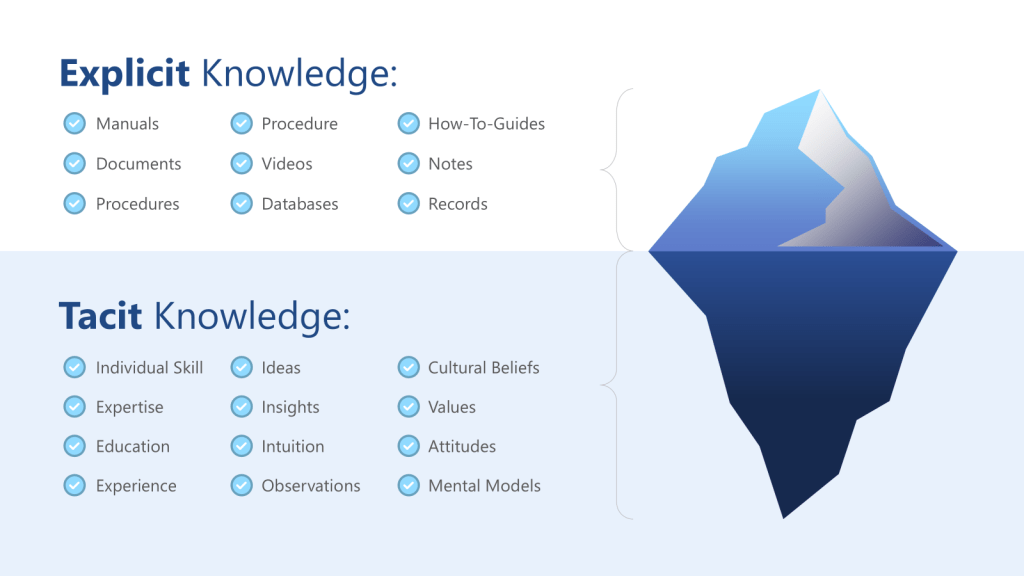
ICH Q10’s definition of knowledge management as “a systematic approach to acquiring, analysing, storing and disseminating information related to products, manufacturing processes and components” provides the regulatory framework, but the cognitive dimensions of knowledge management are equally critical. The distinction between tacit knowledge (experiential, intuitive understanding) and explicit knowledge (documented procedures and data) becomes crucial when designing systems to support effective risk assessment.

Infographic depicting the knowledge iceberg model used in knowledge management. The small visible portion above water labeled 'Explicit Knowledge' contains documented, codified information like manuals, procedures, and databases. The large hidden portion below water labeled 'Tacit Knowledge' represents uncodified knowledge including individual skills, expertise, cultural beliefs, and mental models that are difficult to transfer or document.

Tacit knowledge capture represents one of the most significant challenges in pharmaceutical quality systems. The experienced process engineer who can “feel” when a process is running correctly possesses invaluable knowledge, but this knowledge remains vulnerable to loss through retirements, organizational changes, or simply the passage of time. More critically, tacit knowledge often contains embedded assumptions that may become outdated as processes, materials, or environmental conditions change.

Structured knowledge elicitation processes systematically capture not just what experts know, but how they know it—the cues, patterns, and reasoning processes that guide their decision-making. This involves techniques such as cognitive interviewing, scenario-based discussions, and systematic documentation of decision rationales that make implicit knowledge explicit and subject to validation.

Knowledge validation and updating cycles ensure that captured knowledge remains current and accurate. This is particularly important for tacit knowledge, which may be based on historical conditions that no longer apply. Systematic processes for testing and updating knowledge prevent the accumulation of outdated assumptions that can compromise risk assessment effectiveness.

Expertise Distribution and Access

Knowledge networks provide systematic approaches to connecting decision-makers with relevant expertise when complex risk assessments require specialized knowledge. Rather than assuming that generalist teams can address all risk assessment challenges, mature organizations develop capabilities to identify when specialized expertise is required and ensure it is accessible when needed.

Expertise mapping creates systematic inventories of knowledge and capabilities distributed throughout the organization. This includes not just formal qualifications and roles, but understanding of specific process knowledge, problem-solving experience, and decision-making capabilities that may be relevant to risk assessment activities.

Dynamic expertise allocation ensures that appropriate knowledge is available for specific risk assessment challenges. This might involve bringing in experts from other sites for novel process assessments, engaging specialists for complex technical evaluations, or providing access to external expertise when internal capabilities are insufficient.

Knowledge accessibility systems make relevant information available at the point of decision-making through searchable databases, expert recommendation systems, and structured repositories that support rapid access to historical decisions, lessons learned, and validated approaches.

Knowledge Quality and Validation

Systematic assumption identification makes embedded beliefs explicit and subject to validation. Knowledge management systems must capture not just conclusions and procedures, but the assumptions and reasoning that support them. This enables systematic testing and updating when new evidence emerges.

Evidence-based knowledge validation uses operational performance data, scientific literature, and systematic observation to test the accuracy and currency of organizational knowledge. This includes both confirming successful applications and identifying instances where accepted knowledge may be incomplete or outdated.

Knowledge audit processes systematically evaluate the quality, completeness, and accessibility of knowledge required for effective risk assessment. This includes identifying knowledge gaps that may compromise assessment effectiveness and developing plans to address critical deficiencies.

Continuous knowledge improvement integrates lessons learned from risk assessment performance into organizational knowledge bases. When assessments prove accurate or identify overlooked risks, these experiences become part of organizational learning that improves future performance.

Integration with Risk Assessment Processes

Knowledge-enabled risk assessment systematically integrates relevant organizational knowledge into risk evaluation processes. This includes access to historical performance data, previous risk assessments for similar situations, lessons learned from comparable processes, and validated assumptions about process behaviors and control effectiveness.

Decision support integration provides risk assessment teams with structured access to relevant knowledge at each stage of the assessment process. This might include automated recommendations for relevant expertise, access to similar historical assessments, or prompts to consider specific knowledge domains that may be relevant.

Knowledge visualization and analytics help teams identify patterns, relationships, and insights that might not be apparent from individual data sources. This includes trend analysis, correlation identification, and systematic approaches to integrating information from multiple sources.

Real-time knowledge validation uses ongoing operational performance to continuously test and refine knowledge used in risk assessments. Rather than treating knowledge as static, these systems enable dynamic updating based on accumulating evidence and changing conditions.

A Maturity Model for Cognitive Excellence in Risk Management

Level 1: Reactive – The Bias-Blind Organization

Organizations at the reactive level operate with ad hoc risk assessments that rely heavily on individual judgment with minimal recognition of cognitive bias effects. Risk assessments are typically performed by whoever is available rather than teams with appropriate expertise, and conclusions are based primarily on immediate experience or intuitive responses.

Knowledge management characteristics at this level include isolated expertise with no systematic capture or sharing mechanisms. Critical knowledge exists primarily as tacit knowledge held by specific individuals, creating vulnerabilities when personnel changes occur. Documentation is minimal and typically focused on conclusions rather than reasoning processes or supporting evidence.

Cognitive bias manifestations are pervasive but unrecognized. Teams routinely fall prey to anchoring, confirmation bias, and availability bias without awareness of these influences on their conclusions. Unjustified assumptions are common and remain unchallenged because there are no systematic processes to identify or test them.

Decision-making processes lack structure and repeatability. Risk assessments may produce different conclusions when performed by different teams or at different times, even when addressing identical situations. There are no systematic approaches to ensuring comprehensive risk identification or validating assessment conclusions.

Typical challenges include recurring problems despite seemingly adequate risk assessments, inconsistent risk assessment quality across different teams or situations, and limited ability to learn from assessment experience. Organizations at this level often experience surprise failures where significant risks were not identified during formal risk assessment processes.

Level 2: Awareness – Recognizing the Problem

Organizations advancing to the awareness level demonstrate basic recognition of cognitive bias risks with inconsistent application of structured methods. There is growing understanding that human judgment limitations can affect risk assessment quality, but systematic approaches to addressing these limitations are incomplete or irregularly applied.

Knowledge management progress includes beginning attempts at knowledge documentation and expert identification. Organizations start to recognize the value of capturing expertise and may implement basic documentation requirements or expert directories. However, these efforts are often fragmented and lack systematic integration with risk assessment processes.

Cognitive bias recognition becomes more systematic, with training programs that help personnel understand common bias types and their potential effects on decision-making. However, awareness does not consistently translate into behavior change, and bias mitigation techniques are applied inconsistently across different assessment situations.

Decision-making improvements include basic templates or checklists that promote more systematic consideration of risk factors. However, these tools may be applied mechanically without deep understanding of their purpose or integration with broader quality system objectives.

Emerging capabilities include better documentation of assessment rationales, more systematic involvement of diverse perspectives in some assessments, and beginning recognition of the need for external expertise in complex situations. However, these practices are not yet embedded consistently throughout the organization.

Level 3: Systematic – Building Structured Defenses

Level 3 organizations implement standardized risk assessment protocols with built-in bias checks and documented decision rationales. There is systematic recognition that cognitive limitations require structured countermeasures, and processes are designed to promote more reliable decision-making.

Knowledge management formalization includes formal knowledge management processes including expert networks and structured knowledge capture. Organizations develop systematic approaches to identifying, documenting, and sharing expertise relevant to risk assessment activities. Knowledge is increasingly treated as a strategic asset requiring active management.

Bias mitigation integration embeds cognitive bias awareness and countermeasures into standard risk assessment procedures. This includes systematic use of devil’s advocate processes, structured approaches to challenging assumptions, and requirements for evidence-based justification of conclusions.

Structured decision processes ensure consistent application of comprehensive risk assessment methodologies with clear requirements for documentation, evidence, and review. Teams follow standardized approaches that promote systematic consideration of relevant risk factors while providing flexibility for situation-specific analysis.

Quality characteristics include more consistent risk assessment performance across different teams and situations, systematic documentation that enables effective review and learning, and better integration of risk assessment activities with broader quality system objectives.

Level 4: Integrated – Cultural Transformation

Level 4 organizations achieve cross-functional teams, systematic training, and continuous improvement processes with bias mitigation embedded in quality culture. Cognitive excellence becomes an organizational capability rather than a set of procedures, supported by culture, training, and systematic reinforcement.

Knowledge management integration fully integrates knowledge management with risk assessment processes and supports these with technology platforms. Knowledge flows seamlessly between different organizational functions and activities, with systematic approaches to maintaining currency and relevance of organizational knowledge assets.

Cultural integration creates organizational environments where systematic, evidence-based decision-making is expected and rewarded. Personnel at all levels understand the importance of cognitive rigor and actively support systematic approaches to risk assessment and decision-making.

Systematic training and development builds organizational capabilities in both technical risk assessment methodologies and cognitive skills required for effective application. Training programs address not just what tools to use, but how to think systematically about complex risk assessment challenges.

Continuous improvement mechanisms systematically analyze risk assessment performance to identify opportunities for enhancement and implement improvements in methodologies, training, and support systems.

Level 5: Optimizing – Predictive Intelligence

Organizations at the optimizing level implement predictive analytics, real-time bias detection, and adaptive systems that learn from assessment performance. These organizations leverage advanced technologies and systematic approaches to achieve exceptional performance in risk assessment and management.

Predictive capabilities enable organizations to anticipate potential risks and bias patterns before they manifest in assessment failures. This includes systematic monitoring of assessment performance, early warning systems for potential cognitive failures, and proactive adjustment of assessment approaches based on accumulated experience.

Adaptive learning systems continuously improve organizational capabilities based on performance feedback and changing conditions. These systems can identify emerging patterns in risk assessment challenges and automatically adjust methodologies, training programs, and support systems to maintain effectiveness.

Industry leadership characteristics include contributing to industry knowledge and best practices, serving as benchmarks for other organizations, and driving innovation in risk assessment methodologies and cognitive excellence approaches.

Implementation Strategies: Building Cognitive Excellence

Training and Development Programs

Cognitive bias awareness training must go beyond simple awareness to build practical skills in bias recognition and mitigation. Effective programs use case studies from pharmaceutical manufacturing to illustrate how biases can lead to serious consequences and provide hands-on practice with bias recognition and countermeasure application.

Critical thinking skill development builds capabilities in systematic analysis, evidence evaluation, and structured problem-solving. These programs help personnel recognize when situations require careful analysis rather than intuitive responses and provide tools for engaging systematic thinking processes.

Risk assessment methodology training combines technical instruction in formal risk assessment tools with cognitive skills required for effective application. This includes understanding when different methodologies are appropriate, how to adapt tools for specific situations, and how to recognize and address limitations in chosen approaches.

Knowledge management skills help personnel contribute effectively to organizational knowledge capture, validation, and sharing activities. This includes skills in documenting decision rationales, participating in knowledge networks, and using knowledge management systems effectively.

Technology Integration

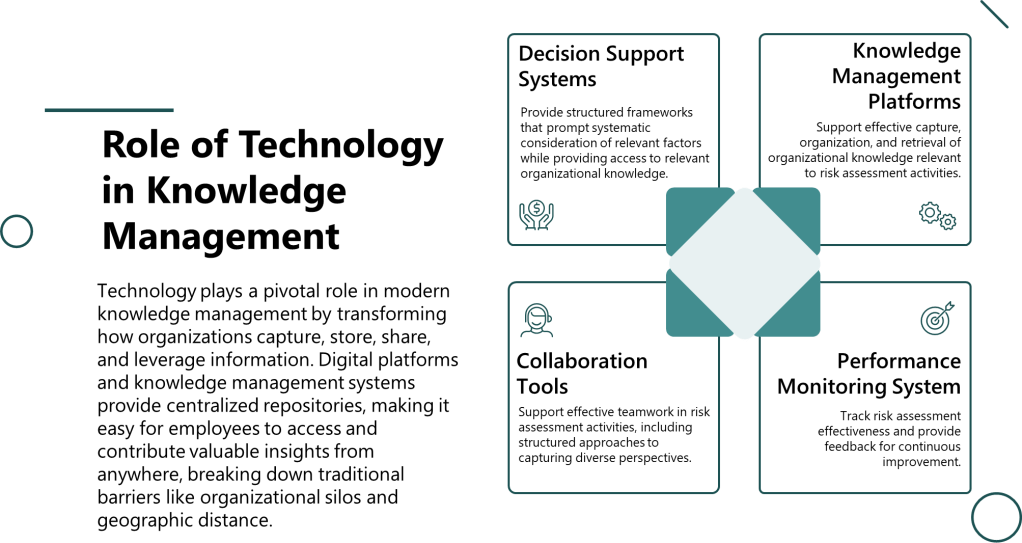
Decision support systems provide structured frameworks that prompt systematic consideration of relevant factors while providing access to relevant organizational knowledge. These systems help teams engage appropriate cognitive processes while avoiding common bias traps.

Knowledge management platforms support effective capture, organization, and retrieval of organizational knowledge relevant to risk assessment activities. Advanced systems can provide intelligent recommendations for relevant expertise, historical assessments, and validated approaches based on assessment context.

Performance monitoring systems track risk assessment effectiveness and provide feedback for continuous improvement. These systems can identify patterns in assessment performance that suggest systematic biases or knowledge gaps requiring attention.

Collaboration tools support effective teamwork in risk assessment activities, including structured approaches to capturing diverse perspectives and managing group decision-making processes to avoid groupthink and other collective biases.

Technology plays a pivotal role in modern knowledge management by transforming how organizations capture, store, share, and leverage information. Digital platforms and knowledge management systems provide centralized repositories, making it easy for employees to access and contribute valuable insights from anywhere, breaking down traditional barriers like organizational silos and geographic distance.

Organizational Culture Development

Leadership commitment demonstrates visible support for systematic, evidence-based approaches to risk assessment. This includes providing adequate time and resources for thorough analysis, recognizing effective risk assessment performance, and holding personnel accountable for systematic approaches to decision-making.

Psychological safety creates environments where personnel feel comfortable challenging assumptions, raising concerns about potential risks, and admitting uncertainty or knowledge limitations. This requires organizational cultures that treat questioning and systematic analysis as valuable contributions rather than obstacles to efficiency.

Learning orientation emphasizes continuous improvement in risk assessment capabilities rather than simply achieving compliance with requirements. Organizations with strong learning cultures systematically analyze assessment performance to identify improvement opportunities and implement enhancements in methodologies and capabilities.

Knowledge sharing cultures actively promote the capture and dissemination of expertise relevant to risk assessment activities. This includes recognition systems that reward knowledge sharing, systematic approaches to capturing lessons learned, and integration of knowledge management activities with performance evaluation and career development.

Conducting a Knowledge Audit for Risk Assessment

Organizations beginning this journey should start with a systematic knowledge audit that identifies potential vulnerabilities in expertise availability and access. This audit should address several key areas:

Expertise mapping to identify knowledge holders, their specific capabilities, and potential vulnerabilities from personnel changes or workload concentration. This includes both formal expertise documented in job descriptions and informal knowledge that may be critical for effective risk assessment.

Knowledge accessibility assessment to evaluate how effectively relevant knowledge can be accessed when needed for risk assessment activities. This includes both formal systems such as databases and informal networks that provide access to specialized expertise.

Knowledge quality evaluation to assess the currency, accuracy, and completeness of knowledge used to support risk assessment decisions. This includes identifying areas where assumptions may be outdated or where knowledge gaps may compromise assessment effectiveness.

Cognitive bias vulnerability assessment to identify situations where systematic biases are most likely to affect risk assessment conclusions. This includes analyzing past assessment performance to identify patterns that suggest bias effects and evaluating current processes for bias mitigation effectiveness.

Designing Bias-Resistant Risk Assessment Processes

Structured assessment protocols should incorporate specific checkpoints and requirements designed to counter known cognitive biases. This includes mandatory consideration of alternative explanations, requirements for external validation of conclusions, and systematic approaches to challenging preferred solutions.

Team composition guidelines should ensure appropriate cognitive diversity while maintaining technical competence. This includes balancing experience levels, functional backgrounds, and thinking styles to maximize the likelihood of identifying diverse perspectives on risk assessment challenges.

Evidence requirements should specify the types and quality of information required to support different types of risk assessment conclusions. This includes guidelines for evaluating evidence quality, addressing uncertainty, and documenting limitations in available information.

Review and validation processes should provide systematic quality checks on risk assessment conclusions while identifying potential bias effects. This includes independent review requirements, structured approaches to challenging conclusions, and systematic tracking of assessment performance over time.

Building Knowledge-Enabled Decision Making

Integration strategies should systematically connect knowledge management activities with risk assessment processes. This includes providing risk assessment teams with structured access to relevant organizational knowledge and ensuring that assessment conclusions contribute to organizational learning.

Technology selection should prioritize systems that enhance rather than replace human judgment while providing effective support for systematic decision-making processes. This includes careful evaluation of user interface design, integration with existing workflows, and alignment with organizational culture and capabilities.

Performance measurement should track both risk assessment effectiveness and knowledge management performance to ensure that both systems contribute effectively to organizational objectives. This includes metrics for knowledge quality, accessibility, and utilization as well as traditional risk assessment performance indicators.

Continuous improvement processes should systematically analyze performance in both risk assessment and knowledge management to identify enhancement opportunities and implement improvements in methodologies, training, and support systems.

Excellence Through Systematic Cognitive Development

The journey toward cognitive excellence in pharmaceutical risk management requires fundamental recognition that human cognitive limitations are not weaknesses to be overcome through training alone, but systematic realities that must be addressed through thoughtful system design. The PIC/S observations of unjustified assumptions, incomplete risk identification, and inappropriate tool application represent predictable patterns that emerge when sophisticated professionals operate without systematic support for cognitive excellence.

Excellence in this context means designing quality systems that work with human cognitive capabilities rather than against them. This requires integrating knowledge management principles with cognitive science insights to create environments where systematic, evidence-based decision-making becomes natural and sustainable. It means moving beyond hope that awareness will overcome bias toward systematic implementation of structures, processes, and cultures that promote cognitive rigor.

Elegance lies in recognizing that the most sophisticated risk assessment methodologies are only as effective as the cognitive processes that apply them. True elegance in quality system design comes from seamlessly integrating technical excellence with cognitive support, creating systems where the right decisions emerge naturally from the intersection of human expertise and systematic process.

Organizations that successfully implement these approaches will develop competitive advantages that extend far beyond regulatory compliance. They will build capabilities in systematic decision-making that improve performance across all aspects of pharmaceutical quality management. They will create resilient systems that can adapt to changing conditions while maintaining consistent effectiveness. Most importantly, they will develop cultures of excellence that attract and retain exceptional talent while continuously improving their capabilities.

The framework presented here provides a roadmap for this transformation, but each organization must adapt these principles to their specific context, culture, and capabilities. The maturity model offers a path for progressive development that builds capabilities systematically while delivering value at each stage of the journey.

As we face increasingly complex pharmaceutical manufacturing challenges and evolving regulatory expectations, the organizations that invest in systematic cognitive excellence will be best positioned to protect patient safety while achieving operational excellence. The choice is not whether to address these cognitive foundations of quality management, but how quickly and effectively we can build the capabilities required for sustained success in an increasingly demanding environment.

The cognitive foundations of pharmaceutical quality excellence represent both opportunity and imperative. The opportunity lies in developing systematic capabilities that transform good intentions into consistent results. The imperative comes from recognizing that patient safety depends not just on our technical knowledge and regulatory compliance, but on our ability to think clearly and systematically about complex risks in an uncertain world.

Reflective Questions for Implementation

How might you assess your organization’s current vulnerability to the three PIC/S observations in your risk management practices? What patterns in past risk assessment performance might indicate systematic cognitive biases affecting your decision-making processes?

Where does critical knowledge for risk assessment currently reside in your organization, and how accessible is it when decisions must be made? What knowledge audit approach would be most valuable for identifying vulnerabilities in your current risk management capabilities?

Which level of the cognitive bias mitigation maturity model best describes your organization’s current state, and what specific capabilities would be required to advance to the next level? How might you begin building these capabilities while maintaining current operational effectiveness?

What systematic changes in training, process design, and cultural expectations would be required to embed cognitive excellence into your quality culture? How would you measure progress in building these capabilities and demonstrate their value to organizational leadership?

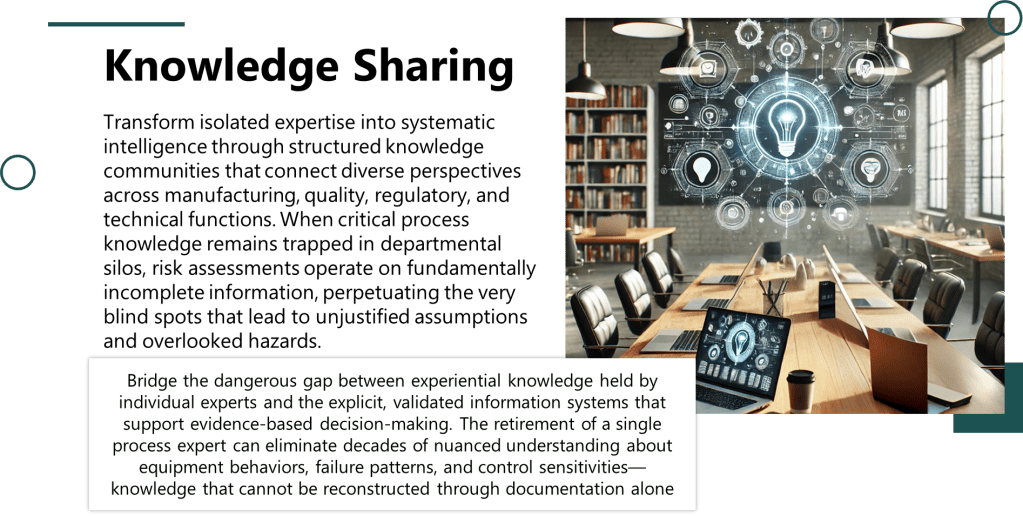
Transform isolated expertise into systematic intelligence through structured knowledge communities that connect diverse perspectives across manufacturing, quality, regulatory, and technical functions. When critical process knowledge remains trapped in departmental silos, risk assessments operate on fundamentally incomplete information, perpetuating the very blind spots that lead to unjustified assumptions and overlooked hazards.

Bridge the dangerous gap between experiential knowledge held by individual experts and the explicit, validated information systems that support evidence-based decision-making. The retirement of a single process expert can eliminate decades of nuanced understanding about equipment behaviors, failure patterns, and control sensitivities—knowledge that cannot be reconstructed through documentation alone

Understanding Some International Organizations – ICH, ICMRA and PIC/S

The ICH, ICMRA, and PIC/S are three important international organizations in the pharmaceutical regulatory space that folks should pay attention to and understand how they shape our profession’s future.

International Council for Harmonisation of Technical Requirements for Pharmaceuticals for Human Use (ICH)

The International Council for Harmonisation of Technical Requirements for Pharmaceuticals for Human Use (ICH) is a global initiative that brings together regulatory authorities and the pharmaceutical industry to discuss and establish common guidelines and standards for developing, registering, and post-approval pharmaceutical products.

History and Evolution

  • Establishment: ICH was established in 1990 by the regulatory authorities and pharmaceutical industry associations from Europe, Japan, and the United States. The goal was to harmonize the regulatory requirements for pharmaceutical product registration across these regions.
  • Reformation: In 2015, ICH was reformed and became a legal entity under Swiss law, transforming from the International Conference on Harmonisation to the International Council for Harmonisation. This change aimed to create a more robust and transparent governance structure and to expand its global reach.

Objectives and Goals

  • Harmonization: The primary goal of ICH is to achieve greater harmonization worldwide to ensure that safe, effective, and high-quality medicines are developed and registered in the most resource-efficient manner.
  • Efficiency: By harmonizing technical requirements, ICH aims to improve the efficiency of the drug development and registration process, reduce duplication of clinical trials, and minimize the use of animal testing without compromising safety and effectiveness.

Structure and Governance

  • ICH Assembly: This is the overarching governing body, which includes all members and observers. It adopts decisions on guidelines, membership, work plans, and budgets.
  • ICH Management Committee: This committee oversees the operational aspects, including administrative and financial matters and working group activities.
  • MedDRA Management Committee: This committee manages the Medical Dictionary for Regulatory Activities (MedDRA), standardizing medical terminology for adverse event reporting and clinical trial data.
  • ICH Secretariat: Handles the day-to-day management and coordination of ICH activities.

Guidelines and Categories

ICH guidelines are categorized into four main areas:

  • Quality: Covers topics such as stability testing, analytical validation, and good manufacturing practices (GMP).
  • Safety: Includes guidelines on genotoxicity, reproductive toxicity, and other safety evaluations.
  • Efficacy: Focuses on the design, conduct, safety, and reporting of clinical trials, including novel drug classes and pharmacogenetics.
  • Multidisciplinary: Encompasses cross-cutting topics like the Common Technical Document (CTD) and electronic standards for regulatory information transfer.

Global Impact and Implementation

  • Membership: ICH includes regulatory authorities and industry associations from around the world. It currently has 20 members and 36 observers.
  • Implementation: Regulatory members are committed to adopting and implementing ICH guidelines within their jurisdictions, ensuring consistent regulatory standards globally.

Key Activities

  • Guideline Development: ICH develops harmonized guidelines through a consensus-based process involving regulatory and industry experts.
  • Training and Support: Provide training materials and support to facilitate the consistent implementation of guidelines across different regions.

The ICH plays a crucial role in the global pharmaceutical regulatory landscape by promoting harmonized standards, improving the efficiency of drug development, and ensuring the safety and efficacy of medicines worldwide.

International Coalition of Medicines Regulatory Authorities (ICMRA)

The International Coalition of Medicines Regulatory Authorities (ICMRA) is a voluntary, executive-level, strategic coordinating, advocacy, and leadership entity. It brings together heads of national and regional medicines regulatory authorities worldwide to address global and emerging human medicine regulatory and safety challenges.

Objectives and Goals

  • Global Coordination: ICMRA provides a global architecture to support enhanced communication, information sharing, crisis response, and addressing regulatory science issues.
  • Strategic Direction: It offers direction for areas and activities common to many regulatory authorities’ missions and identifies areas for potential synergies.
  • Leveraging Resources: ICMRA leverages existing initiatives, enablers, and resources to maximize the global regulatory impact wherever possible.

Membership

  • Voluntary Participation: Membership is voluntary and open to all medicines regulatory authorities. It includes prominent entities such as the European Medicines Agency (EMA), the U.S. Food and Drug Administration (FDA), and many others worldwide.
  • Global Representation: The coalition includes regulatory authorities from various regions, with the World Health Organization (WHO) participating as an observer.

Key Activities and Projects

  • Antimicrobial Resistance (AMR): Developing a coordinated global approach to tackle AMR.
  • COVID-19 Response: During the COVID-19 pandemic, ICMRA has been pivotal in expediting and streamlining the development, authorization, and availability of COVID-19 treatments and vaccines worldwide.
  • Innovation and Pharmacovigilance: Ongoing investigations and case studies relating to emerging regulatory challenges and working on real-world evidence, adverse event reporting, and vaccine confidence.
  • Supply Chain Integrity: Ensuring the integrity of the global supply chain for medicines.

Strategic Importance

  • Enhanced Collaboration: ICMRA fosters international collaboration among medicine regulatory authorities to ensure the safety, quality, and efficacy of medicinal products globally.
  • Regulatory Agility: The coalition promotes regulatory agility and rapid response to global health emergencies, ensuring patients have timely access to safe and effective medical products.

The ICMRA plays a crucial role in the global regulatory landscape by enhancing communication and cooperation among medicines regulatory authorities, addressing shared challenges, and promoting the safety and efficacy of medicinal products worldwide.

Pharmaceutical Inspection Co-operation Scheme.

PIC/S stands for the Pharmaceutical Inspection Co-operation Scheme, a non-binding, informal co-operative arrangement between regulatory authorities in Good Manufacturing Practice (GMP) of medicinal products for human or veterinary use. Its main purpose is to lead the international development, implementation, and maintenance of harmonized GMP standards and quality systems of inspectorates in the pharmaceutical field.

History: PIC/S was established in 1995 as an extension to the Pharmaceutical Inspection Convention (PIC) of 1970. It was created to overcome legal limitations that prevented new countries from joining the original PIC due to incompatibilities with European law.

Membership: PIC/S is open to any regulatory authority with a comparable GMP inspection system. As of 2023, it comprises 56 participating authorities worldwide, including Europe, Africa, America, Asia, and Australasia.

Structure: PIC/S operates as an association under Swiss law, registered in Geneva, Switzerland. It has a committee, an executive bureau, and various working groups.

Relationship with Other Organizations: PIC/S works closely with other international bodies, including the European Medicines Agency (EMA), to promote GMP harmonization and share resources.

Objectives

  • Harmonizing inspection procedures worldwide
  • Providing training opportunities for inspectors
  • Developing common standards in GMP
  • Facilitating cooperation between competent authorities and international organizations

Activities

    • Developing and promoting harmonized GMP standards and guidance documents
    • Training competent authorities, particularly inspectors
    • Assessing and reassessing inspectorates
    • Facilitating networking among regulatory authorities

    Benefits

      • Ensures high standards among members
      • Provides training and networking opportunities
      • May facilitate pharmaceutical exports indirectly
      • Increases confidence in medicines manufactured in member countries

      PIC/S plays a crucial role in global pharmaceutical regulation by promoting harmonized standards, facilitating cooperation between regulatory authorities, and working towards ensuring the quality and safety of medicinal products worldwide.

      The Three in Overview

      AspectICHICMRAPIC/S
      Full NameInternational Council for Harmonisation of Technical Requirements for Pharmaceuticals for Human UseInternational Coalition of Medicines Regulatory AuthoritiesPharmaceutical Inspection Co-operation Scheme
      Established1990 (reformed in 2015)20131995
      Primary FocusHarmonization of technical requirements for drug development and registrationStrategic coordination and leadership in global human medicine regulationHarmonization of Good Manufacturing Practice (GMP) standards and inspections
      Main ObjectivesDevelop harmonized guidelines for drug development, registration, and post-approvalEnhance communication, information sharing, and crisis response among regulatorsDevelop common GMP standards and train inspectors
      Membership20 members, 36 observers (regulatory authorities and industry associations)Heads of medicines regulatory authorities worldwideGuideline development, training, and implementation support
      ScopeGlobal, with emphasis on technical aspects of drug developmentGlobal, focusing on high-level strategic issuesGlobal, concentrating on GMP and quality systems
      Key ActivitiesGuideline development, training, implementation supportStrategic direction, crisis response, addressing emerging challengesInspector training, assessment of inspectorates, developing GMP guidance
      Legal StatusLegal entity under Swiss lawVoluntary coalitionNon-binding, informal co-operative arrangement
      Industry InvolvementDirect involvement of pharmaceutical industry associationsLimited direct industry involvementNo direct industry involvement
      Main OutputHarmonized guidelines (Quality, Safety, Efficacy, Multidisciplinary)Strategic initiatives, position papers, statementsGMP guidelines, inspection reports, training programs

      This table highlights the distinct roles and focuses of these three important international pharmaceutical regulatory organizations. While they all contribute to global harmonization and cooperation in pharmaceutical regulation, each has a unique emphasis:

      • ICH primarily develops technical guidelines for drug development and registration.
      • ICMRA focuses on high-level strategic coordination among regulatory authorities.
      • PIC/S concentrates on harmonizing GMP standards and inspection practices.

      Their complementary roles contribute to a more cohesive global regulatory environment for pharmaceuticals.

      How to Monitor

      OrganizationWhat to MonitorHow to MonitorFrequency
      ICMRA– COVID-19 updates and guidance
      – Statements on regulatory issues
      – Reports on emerging topics (e.g., AI, RWE)
      – Strategic meetings and workshops
      – Check ICMRA website regularly
      – Subscribe to ICMRA newsletter
      – Follow ICMRA on social media
      – Attend public workshops when possible
      Monthly
      ICH– New and updated guidelines
      – Ongoing harmonization efforts
      – Implementation status of guidelines
      – Training materials and events
      – Monitor ICH website for updates
      – Subscribe to ICH news alerts
      – Participate in public consultations
      – Attend ICH training programs
      Bi-weekly
      PIC/S– GMP guide updates
      – New guidance documents
      – Training events and seminars
      – Inspection trends and focus areas
      – Check PIC/S website regularly
      – Subscribe to PIC/S newsletter
      – Review annual reports
      – Participate in PIC/S seminars if eligible
      Monthly

      Key points for monitoring:

      • Set up automated alerts or RSS feeds where available
      • Create a calendar reminder for regular check-ins on each organization’s website
      • Collaborate with regulatory affairs colleagues to share insights and updates
      • Implement a system to disseminate relevant information within your organization
      • Consider joining industry associations that actively engage with these organizations

      Key Links

      Building a Part 11/Annex 11 Course

      I have realized I need to build a Part 11 and Annex 11 course. I’ve evaluated some external offerings and decided they really lack that applicability layer, which I am going to focus on.

      Here are my draft learning objectives.

      21 CFR Part 11 Learning Objectives

      1. Understanding Regulatory Focus: Understand the current regulatory focus on data integrity and relevant regulatory observations.
      2. FDA Requirements: Learn the detailed requirements within Part 11 for electronic records, electronic signatures, and open systems.
      3. Implementation: Understand how to implement the principles of 21 CFR Part 11 in both computer hardware and software systems used in manufacturing, QA, regulatory, and process control.
      4. Compliance: Learn to meet the 21 CFR Part 11 requirements, including the USFDA interpretation in the Scope and Application Guidance.
      5. Risk Management: Apply the current industry risk-based good practice approach to compliant electronic records and signatures.
      6. Practical Examples: Review practical examples covering the implementation of FDA requirements.
      7. Data Integrity: Understand the need for data integrity throughout the system and data life cycles and how to maintain it.
      8. Cloud Computing and Mobile Applications: Learn approaches to cloud computing and mobile applications in the GxP environment.

      EMA Annex 11 Learning Objectives

      1. General Guidance: Understand the general guidance on managing risks, personnel responsibilities, and working with third-party suppliers and service providers.
      2. Validation: Learn best practices for validation and what should be included in validation documentation.
      3. Operational Phase: During the operational phase, gain knowledge on data management, security, and risk minimization for computerized systems.
      4. Electronic Signatures: Understand the requirements for electronic signatures and how they should be permanently linked to the respective record, including time and date.
      5. Audit Trails: Learn about the implementation and review of audit trails to ensure data integrity.
      6. Security Access: Understand the requirements for security access to protect electronic records and electronic signatures.
      7. Data Governance: Evaluate the requirements for a robust data governance system.
      8. Compliance with EU Regulations: Learn how to align with Annex 11 to ensure compliance with related EU regulations.

      Course Outline: 21 CFR Part 11 and EMA Annex 11 for IT Professionals

      Module 1: Introduction and Regulatory Overview

      • History and background of 21 CFR Part 11 and EMA Annex 11
      • Purpose and scope of the regulations
      • Applicability to electronic records and electronic signatures
      • Regulatory bodies and enforcement

      Module 2: 21 CFR Part 11 Requirements

      • Subpart A: General Provisions
      • Definitions of key terms
      • Implementation and scope
      • Subpart B: Electronic Records
      • Controls for closed and open systems
      • Audit trails
      • Operational and device checks
      • Authority checks
      • Record retention and availability
      • Subpart C: Electronic Signatures
      • General requirements
      • Electronic signature components and controls
      • Identification codes and passwords

      Module 3: EMA Annex 11 Requirements

      • General requirements
      • Risk management
      • Personnel roles and responsibilities
      • Suppliers and service providers
      • Project phase
      • User requirements and specifications
      • System design and development
      • System validation
      • Testing and release management
      • Operational phase
      • Data governance and integrity
      • Audit trails and change control
      • Periodic evaluations
      • Security measures
      • Electronic signatures
      • Business continuity planning

      Module 4: PIC/S Data Integrity Requirements

      • Data Governance System
        • Structure and control of the Quality Management System (QMS)
        • Policies related to organizational values, quality, staff conduct, and ethics
      • Organizational Influences
        • Roles and responsibilities for data integrity
        • Training and awareness programs
      • General Data Integrity Principles
        • ALCOA+ principles (Attributable, Legible, Contemporaneous, Original, Accurate, Complete, Consistent, Enduring, and Available)
        • Data lifecycle management
      • Specific Considerations for Computerized Systems
        • Qualification and validation of computerized systems
        • System security and access controls
        • Audit trails and data review
        • Management of hybrid systems
      • Outsourced Activities
        • Data integrity considerations for third-party suppliers
        • Contractual agreements and oversight
      • Regulatory Actions and Remediation
        • Responding to data integrity issues
        • Remediation strategies and corrective actions
      • Periodic System Evaluation
        • Regular reviews and re-validation
        • Risk-based approach to system updates and maintenance

      Module 5: Compliance Strategies and Best Practices

      • Interpreting regulatory guidance documents
      • Conducting risk assessments
      • Our validation approach
      • Leveraging suppliers and third-party service providers
      • Implementing audit trails and electronic signatures
      • Data integrity and security controls
      • Change and configuration management
      • Training and documentation requirements

      Module 6: Case Studies and Industry Examples

      • Review of FDA warning letters and 483 observations
      • Lessons learned from industry compliance initiatives
      • Practical examples of system validation and audits

      Module 7: Future Trends and Developments

      • Regulatory updates and revisions
      • Impact of new technologies (AI, cloud, etc.)
      • Harmonization efforts between global regulations
      • Continuous compliance monitoring

      The course will include interactive elements such as hands-on exercises, quizzes, and group discussions to reinforce the learning objectives. The course will provide practical insights for IT professionals by focusing on real-world examples from our company.

      The Audit Trail and Data Integrity

      Requirement

      Description

      Attributable (Traceable)

      • Each audit trail entry must be attributable to the individual responsible for the direct data input so all changes or creation of data with the persons making those changes. When using a user’s unique ID, this must identify an individual pers on.
      • Each audit trail must be linked to the relevant record throughout the data life cycle.

      Legible

      • The system should be able to print or provide an electronic copy of the audit trail.
      • The audit trail must be available in a meaningful format when. viewed in the system or as hardcopy.

      Contemporaneous

      • Each audit trail entry must be date- and time-stamped according to a controlled clock which cannot be altered. The time should either be based on central server time or a local time, so long as it is clear in which time zone the entry was performed.

      Original

      • The audit trail should retain the dynamic functionalities found in the computerized system, included search functionality to facilitate audit trail review activities.

      Accurate

      • Audit trail functionality must be verified to ensure the data written to the audit trail equals the data entered or system generated.
      • Audit trail data must be stored in a secure manner and users cannot have the ability to amend, delete, or switch off the audit trail. Where a system administrator amends, or switches off the audit trail, a record of that action must be retained.

      Complete

      • The audit trail entries must be automatically captured by the computerized system whenever an electronic record is created, modified, or deleted.
      • Audit trails, at minimum, must record all end user initiated processes related to critical data. The following parameters must be included:
        • The identity of the person performing the action.
        • In the case of a change or deletion, the detail of the change or deletion, and a record of the original entry.
        • The reason for any GxP change or deletion.
        • The time and date when the action was performed.

      Consistent

      • Audit trails are used to review, detect, report, and address data integrity issues.
      • Audit trail reviewers must have appropriate training, system knowledge and knowledge of the process to perform the audit trail review. The review of the relevant audit trails must be documented.
      • Audit trail discrepancies must be addressed, investigated, and escalated to JEB management and national authorities, as necessary.

      Enduring

      • The audit trail must be retained for the same duration as the associated electronic record.

      Available

      • The audit trail must be available for review at any time by inspectors and auditors during the required retention period.
      • The audit trail must be accessible in a human readable format.

      21CFR Part 11 Requirements

      Definition: An audit trail is a secure, computer-generated, time-stamped electronic record that allows for the reconstruction of events related to the creation, modification, and deletion of an electronic record.

      Requirements:

      • Availability: Audit trails must be easily accessible for review and copying by the FDA during inspections.
      • Automation: Entries must be automatically captured by the system without manual intervention.
      • Components: Each entry must include a timestamp, user ID, original and new values, and reasons for changes where applicable.
      • Security: Audit trail data must be securely stored and not accessible for editing by users

      EMA Annex 11 (Eudralex Volume 4) Requirements

      Definition: Audit trails are records of all GMP-relevant changes and deletions, created by the system to ensure traceability and accountability.

      Requirements:

      • Risk-Based Approach: Building audit trails into the system for all GMP-relevant changes and deletions should be considered based on a risk assessment.
      • Documentation: The reasons for changes or deletions must be documented.
      • Review: Audit trails must be available, convertible into a generally readable form, and regularly reviewed.
      • Validation: The audit trail functionality must be validated to ensure it captures all necessary data accurately and securely.

      Requirements from PIC/S GMP Data Integrity Guidance

      Definition: Audit trails are metadata recorded about critical information such as changes or deletions of GMP/GDP relevant data to enable the reconstruction of activities.

      Requirements:

      • Review: Critical audit trails related to each operation should be independently reviewed with all other records related to the operation, especially before batch release.
      • Documentation: Significant deviations found during the audit trail review must be fully investigated and documented.