May FDA Regulate Medical Devices As If They Were Drugs?

FDA’s position that it may regulate device as drugs is plainly not authorized under the FDCA. To the contrary, if a product is within the definition of a device, Congress has decreed that it must be regulated under the device authorities.  

— Read on www.fdalawblog.net/2018/11/may-fda-regulate-medical-devices-as-if-they-were-drugs/

Interesting ideas here. The boundaries between a device and a drug are becoming more and more blurred, and frankly I am not sure if this is the right way to move forward, but this is good reading.

India releases draft guideline on Good Distribution Practices (GDP)

The Indian regulatory authority CDSCO (Central Drugs Standard Control Organization) has published a 21-page draft on Good Distribution Practices (GDP) for pharmaceutical products.

The draft covers topics that are well aligned to other good distribution practices, and is aligned to the ICH framework.

It is good to see India moving ahead in adopting best practices. This is a huge market, a growing source of production and it will be a huge center of innovation in the near future. It is important for CDSCO to continue to push forward in a better regulatory regime and to tighten their quality practices.

The guidance contains some of my favorite themes of GDP (and other pharma) practices, including::

  • Each company must hold one person responsible for ensuring a quality system is implemented and maintained.
  • All distributors of pharmaceutical products have to establish and maintain a quality system supported by a documented quality system.
  • Senior management has to ensure that all parts of the quality system are adequately resourced with competent personnel and suitable and sufficient premises, equipment and facilities.

The responsible person/quality person model is one of the more problematic aspects of our field. Yes, there is someone who is responsible for quality, its called the officers of the company. But this idea that one person sits on the top of the pyramid and makes ALL the best decisions is a problematic thing that regulations tend to enshrine.


Change Control- Leveraging regulatory inspection data

The Pfizer McPherson site has been under a great deal of regulatory scrutiny, and as a result there is a lot we can learn from their findings.

In July the MHRA stated the following:
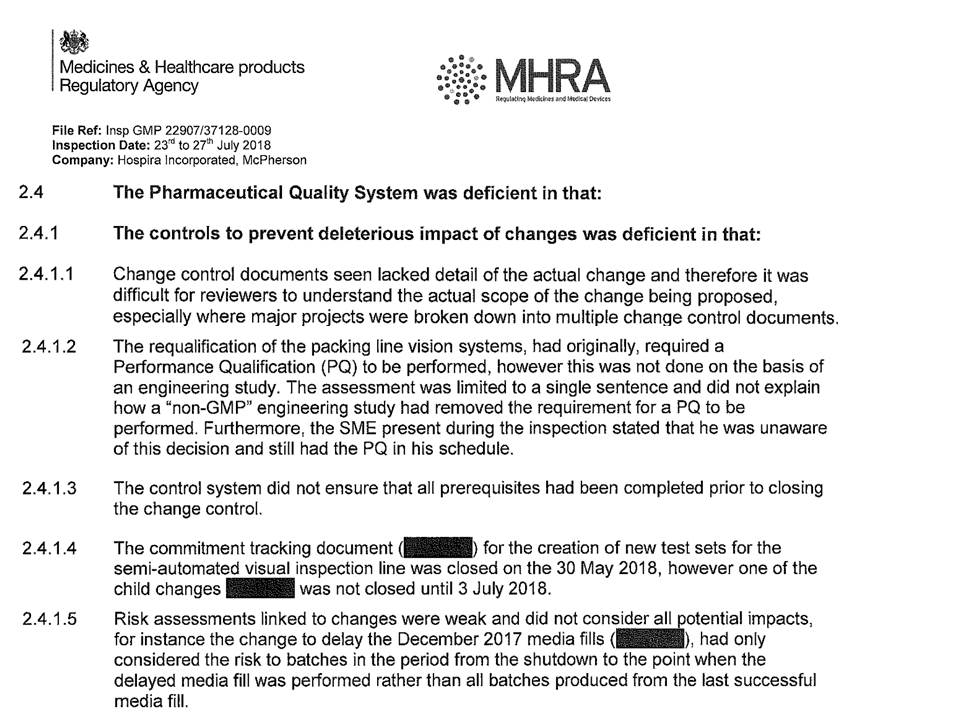
Hospira McPherson Changes

There is a lot to unpack here, and for most of it I can pull up some previous postings to start with:

Breaking down change controls is both a necessity and a difficulty. I talked about the need for a change strategy when breaking up changes. This connective tissue will help with issues like 2.4.1.1 above and can also serve as a good playbook for discussing the changes with an inspector. This is especially important when you find you need to implement related changes at different times. I talked about the various implementation dates in some detail.

Risk assessments are only getting more important, and for a company with international distribution it is important to consider the risks inherent to your regulatory strategy and distribution strategy and mitigate.
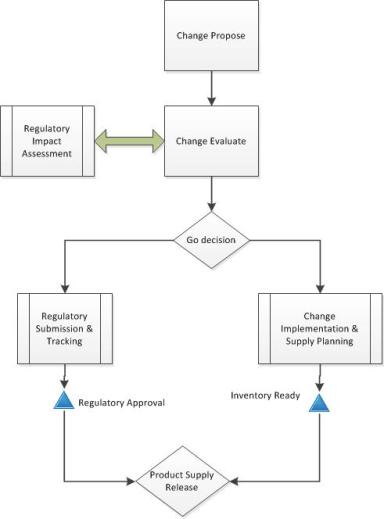
regulatory and change

If you have changes that will have long tails of regulatory approvals, then your change control needs to have the right controls to ensure appropriate and safe supply.

Build your actions to address all risks and impacts and ensure they are appropriately carried through.
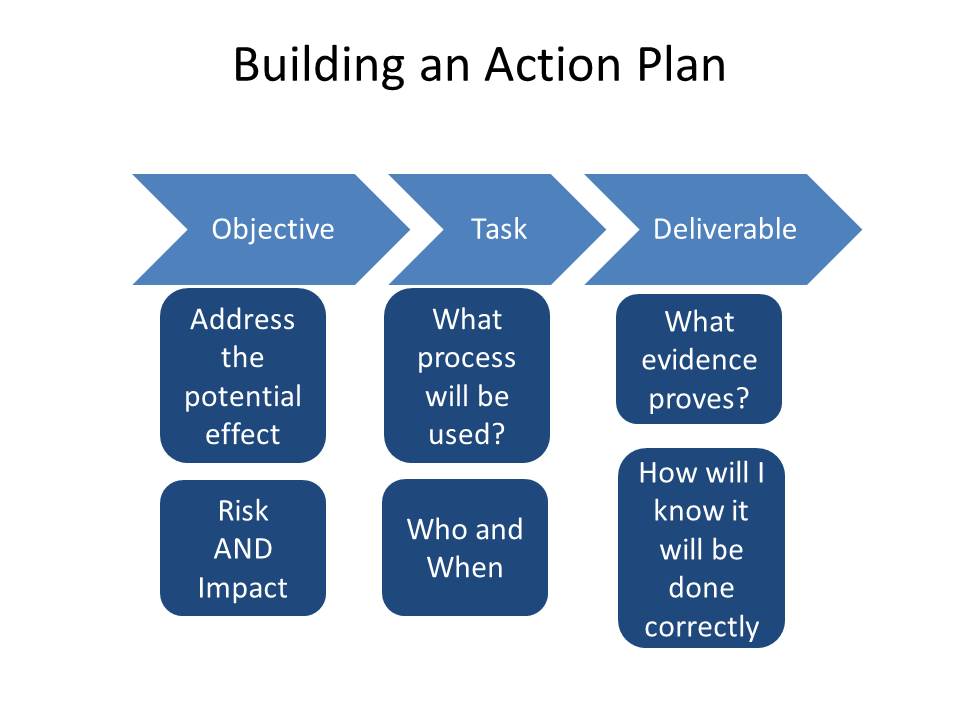
action items

Finally ensure your change control process has a way to revise the plan and ensure all stakeholders are included in the decisions.

 

FDA issues new guidance on Post Approval Changes

This past week the FDA issued a draft guidance “Post Approval Changes to Drug Substances” from the Center for Drug Evaluation and Research on post-approval changes for drug substances to provide clarity to holders of drug master files and holders of new and generic drug applications on which reporting category manufacturing changes fall into as well as the information required to support these changes.

Like any guidance this is supposed to “describe the Agency’s current thinking on a topic” and in this case this is a pretty important guidance as it is the first on the subject of change management published after the draft of Q12. It also clearly builds on the concepts of Q11 and is the first time the agency has published a guidance on drug substance post approval changes.

The guidance covers changes to facility; scale and equipment changes; specification changes to starting materials; synthetic manufacturing process changes; and, changes to the container closure systems for the drug substance.

It uses the traditional breakdown of major changes (prior approval supplement category), Moderate changes (changes-being-effected-30 (CBE-30) category) and Minor changes (annual report).

The guidance provides some solid requirements for risk assessments, and requires the risk assessment be included with the filing of change. This will require some companies to improve their risk management process, and may cause some to question decision making about their internal formulas for level of effort and the formality of risk management.

The deadline for public comment on the draft is Nov. 13. Submit comments to the docket at: https://www.regulations.gov/docket?D=FDA-2018-D-3152.