
Sometimes I feel a bit like Ralph Wolf and Sam Sheepdog.
But most of the time I feel like I’m bonding with my fellow communards. With hopefully a happier ending.
Sometimes I feel a bit like Ralph Wolf and Sam Sheepdog.
But most of the time I feel like I’m bonding with my fellow communards. With hopefully a happier ending.
A RACI chart is a simple matrix used to assign roles and responsibilities for each task, milestone, or decision. By clearly mapping out which roles are involved in each task and at which level, you can eliminate confusion and answer the age-old question, “Who’s doing what?”
RACI is a useful complement to a process map, since it can get into more detailed and specific activities than a high-level process map. Think of a process map at one level of abstraction and RACI as the next level of detail
RACI stands for Responsible, Accountable, Consulted, Informed. Each letter in the acronym represents a level of task responsibility.
RACI’s are best used in procedures as part of the responsibilities section or to start each section in a long procedure.
RACI’s are great tools that can help:
A RACI is a matrix of tasks or deliverables and the roles associated with them.
Each box in the matrix identifies that role’s function in the task
I’m a big fan of adding Supporting, and doing a RASCI. Supporting is very helpful in identifying individuals who provide support services, and often capture indirect accountabilities.
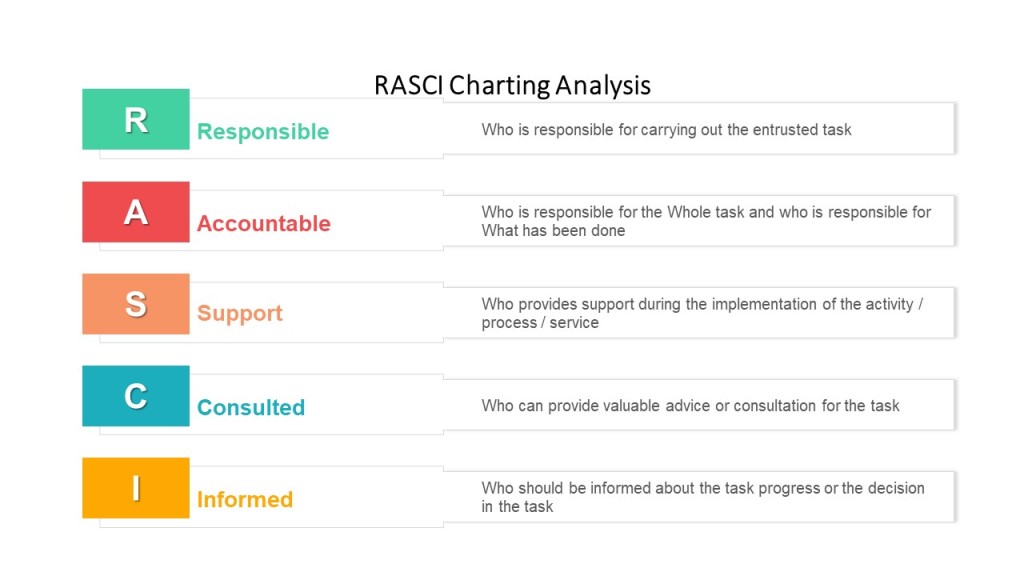
Key point – only one Responsible and one Accountable role for any task or deliverable. In some processes, Responsible and Accountable may be the same role
Follow these 3 steps, using the RACI chart example below as your guide:
Ensure the following:
Some points to consider:
Review the RACI chart vertically to:
Review the RACI chart horizontally to:
Although the RACI is a simple tool, the process of creating it and having it agreed is a political process.
Developing RACI charts surfaces many organizational issues because it confronts the three elements of roles and responsibilities:
| Deviation Creator | Area Responsible | QA | Investigation Team | Site Head | ||
| Take real-time action to minimize and contain the effect of an event | R | A | I | – | – | |
| Assemble cross functional team for Triage | R | A | I | – | – | |
| Determine if the event is a deviation | R | C | A | C | – | |
| Define batch association strategy | C | R | A | I | – | |
| Define Containment | C | R | A | C | – | |
| Create Deviation in eQMS in 24 hr | R | A | I | – | – | |
| Gather Data | C | A/R | C | C | – |
The Outcome Identification Loop asks four questions around a given outcome which can be very valuable in understanding a proposed design, event, or risk.
The four questions are:
| 1 | Who else might this affect? | Stakeholder Question |
| 2 | What else might affect them? | Stakeholder Impact Question |
| 3 | What else might affect this? | System/analysis Design Question |
| 4 | What else might this affect? | Consequence Question? |
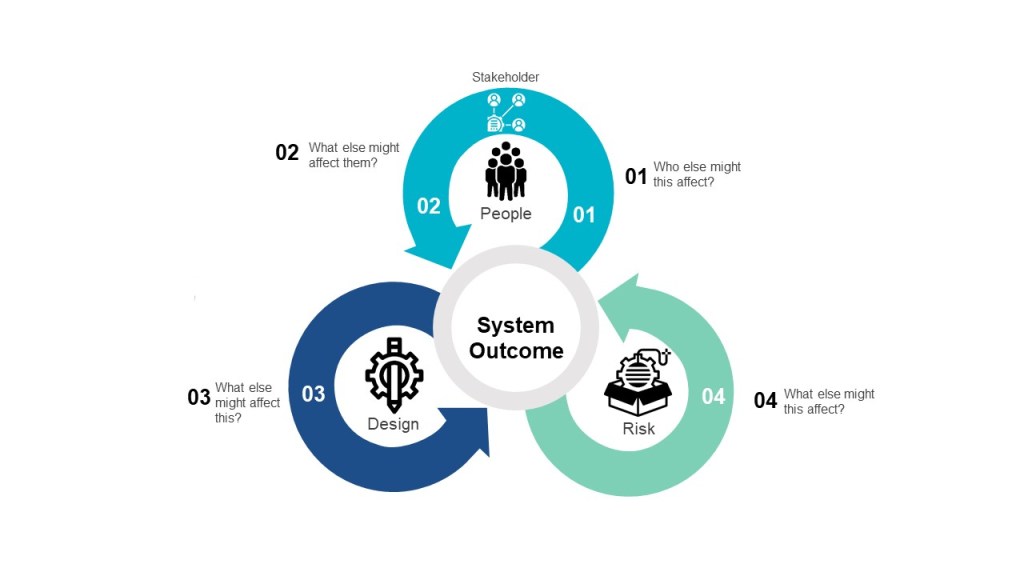
Through answering these questions, outcomes and relationships to further define a central question, and can be used to shape problem-solving, risk mitigation, and process improvement.
Questions 1 “Who else might this affect?’ and 2 “What else might affect them?’ are paired questions from stakeholder identification and analysis techniques.
Question 3 “What else might affect this?” relates to system analysis and design and can be fed by, and lead to, the chains of outcomes elicited using analysis methods, such as process modelling and root cause analysis.
Question 4 “What else might this affect?” considers uncertainty and risk.
These four questions can be iterative. Use them near the beginning to define the problem and then at the end to tie together the entire work.
Recently shred this with a team member and figured it would be of use to someone else.
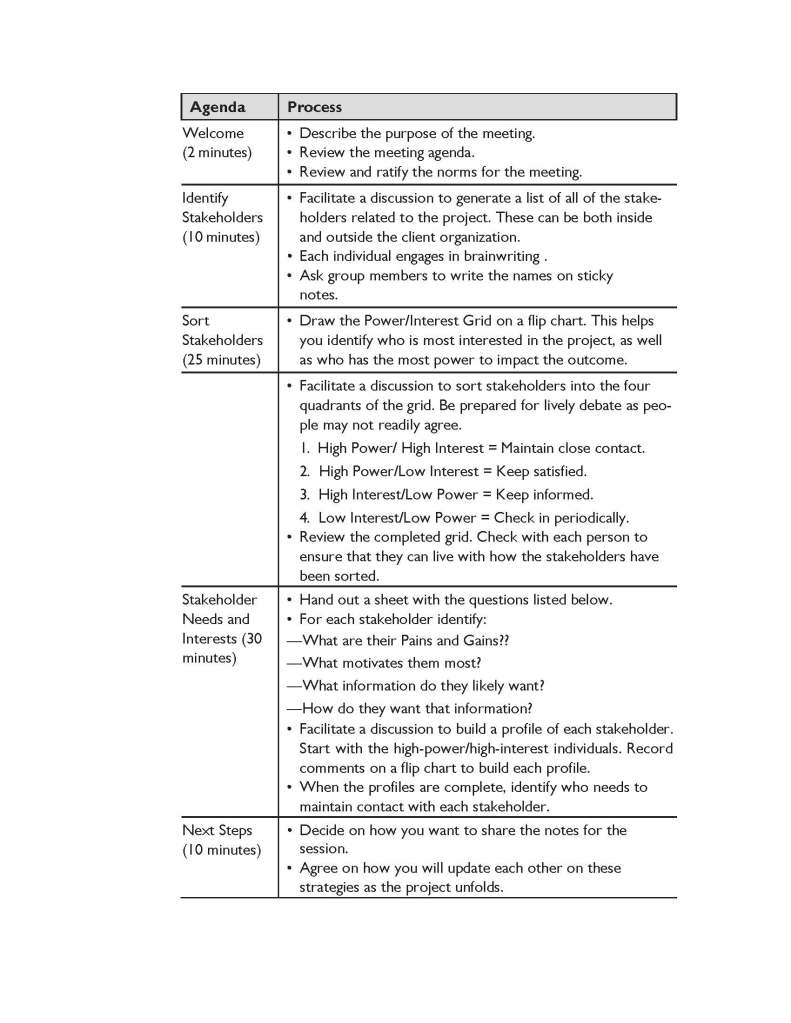
I use a a table like this for recording stakeholders
| Role | Stakeholder Organization (e.g. Department, Function) | Name & Title | Pains | Gains | Impact of Proposal on Role | Importance of securing stakeholder support | RACI |
Every change (and lets be frank, most everything involves change) requires understanding the individuals and groups that will participate or are affected – directly or indirectly.
Stakeholder analysis involves identifying the stakeholders and analyzing their various characteristics. These characteristics can include:
The goal of stakeholder analysis is to choose the best collaboration and communication approaches and to appropriately plan for stakeholder risks.
There are a variety of mechanisms for doing this and then mapping it out.
Start by brainstorming a list of the stakeholders by answering these questions:
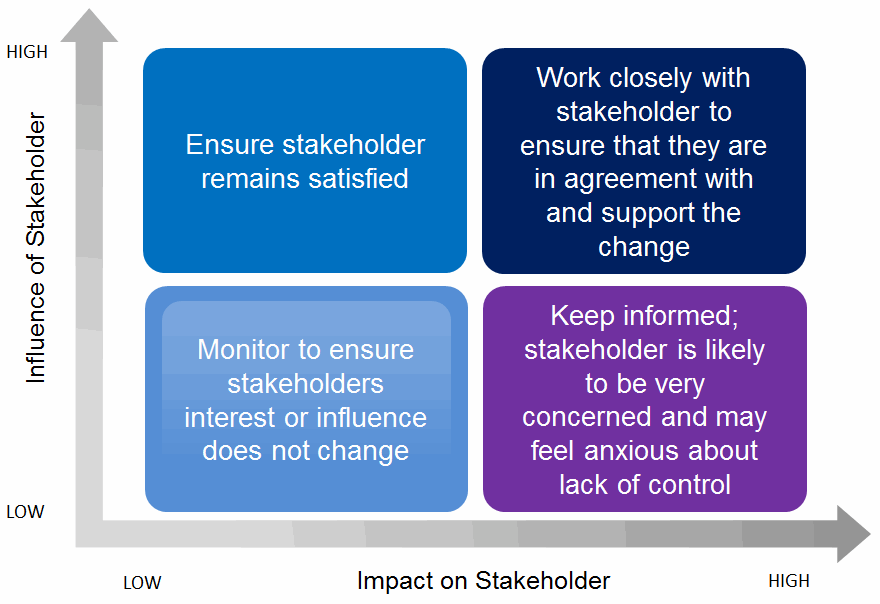
Map these on a stakeholder matrix based on relative power and interest. This should be an iterative process.
Another way to look at stakeholders is though an onion diagram.
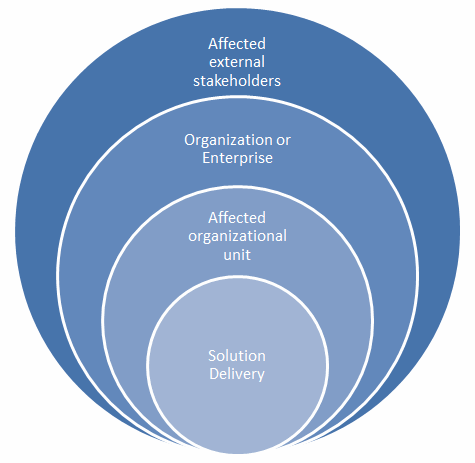
A RACI is another popular way to look at stakeholders.
Once stakeholders are identified is is important to define how communication and engagement will achieved. There is usually no one sized fits all approach and it is important to meet the needs of each stakeholder group to ensure their interest and involvement is maintained. Some considerations include:
Document this in a communication plan, including:
 Investigations of a Dog