Fostering Critical Thinking

As a leader, fostering critical thinking in my team and beyond is a core part of my job. Fostering critical thinking means an approach that encourages open-mindedness, curiosity, and structured problem-solving.

Encourage Questioning and Healthy Debate

It is essential to create an environment where team members feel comfortable questioning assumptions and engaging in constructive debates. Encourage them to ask “why” and explore different perspectives. This open dialogue promotes deeper thinking and prevents groupthink.

Foster a Culture of Curiosity

Inspire your team to ask questions and seek deeper understanding. Role model this behavior by starting meetings with thought-provoking “what if” scenarios or sharing your own curiosities. Celebrate curiosity and reward those who think outside the box.

Assign Stretch Assignments

Provide your team with challenging tasks that push them beyond their comfort zones. These stretch assignments force them to think critically, analyze information from multiple angles, and develop innovative solutions.

Promote Diverse Perspectives

Encourage diversity of thought within your team. Diverse backgrounds, experiences, and viewpoints can challenge assumptions and biases, leading to a more comprehensive understanding and better decision-making.

Engage in Collaborative Problem-Solving

Involve your team in decision-making processes and problem-solving exercises. Techniques like role reversal debates, where team members argue a point they disagree with, can help them understand different perspectives and refine their argumentative skills.

Provide Training and Resources

Offer training sessions on critical thinking techniques, such as SWOT analysis, root cause analysis, and logical fallacies. Equip your team with the tools and frameworks they need to think critically.

Lead by Example

As a leader, model critical thinking behaviors. Discuss your thought processes openly, question your assumptions, and show the value of critical evaluation in real-time decision-making. Your team will be more likely to emulate these habits.

Encourage Continuous Learning

Recommend learning resources, such as courses, articles, and books from diverse fields. Continuous learning can broaden perspectives and foster multifaceted thinking.

Embrace Feedback and Mistakes

Establish feedback loops within the team and create a safe environment where mistakes are treated as learning opportunities. Receiving and giving feedback helps refine understanding and overcome biases.

Implement Role-Playing Scenarios

Use role-playing scenarios to simulate real-world challenges. This helps team members practice critical thinking in a controlled environment, enhancing their ability to apply these skills in actual situations.

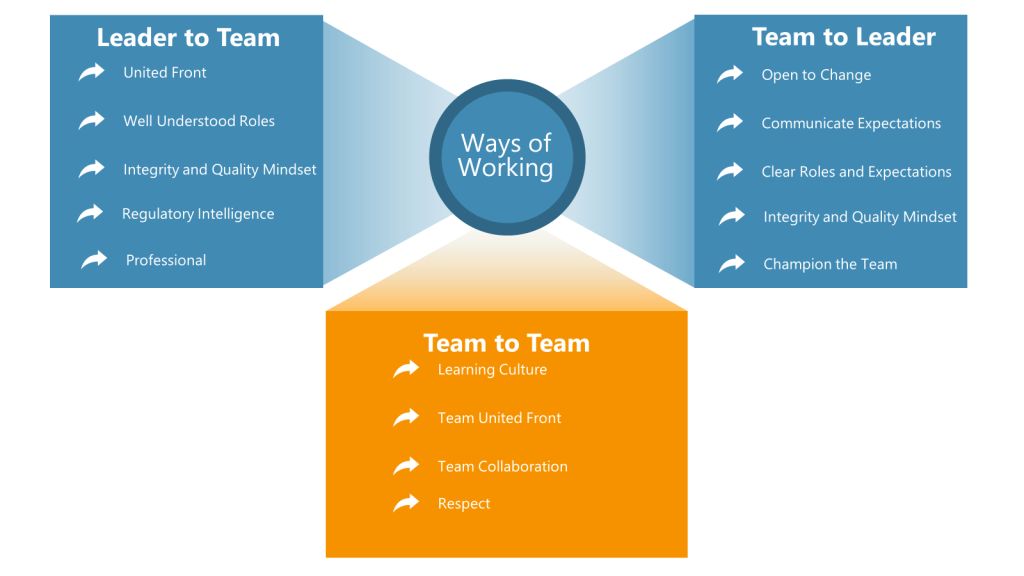
Build Into the Team Charter

Building these expectations into the team charter holds you and your team accountable.
Value: Regulatory Intelligence

Definition: Stay current on industry regulations and guidances. 

Desired Behaviors:

  1. I will dedicate time to reading industry-related guidance and regulation publications related to my job.
  2. I will share publications that I find interesting or applicable to my job with the team
  3. I will present to the team on at least one topic per year to share learnings with the team (or wider organization)

Value: Learning Culture

Definition: Share lessons learned from projects so the team can grow together and remain aligned.  Engage in knowledge-sharing sessions.

Desired Behaviors:

  1. I will share lessons learned from each project with the wider team via the team channel and/or weekly team meeting.
  2. I will encourage team members to openly share their experiences, successes, and challenges without fear of judgement.
  3. I will update RAID log with decisions made by the team.
  4. I will identify possible process improvements and update the process improvement tracker.

Value: Team Collaboration

Definition: Willingness to help teammates when they reach out for input/help

Desired Behaviors:

  1. I will be supportive of my teammate’s requests for assistance
  2. I will engage and offer my SME advice when asked or help identify another SME to assist 
  3. I will not ignore requests for input/help
  4. I will contribute to an environment where teammates can request help

FDA Reorganization

FDA’s Reorganization Approved for Establishing Unified Human Foods Program, New Model for Field Operations and Other Modernization Efforts

The FDA’s reorganization has been unveiled and will be implemented on October 1st. As a total wonk, this is exciting.

There are two major changes:

  • Forming a Human Food Program (HFP) to consolidate a preventive approach will not have much impact on me professionally, but I’m hoping that as a consumer, we see significant dividends from this refocus.
  • ORA is being renamed the Office of Inspections and Investigations (OII) and will focus on inspections, investigations, and imports as its core mission. If nothing else, this will make explaining the structure of the FDA a heck of a lot easier.

Everything else seems to be mostly a lot of shuffling of the deck chairs that will have little impact.

EMA GMP Plans for Regulation Updates

Like one does, I watch upcoming regulations like a hawk. Here are a few of the forthcoming GMP changes coming from the 3-year work plan for the Inspectors Working Group.

DocumentIntended ChangesWhenMy Thoughts
GMP Guide: Chapter 4 (Documentation)Assure data integrity in the context of GMP. This would be in parallel with similar consideration of Annex 11 (Computerised Systems).Q1 2026An update is needed to align with current thinking. Data Integrity has advanced significantly in the last five years, and Chapter 4 could benefit from alignment with the PIC/S guidance.
GMP Guide: Annex 11 (Computerised Systems)Assure data integrity in the context of GMP. This would be in parallel with similar consideration of Chapter 4 (Documentation).Q1 2026A necessary update. Will be curious to see how it aligns with the FDA’s CSA approach (which isn’t really all that new).

We pretty much know what will be in it from the concept paper. At least it will solidify this requirement for cloud systems “Regulated users should
26 have access to the complete documentation for validation and safe operation of a system and be able to present this during regulatory inspections, e.g. with the help of the service provider.”
Guidelines on GMP specific to ATMPSReview the Guidelines in collaboration with CAT and the European Commission
following the publication of a new regulation on standards of quality and safety for substances of human origin intended for human application and need to update legal references and definitions.
Review the Guidelines in the light of new Annex 1 Manufacture of Sterile Medicinal Products and consider whether any updates are necessary.
Q4 2026This is a fast area of change, and this update is called for.

Aligning to Annex 1 is overdue.
GMP Guide: Annex 3 Manufacture of RadiopharmaceuticalsA review and update of the Annex to reflect current state of the art.Q4 2026I’ve never worked in radiopharmaceuticals. Maybe someday.
GMP Guide: Annex 15 Qualification and ValidationIn the context of new technology in facilities, products and processes and following
up on LLE recommendations, and extend the scope to APIs.
Q4 2025LLE is the EMA’s lessons learnt report (LLE) on Nitrosamines.

I’d love to see significant changes to finally align with ATSM E2500 and other recent challenges in validation.
GMP Guide: Annex 16 Certification by a Qualified Person and Batch ReleaseFollowing up on LLE recommendations.Q4 2025I’m not a massive fan of QPs as structured. Not expecting that to change.
GMP and Marketing Authorisation HoldersTo revise the paper in line with recommendations from the Nitrosamines LLE, to strengthen guidance for MAHs in terms of having adequate quality agreement with manufactures.Q4 2025Anything to strengthen quality agreements is probably a good thing.

Anytime we see a major chapter update in the Eudralex Volume 4 is an exciting year, and the next few promise to be big. Maybe not Annex 1 big, but maybe the EMA and PIC/S will surprise us.

ASTM E2500 Approach to Validation

ASTM E2500, the Standard Guide for Specification, Design, and Verification of Pharmaceutical and Biopharmaceutical Manufacturing Systems and Equipment, is intended to “satisfy international regulatory expectations in ensuring that manufacturing systems and equipment are fit for the intended use and to satisfy requirements for design, installation, operation, and performance.”

The ASTM E2500 approach is a comprehensive framework for specification setting, design, and verification of pharmaceutical and biopharmaceutical manufacturing systems and equipment. It emphasizes a risk- and science-based methodology to ensure that systems are fit for their intended use, ultimately aiming to enhance product quality and patient safety.

Despite its 17-year history, it is fair to say it is not the best-implemented standard. There are still many unrealized opportunities and some major challenges. I don’t think a single organization I’ve been in has fully aligned, and ASTM E2500 can feel aspirational.

Key Principles

  1. Risk Management: The approach integrates risk management principles from ICH Q8, Q9, and Q10, focusing on identifying and mitigating risks to product quality and patient safety throughout the lifecycle of the manufacturing system.
  2. Good Engineering Practices (GEP): It incorporates GEP to ensure systems are correctly designed, installed, and operated.
  3. Flexibility and Efficiency: It strives for a more flexible and efficient organization of verification activities that can be adapted to each project’s specific context.

Know your Process

Regulatory agencies expect drugmakers to persuade them that we know our processes and that our facilities, equipment, systems, utilities, and procedures have been established based on concrete data and a thorough risk assessment. The ASTM E2500 standard provides a means of demonstrating that all of these factors have been validated in consideration of carefully evaluated risks.

What the Standard Calls for

Four Main Steps

  1. Requirements: Define the system’s needs and critical aspects. Subject Matter Experts (SMEs) play a crucial role in this phase by defining needs, identifying critical aspects, and developing the verification strategy.
  2. Specification & Design: Develop detailed specifications and design the system to meet the requirements. This step involves thorough design reviews and risk assessments to ensure the system functions as intended.
  3. Verification: Conduct verification activities to confirm that the system meets all specified requirements. This step replaces the traditional FAT/SAT/IQ/OQ/PQ sequence with a more streamlined verification process that can be tailored to the project’s needs.
  4. Acceptance & Release: Finalize the verification process and release the system for operational use. This step includes the final review and approval of all verification activities and documentation.

Four Cross-Functional Processes

  1. Good Engineering Practices (GEP): Ensure all engineering activities adhere to industry standards and best practices.
  2. Quality Risk Management: Continuously assess and manage risks to product quality and patient safety throughout the project.
  3. Design Review: Regularly reviews the system design to ensure it meets all requirements and addresses identified risks.
  4. Change Management: Implement a structured process for managing system changes to ensure that all modifications are appropriately evaluated and documented.

Applications and Benefits

  • Applicability: The ASTM E2500 approach can be applied to new and existing manufacturing systems, including laboratory, information, and medical device manufacturing systems.
  • Lifecycle Coverage: It applies throughout the manufacturing system’s lifecycle, from concept to retirement.
  • Regulatory Compliance: The approach is designed to conform with FDA, EU, and other international regulations, ensuring that systems are qualified and meet all regulatory expectations.
  • Efficiency and Cost Management: By focusing on critical aspects and leveraging risk management tools, the ASTM E2500 approach can streamline project execution, reduce time to market, and optimize resource utilization.

The ASTM E2500 approach provides a structured, risk-based framework for specifying, designing, and verifying pharmaceutical and biopharmaceutical manufacturing systems. It emphasizes flexibility, efficiency, and regulatory compliance, making it a valuable tool for ensuring product quality and patient safety.

What Makes it Different?

ASTM E2500The more traditional approach
Testing ApproachIt emphasizes a risk-based approach, focusing on identifying and managing risks to product quality and patient safety throughout the manufacturing system’s lifecycle. This approach allows for flexibility in organizing verification activities based on the specific context and critical aspects of the system.Typically follows a prescriptive sequence of tests (FAT, SAT, IQ, OQ, PQ) as outlined in guidelines like EU GMP Annex 15. This method is more rigid and less adaptable to the specific needs and risks of each project.
Verification vs QualificationThe term “verification” encompasses all testing activities, which can be organized more freely and rationally to optimize efficiency. Verification activities are tailored to the project’s needs and focus on critical aspects.Follows a structured qualification process (Installation Qualification, Operational Qualification, Performance Qualification) with predefined steps and documentation requirements.
Role of Subject Matter ExpertsSMEs play a crucial role from the start of the project, contributing to the definition of needs, identification of critical aspects, system design review, and development of the verification strategy. They are involved throughout the project lifecycle.SMEs are typically involved at specific points in the project lifecycle, primarily during the qualification phases, and may not have as continuous a role as in the ASTM E2500 approach.
Integration of Good Engineering PracticesOffers greater flexibility in organizing verification activities, allowing for a more efficient and streamlined process. This can lead to reduced time to market and optimized resource utilization.While GEP is also important, the focus is more on the qualification steps rather than integrating GEP throughout the entire project lifecycle.
Change ManagementIt emphasizes early and continuous change management, starting from the supplier’s site, to avoid test duplication and ensure that changes are properly evaluated and documented.It emphasizes early and continuous change management, starting from the supplier’s site, to avoid test duplication and ensure that changes are properly evaluated and documented.
DocumentationDocumentation is focused on risk management and verification activities, ensuring compliance with international regulations (FDA, EU, ICH Q8, Q9, Q10). The approach is designed to meet regulatory expectations while allowing for flexibility in documentation.quires extensive documentation for each qualification step, which can be more cumbersome and less adaptable to specific project needs.

Opinion

I’m watching to see what the upcoming update to Annex 15 will do to address the difficulties some see between an ATSM E2500 approach and the European regulations. I also hope we will see an update to ISPE Baseline® Guide Volume 5: Commissioning and Qualification to align an approach.

ISPE Baseline® Guide Volume 5ATSM E2500
Design inputs
Impact assessment
Design Qualification
Commissioning
Multiple trial runs to get things right
IQ, OQ, PQ, and acceptance criteria
GEP Scope and QA Scope overlapped
Focused on Documentation Deliverables
Change Management
Design inputs
Design Review
Risk Mitigation
Critical Control Parameters define Acceptance Criteria
Verification Testing
Performance Testing
GEP Scope and QA Scope have a clear boundary
Process, Product Quality and Patient Safety
Quality by Design, Design Space, and Continuous Improvement

To be honest I don’t think ATSM E2500, ISPE Guide 5, or anything else has the balance just right. And your program ends up being a triangulation between these and the regulations. And don’t even bring in trying to align GAMP5 or USP <1058> or…or…or…

And yes, I do consider this part of my 3-year plan. I look forward to the challenges of a culture shift, increased SME involvement, formalization of GEPs (and teaching engineers how to write), effective change management, timely risk assessments, and comprehensive implementation planning.

Living Risk in the Validation Lifecycle

Risk management plays a pivotal role in validation by enabling a risk-based approach to defining validation strategies, ensuring regulatory compliance, mitigating product quality and safety risks, facilitating continuous improvement, and promoting cross-functional collaboration. Integrating risk management principles into the validation lifecycle is essential for maintaining control and consistently producing high-quality products in regulated industries such as biotech and medical devices.

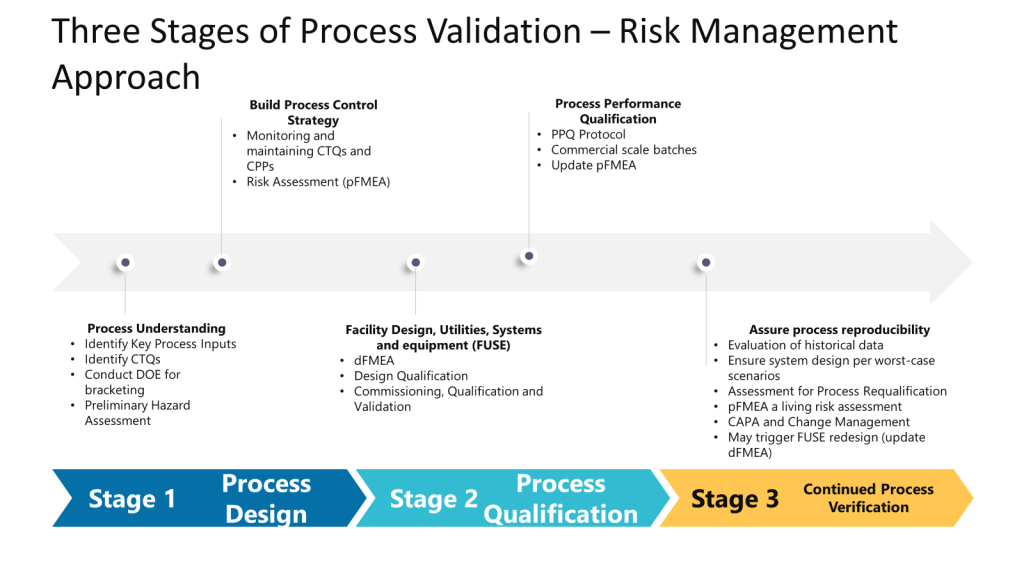
We will conduct various risk assessments in our process lifecycle—many ad hoc (static) and a few living (dynamic). Understanding how they fit together in a larger activity set is crucial.

In the Facility, Utilities, Systems, and Equipment (FUSE) space, we are taking the process understanding, translating it into a design, and then performing Design Qualification (DQ) to verify that the critical aspects (CAs) and critical design elements (CDEs) necessary to control risks identified during the quality risk assessment (QRA) are present in the design. This helps mitigate risks to product quality and patient safety. To do this, we need to properly understand the process. Unfortunately, we often start with design before understanding the process and then need to go back and perform rework. Too often I see a dFMEA ignored or as an input to the pFMEA instead of working together in a full risk management cycle.

The Preliminary Hazard Analysis (PHA) supports a pFMEA, which supports a dFMEA, which supports the pFMEA (which also benefits at this stage from a HAACP). Tools fit together to provide the approach. Tools do not become the approach.

Design and Process FMEAs

DFMEA (Design Failure Mode and Effects Analysis) and PFMEA (Process Failure Mode and Effects Analysis) are both methodologies used within the broader FMEA framework to identify and mitigate potential failures. Still, they focus on different aspects of development and manufacturing.

DFMEAPFMEA
Scope and FocusPrimarily scrutinizes design to preempt flaws.Focuses on processes to ensure effectiveness, efficiency and reliability.
Stakeholder InvolvementEngages design-oriented teams like engineering, quality engineers, and reliability engineers.Involves operation-centric personnel such as manufacturing, quality control, quality operations, and process engineers.
Inputs and OutputsRelies on design requirements, product specs, and component interactions to craft a robust product.Utilizes process steps, equipment capabilities, and parameters to design a stable operational process.
Stages in lifecycleConducted early in development, concurrent with the design phase, it aids in early issue detection and minimizes design impact.Executed in production planning post-finalized design, ensuring optimized operations prior to full-scale production.
Updated WhenExecuted in production planning post-finalized design, ensuring optimized operations before full-scale production.Process changes and under annual review.
dFMEA and pFMEA

Risk Analysis in the Design Phase

The design qualification phase is especially suitable for determining risks for products and patients stemming from the equipment or machine. These risks should be identified during the design qualification and reflected by appropriate measures in the draft design so that the operator can effectively eliminate, adequately control, and monitor or observe them. To identify design defects (mechanical) or in the creation of systems (electronics) on time and to eliminate them at a low cost, it is advisable to perform the following risk analysis activities for systems, equipment, or processes:

  • Categorize the GMP criticality and identify the critical quality attributes and process parameters;
  • Categorize the requirements regarding the patient impact and product impact (for example, in the form of a trace matrix);
  • Identify critical functions and system elements (e.g., the definition of a calibration concept and preventive maintenance);
  • Investigate functions for defect recognition. This includes checking alarms and fault indications, operator error, etc. The result of this risk analysis may be the definition of further maintenance activities, a different assessment of a measurement point, or the identification of topics to include in the operating manuals or procedures.

Additional risk analyses for verifying the design may include usability studies using equipment mock-ups or preliminary production trials (engineering studies) regarding selected topics to prove the feasibility of specific design aspects (e.g., interaction between machine and materials).

Too often, we misunderstand risk assessments and start doing them at the most granular level. This approach allows us to right-size our risk assessments and holistically look at the entire lifecycle.