Story is critical, or why tabletop roleplaying made me the quality professional I am today

I’ve written before on how storytelling is a critical skill. The ability to take data, take the events of the past and transform it into a coherent narrative is central to the quality profession, and frankly just about every other job out there.

This week I got one of my favorite compliments. We were working to take a series of events and shape it into a coherent narrative to explain what had happened, why we could be confident of the results, and how we had improved over time. And one of my co-workers had commented on how much they were learning from this process, and another responded that of course I was good at this because I was a gamer. And I was just tickled pink.

I make no secret of my hobby. My Twitter feed, for example, is one part geek, one part quality, one part politics. Search for me in google (and who doesn’t google search their coworkers?) and you’ll see gaming stuff on the front page. And in this day of working from home, my background is a bookshelf crammed full of games.

And I do think I am, to a large amount, the quality professional I am today because of that gaming background. There are many paths within quality, and this is part of mine.

Some of the things I’ve learned as a gamer include:

  • Storytelling skills
  • Communication skills
  • Organization skills
  • The ability to “think on your feet”
  • Humor
  • Patience
  • Creativity
  • Fairness
  • Knowledge of rules and how they work together in a system.
  • How to use visual aids, pictures et all
  • Paying attention to everyone, giving everyone a chance to be heroic
  • Conflict resolution skills

Which as a list definitely feels like the core of the profession.

So, fellow gamers in quality, next time we actually meet face-to-face at a conference, let’s find a little time to meet each other at the table.

Quality Goes Way Beyond a Few Regulations

The quality profession in the pharmaceutical industry is wider than the overseeing regulations from health authorities. The GXPs are truly a starting point, not an ending point which is why we often use that little “c” for “current.”

The GXPs (and the regulations behind them) serve an important purpose. But they are the start of excellence and not the end.

The GXPs are an outline. When we start with these requirements and then fill in the details we build a robust and beautiful engine for quality.

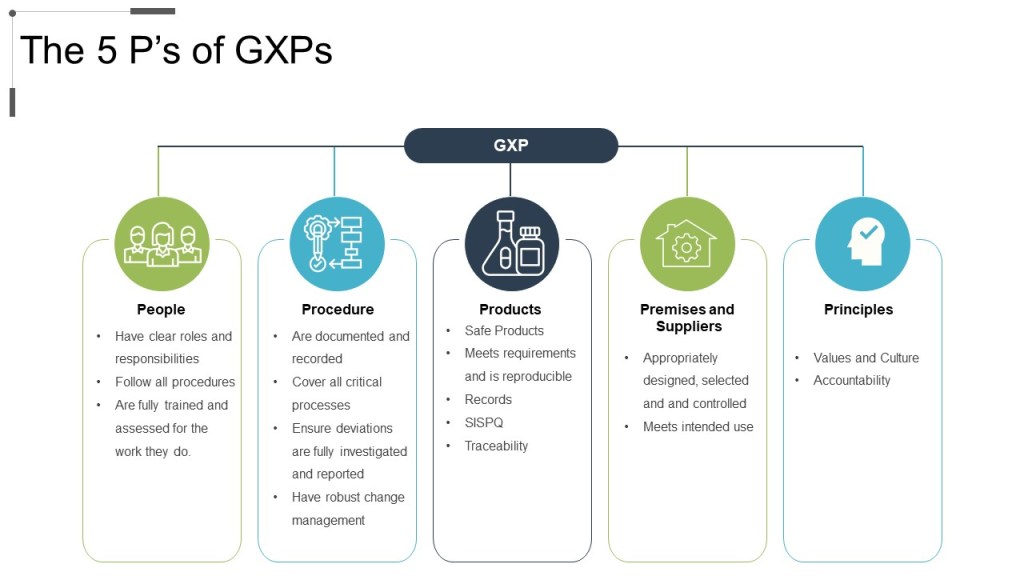
The 5Ps of GXPs: People, Procedure, Product, Premise, and Principles.

This is often why we talk about compliance being the start of quality, and not the end.

The stick is broken, regulatory agencies are toothless

Admit it, we’ve all been through GxP training that utilizes the stick. I’m assuming many of you have designed it. It might have looked like this:

Perhaps you have went over the hundred-and-fifty-plus years history of regulatory action, discussing Elixir Sulfanilamide, thalidomide, and a dozen other noteworthy cases that shared the modern regulatory environment.

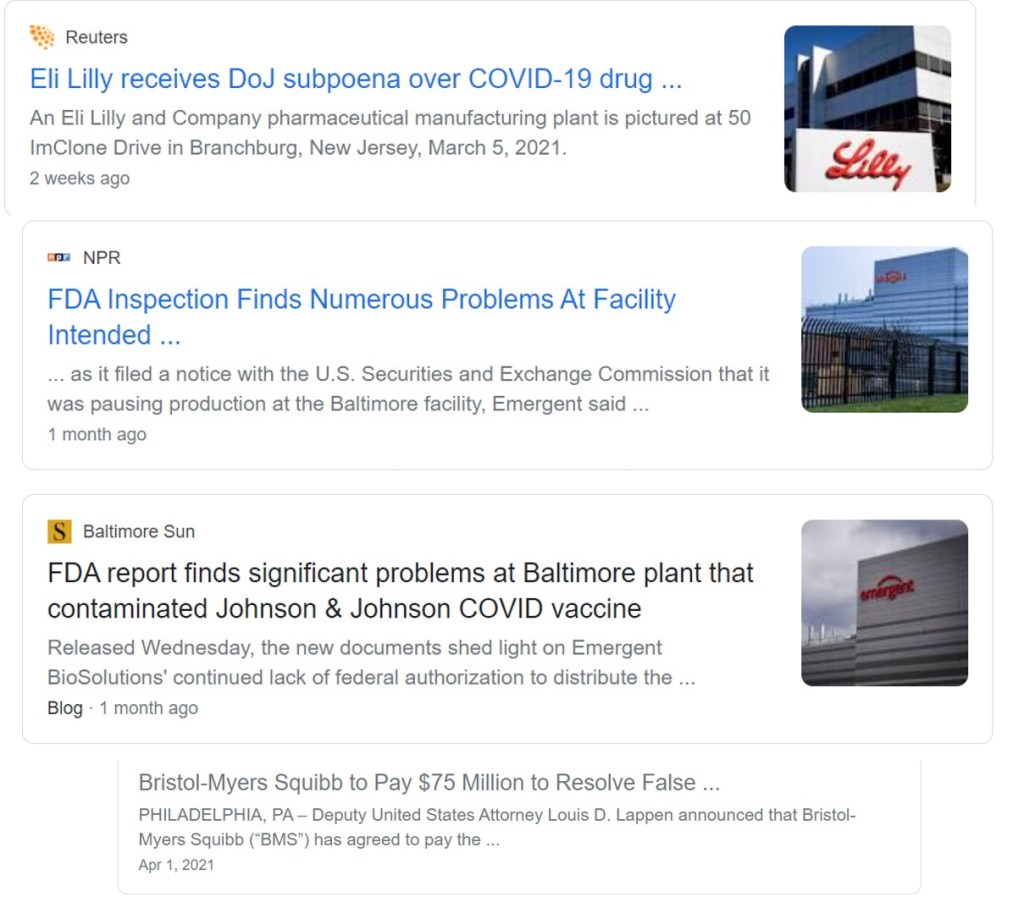
Or perhaps you just like to show a slide with recent headlines on it.

Let’s put aside all the excellent research about the power of positive messaging etc. Valid stuff but not the point I’m trying to make.

The point I want to make in this post is that the regulatory stick has long been broken. Companies suffer at most a slap on the wrist, fines that are weeks or months of profit. But real repercussions are absent.

The Sackler family walks away with billions, MacKenzie gets a slap on the wrist, and other companies are all protected from their deliberate actions in fueling the opioid epidemic.

J&J avoids all real accountability for knowingly causing cancer.

The list goes on.

Frankly, I think this is really bad for our industry. If the price of being caught is pennies to the dollar earned, it has become merely a cost of doing business.

This erodes trust in the safety of our drug supply. And if the last year hasn’t brought home the importance of that trust, you may be hiding under a rock.

We need more perp walks. We need a real system of deterrence that involves arrests and punishments that match the crimes. We can’t even count on the one form of deterrence left, liability lawsuits because companies are playing shenanigans with bankruptcy laws.

We talk about how quality culture starts at the top. But as we see again and again, the top only cares about profit.

That makes me fundamentally worry about the safety of our drugs and medical devices. And if I someone who has dear friends who work at large and small pharma worry, I must admit I can understand why people start to hold suspicions.

The Cost of Generics

Production of generics has shifted overseas, where it’s harder for the Food and Drug Administration to inspect factories. Major companies have been caught faking and manipulating the data that is supposed to prove that drugs are effective and safe. Probable carcinogens have been discovered in the drug supply. During the pandemic, which caused several countries to ban the export of medical supplies, a new fear has arisen: that faraway factories might one day cut Americans off from their drugs. Dozens of lifesaving medications are made with ingredients no longer manufactured in the United States.

Stockman,FarahOur Drug Supply Is Sick. How Can We Fix It?” The New York Times, 18 September 2021

Philip Runyan pointed out this article today, and it is worth reading. It has personal connection with me, as well as professional in that my wife takes Levothyroxine. I’m a huge fan of Katherine Eban’s Bottle of Lies, and this opinion piece fits excellently into that strand of reporting. We need more reporters on this beat.

I do not think the quality of drug manufacturers worldwide are rising to the level of the US and Europe. I think onshoring is one of those trends that is going to shake the pharmaceutical world over the next decade. Civica is ahead of the curve, but not by much.

Good shoutout to Redica, one of my favorite tools for regulatory intelligence (but expensive).

Notice that Viatris (Mylan) fails at driving out fear. Layoffs are one of the largest possible sources of fear.

We will eventually see a quality rating system. Whether it looks like the FDA’s current metric initiative remains to be seen.

Engaging for Quality

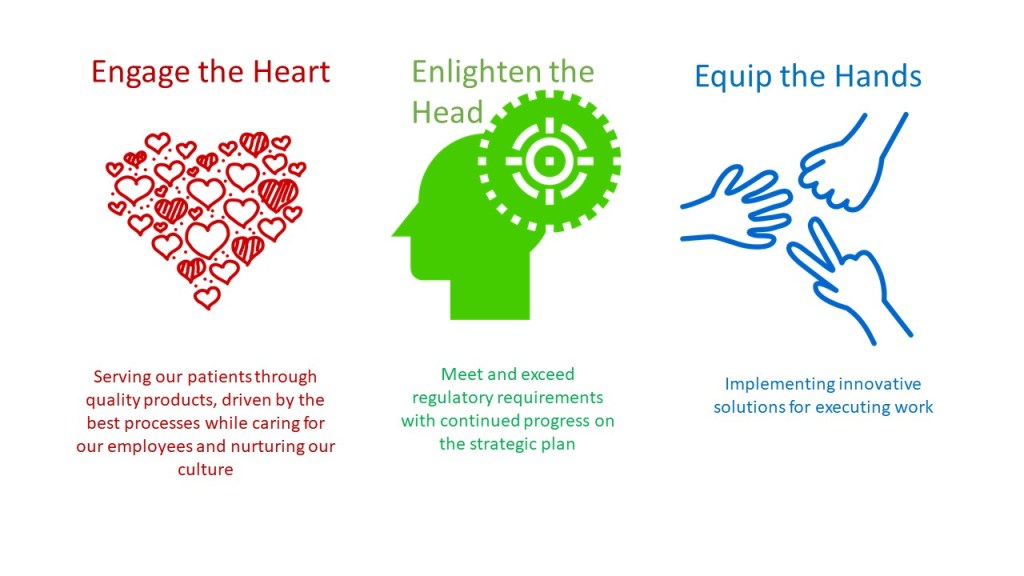
When building a quality organization, we are striving to do three things: get employees (and executives) to feel the need for quality in their bones; get them to understand what quality is and why it is important; and build the process, procedure, and tools to make quality happen. Practitioners in change management often call this heart, head, and hands.

Engage the heart, head and hands to build a quality culture

In our efforts we strive to answer give major themes of questions about why building a culture of quality is critical.

ThemeQuestions
WhyWhy do we need quality? Why is it important? What are the regulatory expectations? What happens if we do nothing?
WhatWhat results are expected for our patients? Our organization? Our people? What does out destination look and feel like?
HowHow will we get there? What’s our plan and process? What new behaviors do we each need to demonstrate?
YouWhat do you need to fulfill your role in quality? What do we need from you?
MeWhat do I commit to as a leader? What will I do to make change a reality? How will I support my team?
Five Themes of Change

The great part of this is that the principles of building a quality culture are the same mindsets we want embedded in our culture. By demonstrating them, we build and strengthen the culture, and will reap the dividends.

Be Preventative: What actions can be taken to prevent undesirable/unintended consequences with employees and other stakeholders. We do this by:

  • Involving end-users in the design process
  • Conduct risk assessments and lessons learned to predict possible failures
  • Ensure the reason for change is holistic and accounts for all internal and external obligations
  • Determine metrics as soon as possible
  • Focus on how the organization is responding to ongoing change
  • Think through how roles need to change and what employees need to be accountable for

Be Proactive: What actions can be taken to successfully meet objectives?

Be Responsive: What evidence-based techniques can be used to respond to issues, including resistance?

This is all about leveraging the 8 change accelerators and effectively developing strategies for change.