Quality is about teaching

One of the core skills for a quality professional is teaching. We teach skills, ways of thinking, methodologies. “Great Employees Want to Learn. Great Managers Know How to Teach” by Daniel Dobrygowski nicely covers some key points that every quality professional should think through as we go through out day advocating for quality in our organizations.

Define goals and communicate them clearly

Part of this is an evangelical role. Quality needs to be able to explain the quality goals, whether of the organization of a specific system or process. People in your organization want to know why they are doing things. Spend some time having clear talking points, be ready to give your pitch. Speak proudly of your quality systems. And be ready to understand how other’s goals intersect with your own.

Identify and build skills

Understand the skills necessary for quality, develop a plan to assess and build them and then execute to it. Knowledge management is crucial here.

Create opportunities for growth

Quality raises the prospects of all. Quality professionals who realize that our core job is building skills and growing the people in our organization benefit from teaching will drive continuous improvement and make folks happier using our systems. Growth is a reward loop, and people feeling they are rewarded by your system will want to use it more.

In short take each and every opportunity to use your interactions as a way to grow skills and capabilities. Quality will only grow as a result.
What quality matters are on your radar?

What quality system concerns do you have? What are you investing time in figuring out? What are your best practices – the quality solutions you are proud to share?

The site I work at is under a consent decree (fairly late in the process now). I joined because I wanted the experience of building and refining quality systems in that environment and the last five years here have been incredibly rewarding for a whole host of reasons.

I started this blog because I had a whole host of things I wanted to share. It also serves as a reflective tool to refine several ideas that I am working on. The themes of change management, knowledge management, document management, risk management, computer systems and data integrity (amongst other things) are the items I have spent a lot of time on and are some of the topics driving the next stage of my career.

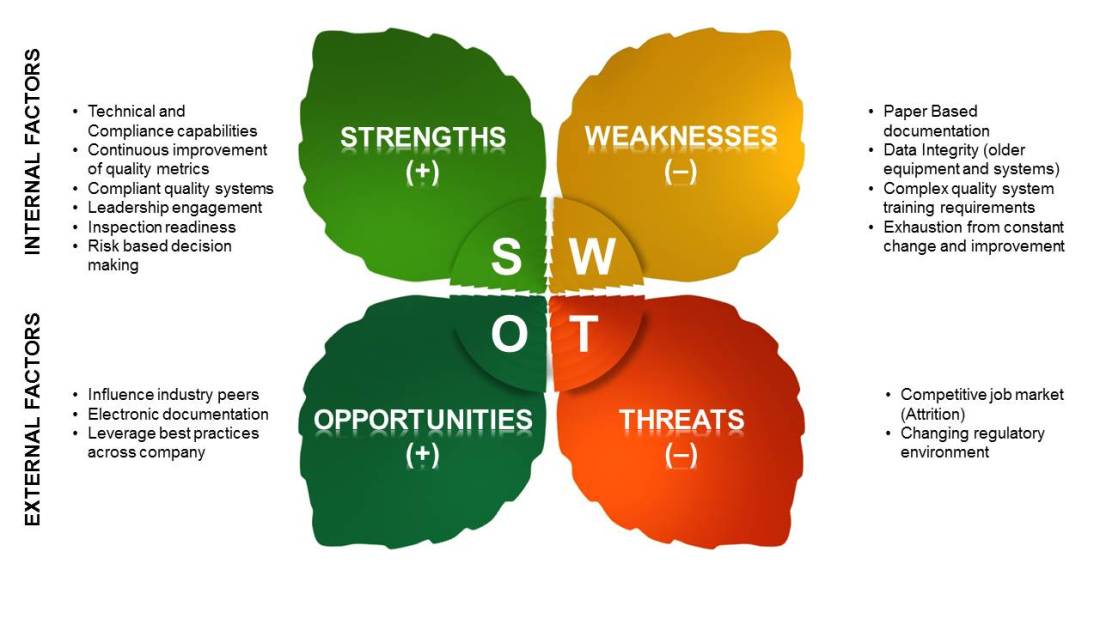
If I was to do a personal SWOT of where I am at (100% my opinions, does not represent anything official), it would look like this (with seasonal fall leaf structure):

SWOT - personal experience

It is not that hard to draw from these to my topics of interest.

I am following a tried-and-true technique, that of thinking aloud, which allows me to reflect upon and clarify the problem and focus on what is next. “Thinking aloud” requires talking through the details, decisions, and the reasoning behind those decisions. This slowing down the process allows me to fully comprehend the problem. This blog then serves to experiment, consider, and then decide upon next steps.

I’ll end this asking the same question I started with: What are your quality system concerns? What would you like to talk about on this blog?

Knowledge Work is the product

Johanna Rothman recently provided some insightful thoughts about Project Work vs Product Work. While focused on software, Johanna has some points that are valuable outside of software as she focuses on the importance of long-lived teams, applying a product work mindset to team functions.

The more we create long-lived teams who have already learned how to work together, the easier it is to work together. Even if that work is project-based work.

I think the critical thing for me is how much we have to view each team, each project as having as one of it’s key deliverables knowledge management.

However, we also need to recognize that in this day-and-age the modern corporation is  a transient collective. Companies do not do a great job of showing loyalty, there are a lot of options for the modern knowledge worker, and people regularly move on.

For me, this is why it is so important for not just projects, but day-to-day work to have as part of the inherent ways of working, processes to bring the tacit to explicit. The lessons-learned is a great place to start but we should be constantly be striving to identify “what have we learned”, “what do we need to make explicit” and “how do we make it explicit” as part of our work.

Knowledge management Circular_Process_6_Stages (for expansion)

Returning to the 6 stages of knowledge management:

    1. Have a way to capture what knowledge bits. For example, if you have a visual board, make sure this is explicitly part of the board. Make it part of your day-to-day.
    2. As a team assess the collected captured (and generated) knowledge and determine what is suitable for retaining.
    3. Share it – pass it up, pass it down. Make it available by tying it into your companies knowledge management system.
    4. Turn it into artifacts that are reusable. Pre-job briefings, procedures, work instructions, whatever is relevant.
    5. Live it. Confirm you are using it.
    6. Remember knowledge management artifacts are living. Things change and need to be updated. We can always refine. Continuous improvement is key.


Change Control- Leveraging regulatory inspection data

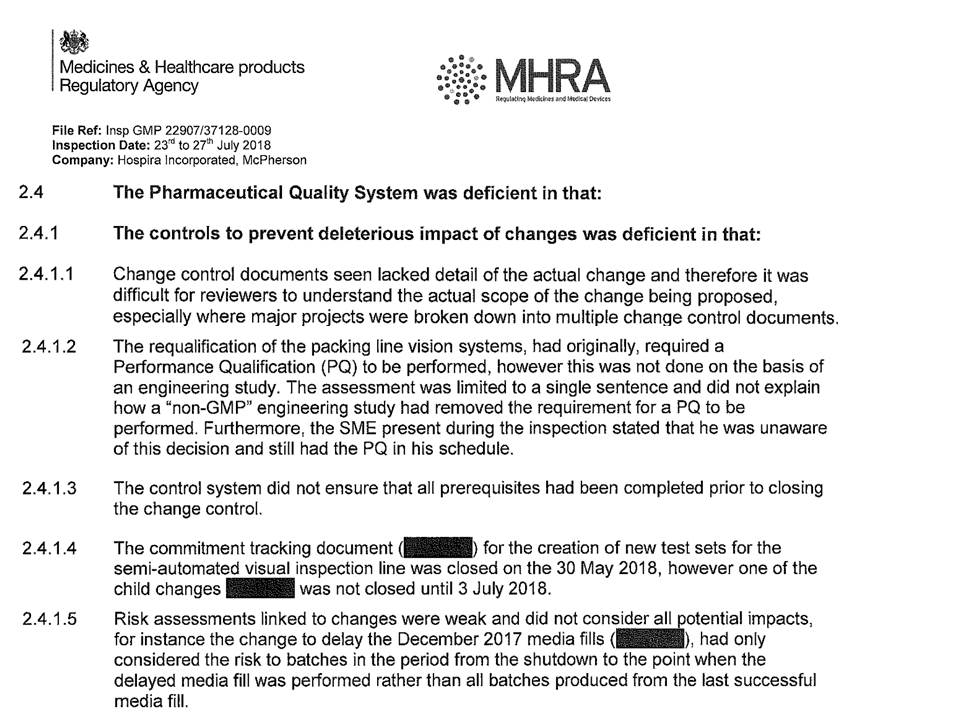
The Pfizer McPherson site has been under a great deal of regulatory scrutiny, and as a result there is a lot we can learn from their findings.

In July the MHRA stated the following:

Hospira McPherson Changes

There is a lot to unpack here, and for most of it I can pull up some previous postings to start with:

Breaking down change controls is both a necessity and a difficulty. I talked about the need for a change strategy when breaking up changes. This connective tissue will help with issues like 2.4.1.1 above and can also serve as a good playbook for discussing the changes with an inspector. This is especially important when you find you need to implement related changes at different times. I talked about the various implementation dates in some detail.

Risk assessments are only getting more important, and for a company with international distribution it is important to consider the risks inherent to your regulatory strategy and distribution strategy and mitigate.

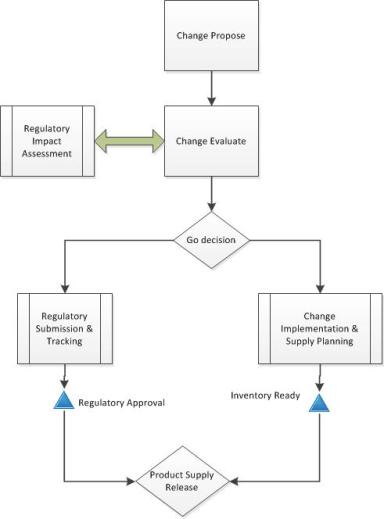
regulatory and change

If you have changes that will have long tails of regulatory approvals, then your change control needs to have the right controls to ensure appropriate and safe supply.

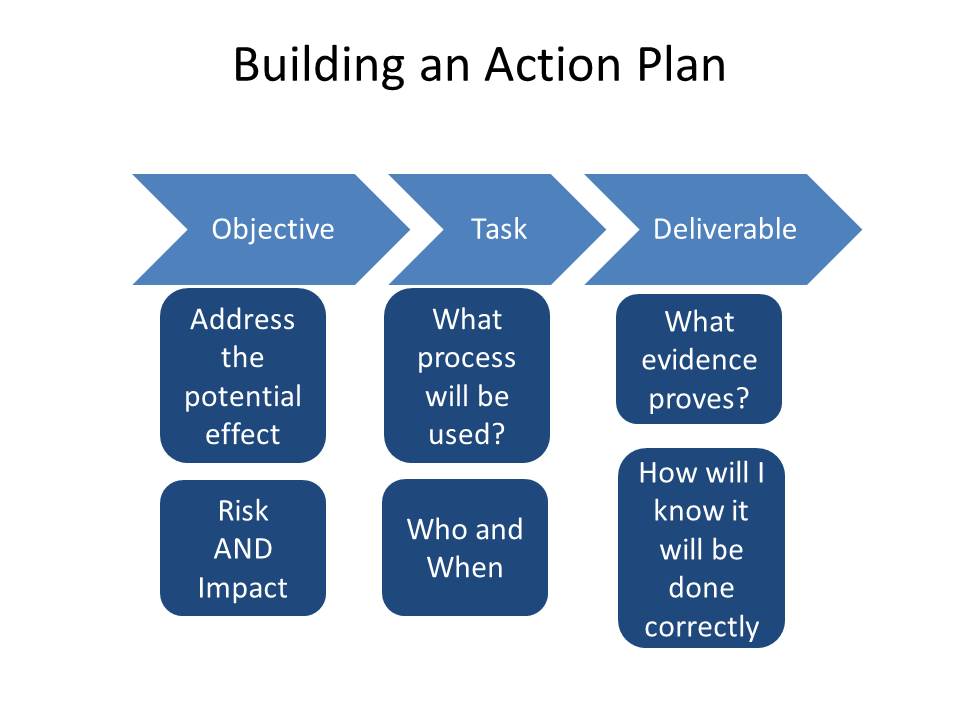
Build your actions to address all risks and impacts and ensure they are appropriately carried through.

action items

Finally ensure your change control process has a way to revise the plan and ensure all stakeholders are included in the decisions.


FDA In Brief > FDA In Brief: FDA advances policies related to bolstering security of drug products in the U.S. supply chain

FDA issues drug supply chain guidances to alert industry of changes to pharmaceutical product identification and tracing procedures.
— Read on www.fda.gov/NewsEvents/Newsroom/FDAInBrief/ucm621095.htm

Today, the FDA is finalizing two guidance documents and making available one draft guidance to help ensure that prescription drug products are identified and traced properly as they move through the supply chain in compliance with federal law.