
Subject Matter Expert in Validation

In ASTM E2500, a Subject Matter Expert (SME) is an individual with specialized knowledge and technical understanding of critical aspects of manufacturing systems and equipment. The SME plays a crucial role throughout the project lifecycle, from defining needs to verifying and accepting systems. They are responsible for identifying critical aspects, reviewing system designs, developing verification strategies, and leading quality risk management efforts. SMEs ensure manufacturing systems are designed and verified to meet product quality and patient safety requirements.

In the ASTM E2500 process, the Subject Matter Experts (SME) has several key responsibilities critical to successfully implementing the standard. These responsibilities include:

  1. Definition of Needs: SMEs define the system’s needs and identify critical aspects that impact product quality and patient safety.
  2. Risk Management: SMEs participate in risk management activities, helping to identify, assess, and manage risks throughout the project lifecycle. This includes conducting quality risk analyses and consistently applying risk management principles.
  3. Verification Strategy Development: SMEs are responsible for planning and defining verification strategies. This involves selecting appropriate test methods, defining acceptance criteria, and ensuring that verification activities are aligned with the project’s critical aspects.
  4. System Design Review: SMEs review system designs to ensure they meet specified requirements and address identified risks. This includes participating in design reviews and providing technical input to optimize system functionality and compliance.
  5. Execution of Verification Tests: SMEs lead the execution of verification tests, ensuring that tests are conducted accurately and that results are thoroughly reviewed. They may also leverage vendor documentation and test results as part of the verification process, provided the vendor’s quality system and technical capabilities are deemed acceptable.
  6. Change Management: SMEs play a crucial role in change management, ensuring that any modifications to the system are properly evaluated, documented, and implemented. This helps maintain the system’s validated state and ensures continuous compliance with regulatory requirements.
  7. Continuous Improvement: SMEs are involved in continuous process improvement efforts, using operational and performance data to identify opportunities for enhancements. They also conduct root-cause analyses of failures and implement technically sound improvements based on gained product knowledge and understanding.

These responsibilities highlight the SME’s integral role in ensuring that manufacturing systems are designed, verified, and maintained to meet the highest standards of quality and safety, as outlined in ASTM E2500.

The ASTM E2500 SME is a Process Owner

ASTM E2500 uses the term SME in the same way we discuss process owners, or what is sometimes called product or molecule stewards. The term should probably be changed to reflect the special role of the SME and the relationship with other stakeholders.

A Molecule Steward has a specialized role within pharmaceutical and biotechnology companies and oversees the lifecycle of a specific molecule or drug product. This role involves a range of responsibilities, including:

  1. Technical Expertise: Acting as the subject matter expert per ASTM E2500.
  2. Product Control Strategies: Implementing appropriate product control strategies across development and manufacturing sites based on anticipated needs.
  3. Lifecycle Management: Providing end-to-end accountability for a given molecule, from development to late-stage lifecycle management.

A Molecule Steward ensures a drug product’s successful development, manufacturing, and lifecycle management, maintaining high standards of quality and compliance throughout the process.

The ASTM E2500 SME (Molecule Steward) and Stakeholders

In the ASTM E2500 approach, the Subject Matter Expert (Molecule Steward) collaborates closely with various project players to ensure the successful implementation of manufacturing systems.

Definition of Needs and Requirements

  • Collaboration with Project Teams: SMEs work with project teams from the beginning to define the system’s needs and requirements. This involves identifying critical aspects that impact product quality and patient safety.
  • Input from Multiple Departments: SMEs gather input from different departments, including product/process development, engineering, automation, and validation, to ensure that all critical quality attributes (CQAs) and critical process parameters (CPPs) are considered.

Risk Management

  • Quality Risk Analysis: SMEs lead the quality risk analysis process, collaborating with QA and other stakeholders to identify and assess risks. This helps focus on critical aspects and consistently apply risk management principles.
  • Vendor Collaboration: SMEs often work with vendors to leverage their expertise in conducting risk assessments and ensuring that vendor documentation meets quality requirements.

System Design Review

  • Design Review Meetings: SMEs participate in design review meetings with suppliers and project teams to ensure the system design meets the defined needs and critical aspects. This collaborative effort helps in reducing the need for modifications and repeat tests.
  • Supplier Engagement: SMEs engage with suppliers to ensure their design solutions are understood and integrated into the project. This includes reviewing supplier documentation and ensuring compliance with regulatory requirements.

Verification Strategy Development

  • Developing Verification Plans: SMEs collaborate with QA and engineering teams to develop verification strategies and plans. This involves selecting appropriate test methods, defining acceptance criteria, and ensuring verification activities align with project goals.
  • Execution of Verification Tests: SMEs may work with suppliers to conduct verification tests at the supplier’s site, ensuring that tests are performed accurately and efficiently. This collaboration helps achieve the “right test” at the “right time” objective.

Change Management

  • Managing Changes: SMEs play a crucial role in the change management process, working with project teams to evaluate, document, and implement changes. This ensures that the system remains in a validated state and continues to meet regulatory requirements.
  • Continuous Improvement: SMEs collaborate with other stakeholders to identify opportunities for process improvements and implement changes based on operational and performance data.

Documentation and Communication

  • Clear Communication: SMEs ensure clear communication and documentation of all verification activities and acceptance criteria. This involves working closely with QA to validate all critical aspects and ensure compliance with regulatory standards.
Conducive Culture

Another building block to Quality Culture is conducive culture, which is an environment that promotes employee productivity, satisfaction, and well-being. There is a huge overlap between the concepts of a Just and Conducive Culture.

  1. Physical Comfort and Resources: Ensuring employees have a comfortable physical environment and the necessary resources to perform their tasks effectively.
  2. Open Communication: Encouraging transparent and open communication between employees and management helps build trust and fosters a sense of teamwork.
  3. Recognition and Reward: Regularly acknowledging and rewarding individual contributions can maintain high levels of employee motivation and engagement.
  4. Diversity, Equity, and Inclusion (DEI): Promoting a culture that values diversity, equity, and inclusion can lead to a more respectful and collaborative workplace, enhancing employee morale and productivity.
  5. Work-Life Balance: Supporting employees in achieving a healthy work-life balance through flexible working hours and telecommuting opportunities can increase their engagement and motivation.
  6. Positive Organizational Values: Establishing and operationalizing core values that align with collaboration, learning, and adapting (CLA) can create a supportive and innovative work environment.
  7. Feedback and Development: Regular, constructive feedback and opportunities for professional growth help employees feel valued and supported in their roles.
  8. Team Culture: Promoting teamwork and collective responsibility for outcomes can enhance the organization’s overall performance and success.

A conducive culture fosters innovation, collaboration, and inclusivity, all vital elements of a quality culture.

System Boundary

A system boundary for equipment or utility refers to the demarcation points that define the extent of a system’s components and the scope of its operations. This boundary is crucial for managing, validating, maintaining, and securing the system.

    • For utilities, the last valve before the system being supplied can be used as the boundary, which can also serve as a Lock Out Tag Out (LOTO) point.
    • Physical connections like tri-clamp connections or flanges can define the boundary for packaged systems or skids.
    • For critical and non-critical systems, such as air or HVAC systems, filters can be the boundary between systems.

    Defining system boundaries is crucial during the design of equipment and systems. It helps identify where the equipment starts and stops and where the breakpoints are situated. This ensures a smooth transition and handover during the commissioning process.

    1. Early Definition: Define system boundaries as early as possible in the system’s development life cycle to reduce costs and ensure effective security controls are implemented from the start.
    2. Stakeholder Involvement: Relevant stakeholders, such as system engineers, utility providers, and maintenance teams, should be involved in defining system boundaries to ensure alignment and a clear understanding of responsibilities.
    3. Documentation and Traceability: To ensure consistency and traceability, document and maintain system boundaries in relevant diagrams (e.g., P&IDs, system architecture diagrams) and commissioning/qualification protocols.
    4. Periodic Review: Regularly review and update system boundaries as the system evolves or the environment changes, using change management and configuration management processes to ensure consistency and completeness.
    5. Enterprise-level Coordination: At an enterprise level, coordinate and align system boundaries across all major systems to identify gaps, overlaps, and seamless coverage of security responsibilities.

    Applying Systems Thinking

    Systems thinking and modeling techniques are essential for managing and improving complex systems. These approaches help understand the interconnected nature of systems, identify key variables, and make informed decisions to enhance performance, reliability, and sustainability. Here’s how these methodologies can be applied:

    Holistic Approach

      • Systems thinking involves viewing the system as an integrated whole rather than isolated components. This approach acknowledges that the system has qualities that the sum of individual parts cannot explain.
      • When developing frameworks, models, and best practices for systems, consider the interactions between people, processes, technology, and the environment.

      Key Elements:

      • Interconnectedness: Recognize that all parts of the utility system are interconnected. Changes in one part can affect other parts, sometimes in unexpected ways.
      • Feedback Loops: Identify feedback loops where outputs from one part of the system influence other parts. These can be reinforcing or balancing loops that affect system behavior over time.
      • Time Consideration: Understand that effects rarely ripple through a complex system instantaneously. Consider how changes will affect the system over time.

      Fostering Critical Thinking

      As a leader, fostering critical thinking in my team and beyond is a core part of my job. Fostering critical thinking means an approach that encourages open-mindedness, curiosity, and structured problem-solving.

      Encourage Questioning and Healthy Debate

      It is essential to create an environment where team members feel comfortable questioning assumptions and engaging in constructive debates. Encourage them to ask “why” and explore different perspectives. This open dialogue promotes deeper thinking and prevents groupthink.

      Foster a Culture of Curiosity

      Inspire your team to ask questions and seek deeper understanding. Role model this behavior by starting meetings with thought-provoking “what if” scenarios or sharing your own curiosities. Celebrate curiosity and reward those who think outside the box.

      Assign Stretch Assignments

      Provide your team with challenging tasks that push them beyond their comfort zones. These stretch assignments force them to think critically, analyze information from multiple angles, and develop innovative solutions.

      Promote Diverse Perspectives

      Encourage diversity of thought within your team. Diverse backgrounds, experiences, and viewpoints can challenge assumptions and biases, leading to a more comprehensive understanding and better decision-making.

      Engage in Collaborative Problem-Solving

      Involve your team in decision-making processes and problem-solving exercises. Techniques like role reversal debates, where team members argue a point they disagree with, can help them understand different perspectives and refine their argumentative skills.

      Provide Training and Resources

      Offer training sessions on critical thinking techniques, such as SWOT analysis, root cause analysis, and logical fallacies. Equip your team with the tools and frameworks they need to think critically.

      Lead by Example

      As a leader, model critical thinking behaviors. Discuss your thought processes openly, question your assumptions, and show the value of critical evaluation in real-time decision-making. Your team will be more likely to emulate these habits.

      Encourage Continuous Learning

      Recommend learning resources, such as courses, articles, and books from diverse fields. Continuous learning can broaden perspectives and foster multifaceted thinking.

      Embrace Feedback and Mistakes

      Establish feedback loops within the team and create a safe environment where mistakes are treated as learning opportunities. Receiving and giving feedback helps refine understanding and overcome biases.

      Implement Role-Playing Scenarios

      Use role-playing scenarios to simulate real-world challenges. This helps team members practice critical thinking in a controlled environment, enhancing their ability to apply these skills in actual situations.

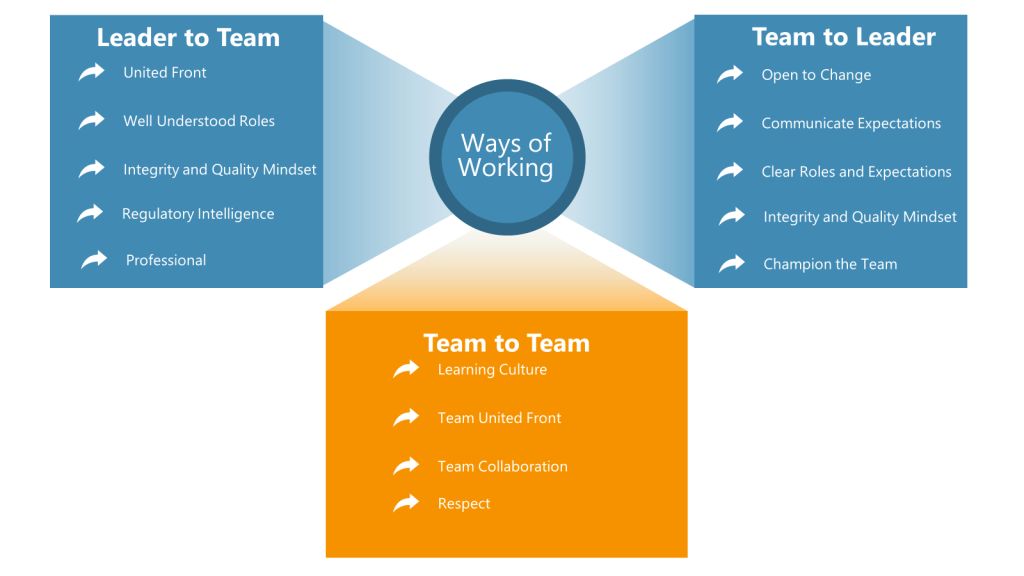
      Build Into the Team Charter

      Building these expectations into the team charter holds you and your team accountable.

      Value: Regulatory Intelligence

      Definition: Stay current on industry regulations and guidances. 

      Desired Behaviors:

      1. I will dedicate time to reading industry-related guidance and regulation publications related to my job.
      2. I will share publications that I find interesting or applicable to my job with the team
      3. I will present to the team on at least one topic per year to share learnings with the team (or wider organization)

      Value: Learning Culture

      Definition: Share lessons learned from projects so the team can grow together and remain aligned.  Engage in knowledge-sharing sessions.

      Desired Behaviors:

      1. I will share lessons learned from each project with the wider team via the team channel and/or weekly team meeting.
      2. I will encourage team members to openly share their experiences, successes, and challenges without fear of judgement.
      3. I will update RAID log with decisions made by the team.
      4. I will identify possible process improvements and update the process improvement tracker.

      Value: Team Collaboration

      Definition: Willingness to help teammates when they reach out for input/help

      Desired Behaviors:

      1. I will be supportive of my teammate’s requests for assistance
      2. I will engage and offer my SME advice when asked or help identify another SME to assist 
      3. I will not ignore requests for input/help
      4. I will contribute to an environment where teammates can request help

      FDA Reorganization

      FDA’s Reorganization Approved for Establishing Unified Human Foods Program, New Model for Field Operations and Other Modernization Efforts

      The FDA’s reorganization has been unveiled and will be implemented on October 1st. As a total wonk, this is exciting.

      There are two major changes:

      • Forming a Human Food Program (HFP) to consolidate a preventive approach will not have much impact on me professionally, but I’m hoping that as a consumer, we see significant dividends from this refocus.
      • ORA is being renamed the Office of Inspections and Investigations (OII) and will focus on inspections, investigations, and imports as its core mission. If nothing else, this will make explaining the structure of the FDA a heck of a lot easier.

      Everything else seems to be mostly a lot of shuffling of the deck chairs that will have little impact.